From our working holiday volunteering with leopards, caracals and Cape biodiversity in South Africa (www.biosphere-expeditions.org/southafrica)

Let the science commence! With the training completed on the various methods, our surveys could begin for real. For the next few days we’ll be ‘hunting’ high and low to find the mammal fauna of the of the fynbos.

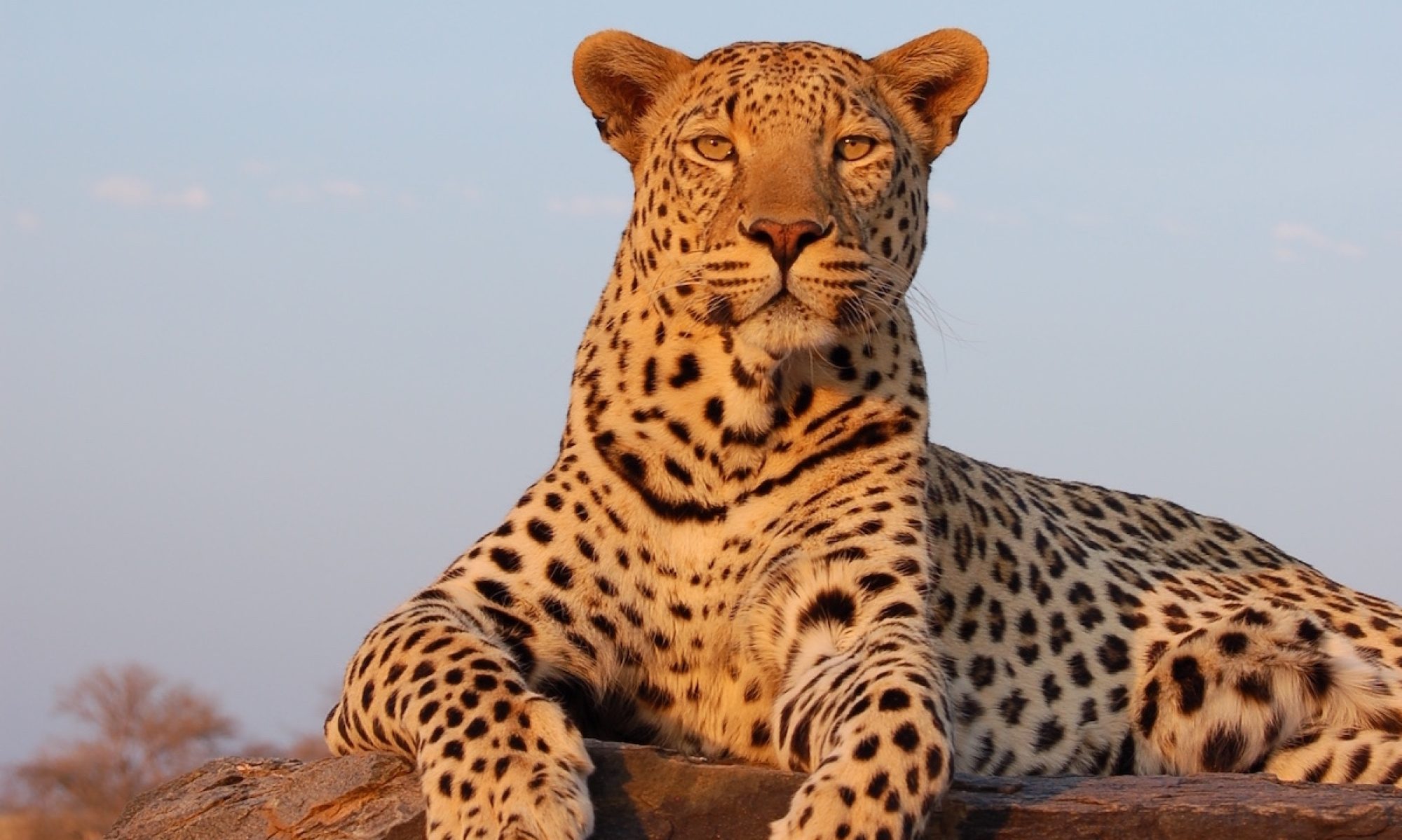
The first job of the day is always the leopard trap – a large cage trap, which will hopefully tell us which of the cat species is moving through the local area. But we’ll also get some interesting by-catc, and the last couple of mornings we have trapped grysbok – a small antelope almost entirely restricted to the fynbos vegetation. All are released to continue on their way.

Our day yesterday then continued with flush surveys. Basically a large transect survey, with multiple people, whereby we can document the mammal and birdlife in a specific area. Our first survey was in the Welbedacht section of Baviaanskloof. It also gave the team an opportunity to deploy a few more camera traps to hopefully catch the elusive and wide-ranging leopard.

Whilst the science went to plan, the transportation was a different matter. Our local ranger, Eksteen decided that he and Christine would take the vehicle to meet us at an entirely different point to one agreed with our scientist, Alan. The upshot meant a long walk out of the survey area and a late lunch. Though we took the opportunity to drive through the Nuwekloof pass – a stunning rock canyon where stumbled across two leopard tortoises in a rather noisy embrace!

In addition to getting the flush surveys underway, we also now have 50 Sherman traps deployed with half of them up the now infamous protea slope. Locating the pre-marked trapping points in head height protea bushes is certainly a challenge – think needle in a haystack on a 40 degree slope. But as with much scientific survey work, hard graft usually pays off. We’ve already been rewarded with several captures, including a species not on our provisional list, though we await confirmation.

This slideshow requires JavaScript.


From our working holiday volunteering with leopards, caracals and Cape biodiversity in South Africa.

From our working holiday volunteering with leopards, caracals and Cape biodiversity in South Africa (www.biosphere-expeditions.org/southafrica)

The first volunteers of the inaugural ‘Carnivores of the Cape Floral Kingdom’ expedition all arrived on Sunday with only a minor glitch of getting one vehicle stuck just a couple of miles from the expedition base. Welcome to expedition life!

With initial introductions, risks assessments and briefings completed by Sunday afternoon, we stretched our legs with a brief orientation walk around Blue Hill Nature Reserve – our base for the next 12 days. We passed by (and checked) the leopard trap, which will form a key part of the survey work, and enjoyed some of the local wildlife whilst on route. Sightings included klipspringer, jackal buzzards and an ancient relative of the elephant – the dassie or rock hyrax. This was followed by another orientation walk up a ridge behind our base. The climb rewards you not only with a great view over the fynbos landscape, but also with a mobile phone signal. I have a feeling the path will be well–trodden by some!

Rested and recuperated from Sunday’s travel and briefing exertions, the science training than began in earnest on Monday, with camera trapping analysis and mammal ID work. Practical session came in the form of off-road 4WD training. Our three transport options on the project are either by foot, by 4WD or by mountain bike. All vehicles and drivers returned to base in one piece. So far there have been no riders.

With equipment briefings completed and after-dinner lectures from our project scientist (Dr. Alan Lee) digested, we put things into action on Tuesday. The sunrise activity of trap checking yielded a klipspringer in the trap, which was promptly released. Unfortunately it broke a horn in the box trap, something that happens very rarely, but did this time. Alan was worried, but the klipspringer seems to have been fine. Later in the morning we practised setting 50 small mammal traps in a big group. It took us about three hours, so a couple of people should manage in an afternoon, especially because we have already marked and recorded the fifty locations now, covering a big rectangle of 250 x 1000 m. In the afternoon we conducted our first ‘flush survey’ in a group of seven walking all abreast and 2 m apart, recording vegetation and any animals that are disturbed and ‘flushed’ out of the undergrowth. Christine, who had twisted her ankle just before the expedition, and her husband Prasadu stayed back to go through camera trap pictures collected by Alan in the past. This will be another key activity where we can help Alan do things that he would not be able to do without willing volunteers, in this case because he simply lacks the time to go through 3000-odd camera trap photographs. But split over two weeks amongst seven volunteers working in shifting pairs this task become manageable and the end result, Alan hopes, will be a peer-reviewed scientific publication on “temporal patterns of abundance of medium to large-size mammals from camera trap records” (that already sounds very scientific, doesn’t it ;).

This slideshow requires JavaScript.


From our working holiday volunteering with leopards, caracals and Cape biodiversity in South Africa.

From our working holiday volunteering with leopards, caracals and Cape biodiversity in South Africa (www.biosphere-expeditions.org/southafrica)

Hello and welcome to the South Africa expedition diary. I am Craig Turner your expedition leader and I am writing this on board the flight to Johannesburg. I am due to land in an hour or so and will then meet up with Matthias Hammer, Biosphere Expeditons’ executive director (who will be joining us for the first few days), to fly onto George and eventually Blue Hill by car. We should be there tonight and once we have settled in, I will be in touch again with details of our plans for the expedition, weather updates, emergency conctact details, etc.

I hope your preparations are going well. Safe travels and I look forward to meeting you in due course.

Craig Turner
Expedition leader


From our working holiday volunteering with leopards, caracals and Cape biodiversity in South Africa.

From our scuba diving conservation holiday with whale sharks and coral reefs of the Maldives (http://www.biosphere-expeditions.org/maldives)

No bleaching and lots of teaching on Biosphere Expeditions’ Maldives reef expedition 2015

If you have ever visited the Maldives, you will have seen fleets of luxury liveaboards motoring around the atolls taking their guests to well-known dive sites to experience the underwater beauty that the Maldives is famous for. This September, one of those liveaboards, the MV Carpe Diem, housed a rather different clientele – the honeymooners and adventure divers were replaced with studious environmentalists embarking on a training course to learn the monitoring techniques necessary to collect reef health data – Reef Check.

From five different countries, 10 participants, two of whom were Maldivian, came together to learn the Reef Check methodology on an annual research expedition organised by nonprofit conservation organisation Biosphere Expeditions. Biosphere Expeditions recognizes the importance of training local Maldivians, alongside citizen scientsts from around the world. Once the expedition is over, and most participants have returned to their temperate homes, the Maldivians have continued access to their reef and with their newly acquired knowledge, can support Biosphere Expeditions’ work with additional Reef Checks, amongst them the first such all-Maldivian survey in 2014.

So, with the lounge of the Carpe Diem transformed into a classroom and its dhoni (dive boat) now a research vessel, the ten newly qualified Reef Check team set out on a survey route previously visited in 2011 and 2013. “We revisit the same sites to get a clearer idea of what’s going on,” says Catherine Edsell, expedition leader and Reef Check trainer, “much can be gleaned from repetitive datasets – they helps us to see what is changing, especially when it comes to the issue of bleaching.”

With a global El Niño event and documented sea surface temperatures rising, the team were on high alert for signs of coral bleaching. leaching occurs when corals are stressed resulting in expulsion of the symbiotic algae (zooxanthellae), which not only give them their colour, but provide them with food via photosynthesis. Without their zooxanthellae corals appear bright white or luminous yellow and it was this sign that the team was on the look-out for.

Initial training dives around Baros Resort’s house reef revealed no such incidence, but Mariyam Shidha Afzal, this year’s expedition scientist and a previous Maldivian recipient of Biosphere Expeditions’ training programme said, “Bleaching can be quite localised, so we may find when we travel south that things are different.” Fortunately this was not the case and there was minimal bleaching at all survey sites. Storm damage, on the other hand, was quite severe, especially at Bathalaa Maaga and Holiday Thilla, and it was easy to see why, as throughout the expedition, monsoon storms battered the more exposed atolls, causing one of the surveys to be aborted.

“Understanding the factors that are affecting the health of the Maldives’ reefs is the ambition of the programme”, says Dr Jean-Luc Solandt of the Marine Conservation Society and Reef Check co-ordinator for the Maldives. “It is never a simple story – when we put our heads underwater at each site, we have a basic understanding of what‘s likely to be affecting the reef, but Reef Check allows us to nail this down further with data on a wide variety of factors. At the same time we are able to train Maldivians and conservationists from other countries to do the same, so we are delighted with the long-term results of the trainings and collaborations we are forging in the Maldives.”

Biosphere Expeditions’ placements this year, kindly supported by the Rufford Foundation, were Mohammed Ryan Thoyyib, currently working for LaMer (Land and Marine Environmental Resource group – a local environmental consultancy), and Irthisham Hassan Zareer from the Maldives Whale Shark Research Programme. Both organisations have an ongoing relationship with Biosphere Expeditions and offer up their most promising candidates to become Reef Checkers. “I feel extremely lucky to be part of such an expedition that brings people together from different corners of the world for the same goals, to try and conserve the beautiful reefs that we are blessed with,” says Irthrisham, “I am hoping to get in contact with some of the other Reef Check trainers from the Maldives and with the help of some more dedicated divers, carry out more surveys at the end of the year.”

2015 expedition slideshow:

This slideshow requires JavaScript.

Continue reading “From our scuba diving conservation holiday with whale sharks and coral reefs of the Maldives (http://www.biosphere-expeditions.org/maldives)”
From our conservation holiday volunteering with jaguars, pumas, ocelots, primates and other species in the Peru Amazon jungle (http://www.biosphere-expeditions.org/amazonia)

This year’s Amazonia expedition has come to an end.

Highlights of the last couple of days are sightings of a tamandua (big anteater) sleeping on a tree, a coati, a huge group of perhaps 70 peccaries, crossing our survey path right in front of us. How exciting! During the review Alfredo added that he had not seen “the big” peccaries for a year or so.

The cameras took a few good pictures of red squirrel, tyra, collared peccary and tapir. Also a great series of “cappuchinos” – brown capuchin monkeys. To everyone’s amusement, Suzie renamed the species earlier this week. And finally, a cat. No, not the big one, but its little brother. A margay passed by one of the cameras set on the trail to Yarina lake documented in a series of three very good shots. As promised, they will all be shared once I’ve made it back home to my desk.

By the end of two expedition weeks, the species summary sheet is impressively long. Recordings (sightings & tracks) are of a total of 32 different mammal species, not to mention a great variety of birds, frogs, reptiles and insects. Ten different monkey species were spotted, one of which was seen for the very first time on expedition since the project started four years ago: the rare red uakari monkey. From the number of sightings – not individuals – saddleback tamarin is the most common species in the area (16 groups) followed by ‘cappuchino’ 😉 and squirrel monkey (13 & 12 groups). More details of all results will be published in the expedition report.

The total mileage walked is an impressive 160 km of forest trails on foot and about 60 km by canoe paddling up and down the Tahuayo river. Of these 57.27 km are actual foot and 30 km are canoe transect surveys. Statistically the sightings will be related to ten different cells of 2 x 2 km including seasonally flooded forest habitat, palm swamps, higher and lower restinga and terra firme.

A big thank you goes to the expedition team for performing the daily tasks enthusiastically and with great endurance. You never faltered – neither heat, nor humidity, nor tiredness, blisters or whatever held you back from going out twice a day, bringing back to base datasheets with valuable information. A special thanks goes to the local field assistants Gabriel, Julio, Manuel and Oscar for contributing their jungle skills and knowledge, whether it was by guiding teams on jungle trails, hearing, smelling, spotting and identifying animals, driving the boats safely through a labyrinth of logs and fallen trees, or paddling and stearing the canoes.

Thank you, Alfredo, for setting up an exemplary partnership between foreign researchers and local people. Even more for sharing your great knowledge, answering many, many questions and guiding teams day & night on “your patch”. Thank you Andy and Fredrik for joining us and multiplying the scientific input, not only of birds and frogs.

You all have put lots in – not only time & money, but also skills, good chats, ideas and comments. I trust you got lots out in return and enjoyed the project and our time at the ARC as much as I did.

All the best

Malika

P.S. Please don’t forget to share your pictures (instructions to be mailed soon).

This slideshow requires JavaScript.

Continue reading “From our conservation holiday volunteering with jaguars, pumas, ocelots, primates and other species in the Peru Amazon jungle (http://www.biosphere-expeditions.org/amazonia)”

From our scuba diving conservation holiday with whale sharks and coral reefs of the Maldives (http://www.biosphere-expeditions.org/maldives)

So, sadly all good things must come to an end. It has been an excellent expedition, with a hardworking, diligent, enthusiastic team. The fact that everyone passed their Reef Check tests first time was testament to the effort put into studies. And despite being a diverse group from many different countries, with an age difference of over 30 years, the team gelled really well and we all had a lot of fun together. Thanks also to Shidha, our scientist, who stepped in at the last minute and did a great job.

I must mention the fantastic crew of the Carpe Diem who supported us both on board and under water – without them, some of our transects would not have been laid, due to the extreme weather and currents we encountered, so they really were integral to the success of the expedition and the collection of valuable data. Thank you!

In addition to all our Reef Check data, (which will be published in the 2015 Maldives Report), we also collected ID shots of manta rays, which I will submit to Manta Matcher www.mantamatcher.org. This a conservation group that endeavours to learn more about the habits of Manta rays worldwide, with a view to their protection. Of course our whale shark encounters that were also mapped and logged will also be submitted to the Maldives Whale Shark Research Programme http://maldiveswhalesharkresearch.org. Using IS3, a programme initially designed by NASA to identify constellations, we were able to identify two of the sharks we saw by matching ID photographs of their markings to those already on the MWSRP’s database. Our sharks were called Adam and Kokko, two juvenile males taking refuge in the warm sheltered waters of Ari Atoll.

So thank you all for your energy, your laughter, for joining me on the sun deck for yoga at dawn, for revising late into the night, for supporting and helping each other throughout the week – you really made a fantastic team, and I hope to meet you all on another expedition someday.

This slideshow requires JavaScript.

Continue reading “From our scuba diving conservation holiday with whale sharks and coral reefs of the Maldives (http://www.biosphere-expeditions.org/maldives)”

From our scuba diving conservation holiday with whale sharks and coral reefs of the Maldives (http://www.biosphere-expeditions.org/maldives)


Our final Reef Check survey at Holiday Thilla went exceptionally smoothly. We recorded a lot of storm damage, but fortunately there was no actual storm during our data collection.

Next on the agenda was our whale shark survey, but the whale sharks beat us to it, interrupting our data entry! We grabbed our masks and snorkels and hopped back onto the dhoni (our dive boat) and set off down the transect to catch up with the shark. All in all we had five encounters with three individuals, the last unfortunately disturbed by a dive boat and jumping divers who scared it away. Iru, our placement from the Maldives Whale Shark Research Programme (MWSRP), and the dive guides were outraged by the behaviour of the dive boat and rightly told them so! Encounter protocols are so rarely followed and although we were in an MPA (marine protected area), there is no enforcement and no limit on the amount of boats (and people) that can safely enter an area where a whale shark is present. It is very common for the sharks to bear scars as testament to this unregulated behaviour.

After a couple of hours of surveying, we headed back to the Carpe Diem and listened to Iru’s excellent presentation about the whale shark and the work that the MWSRP are doing, and later visited their headquarters on Dighura atoll – it was great to see such inspiring work taking place.

This slideshow requires JavaScript.


Continue reading “From our scuba diving conservation holiday with whale sharks and coral reefs of the Maldives (http://www.biosphere-expeditions.org/maldives)”

From our scuba diving conservation holiday with whale sharks and coral reefs of the Maldives (http://www.biosphere-expeditions.org/maldives)

Our third Reef Check survey at Kudafalu went well and we arrived at Digga Thilla with high hopes and great expectations. Digga Thilla is a submerged pinnacle, rather than island and does not break the surface of the ocean. Its exposed position means that it is at the mercy of unpredictable wave action and current – and due to the recent storms we have been subjected to, Wednesday was one of those days! After fighting the current and surge for a while, we had to abort, leaving our survey unfinished. Well done though to Lori and Shidha for battling through and actually finishing their part of the transect!

Saddened by the fact that we had failed in our data collection, we came up with the idea that perhaps in the coming months a team of Maldivian Reef Checkers (trained by Biosphere Expeditions in previous years), could return to Digga Thilla and survey the reef in our place!  Iru and Ryan, our current Maldivian trainees thought that was a great idea  – we look forward to hearing their results!

buddies safety stop

Continue reading “From our scuba diving conservation holiday with whale sharks and coral reefs of the Maldives (http://www.biosphere-expeditions.org/maldives)”

From our conservation holiday volunteering with jaguars, pumas, ocelots, primates and other species in the Peru Amazon jungle (http://www.biosphere-expeditions.org/amazonia)

The second week’s survey is in full swing. Completing the second week’s team, Christy, Stephen & Suzie arrived on Sunday and went through their training sessions on Monday. From Tuesday on four teams have been going out every day for transect surveys.

Anh, Ed, Neil & I had some spare time in the early morning on Sunday to explore Fredrik’s frog transect located in the forest behind the small village of San Pedro – the home of six families – up at the Blanco river about 45 boat minutes away from the main lodge. Due to very low water, it took us about an hour to get there – we would not have made it without Mario’s brilliant boat driving skills!

Mario_S San Pedro village_S

Not having been visited for more than a year, the path was completely grown over and hard to find. To everyone’s excitement quite a few poison arrow frogs (Ranitomeya flavovittata) and another even rares species of the same family (Ranitomeya ventrimaculata) were spotted – have a look at the picture. They are amazing little creatures no bigger than a thumbnail.

Ranitomeya ventrimaculata_S

Back at our study site around the ARC, we add new sightings to our summary sheets every day. We have tuned in to the various monkey calls – at least when they are close enough for foreign ears to be recognised. Watching the monkeys while they are watching us from high up in the trees is an entertaining job. They make a lot of noise – not hard to guess what they want to tell us: go away!

A visitor of a different kind swung by on Tuesday evening during dinner time: a porcupine wandering about nibbeling the wood of the station’s balustrade. Very kind of him to pose for a few pictures before strolling away. An Emerald tree boa was also spotted – a rare finding.

Emerald tree boa-2_S

Other rare sightings during the surveys are collared peccary (so far only tracks have been recorded) and an agouti family patiently sitting in front of a den to be watched for 10 minutes or so.

porcupine_S

I will come up with a complete list of sightings and the results of the camera traps after the last survey day, which is on Friday already! Continue reading “From our conservation holiday volunteering with jaguars, pumas, ocelots, primates and other species in the Peru Amazon jungle (http://www.biosphere-expeditions.org/amazonia)”

From our scuba diving conservation holiday with whale sharks and coral reefs of the Maldives (http://www.biosphere-expeditions.org/maldives)


Our first transit across open ocean from one atoll to another greeted us with storms – and these continued into the night. With the Carpe Diem rocking wildly in the wind and waves, it was quite a rough night’s sleep, for everyone except Yannick and Desiree who slept through the whole affair!

It’s been an exciting couple of days for the Maldives team – we’ve dived with reef sharks, eagle rays and enormous humphead wrasse during a dawn dive before work, and snorkled with Manta rays after dinner! Everyone passed all their tests first time round so no re-tests were necessary. Congratulations to you all!  This also meant that we could all focus our attention on the survey work.   We’ve now completed two full Reef Check surveys in Rasdhoo Atoll and Bathalaa Maagaa, and so far the news is good – no significant bleaching.

The stormy weather is still with us, but let’s hope it will be a calmer night tonight, with clear skies for tomorrow’s survey in Kudafalu.

This slideshow requires JavaScript.

Continue reading “From our scuba diving conservation holiday with whale sharks and coral reefs of the Maldives (http://www.biosphere-expeditions.org/maldives)”