We have arrived and spent the last two days training our snow leopard volunteers from six countries. Training involves everything from safety in the mountains, looking after the expedition 4x4s and how to drive them off road, camp tasks and etiquette, and of course all the science: What to look out for, how to collect data, how to set camera traps. And the equipment: Compass, map, GPS, radio, camera traps etc. etc.
This is a quick update from the field to let you know that the staff team has officially arrived in the Tien Shan mountains. We have spent the last few days working hard to establish our base camp, navigating some pretty foul weather in the process. With heavy skies, wind and rain testing our gear, the camp is now almost fully functional and ready for the weeks ahead.
Given the current conditions, please make sure you come prepared for true mountain weather. High-altitude environments can be highly unpredictable, so ensuring your layers, waterproofs and sturdy boots are packed and easily accessible is essential.
The journey has officially begun! I touched down in Central Asia a couple of days ago for our latest research season. If you are looking into the realities of snow leopard volunteering, let me tell you: The expedition starts long before you set foot in the mountains.
My transit through Istanbul provided a swift reminder of the logistics involved in remote conservation work. Due to a self-transfer flight booking, I had to manually retrieve and recheck my bags. Take it from me: avoid self-transfers at all costs when travelling for fieldwork, especially when you are hauling 30 kg of heavy expedition kit and scientific equipment!
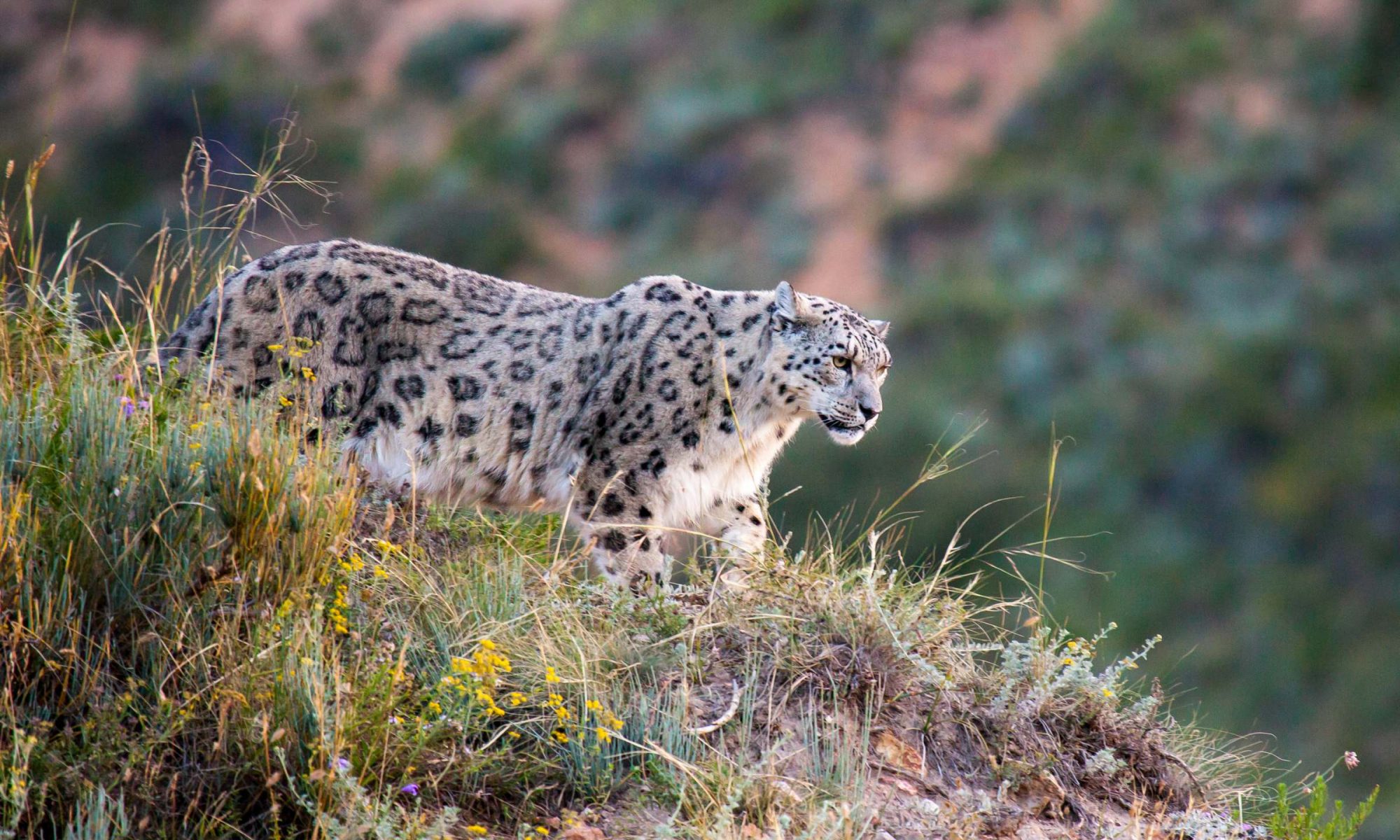
A snow leopard wistfully looking over his mountain domain – camera trap picture retrieved from the 2025 expedition
Our behind-the-scenes preparation for this year’s Kyrgyzstan snow leopard conservation expedition has been going for months. It now enters the final phase. As our citizen scientists finalise checklists and pack their gear, so are we.
Team 3 has been a very productive 12 days with many highlights, a little ermine hopping through camp being one of them! We’ve had nights under the stars in bivvy bags watching shooting stars and the Milky Way, river dips, yoga, a successful Archaly valley reccee and of course lots of research.
Group 3
Ermine at base camp
The first few days as always, we focused on training, getting familiar with equipment, ready for driving off road, field surveys and camera trap servicing and placement. This also allows time to acclimate, especially for those of us that live at a much lower altitude for much of the year (yours truly). Getting to know the field guide is important too and we learn that identifying scat, prints, tracks, scratchings etc. is a dark art.
The results of this group were:
No more snow leopard pictures on this group, because all camera traps had been serviced recently. But two more potential snow leopard scats have been added to this year’s collection in the final group, bringing the tally to six total. Talking about scats: The first batch from group 1 has come back and all the high-mountain ones were indeed snow leopard; only the lower altitude one collected next to the ibex skull was not, so a very good result for group 1. Well done!
Over the three groups we have managed to survey over 97 cells on my last count, this has involved some big days out along rivers, through deep-cut gorges, up steep scree slopes, over majestic ridges and through alpine meadows awash with cranesbill, alpine aster and edelweiss, an abundance of wildflowers typical. In the background a scattering of prominent glaciers provide much needed water… But I digress. The overall headline results of the expedition are:
Expect the full expedition report with all details and conclusions in a few months.
Camera traps are now placed in and around three valleys; those cut by the Burkhan, Archaly and Jyluu Suu rivers. We have also had some very interesting interviews. You will need to wait for the report for more on that.
When the time finally came to pack down camp, swifts were frantically foraging overhead and the wildflowers had gone to seed. It’s amazing how short the alpine season is here. Emil, our scientist left with our equipment including yurts, showers and kitchen destined on the penultimate day, so we were back to wild camping for our final night. The last morning involved an early breakfast, a quick final goodbye to the local herders who have cooked and kept us fed many of the evenings here and then we were on our way. The journey to Bishkek went smoothly.
So it is now time for reflection and maybe a toast to the season that has been. A heartfelt thank you to all our citizen scientists in this final group for their huge effort. Thank you everyone for keeping high spirits when the weather grounded us, for playing a role in keeping expedition base camp running smoothly and of course for your data collection activities. Also, your company has been fantastic. Thank you to Johnny for all the guidance and Sofia for your delicious salads and desserts and of course all your help around camp, thank you Matthias for the training and taking me on as part of the Biosphere Expeditions team. Most importantly, thank you to all the citizen scientists this year, for without you, this couldn’t happen. Rahmat!
Darran Keogh Expedition leader
I leave you with some more impressions and a couple of feedback videos:
Hello from base camp. The sun is shining, nights are cool with morning frost that is quick to thaw with sunrise.
All is well here, we are surveying many 2×2 km cells in and around the valley, even a requests from our citizen scientists to revisit and resurvey areas they reckon hold promise! We had some interesting local interviews today with the usual hospitality and offers of local food and drink and talk of close encounters with Tien Shan bear, wolf and snow leopard.
Today is our rest day. Monday we head to beautiful and remote Archaly valley (see pictures) to set up camp for surveys there and an extended reconnaissance for 2026. We look forward to bringing you more details at the end of the expedition, after we get back to Bishkek at the end of next week.
And just like that, the second Tien Shan expedition group of 2025 has concluded. A whirlwind of a fortnight with higher temperatures and more sunny days than any of us could have imagined – with the occasional blizzard thrown in for good measure.
All camera traps placed in 2024 have now been either serviced or retrieved and an extra seven camera traps placed. We have set up “stations” at three locations, which have previously yielded great results.
There were more snow leopard captures on the 2024 cameras, in fact we recorded four more snow leopard events. Here are the best ones:
And of course we recorded other animals too and achieved the following in group 2:
One highlight was the direct sighting of a Mongolian wolf with prey in its mouth:
Other animals posed for our cameras too:
After a severe weather warning thwarted our original plans for overnighters between Monday and Wednesday, we managed to squeeze in a brief overnight expedition on Thursday evening.
All in all, another very successful group. I will now hand over the expedition leader baton into the very capable hands of Darran – he is about to enter his third Tien Shan expedition group and now knows the valley like the back of his hand. I must thank each and every participant from this year and previous years: your motivation and hard work has afforded us incredible results that are far beyond our expectations. I hope to see you all again in the field again one day soon.
Group 2 has settled in and is collecting good data. All but two camera traps have now been either serviced or collected, once again yielding snow leopard images.
The last two camera traps will require an overnight trip, but we have some severe weather warning for the next couple of days, so won’t be venturing deep into the mountains.
We have also set up two new camera traps at a new location, in this study site’s first “camera trap station” configuration. This is when two camera traps face a pinch point through which animals pass. The aim is to take pictures of animals – particularly snow leopards – from two sides simultaneously as this makes it easier to identify individuals through their unique coat spot patterns.
We have also found snow leopard tracks
and logged our first-ever direct sighing of a Mongolian wolf – carrying a small bird kill – by a group on cell survey.
All field data are up to date and the weather so far has been good, with clear warm days and no rain, though this is about to change. This group has so far surveyed 13 cells surveyed and conducted two interviews.
In other developments in Europe, the first batch of suspected snow leopard scat from group 1 has now been sent for DNA analysis to a specialist lab in Germany. We should have results within a few weeks.
Group 2 is now safely at base camp, after a 9 hour journey on progressively smaller to no roads. Today training begins.
Following a successful first group, we hope now to get more local interviews, more cells surveyed and camera traps serviced and set and we will hopefully be reporting back with more positive data at the next opportunity.
Group 1 is back from the field – and what a start it was, exceeding all expectations of what the 18 camera traps left in the field by last year’s expedition would yield. Almost every camera we toiled up to at around 4000 m caught snow leopards. Preliminary analysis of pelt patterns yields 8+ individuals, a result we can hardly believe ourselves (and have enquired with colleagues about for confirmation). One camera in particular yielded a spectacular photo:
But there were many others too:
Of course the camera traps not only caught snow leopards, but also many other species such as this rare manul / Pallas cat
A probably even rarer (because they have all been poached out) argali mountain sheep
Ibex
Wolf
An incredibly hardy “yeti” marmot up at 4000 m
Fox
Yak
A curious red-billed cough
Many Himalayan snow cock prancing about
And a lammergeyer photographed by a camera trap that was knocked over (by what we don’t know) and recorded over 10,000 pictures of moving clouds (thanks for going through all of them Aurélie), but also this vulture
But it was not just all about camera traps. We also surveyed cells lower down, conducted interviews and re-affirmed good relations with the local people, ran overnighter surveys and reconnaissance trips into the neighbouring valleys and so much more, yielding this quick summary of results, presented to the team by our local scientist Emil at the end of group 1’s efforts
And what an effort it was! None of this could have been achieved without our 14-strong team of citizen and professional scientists and staff. Thank you to you all and so very well done.
I leave you with impressions of our work, camp and the mountains, as well as feedback from some group 1 participants, and hand the expedition leader baton over to Jonny, who will meet group 2 at the Futuro on Monday.