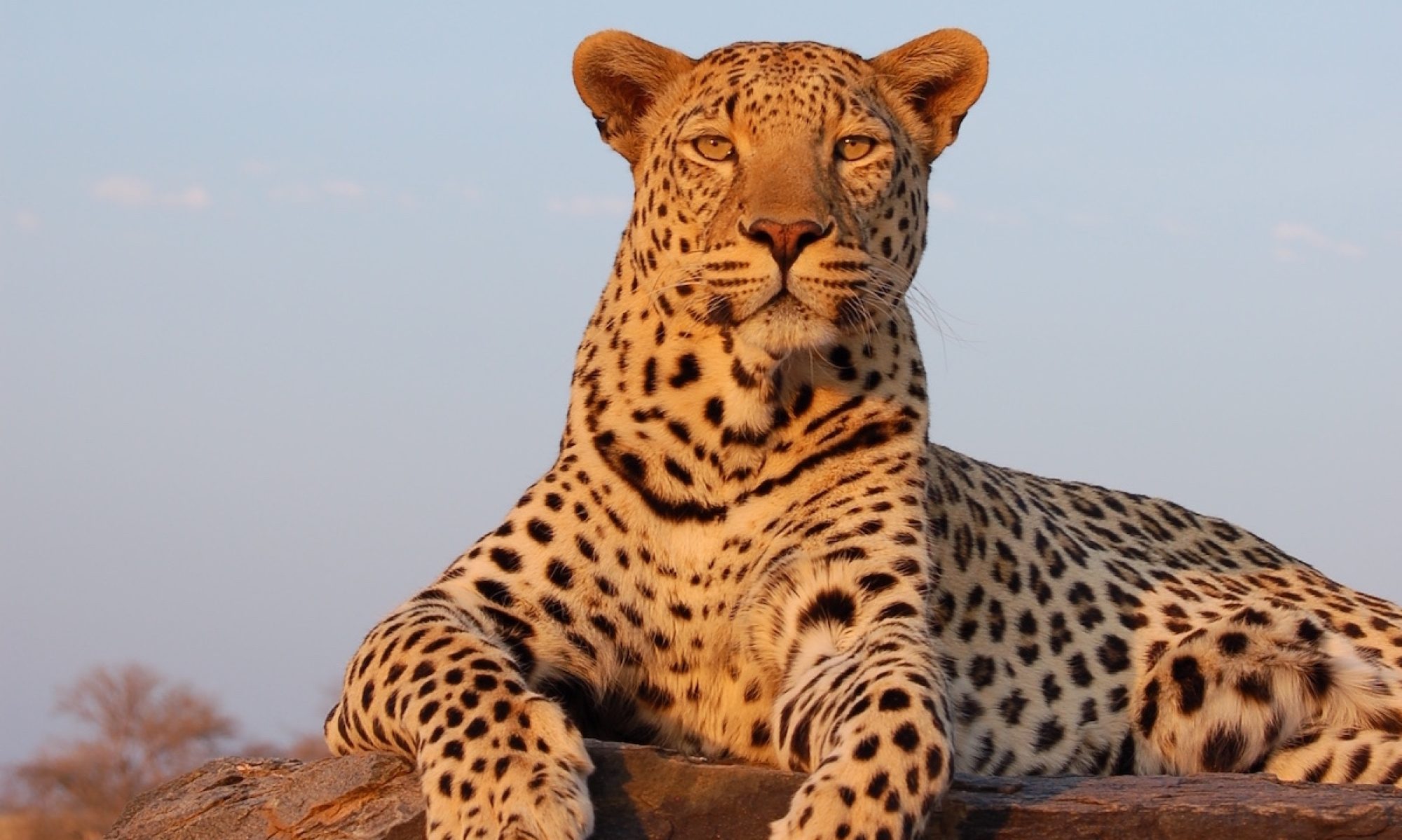
Update from our conservation holiday volunteering with jaguars, pumas, ocelots, primates, macaws and other species in the Peru Amazon jungle (www.biosphere-expeditions.org/amazonia)

Hello everyone and welcome to the Amazonia 2016 expedition diary!

My name is Malika (Fettak) and I will be your expedition leader on the first group and then Catherine (Edsell) will take over for group 2.

Malika Fettak
Malika Fettak
Catherine Edsell
Catherine Edsell

This year the project will return to where Biosphere Expeditions started off in Peru in 15 years ago: The Piedras Biodiversity Station in Madre de Dios region. The station, which was originally part-financed by us, sadly fell into disrepair in the past, but now has a new owner giving us the chance to come back for more research work.

Piedras Biodiversity Station

It will be a return to beginnings too for Dr. Alan (Lee), the expeditions’ head scientist, who gained his PhD in the Amazon and worked with our expeditions before moving back to his native country South Africa. For me, it will be leading the project for the fourth time and handing over to Catherine after the first week. We will also be working together with local staff I will introduce you to once I have met everyone personally on the ground.

Alan Lee
Alan Lee

We have been busy over the last few weeks preparing logistics, expedition kit, research equipment, paperwork, datasheets and the research manual. Innumerable e-mails have been exchanged between continents. Catherine, Alan & I will each bring a share of the equipment, some more equipment boxes stored in Lima will be picked up on the way. Flying in from different directions (UK, South Africa, Germany) we will meet on Wednesday in Puerto Maldonado – keep your fingers crossed that none of us gets stuck on the way! Our schedule on the ground is pretty tight. If things work out as planned we will go shopping on Wednesday afternoon in Puerto, proceed to Piedras Station on Thursday and set up base. I will return to Puerto Maldonado on Saturday for last minute shopping and meet team 1 on Sunday morning.

I hope your preparations are going well. Please don’t forget to bring a strong torch (600 lumens minimum) for night surveys!

I will be in touch again once I have arrived in Puerto.

That’s it for now – I’ll keep you updated!

Regards

Malika

Continue reading “Update from our conservation holiday volunteering with jaguars, pumas, ocelots, primates, macaws and other species in the Peru Amazon jungle (www.biosphere-expeditions.org/amazonia)”

From our Sumatran tiger conservation volunteering holiday in Indonesia (http://www.biosphere-expeditions.org/sumatra)

The 2016 expedition is wrapping up and we have just arrived back in Pekanbaru after 12 nights in the field. The second group enjoyed brilliant blue skies and endless sunshine throughout their stay in Rimbang Baling reserve. This was great for afternoon swims in the river and everyone’s skin has turned golden. However, the lack of torrential downpours that the first group experienced means the river level has been very low. Going upriver has been slow and a lot of hard work, we often had to get out of the boats and push them across shallow rocks or walk along the shore while the boat driver worked hard to get the boat up the shallow rapids. What a couple of weeks ago took an hour to travel took us over two hours. It meant long days and everyone worked hard to get back the camera traps and survey the rainforest.

A second overnight group went to Aur Kuning to retrieve camera traps. They surveyed two areas the first day climbing to over 350 meters to retrieve the first camera and then another 260 meters for the second. “My favourite thing about the trip was sitting down on the second hill having a rest,” laughed Horry when they returned. “I really enjoyed spotting a tawny fish owl. It was unafraid and right next to us,” Peter said.

We also visited the school in Muara Bio village. This school only has eight pupils, but they were very attentive during Febri’s presentation about conservation and enjoyed the many games the group members played with them afterwards. The NASA pins Bob had brought from the US and the soft toy kangaroos Penny and John brought from Australia were particularly appreciated.

During the 2016 expedition we have surveyed sixteen cells, covering some 64 square kilometers. Most areas were surveyed twice, and seventeen camera traps were deployed. All areas surveyed showed presence of wild pigs, suggesting prey for tigers is common. Signs of illegal logging was also common within the reserve. Interviews with fifteen villagers along the Subayang river revealed that almost everyone is wary of tigers although most interviewees recognised that they are important and would help reduce the wild pig numbers as well as attracting tourists to the area. Despite the survey times being short and the high presence of humans in the study area, a large number of species including tiger prey were repeatedly recorded, pointing towards relatively good and intact habitat conditions in the areas of RB that were surveyed by the 2016 expedition.

I am now in Pekanbaru wrapping up and storing equipment with WWF until next year. Thank you to all our partners and participants for making this expedition a success. This project could not happen without your efforts and committment. Tigers are few and far between, as two years of our expedition work here have shown, and they need all they help they can get. If they are to survive, it will be in areas such as Rimbang Baling, where they can retreat into the farther reaches of a large reserve, away from humans and their logging, poaching and plantations. But with the support of the local people, it seems they could even return closer to the villages, where our research suggests there is a good prey base. Our work here is, amongst other things, to sway local attitudes in favour of tigers. And this kind of work is a generational game, so we are here to stay and look forward to many more years of working with WWF in tiger conservation in this beautiful corner of Sumatra. Thank you everyone for making this possible.


From our Sumatran tiger conservation volunteering holiday with tigers in Sumatra, Indonesia

From our Sumatran tiger conservation volunteering holiday in Indonesia (http://www.biosphere-expeditions.org/sumatra)

The new group 2 arrivals have settled into the daily routine of Subayang field station, waking up to the call of gibbons and the daily scientific survey work. We have also been collecting the camera traps that the previous group deployed two weeks ago. So far they have captured; mouse deer, barking deer, pig-tailed macaques, wild pigs, poachers and bird catchers.

On Wednesday half of the group went to the village of Aur Kuning, three hours upriver from the station, to survey two areas we had not yet visited. One which was far into the jungle and they sure had some stories to tell upon their return. “There was no path, we had to cut our way through the jungle. It was very steep, and very very slippery,” says Brodie.

Ulva, one of the local placement participants, laughs as she tells us, “Everyone fell over many times on the slippery rocks and steep hills.”

The group spent the night in the village of Aur Kuning, and by the sound of things they were very well looked after. “It was all very good. The food was good and the house we slept in was good too,” reports a tired but happy John.

The other half of the team stayed behind and surveyed areas closer to the station recording long-tailed macaques, wild pigs, sun bears, water buffalo and siamangs. We also saw signs of illegal logging and traps set by poachers to catch song birds. Song bird competitions are common in the towns and therefore so is the demand for wild song birds. Birds are judged on the length and beauty of their song and the owner takes home a price.

Today we are having a well-deserved day off. It is tough work surveying the densely forested and hilly terrain within the Rimbang Bailig Reserve. But a day’s rest and a refreshing swim in the waterfall should see us fit to get back into the rainforest again tomorrow….


From our Sumatran tiger conservation volunteering holiday with tigers in Sumatra, Indonesia

From our Sumatran tiger conservation volunteering holiday in Indonesia (http://www.biosphere-expeditions.org/sumatra)

The first group of our Sumatran Tiger expedition has come to an end. It has been a successful 12 days surveying a total of fourteen cells for tiger prey species and signs of illegal logging and poaching. We have also placed a total of seventeen camera traps, which the next group arriving on Sunday will be busy retrieving. It was often tough going, tromping through deep water, up steep muddy hills, cutting our way through dense jungle, and all whilst leeches were enjoying our blood. What a great effort by all!

Interviews were also conducted with members from villages, or rubber plantation workers that we met in the field. Most local people are scared of tigers, but there seem to be strong mythical beliefs that tigers are the guardians of the forest and that when a human is killed by a tiger, it is because they have done something bad.

“I wish there were more tigers as there are too many bad people these days,” said the vice-headmaster at the elementary school on Batu Sangan village!

The large number of wild pigs is also a reason that many of our interview subjects expressed a wish for increased tiger populations. We see signs of wild pigs everywhere and often spot them along the river. The locals do not hunt wild pigs due to their Muslim faith, and wild pigs are a nuisance as they eat the villagers’ crops.

We also visited two schools, talking to the children about tigers and the importance of their habitat and prey in the area. Illegal logging and poaching for deer is common and on the fringes of the Rimbang Bailing Wildlife Reserve forest is being clear-cut for palm oil plantations. Our school visits were well received, and both teachers and children were excited to see us.

Now a day to recharge and reorganise in Pekanbaru before the next group is ready to head into the jungle on Sunday morning.


From our Sumatran tiger conservation volunteering holiday with tigers in Sumatra, Indonesia

From our scuba diving conservation holiday with whale sharks and coral reefs of the Maldives (http://www.biosphere-expeditions.org/maldives)


We have completed the week with six full Reef Check surveys under our belt and some fascinating variations in what we are seeing underwater. Jean-Luc, our expedition scientist, formed a theory early on in the week that it was the corals on the outer reefs that were doing better than the more sheltered inner-reef corals, and it is a theory that has held true in the areas that we have been surveying.

Jean-Luc getting ready to dive

We have gone from Rasdhoo at the north end of the North Ari Atoll, we have dived Bathalaa, Kuda Falhu, Dega Giri and all the way to Holiday Thila in the South Ari Atoll. Quite a journey involving a lot of travelling between sites in some lumpy seas, but with a great group of divers as company and some really lovely food to eat, it has not felt like that much of a journey.

Our week ended with a whale shark survey, led by Iru who is one of the local placements on the boat who works for the Maldives Whale Shark Research Programme.

Iru explaining whale sharks

She talked us through the work that she does and how we could help with the survey, but unfortunately we didn’t see a whale shark this year. Instead we added in a lazy drift dive on the outer reef, which looked really healthy and Jean-Luc managed to throw in an extra substrate survey as he could not resist adding to his data (he thinks of little else)!!

The week was completed by a visit to Dhigurah Island with Aru (another of our local placements) leading the group, showing us his home.  What a beautiful island! We had a fascinating visit, seeing the school and meeting Aru’s biology teacher, seeing the dive base where Aru (aged only 19) is completing his diving instructor training, and seeing how the local Maldivians live. Thank you Aru (and Iru, who is is based there as part of her whale shark work) for showing us your home!

Dhigurah Island
Dhigurah Island

All that was left on Friday was to take the boat back up to the north where we began. The captain set the boat off early for what should have been a five-hour journey, but with force 7 winds picking up, it took a lot longer (some vessels could not get to Male’ that morning).  Thanks to our captain for getting us safely back with everyone leaving on time for their flights. And thanks to all the team for a great week.  We achieved a lot in a week, with everyone working hard, but we also had a lot of fun – the night time chair fishing will stick in my memory! Final thanks go to Shaha for her dedicated contribution to the science tuition, to Jean-Luc for doing an amazing job working far too hard throughout the week, and to our two dive masters, Chakku and Atho, for helping out with the survey dives and contributing their wealth of local knowledge. And finally the team, who could have just gone on an ordinary dive holiday, but instead chose to go diving with a purpose, giving their time and money for reef conservation in the Maldives, where it is badly needed.

The team
The team

All the best to everyone and hope to see you all again.

Continue reading “From our scuba diving conservation holiday with whale sharks and coral reefs of the Maldives (http://www.biosphere-expeditions.org/maldives)”

From our Sumatran tiger conservation volunteering holiday in Indonesia (http://www.biosphere-expeditions.org/sumatra)

Everyone arrived safely at base on Sunday. After a couple of days of training, we’ve had our first field surveys, all successful and good fun. We’ve had sunshine, evidence of animals, torrential rain, amazing swims in the river and much more. Everyone is well and enjoying their time. A sample survey result is below. More in 10 days or so, or earlier, if I can get a message through 😉

=====

CELL AND SURVEY SUMMARY

AB130 (village cell) 

Surveyors: Giovanni, Irfan, John, Steve, Matthias

Survey date: 19 July 2016

Cell description:

This cell is east of the village of Tanjung Belit with some parts of the village extending into the western edge of the cell. The border of the Rimbang Baling Wildlife Sanctuary runs through the cell and the sanctuary starts just east of the village. There are good rubber plantation paths that lead into and across the cell, which is not overly hilly. There was also a relatively wide river with good sand or rubble banks to walk on.

Survey description and access:

Our survey was for about 3.5 km, along rubber paths and the river, which took us about 3 hours to cover. This was an easy cell to survey with flat ground and good paths or rivers to walk along. Access to the cell is simply via Tanjung Belit and then walking into the direction of the cell along a concreted path until the cell starts and then onwards on rubber paths and along the river.

Human impact:

There where rubber plantations everywhere we went and some evidence of logging, such as stumps of large trees and an abandoned logger’s camp. We also heard some chainsaw noise. Once the concreted village path ended, so did the litter and humans, and we only encountered one rubber worker, as well as a couple collecting tree bark for drying and selling onto a factory to produce insect repellent.

Animal evidence:

Evidence of wild pigs is common, particularly rootings. We discovered one mineral lick in the cell with evidence of good use, which we set a camera trap at. We also encountered a local breed of cattle, the sepi cow, which was domesticated in Java from a forest bovine only 50 or so years ago, according to Febri. These roam freely in the forest and are periodically claimed by their owners. We encountered two of them, about 2 km as the crow flies from the village, wearing bells and running from us as soon as they became aware of our presence. Other than widespread evidence of wild boar and the sepi cows, we saw water buffalo, macaques, goats and chicken, the latter three all close to or in the village.

Human/tiger dimension (interviews): 

The above suggests that the villagers do not fear tiger attacks in this cell. This was corroborated by an older man we met when walking into the cell. He did not want to do a formal interview, but he told us that when he was a child, villagers used to send tiger hunting parties into the forest once a week. He never saw a tiger himself and we estimated him to be around 60, so the tiger hunting parties would have happened in the 1960s.


From our Sumatran tiger conservation volunteering holiday with tigers in Sumatra, Indonesia

From our Sumatran tiger conservation volunteering holiday in Indonesia (http://www.biosphere-expeditions.org/sumatra)

We have arrived at Subayang Field Station and started some initial surveys to get the lay of the land. It is tough going through the jungle and despite following a creek bed it took us one hour to cover only one kilometer. We encountered armies of leeches and we all donated some blood today, luckily the little buggers are harmless. WWF is building a water-lab next to the station, so there is some construction going on at the moment, but disturbance should be minimal as they will only work the heavy machinery when we are out in the field – or so we hope and have been told. Two girls from Tanjung Belit, the closest village and jump-off point for the station, Elsi and Ari are cooking us our food. It has been absolutely delightful so far, you are in for a treat. Now I look forward to meeting the first group in Pekanbaru on Sunday morning.


From our Sumatran tiger conservation volunteering holiday with tigers in Sumatra, Indonesia

From our scuba diving conservation holiday with whale sharks and coral reefs of the Maldives (http://www.biosphere-expeditions.org/maldives)

Everyone passed all the tests, both land-based and the in-water ‘pointy’ tests, where the trainers do indeed point at things and ask people to write on their slates what they think they are. We also completed our first Reef Check survey at Rasdoo, an exposed outer reef site, and encouragingly reefs were less affected by bleaching – the first reef check survey dive acts as a kind of final dress rehearsal, but if all goes well we use the data. It all went well.

One of our fish teams, however, did look a bit distressed when they came up from the dive. Rajiv had a wide-eyed stare and blank expression and when asked what happened, he just said that everything was ok until near the end and then ‘I was overwhelmed’.  ‘What do you mean?’. ‘I was overwhelmed by fish!!’. It seems that the abundance was a bit of an issue. So we’ve done a bit more work on estimating schools of fish in case it happens again…

Lots of fish...
Lots of fish…

The dive itself was a really nice one, with a relatively flat reef down to about 4 m and then a wall going down below our survey teams. With low current and good visibility in our favour, the work was done very efficiently by all and several teams managed to see the eagle rays, turtles and sharks that cruised past and even lay undisturbed (in the case of one of the turtles), right next to our transect line.

Diver
Diver

It seems the faster-growing species have been more severely affected than slower-growing massive species. It appears that even within the same massive species (e.g. porites), some are much more affected than others, at the same depth, side by side. Is this because some have bleaching resistant zooxanthellae (their symbiotic algae) and some don’t? We don’t know the answer, but we are trying to find out…

Bleached and unbleached side by side
Shaha and Atho
Shaha and Atho

Continue reading “From our scuba diving conservation holiday with whale sharks and coral reefs of the Maldives (http://www.biosphere-expeditions.org/maldives)”

From our Sumatran tiger conservation volunteering holiday in Indonesia (http://www.biosphere-expeditions.org/sumatra)

So today was the usual whirlwind of checking equipment, shopping, repacking, reviewing datasheets and the research, safety, evacuation and all sorts of other plans A, B, C and D.

Ida, equipment and to do board

We are mostly done – perhaps just another morning tomorrow – and then off into the field. Our research plan for the expedition is:

1. Conduct wildlife survey (tiger and other species) in the following cells. Surveys include visual transect surveys as well as camera-trapping. Cells include those with and without villages for comparative analysis of the areas of tigers and their prey animals prefer.

Cells with villages in them: W137 or X136, Y131, Y132, Y135, Y136, Z131, AA130, AB130

Cells without villages*: X131, X132, X133, X134, Z134, AA132, AA135, AB135

*surveying these cells is likely to involve multi-day trips, carrying tents, hammocks and food, and staying with a local community. Participants can volunteer for these multi-day trips.

2. Conduct interviews with local people in the area (not necessarily in cells above) to ascertain human-tiger encounters and conflicts, as well as attitudes of local people towards the tiger.

3. Visit schools in the area (not necessarily in cells above) and conduct tiger educational activities, including distribution of tiger educational materials.

4. Document illegal logging and poaching activities (such as snares, traps, gun cartridges, etc.) for analysis by WWF and to be passed on to the national park authorities and rangers.

5. Work with local village headmen and communities to establish community bases for multi-day surveys. Also work with headmen and villagers to identify community members who can be trained to help with community-based tiger surveys using camera traps and other survey methods. The aim is to train and establish teams of community surveyors to assist in year-round tiger surveying and anti-poaching activities.

6. Opportunistically survey for birds, using existing skills amongst participants, and create a bird list as another indicator of local biodiversity.

And finally, for good measure, some pictures from the Red Planet breakfast room. Given this is a fairly religious Muslim country, where talking about sex and alcohol is not very high on the agenda, we are guessing that not many people realise at all what’s hanging up on the walls.

3 4


From our Sumatran tiger conservation volunteering holiday with tigers in Sumatra, Indonesia

From our Sumatran tiger conservation volunteering holiday in Indonesia (http://www.biosphere-expeditions.org/sumatra)

Greetings from Pekanbaru. Ida has landed, suitably zombified after a 42 hour trip and three flights from Seattle via China and Jakarta. She’s checked into the Red Planet hotel and tomorrow will go to the WWF offices to prepare the expedition, then go shopping (amongst other things for a SIM card, the number of which we will give you) and do all the little things that need to be done.

20160711_184753
Ida barely checking in… 😉

It’s 30 deg C in Pekanbaru and humid, as expected. We’ll be back with more news tomorrow, but before we go we wanted to share this gem with you: A new pizza place has sprung up opposite the Red Planet.

Yes, you read right, it’s “Panties Pizza”. And it gets better when you read the tag line…

…”I love Panties, as I love U”?!? Perhaps they slipped in the dictionary from “pasta” to “panties”?!….


From our Sumatran tiger conservation volunteering holiday with tigers in Sumatra, Indonesia