Award-winning, non-profit and ethical wildlife conservation volunteering. Advancing citizen science and conservation since 1999 – for nature, not profit.
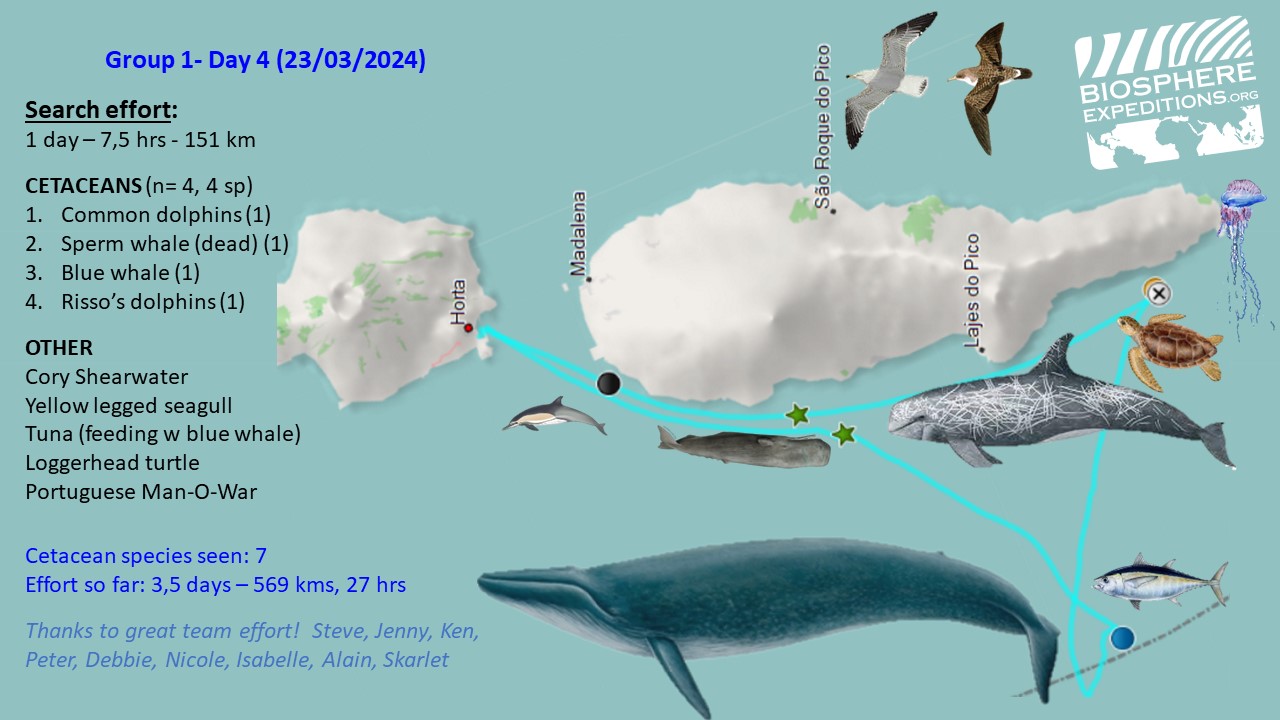
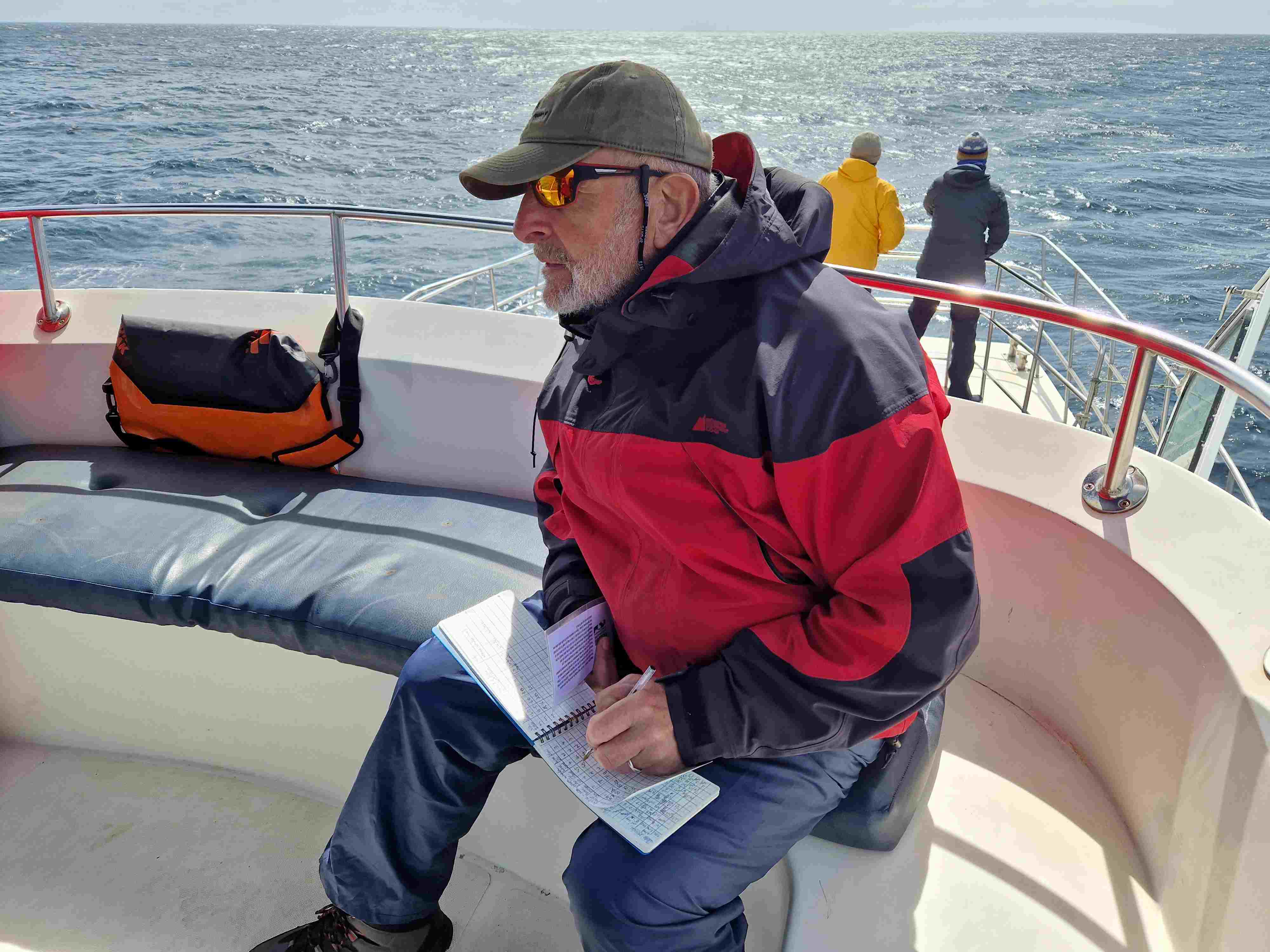
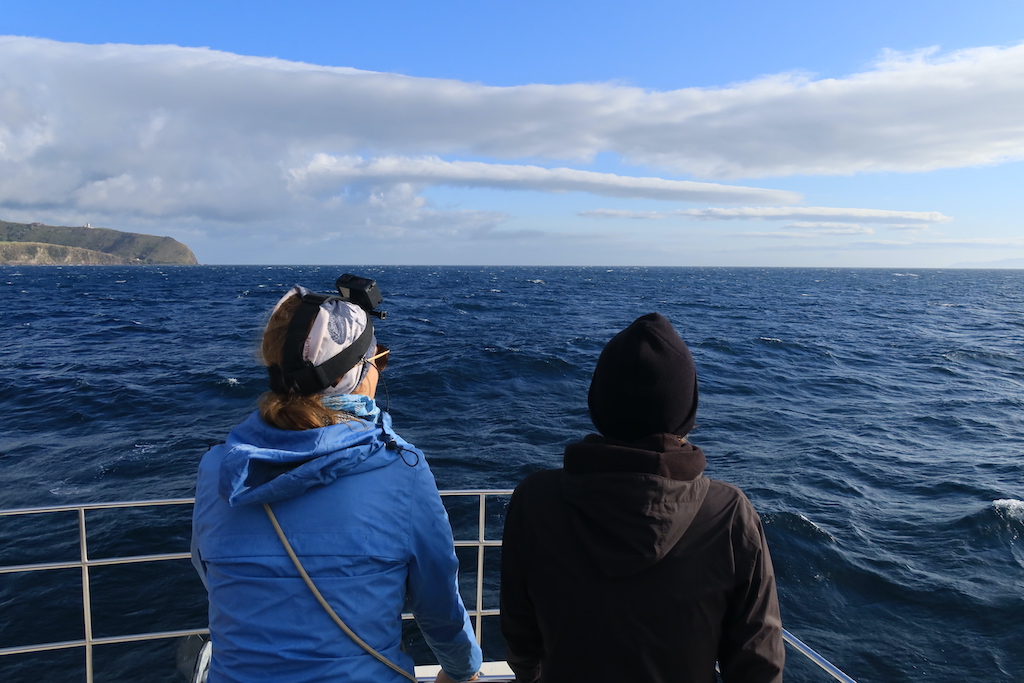
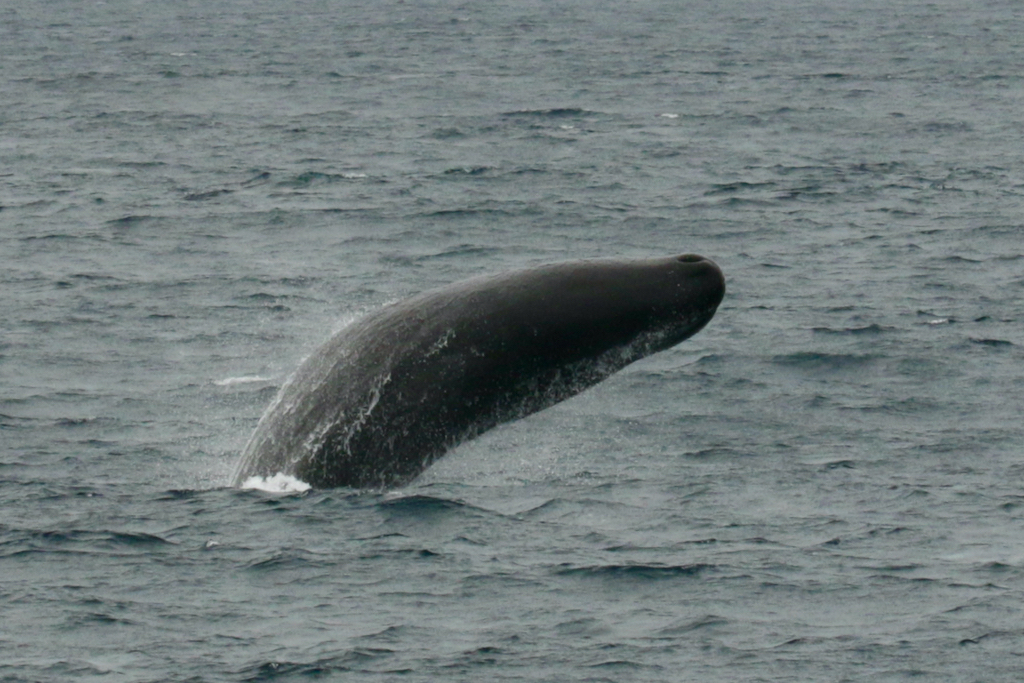
On Saturday we had sea state 4 with higher waves, strong winds and a rocking boat. The lower deck team had to hold on tight and put their balance skills to the test. Also on the upper deck, taking data when holding on can be tricky, but the team managed in the end. With the north-eastern winds, we headed out again to the south of Pico and came across a dead sperm whale floating. The cause of death is unclear. Eventually the carcass will sink to the bottom in what is called ‘a whale fall’ and provide food for a whole set of organisms during the different stages of decomposition at depth for a long period of time, up to as long as 10 – 50 years. We have yet to spot our first live sperm whale.
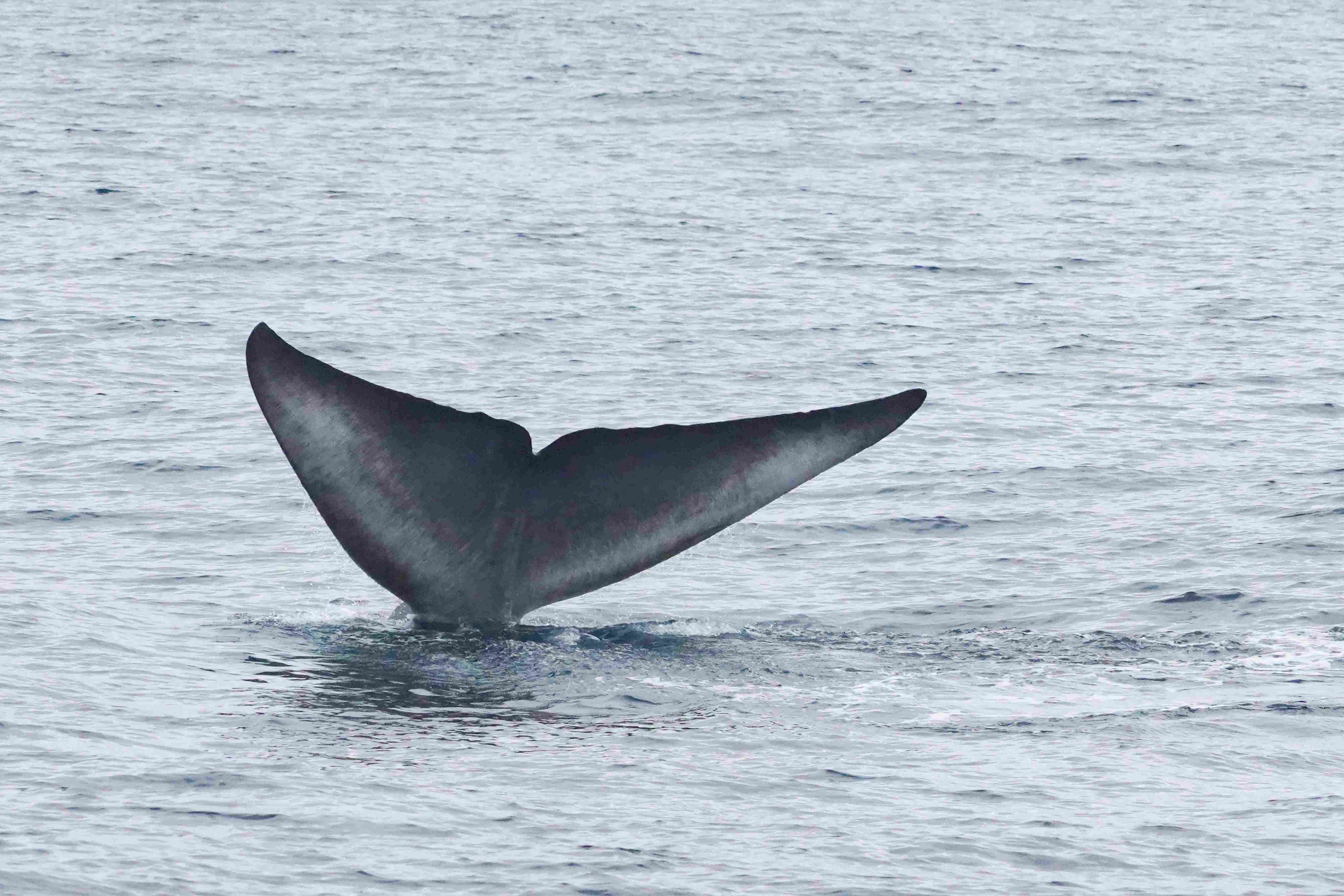
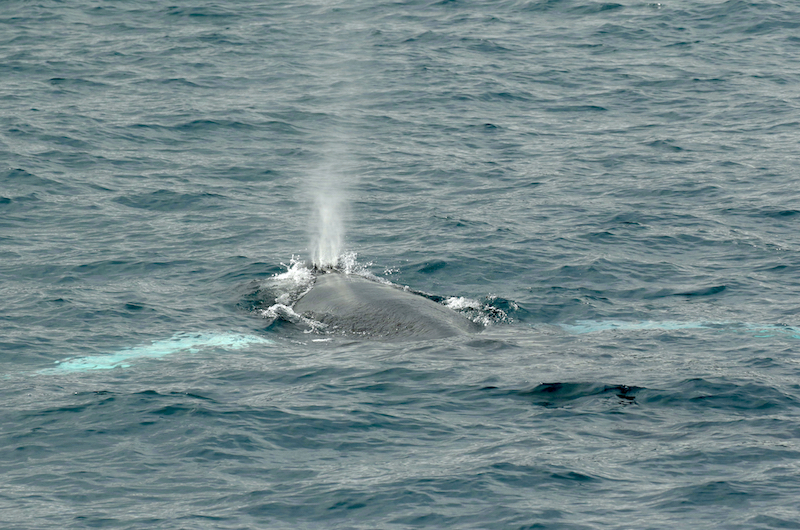
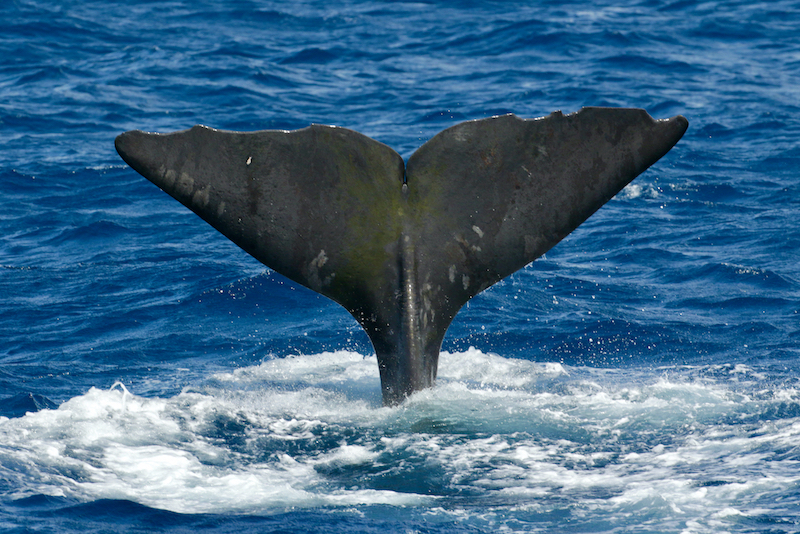
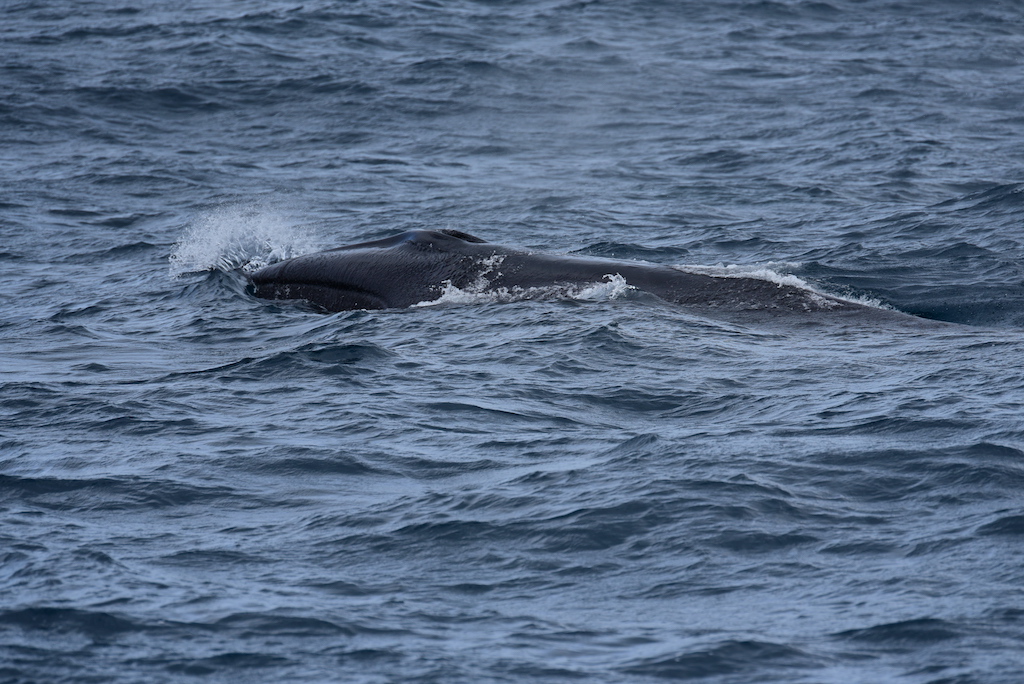
Further offshore we managed to get photos of a blue whale. Turned out it is still the same individual we saw on our first day, hence there must be food around. This individual was last seen around Azores in May 2022.
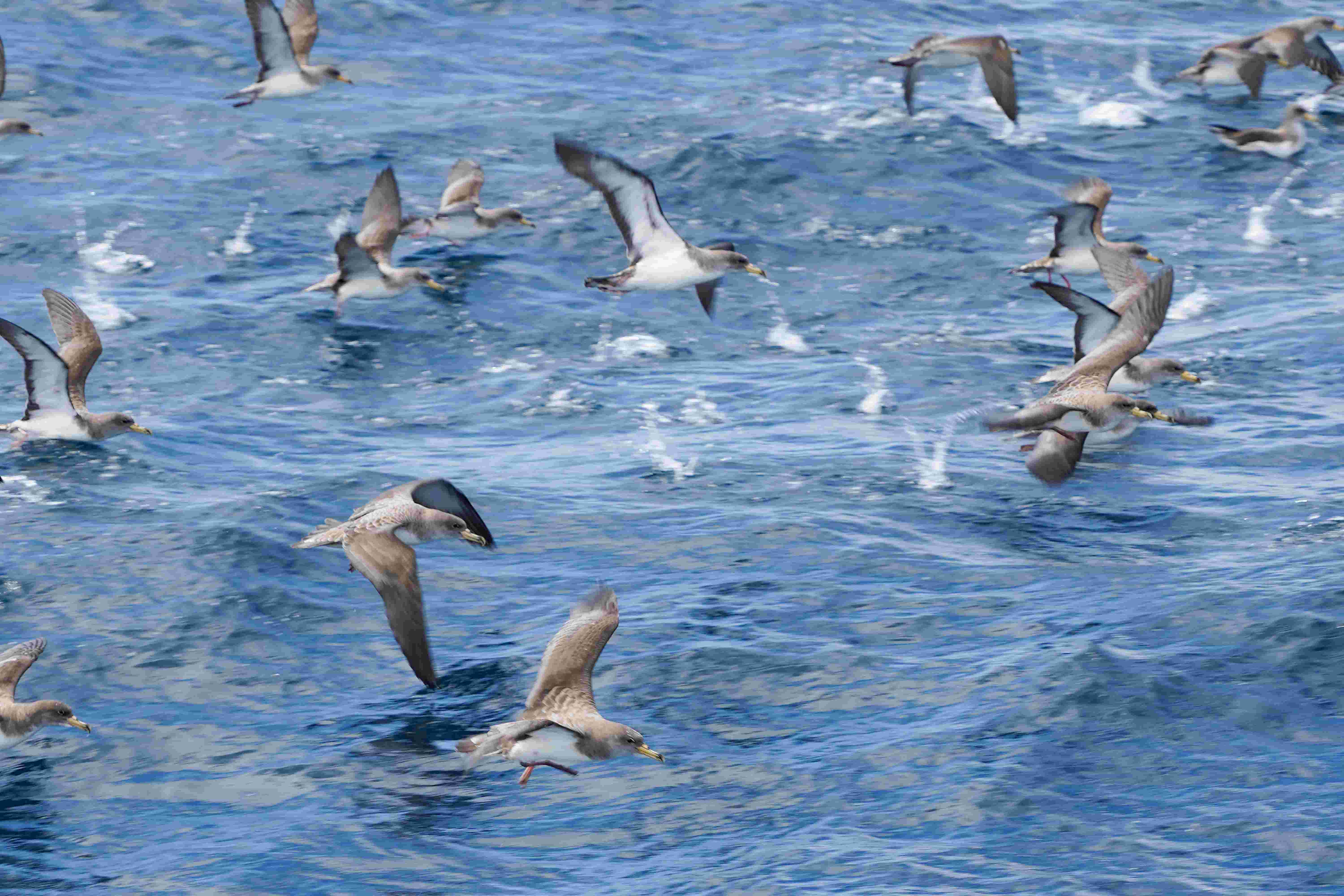
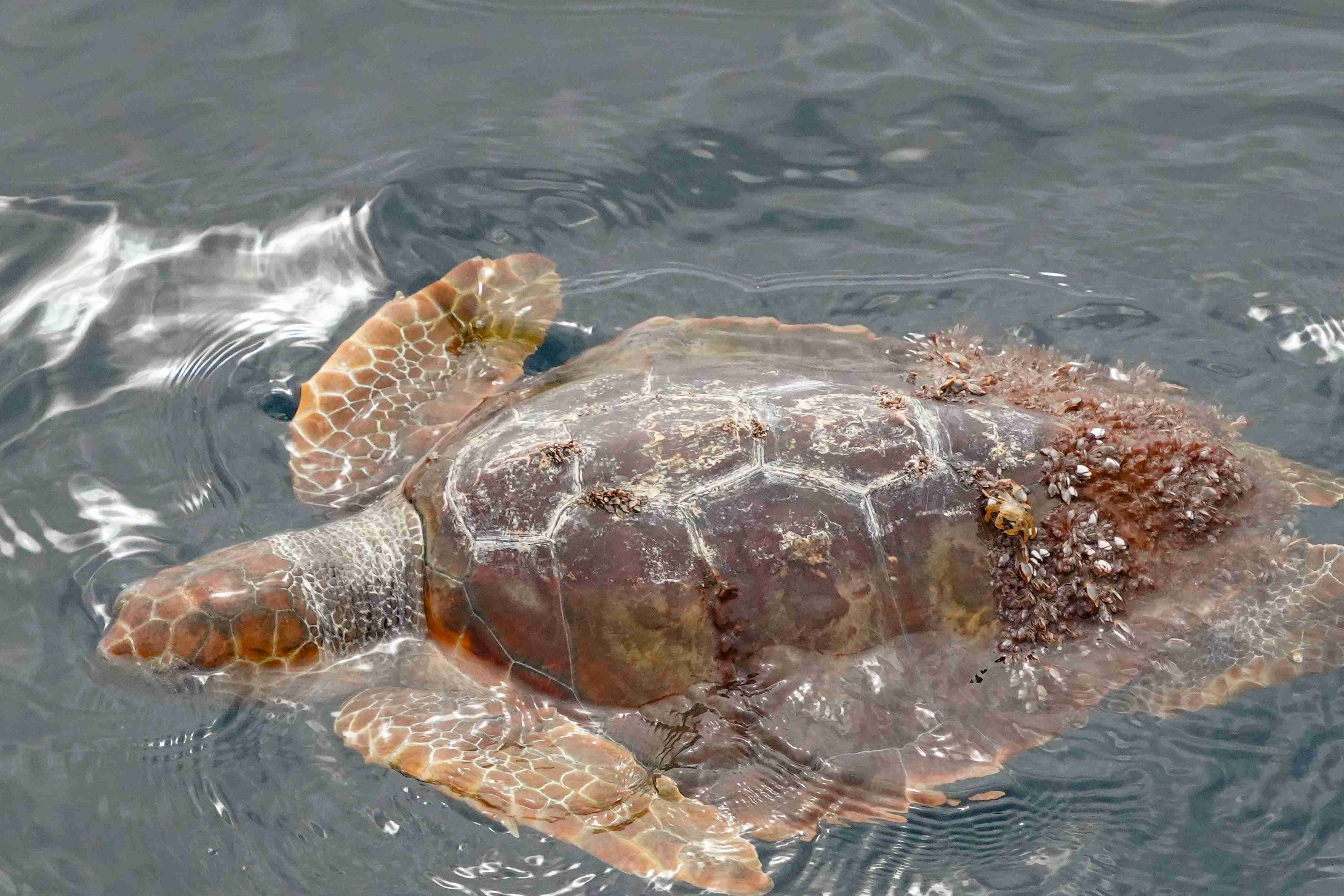
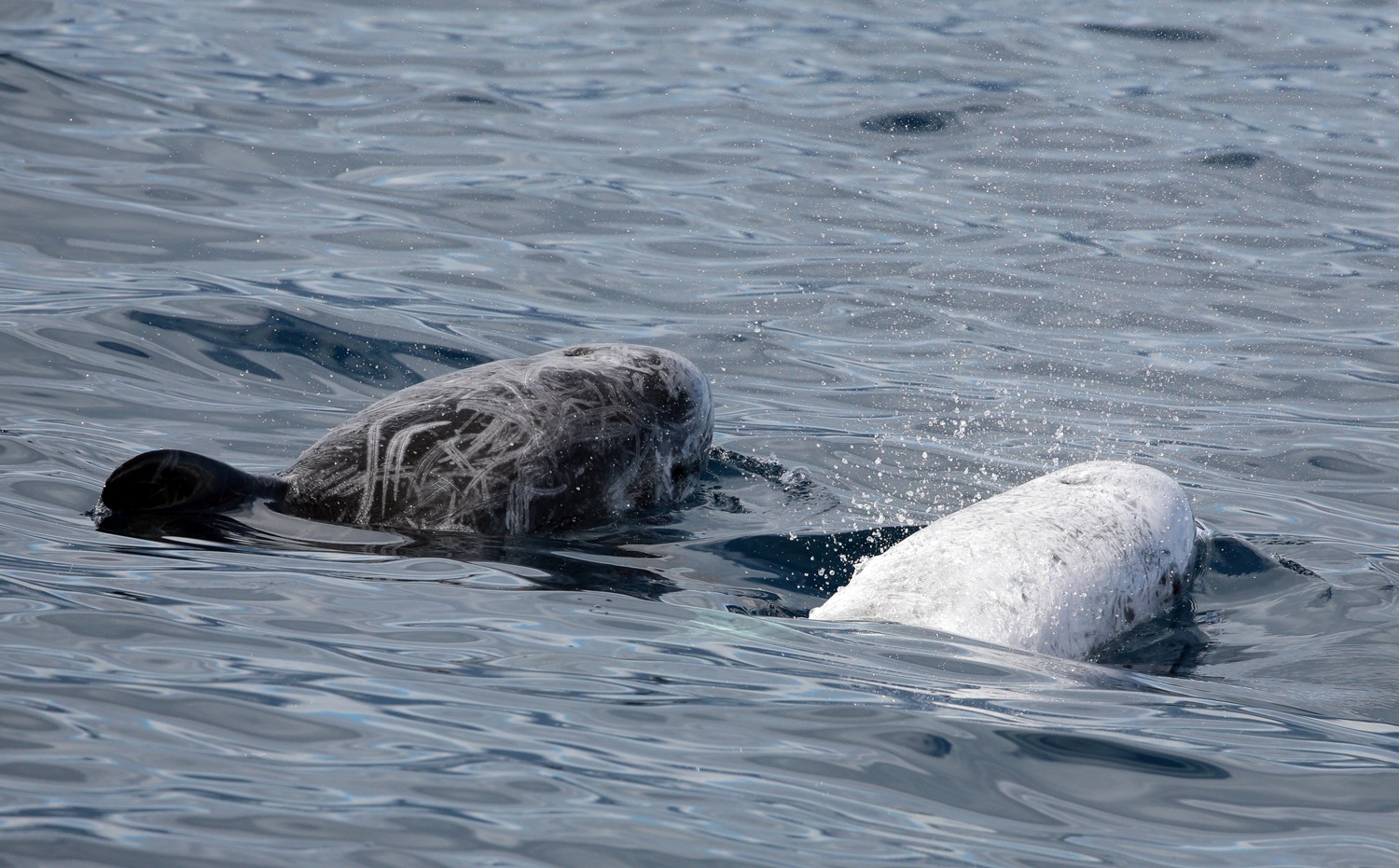
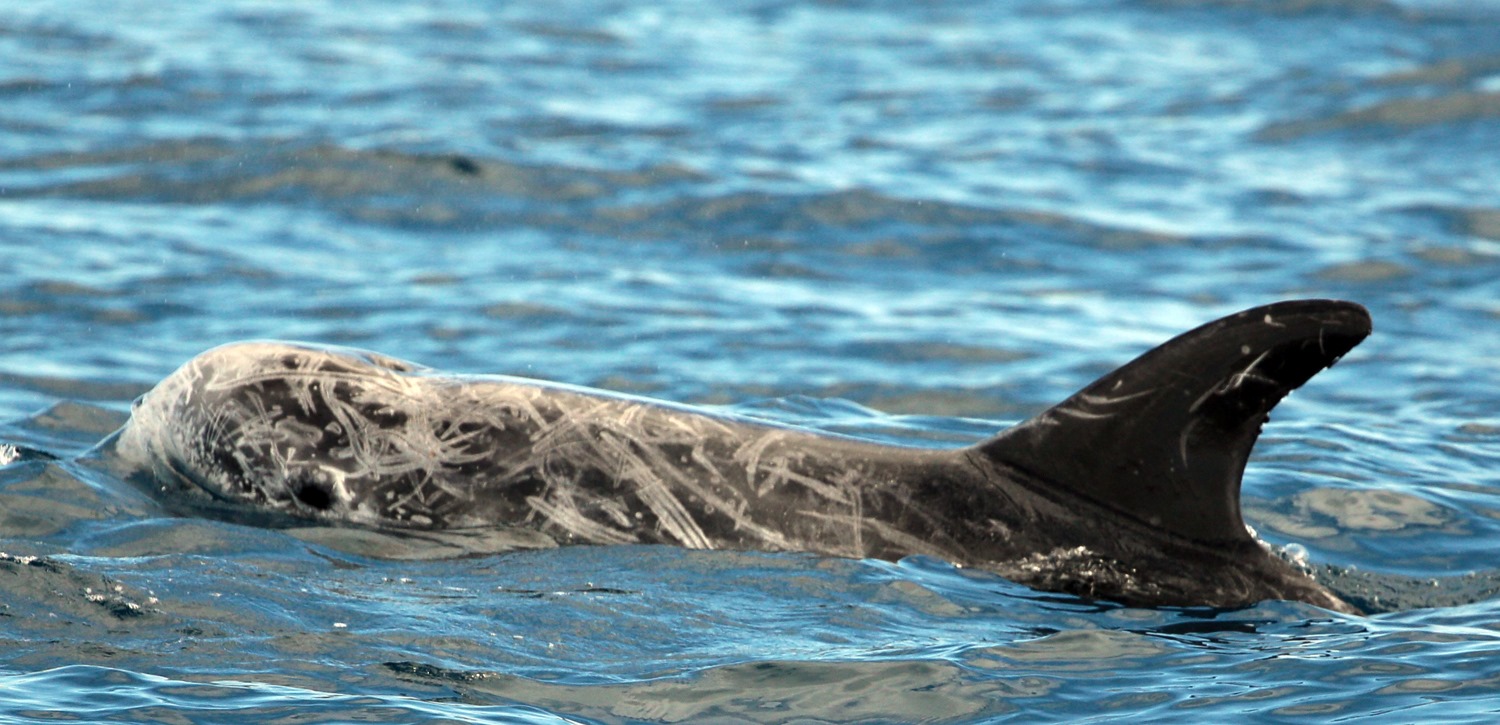
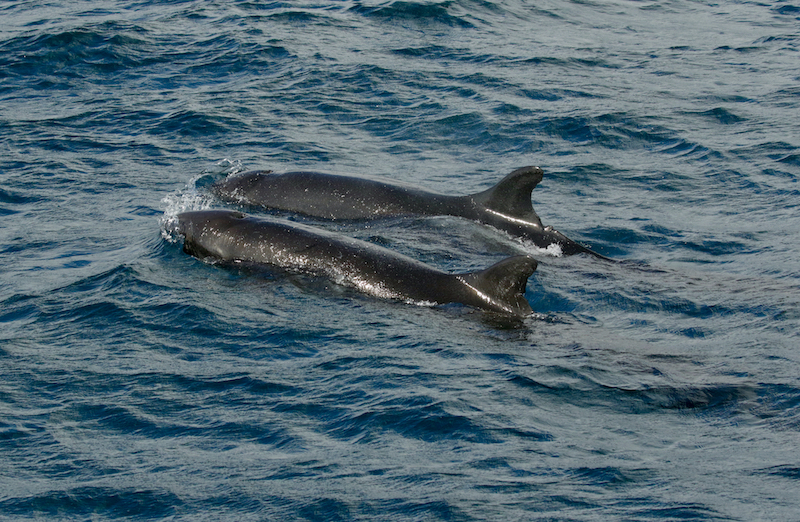
Then Lisa decided to explore an area good for Risso’s dolphins sightings, one of our priority resident species, and sure enough we found them there. The animals were moving about slowly, surfacing simultaneously in chorus-like display line not too far from the boat. We took many pictures, which will be analysed later this week and send to specialists. A lonely loggerhead was floating nearby and many Cory shearwaters completed the scene.
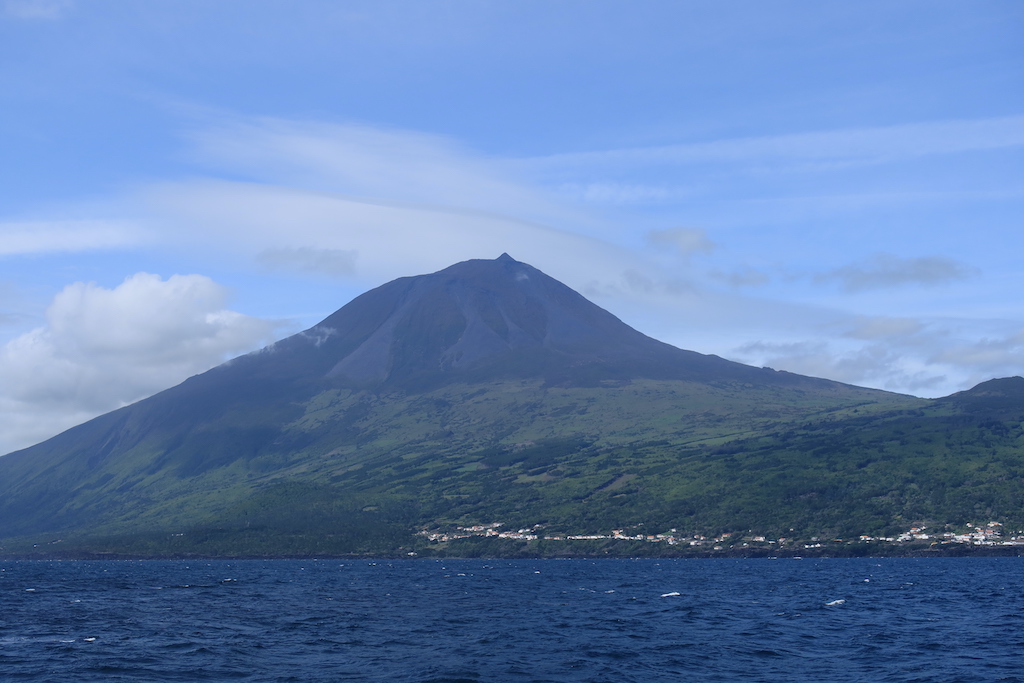
With the winds getting even stronger, Sunday was a day off for the team to explore the volcanic landscapes Faial has to offer: Caldeira, Capelinhos and, right next to our basec, Monte de Guia.
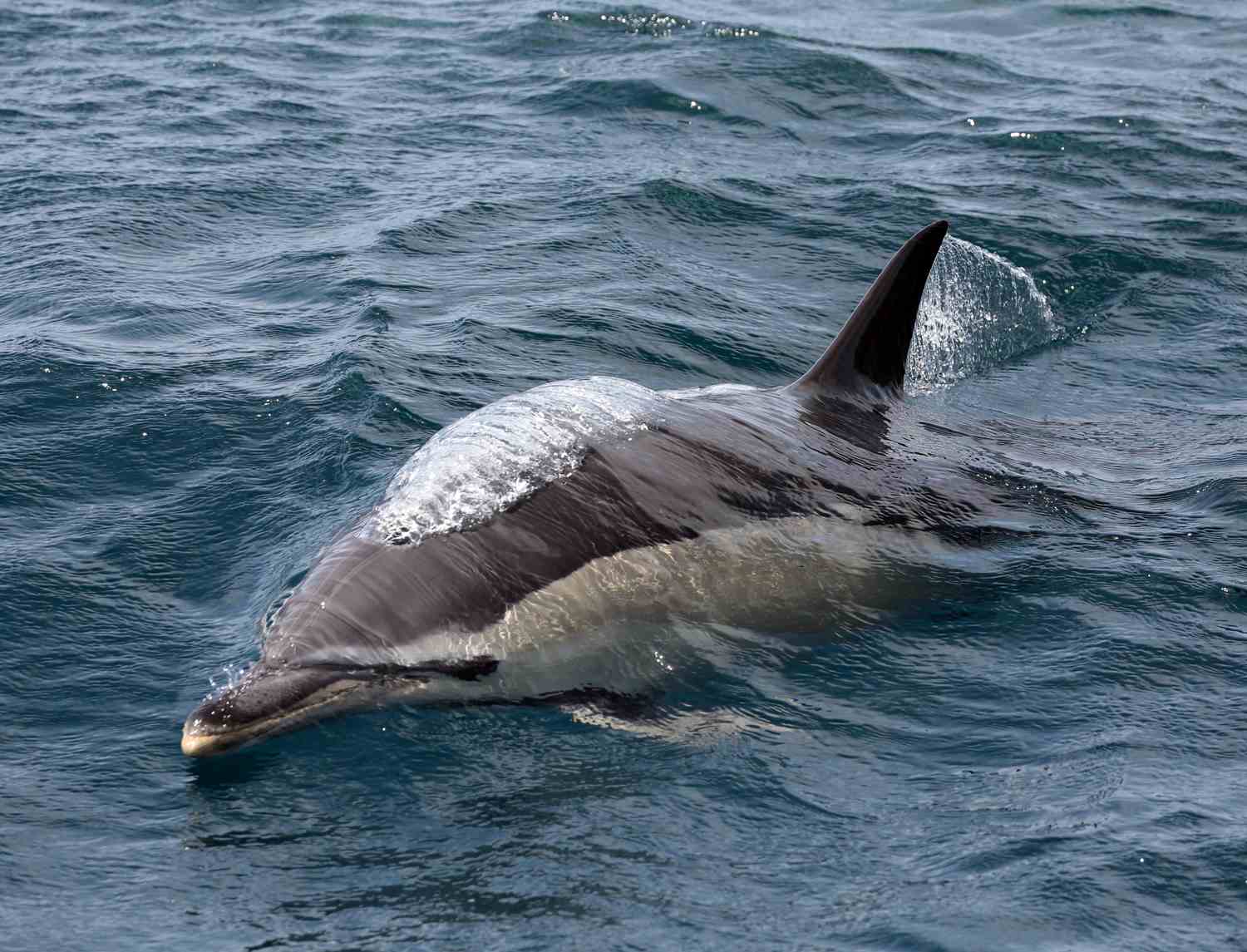
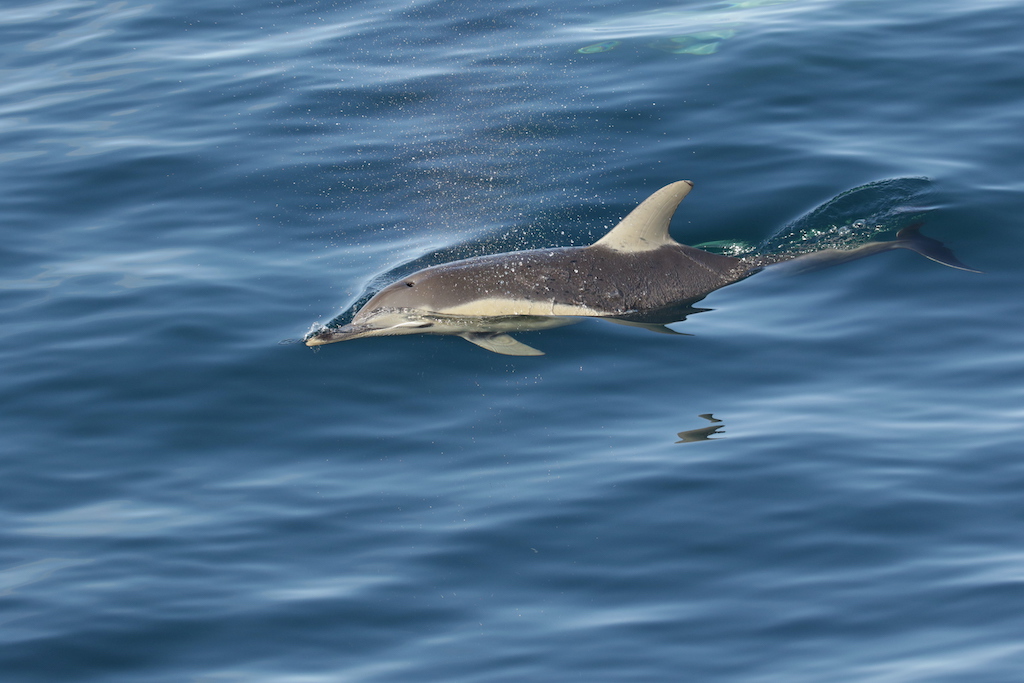
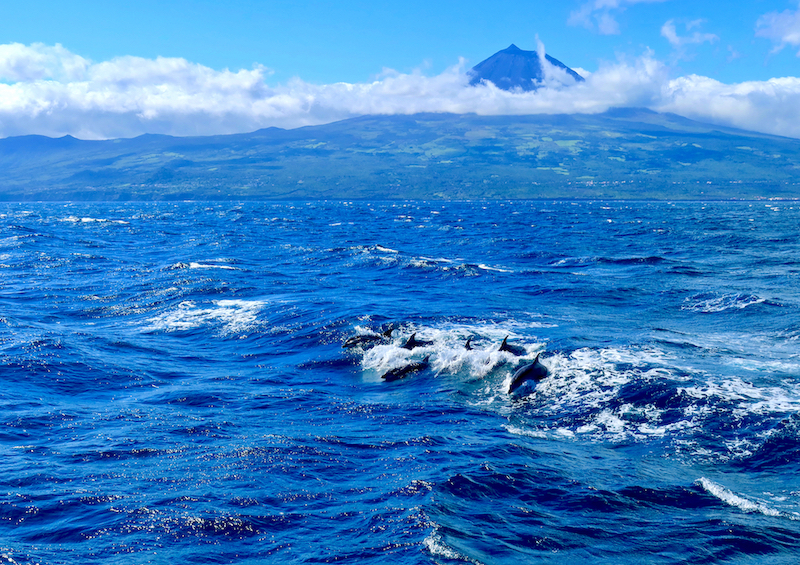
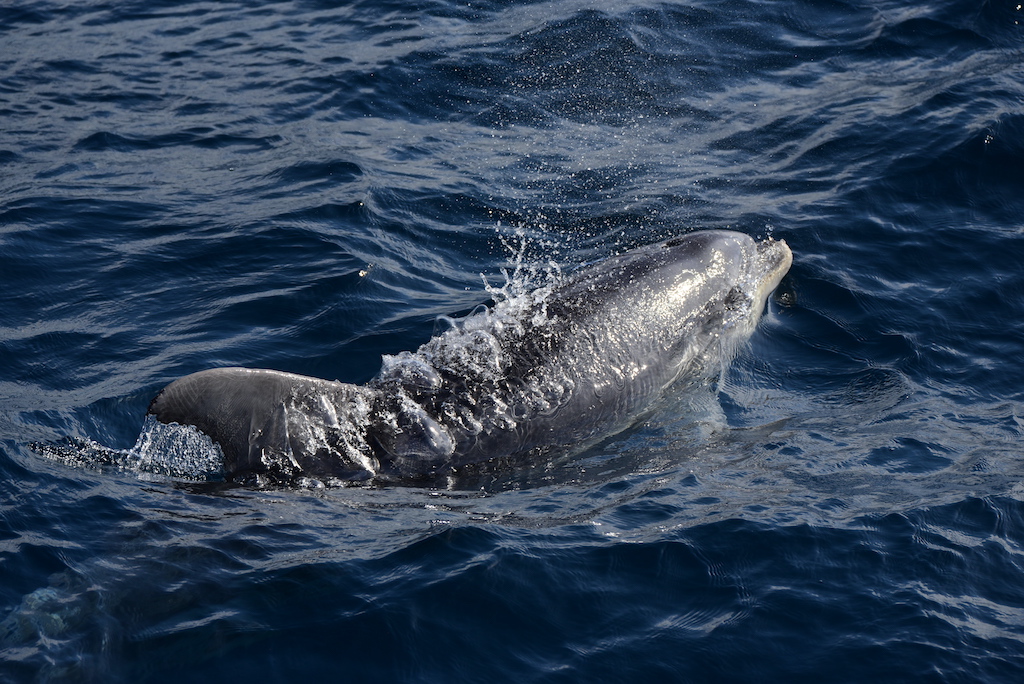
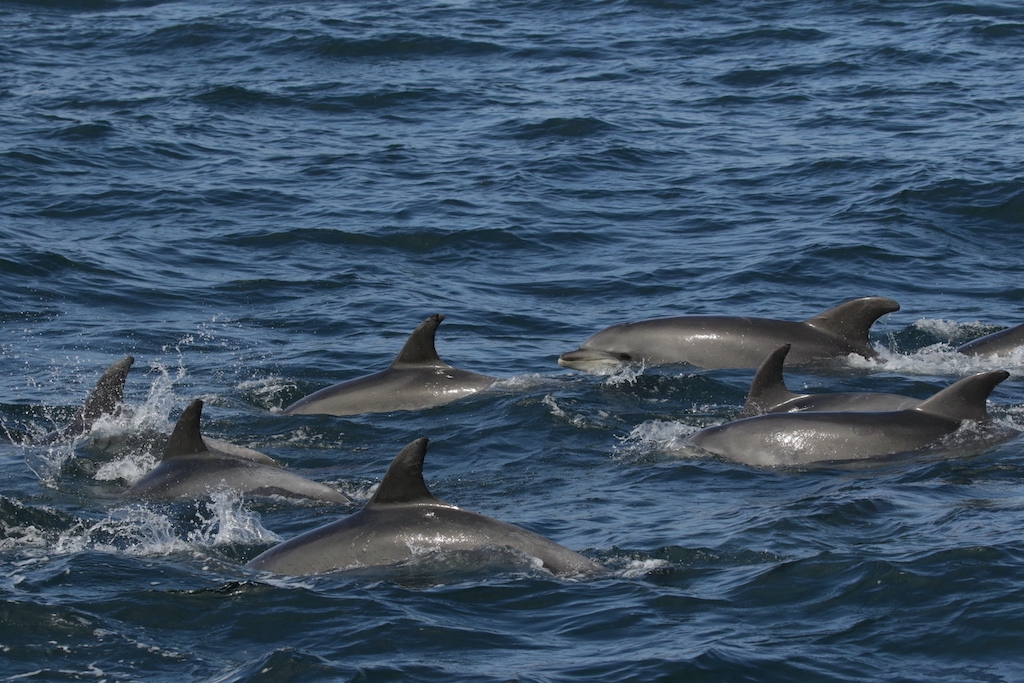
On Monday we tried our luck again even though the wind was blowing fiercely. The southern side of Faial was the only place sheltered enough to do monitoring. These conditions make it much harder to spot animals, yet our patience paid off. Following multiple short encounters of individual common dolphins, a pod of 20 approached the boat to bow-ride and surf in the waves displaying their agility and beautiful colouration.
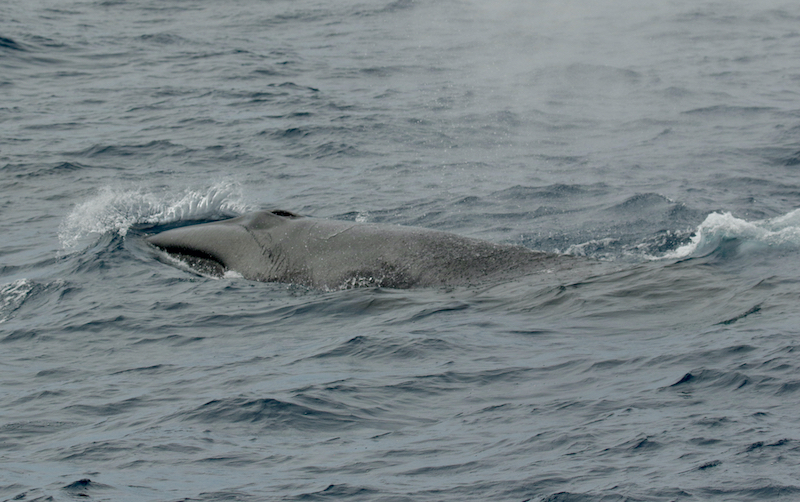
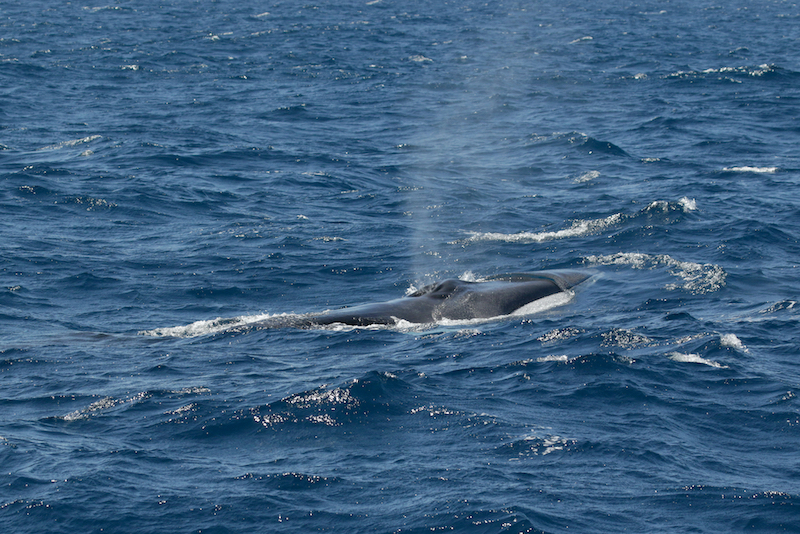
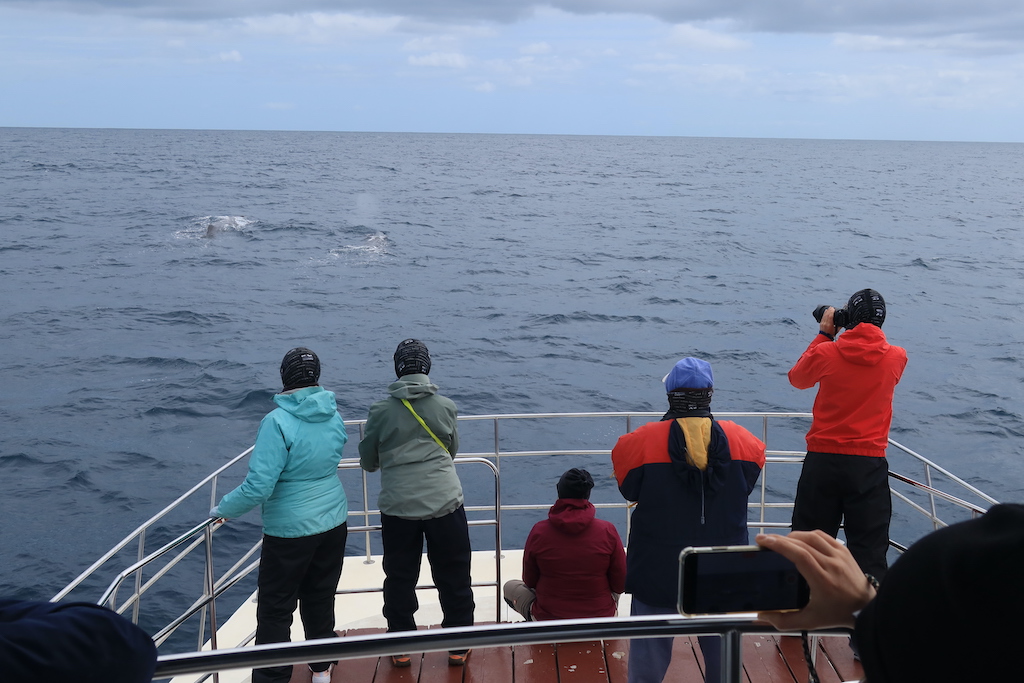
On Thursday it was smooth sailing on rolling waves. The topic of the day was clearly baleen whales. We did a return visit to the same giant blue whale still feeding in the same area. Then Nicole spotted a large fin whale twice, followed by Peter surprising us with the observation of the smaller minke whale. Quite remarkable, as they are hard to spot with almost no blow. An excellent day to memorise those identifying features, unique to each species. Meanwhile everyone is in the rhythm of the different roles to be performed on board. Also, thanks to sea state 1, with just ripples on the surface, we managed to get a good closer look at our first loggerhead turtle floating nearby the boat.
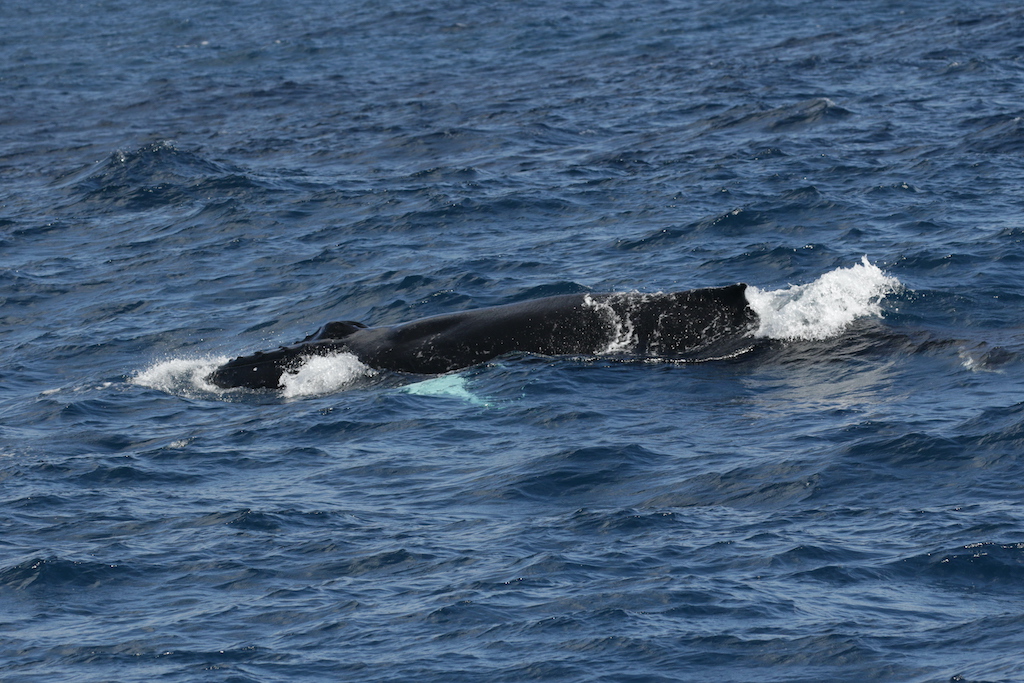
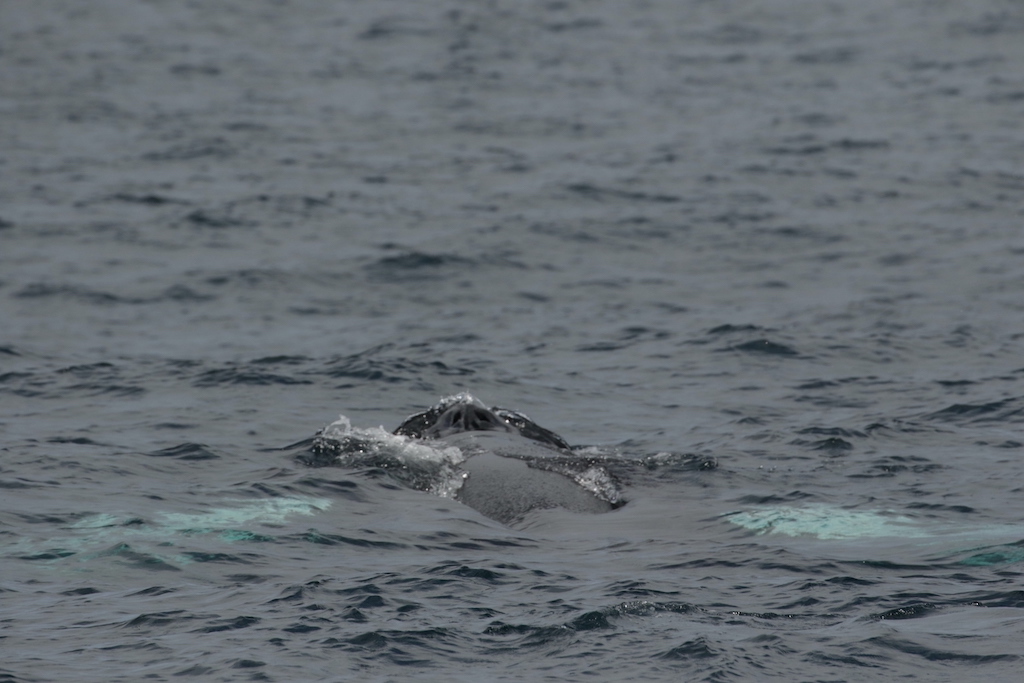
On Friday the sun came out. We covered a lot of distance in the morning with no sightings, except for a few elusive small groups of common dolphins. Southeast of Pico, a vigia guided us to a humpback whale feeding closer to shore. Another baleen whale species on our list, the fourth in only three days! Their white long pectoral fins make this species quite distinctive, as well as their coloured fluke, ideal for photo-identification. Another blue whale was feeding in that same area….
On our way back to Horta, we spotted Risso’s dolphins, also called the ghosts of the sea, ranging from black to white depending on the number of scars. The local expert Karin Hartman confirmed this is a relatively shy resident group of males, some of which have been seen already since 2000, with one female in the group being courted. Thus ended a long, tiring yet very satisfying day full of beautiful observations, rich in data and many photos for identification to better understand the migration patterns of the different baleen whales.
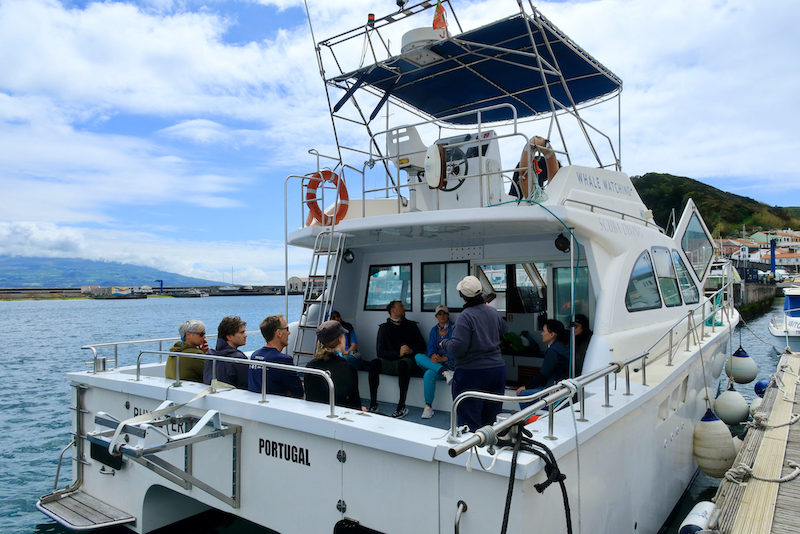
After two days of strong winds, the sun came out to welcome our first group of expeditioners arriving from both sides of the Atlantic. As always, the first two days are dedicated to full-on training to get everyone up to speed on the species of interest, ready to record valuable data out at sea.
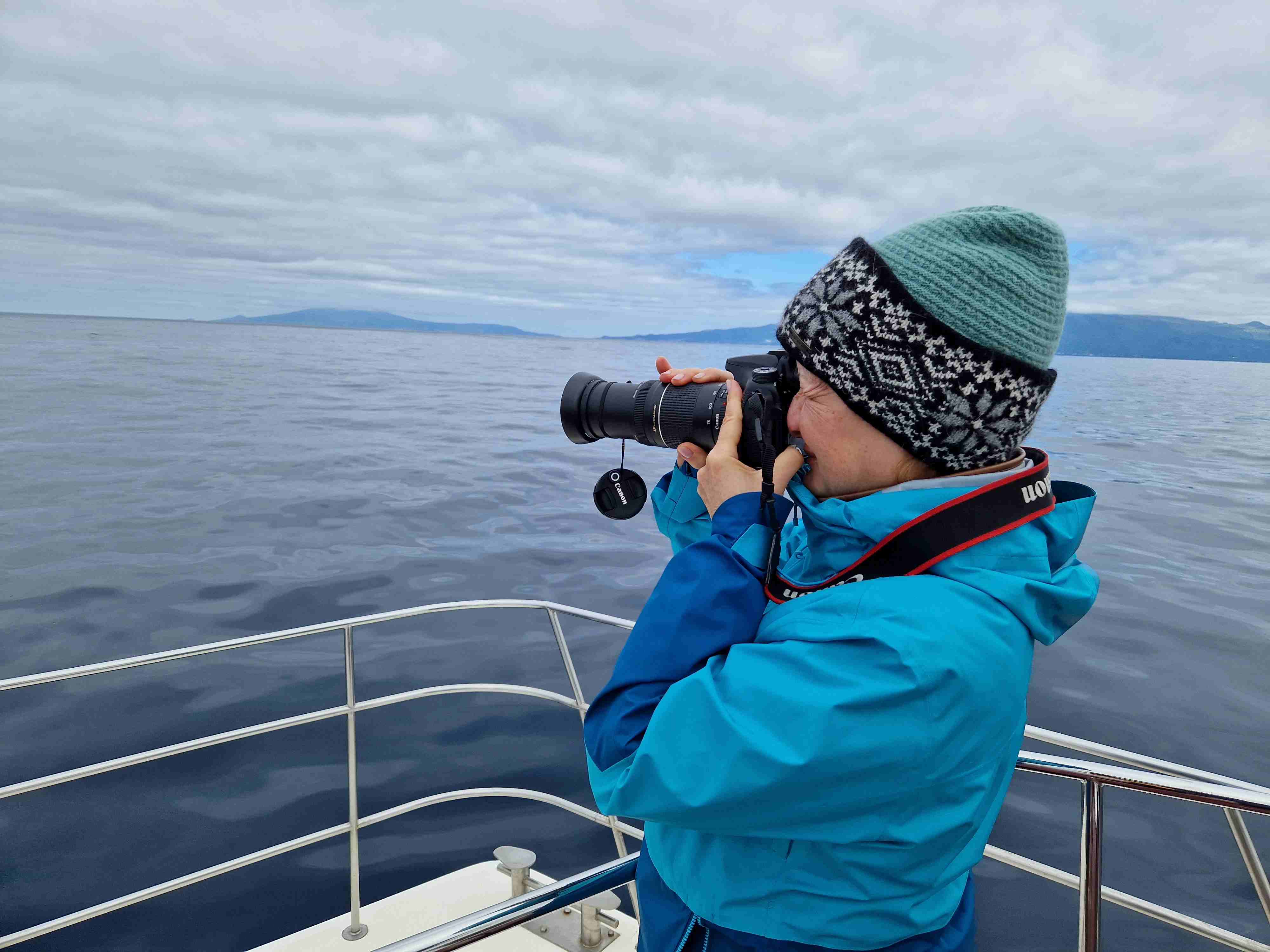
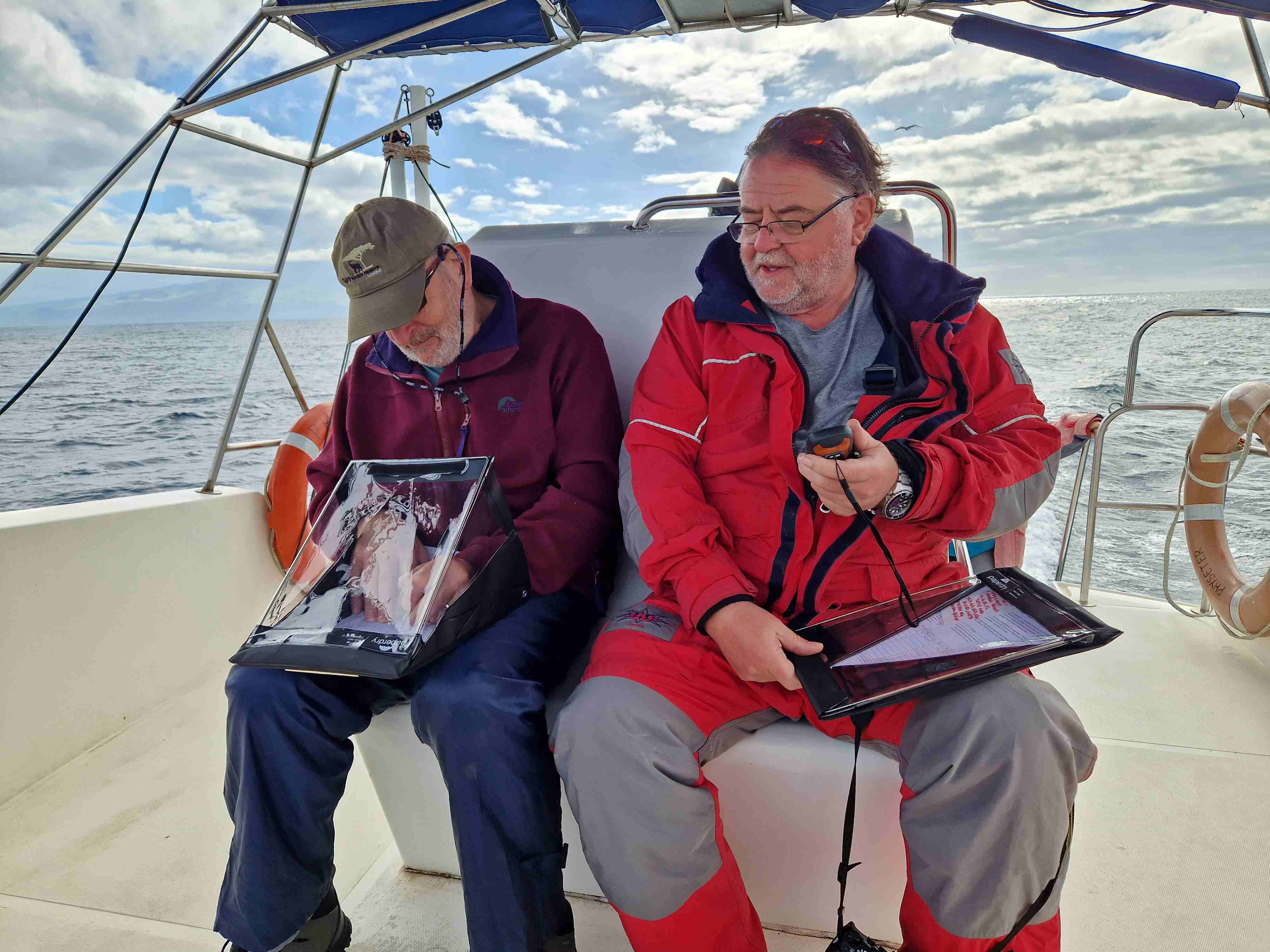
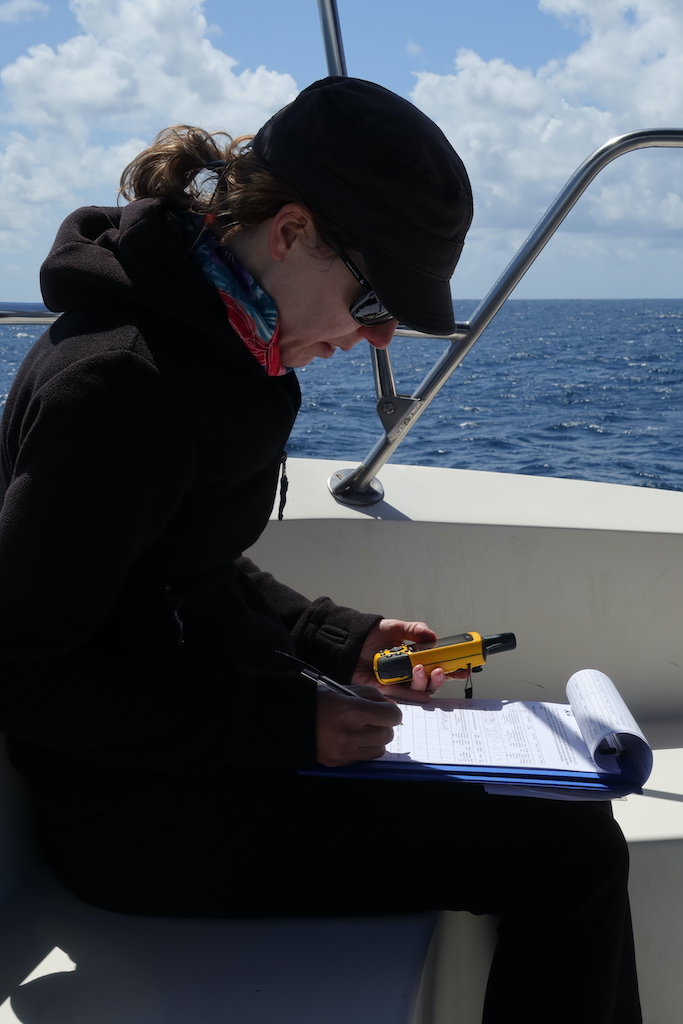
As we were getting familiar with all the roles on board, the many different datasheets, GPS, transect log, phone app… there was a slight sense of information overload. Yet, once on board, the team really got into it, performed well and demonstrated they are up to the task.
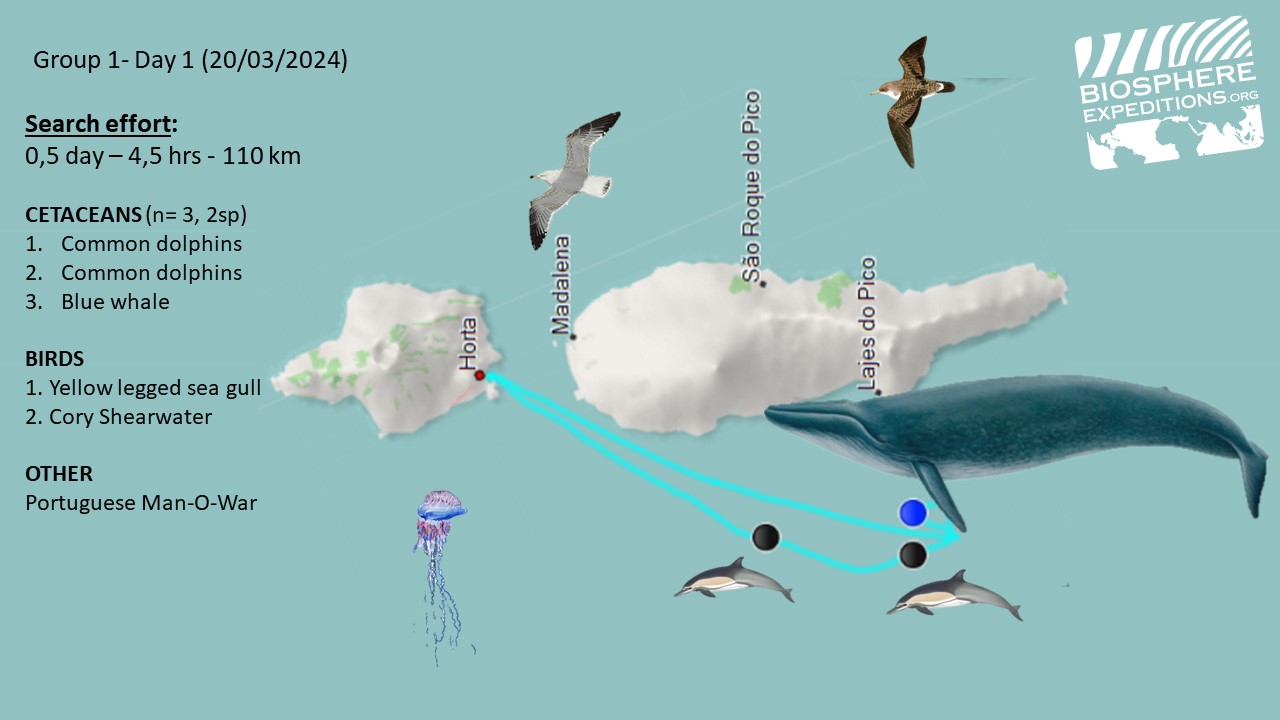
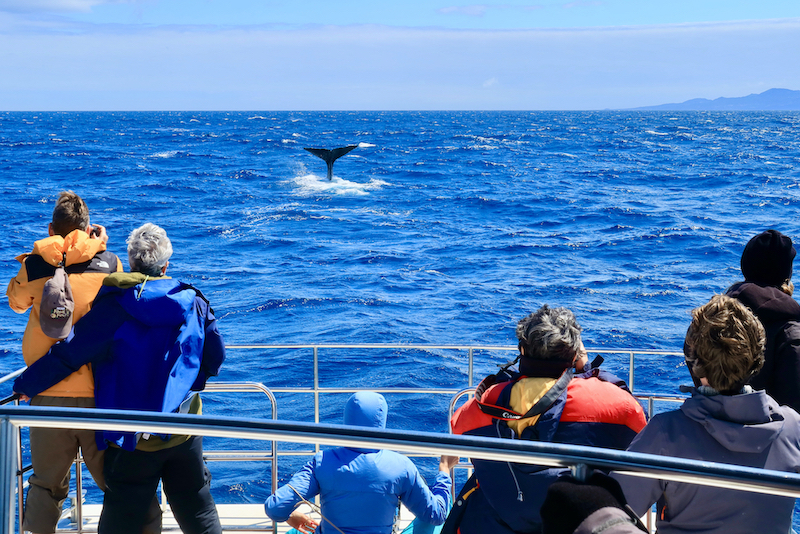
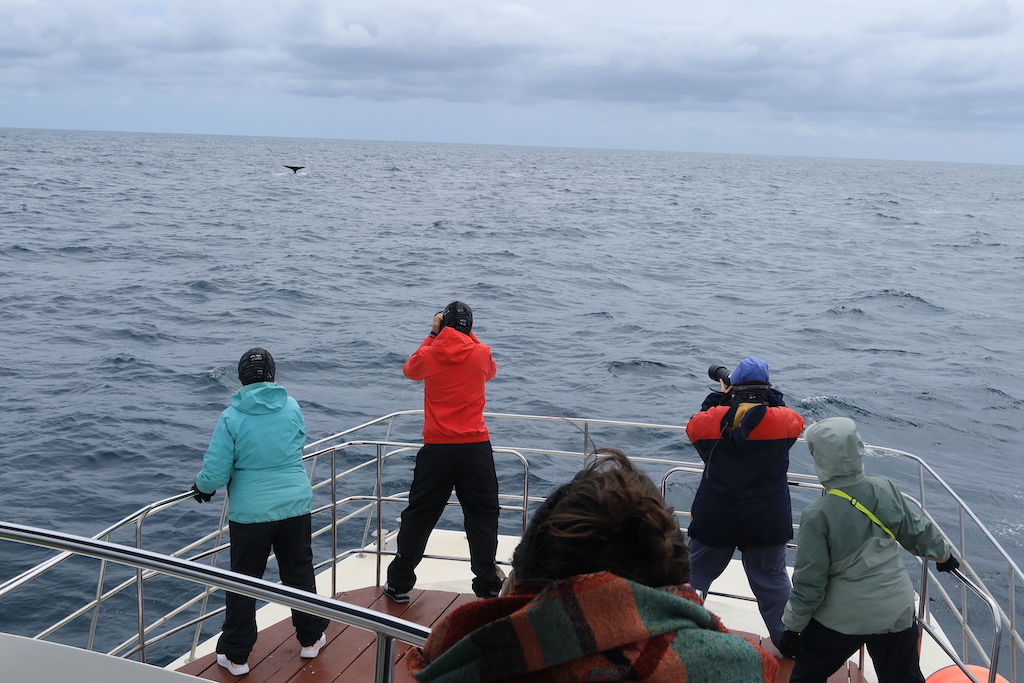
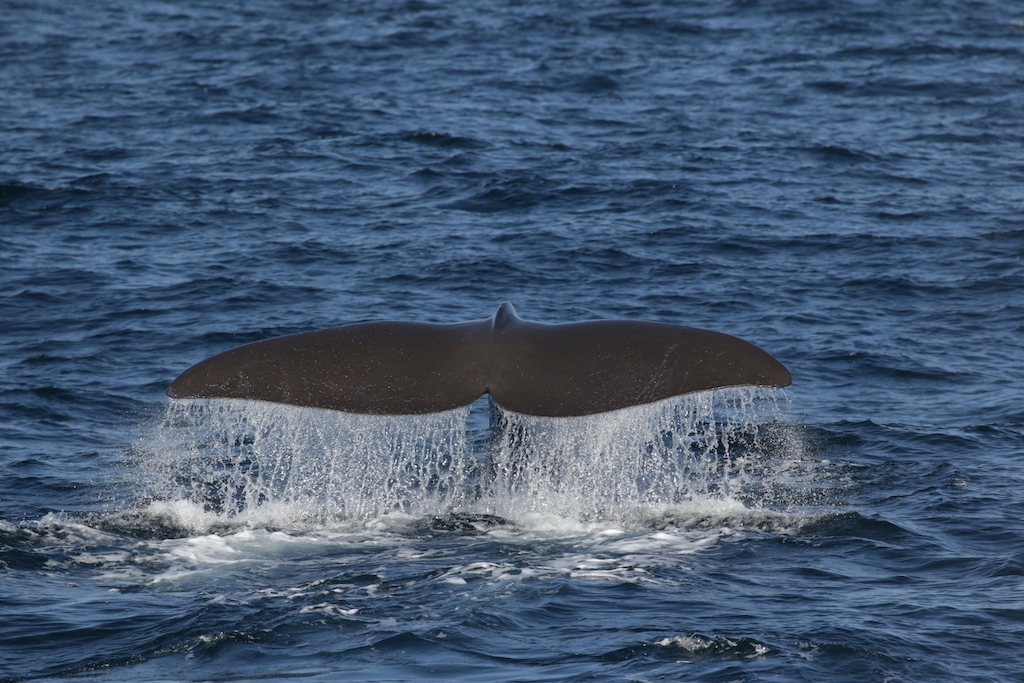
Southwards of Pico, we spotted and recorded our first two groups of common dolphins, when the vigias – lookouts on land – informed us of something special further ahead. Sure enough, a little later Isabelle spotted a huge blow of 8 m high, which can only come from ‘the’ mighty gentle giant of the ocean, the one and only blue whale. Lisa commented it was a ‘small one’ of just 20 m, nevertheless we were all in awe, especially when the whale was cooperative and dived several times to feed, resulting in some good fluke shots.
It’s fair to say that our first day out at sea with a blue whale sighting kicked off this 18th annual expedition nicely. With good weather foreseen in the coming days, we are curious to see what else we can find. Meanwhile our photos of the blue whale have been sent to experts to see if they can identify the individual. Stay tuned for more.
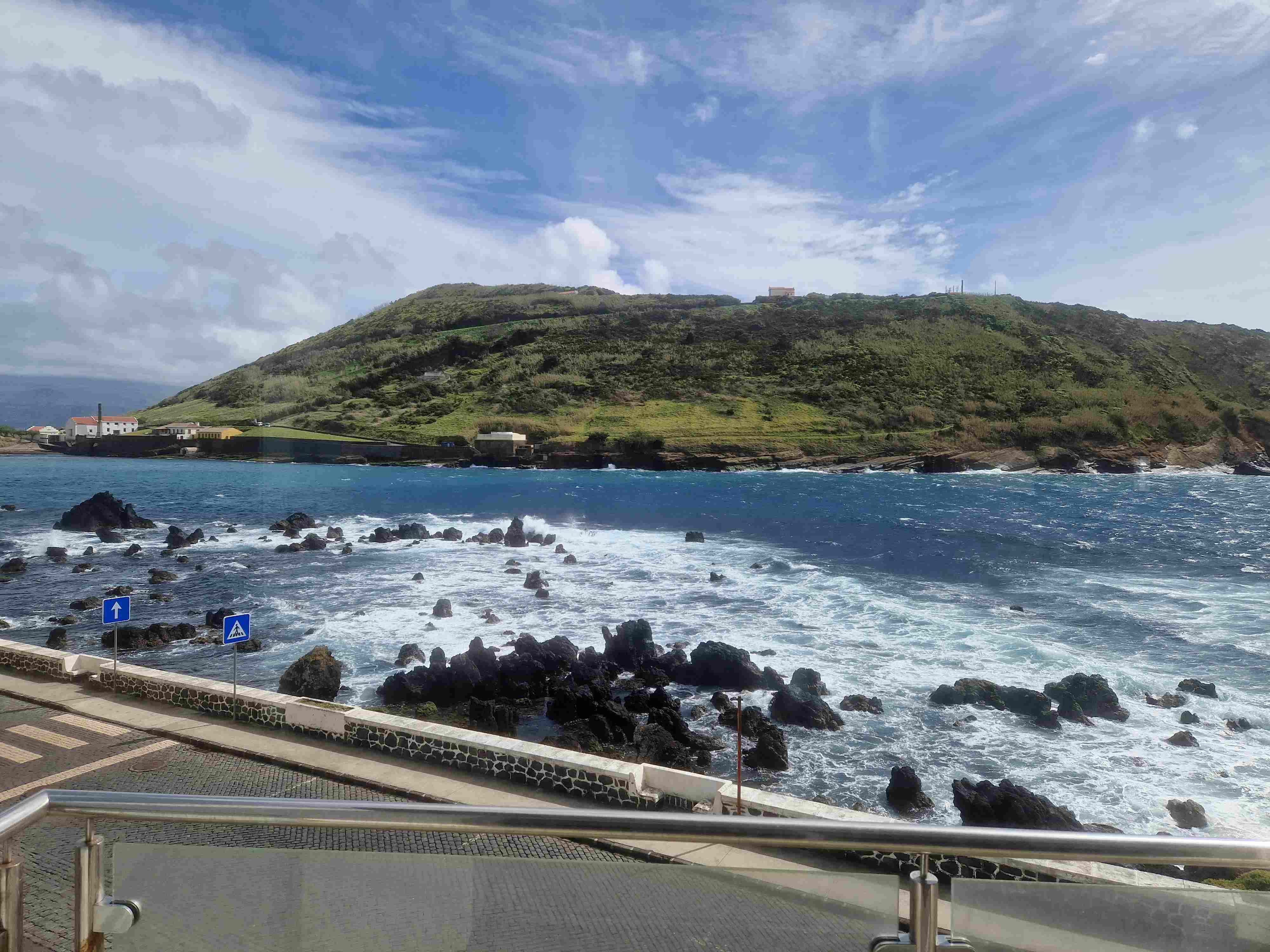
I write to you from our beautiful research base at Monté de Guia where Lisa and I are busy preparing everything for your arrival. Located right at the waterfront, the sea view here is ideal to check out the weather conditions before heading out to sea and get into marine citizen science action. Today we were treated to blue skies, some sunshine, but strong winds and many white caps dancing on the waves, but the conditions should improve in the coming days when group 1 will get trained.I hope group 1 is more or less packed up and ready for the journey or on it already.
I wish you a safe flight and I look forward welcoming you here tomorrow (Tuesday) at 11:30.
Welcome to the first diary entry of the 2024 Azores Biosphere expedition. I am An Bollen, your expedition leader for this 18th edition. I look forward returning to the stunning Azores and immersing myself in citizen science research alongside all of you in the weeks ahead. It will be my third time running the expedition.
Meanwhile at our research base, Lisa Steiner, our expedition scientist, has already been treated to sightings out at sea. Not only her favoured sperm whales, but also humpbacks, including a mother with a young calf – an uncommon occurrence.
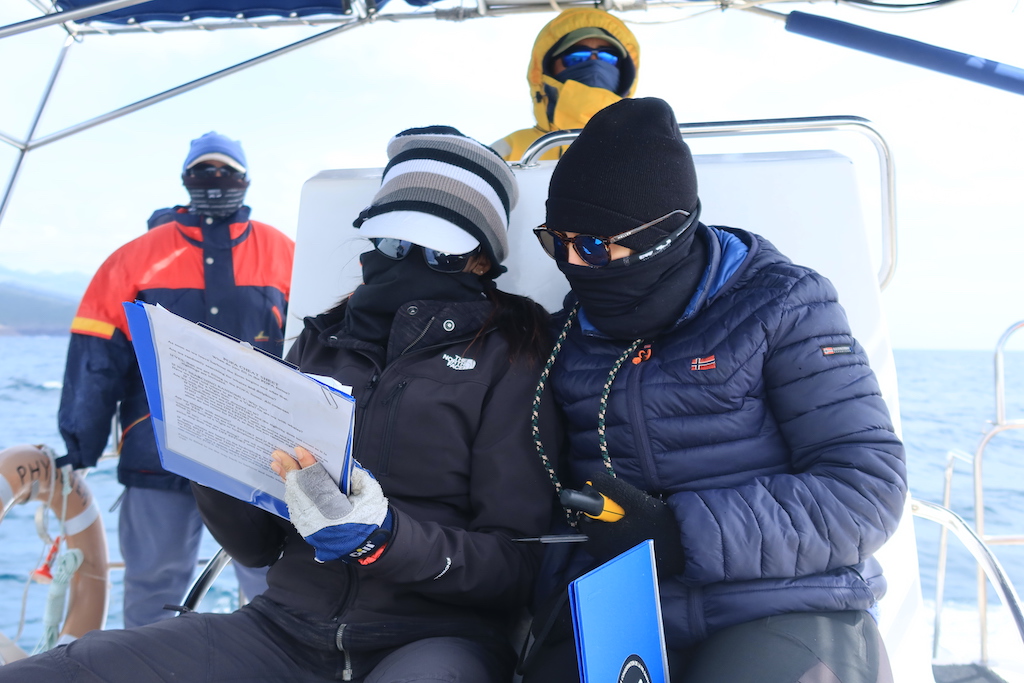
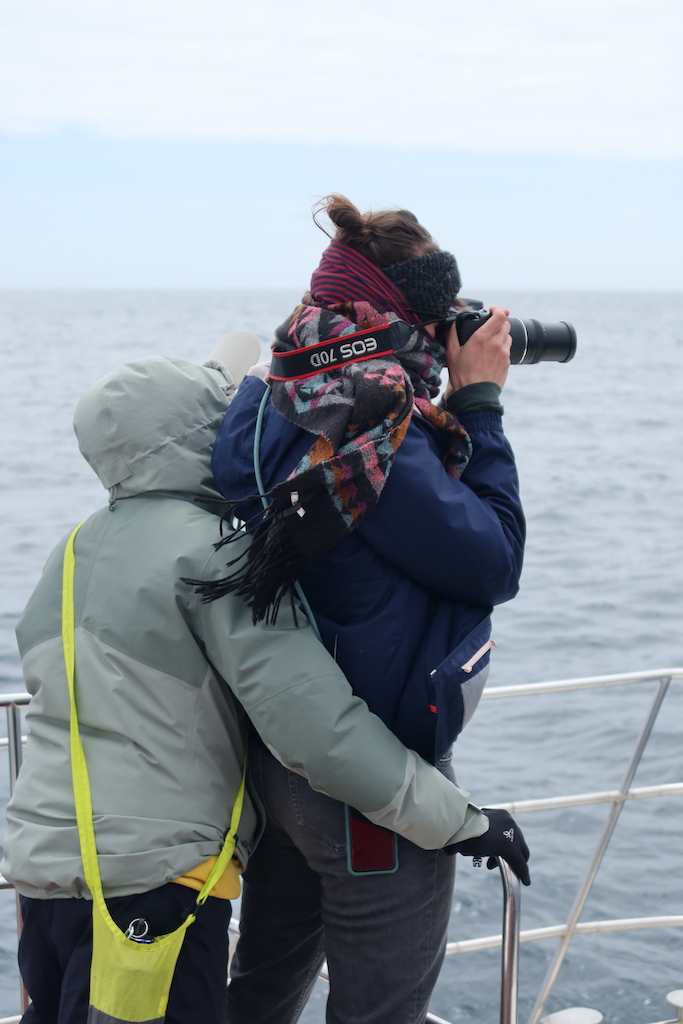
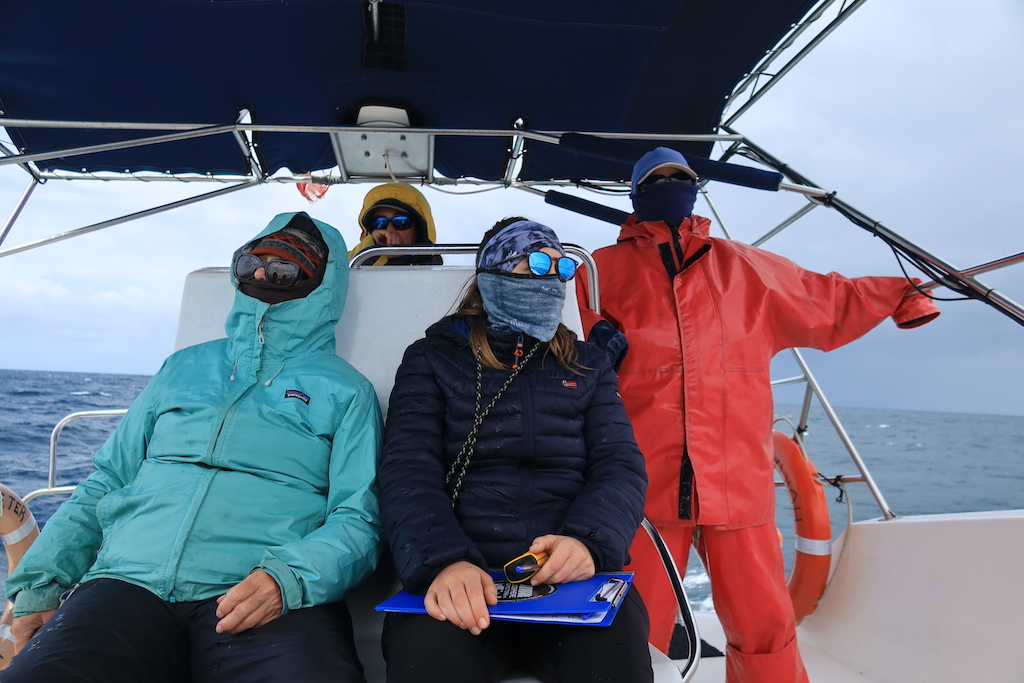
This year, we’ve established a new research base – the Monte De Guia Alojamento, strategically positioned right along the seafront. I’m already in packing mode, preparing to depart for Lisbon on Saturday and then onwards to Horta. As always, the weather during this time of year remains unpredictable. Some days offer fair conditions, while others bring strong winds, chilly temperatures, and occasional rain. Lisa’s photo, showcasing her all-weather whale-watching outfit, encapsulates it perfectly. Layering up with a reliable windproof and rainproof outer jacket is the key. The Azores can surprise you with four seasons in a single day, so come prepared!
When I arrive in Horta, I’ll share the next diary entry along with my local contact details. Those remaining back home and eager to stay updated, can visit this blog, where we’ll regularly publish diaries and photos.Looking forward to seeing you all soon!
That’s a wrap. The end of the expedition is upon us. Five weeks seems have gone by in a blink of the eye and we must all now slowly head home via various routes. Time genuinely flies when you are having fun, but let me first (briefly) recap the last day at sea, since we still experienced some highs and lows.
On our very last day we were thwarted in our efforts to go to sea by bad weather, but this presented another opportunity to sort more data. The day prior was a great day. Heading many miles south of Pico, we were again treated to encounters with common and bottlenose dolphins, before finding yet more sei whales. These efforts lead us on to multiple sperm whale encounters, with yet more dolphins and the obligatory shark. Though initially a mix of shouts (turtle and shark – shurtle?) were heard (more coffee needed for some!), when the boat circles back around, we could confirm a shark and it does finally prove it is not only the expedition leader that finds the sharks. But better was to come…
Like all good plots, Lisa had saved the best until last – and having been left in charge of the helm – she soon spotted the back of a large whale, and very quickly the shout of ‘blue’ rang out – no confusion this time. Then clear for all to see the blue hue of the largest species ever known, drifted through the water, almost alongside the boat. The silence onboard was deafening. A species you never forget seeing and a species I never tire of seeing. A great way to end what was our last day at sea in 2023.
So that concluded our data collection, though in addition to data, expeditions offer many things, including discovery, difficulty and diversity. The last group have successfully added to and/or experienced all of these, but before we talk about the discovery and data, let me initially offer some thanks. First off, to our groups, who stepped up to the daily challenge of data collection to achieve our goals of better understanding the spatial and temporal distributions of the cetaceans and turtles of the Azores. You’ve all contributed to advancing this knowledge and making this expedition a success.
Let me also offer thanks to Henry who helped get things started this year, and the staff at Biosphere Expeditions, as this project can’t happen without the unseen preparation. I also extend thanks to all in Horta who have supported us, particularly Norberto Divers and our various caterers – whose food was more than fuel! I must also not forget our skipper Siso, who not only took us to sea, but ensured we knew the sea state, wind direction, cetacean locations and always got us back to port safely – thanks Siso. And of course, our enormous collective thanks go to Lisa, our leader in all things scientific. It is indeed a privilege to again share in your world and work with such a dedicated field biologist and cetacean scientist. But my final thanks go to Jim and Claudia who have not only hosted us for the past five weeks, but have supported Biosphere Expeditions for over ten years. Whilst this may be our last year at Banana Manor, your hospitality and garden have been enjoyed by many – and for me it is like second home. Thank you.
This year we’ve again recorded an impressive array of data that without Biosphere Expeditions, wouldn’t have been collected. In case you have forgotten, here are just some of our highlights:
> We’ve deployed four teams into the field, comprising 8 different nations, spanning multiple decades
> We completed 15 days at sea, totalling in excess of 95 hours of surveys, covering over 1500 km of the ocean
> We’ve collected data on at least 10 different cetacean species (5 whale and 5 dolphin species), 1 turtle species (8 individuals), 1 shark species (4 individuals)
> Our total encounters with cetaceans, exceed 170, and yes, simple statistics will tell you that is almost two for every hour at sea
> For the whales, we have already confirmed 46 positive IDs, and 16 re-sights, but also have 27 new flukes – i.e. individuals never recorded before.
In isolation, these may just seem like bits of data, as field research rarely gives us instant results or fast answers to our bigger questions. But we’ve collected a huge baseline of data and the full results will soon become clearer in the expedition report. The power of these data build over time.
So, it has been a successful expedition and the summary statistics highlight some of the success, but success doesn’t just come in the form of empirical data. It is influenced by the people we meet, our expectations, experience and wildlife encounters…to mention a few. We have had a great diversity on all fronts, with three great groups and from my perspective this year did not disappoint in terms of diversity, discovery and data.
For me personally it has been great to have the opportunity to return the Azores, work in this wonderful place and meet old and new friends. Thank you.
So, our luck has changed, well the weather has changed, and this meant a shore day on Saturday. High winds and waves made it very difficult to work at sea and even harder to spot any cetaceans. So some rest, relaxation and tours of Faial were the order of the day.
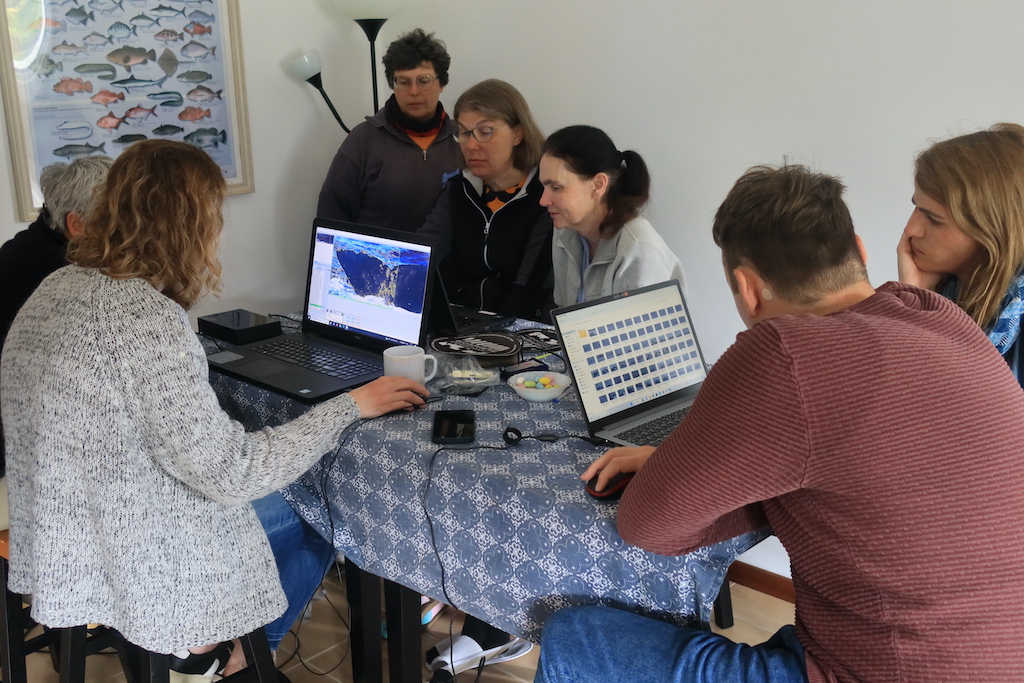
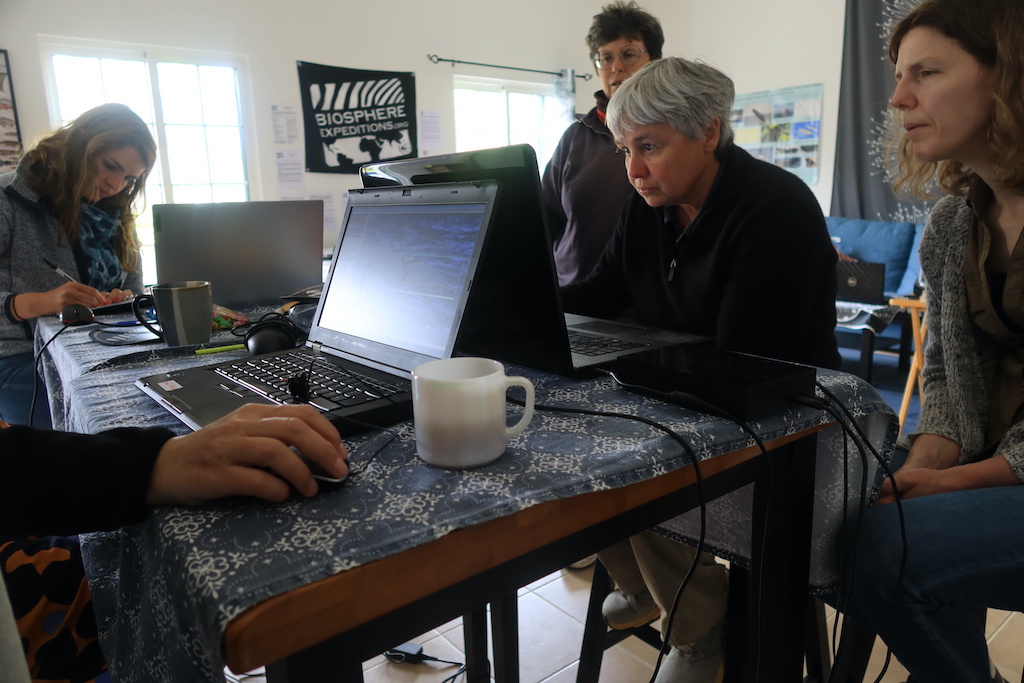
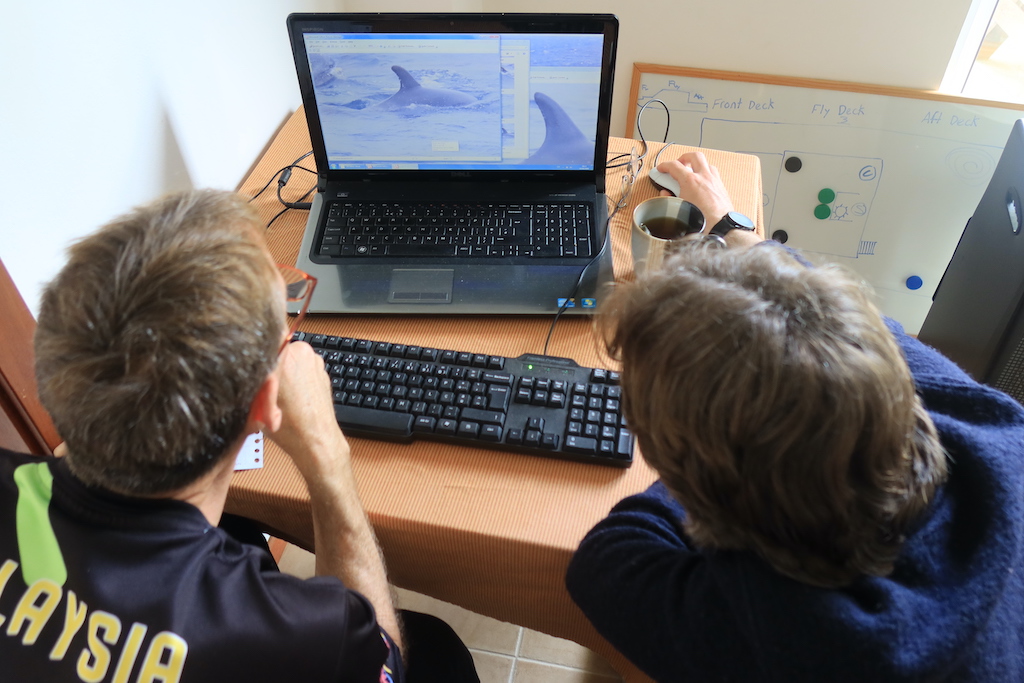
Sunday brought the rain, adding to the cocktail of poor weather, but this presented the ideal opportunity to sort some data, organise some photo catalogues and begin some matching. With caffeine, biscuits and some late Easter eggs in ready supply, the team managed to sort recent catalogues for sperm whales, false killer whales and bottlenose dolphins – great progress on recent data. Some even had some creative brain power remaining to add to the harbour paintings!
Monday brought a welcome (albeit slow) improvement in the weather, so we headed out to sea once again, but our foray was short-lived (41 minutes and 15 km according the GPS). A fuel filter issue on one of the boat engines meant another change of plan – a return to port – for what turned out to be a quick repair. Refuelled on coffee, our second attempt that day was far more successful.
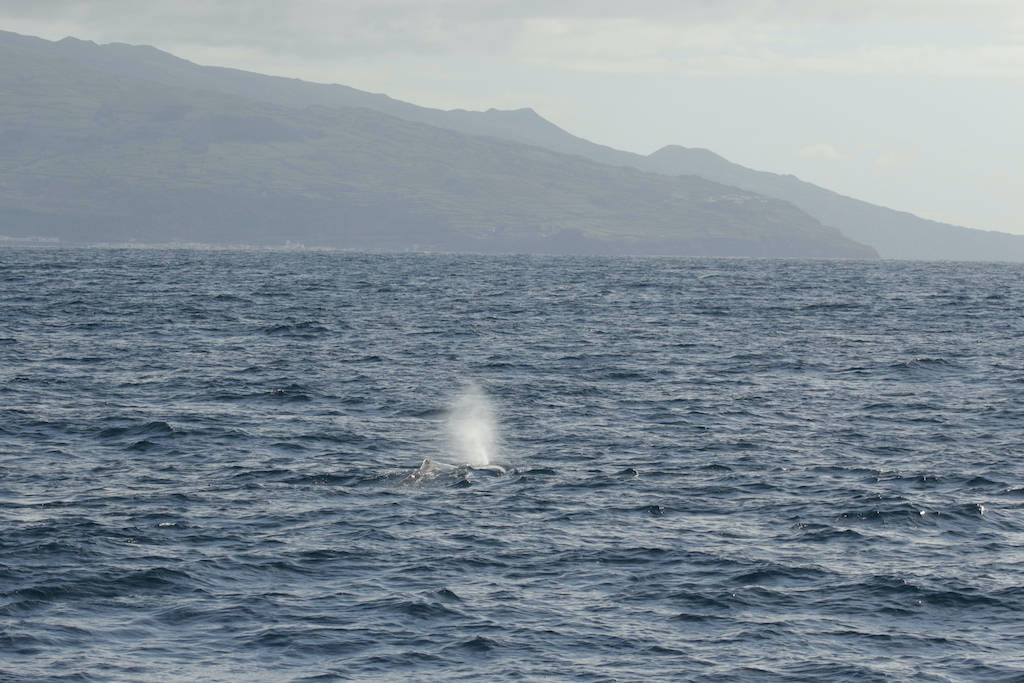
Exploring south of Pico, we initially encountered our customary common dolphins, but this was soon followed with a sighting of a new humpback whale. From here we pursued several sperm whales with both common dolphins and sei whales doing their best to distract us. The day ended with yet more sei whale sightings.
Despite the stuttering start, we had another good haul of data, with our slightly smaller team happy to cover all jobs required, with Stefanie being kept fairly busy on the data sheets and Joel put through her paces on the camera.
As we now enter the final days of this year’s expedition, we still have a few species on our wish list, and opportunities to add to the data.
We have commenced the final leg of this year’s expedition. With the welcomes, greetings, briefings and training sessions efficiently covered, we were all keen to get out to sea. Our potential survey area was restricted by the sea conditions, and these also challenged some of our team. We were rewarded with just our second sighting of Risso’s dolphins, which was some consolation to several of the team we ‘lost’ aft.
The next day at sea was met with some nerves, but the team needn’t have worried. The rolling swells were a thing of the past and there is nothing like finding a humpback whale to refocus the mind. This was followed by a large group of false killer whales – another first record for this year’s expedition.
Conditions dictated that we head south, where we were briefly distracted by common dolphins and entertained by the same humpback breaching very close to the boat! With yet more dolphin sightings, the day was rounded off following two Sei whales – who only blow once when they surface. so are tricky creatures to photograph – as Ed discovered.
With the winds increasing from the south, we weren’t sure how long we would be out on Friday, but again headed north (to more protected water) out to another humpback sighting. With common dolphins competing for our attention, the humpback turned out to be the same whale from the previous day, so we quickly moved on.
With the strengthening winds, our only option was to explore the channel between Pico and São Jorge, where there was less white water. After a brief passing of bottlenose dolphins, the day turned into a very productive sperm whale ‘hunt’. We manage to find and record at least six individuals, not recorded before (based on initial catalogue matching), so some great new data. The day was rounded off finding two fin whales on the way home. A great day and great data.
It is often unpredictable how things work out – this is an expedition after all. When we expect to lose out to the weather with a shorter day at sea, we actually came in slightly late having found multiple species, with several new records. A great job by all!
After a much needed day off exploring Faial and Pico, and recharging all ‘batteries’, it was time to embark on a final day at sea for group 2. Conditions dictated that we would head south of Pico due to the increasing winds.
With the now customary common dolphin sighting, we were soon in the company of more sperm whales. This meant the team could seamlessly start documenting each individual and record flukes as they dived – for once the whales were largely behaving. They were soon joined by a group of bottlenose dolphins – not uncommon to see these dolphins hassling sperm whales. With two species to document, it was all hands on deck and kept Gernot very busy on camera.
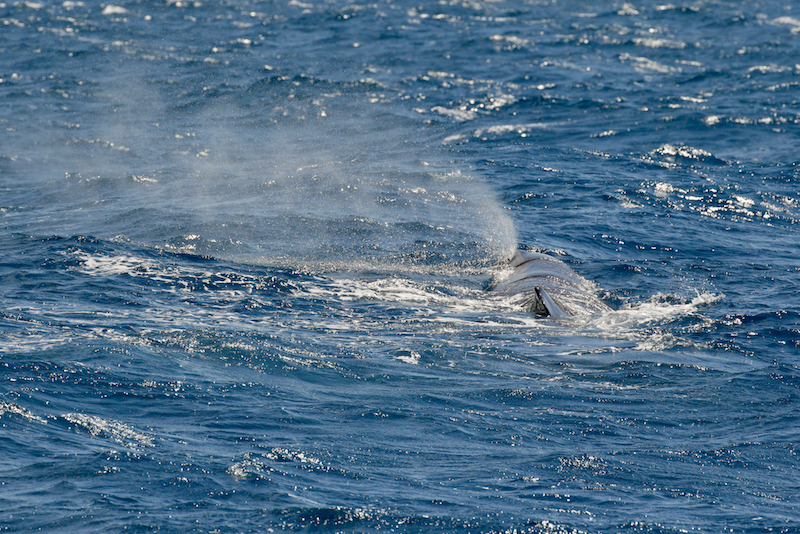
The look-outs soon reported a possible baleen whale, not to far away, so off we went in pursuit. This turned out to be a pair of Sei whales, another new record for the expedition, as we had hoped in the previous blog! They only surface once (briefly) so can be a tricky species to find. We were then directed to another baleen whale sighting which also turned out to be another pair of Sei whales.
These encounters were relatively brief, which meant we could soon return to the sperm whales. A few individuals later, our skipper (Siso) spotted a large blow – this turned out to be a blue! A single blue whale gave us a great sighting as it almost circled the boat. A great last whale sighting for group 2.
With over 540 km travelled over 5 days at sea, the group has been able to almost double the species list for the expedition – now standing at 9 species. Numbers of encounters and individuals have also increased. A great effort by all.
So, as we bid group 2 farewell, we wait to welcome group 3, and hope they too bring the luck with the whales and the weather. Safe travels all.
The weather has turned in our favour for much of the past week, which meant improving conditions and calmer seas. Music to ears of many. It also meant we could venture in a new direction for 2023, south of Faial. This paid dividends with not only another humpback sighting, but also a fin whale.
The latter is another new record for 2023, and appeared at random, whilst ‘on transect’ less than 10 m in front of the boat! Quite a surprise for all, including our skipper. This was followed by more sperm whale encounters off the far west of Faial, which then gave us the opportunity to complete the circumnavigation of Faial before returning to Horta, only interrupted by a few common dolphin sightings, and a great encounter with sociable bottlenose dolphins.
The next day saw us head south again, this time off Pico. In addition to the usual, dolphin, and less common turtle and shark sightings, it again turned into a sperm whale day. Whilst they were doing their best to frustrate us, with not many fluking, so ID pictures were limited, they saved the best until last. We managed to see one breaching some distance from the boat, but were then treated to three breaches a few hundred metres from the front of the boat – think flying giant cucumbers!
With the weather changing and winds building on Thursday, we pursued a suspected sighting of more than one blue whale, several miles north of Faial. This turned out to be a fairly challenging day, with the boat making way into oncoming weather and waves, peaking at force 5 – which makes staying upright a challenge – let alone doing any data collection. However, persistence often pays off, and we were rewarded with sightings of three blue whales. A great job by all to get the data recorded and stay on the boat….
With photos sent off to various collaborators, we now await news of possible matches, to work out where there whales may have come from or go to…….watch this space. After four consecutive days at seas the team are having a well-earned rest before we make the final push on Saturday.























 Biosphere Expeditions: blogs from the frontline of wildlife conservation and the fight for a more sustainable planet