Update from our SCUBA diving volunteer opportunity & conservation holiday on the coral reefs of the Musandam peninsula, Oman (www.biosphere-expeditions.org/musandam)

For those of you still under the impression you are coming on a cushy diving “cruise”, we thought you might like to see the itinerary and dive sites 😉

Image1

Image2


Update from our SCUBA diving volunteer opportunity & conservation holiday on the coral reefs of the Musandam peninsula, Oman.

Update from our SCUBA diving volunteer opportunity & conservation holiday on the coral reefs of the Musandam peninsula, Oman (www.biosphere-expeditions.org/musandam)


Hello and welcome to the first instalment of the Musandam diary.  I am Catherine Edsell your leader for this year’s expedition to the Musandam Peninsula. I have led this expedition for the past three years and feel privileged to be able to take you to such a stunning environment – we have a great expedition ahead of us. I trust all your preparations are going well, and I look forward to meeting you in Dubai at 09:00 on 25 October in the foyer of the Holiday Inn Express Jumeirah, our departure point to the northernmost tip of Oman.

It is our aim to replicate the surveys we performed in 2013 and 2011 as only by obtaining comparative data can we gain an insight into the true state of reef health. This year is an El Niño year. Sea surface temperatures are rising and as I write this, corals around the world are dying due to the intensity of this phenomenon. The temperature of the waters surrounding the Musandam Peninsula are always higher than the global average, making it a unique study site, as the corals here are already adapted to warmer temperatures. It will be interesting to document how much resilience they have and whether they are being affected. This is our quest.

To be able to collect accurate data, Dr. Jean-Luc Solandt our expedition scientist, and I will first need to train you in Reef Check methodology, so please have a look at all the training materials available on our website (see your dossier for details), as the more familiar you are with the indicator species of fish and invertebrates and types of substrate we will be studying, the better!


Update from our SCUBA diving volunteer opportunity & conservation holiday on the coral reefs of the Musandam peninsula, Oman.

From our scuba diving conservation holiday with whale sharks and coral reefs of the Maldives (http://www.biosphere-expeditions.org/maldives)

No bleaching and lots of teaching on Biosphere Expeditions’ Maldives reef expedition 2015

If you have ever visited the Maldives, you will have seen fleets of luxury liveaboards motoring around the atolls taking their guests to well-known dive sites to experience the underwater beauty that the Maldives is famous for. This September, one of those liveaboards, the MV Carpe Diem, housed a rather different clientele – the honeymooners and adventure divers were replaced with studious environmentalists embarking on a training course to learn the monitoring techniques necessary to collect reef health data – Reef Check.

From five different countries, 10 participants, two of whom were Maldivian, came together to learn the Reef Check methodology on an annual research expedition organised by nonprofit conservation organisation Biosphere Expeditions. Biosphere Expeditions recognizes the importance of training local Maldivians, alongside citizen scientsts from around the world. Once the expedition is over, and most participants have returned to their temperate homes, the Maldivians have continued access to their reef and with their newly acquired knowledge, can support Biosphere Expeditions’ work with additional Reef Checks, amongst them the first such all-Maldivian survey in 2014.

So, with the lounge of the Carpe Diem transformed into a classroom and its dhoni (dive boat) now a research vessel, the ten newly qualified Reef Check team set out on a survey route previously visited in 2011 and 2013. “We revisit the same sites to get a clearer idea of what’s going on,” says Catherine Edsell, expedition leader and Reef Check trainer, “much can be gleaned from repetitive datasets – they helps us to see what is changing, especially when it comes to the issue of bleaching.”

With a global El Niño event and documented sea surface temperatures rising, the team were on high alert for signs of coral bleaching. leaching occurs when corals are stressed resulting in expulsion of the symbiotic algae (zooxanthellae), which not only give them their colour, but provide them with food via photosynthesis. Without their zooxanthellae corals appear bright white or luminous yellow and it was this sign that the team was on the look-out for.

Initial training dives around Baros Resort’s house reef revealed no such incidence, but Mariyam Shidha Afzal, this year’s expedition scientist and a previous Maldivian recipient of Biosphere Expeditions’ training programme said, “Bleaching can be quite localised, so we may find when we travel south that things are different.” Fortunately this was not the case and there was minimal bleaching at all survey sites. Storm damage, on the other hand, was quite severe, especially at Bathalaa Maaga and Holiday Thilla, and it was easy to see why, as throughout the expedition, monsoon storms battered the more exposed atolls, causing one of the surveys to be aborted.

“Understanding the factors that are affecting the health of the Maldives’ reefs is the ambition of the programme”, says Dr Jean-Luc Solandt of the Marine Conservation Society and Reef Check co-ordinator for the Maldives. “It is never a simple story – when we put our heads underwater at each site, we have a basic understanding of what‘s likely to be affecting the reef, but Reef Check allows us to nail this down further with data on a wide variety of factors. At the same time we are able to train Maldivians and conservationists from other countries to do the same, so we are delighted with the long-term results of the trainings and collaborations we are forging in the Maldives.”

Biosphere Expeditions’ placements this year, kindly supported by the Rufford Foundation, were Mohammed Ryan Thoyyib, currently working for LaMer (Land and Marine Environmental Resource group – a local environmental consultancy), and Irthisham Hassan Zareer from the Maldives Whale Shark Research Programme. Both organisations have an ongoing relationship with Biosphere Expeditions and offer up their most promising candidates to become Reef Checkers. “I feel extremely lucky to be part of such an expedition that brings people together from different corners of the world for the same goals, to try and conserve the beautiful reefs that we are blessed with,” says Irthrisham, “I am hoping to get in contact with some of the other Reef Check trainers from the Maldives and with the help of some more dedicated divers, carry out more surveys at the end of the year.”

2015 expedition slideshow:

This slideshow requires JavaScript.

Continue reading “From our scuba diving conservation holiday with whale sharks and coral reefs of the Maldives (http://www.biosphere-expeditions.org/maldives)”
From our scuba diving conservation holiday with whale sharks and coral reefs of the Maldives (http://www.biosphere-expeditions.org/maldives)

So, sadly all good things must come to an end. It has been an excellent expedition, with a hardworking, diligent, enthusiastic team. The fact that everyone passed their Reef Check tests first time was testament to the effort put into studies. And despite being a diverse group from many different countries, with an age difference of over 30 years, the team gelled really well and we all had a lot of fun together. Thanks also to Shidha, our scientist, who stepped in at the last minute and did a great job.

I must mention the fantastic crew of the Carpe Diem who supported us both on board and under water – without them, some of our transects would not have been laid, due to the extreme weather and currents we encountered, so they really were integral to the success of the expedition and the collection of valuable data. Thank you!

In addition to all our Reef Check data, (which will be published in the 2015 Maldives Report), we also collected ID shots of manta rays, which I will submit to Manta Matcher www.mantamatcher.org. This a conservation group that endeavours to learn more about the habits of Manta rays worldwide, with a view to their protection. Of course our whale shark encounters that were also mapped and logged will also be submitted to the Maldives Whale Shark Research Programme http://maldiveswhalesharkresearch.org. Using IS3, a programme initially designed by NASA to identify constellations, we were able to identify two of the sharks we saw by matching ID photographs of their markings to those already on the MWSRP’s database. Our sharks were called Adam and Kokko, two juvenile males taking refuge in the warm sheltered waters of Ari Atoll.

So thank you all for your energy, your laughter, for joining me on the sun deck for yoga at dawn, for revising late into the night, for supporting and helping each other throughout the week – you really made a fantastic team, and I hope to meet you all on another expedition someday.

This slideshow requires JavaScript.

Continue reading “From our scuba diving conservation holiday with whale sharks and coral reefs of the Maldives (http://www.biosphere-expeditions.org/maldives)”

From our scuba diving conservation holiday with whale sharks and coral reefs of the Maldives (http://www.biosphere-expeditions.org/maldives)


Our final Reef Check survey at Holiday Thilla went exceptionally smoothly. We recorded a lot of storm damage, but fortunately there was no actual storm during our data collection.

Next on the agenda was our whale shark survey, but the whale sharks beat us to it, interrupting our data entry! We grabbed our masks and snorkels and hopped back onto the dhoni (our dive boat) and set off down the transect to catch up with the shark. All in all we had five encounters with three individuals, the last unfortunately disturbed by a dive boat and jumping divers who scared it away. Iru, our placement from the Maldives Whale Shark Research Programme (MWSRP), and the dive guides were outraged by the behaviour of the dive boat and rightly told them so! Encounter protocols are so rarely followed and although we were in an MPA (marine protected area), there is no enforcement and no limit on the amount of boats (and people) that can safely enter an area where a whale shark is present. It is very common for the sharks to bear scars as testament to this unregulated behaviour.

After a couple of hours of surveying, we headed back to the Carpe Diem and listened to Iru’s excellent presentation about the whale shark and the work that the MWSRP are doing, and later visited their headquarters on Dighura atoll – it was great to see such inspiring work taking place.

This slideshow requires JavaScript.


Continue reading “From our scuba diving conservation holiday with whale sharks and coral reefs of the Maldives (http://www.biosphere-expeditions.org/maldives)”

From our scuba diving conservation holiday with whale sharks and coral reefs of the Maldives (http://www.biosphere-expeditions.org/maldives)

Our third Reef Check survey at Kudafalu went well and we arrived at Digga Thilla with high hopes and great expectations. Digga Thilla is a submerged pinnacle, rather than island and does not break the surface of the ocean. Its exposed position means that it is at the mercy of unpredictable wave action and current – and due to the recent storms we have been subjected to, Wednesday was one of those days! After fighting the current and surge for a while, we had to abort, leaving our survey unfinished. Well done though to Lori and Shidha for battling through and actually finishing their part of the transect!

Saddened by the fact that we had failed in our data collection, we came up with the idea that perhaps in the coming months a team of Maldivian Reef Checkers (trained by Biosphere Expeditions in previous years), could return to Digga Thilla and survey the reef in our place!  Iru and Ryan, our current Maldivian trainees thought that was a great idea  – we look forward to hearing their results!

buddies safety stop

Continue reading “From our scuba diving conservation holiday with whale sharks and coral reefs of the Maldives (http://www.biosphere-expeditions.org/maldives)”

From our scuba diving conservation holiday with whale sharks and coral reefs of the Maldives (http://www.biosphere-expeditions.org/maldives)


Our first transit across open ocean from one atoll to another greeted us with storms – and these continued into the night. With the Carpe Diem rocking wildly in the wind and waves, it was quite a rough night’s sleep, for everyone except Yannick and Desiree who slept through the whole affair!

It’s been an exciting couple of days for the Maldives team – we’ve dived with reef sharks, eagle rays and enormous humphead wrasse during a dawn dive before work, and snorkled with Manta rays after dinner! Everyone passed all their tests first time round so no re-tests were necessary. Congratulations to you all!  This also meant that we could all focus our attention on the survey work.   We’ve now completed two full Reef Check surveys in Rasdhoo Atoll and Bathalaa Maagaa, and so far the news is good – no significant bleaching.

The stormy weather is still with us, but let’s hope it will be a calmer night tonight, with clear skies for tomorrow’s survey in Kudafalu.

This slideshow requires JavaScript.

Continue reading “From our scuba diving conservation holiday with whale sharks and coral reefs of the Maldives (http://www.biosphere-expeditions.org/maldives)”

Update from our volunteer vacation / conservation holiday protecting whales, dolphins and turtles around the Azores archipelago (www.biosphere-expeditions.org/azores)

Decade of data from citizen science confirms cetacean hotspot

Information on cetacean sightings collected by Biosphere Expeditions’ citizen science volunteers in the Azores are confirming the importance of this region for a variety of species, amongst them humpback, sperm and blue whales – the largest species ever to exist on our planet.

Recent data have highlighted the importance of ‘site fidelity’ (the same individuals returning to the same location again and again) for species such as sperm whales. Indeed some individuals have been recorded multiple times since 2004, when Biosphere Expeditions first collaborated with Whale Watch Azores on this long-term project.

Cetacean specialist Lisa Steiner, the expedition’s scientist, says that “the collaboration with Biosphere Expeditions has led to repeat sightings of blue whales in different years, as well as matching humpback whales seen in the Azores to the Cape Verde Islands. We often encounter sperm whales that have been observed more in the early or late part of the year, and such information will help determine if there are ‘winter’ and ‘summer’ whales.”

But the decade-long data collection has not only revealed patterns of the lives of whales and dolphins around the Azores. Fluke identifications have been matched with individuals recorded further afield, such as in Norway. The project supports initiatives with both the University of the Azores and University of Florida, resulting in multiple novel scientific publications on the marine life of this unique archipelago.

“The volunteer data collection effort is vital”, says Dr. Craig Turner, the 2015 expedition leader, “as it helps unravel the detail in the lives of not just one ocean giant, but also resident species such a Risso’s dolphins and migratory species such as loggerhead turtles. The project is developing an insight not just into which species are here, but what these species are doing, where and when. This knowledge is vital for any conservation efforts, if they are to be effective.”

Dr. Matthias Hammer, Biosphere Expeditions executive director, adds: “The Azores is one of our longest-running projects and our collaboration with Lisa Steiner has given hundreds of people a unique insight into cetacean research and conservation over the years. It has also yielded a vast amount of data. We may not have headline-grabbing news every year, but it’s the steady chipping away at the block that makes the difference here, because the data collected by our citizen scientist volunteers are the bedrock on which effective conservation sits. The project as a whole is also a showcase of how volunteer-led commitments can go well beyond the support of a few years that are usually offered by grant-giving bodies. Lisa has shown an outstanding dedication to marine life that now spans several decades, so this long-term support is what is needed. We are proud to be helping Lisa in her efforts and look forward to many more years of working with her.”

2015 expedition slideshow:

This slideshow requires JavaScript.

Continue reading “Update from our volunteer vacation / conservation holiday protecting whales, dolphins and turtles around the Azores archipelago (www.biosphere-expeditions.org/azores)”

From our scuba diving conservation holiday with whale sharks and coral reefs of the Maldives (http://www.biosphere-expeditions.org/maldives)

The team worked hard today, studying furiously both in and out of the water. Reef Check training means complete immersion in the marine environment, mentally and physically, absorbing new information about all aspects of the reef – the substrate, the fish and invertebrate life, as well as the impacts on the reef such as destructive fishing practices, coral bleaching and predation.

This year is an El Nino year, with predicted rises in surface ocean temperature, and we have already seen small signs of coral bleaching here on the Baros house reef, but nothing to be alarmed about. As our expedition continues and we travel further south, we will no doubt glean more information about other effects here in the Maldives.

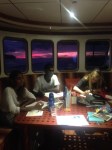
As the day drew to a close, all the hard work paid off – with a glorious sunset as a backdrop, the entire team sat, and passed their fish test! Well done everyone! Only the substrate test and invertebrate tests to go tomorrow.

Continue reading “From our scuba diving conservation holiday with whale sharks and coral reefs of the Maldives (http://www.biosphere-expeditions.org/maldives)”

From our scuba diving conservation holiday with whale sharks and coral reefs of the Maldives (http://www.biosphere-expeditions.org/maldives)


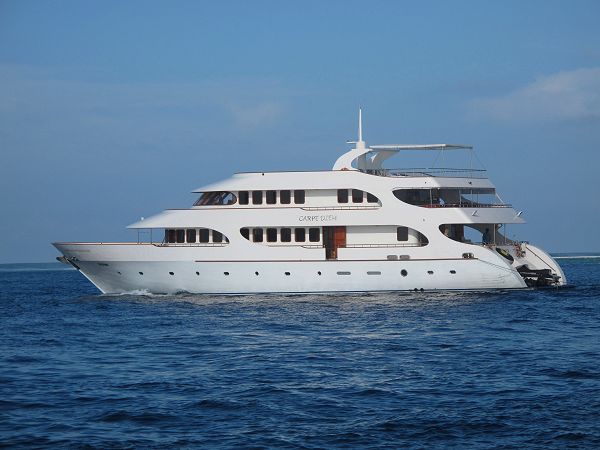
With all team members present and correct, we made our way to the Carpe Diem, our magnificent research vessel.

Boat 2010 (1)

Ours is a busy schedule, so without further ado, briefings were given and the Reef Check programme initiated, whilst we cruised to our training site at Baros to complete our first dive.

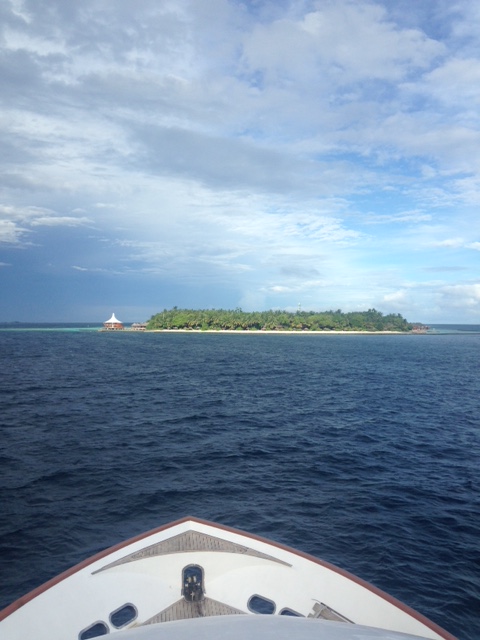
Baros, as with many islands in the Maldives, is a resort island and boasts well-kempt house reefs complete with megafauna.

baros from carpe diem

Though here, unlike many of the resorts, Reef Check training is offered to their guests. Ronny and Karin, the managers of the Baros Dive Centre, uphold the ethos of Reef Check and fully understand the benefits of long-term monitoring. Sadly, this is all-too uncommon around the Maldives, a country which depends on reefs for everything from its existence to substanance to tourist income.

The team had a great first dive and for some, who hadn’t dived in a while, it was a chance to become reacquainted with the ocean – some even saw their first shark, a white tip that moved silently through the group and off into the blue.

Rob Byron

Tomorrow the pressure is on with training lectures and dives all day, and the first test tomorrow evening!  Now though, it’s been a long day, so time for a good night’s rest.

Continue reading “From our scuba diving conservation holiday with whale sharks and coral reefs of the Maldives (http://www.biosphere-expeditions.org/maldives)”