Update from our snow leopard conservation expedition to the high mountains of the Altai Republic in Central Asia (www.biosphere-expeditions.org/altai)

So its all over! Thank you everyone, it has certainly been an adventure. I have been in the Altai a month now, our expedition scientist, Jenny, has  returned to Germany and I have had the rather large task of packing up and putting the expedition to bed for a year. I have stored the camp equipment and the Land Rovers and tomorrow I fly home to England.

The final slot ended on Saturday with some sad goodbyes and after giving Novosibirsk a taste of our disco dancing! Still, it was an early night after such a mammoth drive.

Friday morning we set off from base camp and stopped quickly to have a look at the new snow leopard museum set up by the Snow Leopard Conservancy, WWF and other local parties. We dropped off two team members, Alice and Lucy, to help further with the set up of the museum. The rest of us carried on to Kamlak and the pleasure/pain ritual of a Siberian banya!

I spent Thursday packing up camp, the others went out to local yurts and interviewed locals about their attitudes towards the snow leopard, the environment and the encroachment of the outside world on their way of life. Hannes and Martin braved one of the close-by ridges. Wind and rain, however, called them back before lunch. I like the spirit though guys! Jenny got back last night from her meeting with leaders in the Altai snow leopard research in Kosh Agash and was called back again to talk more about the role of Biosphere Expeditions’ research. Hopefully in the future more collaboration in this area of research can further benefit this fragile region.

Spitsyn snow leopard

I’ll let Jenny add an addendum to this diary in due course with a summary of the research, camera trap pictures taken, etc. We end on a high though, as news is coming through of a camera trap picture of a snow leopard on our very “own” Chicachova ridge, taken by Sergey Spitsyn of Arkhar NGO and one of the very people whom Jenny saw in Kosh Agach. This camera trap picture and a short video of our windy and sunny work is now on WordPress.

Thank you so much everyone for helping us with snow leopard research in the Altai. We could not do this without you and we can all feel proud of what we’ve achieved. It’s a long hard slog, as we all know, but we have taken another step thanks to you all.

Best wishes

Adam Stickler
Expedition leader

Continue reading “Update from our snow leopard conservation expedition to the high mountains of the Altai Republic in Central Asia (www.biosphere-expeditions.org/altai)”

Update from our working holiday volunteering with leopards, elephants and cheetahs in Namibia, Africa (www.biosphere-expeditions.org/namibia)

For our last few days the rhinos have been appearing for most of the groups, standing very close to one of the routes to a main waterhole. They are very calm and a joy to observe as we head out to our respective jobs. The elephants have also moved closer to camp and continue to entertain us with their disappearing acts. They have been observed eating and trying to knock down trees and have often been seen travelling on the tracks for some distance before walking into the bushes and vanishing.

Rhinos
Rhinos

We have seen quite a few juveniles of several species during this last week, the new-borns arriving with the spring here. There is a four-day old giraffe, several baby oryx that look like little fluffy cows (although I’m told that their distinctive long straight horns grow very quickly) and we came across a very calm sable antelope with three young on Wednesday. The acacia bushes are coming more into bloom and with the warm weather the spring smells are wafting over the savannah now. Flipflops around camp are becoming fashionable with a growing feeling that the cold has really gone for this year.

As the end of this slot approached a bottle of whisky appeared from John’s bag and the last three nights have produced an increasing number of tasters each time. We even managed to stay up past 22:00 on Wednesday night, pretty much unheard of due to the early mornings, fresh air and early darkness (06:00) in these parts. For our last evening we all headed out to find the ancient rock art that is marked on our maps as a little way NE of base. We had a wonderful drive as the sun was beginning to set and spent a relaxed half hour with the rhinos before heading up the slope to the East. We stopped in what we thought was the right spot, but only found a rare example of ancient Namibian invisible art. After some serious searching we gave up and had a sun-downer whilst Kristina gave us a summary of the work that has been done here. We all got back in the Land Rovers and headed back only to be stopped after a few minutes by Kristina declaring that we were at the right spot – after a very short search we found a fabulous drawing of an oryx and some hunters, well worth it. A shooting star lit our way home and the evening finished with Joerg giving us a great summary of the elephant research that had been done.

Many thanks to all in slot 2. It was a very memorable 2 weeks with some great work and lots of expedition spirit! I am heading home too so all the best to Jenny (Kraushaar) who will be taking over as expedition leader for the remainder of the expedition, and I hope that Kristina, Joerg, and the next teams have a wonderful and productive time.

Best wishes

Kathy Gill
Strategy Director & Expedition Leader

Continue reading “Update from our working holiday volunteering with leopards, elephants and cheetahs in Namibia, Africa (www.biosphere-expeditions.org/namibia)”

Update from our conservation holiday volunteering with jaguars, pumas, ocelots, primates and other species in the Peru Amazon jungle (www.biosphere-expeditions.org/peru)

Team 1’s expedition ended with a great last afternoon & evening. As the river’s water level has dropped about one meter over the last few days, some of the local ARC staff went diving in the river trying to find Felix’ digital camera drowned on Wednesday during the canoe lesson. Surprisingly it was found near the gangplank and being put in the sun to dry out by overjoyed Felix. Klaus, Raphael, Sarah & Libby joined the refreshing bathing session. They only came out when caimans were spotted around the corner at the far river’s edge.

The kitchen staff surprised the team at dinner by serenading typical Peruvian carnival music playing drums and flute while Libby and Donaldo were dancing to the rhythm. There was a cake for dessert and most of us went out for either a forest nightwalk or a boat drive to explore the nocturnal rainforest wildlife one last time.

I have now waved goodbye to team 1 – thank you again for being great expeditioners, explorers & data collectors on our Peru project in the Amazon. Good luck & those of you who will travel on through South America, have fun, and safe travels back home everyone else. Hope to see some of you again some day.

Team 1
Team 1

Continue reading “Update from our conservation holiday volunteering with jaguars, pumas, ocelots, primates and other species in the Peru Amazon jungle (www.biosphere-expeditions.org/peru)”

Update from our conservation holiday volunteering with jaguars, pumas, ocelots, primates and other species in the Peru Amazon jungle (www.biosphere-expeditions.org/peru)

We’ve had a very busy week with team 1 in the jungle. It’s gone so quickly and later today team 1 will leave. Here’s what happened over the last week.

After our Sunday/Monday training phase, on Tuesday (21 August) all teams went out to set up 8 camera traps at randomly choosen locations within the trail grid. The trail grid is our research area just behind the Amazon Research Centre (ARC), a 2 x 2 km representative area of the Tamshyacu Tahuayo Reserve including open and dense forest, palm swamps and higher ground that is usually not flooded during the rainy season. The area is surveyed from twenty trails cut every 100 metres through the forest. It’s a unique and amazing research tool in the Amazon.

Tine & Penny setting up a camera trap

On our survey walks we concentrated on spotting mammals such as monkeys, peccaries, coatis to name but a few. Known as a biodiversity hotspot, eleven different species of monkeys are known to be present in the area. It turned out to be a difficult task to find and identify them, though. Klaus and Felix were lucky enough to spot a coati twice. Teresa, Libby and Steve spotted an anteater sleeping high up in a tree with the help of Donaldo, one of the local guides. Tine spotted a single monkey taking a nap on a branch. Alarming her team mate, Penny must have suddenly interrupted his dreams so that he fell off his branch and ran away as fast as he could.

Larger groups of titi, capuchin and squirrel monkeys were seen by all of the groups, sometimes further away from the trails. We have all learned to walk very, very quietly during the transect surveys very, very early in the morning. After the first survey day on Tuesday, we shifted breakfast time to 5:30 and are leaving base at 6:00. The sun has been shining intensively, so that not only we, but also the forest animals become quiet and lazy during midday.

We have also done our canoe surveys up and down the Tahuayo river in the afternoon, coming across amazing bird life, but unfortunately no monkeys or other mammals. After dinner Alfredo also takes out a group of maximum three for a night walk in the forest. Bats have been seen as well a a tarantula, nocturnal frogs, leafcutter ants and many other smaller animals one would never spot during the day. Hopefully we will find more nocturnal felids on our camera traps.

Yesterday (Friday, 24 August) we did the last transect surveys and collected all camera traps on the way. It is a tiring job to walk the transects keeping ears and eyes open for 5 hours. Again, we left base at 6:00 in the morning to avoid walking in the midday heat. Temperatures slightly dropped after some light rainfalls, but were in the 30s again on Friday.

It was exciting to flick through the pictures of 8 SD cards. Funny faces, a jaguar named Libby and…. and a margay, a small felid. Other pictures showed fragments of other mammals identified by Alfredo as agouti. All this is a good result and Alfredo is pleased. Thank you team 1 – we couldn’t have done this without you.

Margay
Margay

Team 2, here’s an admin reminder. Assembly time is 9:00 on Sunday morning at the A&E office in Iquitos. A&E office staff will meet & greet you there and I will await everyone at the Tahuayo Lodge where we will have lunch before swapping to smaller boats and heading off for our research centre base. Please make sure you are on time; an A&E guide will be with you from Iquitos to the lodge.

Safe travels & see you on Sunday!

Continue reading “Update from our conservation holiday volunteering with jaguars, pumas, ocelots, primates and other species in the Peru Amazon jungle (www.biosphere-expeditions.org/peru)”

Update from our SCUBA conservation holiday volunteering with coral reefs and whale sharks of the Maldives (www.biosphere-expeditions.org/maldives)

Welcome to the Maldives diary. My name is Matthias Hammer and I will be your expedition leader for the Maldives replacing Kathy Gill. More information about me is at www.biosphere-expeditions.org/about > tab “Staff”.

I hope your preparations are going well and I look forward to seeing you in Male’ on 2 September at 09.00 in the lobby of the Nasandhura Palace Hotel. My Maldivian mobile (for emergency purposes only, such as missing assembly) will be +960 7570825. Because we have such great support from our Carpe Diem liveaboard team, I will only arrive a day ahead of you and set things up. I may write again before we all meet, but if not, I look forward to seeing you Sunday after next.

Safe travels.

Dr. Matthias Hammer
Expedition leader

Continue reading “Update from our SCUBA conservation holiday volunteering with coral reefs and whale sharks of the Maldives (www.biosphere-expeditions.org/maldives)”

Update from our working holiday volunteering with leopards, elephants and cheetahs in Namibia, Africa (www.biosphere-expeditions.org/namibia)

With the freezing overnight temperatures continuing we decided to deactivate the box traps for a couple of nights. This was to prevent the capture of smaller animals that cannot cope with such low temperatures at times when they are usually in their dens. Thankfully this spell of weather has passed and the nights have warmed up again, so all the traps are fully operative. However, nothing to report in terms of captures. We have tracks of predators walking near the traps, but nothing has gone in as yet…

The elephant teams have been continuing their observations morning and afternoon and getting quite close to the animals now, something that we were unable to do in the first slot. This has meant some interesting feeding observations and also some reversing to maintain our 50 metre distance rule (we should not get closer than this for safety reasons) as the elephants are wandering towards us and have, on occasion, appeared out of the bushes at a closer distance, but always calm and relaxed. It’s amazing that such large animals can be invisible in acacia bushes.

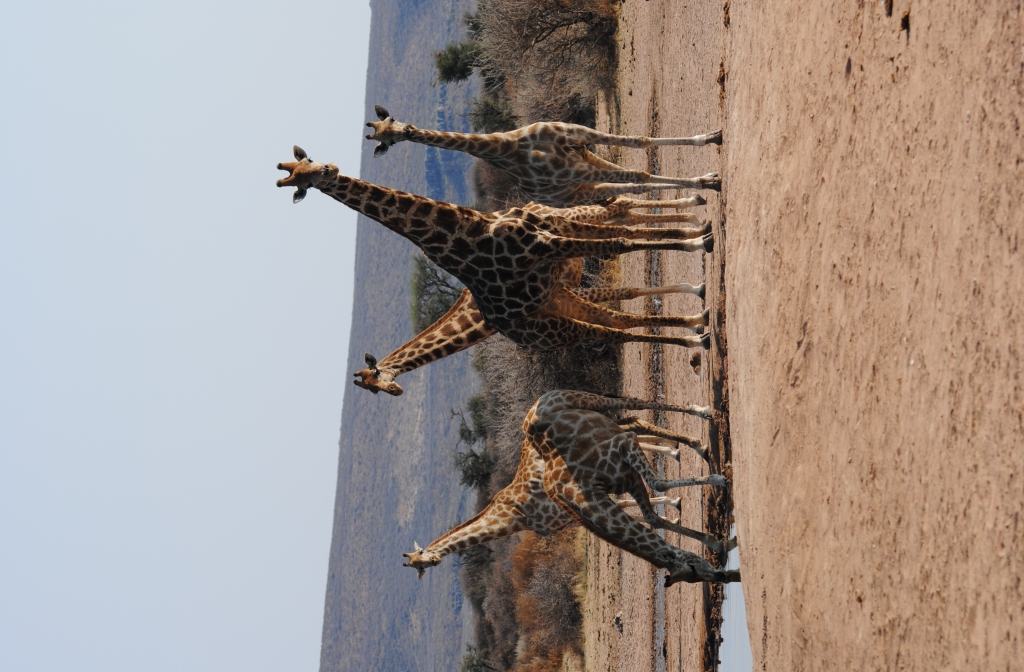
Our waterhole counts have been interesting too – there are a lot of different species here, with everything from giraffe, to cavorting wildebeest and shy oryx, not to mention the donkeys who were a surprise to me. Due to the destructive nature of the elephants here, it is not sensible to build the sort of hides that you can find in Europe – nice wooden boxes for people to sit in with a window slit to look out of.  Unfortunately these don’t last long as the elephants can be very inquisitive and when they want to find out about something they investigate with their trunks and objects often don’t survive very long. So we use adapted bushes with enough foliage to keep people covered and just enough room for three people sitting on folding stools. These have worked very well in fooling one species – the elephant team spent 20 minutes in front of the newest hide doing their radio telemetry work and noting cheetah tracks before one of them followed some tracks right to the door of the hide and three laughing people. It has been more difficult to hide from the other species, most animals seem to know that we are there, often staring straight at the hide before drinking and going about their business. This month is known as the month of changing winds and we more than suspect that the animals can smell us (some team members even claimed to have had showers the same day so they don’t understand it). Our evening camp fire discussions over the last couple of nights have included a lot of debate on hide design – a portable, collapsible design seems to be the most favoured at the moment, but I think we will have a proper design competition before the end of the slot.

Giraffe at the waterhole

Continue reading “Update from our working holiday volunteering with leopards, elephants and cheetahs in Namibia, Africa (www.biosphere-expeditions.org/namibia)”

Update from our conservation holiday volunteering with jaguars, pumas, ocelots, primates and other species in the Peru Amazon jungle (www.biosphere-expeditions.org/peru)

The ground is set at the ARC to welcome the first expedition team. Over the last few days Alfredo and I have worked on the datasheets and a weekly work plan including various tasks for each group. We went out for a night walk in the forest spotting a tarantula and more nocturnal animals, unfortunately no mammals, though.

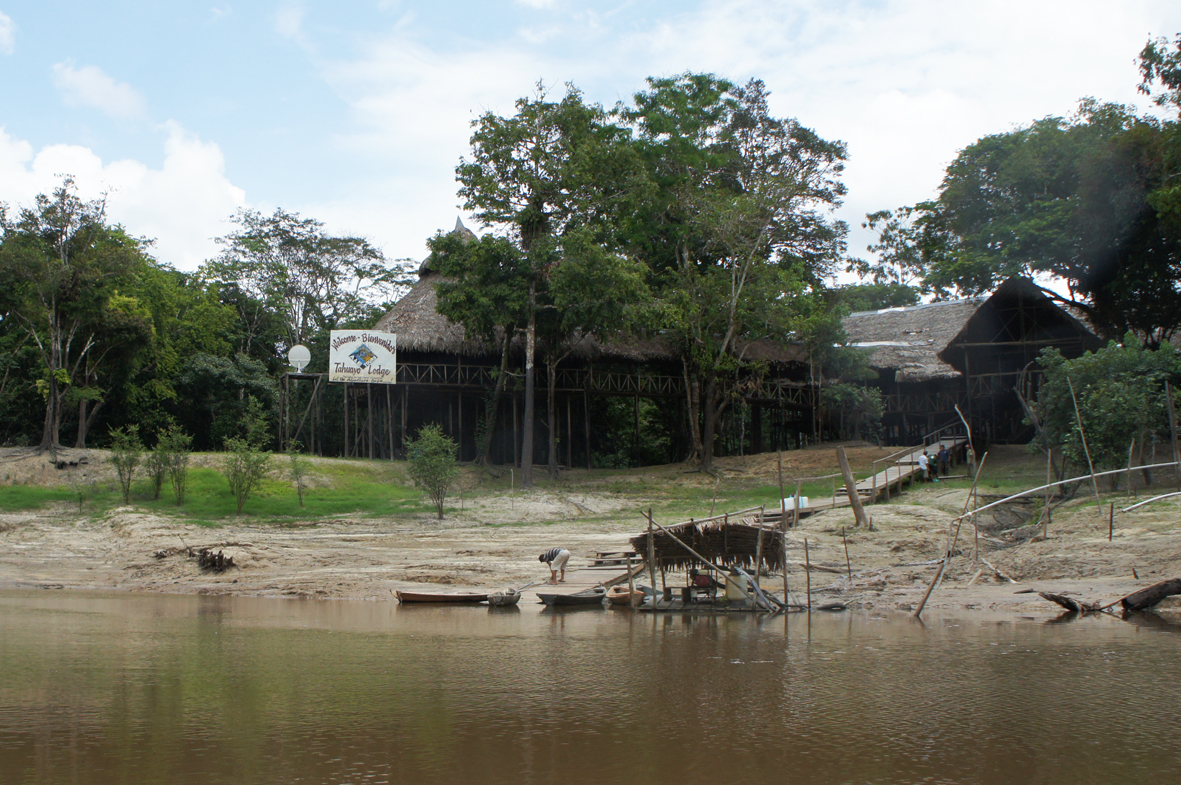
Writing this I am waiting at the Tahuayo Lodge for the team members to arrive from Iquitos. All of them have made it despite late arrivals and cancelled flights from Australia. Once they arrive here, the rest of the day will be packed with introductions, safety procedures and background information about the animals and the research.

Tahuayo Lodge
Tahuayo Lodge

Having spent most of the time working on our computers and finishing preparations, Alfredo and I can’t wait to go out into the field.

Continue reading “Update from our conservation holiday volunteering with jaguars, pumas, ocelots, primates and other species in the Peru Amazon jungle (www.biosphere-expeditions.org/peru)”

Update from our working holiday volunteering with leopards, elephants and cheetahs in Namibia, Africa (www.biosphere-expeditions.org/namibia)

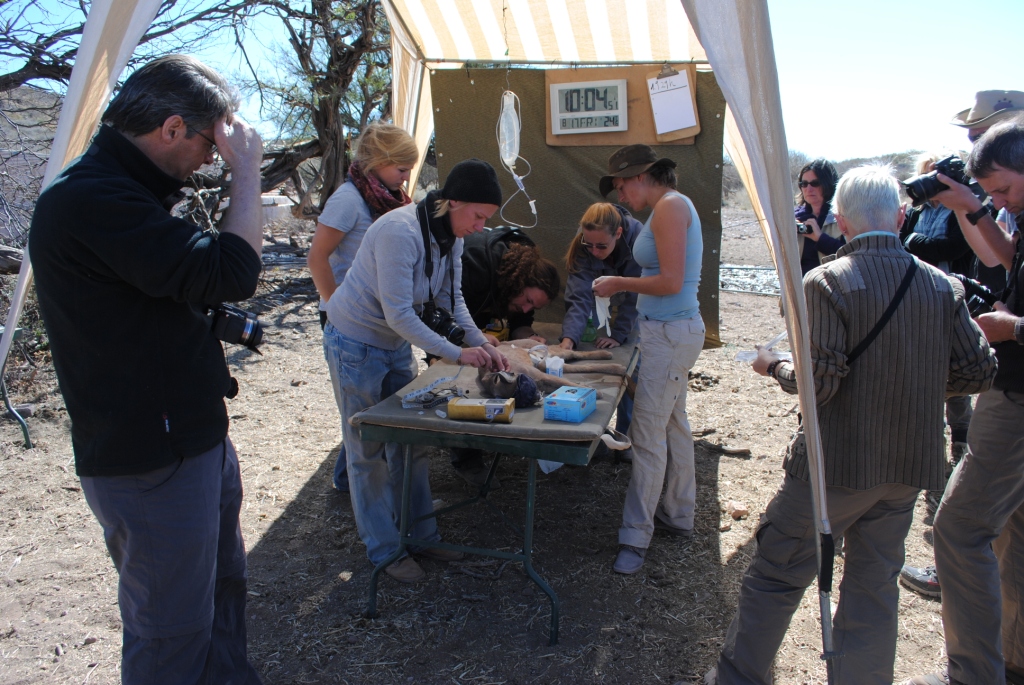
The temperature has dropped again over the last few nights with ice on the waterholes early in the morning and our water pipes freezing, so there is no water first thing in the morning. The Land Rovers have also refused to move before they have warmed up, but teams have still managed to leave camp by 08:00. On Thursday morning a caracal was found in box trap number 1 (a quick congratulations to the team from the last slot who set this trap up before they left – their third capture, truly box trap setting gods:)). The wildlife vet came to sedate the animal so that samples could be taken, and the usual efficient and professional organisation came with her. She arrives on scene with helpers (some also qualified vets) and a tent is set up with a table for the animal to be taken to once it is sedated. A clock sits over the proceedings and everyone works quickly to ensure that the animal is sedated for the minimum amount of time. Our team members likened it to everything from the set up used by Medicine sans Frontier in the field, to the arrival of a CSI (Crime Scene Investigation) team.

CSI field lab
CSI field lab

Caracals are known to bruise their faces when they are in box traps, something that they quickly recover from, but our animal had damaged its lower teeth, a very rare happening, so a decision was taken to remove it to a large enclosure where it could be watched for some days before release.

One team was very fortunate in finding some big drag marks crossing their path, and on following them into the bush they found the remains of an impala that had been killed by a leopard.  It was a very fresh kill, which means that the leopard will be back to eat more. A decision was quickly made to move one of the box traps to this location and set up a kraal around the kill so that if the leopard wanted to get to the meat, then it would have to go through the box trap and hopefully be captured. The team worked hard with the very spikey acacia bushes to create a kraal that the leopard could not get through. This morning we found the tracks of the leopard coming back to have a look for its kill but it hadn’t tried to reach it  – we are very hopeful that it will ‘take the bait’ within the next few nights…

Continue reading “Update from our working holiday volunteering with leopards, elephants and cheetahs in Namibia, Africa (www.biosphere-expeditions.org/namibia)”

Update from our snow leopard conservation expedition to the high mountains of the Altai Republic in Central Asia (www.biosphere-expeditions.org/altai)

Here’s what happened since my last update.

Thursday (16 Aug) was our first day out walking so we chose a nearby valley to get everybody’s legs and lungs working at this altitude. The skills still fresh from training yesterday were put to good use. As soon as we had left the tree line, we spotted two groups of ibex (one with 3 males, 3 females, 3 juveniles, the second with 4 adults, 2 juvenilea) wandering up the scree and out of sight over the ridge. The sighting was logged (correctly!) on the datasheets using GPS and compass. There was snow on the highest ridges; unfortunately this is where snow leopards like to live. Climbing up would be difficult and dangerous for a big group so Martin and Hannes took up the challenge with Oleg, Jenny and I leaving the rest of the group surveying the valley floor with our visiting scientist Anna (a scrape was found here last slot). Camera traps 2 and 8 were successfully collected and revealed unidentifiable ghostly figures moving in the night. The importance of a test day became clear as Wan-Lin’s walking boot sole came clean off as she crossed a stream. Luckily, Hannes, the man with a plan (and a rucksack full of EVERYTHING) came to the rescue by pulling out a roll of duct tape and neatly lashing the sole back on. The shoe held together back to camp and is still going strong.

Taping Wan Lin's shoe
Taping Wan Lin’s shoe

More sunshine on Friday (17 Aug) prompted a move to an advanced base camp with the objective of retrieving a number of camera traps placed around a ridge near a high tarn (lake). It was a day hike to the lake and back and a select few (Hannes, Martin, Karl, Jenny, Kate, Oleg and I) would be left at the lake overnight to spend tomorrow at the top of the ridge retrieving the traps. All of us helped shift camp to the lake and then the valley group (with Anna) retreated down the boulder field to research the steppe habitat in the valley. As we (the ridge group) saw the valley group disappearing with Oleg, stormy clouds gathered and the first drops of snow started falling. Still, we had had fun designing sleeping arrangements. Hannes (ever a man for an experiment) had rigged a tarp/stone house and intended to sleep the night there. Karl and I preferred the simple approach and brought bivi bags. The rest preferred to use the two lightweight camouflage tents.  It started to snow at 21.00 and soon the bivi bags gave up, both Karl and my sleeping bags were soaking wet, we decided to head into the tents. Now the two tents were at maximum capacity (3 persons) with Hannes stubbornly sticking it out in his homemade den. As the snow built up into the early hours of yesterday morning (18 Aug) we had to wake up every half hour to kick the snow off the roof of our tent to avoid it collapsing. Hannes fared less well! At regular intervals during the night his tarp buckled under the weight of the snow. This was his signal to wake up and bash the snow off, getting soaking wet in the meantime. At around 03.45 he gave up too and showed up at our tent begging for somewhere warm to sleep! Naturally, we allowed the soaking wet German inside and spent the next 3 sleepless hours crushed up like sardines. At least we were warm!

This slideshow requires JavaScript.

We couldn’t get up the ridge (for obvious reasons) yesterday, so after a brief breakfast we set off on the 4-hour journey back to the Land Rover. The camera traps will have to wait for another day. That’s the uncertainty of expeditions!

We arrived back at basecamp safely where it was raining. The rest of the group had decided (wisely) not to venture out onto the steppe and instead they were keeping warm in the mess tent. At time of writing the rain has stopped and the cloud is breaking up! Time to make another plan!

Continue reading “Update from our snow leopard conservation expedition to the high mountains of the Altai Republic in Central Asia (www.biosphere-expeditions.org/altai)”

Update from our working holiday volunteering with leopards, elephants and cheetahs in Namibia, Africa (www.biosphere-expeditions.org/namibia)

The temperature has been slowly warming up as the team has warmed to their tasks. There were two days of training and yestreday have completed the first two full days of work. The training all went well – the presentation about the abilities of the Land Rovers have obviously been taken on board a little bit too well by Ilka. When she was driving there was a comment at one point, in unison, by the two passengers in the back of the vehicle pointing out, ‘There’s a big hole’.  The response from the driving Ilka was ‘This is a Land Rover’. With no pause, the reply came from the voices in the back ‘It’s still a big hole!!’.

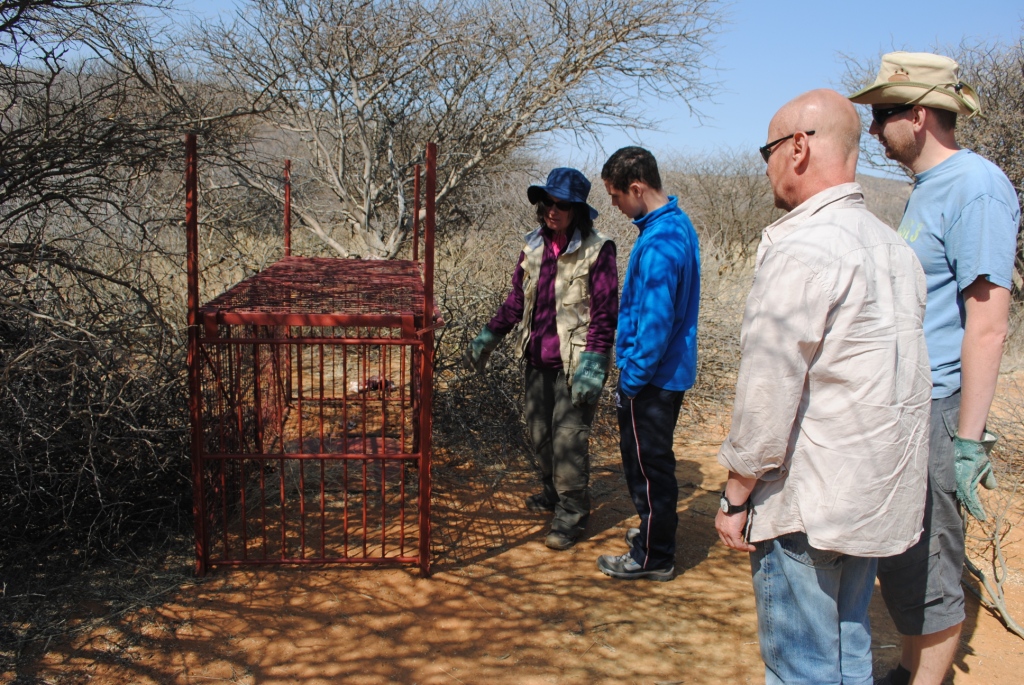
The box traps were disarmed during the team change-over, so that no animals were captured whilst we were busy with training. They were re-armed yesterday and today, and new camera traps have been installed to add to the ones already in the field.

Setting a box trap
Setting a box trap

Already we have found several tracks of predators, and our work to understand the elephant movements has begun with several observations, during some of which we were able to get very close to the animals and see them ripping off parts of bushes.  In one instance we witnessed one of the larger animals working out whether to knock over a tree or not – she decided against in the end, but it was a good example of how the elephants work things out and test out their strength on potential sources of food (pushing hard with the front of their head between their tusks).

The team members are all working well together. They are getting used to the daily planning cycle and the constant changes and adaptations necessary to plans as things develop the way they do on expedition. The showers are hot and the beer is cold, there are a lot of beautiful animals to observe and a lot of work to be done. One team member, Fritz, made a good comment about his normal work that applies well here – he said that it is best to have a vision and to react to circumstances in a way that supports the vision. Plans should follow the vision, not lead it – very ‘expedition’!!

Continue reading “Update from our working holiday volunteering with leopards, elephants and cheetahs in Namibia, Africa (www.biosphere-expeditions.org/namibia)”