Award-winning, non-profit and ethical wildlife conservation volunteering. Advancing citizen science and conservation since 1999 – for nature, not profit.
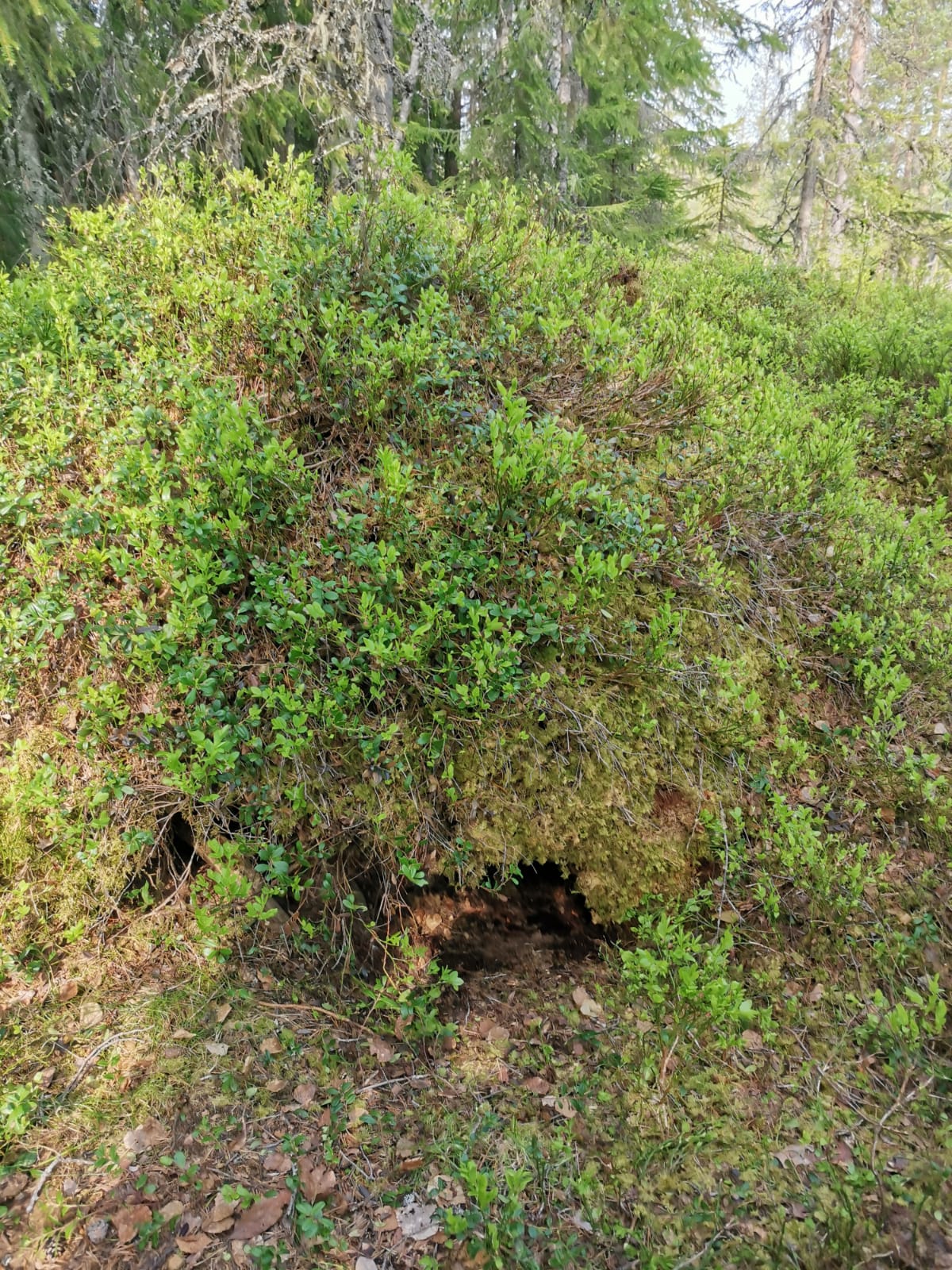
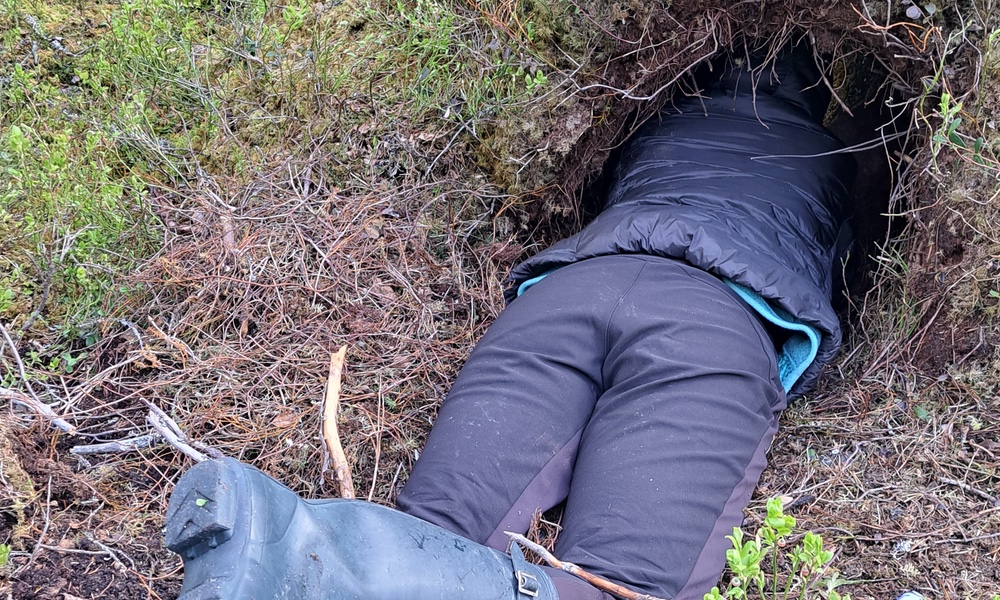
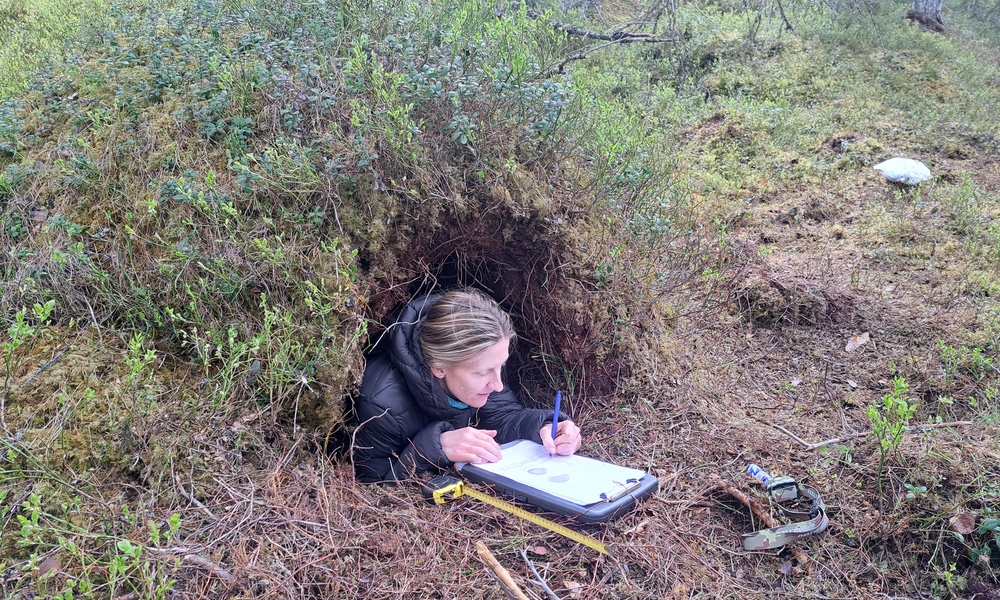
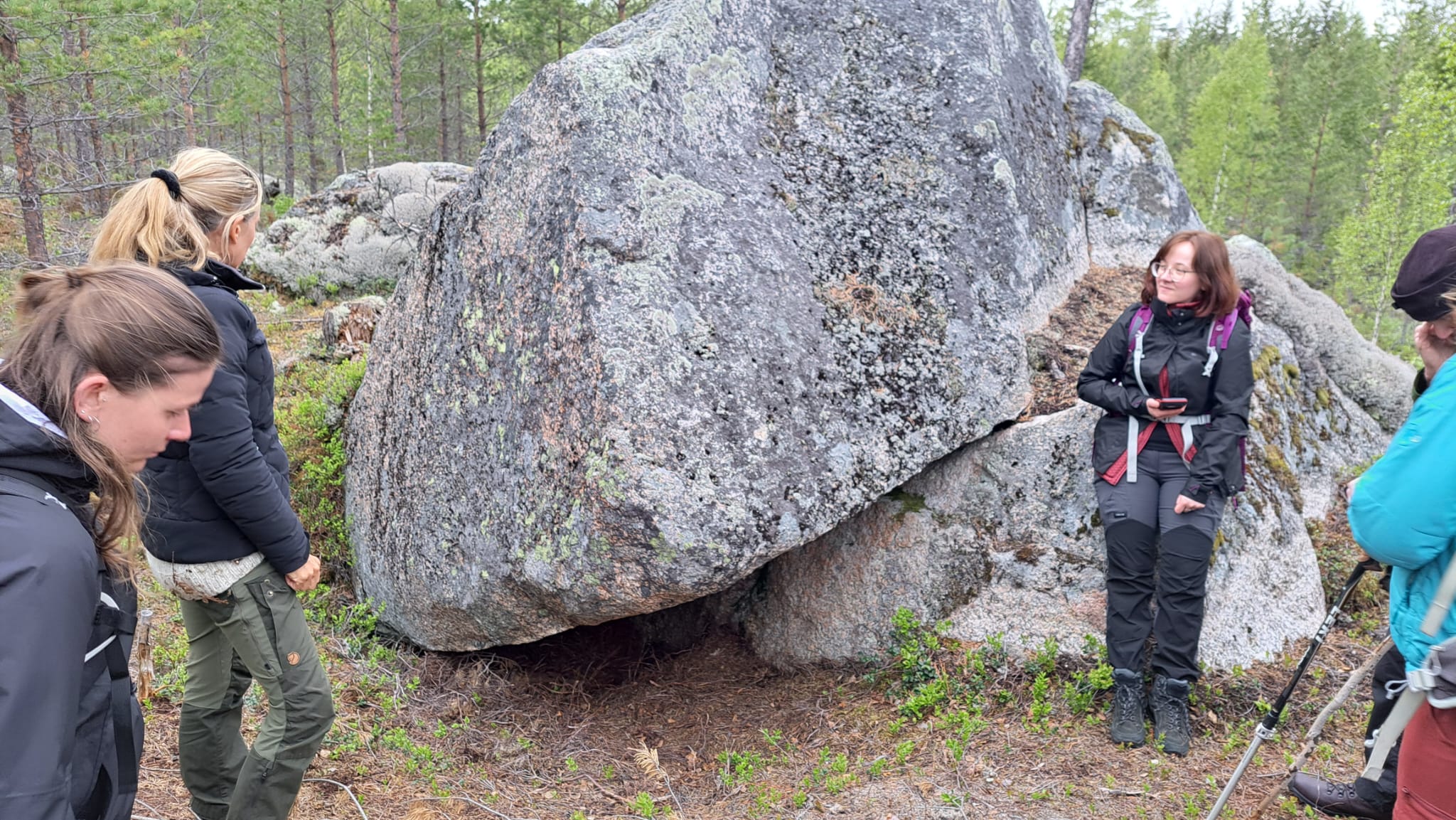
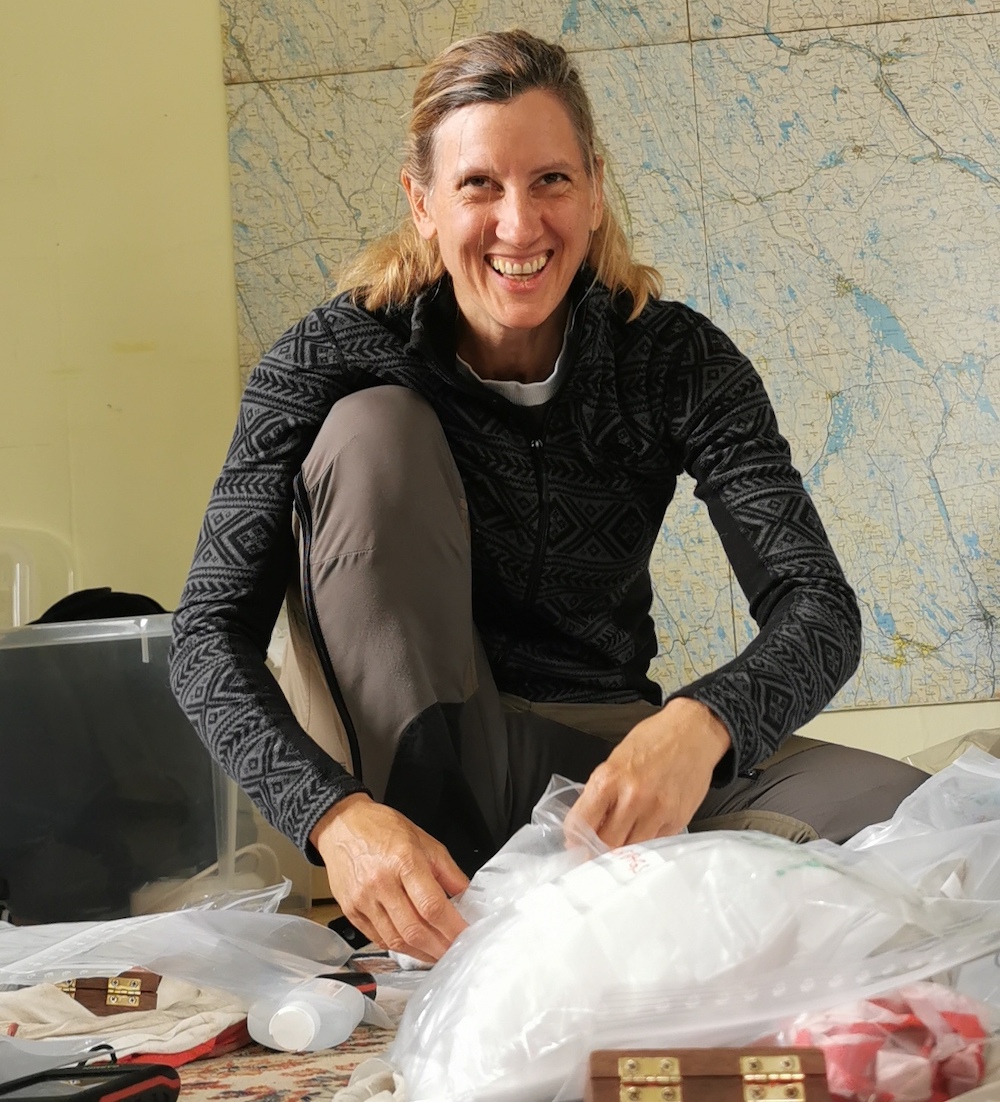
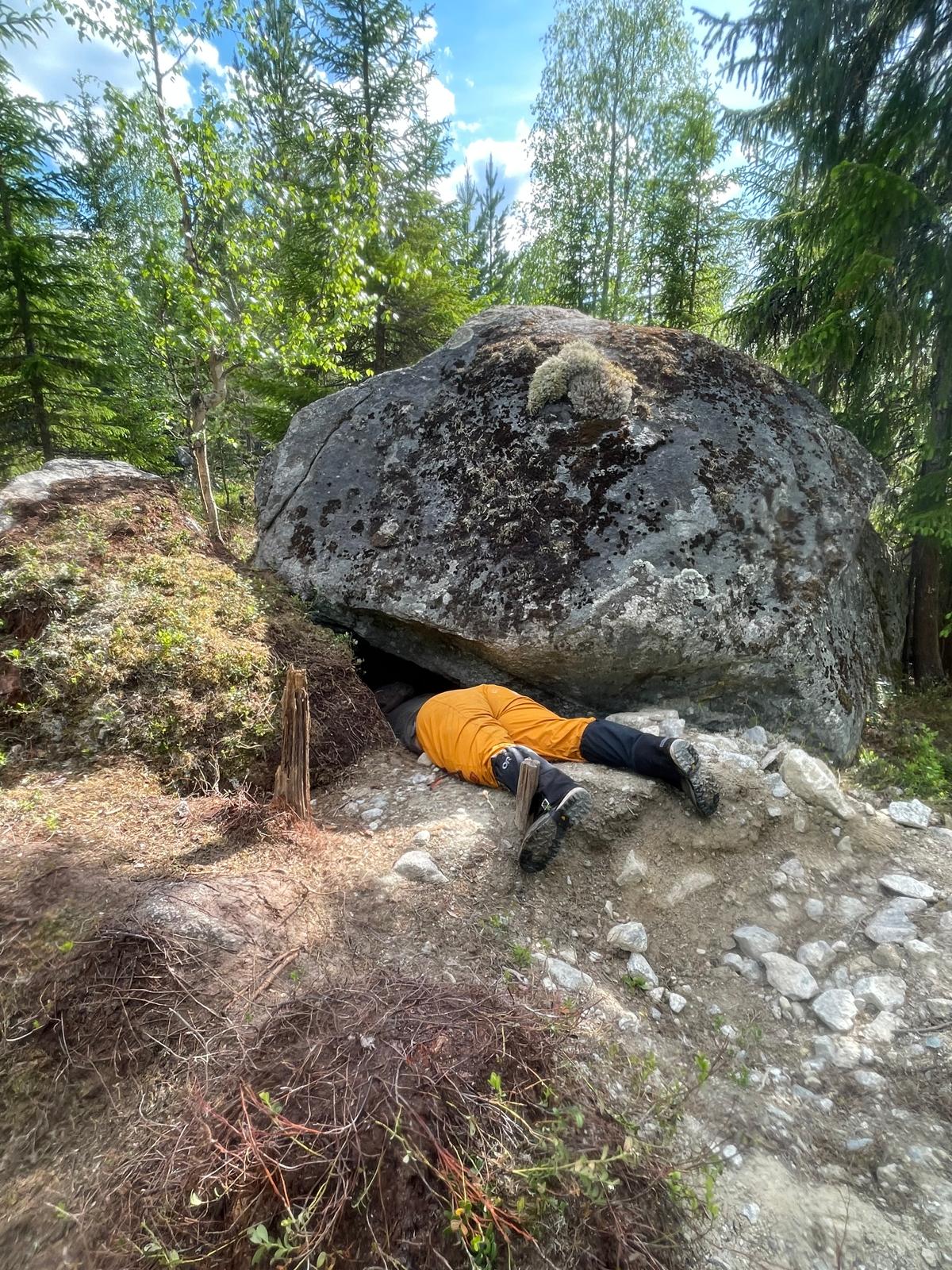
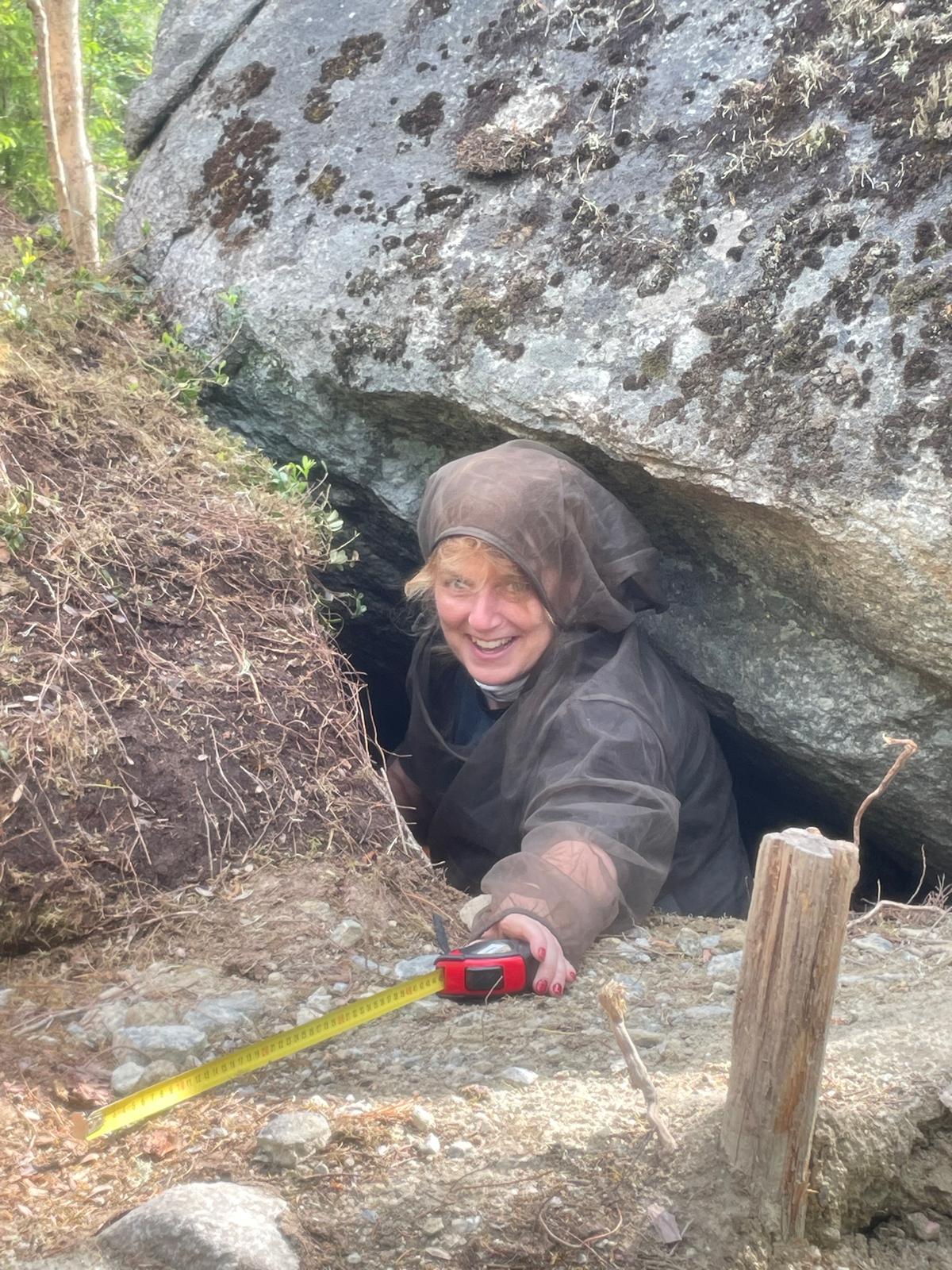
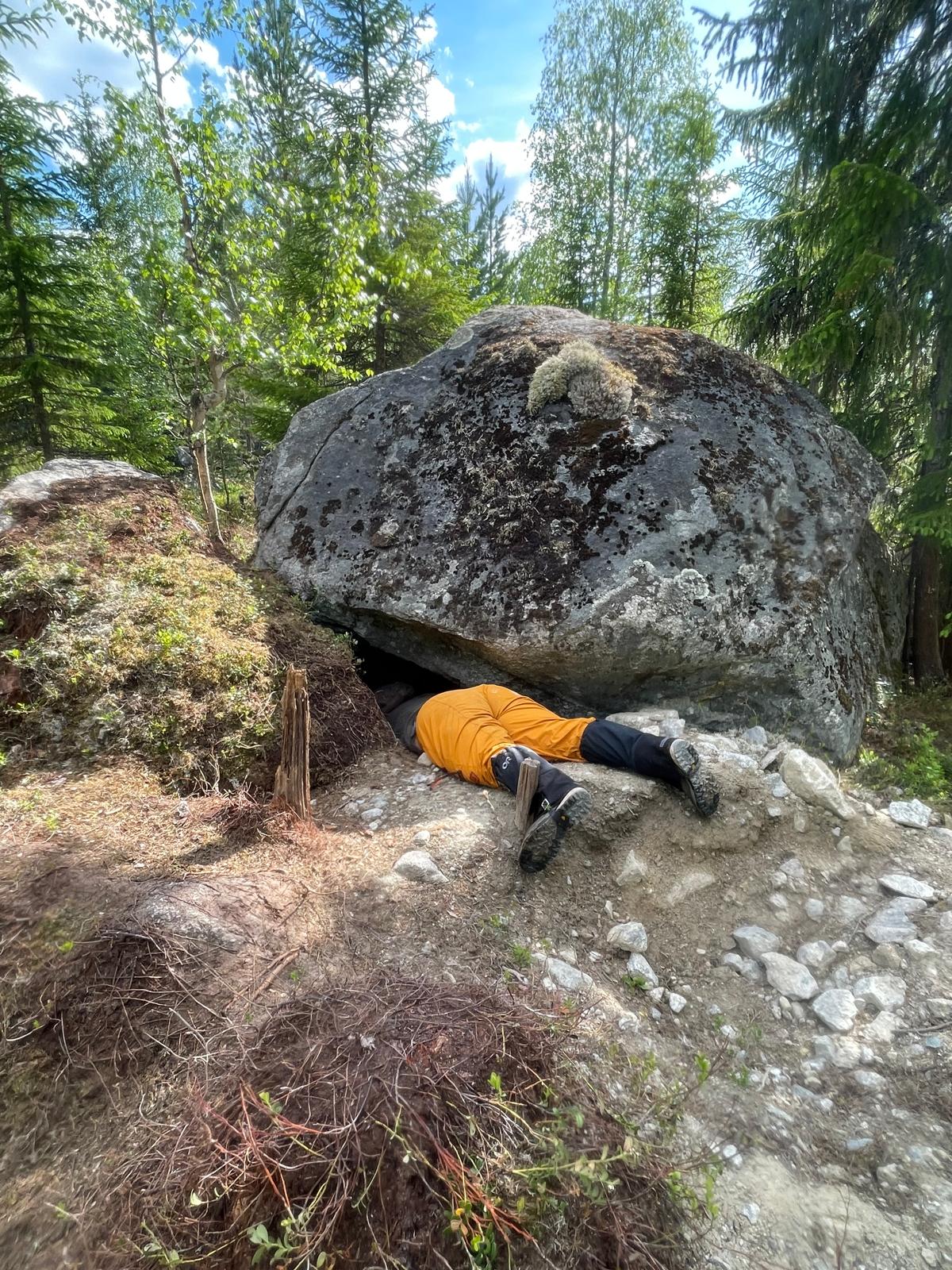
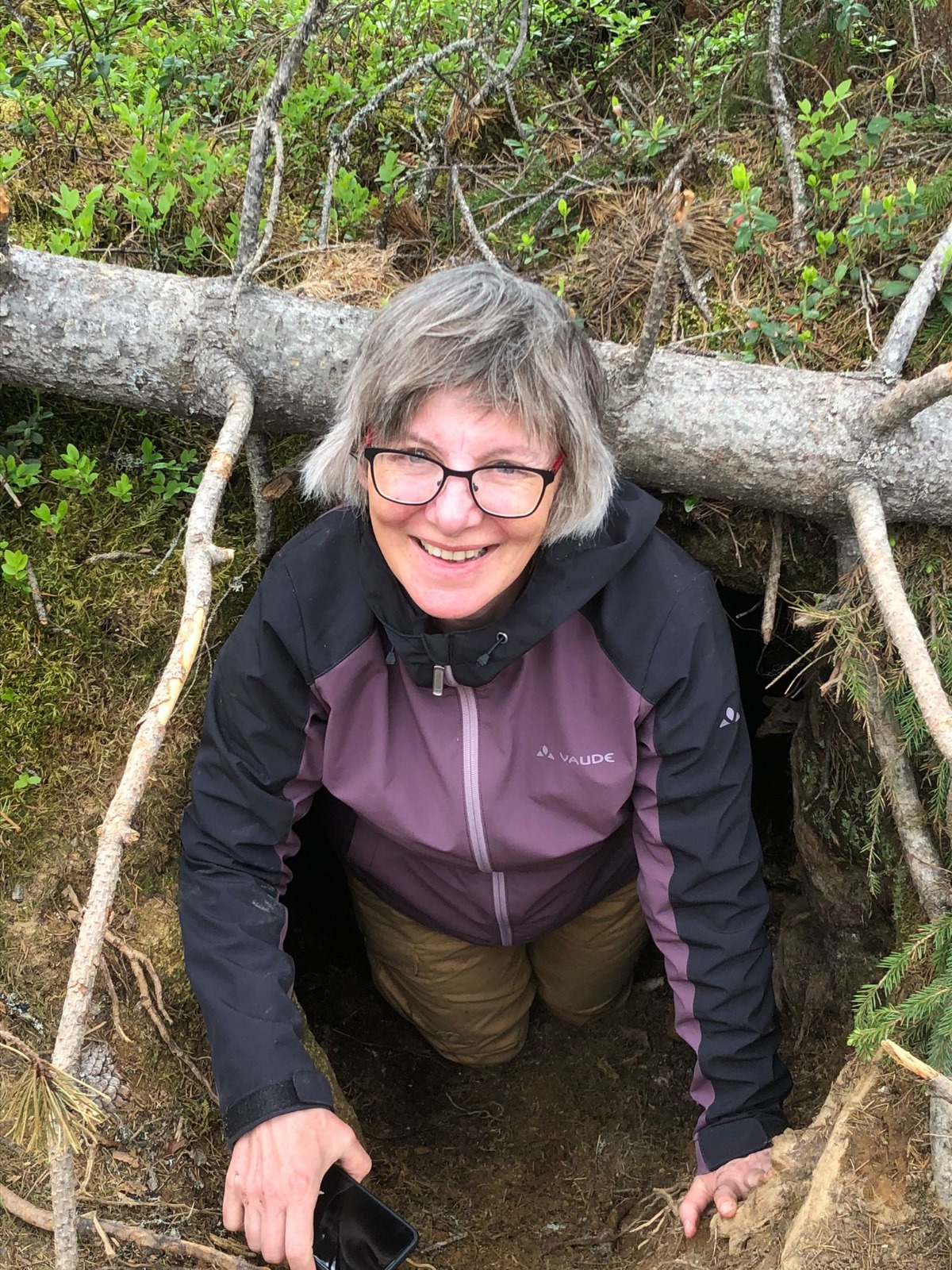
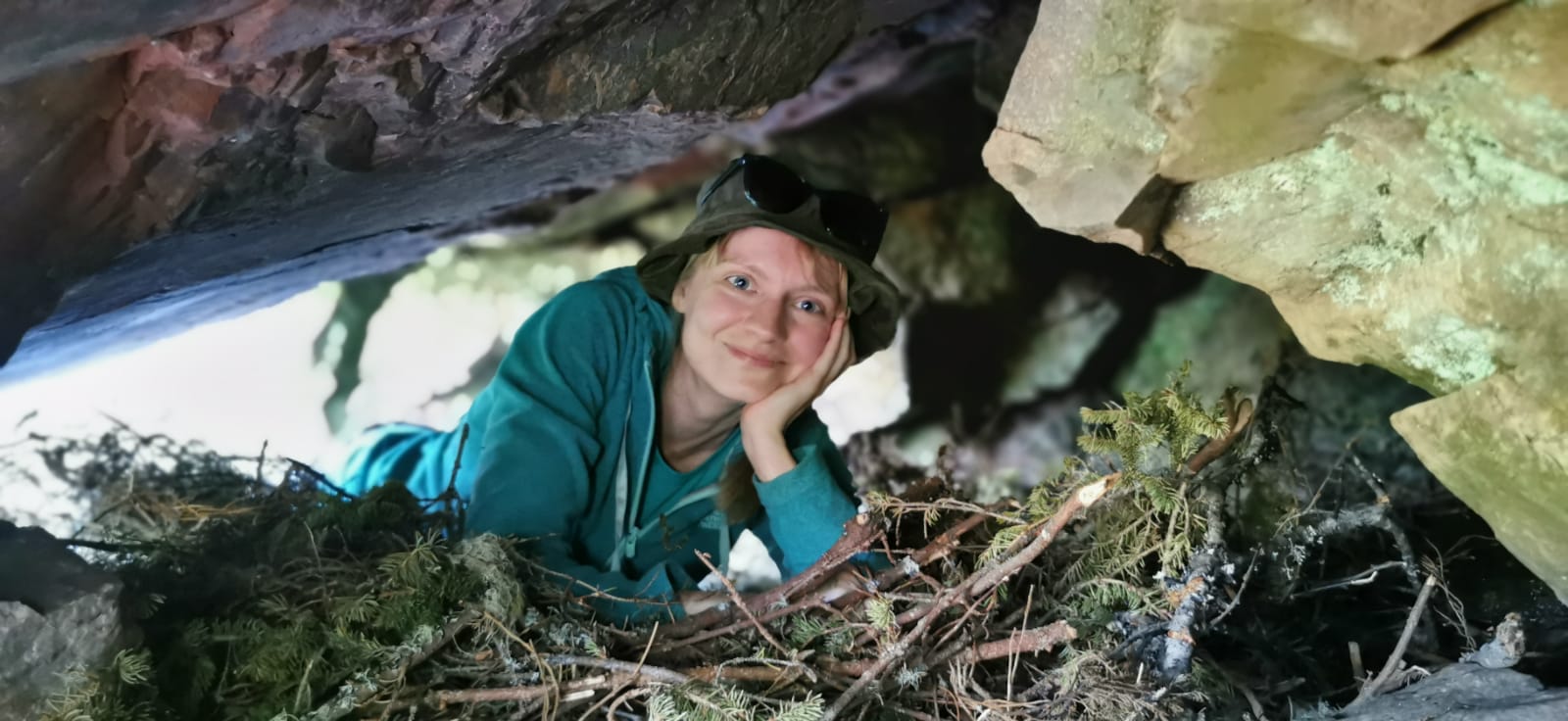
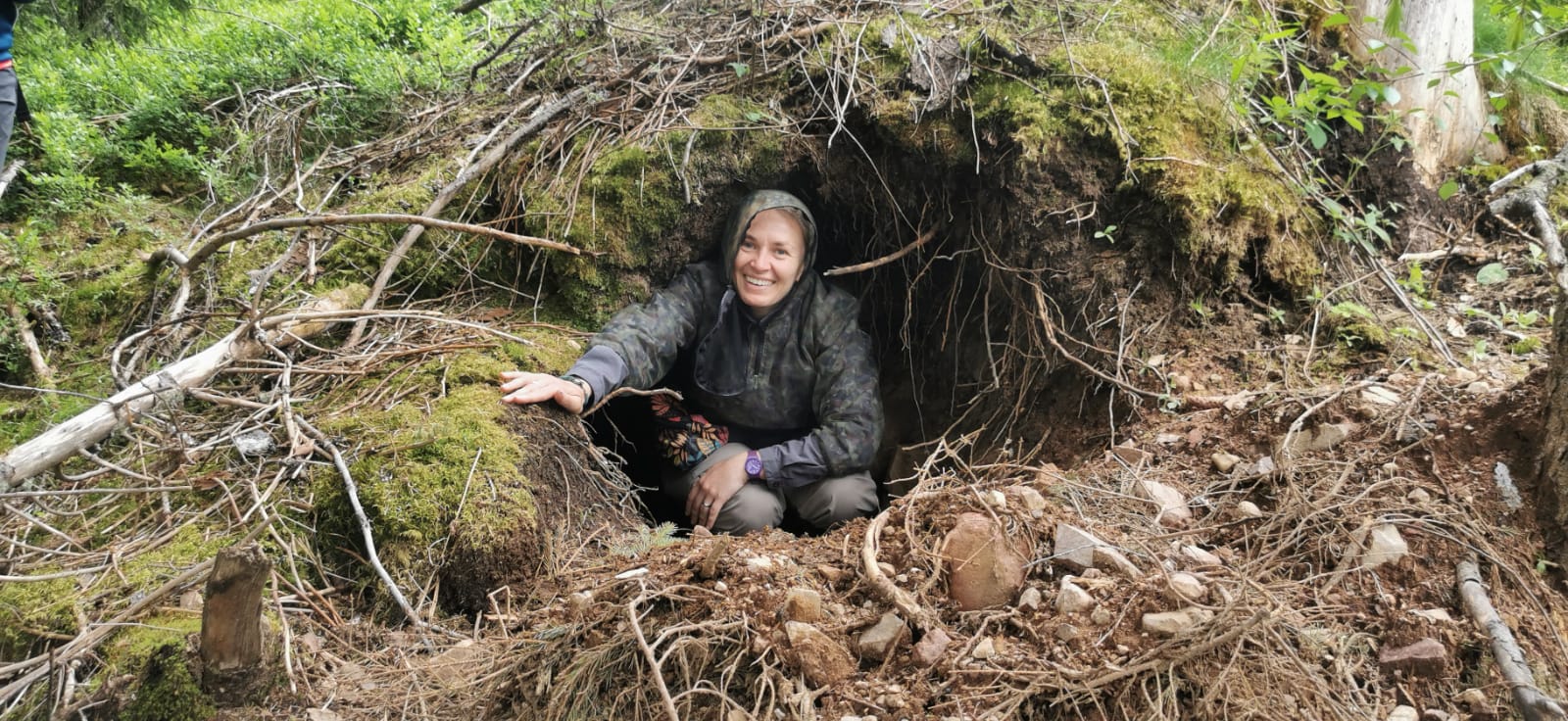
Over the past week, we’ve been checking the hell out of the dens within an hour’s drive of the base in all directions. We’ve studied and recorded soil, rock, anthill, nest and all manner of weird and wonderful dens, crawled into almost all of them (thank you Keira and Sarah for being the pre-eminent den crawlers) to measure and study the inside, found evidence of cubs and feeding and preying and playing.
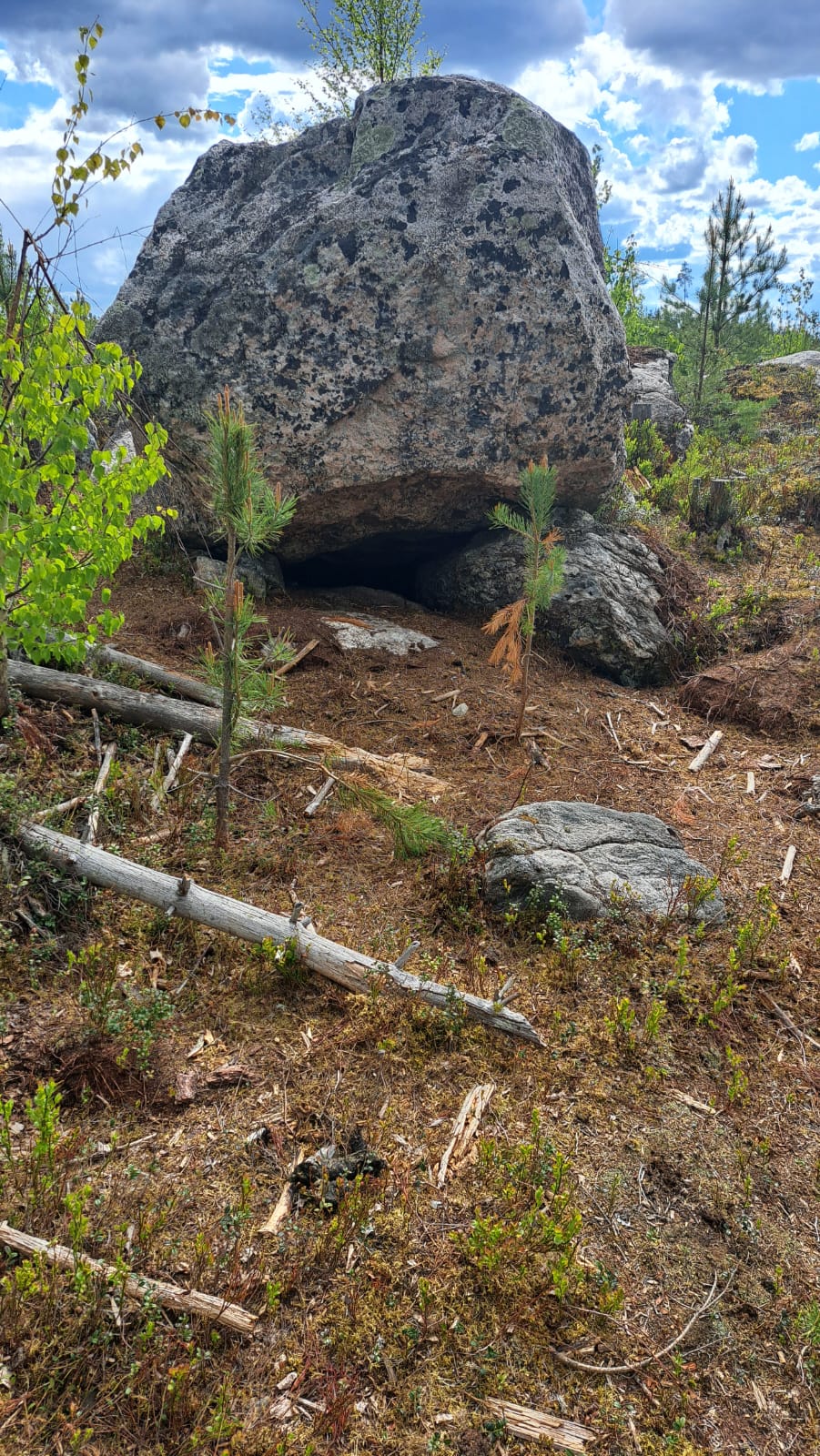
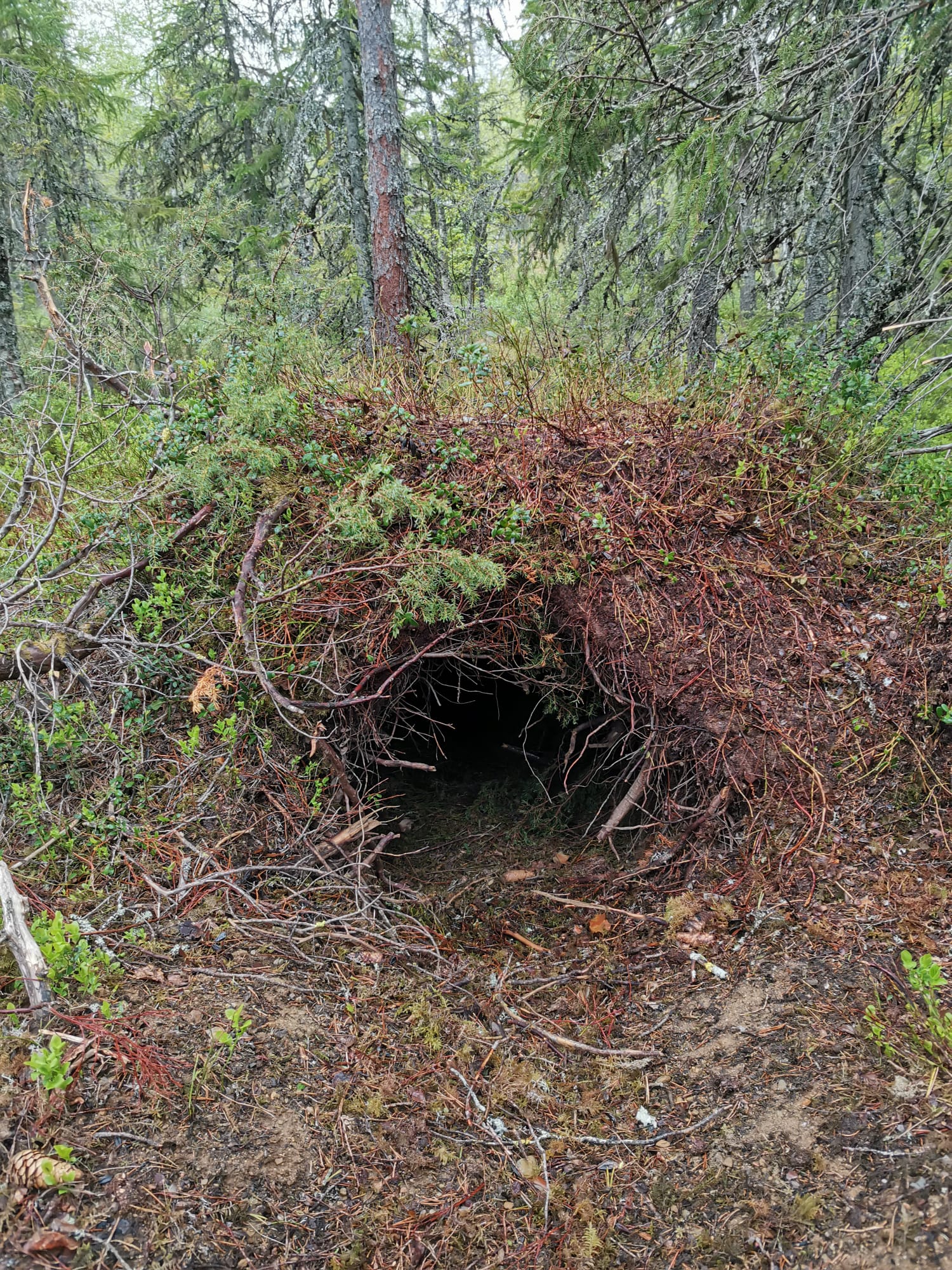
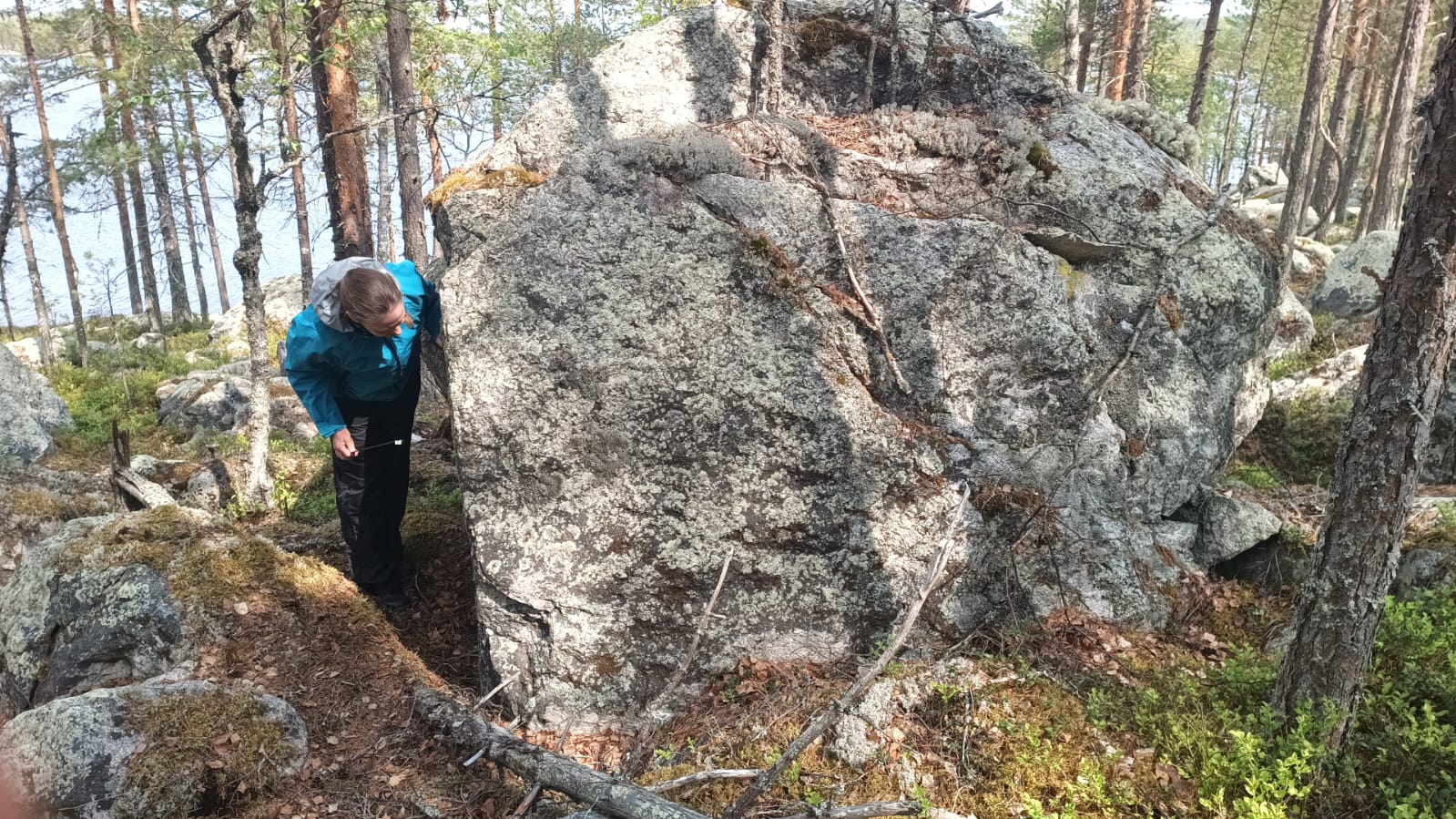
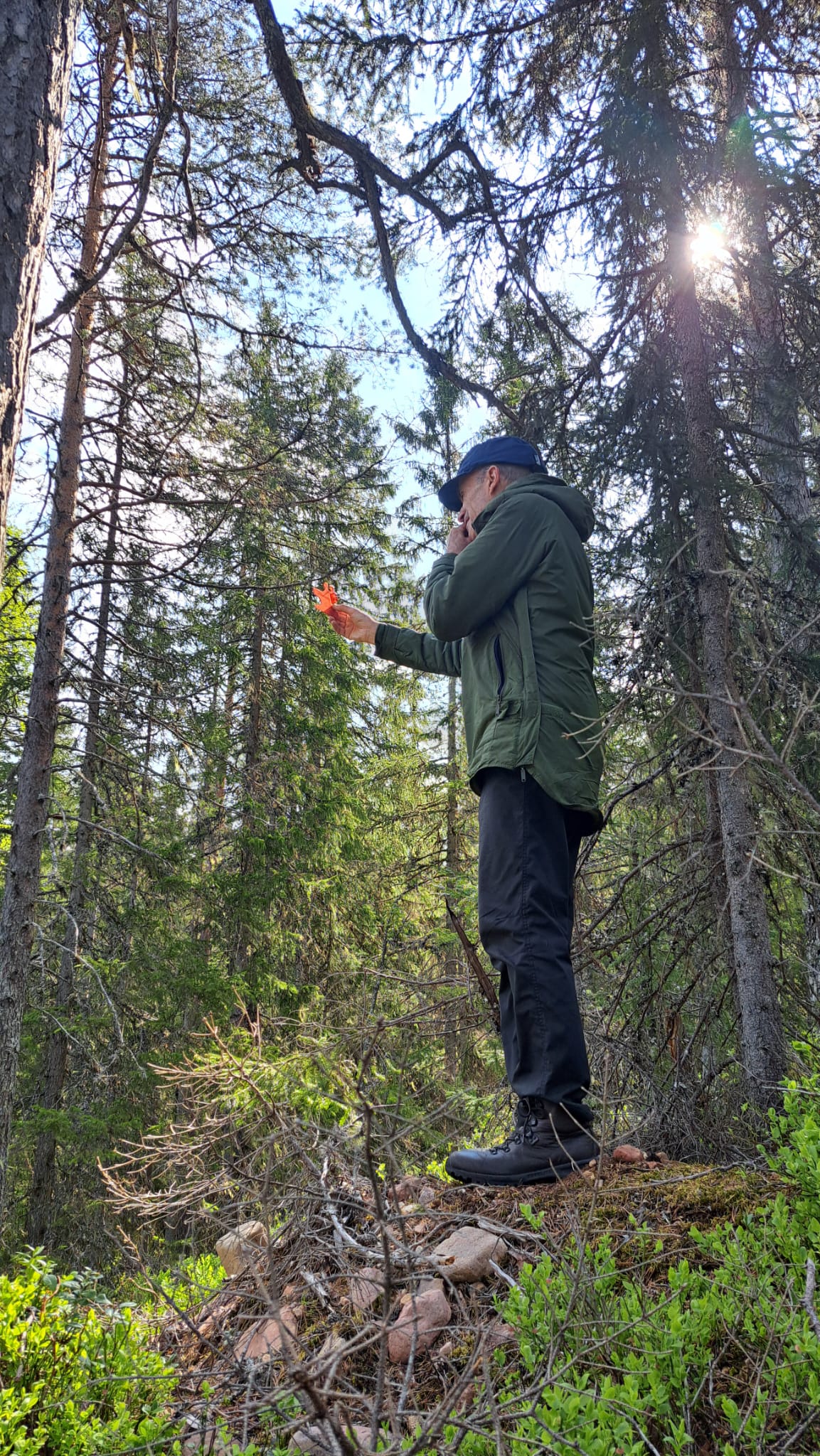
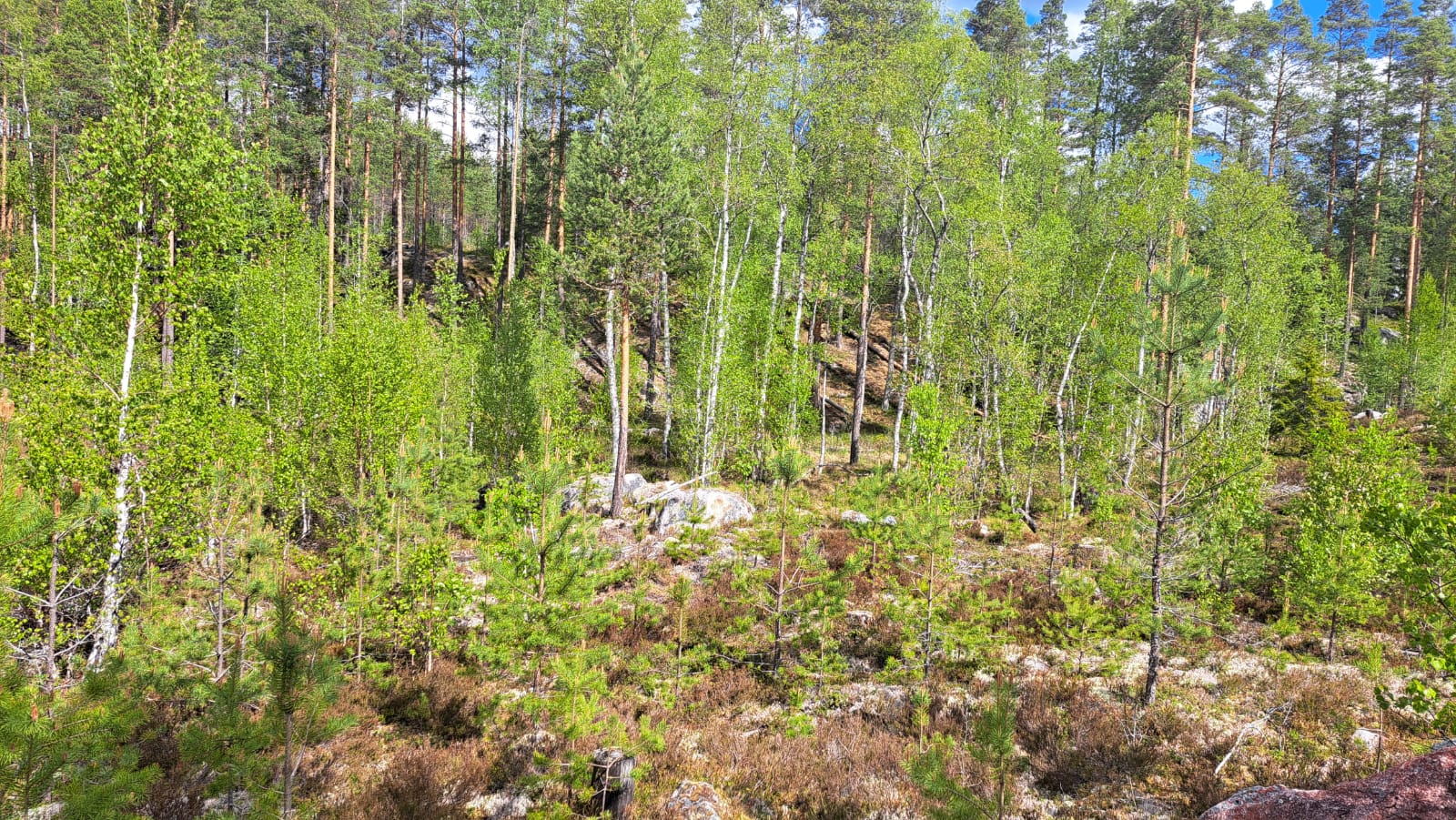
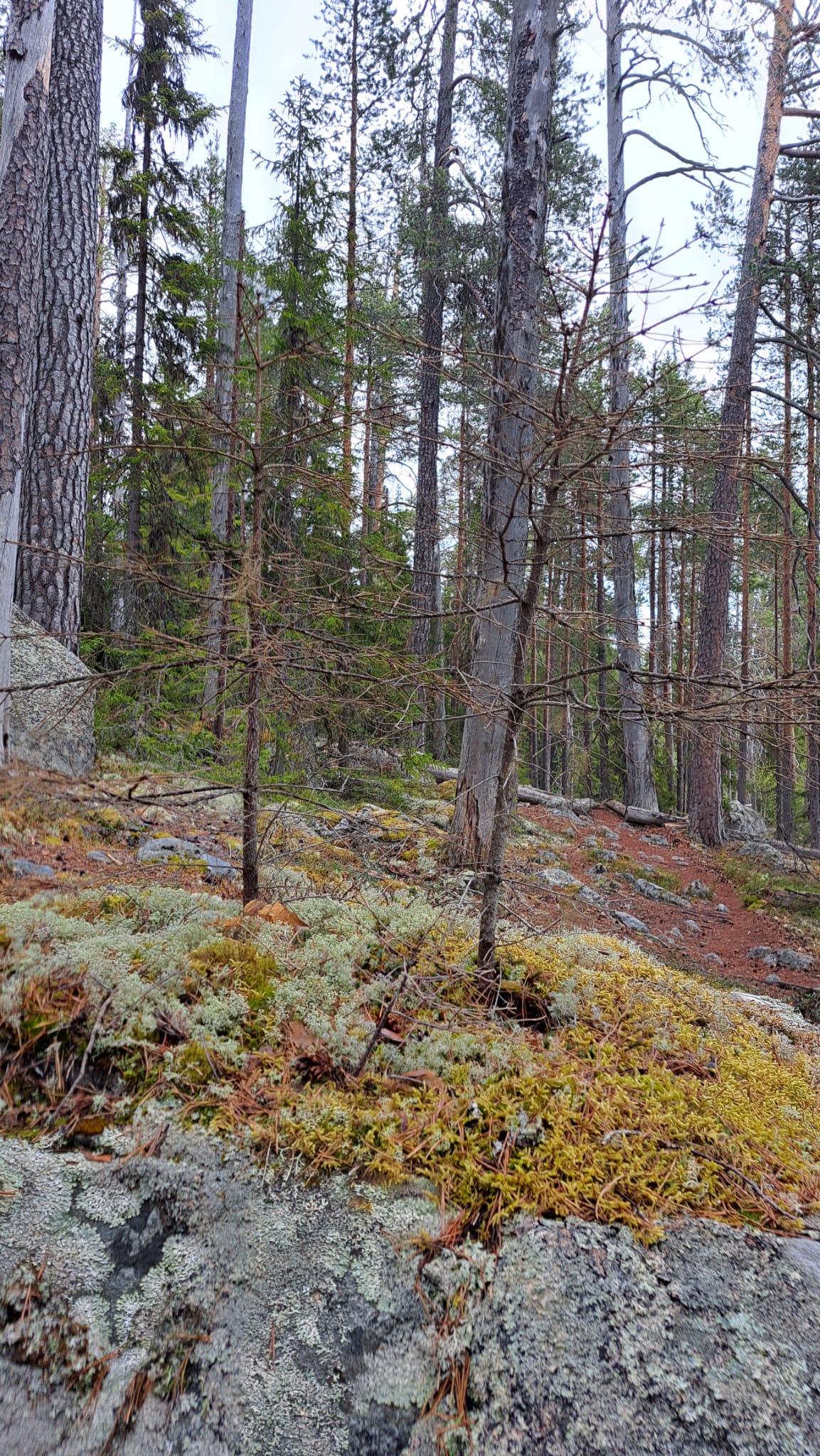
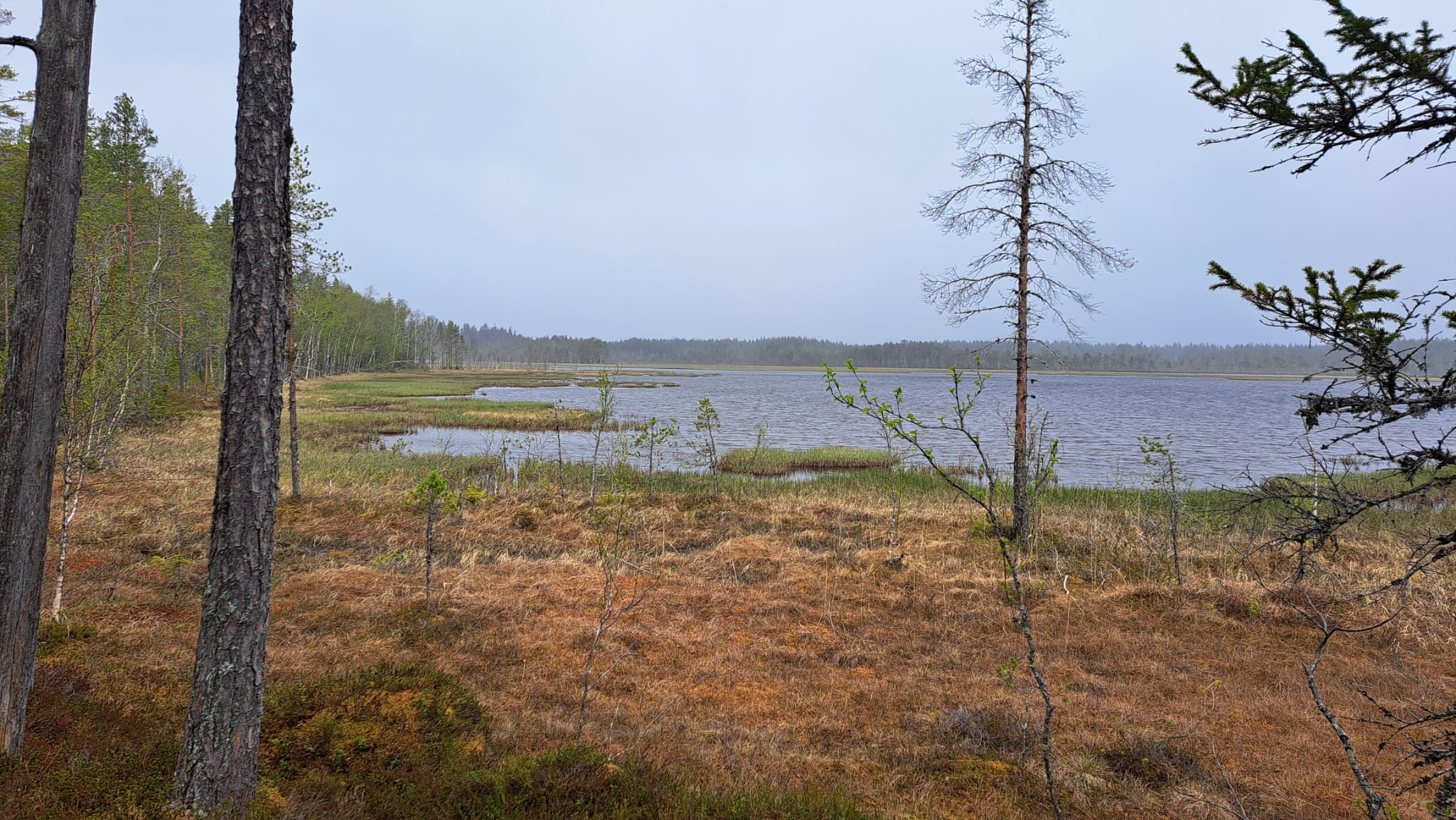
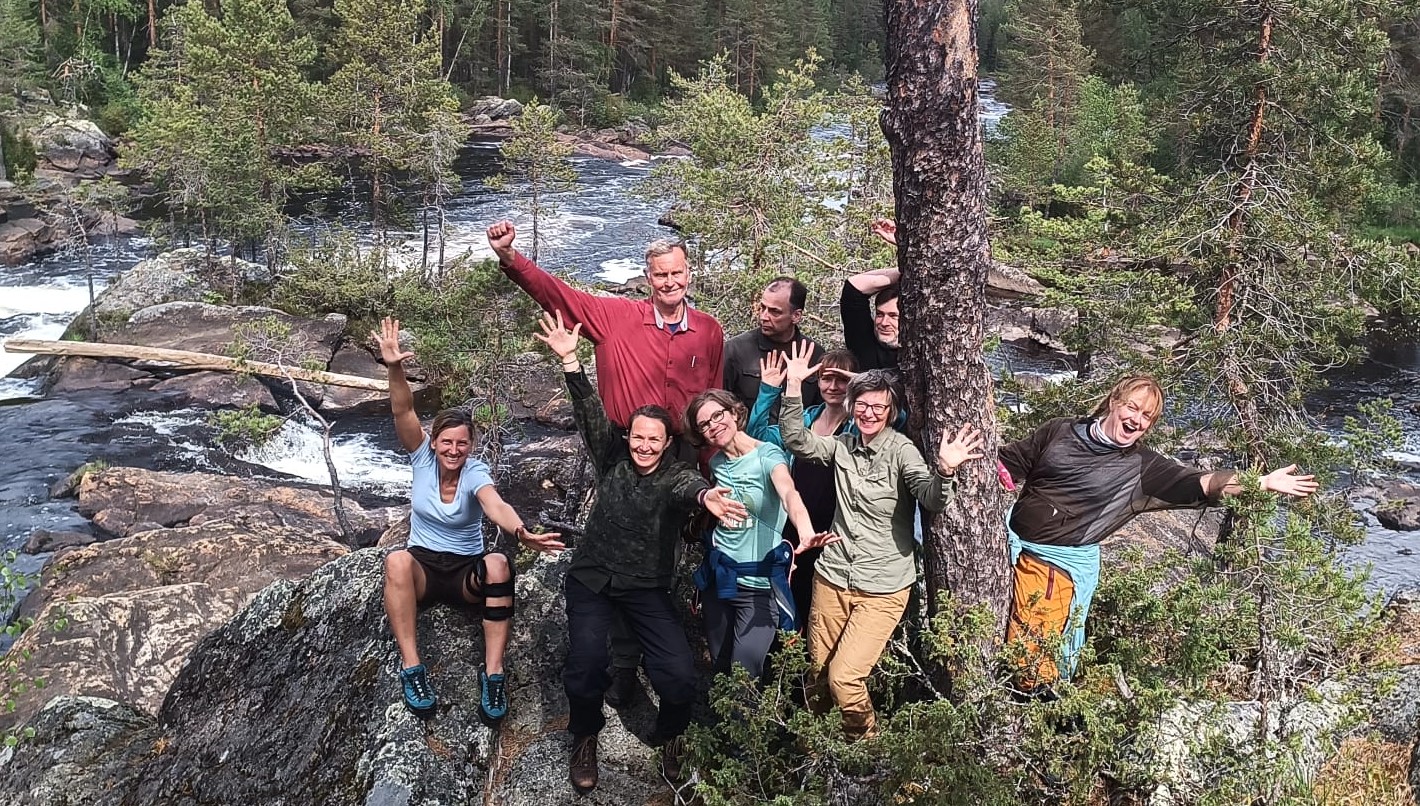
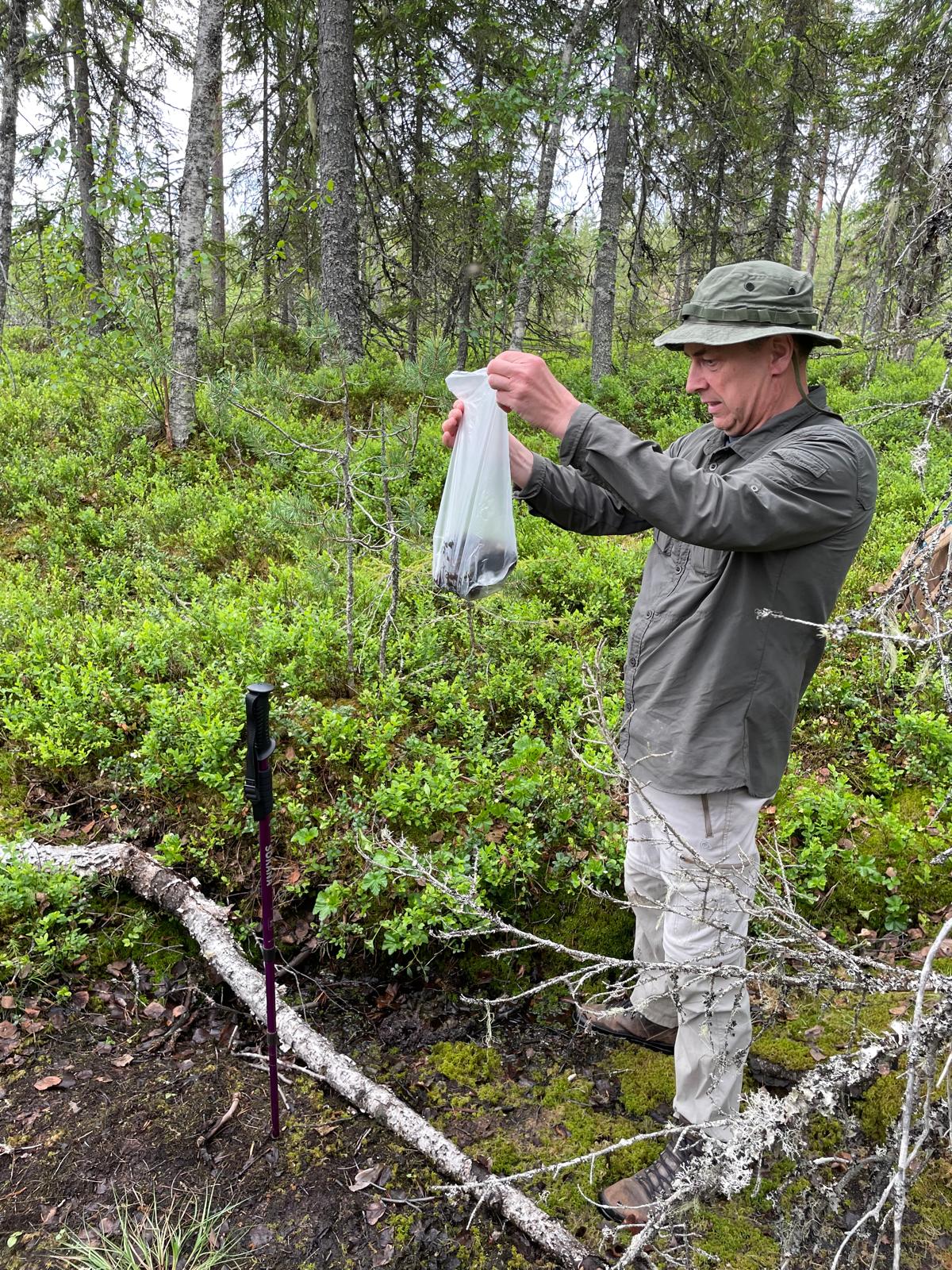
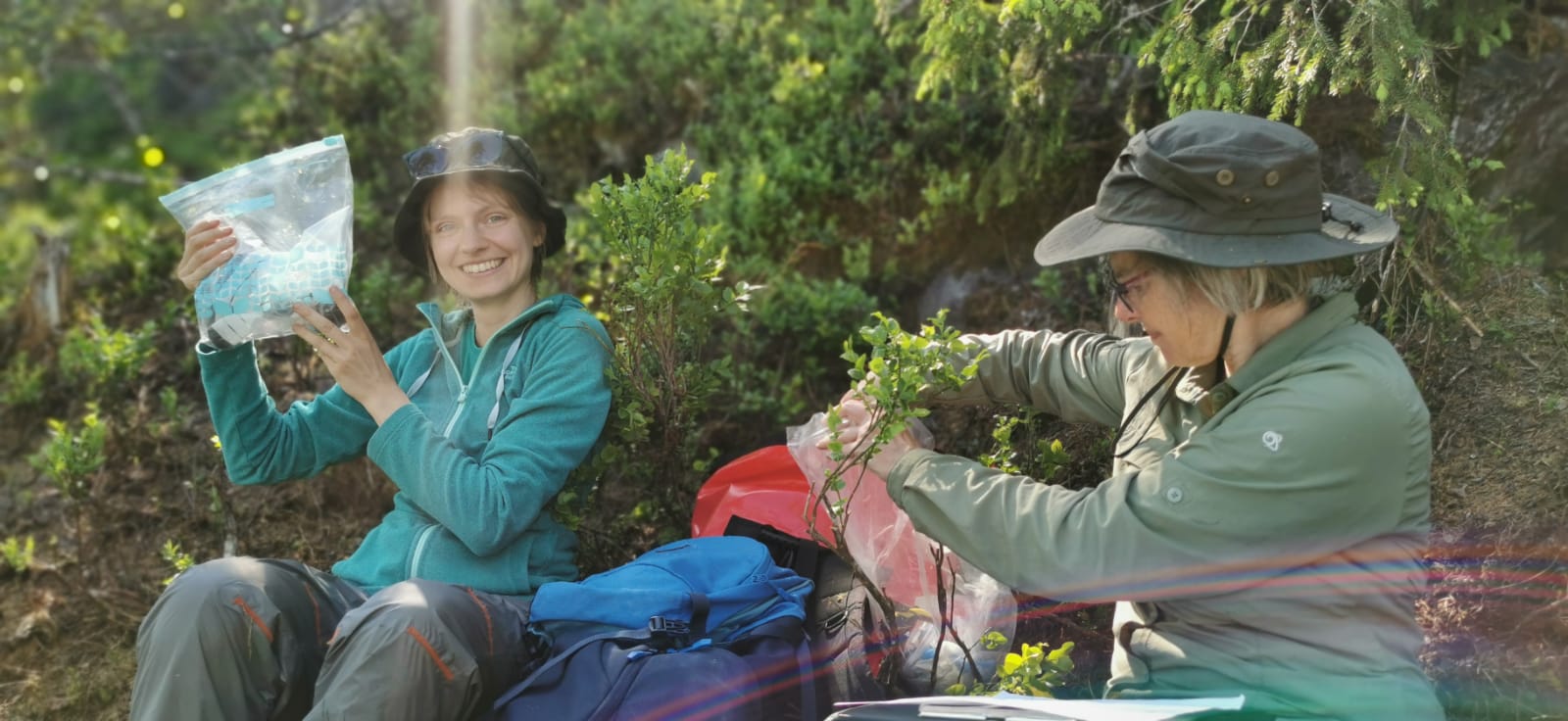
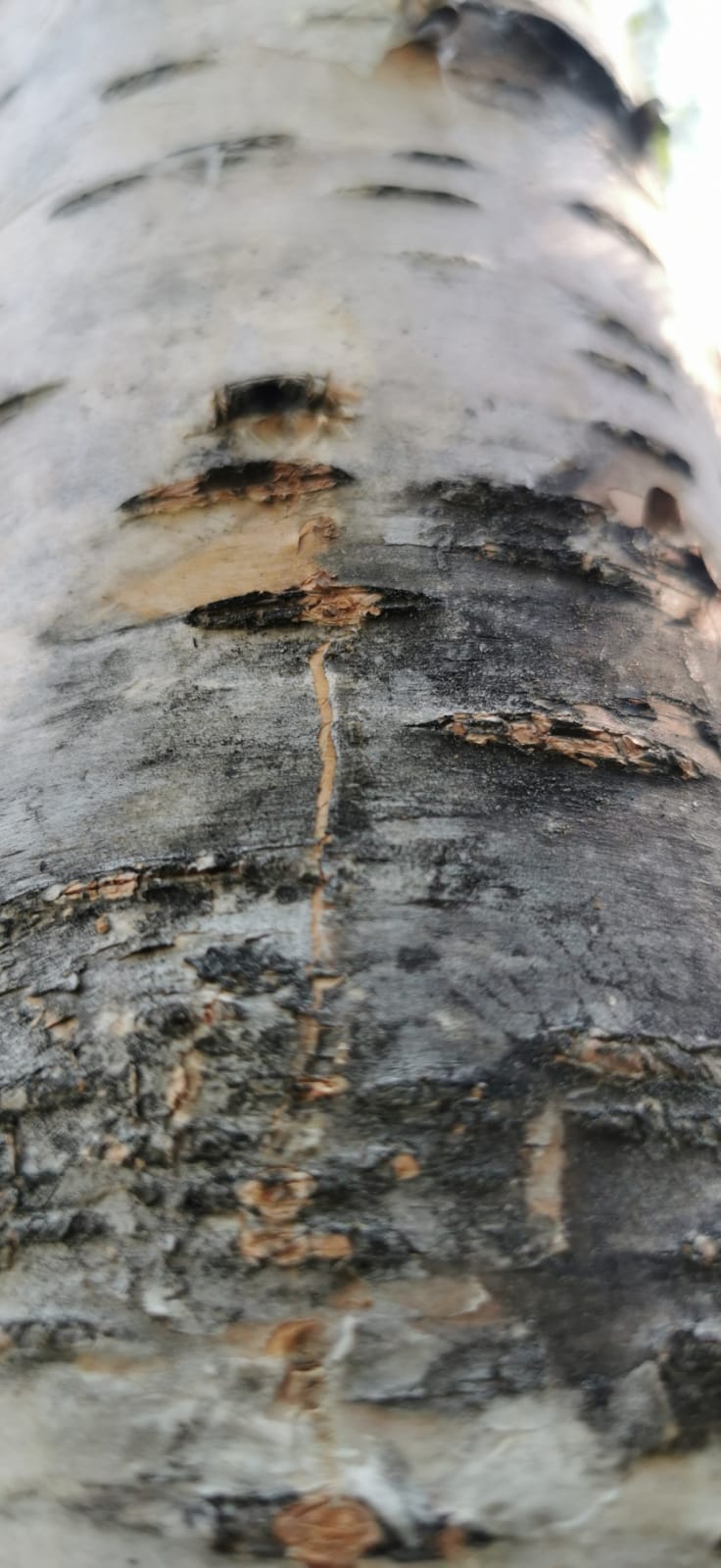
Here’s a den gallery:
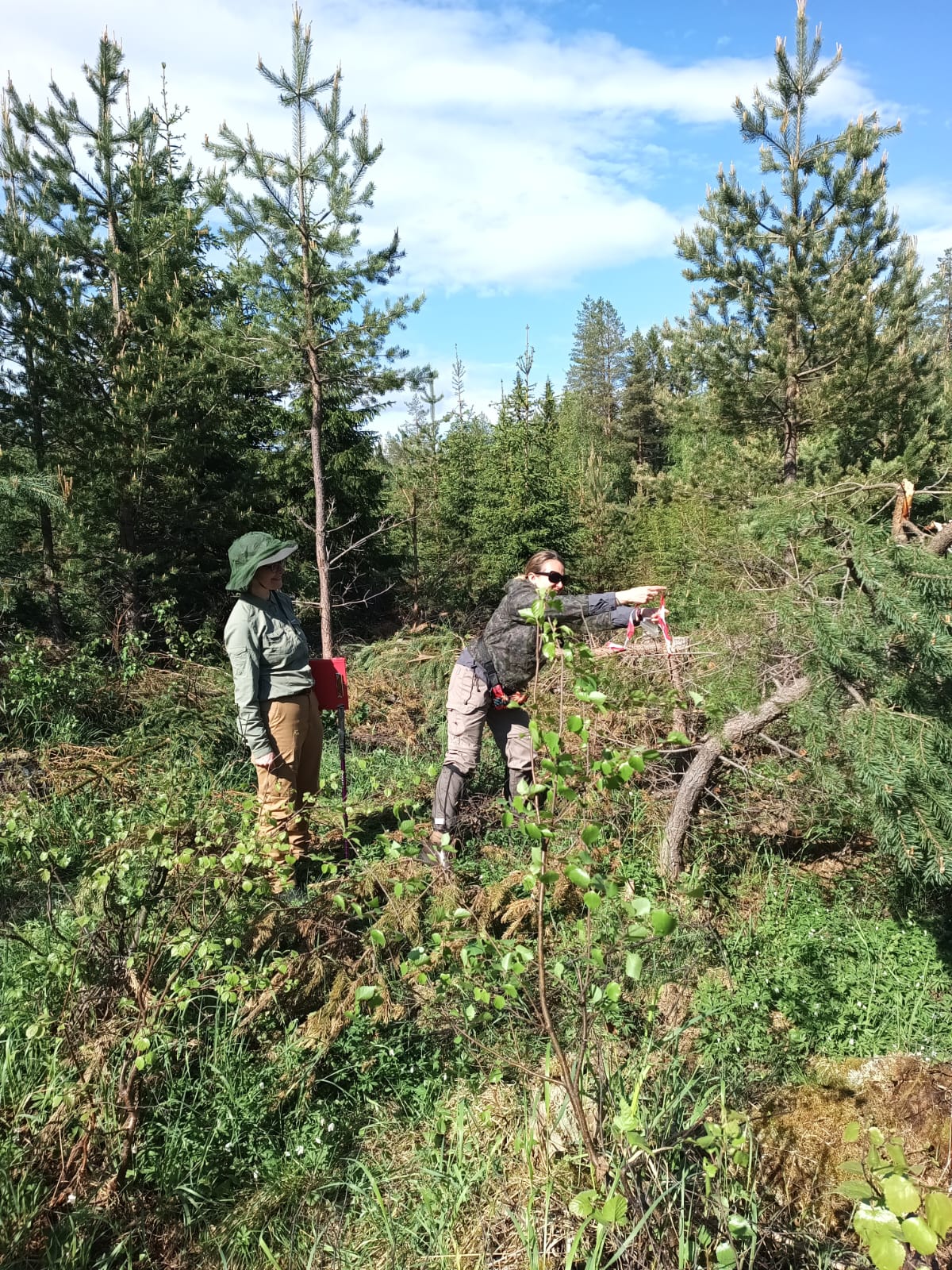
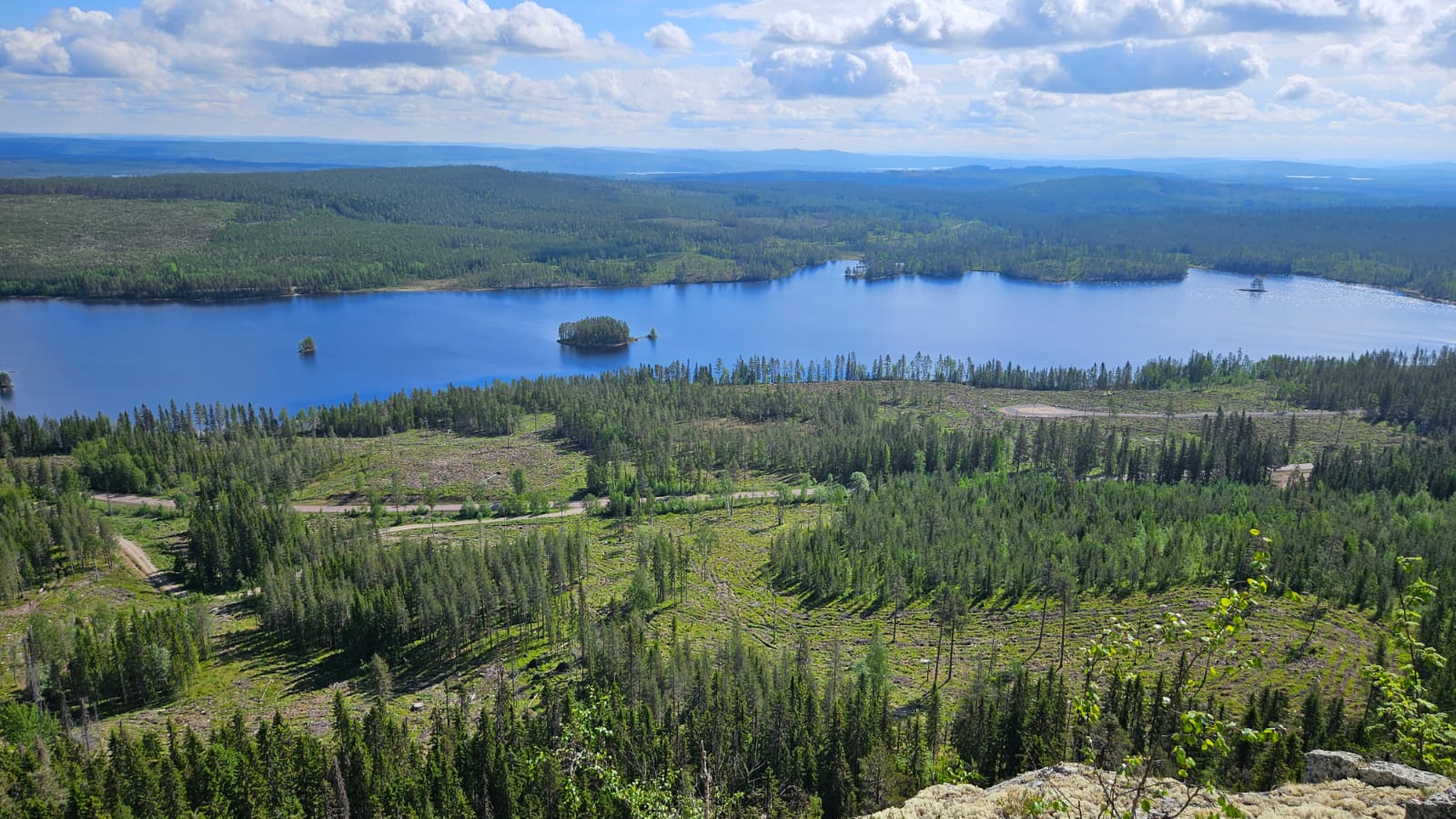
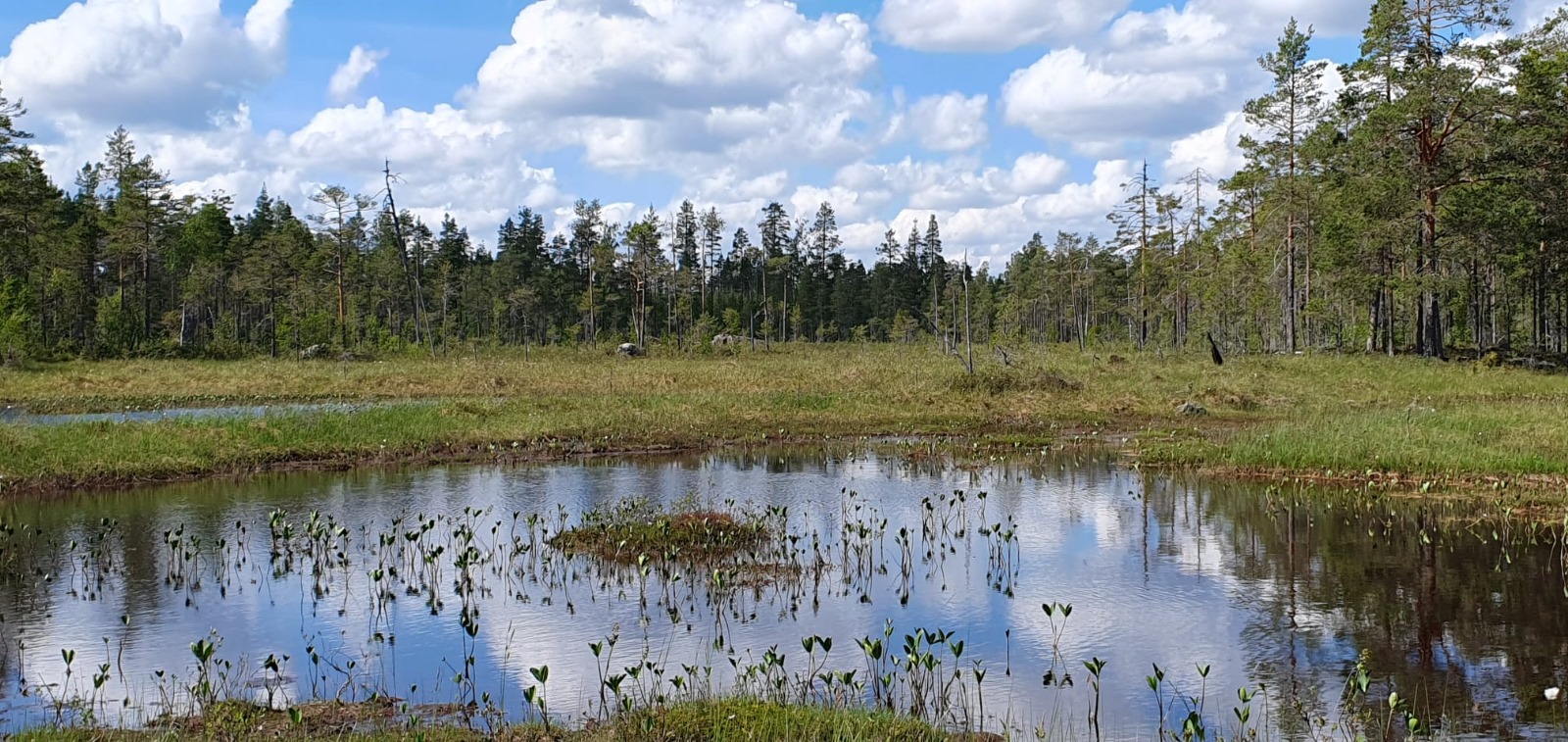
To get to the dens, we’ve negotiated broken ground, bogs, steep hills, gentle slopes, beautiful meadows, rock falls, woods and forests, plantations and clear-cuts, as well as lakes and waterways.
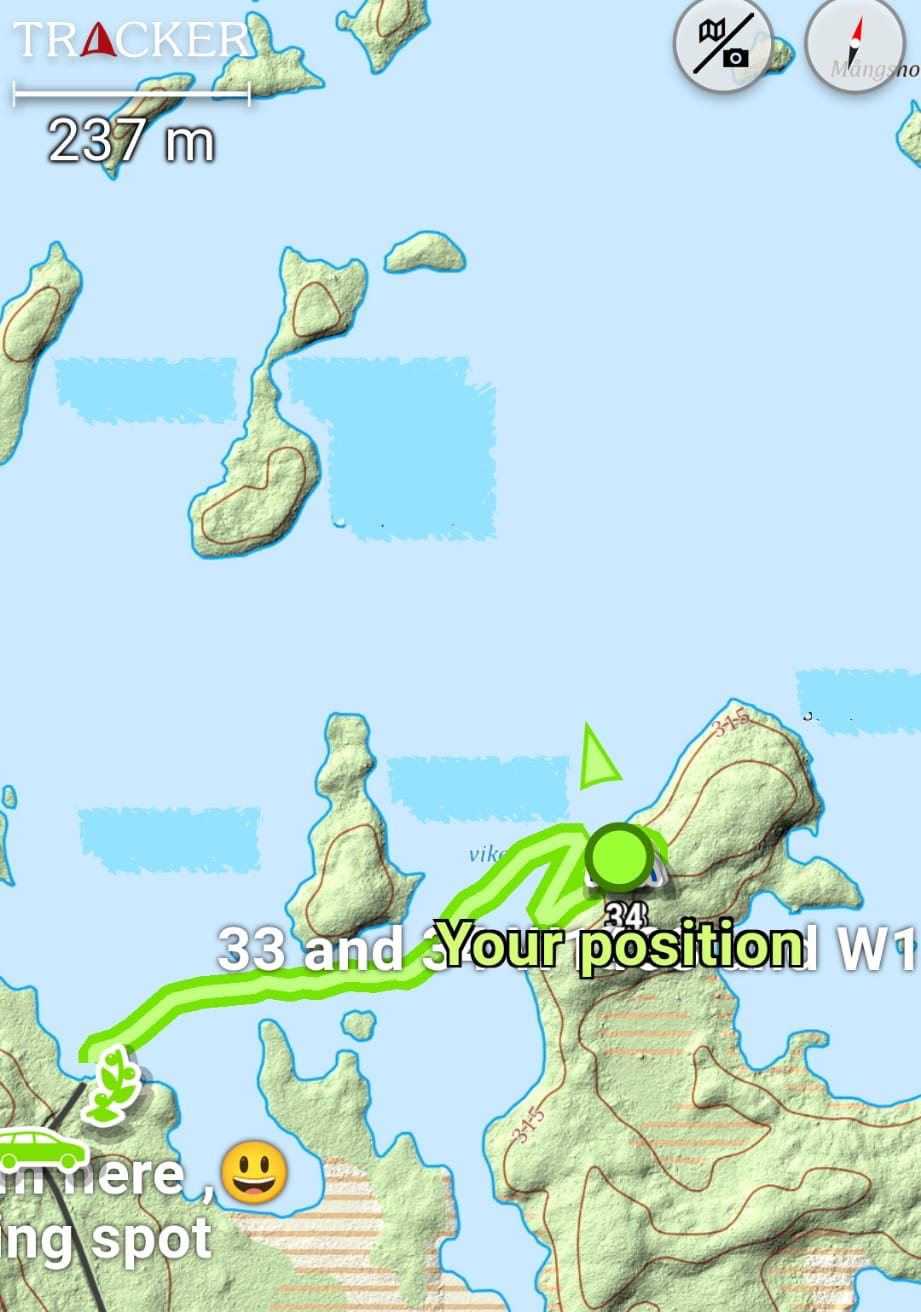
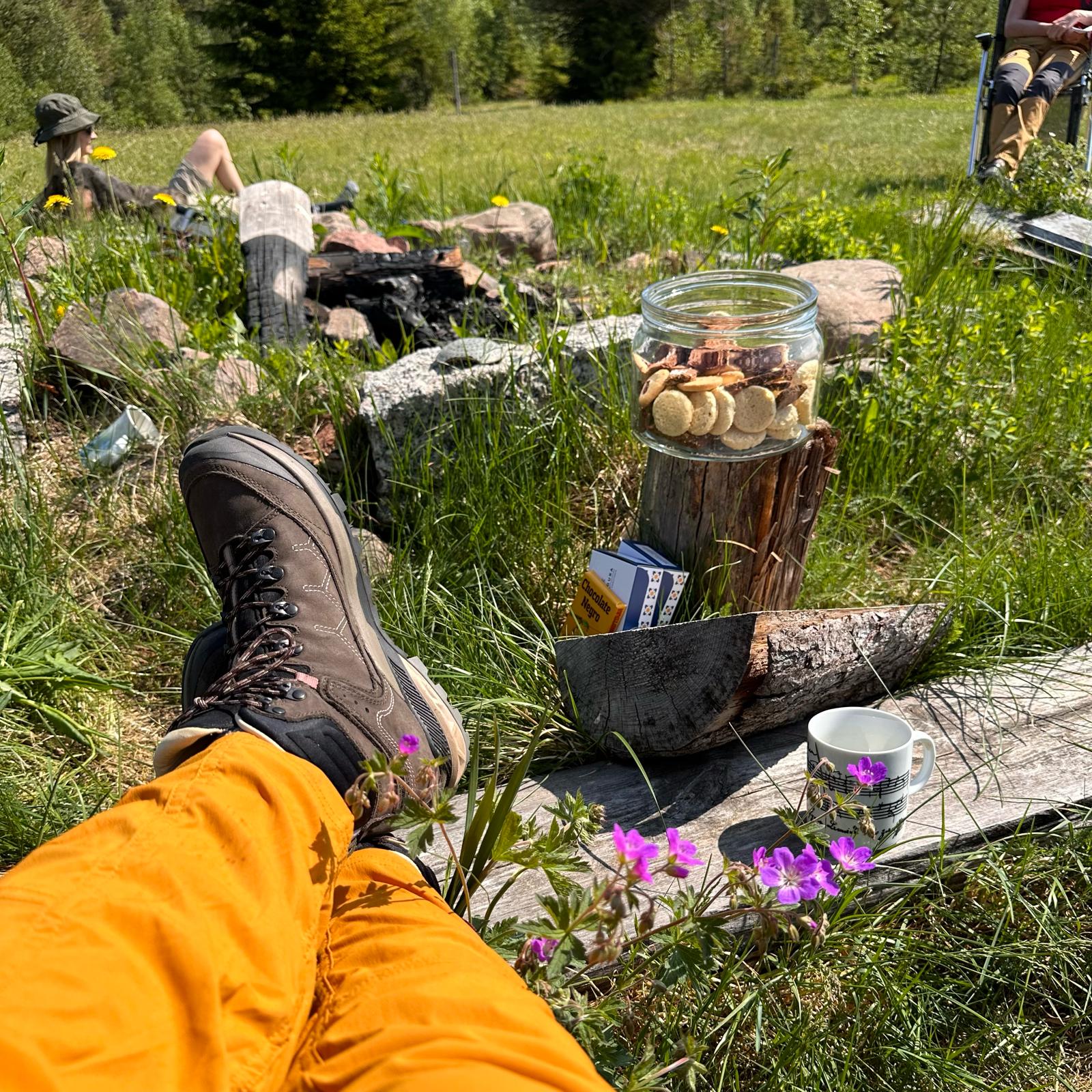
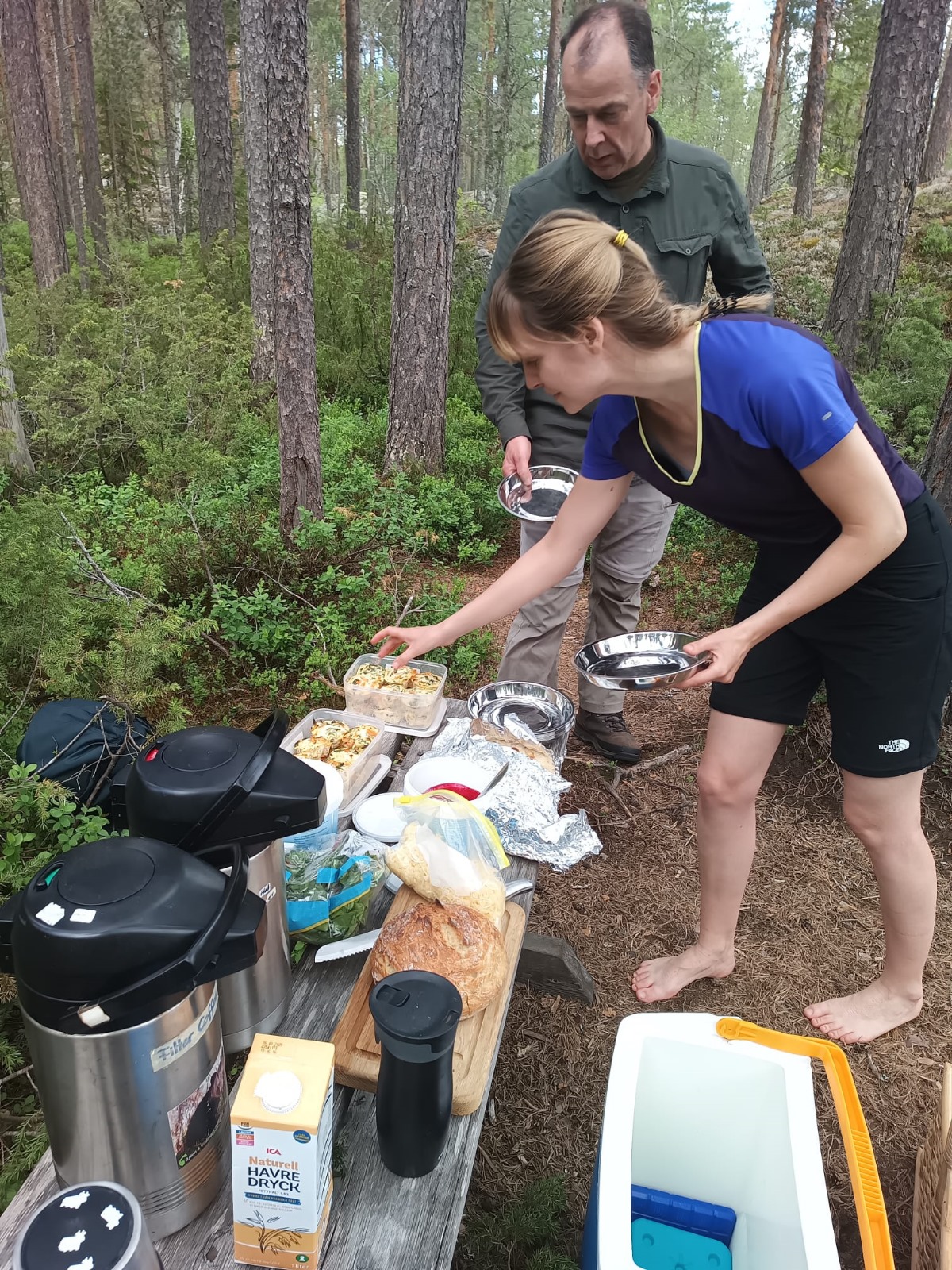
Highlights included coming across a bear crossing the road (“we were all too busy screaming to take pictures”), fox, moose, capercaillie and various other birdlife, crossing a lake on a paddle board to get to a den on a small island, and the team meeting at a local beauty spot for lunch.
Island den-checking
Tomorrow is our last survey day. It’ll be more dens and retrieving some camera traps. Our scientist Andrea will also present some preliminary results. I will share this all in the next diary entry, before we part, ready for a holiday after this research expedition. Thank you for den-checking your guts out team! You deserve a holiday 😉
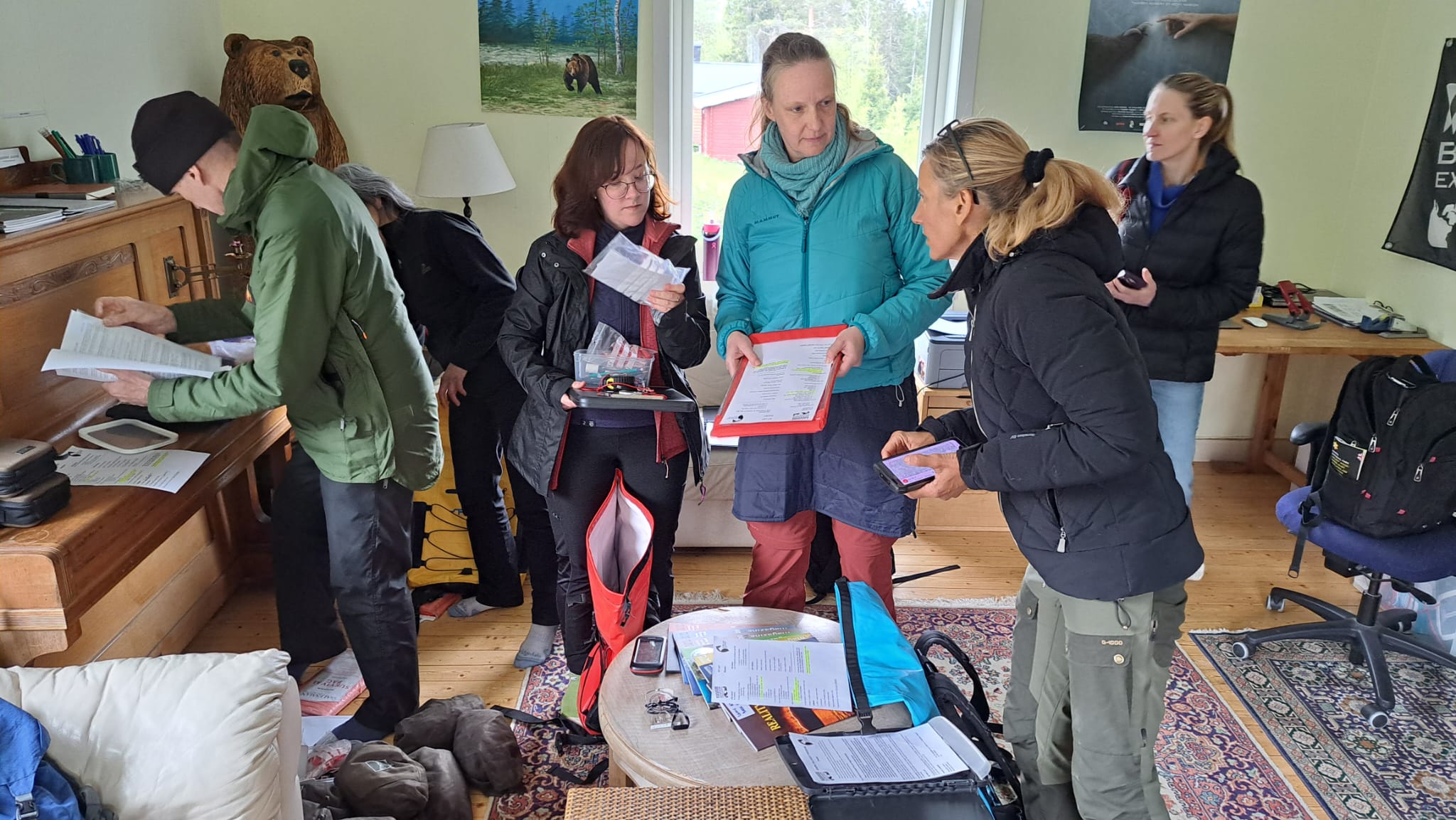
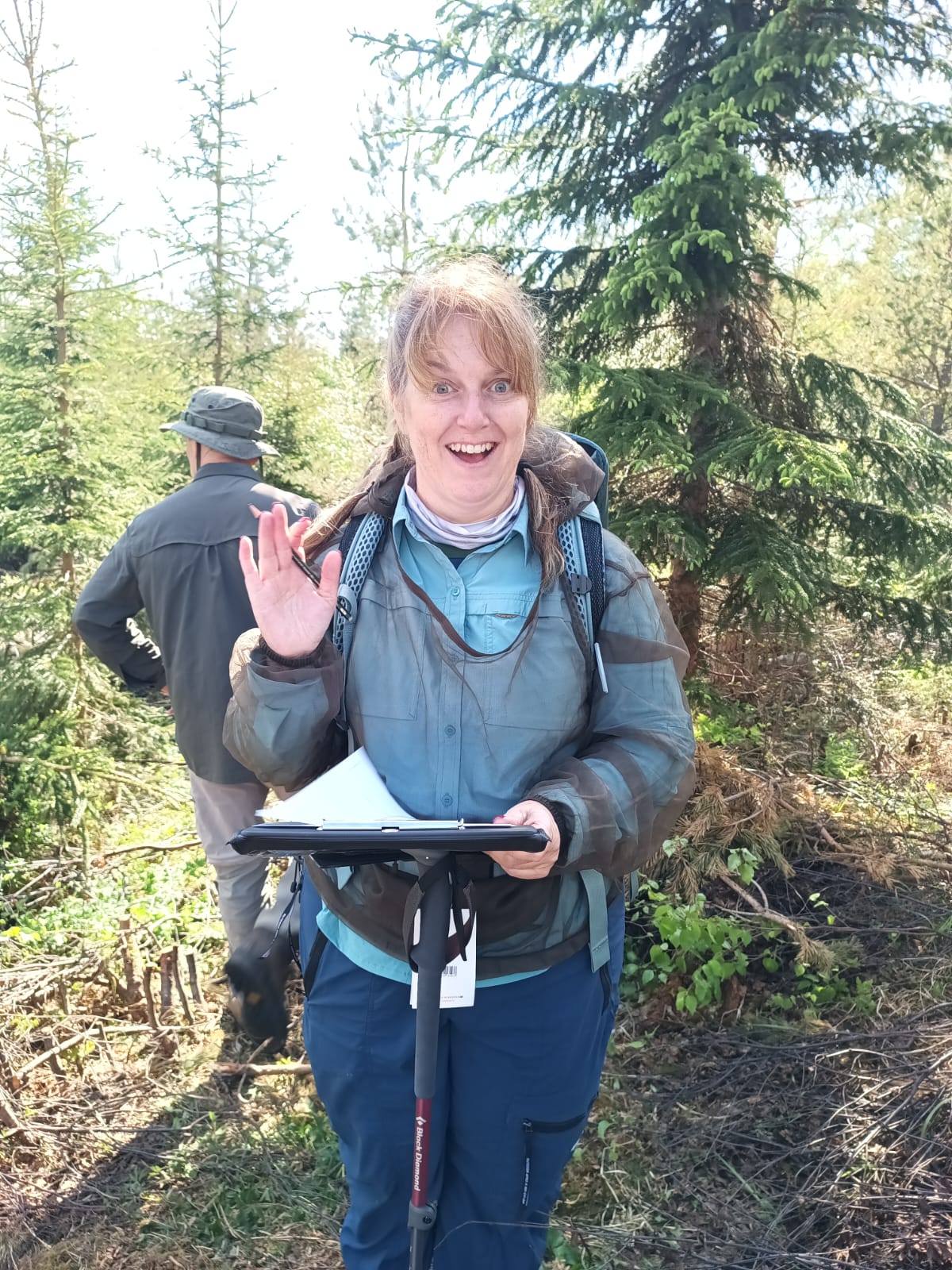
After two days of training and recording den data as one group, we have been let loose and are now on our second day of collecting den data by ourselves, in three groups of two or three people.
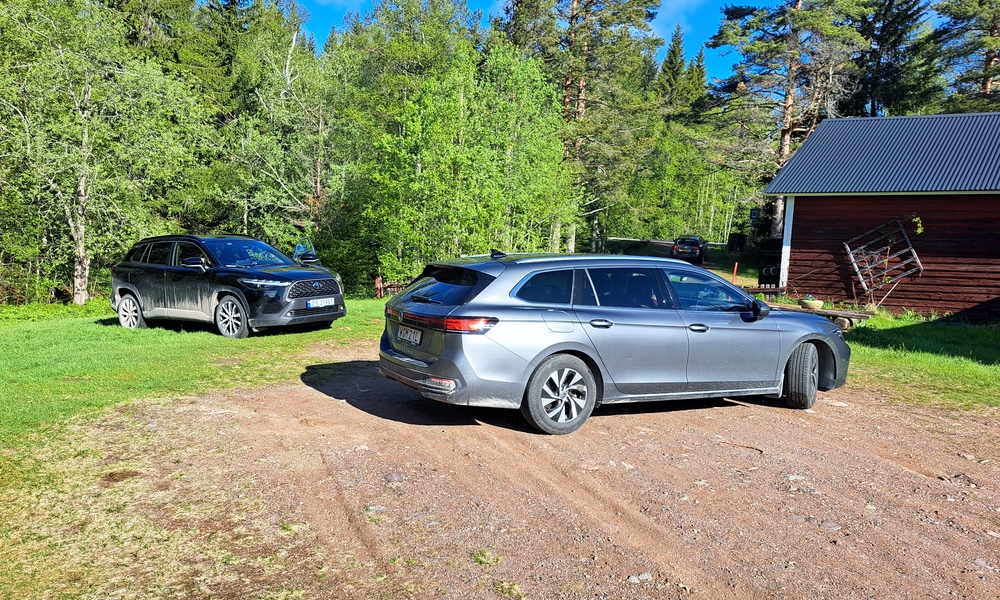
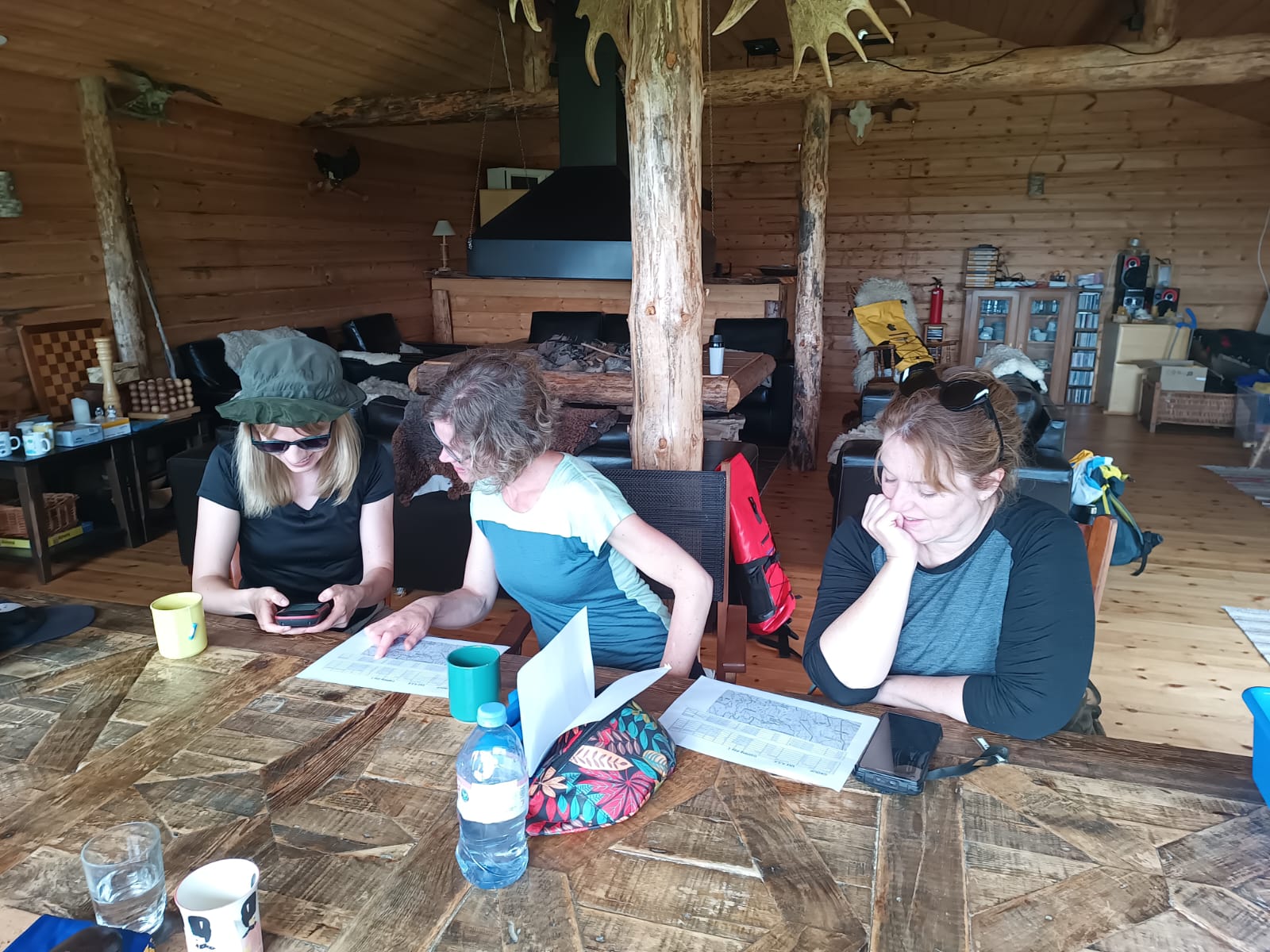
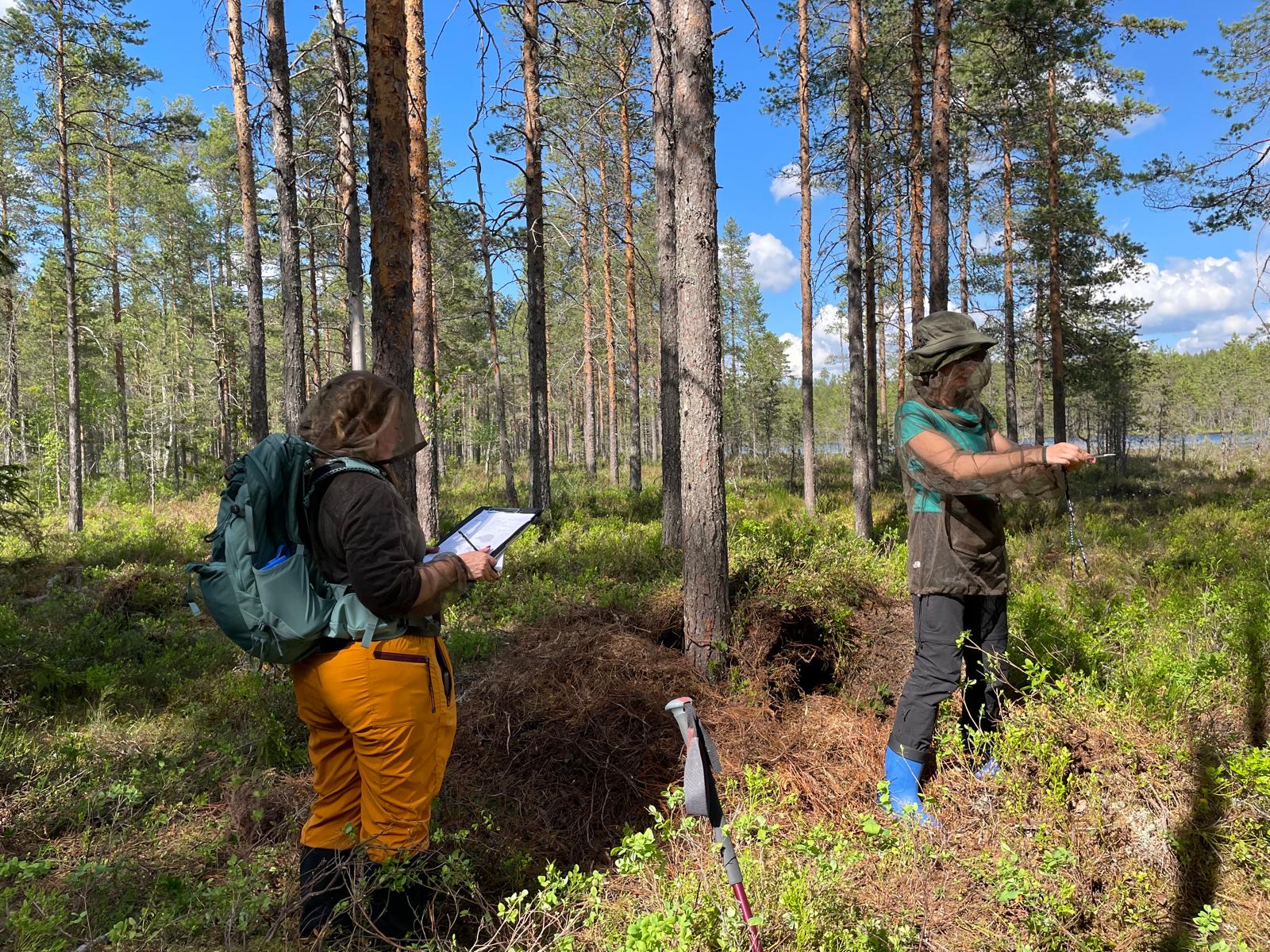
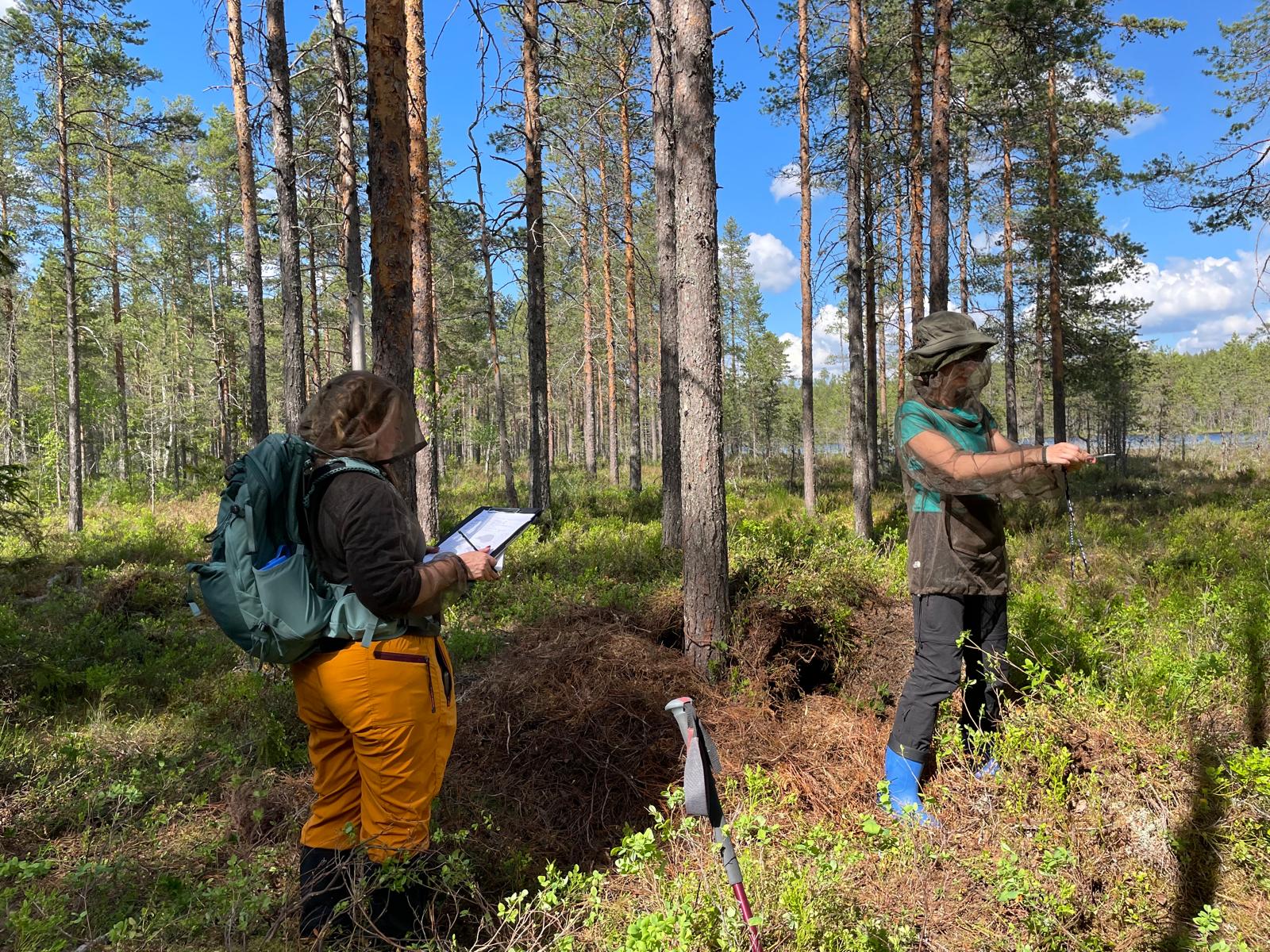
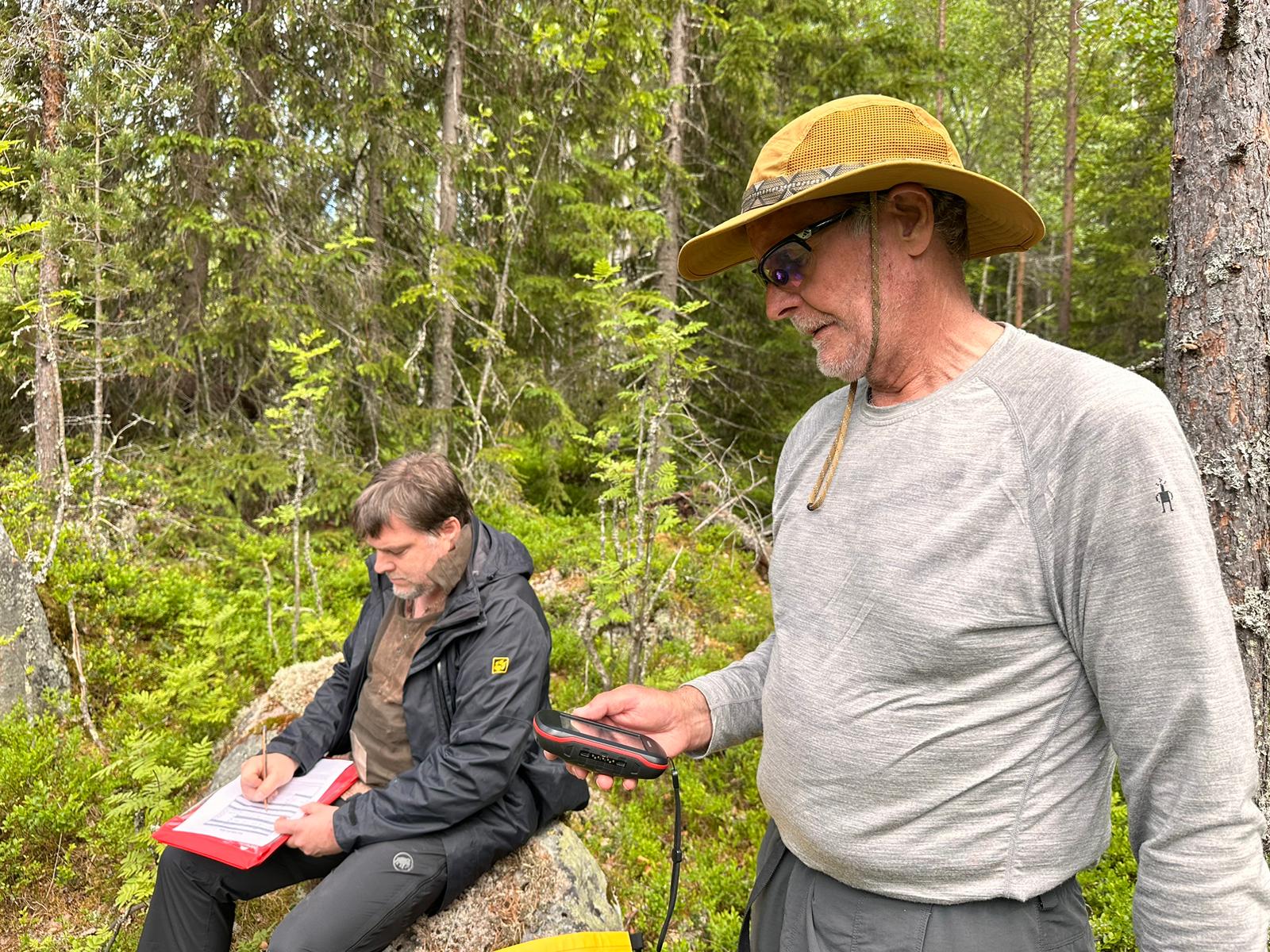
Each morning Andrea assigns dens to us, hidden in the forest. We get their GPS position and some background information and then have to work out how to get there, first in the car, mainly on forest roads to advance as close to the den as we can. Then it’s on foot through enchanted, pathless forests, picking our way through wetlands, bolder fields, carpets of moss, over rocks, birds for company. Sunshine and light through the clouds change as we walk and clamber through quiet groves, past springs and fallen trees to our object of desire: a bear den. Sometimes we only have a few hundred metres to go, sometimes one or two kilometres. It’s slow going. You have to pick a path through the trees, watch your direction on the GPS. It slows you down. It’s not a race. You sink into the forest. Deceleration. Sometimes it’s only a few minutes to the den, sometimes an hour or more.
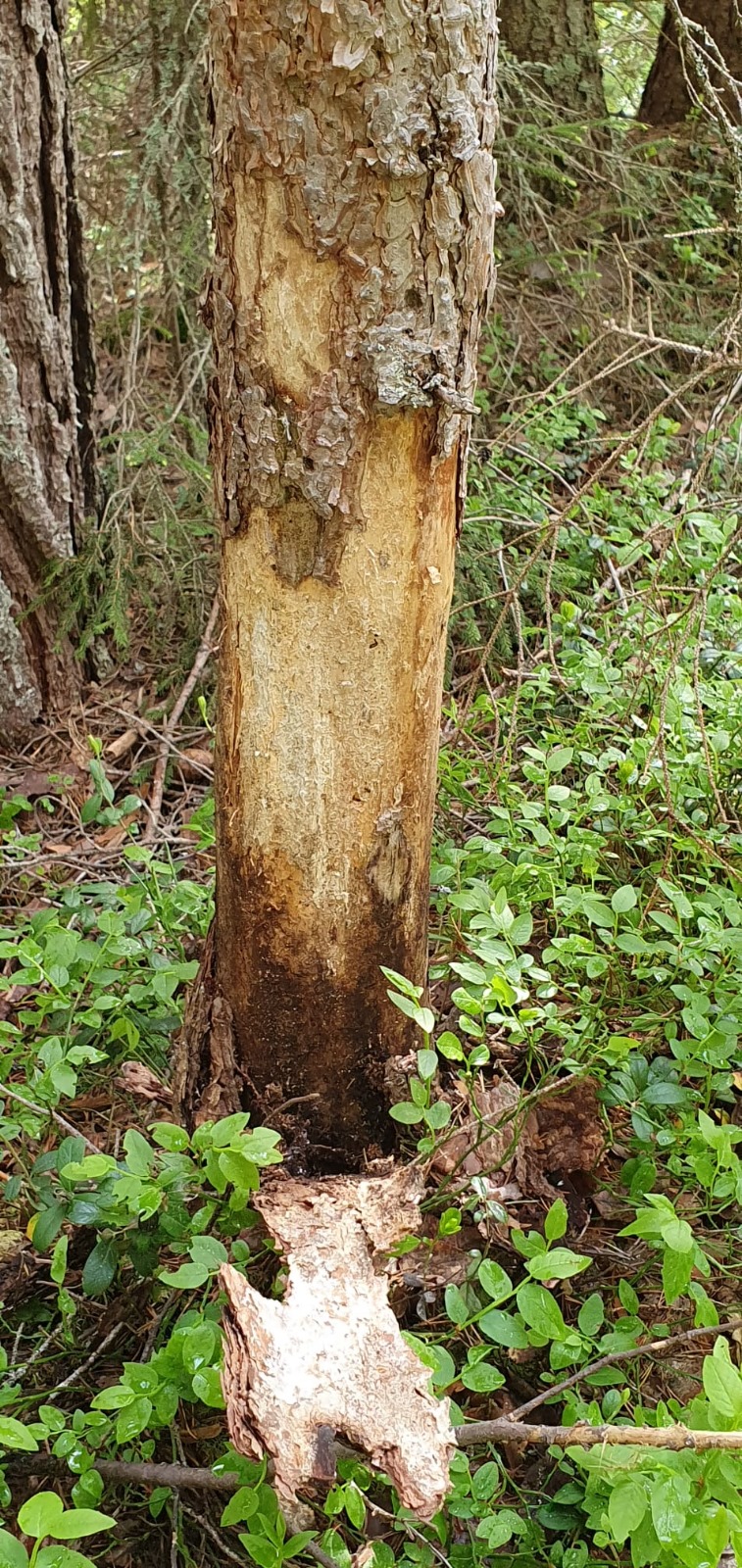
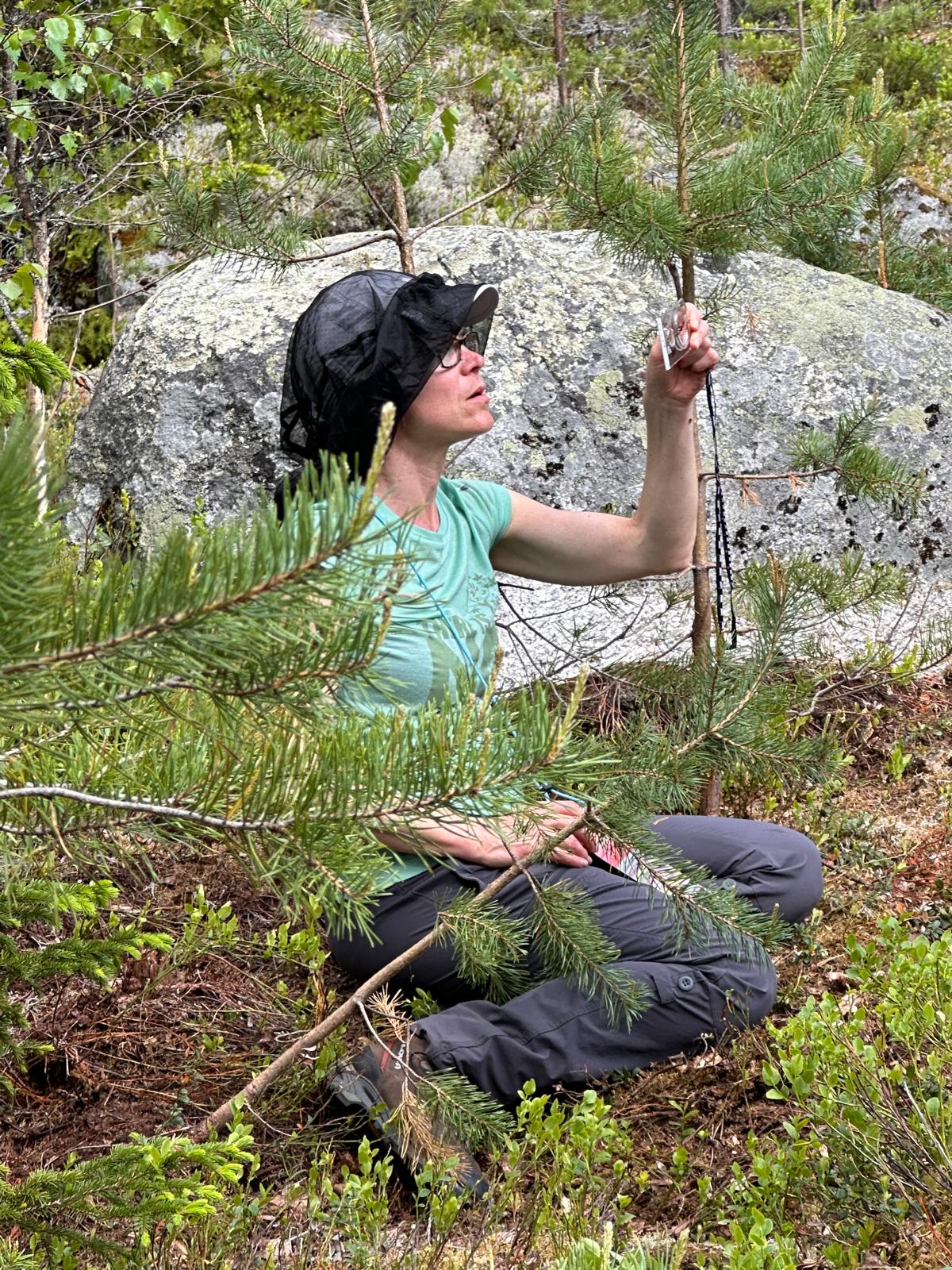
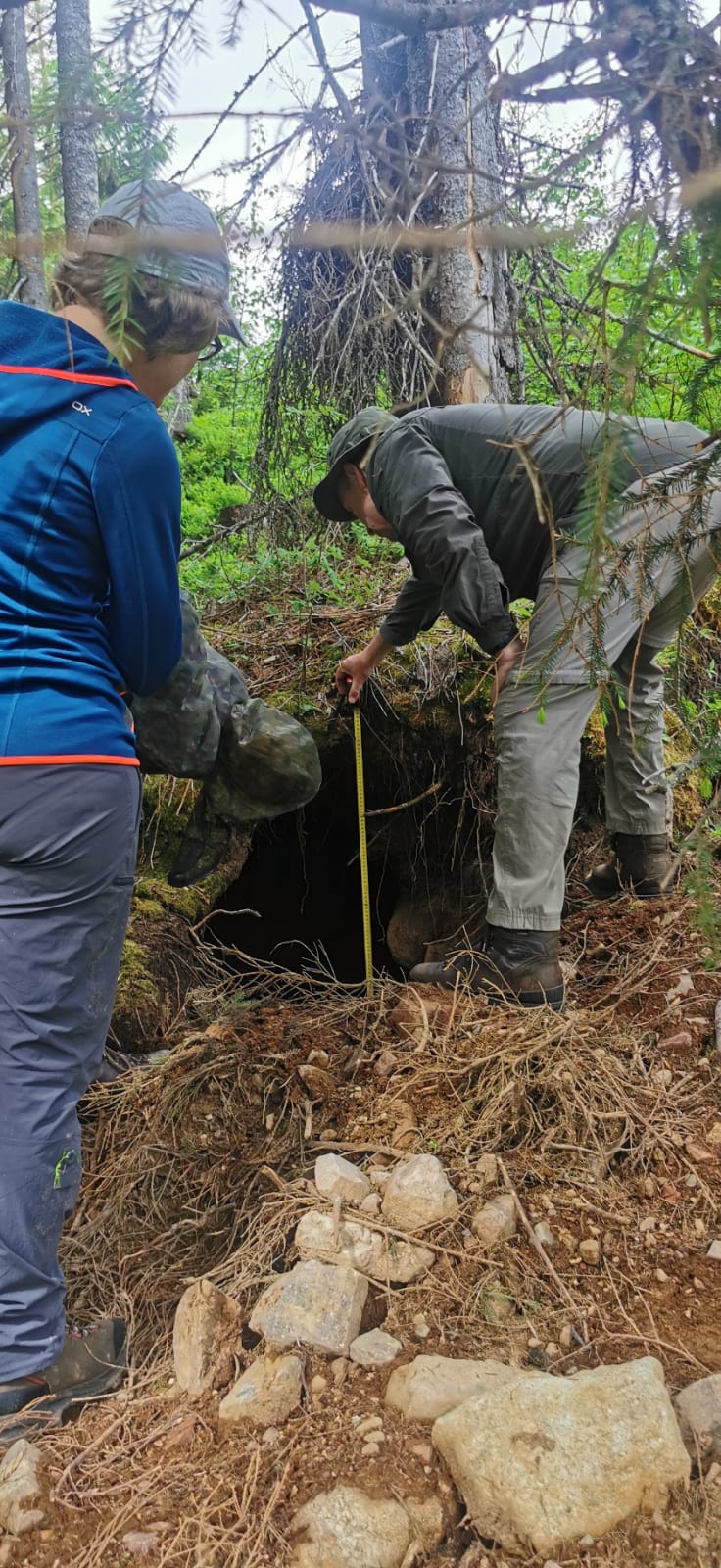
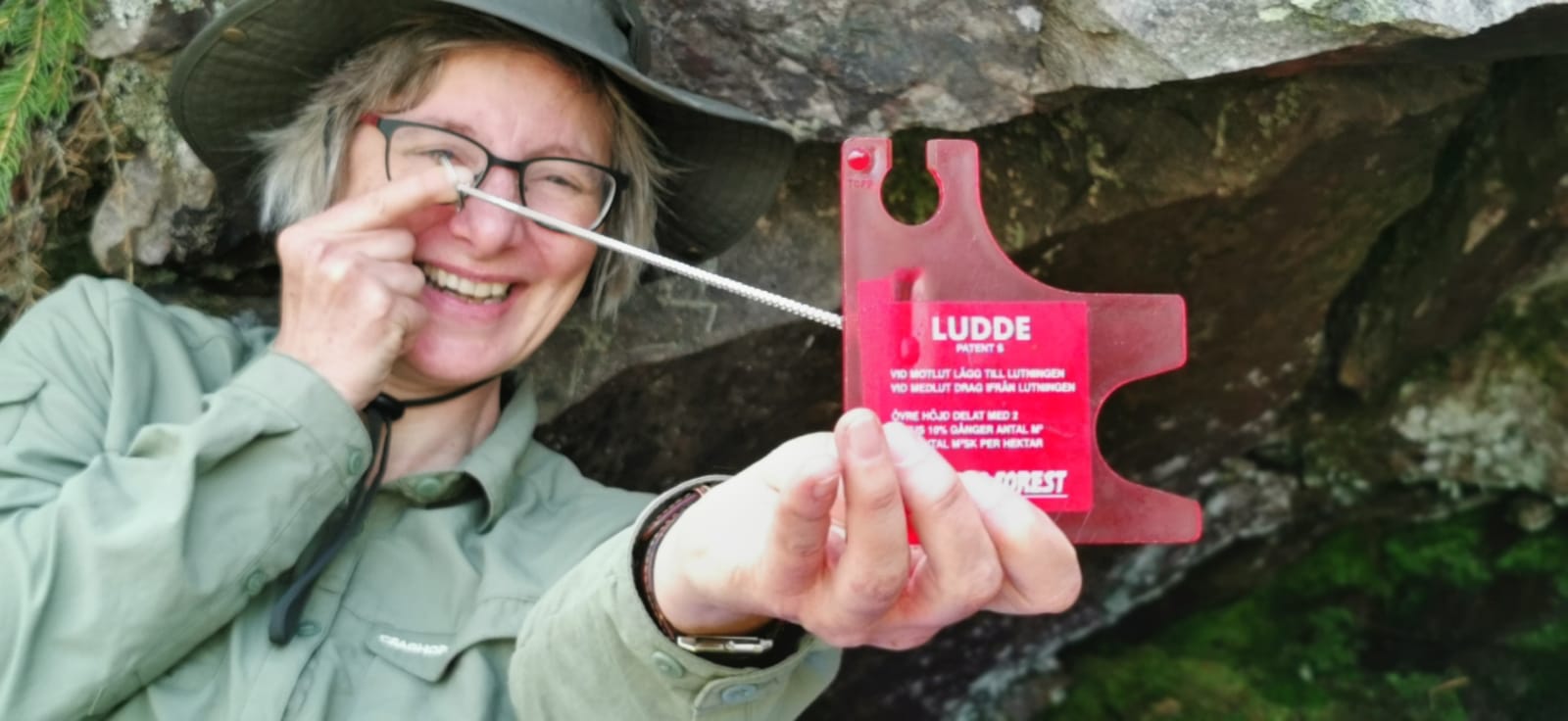
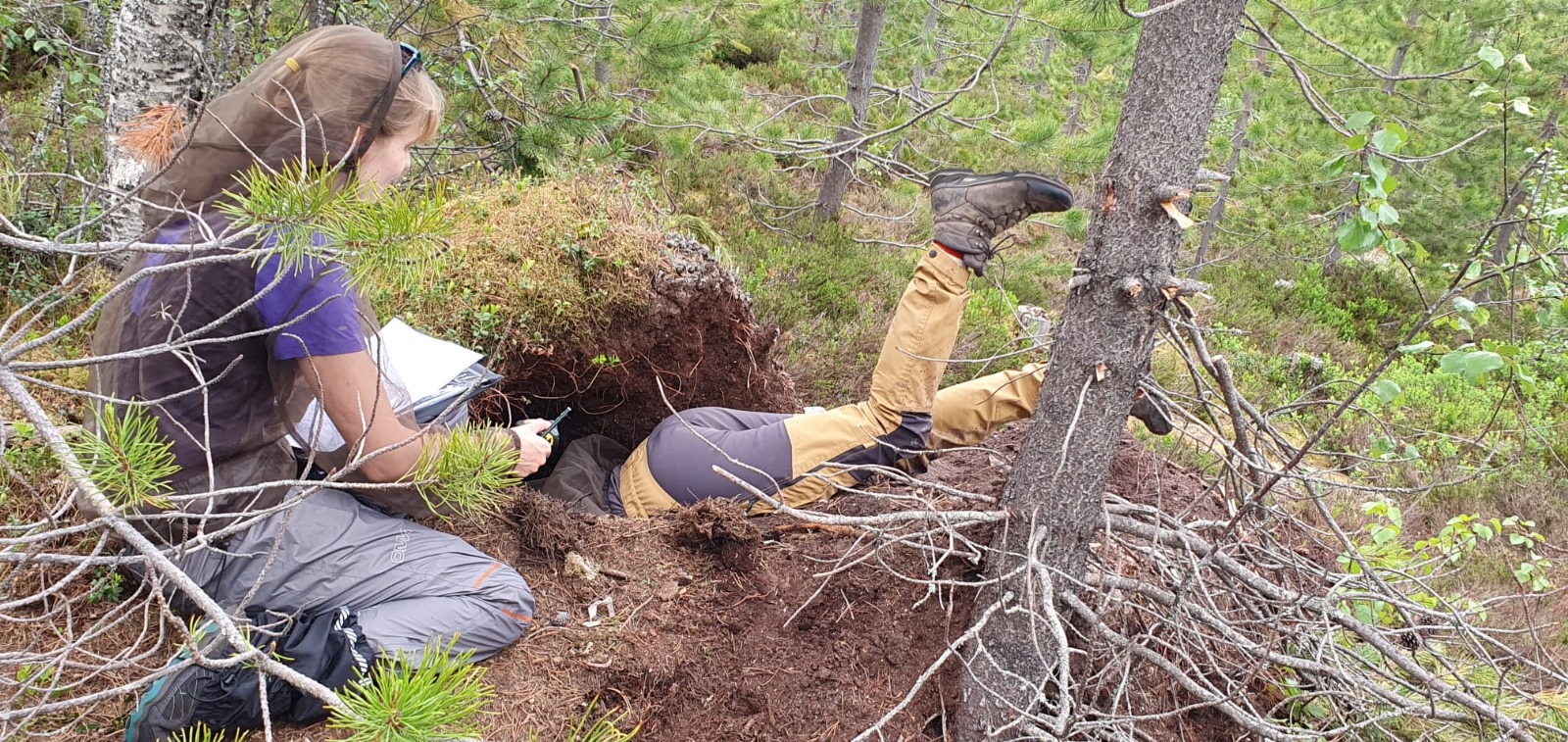
Once at the den, which wants to be found first too, lots of measurements need to be taken. How big is the den and its inside chamber (crawl inside for this)? What bedding did the bear use? What trees make up the surrounding forest? Are there any scratch marks around or scat (collect this). Are there signs of cubs, such as small scratch marks low down on trees, and more. This takes about another hour and is all meticulously recorded. Then back to the car and onto the next den. A group manages between a couple and half a dozen a day, depending how far apart they are in the forest and on the roads.
Measuring the inside of a den
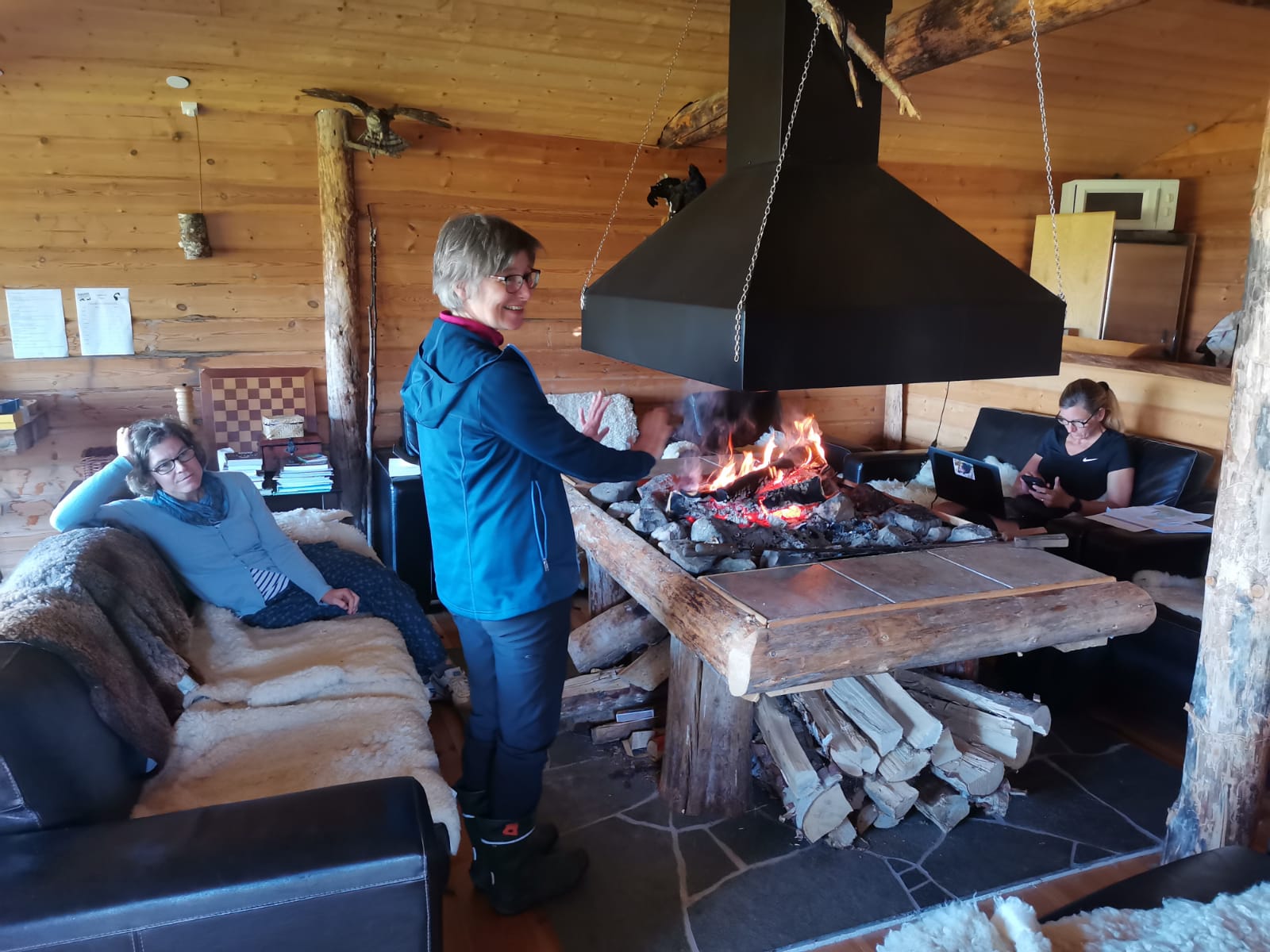
Back to base in the afternoon for a de-brief session where each group tells the others what they found. Tips & tricks are exchanged, Andrea asks questions, wants to know more. Then data entry into the computer and a well-deserved hot dinner. Some fireplace conversations perhaps, for those who haven’t crashed already. Ready for the next day.
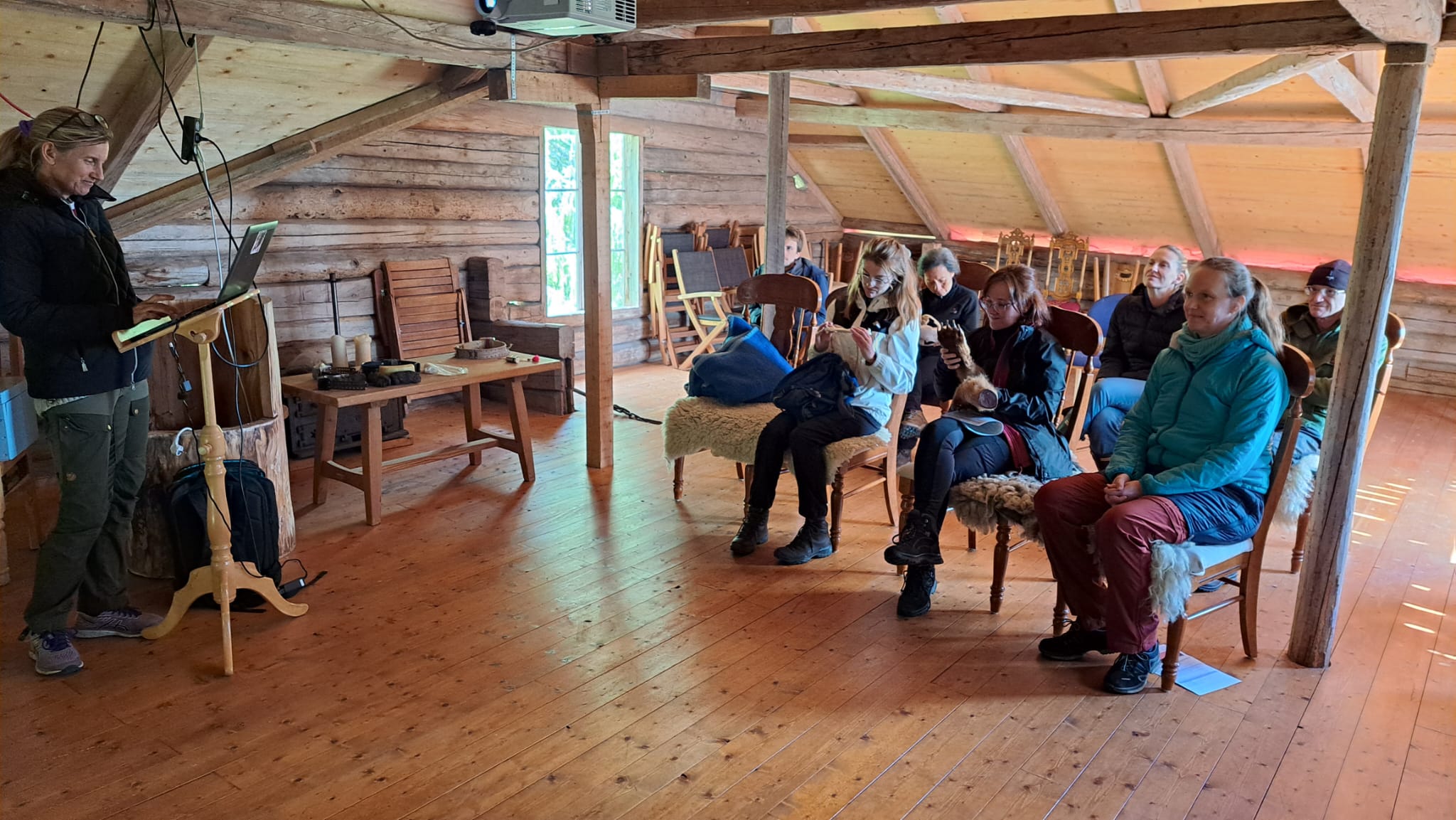
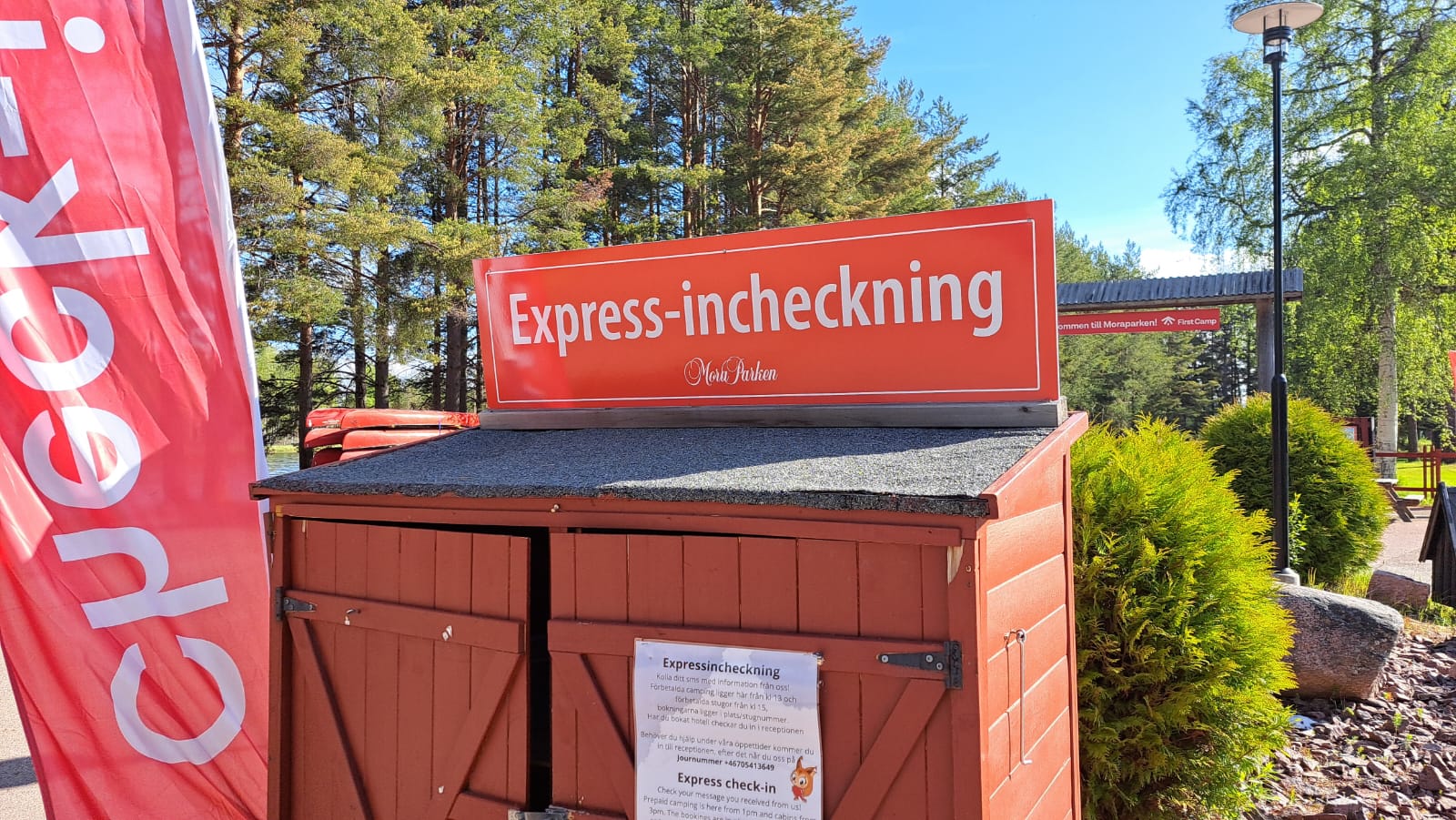
We’re off with everyone here. After some “express-incheckning” in Mora we proceeded to the expedition base and went straight into training for the rest of the morning and early afternoon: What the project is about, why citizen science is so important to it, how the bears are doing, what we will be doing, how to use a GPS & compass, how to pack your research bag and more.
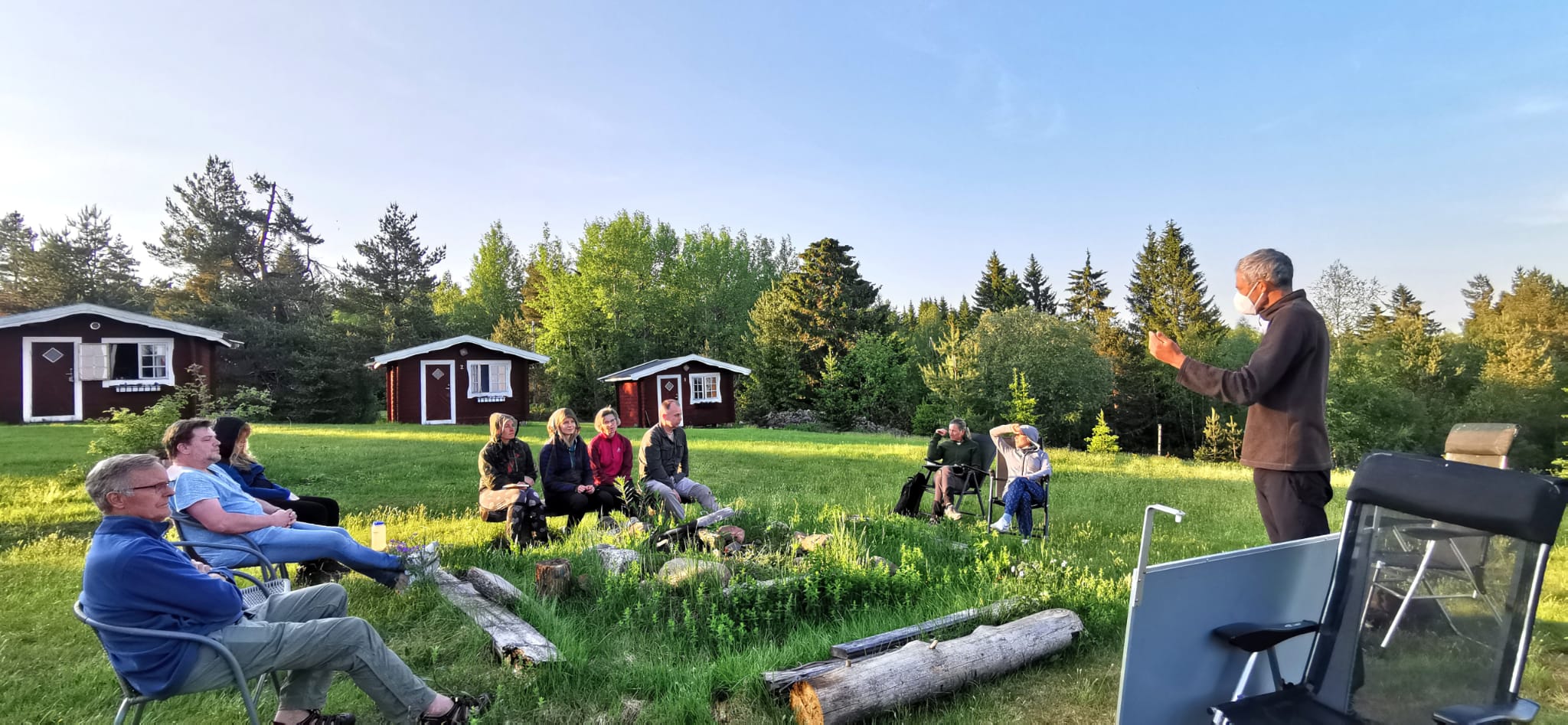
In the afternoon, we checked out some old dens to see what a rock and anthill den look like, as well as an open hibernation nest (the big males just make one of those and let themselves get snowed in). Then a short lecture, dinner with the fire roaring, crash.
More of the same tomorrow. Boring, this life of a field biologist 😉
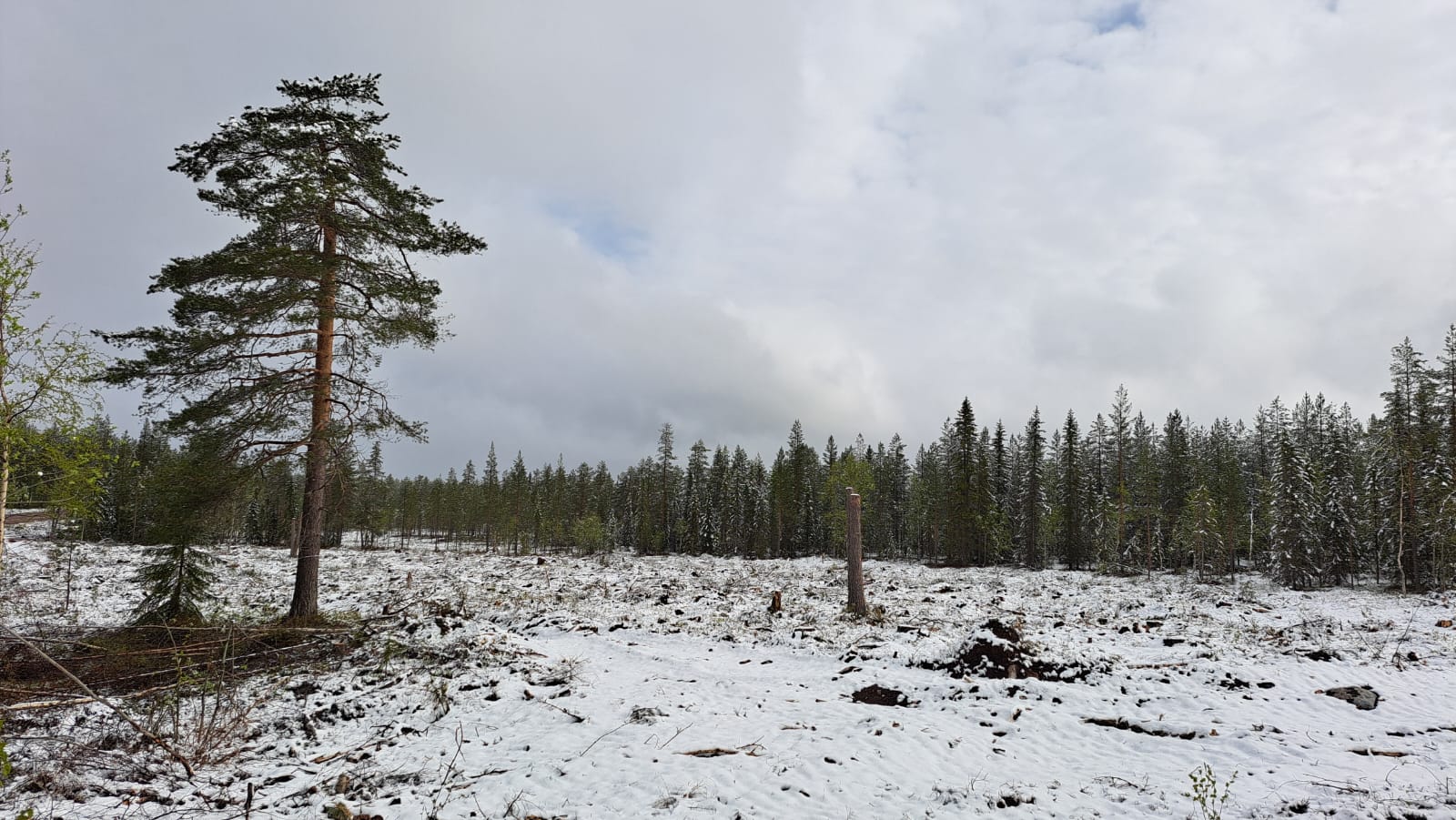
Sweden is as beautiful as ever, so is our expedition base and the surrounding forest. Note that it snowed today.
Snow in May
The bears have not fared too well over the past 12 months. The government has slashed the number of bears it wants alive in Sweden from 2800 to 1400. This has meant that over the past year lots of bears have been killed in the study site, many of them with collars. At the same time the SBBRP has been starved of funds. How all this impacts what we do on the expedition this year, Andrea will explain when you get here. Suffice it to say that your contribution will be as important as ever, if not more.
On the bright side, we’ll be getting everything ready for you over the next few days. The weather forecast says the weather should improve and get warmer by the time you arrive, but come prepared for fours seasons anyway.
So safe travels and I’ll leave you with some impressions from today…
It’s time for our 2025 edition of our Sweden bear expedition, working in collaboration with Björn & Vildmark (bear & wilderness). I am Matthias Hammer and I will be your expedition leader this year.
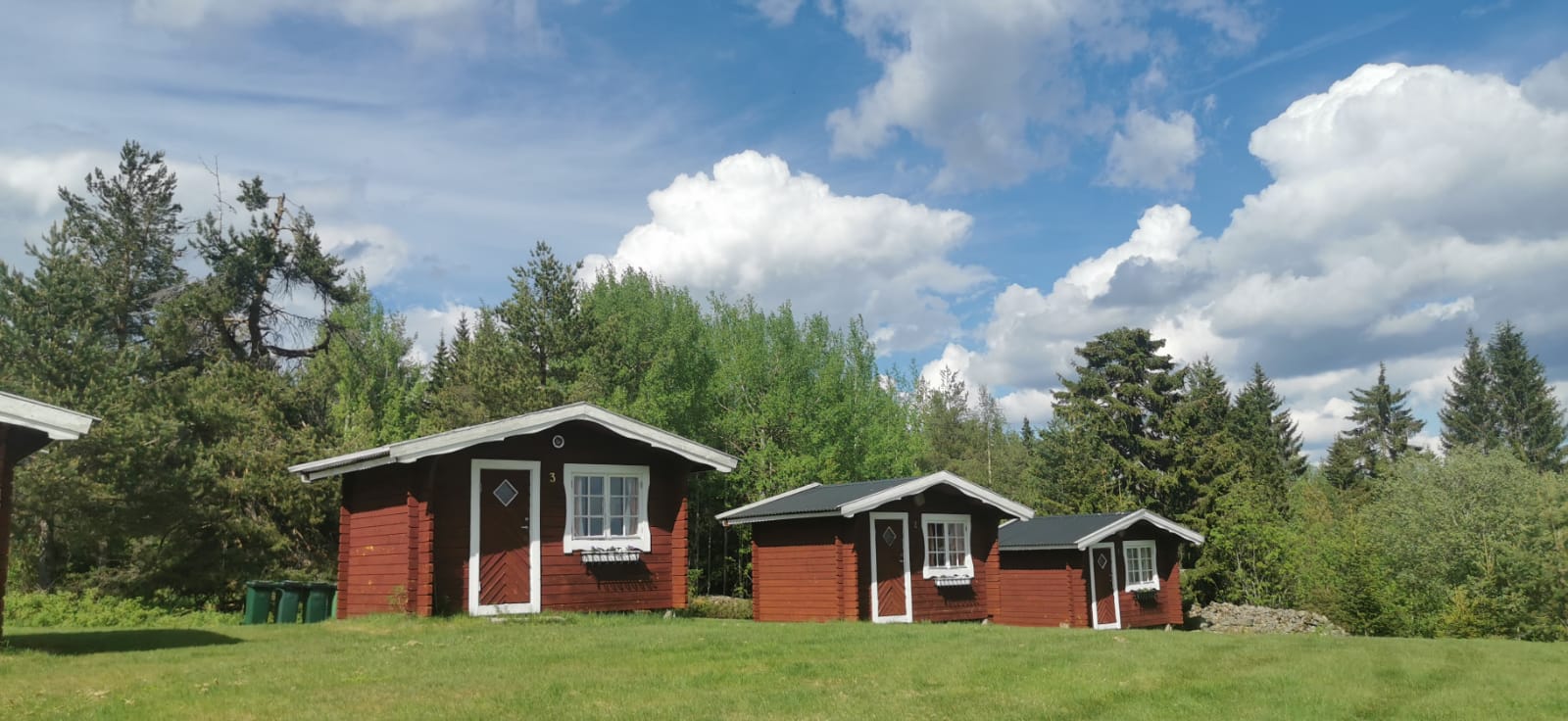
Expedition base
This is our fifth citizen science research expedition in Dalarna province, Sweden, gathering field data on brown bears (Ursus arctos), contributing to the conservation of this iconic Scandinavian mammal. The data collected is used by the trans-national Scandinavian Brown Bear Research Project (SBBRP). Expedition scientist Dr Andrea Friebe has worked in the SBBRP since 1998 and wrote her master thesis and dissertation about brown bear hibernation and ecology in Sweden.
Dr. Andrea Friebe
The main focus of the Biosphere Expeditions brown bear research expeditions is locating and surveying winter dens used by bears that have previously been fitted with tracking devices. Once the bears have left in spring, each winter den is then carefully measured by the citizen scientists and a wide range of data are collected relating to the type of den, the surrounding habitat and any evidence of cubs and/or bear scats at the den site. The data gathered by the expeditions are used by the SBBRP as part of their long-term research programme following the lives of specific bears from birth to death, to gain insights into bear diet, weight development, patterns of movement, colonisation of new areas, choice of den, social behaviour, mortality and reproduction. Inter-species interaction with moose and domestic livestock have also been investigated, as well as the sensitivity of bears to human disturbance and human-bear conflict. The purpose of this all this is to provide managers in Norway and Sweden with solid, fact-based knowledge to meet present and future challenges by managing the population of brown bears, which is both an important hunted species and a source of conflict, and whose management has been changing rapidly in recent years.
Investigating a den
So, here we are. I hope you have read the latest expedition reports, your preparations are going well and you are all excited. I will be a few days ahead of you and my next diary entry will be from Sweden with updates from the ground.
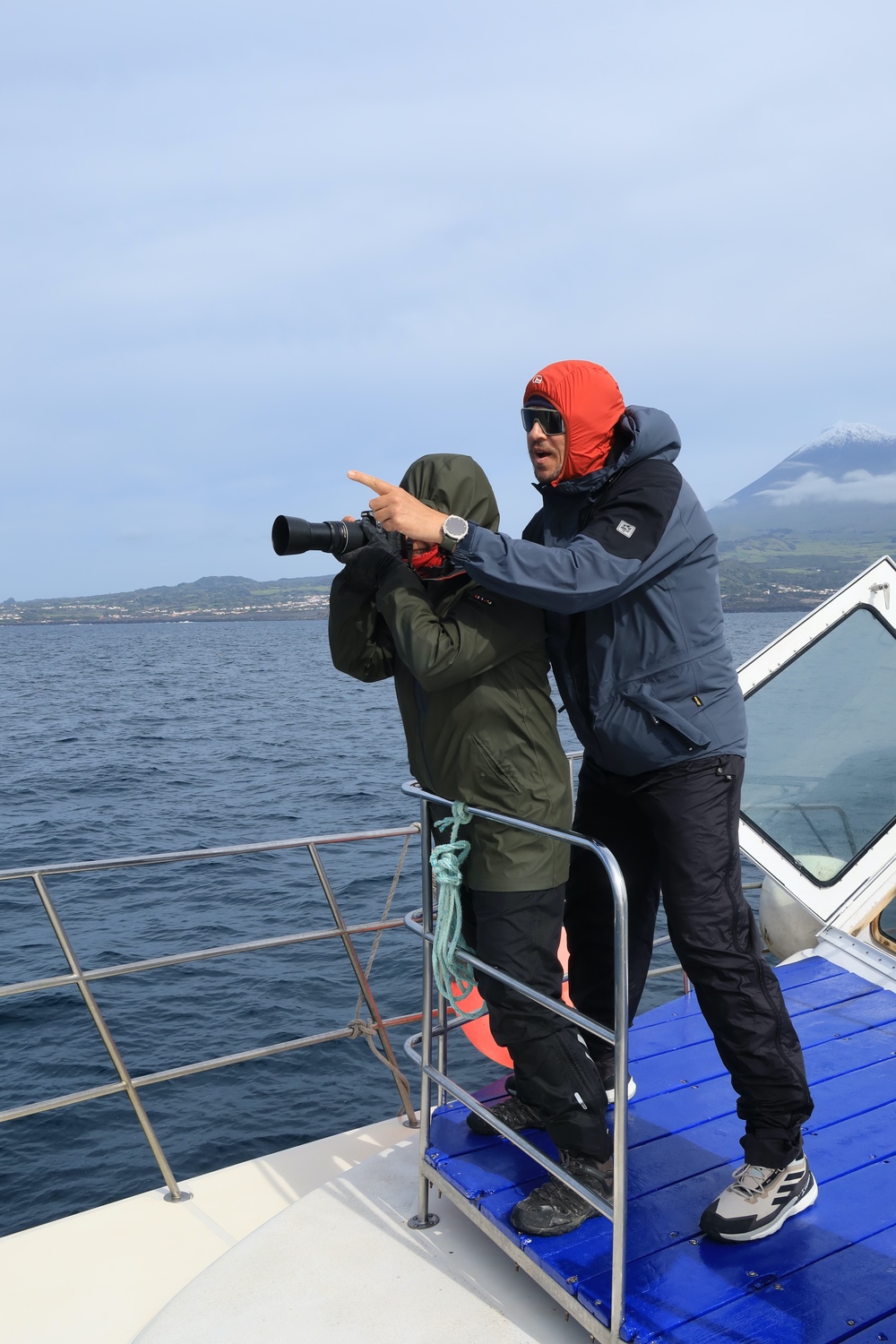
Whale watching can be undertaken in a matter of hours, but monitoring cetaceans to better understand their spatial and temporal use of different areas of our oceans – takes years. Biosphere Expeditions has just completed their latest expedition in the Azores, and is rapidly approaching two decades of monitoring, in an area of the Atlantic Ocean supporting over 25 different cetacean species.
Cetacean research questions cannot often be addressed (with any certainty) in a month or a single year. Data collection may take a decade or longer, to reveal meaningful patterns and this is the case with the cetaceans of the Azores. The true value may not always be in the ‘here and now’, but be realized as future questions or challenges arise. Such a data bank will only accrue value over time.
Some feedback is more immediate. Images of sperm whales and blue whales taken this year, have already be matched to other locations in the Azores, and northern Europe, across more than two decades. Some blue whales have not only been matched but never been recoded so early in previous years. yut many more whales have still yet to be matched, revealing range of their movements and importance of different parts of the oceans. Some individuals have only been recorded for the first time, again contributing to our understanding of population dynamics.
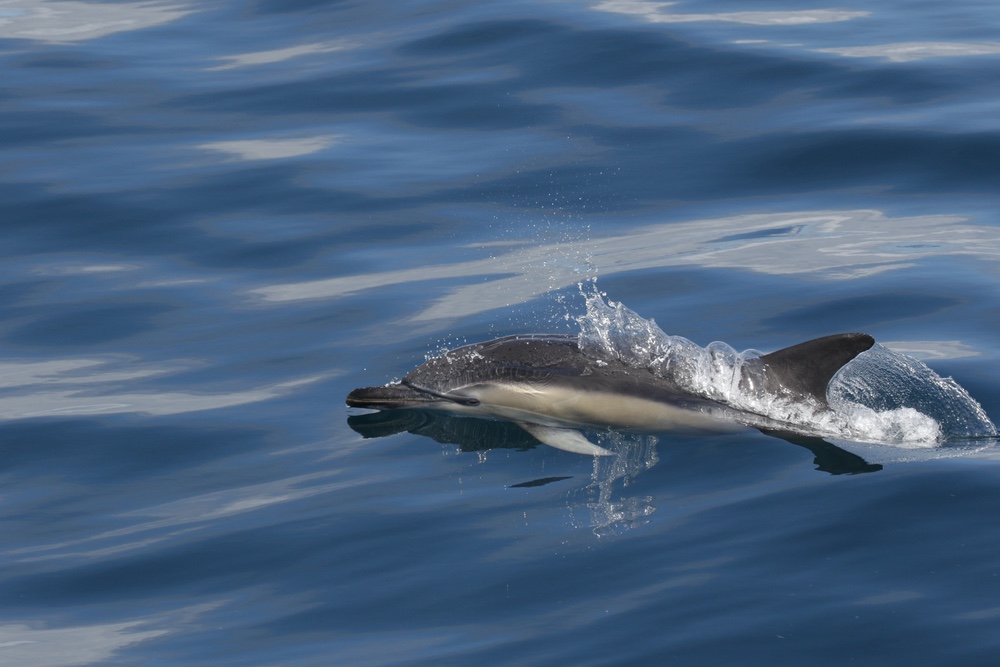
This year’s project still has a lot of data to process, from over 125 cetacean encounters over 15 days at sea, sighting over 1500 individuals. But some species are absent from this year’s research findings (e.g Sei whales) and dolphins have been found in lower numbers. On the upside, a few rarer records were noted such as orca, minke and Sowerby’s beaked whale.
With the expedition fieldwork continuing to commence in March, “it has also been great to extend the data collection beyond the normal tourism season”, says expedition scientist Lisa Steiner, “and collect data on a range of species, across a broader time span. The value of this work is huge as we wouldn’t have documented the range of species, including several sei, humpback, fin and blue whales, since there are fewer tour boats out at this time of year”.
Understanding spatial and temporal patterns of so many cetaceans is key to their long-term protection and conservation. And undertaking field research when others are not often at sea reveals new information such as species being absent or present in lower or higher numbers compared to other years.
“The ability to collect such data is greatly enhanced by the annual contribution of the Biosphere Expeditions citizen scientists”, says expedition leader Craig Turner, “and underlines the value of long-term data sets in illustrating the importance of the Azores for many cetacean species”.
This data-collection approach is being applied to other species of whale, along with dolphin species, such as bottlenose and Risso’s. The scale of the data collection both in terms of time and space serves to demonstrate the importance of the Azores for several cetacean species. And highlights the importance of appropriate conservation management, to ensure these species continue to thrive not just in Azorean waters, but elsewhere in the wider Atlantic Ocean.
Citizen scientist feedback:
The expeditions was very well organised. Craig & Lisa work very well together and you could tell they enjoy what they do. They cope very well when plans change, flights are delayed, weather changes etc . Amazing Nicola B, Switzerland.
Our first day on the boat (also my birthday) I will never forget. I wished for a blue whale and I think we had six sightings that day (plus seven orcas!). Seeing the blow, seeing it just at the water surface and the beautiful turquoise colour before it dives. It was an experience way beyond what I expected. Accommodation was excellent. We were so lucky to have a view over the seas and Pico beyond. Great positive atmosphere of all the group members Anne Clarke, UK.
The group dynamic was excellent and the leader really helped to create this. The expectations were handled well and we knew flexibility (weather etc) needed. So no frustrations or disappointments. Meals etc were excellent, science presentations very informative. Peter S., Canada.
We found everything to be very well organised. A big compliment to our expedition leader Craig – what a wonderful guy – he kept everything going and the spirits up ; and to Lisa, our great scientist from whom we learned a lot. Loved the lectures from the Portuguese scientists who came to explain about their work on cetaceans. Loved to listen to Lisa who shared her unbelievable knowledge with us. Gitta V., Netherlands.
This was a wonderful experience for me. Lisa & Craig are top notch organisers and kept things flowing. Briefing every day after outings and evenings were perfect. Selections of vegetarian options was excellent for me Mita P., USA.
That’s all folks. It is time for final diary entry. The end of the expedition is suddenly upon us, and five weeks seems to have flown by, with the international team now gone. Before I wrap the expedition, let me first recap the last few days:
Our final day at sea presented yet more great sightings. Most notably was another fin whale and not one, but two more humpbacks – one far easier to photograph than the other, but still a favourite amongst many. Add to this, more sperm whales, common and bottlenose dolphins and it was another great data haul. Sea conditions and our continued search for more sightings put us close to Capelinhos – the most recent volcano to erupt in the Azores – at the west end of Faial. This presented an opportunity for another first in 2025 – a circumnavigation of Faial – as the seas were easier to navigate to the north. Our 2025 data collection ended with our final loggerhead turtle.
This ocean-based tour of the island gave the group a better feel of where to visit on their day off – with many heading back to Capelinhos. But on our last day we were thwarted at the final hurdle, in our effort to go to sea, by bad weather, but this presented another opportunity to sort more data. Not how we would wish to end, but you can’t argue with the Atlantic Ocean – just accept that plans may often change. So that concluded our data collection and sorting, on another really successful expedition in the Azores.
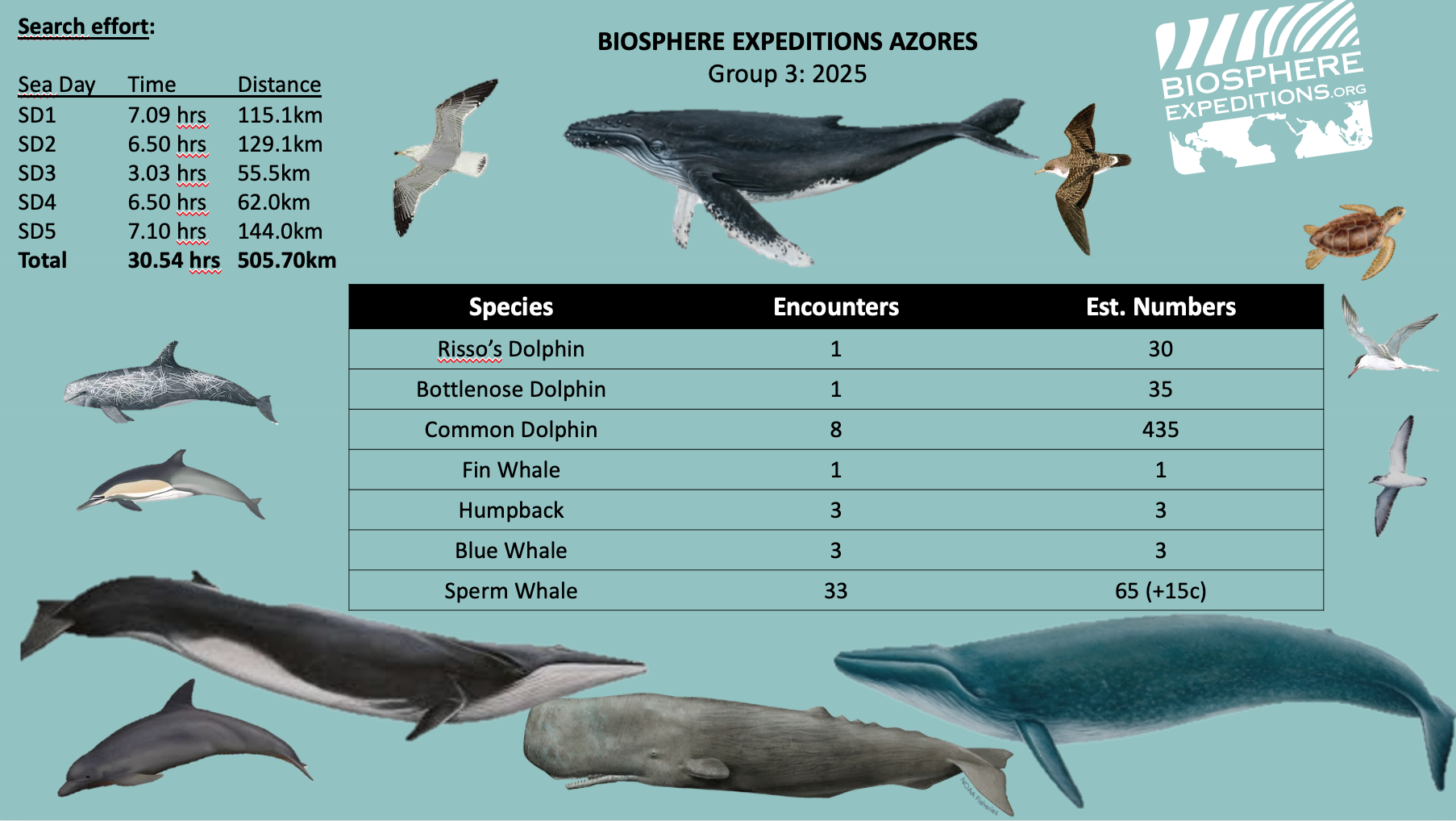
This year we’ve again documented an impressive array of records that without Biosphere Expeditions, would not have been collected. Here are just some of our highlights. We have
deployed three teams into the field, comprising 8 different nations, spanning multiple decades
completed in excess of 84 hours of surveys, covering over 1400 km of the ocean
collected data on at least eleven different cetacean species (six whale and five dolphin species), one turtle species and numerous birds
encountered more than 125 cetaceans,
confirmed some positive whale IDs, and several re-sights, but also have numerous new flukes – i.e. individuals never recorded before
Data in isolation can be a bit ‘dry’, and lack context, as field research rarely gives us instant results (though fluke matches are coming through) or fast answers to our bigger questions. But we’ve collected another great baseline of data and the full results will become clearer in the expedition report. The power of this simple field data builds over time, as has been illustrated by our excellent invited speakers (thank you, to all).
Whilst we comb the see and learn about the cetaceans and contribute to the ongoing data collection on this project (19 years and counting), it is not always all about the project. What also makes the project so special is the people. So let me initially offer some thanks. First off, to our three groups, who stepped up to the daily challenge of data collection to achieve our goals of better understanding the spatial and temporal distributions of the cetaceans and turtles of the Azores. You’ve not only all contributed to advancing this knowledge and making this expedition a success – you have also been great fun to work with and not given the expedition leader too much stress!
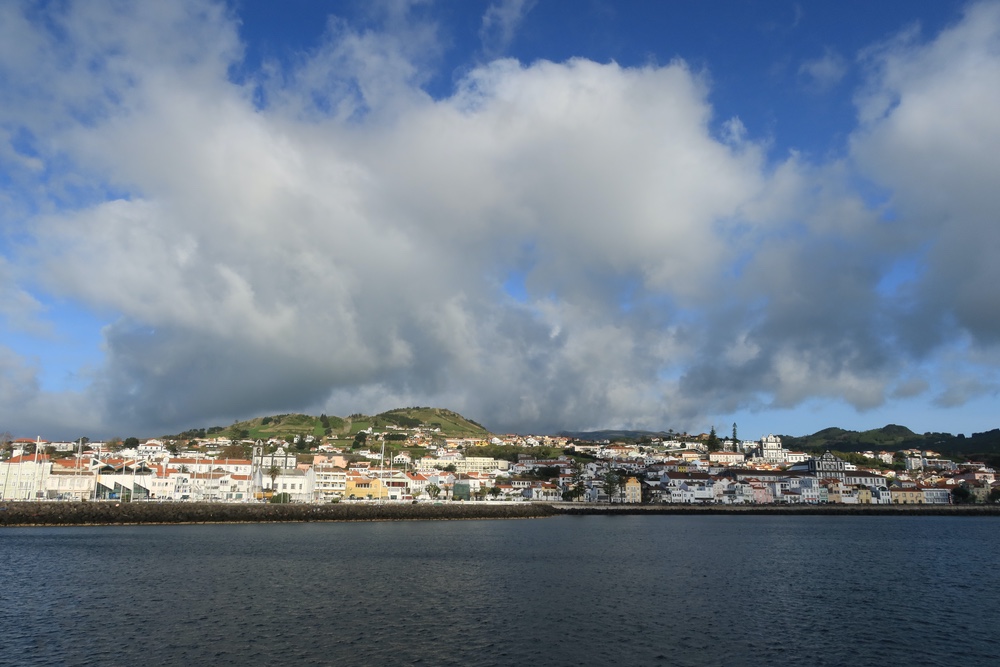
We also thank the wider Biosphere Expeditions team, as this project can’t happen without the unseen preparation, often months before we even set foot on a boat. I also extend thanks to all in Horta who have supported us, particularly Norberto Divers, the lookouts and our various caterers – whose food has more than sustained us! We also extend our thanks to our hosts (Silvia & Mario) and the project base, of course to Lenita (our housekeeper) who ensured we were more than comfortable. I (like many) can also not forget our skippers (‘Pico’ Pedro & Pedro 2), who not only took us to sea, but ensured the team knew the sea state, wind direction, cetacean locations and always got us back to port safely – thank you gentlemen. Finally, our collective thanks go to Lisa. A constant force for knowledge and our leader in all things scientific. It is always a privilege to share in your world of cetacean fieldwork.
We have also had the great privilege of briefly experiencing life in Azores. As I mentioned in my very first diary entry (if you remember!), who doesn’t want to live on a volcano, in the middle of an ocean, searching for a diverse array of charismatic cetaceans. The allure of this fascinating archipelago is strong, and I don’t doubt that some of us will return, in the not too distant future – there are many reasons to come back.
For me personally it has been great to have the opportunity to return to the Azores, work on the project, in this wonderful place and meet old and make new friends. It has been a blast, but all good things come to end and now I too must make my way home. Time to head to my place in Scotland, catch up with my own family and see what projects we take on next.
Our survey sightings have continued where we left off, and almost unbelievably the bar has been pushed even higher. Encounters with blue whales and fin whales have continued – Tim (and others) has been blown away by the fact that we are seeing the largest creature ever to exist, on a daily basis!
We have also managed to add a humpback whale encounter to the data set, but better was still to come. Returning to Horta on one of our survey days over the weekend, we had a ‘random’ encounter with a couple of Sowerby’s beaked whales. To paraphrase Lisa, you can count on one hand how many times beaked whales have been recorded on the past 18 expeditions.
However, there was even more to come, and Pedro, our ever-alert skipper, also spotted a minke whale. They are fast, relatively small, with low blows; so hard to find, and rank amongst the least recorded species in the Azores – a great sighting and fantastic data.
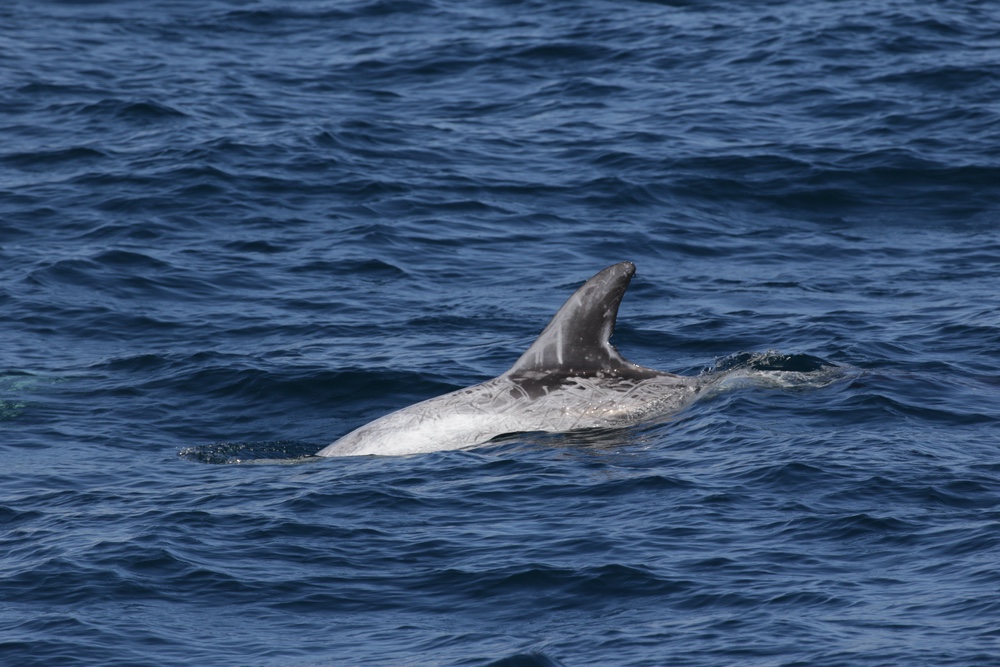
With the weather still on our side, our species list was to increase further still, with a group of non-cooperative sperm whales – i.e. they were socialising and not diving, so very limited fluke pictures for ‘matching’ purposes. More work to be done here. Whilst blue whale encounters seem to continue like clockwork, punctuated by more common dolphins and a fin whale. Monday saw the addition of Risso’s dolphins, following yet another random encounter to the south of Pico.
Recording cetaceans on most days at sea is what we hope for, but the realisation of new records and rare encounters is beyond all our expectations. Over the past ten years, I can’t remember a start to an expedition like this one. May the good weather and our good luck continue.
Biosphere Expeditions has continued its long-term partnership with Lilongwe Wildlife Trust, researching and monitoring wildlife populations in Vwaza Marsh Wildlife Reserve.
The Malawi expedition has a particular focus on surveying elephants and hippos, as well as camera trap surveys of other wild animals. Analysis of elephant dung was also carried out to assess whether elephants had been eating crops grown in fields outside the reserve. The 2024 expedition also continued the process started in the earlier expeditions of identifying individual matriarch and adult bull elephants. Building this database of individual elephants will help greatly in mapping the demographics, movements and health of the elephant herds in Vwaza.
The 2024 expedition counted 296 elephants over 34 sightings, 339 hippos over five complete lake-side transects and collected and analysed 24 elephant dung samples (yielding 1743 seeds). The expedition also identified or created 17 ID profiles of elephants, with at least one re-sighting. Seventeen camera traps throughout the expedition provided evidence of hyaena, civet, genet, two species of mongoose and honey badger, amongst other species.
Expedition Leader Roland Arnison, who also led the 2022 and 2023 expeditions in Vwaza, said that “this was another successful expedition, carrying out field research tasks that, practically, can only be carried out by a team of hard-working citizen scientists. I am confident that the results gathered from this expedition will make an important contribution to the conservation of endangered species and biodiversity in Vwaza”.
Head of Research at LWT, Dr Leandra Stracquadanio, who was the expedition scientist, said “the data that we collected during this expedition is invaluable for us to continue our monitoring of elephant and hippo populations, as well as the overall biodiversity within Vwaza. The team did an excellent job and produced high-quality data that will inform ongoing and future conservation planning.”
Citizen scientists feedback:
Roland and Lea and the team really made this entire experience incredible. Kathy H., USA
It’s a great experience and I really felt us being here was useful. Sanne W., Netherlands
Really enjoyed that each day had a different combination of activities. Really positive leadership by Roland and Lea. Pam G., UK
The expedition was well set up and organised and there was not a day that I felt like something was out of place. Glory M., Malawi
This is my fourth expedition to Vwaza Marsh with Biosphere Expeditions. Another wonderful experience, finished off with a very special visit from the elephants and their babies coming right past our campfire as we were having dinner on our last night. Janet B., UK
Biosphere Expeditions, working in collaboration with Björn & Vildmark (bear & wilderness), has completed its fourth citizen science research expedition in Dalarna province, Sweden, gathering field data on brown bears (Ursus arctos), contributing to the conservation of this iconic Scandinavian mammal.
The expedition involves citizen scientists staying at a base camp and, after receiving relevant training, collecting data under the direction of the expedition scientist, Dr Andrea Friebe.
The data collected is used by the trans-national Scandinavian Brown Bear Research Project (SBBRP). Dr Friebe has worked in the SBBRP since 1998 and wrote her master thesis and dissertation about brown bear hibernation and ecology in Sweden. In 2001 she founded the company Björn & Vildmark, as an interface between bear research and information for the public and for managers.
The main focus of the Biosphere Expeditions brown bear research expeditions is locating and surveying winter dens used by bears that have previously been fitted with tracking devices. Once the bears have left in spring, each winter den is then carefully measured by the citizen scientists and a wide range of data are collected relating to the type of den, the surrounding habitat and any evidence of cubs and/or bear scats at the den site.
The expedition team also visits sites where bears had recently spent a significant amount of time, indicating a ‘day-bed’, or a potential kill or scavenging site. These sites also provide a high chance of finding bear scats. Samples of these scats are collected and later analysed to reveal bear diet as well as helping to identify the presence of cubs accompanying female bears.
The data gathered by the expeditions is used by the SBBRP as part of their long-term research programme following the lives of specific bears from birth to death, to gain insights into bear diet, weight development, patterns of movement, colonisation of new areas, choice of den, social behaviour, mortality and reproduction. Inter-species interaction with moose and domestic livestock have also been investigated, as well as the sensitivity of bears to human disturbance and human-bear conflict.
The purpose of this all this is to provide managers in Norway and Sweden with solid, fact-based knowledge to meet present and future challenges by managing the population of brown bears, which is both an important hunted species and a source of conflict, and whose management has been changing rapidly in recent years.
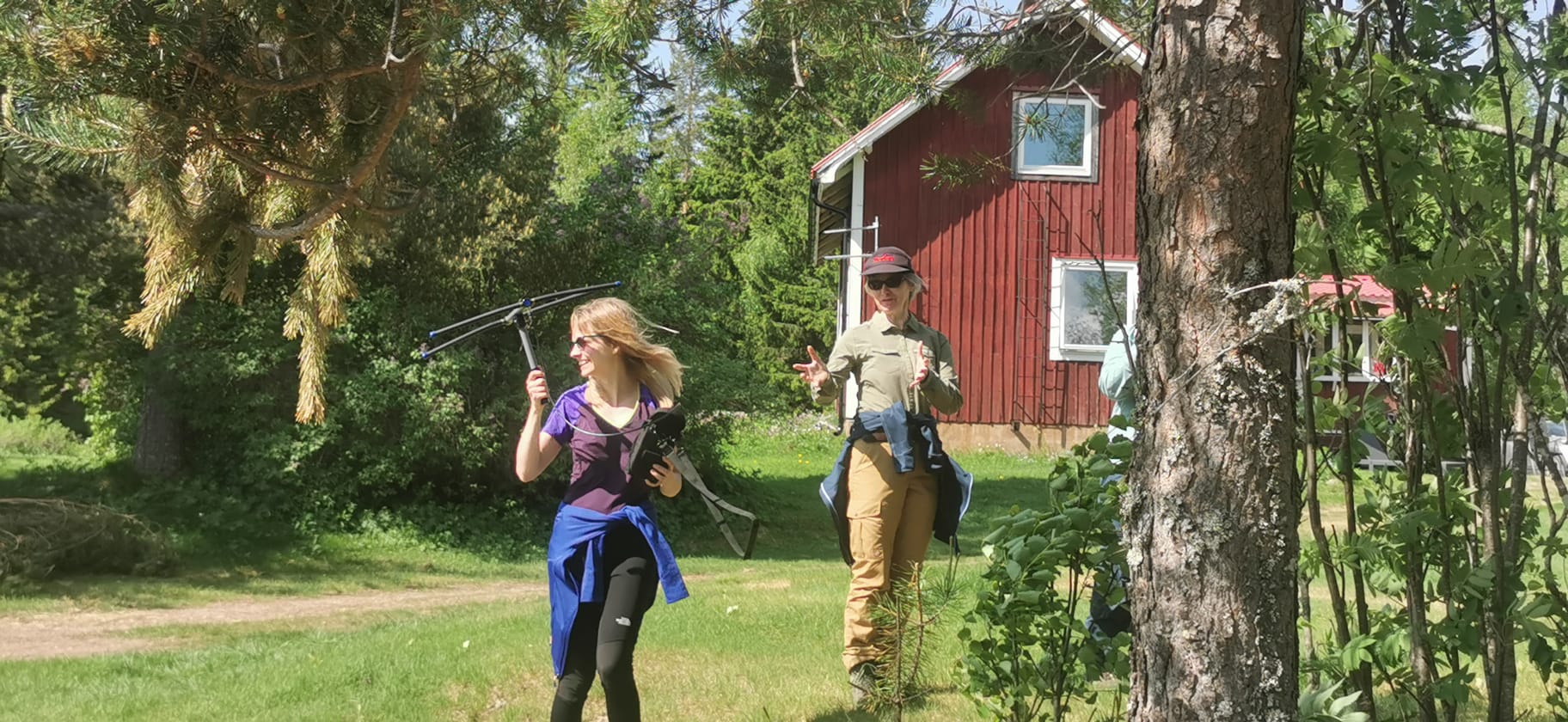
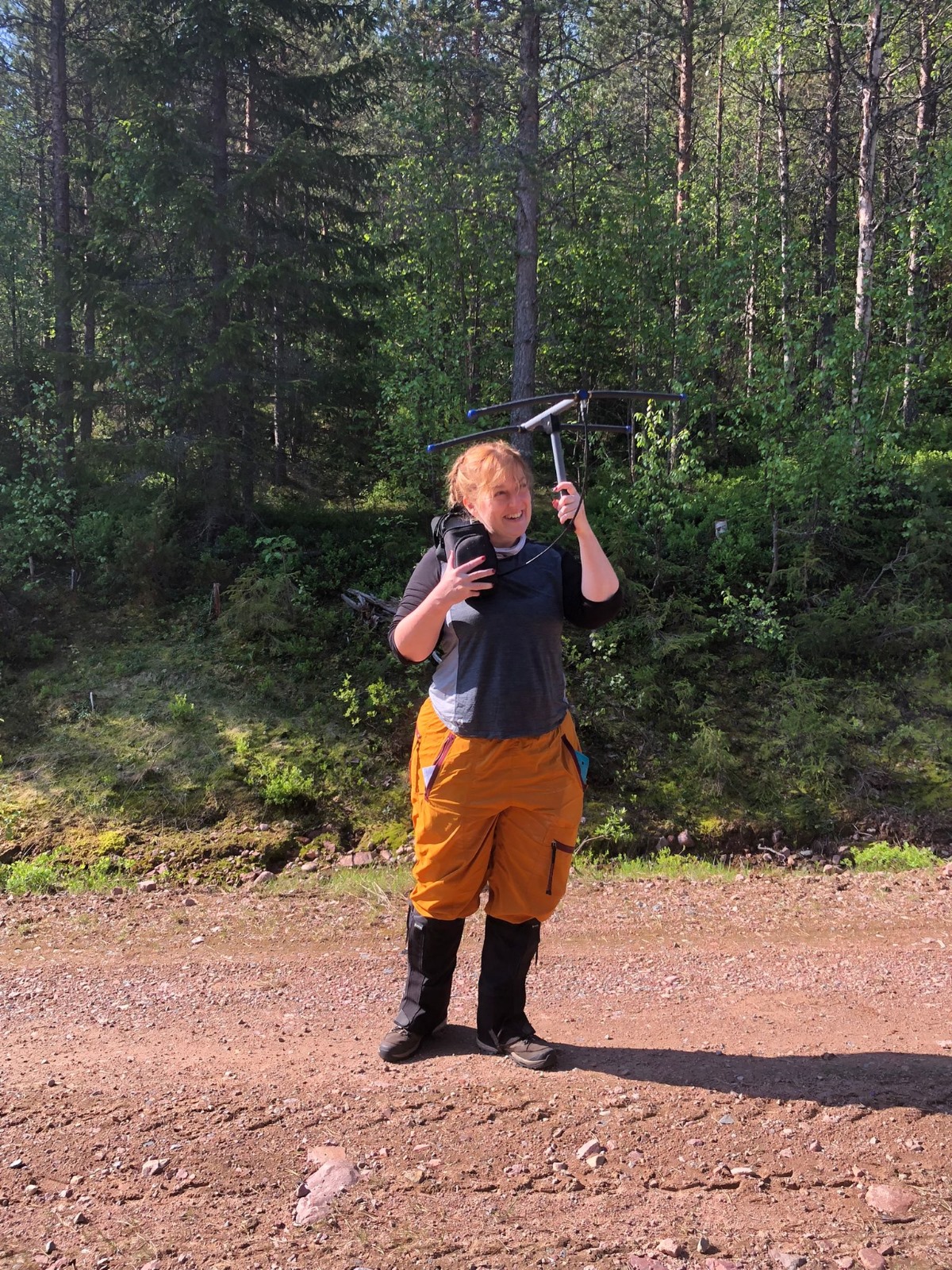
The 2024 expedition ran from 26 May to 4 June 2024, involving two days of practical training followed by seven days of research in the field carried out by nine citizen scientists from Germany, Spain, Poland, the UK and US. The expedition succeeded in locating and visiting 60 sites, including surveying 27 winter dens and collecting 56 samples of bear scats, three of which were ‘first scats of the season’ (especially valuable samples that can reveal a bear’s diet before and during hibernation). Other evidence of bear presence and behaviour recorded by the expedition included bear ‘day beds’, claw scratches on trees, footprints and the remains of prey carcasses, notably moose. The team also used directional radio antennae to reveal the live location of some bears.
“The team did really well this year, working hard in unusually challenging conditions. They also had to deal with some tough hiking in rough wild terrain to find the dens. They all deserve a good rest following the expedition”, says expedition leader Roland Arniston with a wry smile.
Expedition scientist Dr Andrea Friebe was very pleased with the data collected. “I really appreciate the effort that the citizen scientists put into collect the data. I wouldn’t be able to obtain this long-term dataset on brown bears without them. Initial results show a changing pattern of the types of winter dens used by bears, including a trend of increasing use of basket dens by female bears, a type of den more usually favoured by large male bears.”
Andrea will carry out further analysis of the data collected on the expedition, to reveal more detailed results about bear dens, diet and demographics. An expedition report with all analyses and details will be published in due course
Biosphere Expeditions will to return to Sweden in 2025 to continue this valuable contribution to brown bear research and conservation in Scandinavia.
Citizen scientist testimonials:
“The setting of base was beautiful, basic and comfortable. Andrea was amazing to work with. Loved the presentations. The food was EXCELLENT.” Zoe G., UK.
“I enjoyed a really great experience, beautiful landscape, meeting very kind and interesting people. I am very happy that I got the chance to come here.” Almut D., Germany.
“The food that Lousie cooked was VERY good. Andrea’s enthusiasm and expertise are an inspiration. I thought she was amazing and will follow her research. I loved the technical work and strengthening my technical skills.” Kari V., USA.
“The local researcher is very excited about her work and her enthusiasm is contagious. The research felt worthwhile and finding bear dens was very satisfying. I enjoyed the full days.” Maya G., Poland.
“I appreciated the opportunity to work closely with the project scientist and gain more knowledge of bear ecology and how they interact with the human population” Thomas K., USA.
































 Biosphere Expeditions: blogs from the frontline of wildlife conservation and the fight for a more sustainable planet