Award-winning, non-profit and ethical wildlife conservation volunteering. Advancing citizen science and conservation since 1999 – for nature, not profit.
Group 2 is now safely at base camp, after a 9 hour journey on progressively smaller to no roads. Today training begins.
Following a successful first group, we hope now to get more local interviews, more cells surveyed and camera traps serviced and set and we will hopefully be reporting back with more positive data at the next opportunity.
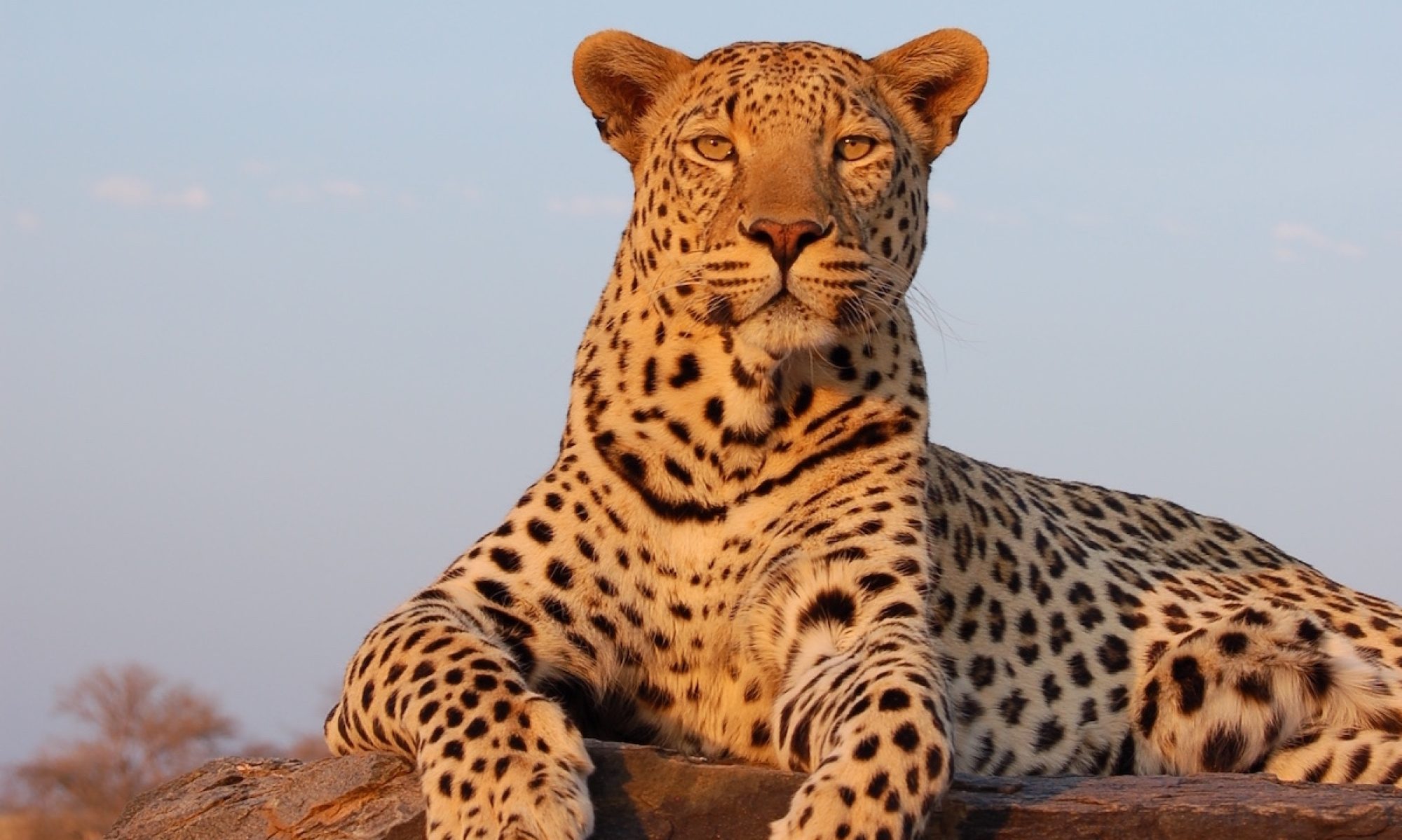
Group 1 is back from the field – and what a start it was, exceeding all expectations of what the 18 camera traps left in the field by last year’s expedition would yield. Almost every camera we toiled up to at around 4000 m caught snow leopards. Preliminary analysis of pelt patterns yields 8+ individuals, a result we can hardly believe ourselves (and have enquired with colleagues about for confirmation). One camera in particular yielded a spectacular photo:
But there were many others too:
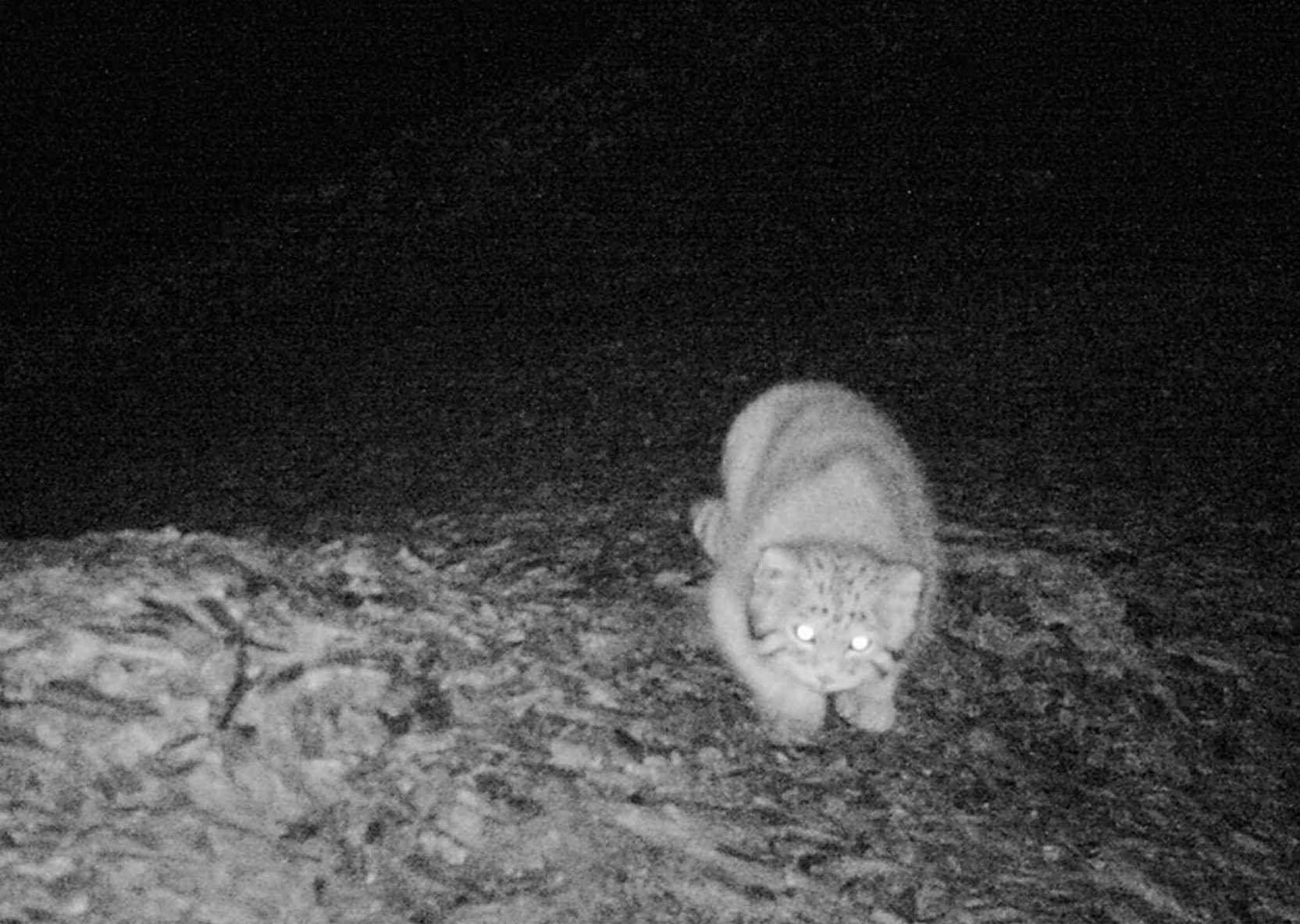
Of course the camera traps not only caught snow leopards, but also many other species such as this rare manul / Pallas cat
A probably even rarer (because they have all been poached out) argali mountain sheep
Ibex
Wolf
An incredibly hardy “yeti” marmot up at 4000 m
Fox
Yak
A curious red-billed cough
Many Himalayan snow cock prancing about
And a lammergeyer photographed by a camera trap that was knocked over (by what we don’t know) and recorded over 10,000 pictures of moving clouds (thanks for going through all of them Aurélie), but also this vulture
But it was not just all about camera traps. We also surveyed cells lower down, conducted interviews and re-affirmed good relations with the local people, ran overnighter surveys and reconnaissance trips into the neighbouring valleys and so much more, yielding this quick summary of results, presented to the team by our local scientist Emil at the end of group 1’s efforts
And what an effort it was! None of this could have been achieved without our 14-strong team of citizen and professional scientists and staff. Thank you to you all and so very well done.
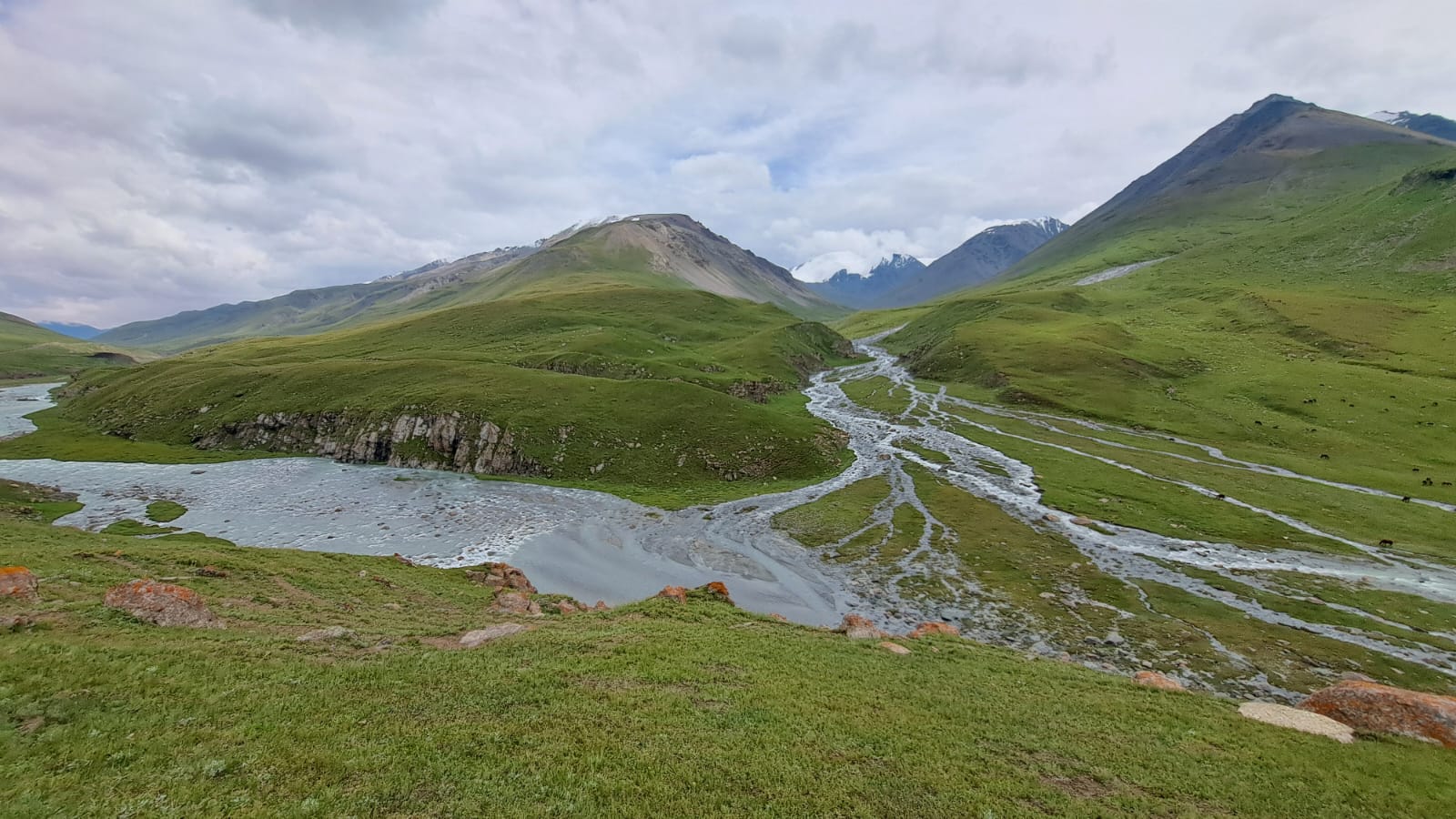
I leave you with impressions of our work, camp and the mountains, as well as feedback from some group 1 participants, and hand the expedition leader baton over to Jonny, who will meet group 2 at the Futuro on Monday.
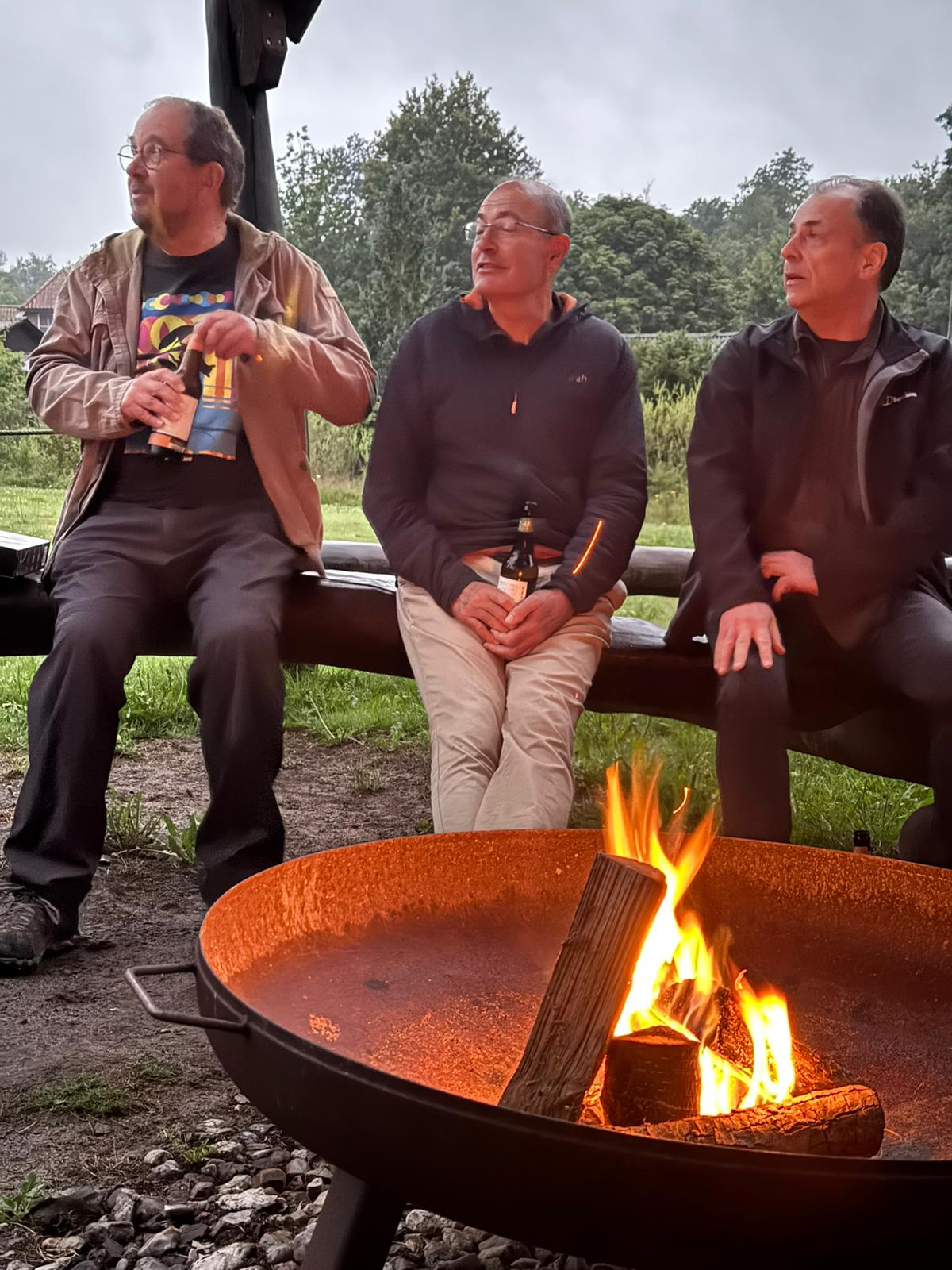
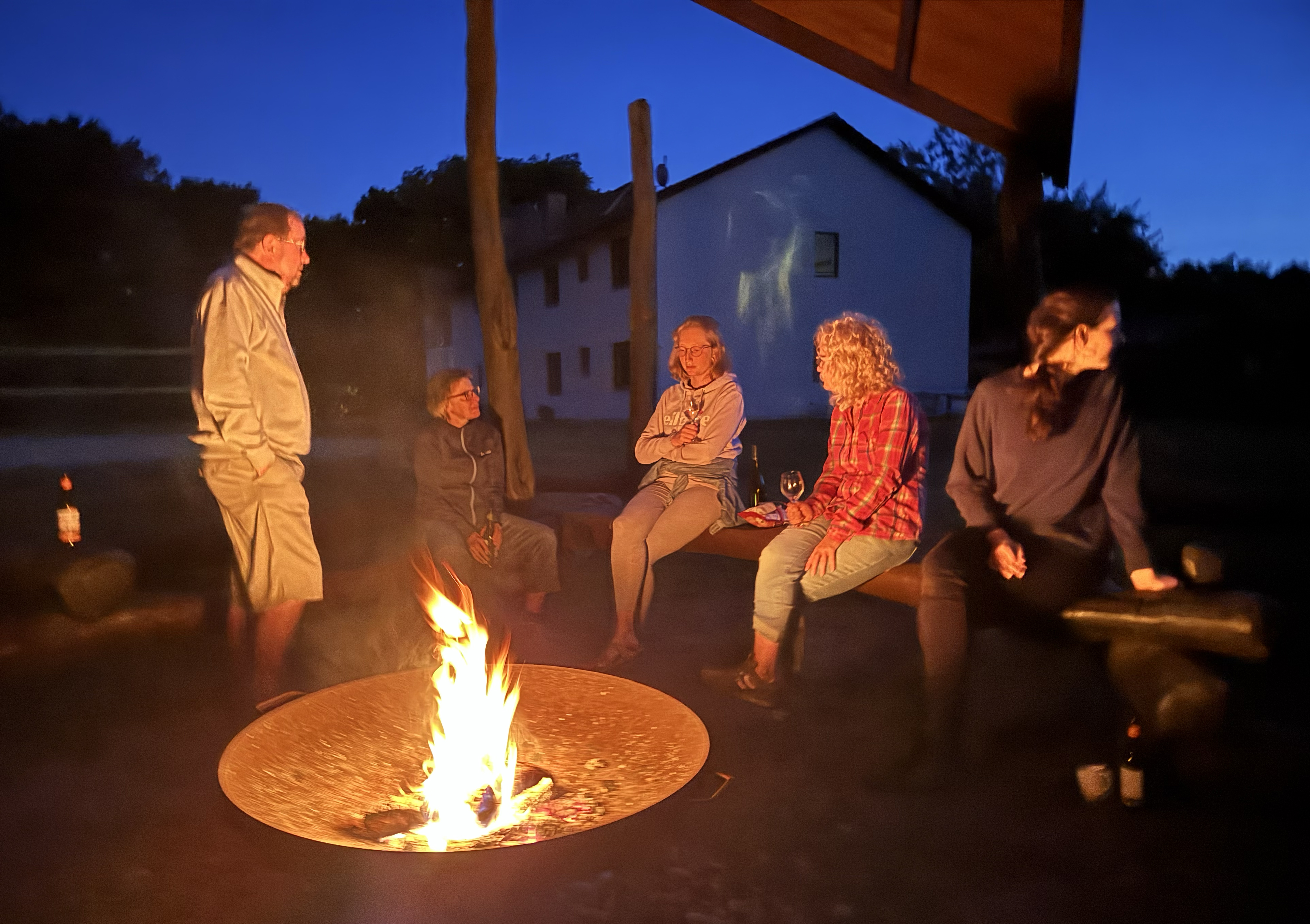
Yet another two successful weeks of wolf monitoring in Lower Saxony have come to an end. Group 2 left the NaturCampus base on Friday morning headed in different directions after a late night with lots of laughter and bread-on-a-stick around the fireplace.
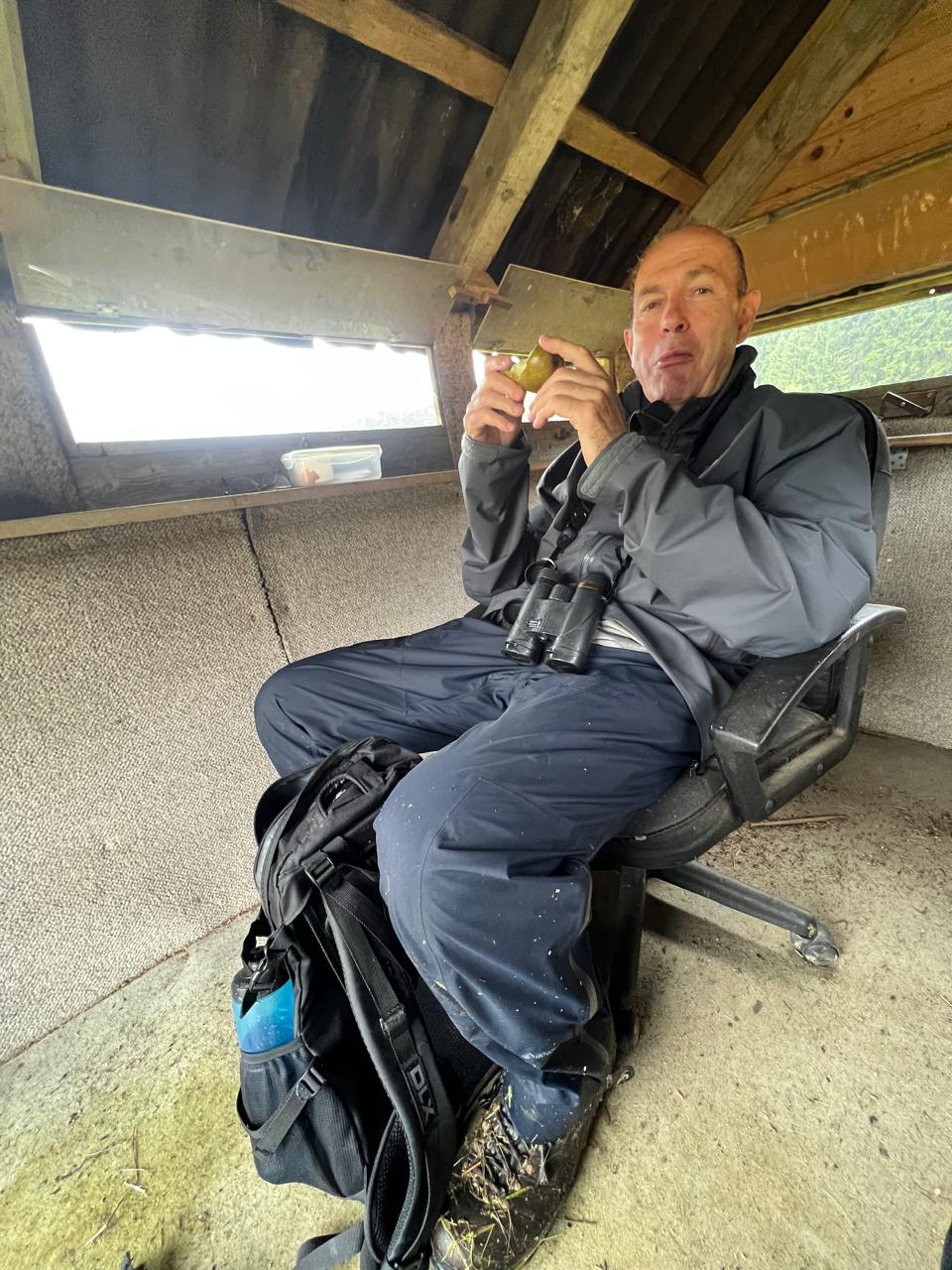
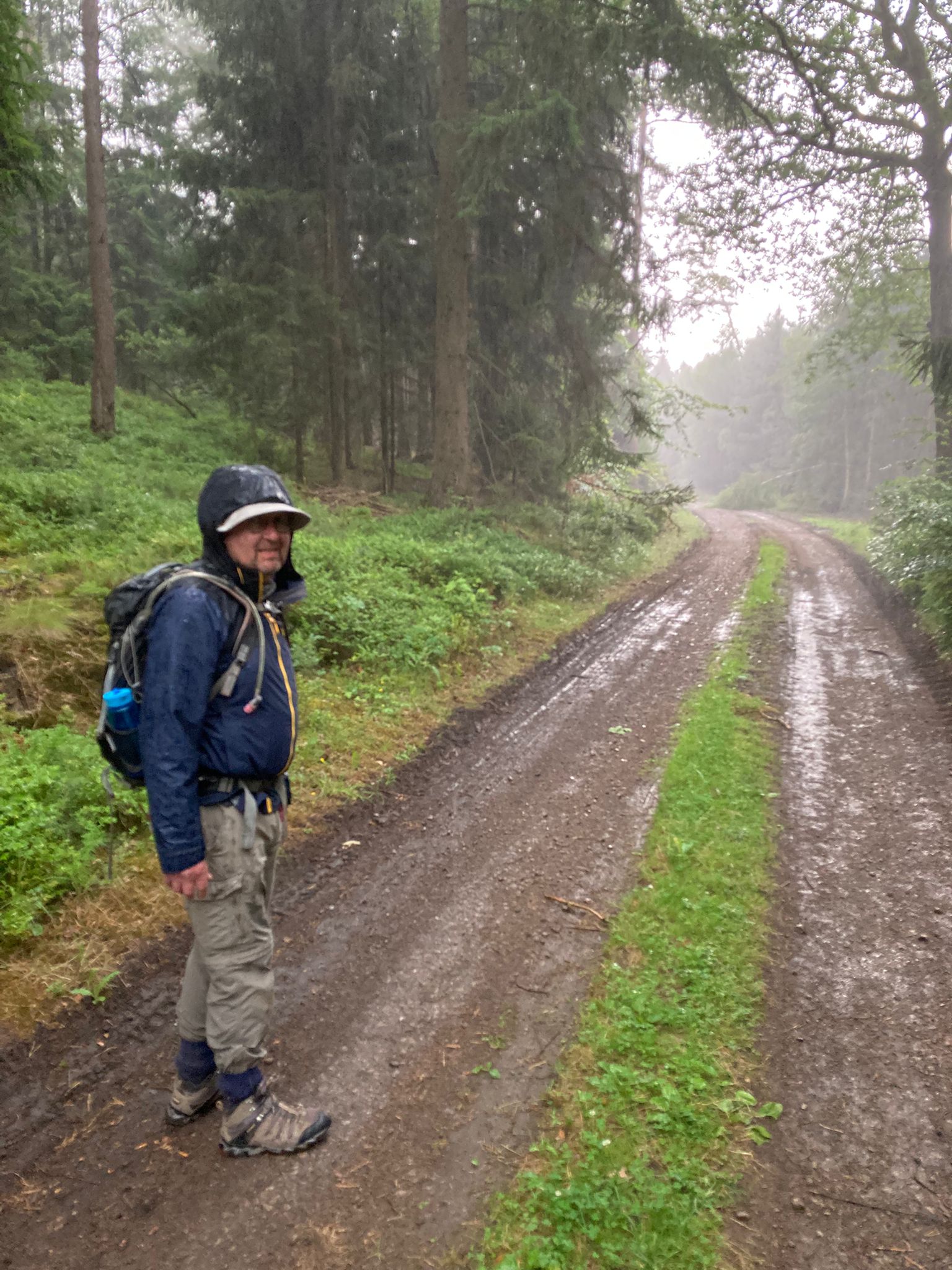
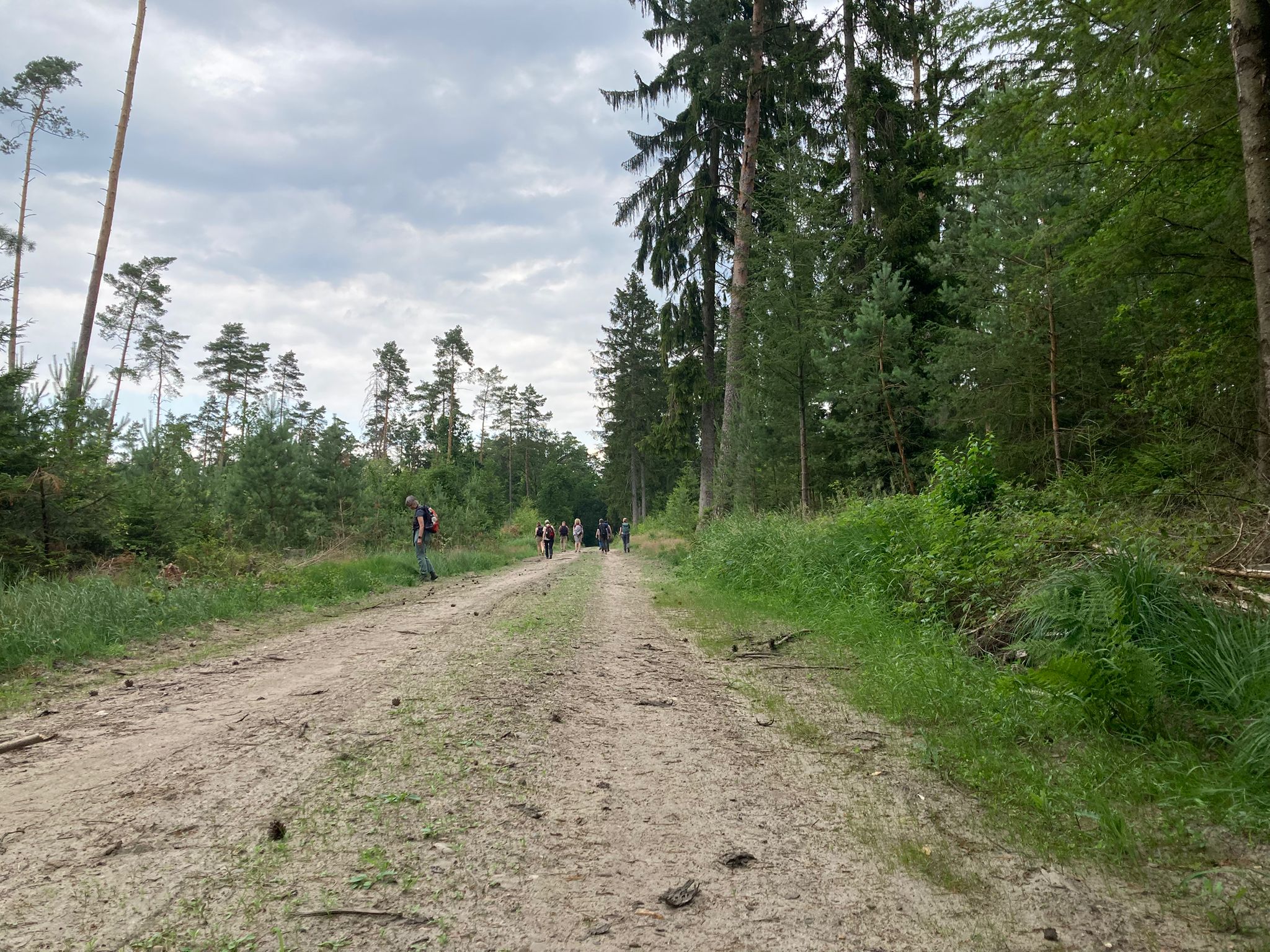
Once more the teams were hit again and again by rain showers on our last survey day on Thursday but determination to find and collect wolf scat prevailed. Two of us established a new record of walking 22.2 km in ongoing rain!
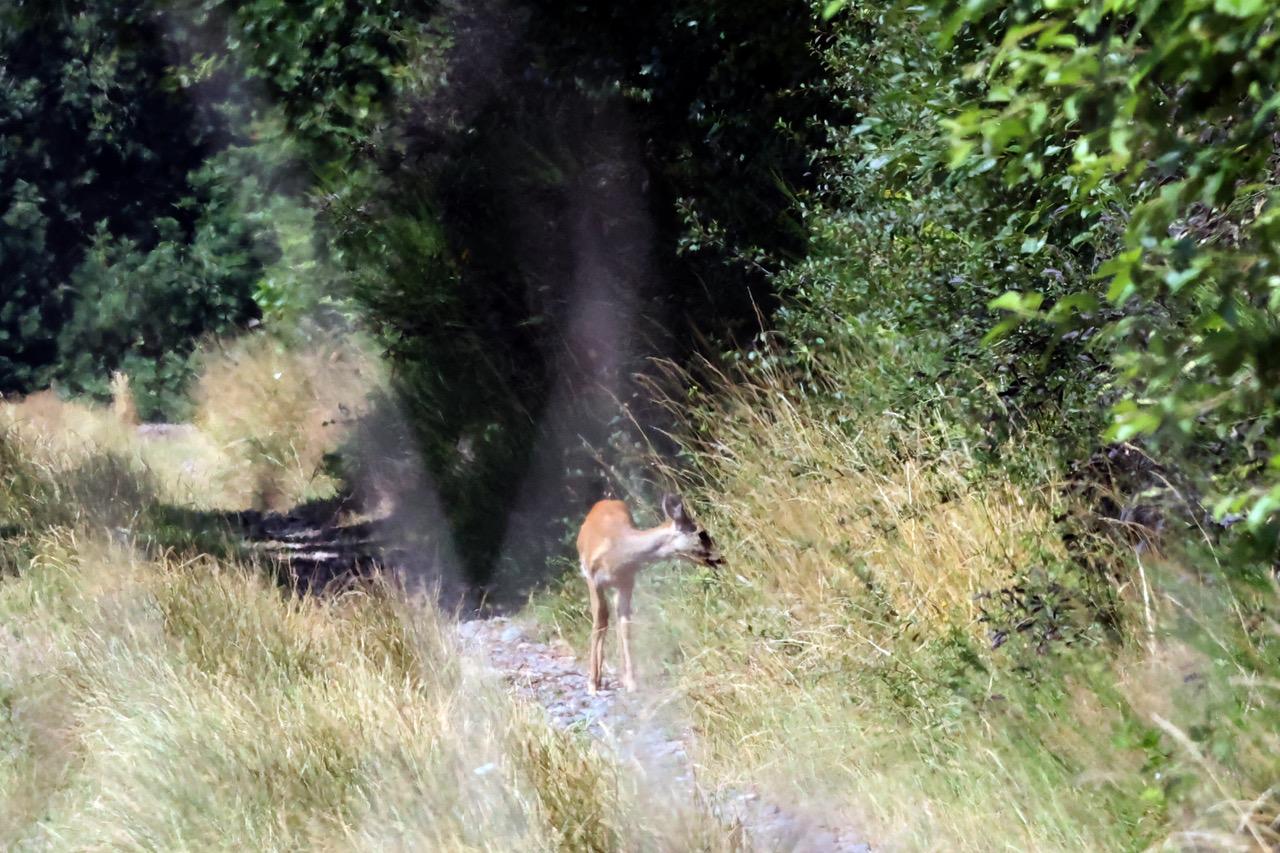
Within 4 survey days group 2 covered 394 km of forest trails and collected 30 more (possible) wolf scat samples for further analysis two of which fresh enough for DNA analysis. Sightings on the survey walks included hare, red deer, roe deer, wild boar with 10 piglets, various butterflies and birds of prey… and a naked man walking the nudist trail in the Schneverdingen area. The survey team has been warned during Lotte’s briefing but it was still a surprise to run into someone wearing nothing but socks, boots and a hat while oneself was fully geared against rain and cold.
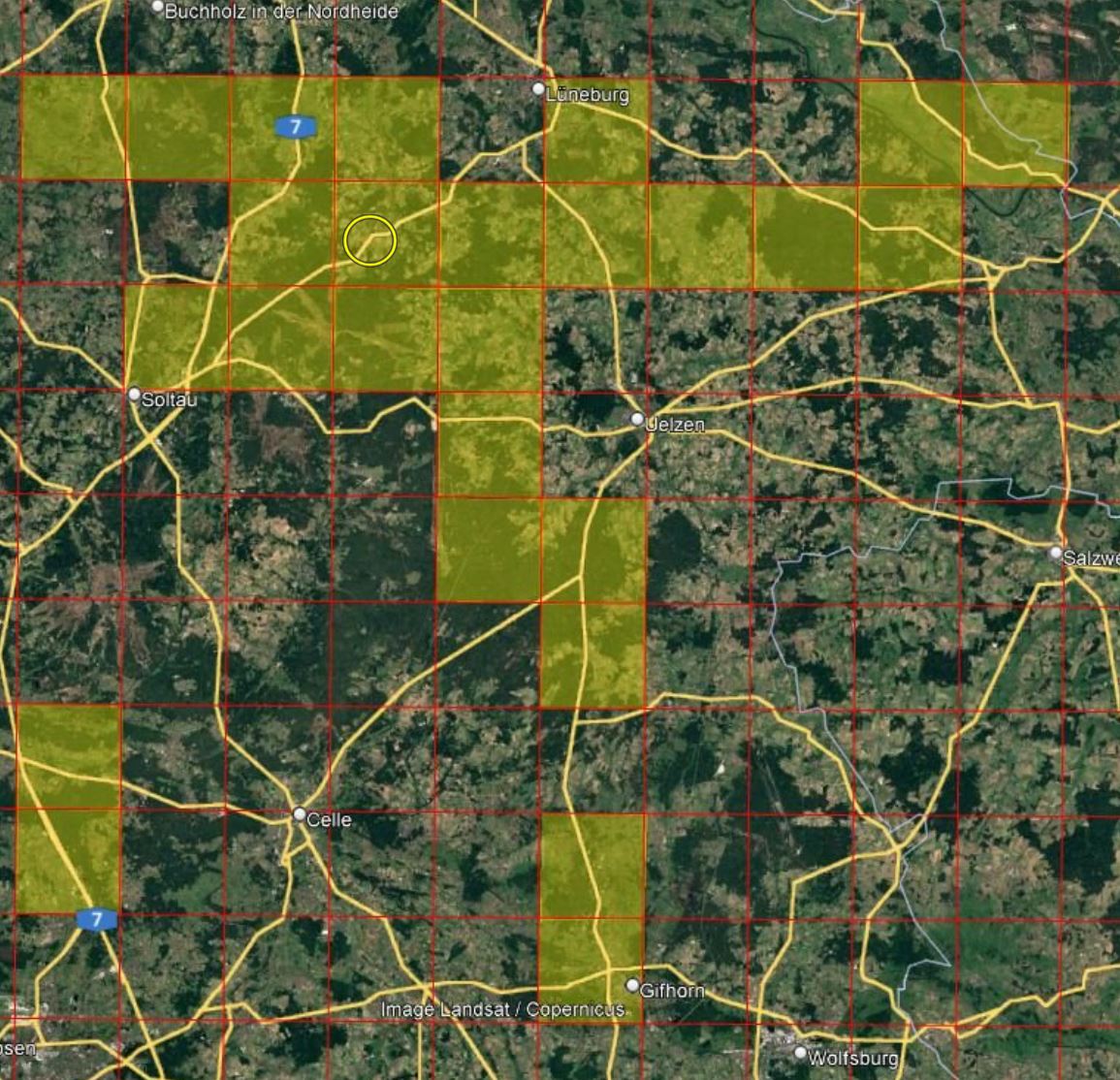
Thanks to two groups a total number of 75 wolf scats and 13 genetic samples are now secured, labelled and packed to be handed over together with the database entries to the LJN authorities. They are an enormous addition to the Lower Saxony wolf monitoring efforts and will be included in their official yearly report, as well as territory statistics, maps, etc. to be published on their website. We have covered a total number of 26 cells (10 x 10 km) of the survey grid by walking 650 km in 12 survey days.
For Lotte & I it’s been a great pleasure meeting and working with all of you for a week respectively. We’d like to thank you again for your time, efforts, input and being great companions in every aspect. A special thanks goes to the drivers and NaturCampus staff that made us feel comfortable and at home. I hope you’ve enjoyed your time as much as Lotte an I did. We’re hoping to see some of you again some time and wish you all safe travels back home!
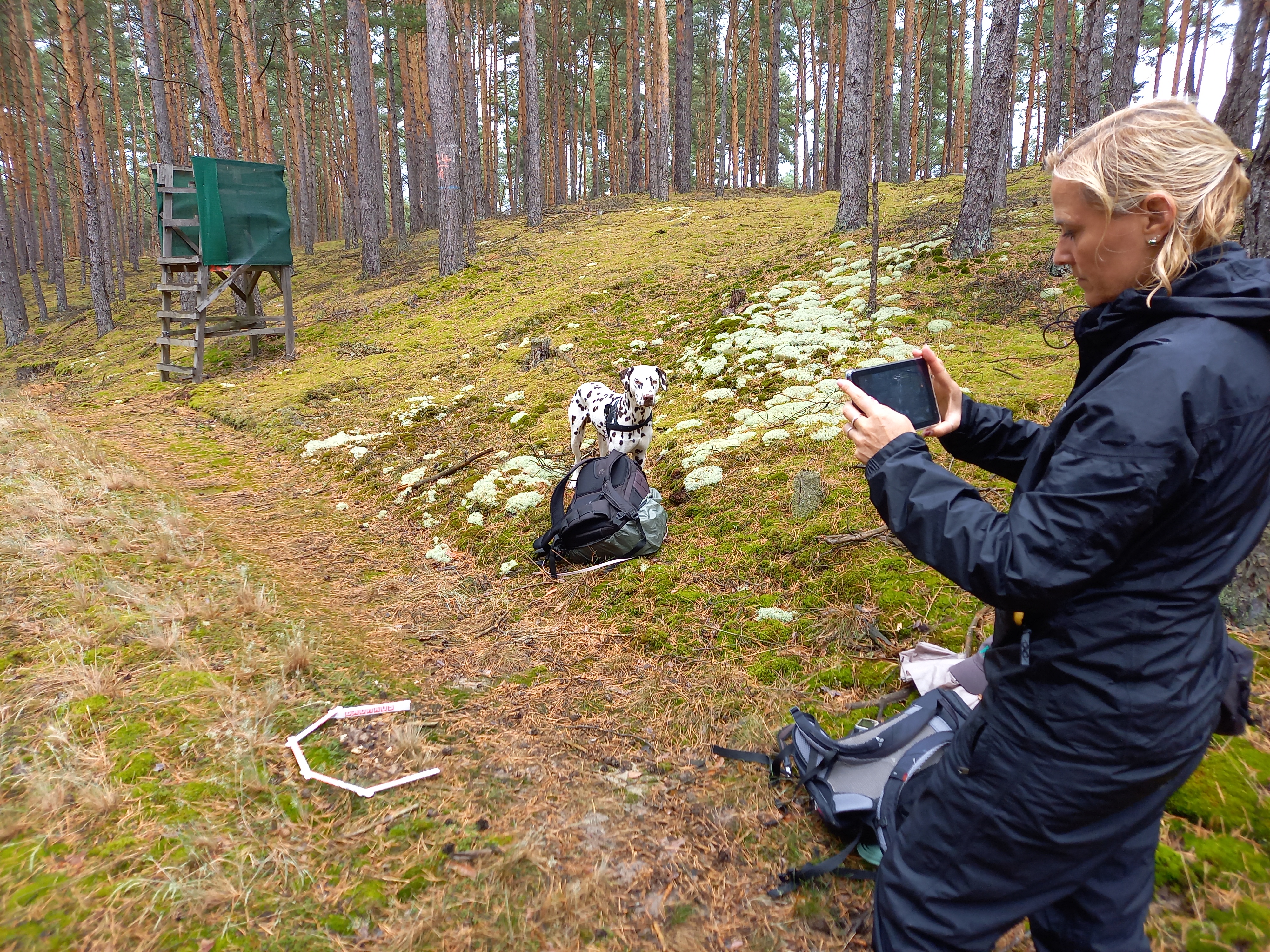
Group 2 – a team of ten people from 5 different countries – started off on Sunday with a practical training survey walk nearby NaturCampus following up on a wolf scat finding two days before. We were surprised by a once in a year biking event taking place on the military grounds we were exploring. The terrain is usually closed for the public. Bikers didn’t interfere with our training walk but a heavy downpour did just when we were practicing data recording with the tablets. Despite rain gear and backup umbrellas we all ended up being soaking wet. I like to frame it as an ultimate field test. 😉
Sunshine and rain took turns during the following three survey days in various wolf territories. That didn’t hold us back from long walks and intensive surveys. Unfortunately we didn’t find anything wolf-like in the Suesing forest on Monday which made us wonder what neighbouring area the pack has moved to.
On Tuesday we were more successful in terms of findings. 22 wolf scat samples were brought back to base one of which had a total length of 82 cm! I think this is a first. Speculating about causes for the exceptional big amount of shit, we came up with quite a few creative ideas during the very entertaining daily de-brief – ranging from constipation for a week to making a statement to impress possible intruders.
And finally we secured another fresh DNA sample in the Goehrde forest on Wednesday. During the de-brief we all got a first-hand experience with the undeniable deterrent smell of fresh wolf scat. I must say that scat & its attributes (we now refer to as “beautiful, nice, perfect,…”) have become one main topic of conversation – even during dinner. Just like a bunch of very serious citizen scientists we surely are. Still, we had a good laugh realising that and not at all problems with moving on to more sophisticated dinner table talk.
Everyone is out in the field for one last survey day today. Time is flying….
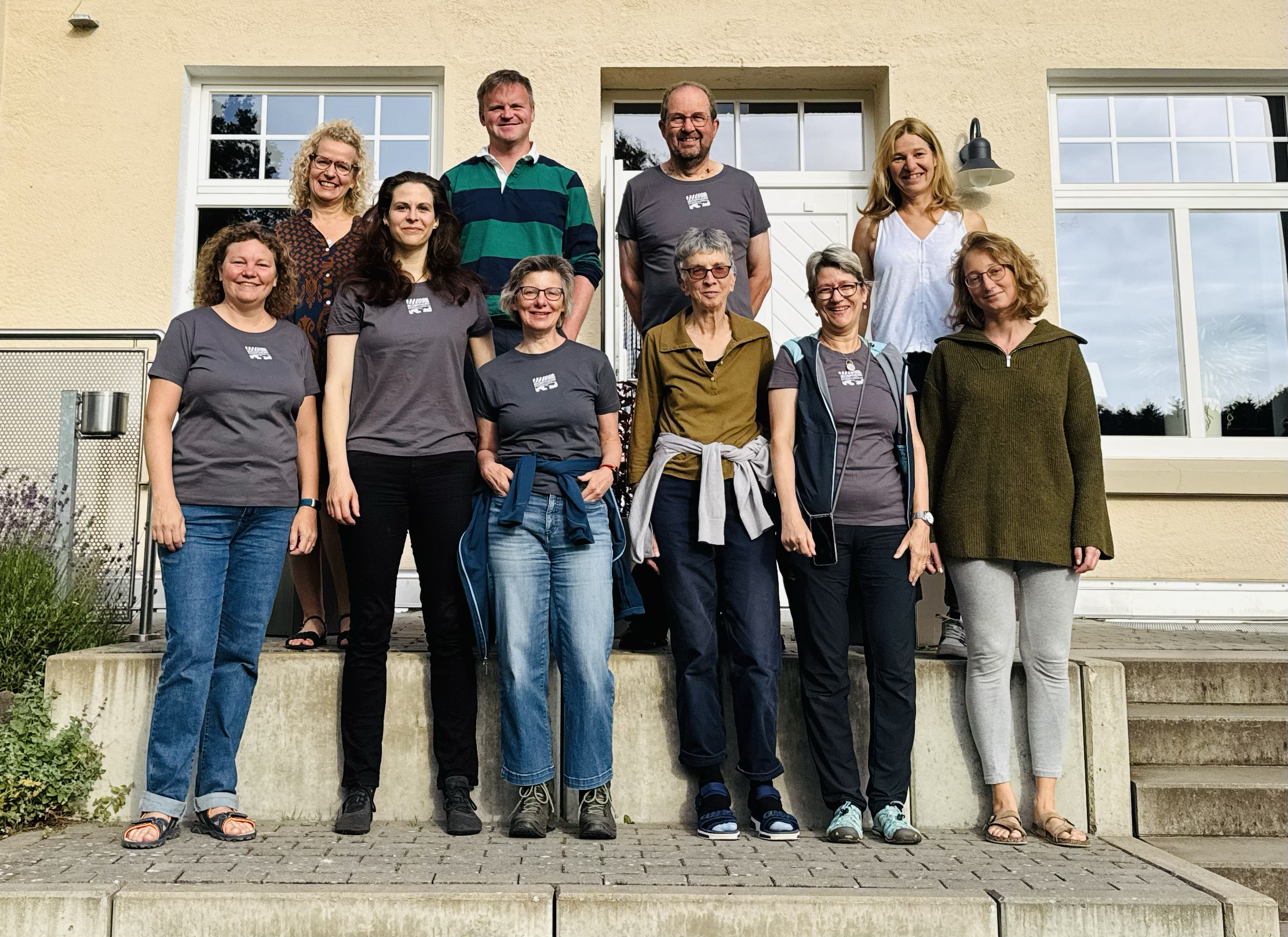
We said our good-byes this morning to group one. What a fantastic week filled with long walks, many findings and lots of fun. To be more specific the teams walked a total of 301 kilometres of forest trails in 4 survey days – an average of 73 km each day respectively. Including our training walk on Sunday, when we collected the first two wolf scats, 305 km were covered in total. 44 (possible) wolf scats were recorded and collected, 9 of which also as DNA samples. Thats’ a great success already, well done everyone!
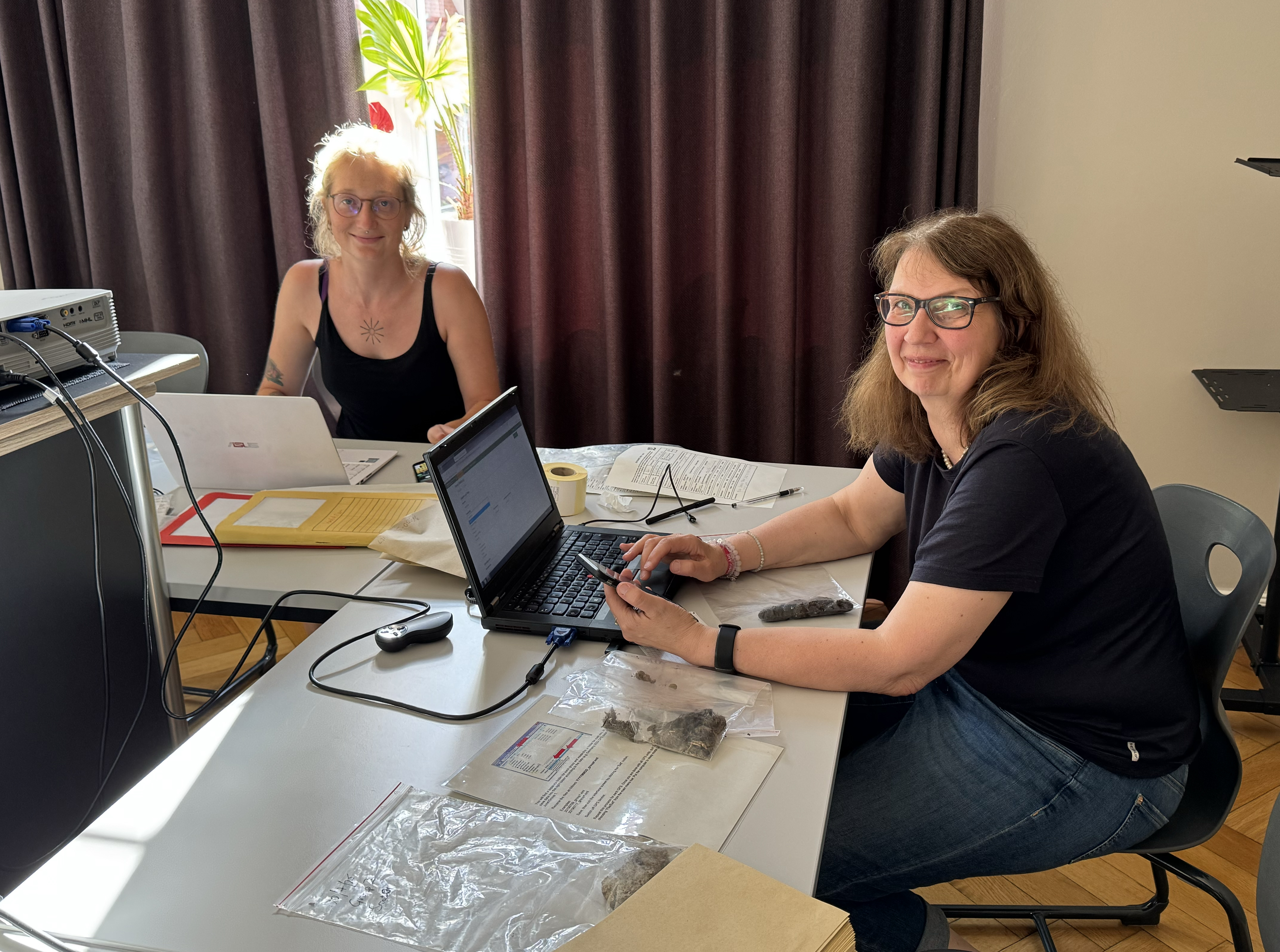
Beate, a local wolf ambassador and scat expert who is involved with the expedition for many years, joined us on Friday afternoon to support Lotte with scat identification, labeling and data logging into the official LJN database. During dinner she reported about 15 personal wolf sightings and shared some of her knowledge.
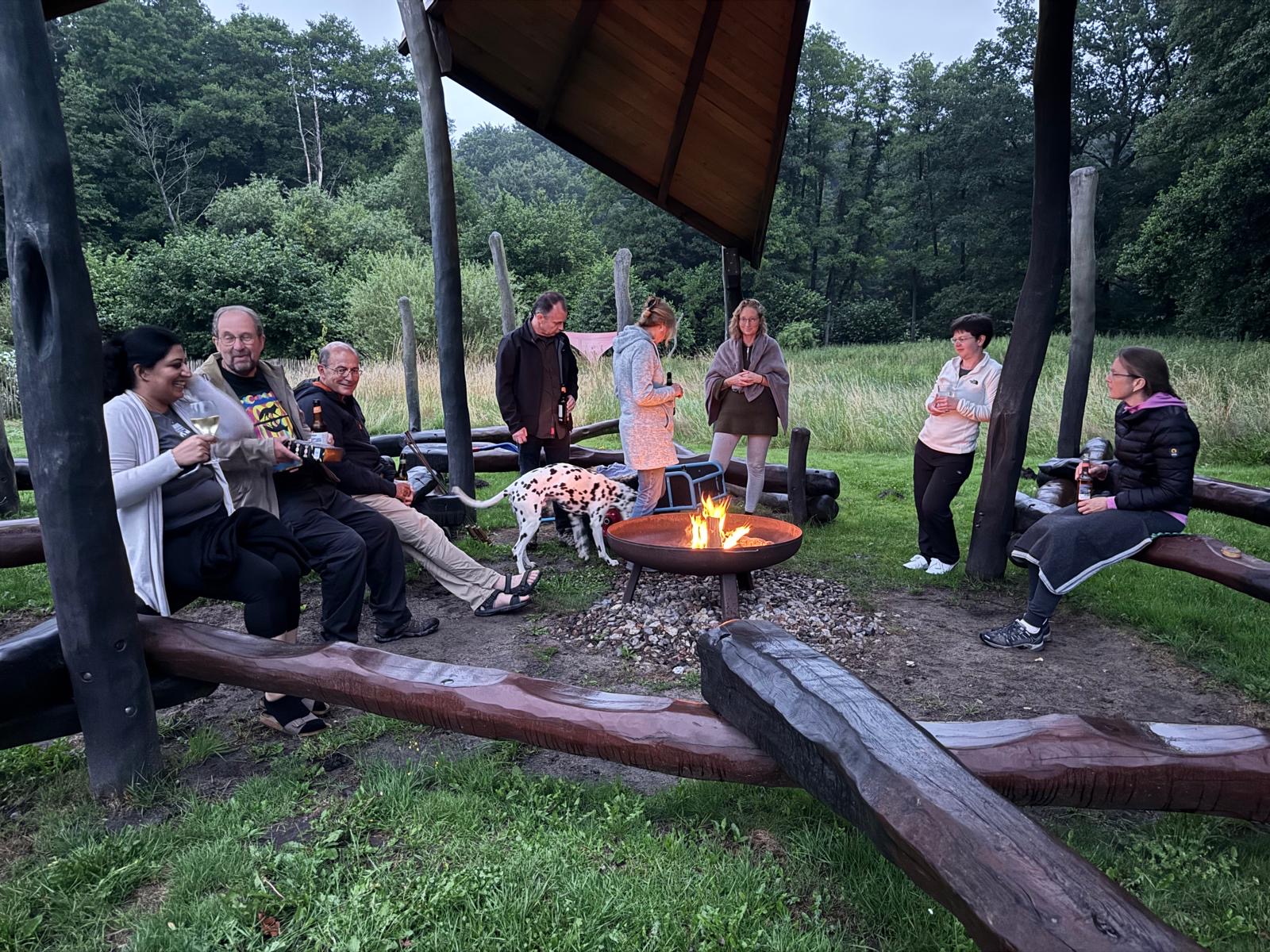
Since all scat samples of the week were spread out in the conference & dining room we were welcomed by a very distinct wolf smell when we returned from dinner. Nonetheless we went through the daily de-brief group by group, enjoyed a final presentation of other Biosphere Expeditions projects and finally sat around the fire place to celebrate a wonderful week and enjoy a cool drink.
It was late night when the last of us got to bed – very tired but happy. I’d like to thank you all for being a great team and putting time, work and money into this project. Thanks for being the trailblazers for using new technology, for your input, suggestions and enthusiasm. None of our projects would happen without you! A special thanks goes to those who volunteered to bring their own car and be a driver for the whole week. Your extra contribution is very much appreciated. I hope you’ve enjoyed the week as much as I did and I hope to see some of you again some time, somewhere.
It’s your turn now, group 2. Have safe travels to Bremen and I’ll meet you on Saturday morning at 9:00 at the airport!
After our two training days (for this group in pretty foul weather), we were off in four groups today. Two groups checked camera traps from last year, which recorded ibex, fox, snow cock and the snow rising until it covered the lens. Another group surveyed two cells and found an ibex skull and horns, probably a victim of poaching. The site was littered with scats, one looked like wolf or snow leopard, so we collected a sample for DNA analysis to find out. The fourth group found three more ibex skulls. Poaching seems as rife as ever here. All in all an excellent first day of surveying. Well done to the team.
We have completed three full survey days – writing this four teams are headed out in different directions for their last surveys of group 1. Wolf scat samples are piling up in the scat fridge downstairs, two of which appear to be good for DNA analysis. We’ve been blessed with perfect weather conditions, only some of us got wet on Monday during an afternoon downpour – but that’s what makes an expedition.
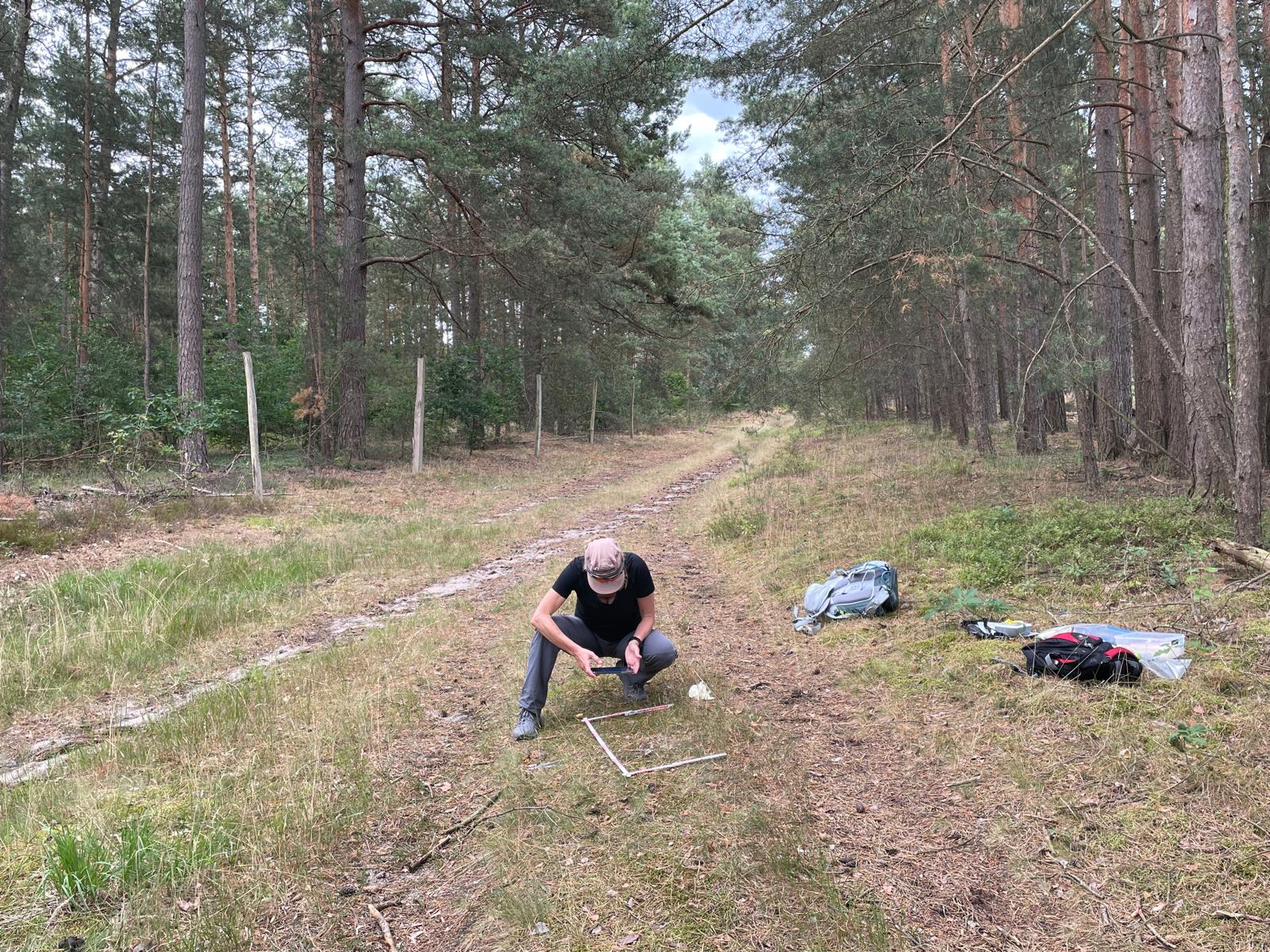
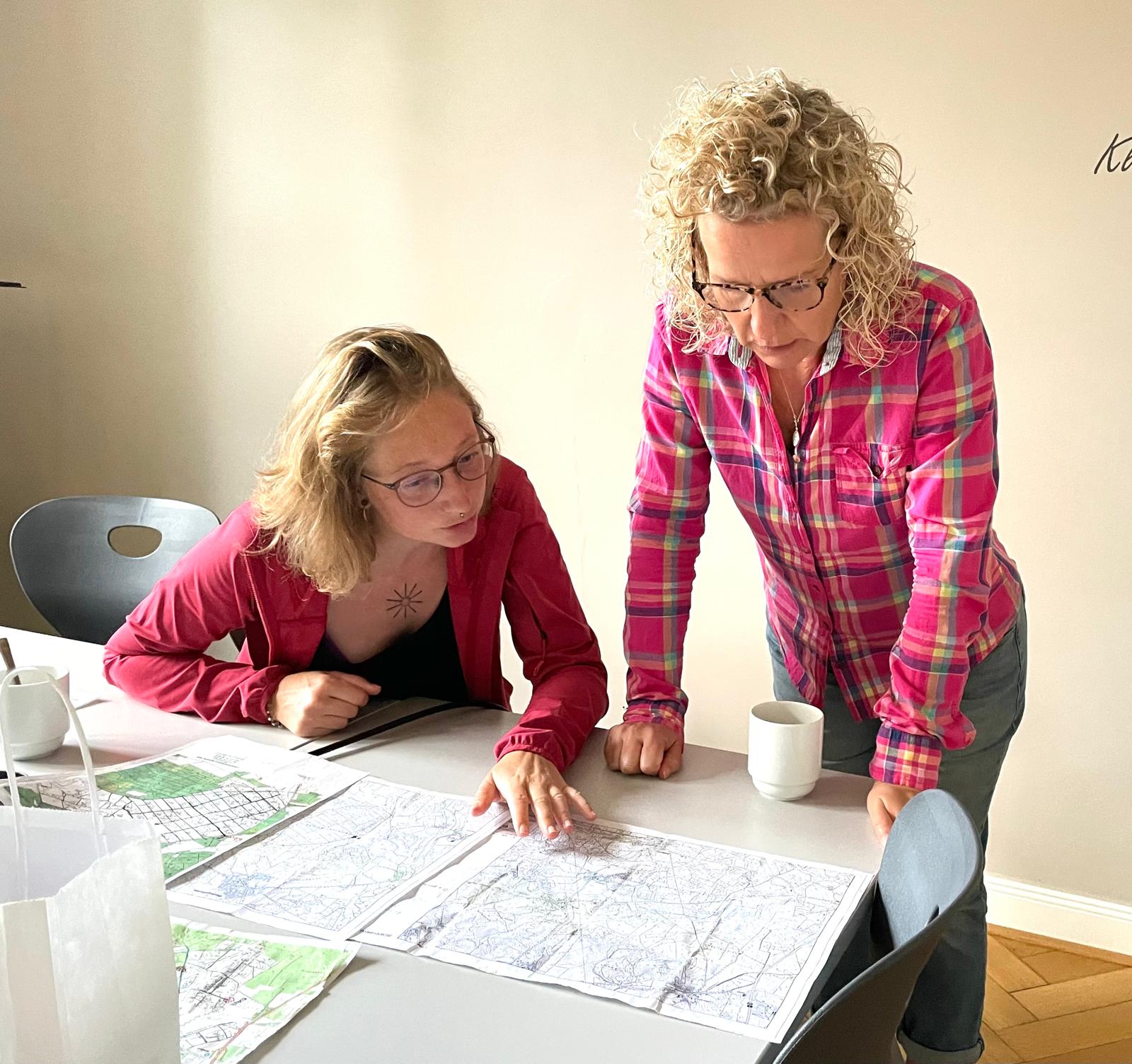
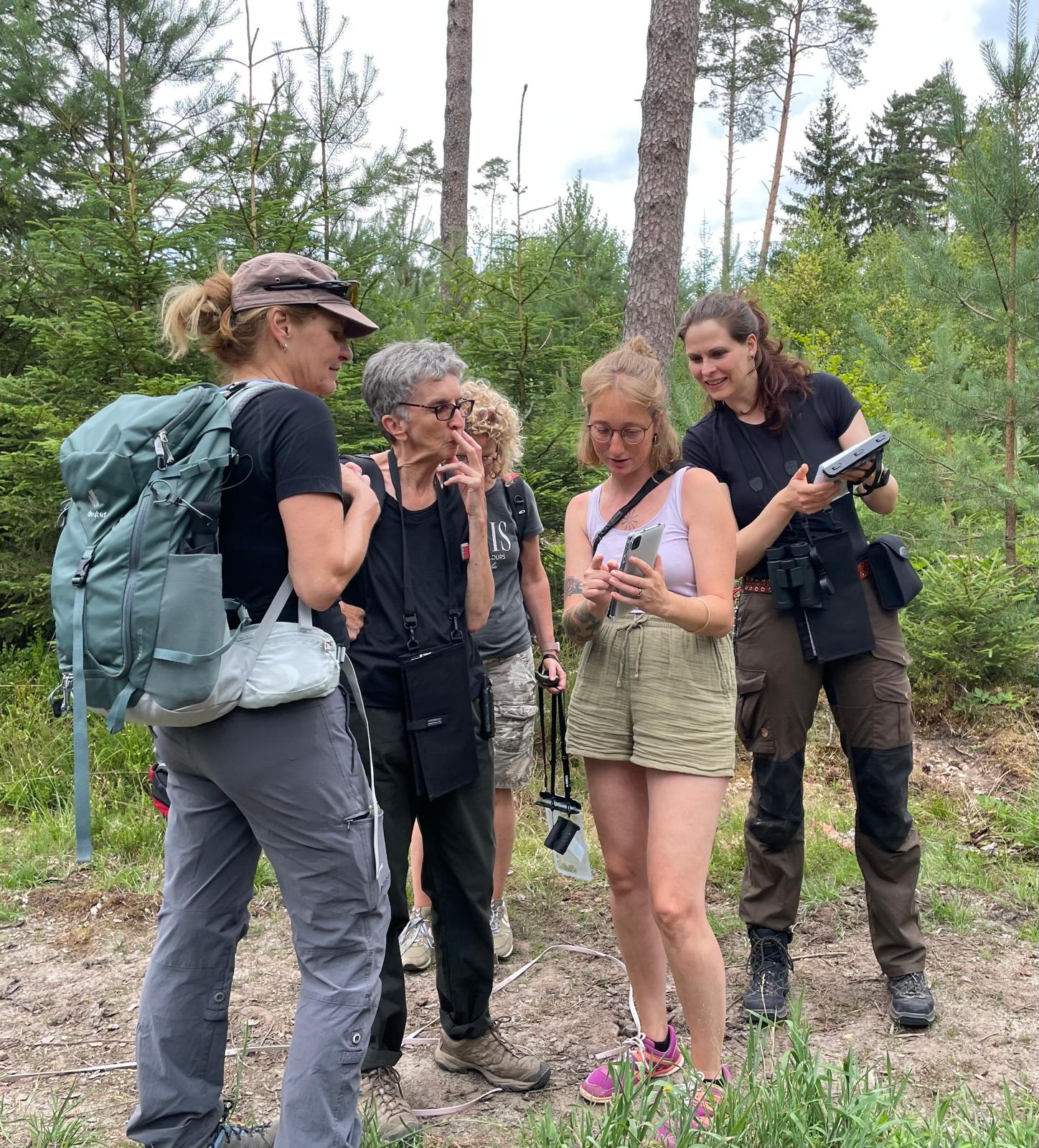
Even though almost every day teams “forgot” to pack different pieces of equipment – a printed map of the area, a tablet (!?), and who knows what else… they all managed and brought back from the field perfect recordings. We definitely have to work on that with group 2! Here are some field work pictures:
Intensive surveys make for interesting findings: One team found a handbag in the shrubs and dropped it at a police station nearby for further investigation. Two days later we were informed by the police, that the owner confirmed that it was stolen in 1990! She didn’t want it back … Let’s see what you will find, group 2. 🙂
With six intensive days behind us, we’re all pretty tired in the evening but have planned a bonfire for our last evening tonight before leaving NaturCampus on Friday morning. You will hear from me again tomorrow, when Lotte and I have wrapped up this week’s results.
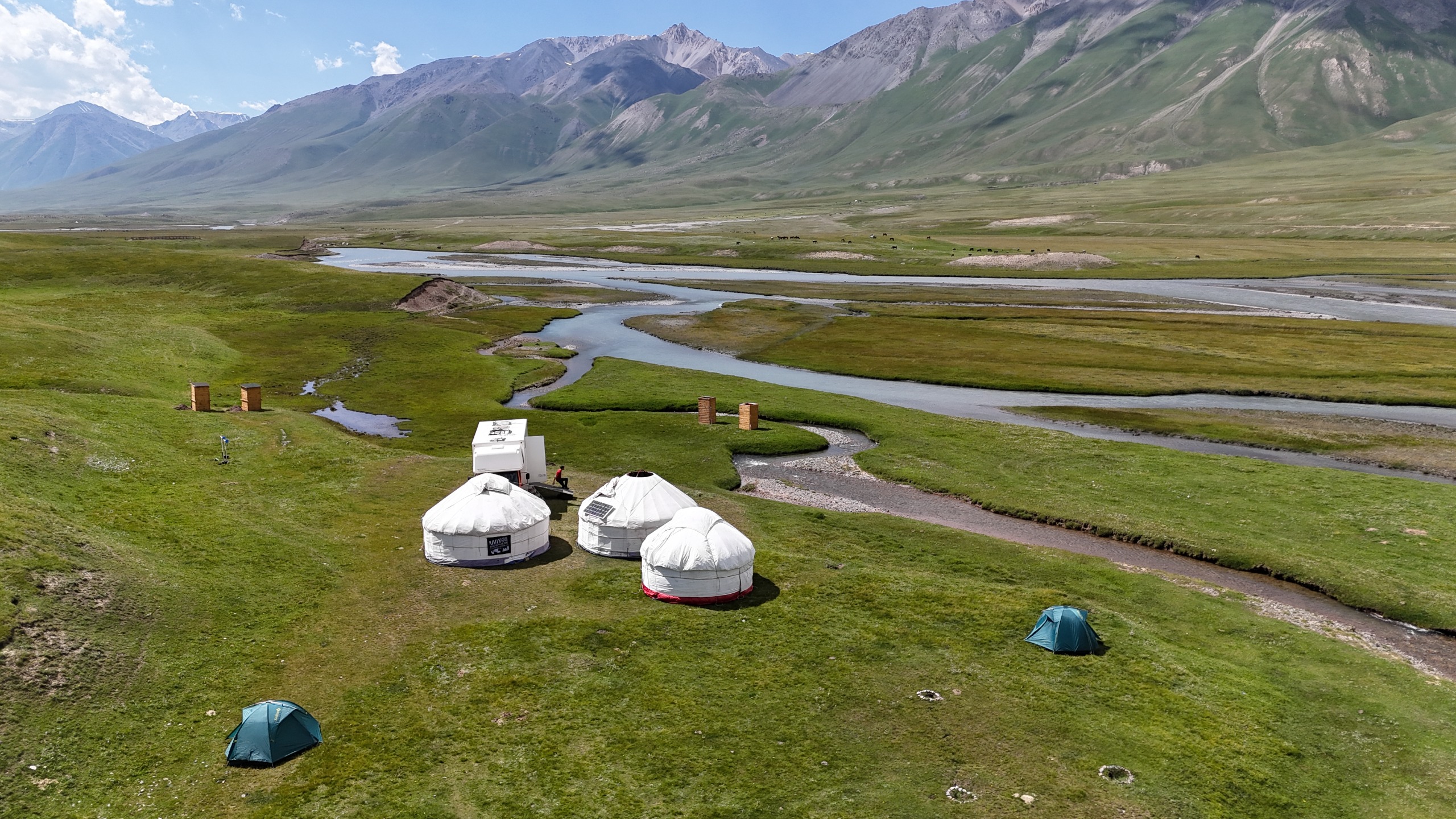
We have successfully assembled and are currently making or camp. The team are in good spirits.We look forward to bringing you updates from this year’s Kyrgyzstan expeditions.
After two training days the first group is all set to go on proper survey walks from tomorrow on. We met up at Bremen airport on Saturday morning and from there went straight to visit the Wolfcenter Doerverden for a guided tour and close encounters with our study species.
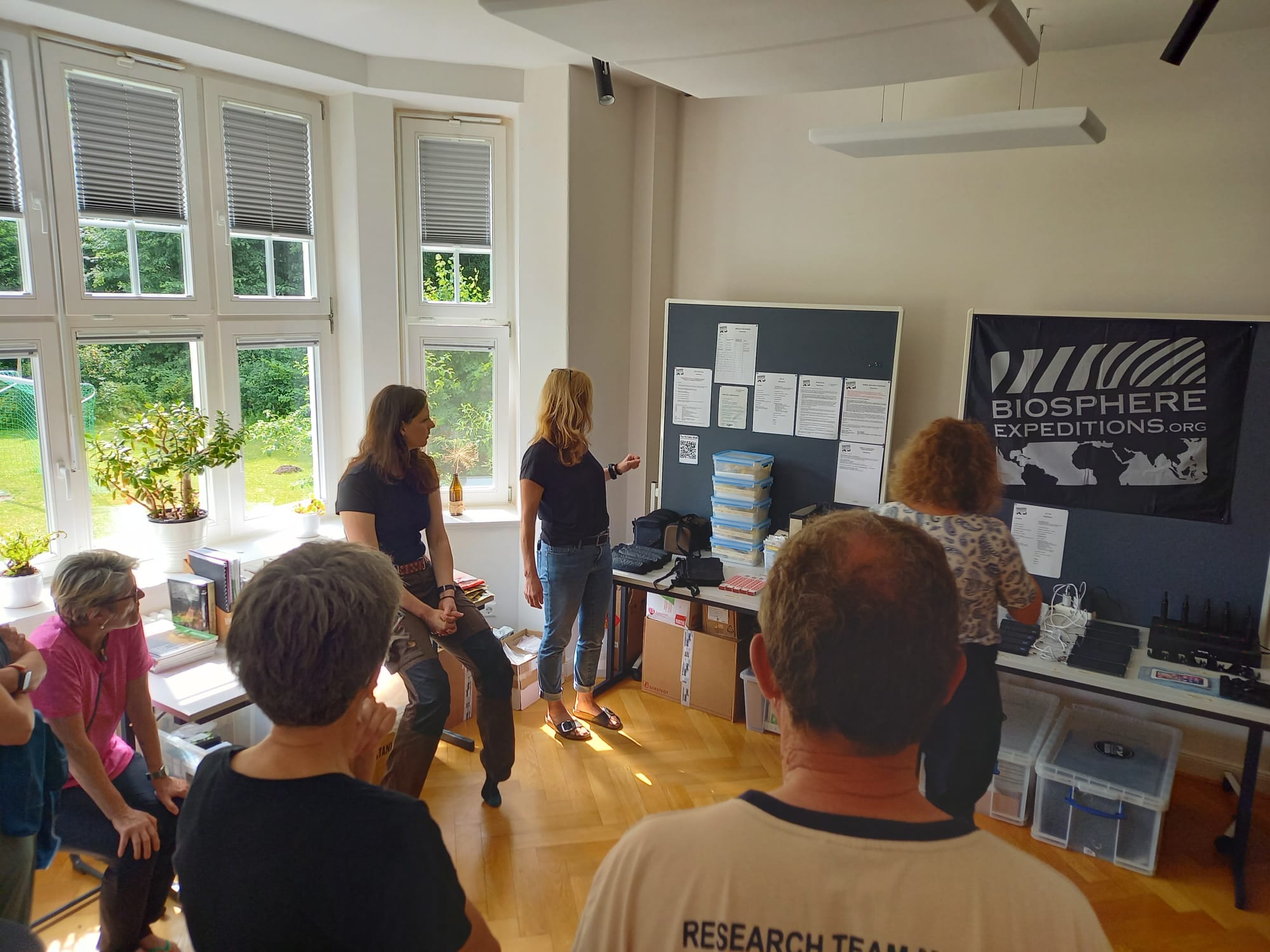
We arrived at our lovely NaturCampus base in the afternoon. As usual everyone’s head was filled with more information about safety, procedures and equipment, wolf distribution & history in Germany, how to identify, measure, collect and record wolf scat and tracks.
This afternoon we finally went out on our first practicing survey walk. Unexpectedly we found two wolf scats one of which is fresh enough for DNA analysis. What a success!
Writing this it’s still early in the evening but the noises of people chatting outside have stopped. I guess everyone’s gone to bed early. Well done, group one – you’ll be well rested for four more days of intensive surveys and scat sampling. 🙂
Greetings from Bishkek. Expedition base is now ready for our first group of participants. At an altitude of almost 3000 m, the weather at camp is much cooler at night, around 4 degree celcius and warm during the day, the air is clear and snow is thawing from the surrounding peaks. There has been some rain making for a more interesting approach by vehicles (especially the truck).
Emil, Johnny and myself (Darran)- expedition scientist and both leaders are back in hot and hazy Bishkek collecting the last of the supplies. There will be ample wildlife spotting opportunities from the vehicle as we a approach camp, on the drive out we had a pair of Hoopoe follow the vehicle!
We look forward to meeting the first group of expeditioners in Bishkek tomorrow morning and traveling to the remote Tien Shan mountains. The drive will take approximately 10 hours, a packed lunch will be provided. In the meantime, don’t forget to grab any last minute supplies today before meeting 8am sharp tomorrow morning.

































 Biosphere Expeditions: blogs from the frontline of wildlife conservation and the fight for a more sustainable planet