Award-winning, non-profit and ethical wildlife conservation volunteering. Advancing citizen science and conservation since 1999 – for nature, not profit.
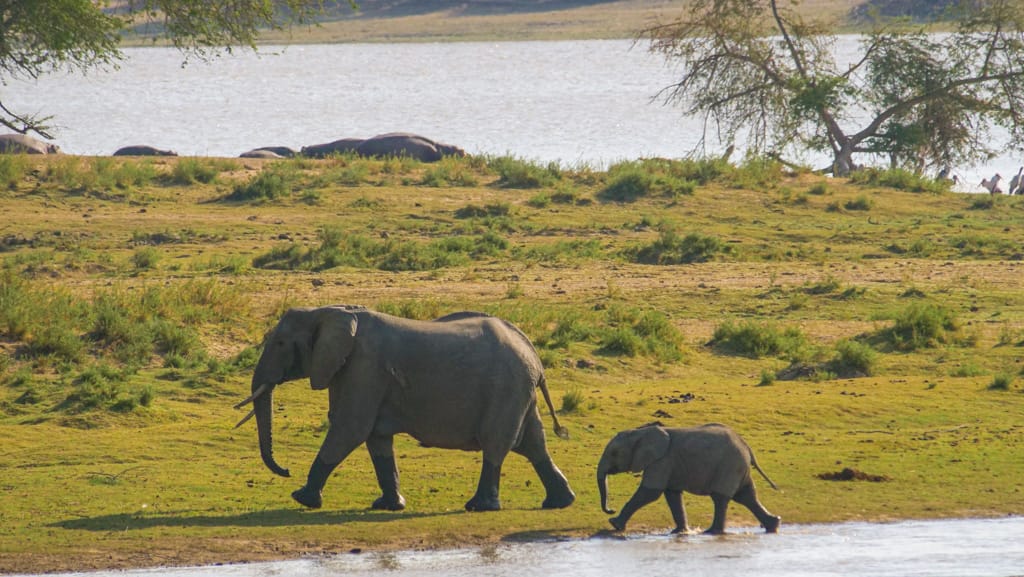
We have been continuing our search for the elephant with the wire caught around her head, but she has proved elusive. In our efforts to find one particular elephant we have found many other elephants instead: a few small groups or solo males, as well as several family herds, big and small. We have enjoyed the sight of two family herds meeting each other at the water a few times. It is common amongst elephant communities to spend much of their time apart, but then meeting up occasionally, greeting each other with obvious interest and joy. Witnessing this, it impossible not to find the sight of excited baby elephants running around enchanting.
And we had two or three elephants visit our camp late last night too. They announced themselves only by the sounds of breaking branches, distinctive chomping, and some low rumbles, wandering amongst our tents. The elephants were amazingly peaceful: they were clearly aware of our presence and were here on their own terms, spending a few hours calmly feeding. It was a wonderful experience for those still awake, peering out of our mesh tent windows.
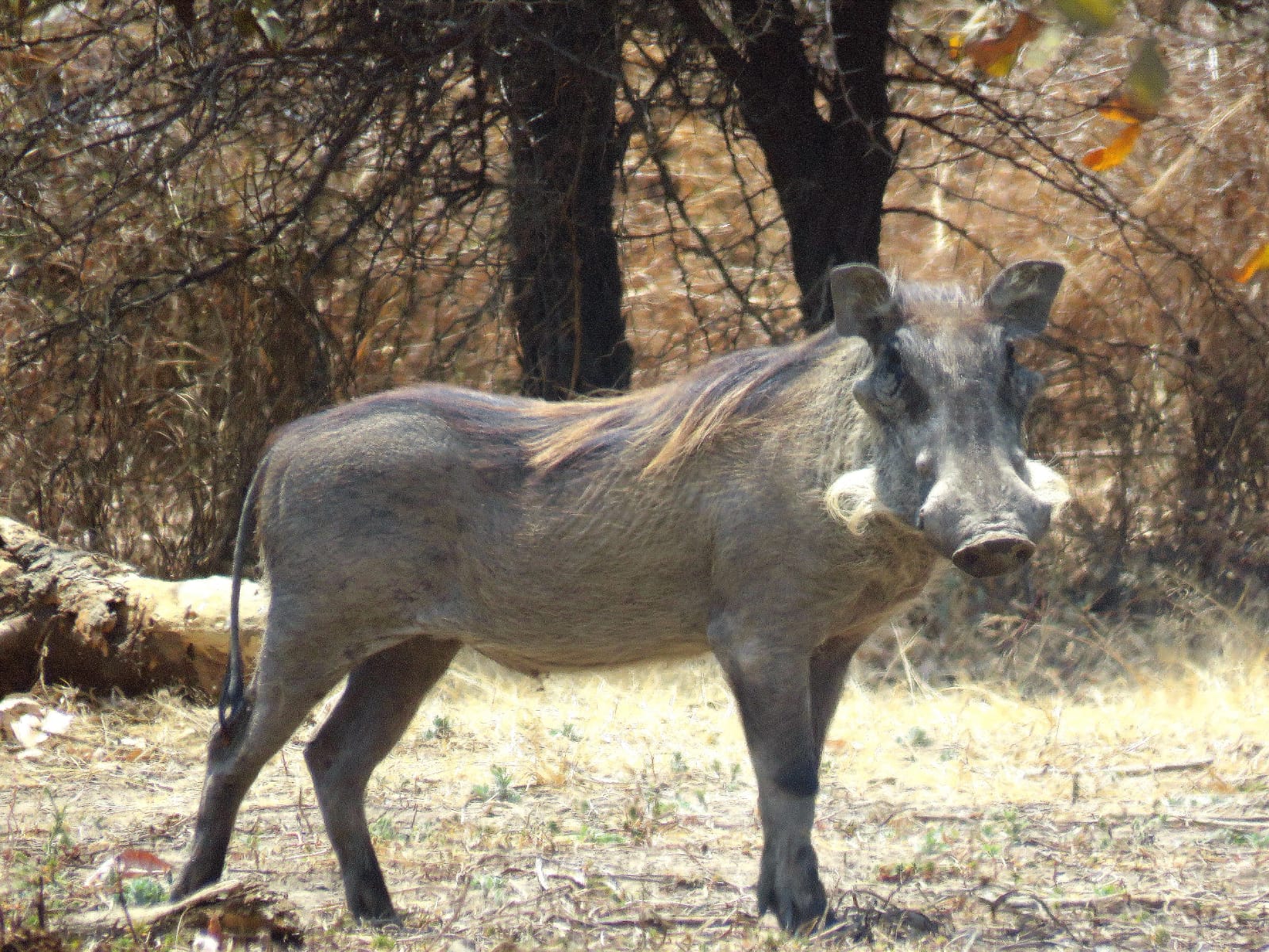
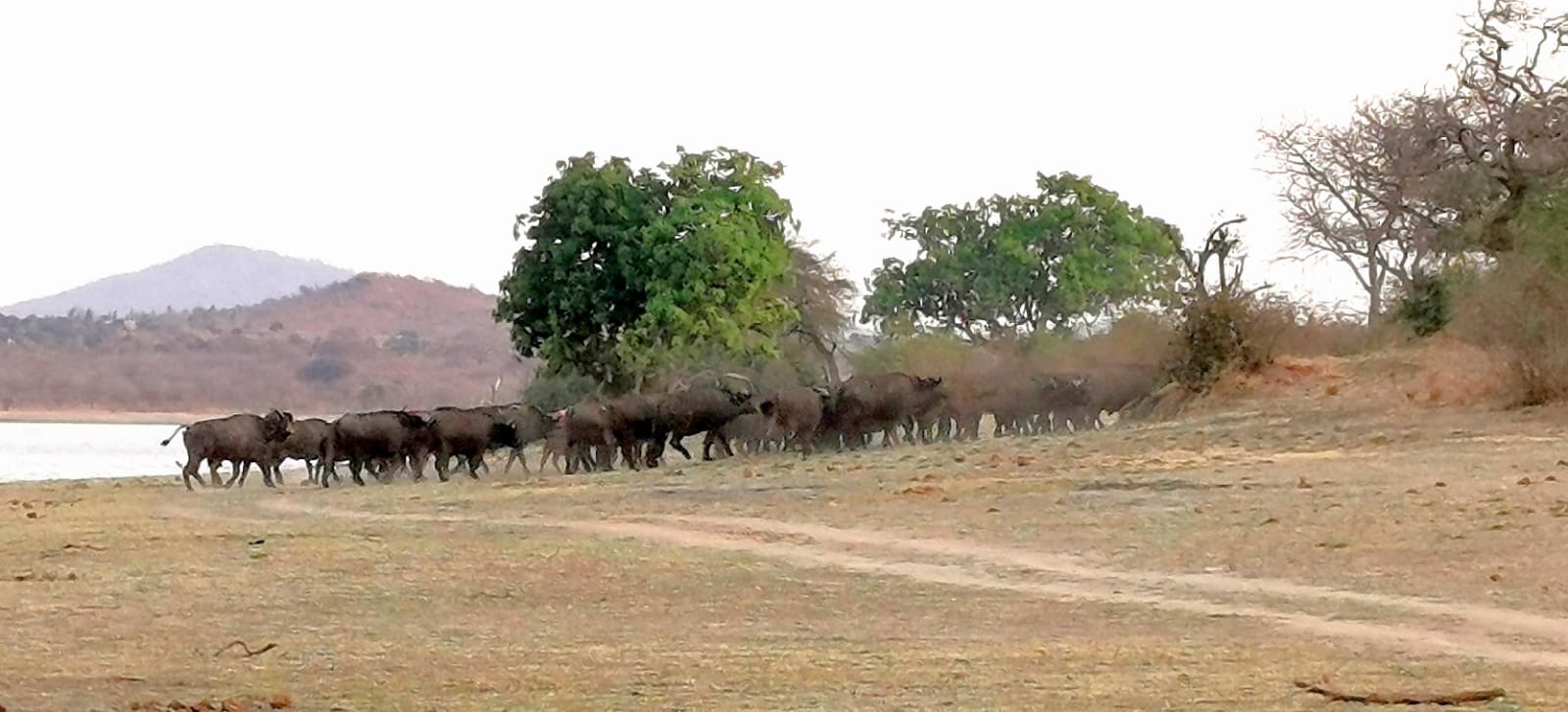
For those of the team who are at risk of getting bored by elephants – we had more excitement yesterday when a large herd of buffalo was discovered in the woods on one of our regular dawn research drives. Hippos, baboons, impala, kudus, warthogs and all sorts of birds are also commonly spotted.
Tomorrow is a planned rest day, although with a trip to the market at Rumphi and a visit to the local school planned in, there may not be very much resting happening after all.
We thought you might be interested in the results of the DNA analysis of the samples you collected into the tubes.
Tubes 10, 12 (CT07), 13 and 14/15 (collected by group 3) are snow leopard.
All other tubes, i.e. all from group 1, as well as tubes 9 and 11 from group 3 are Mongolian wolf. Group 2 did not collect any tubes.
Thank you for your efforts in collecting these and the very useful results they yielded. More details and conclusions will be in the expedition report.
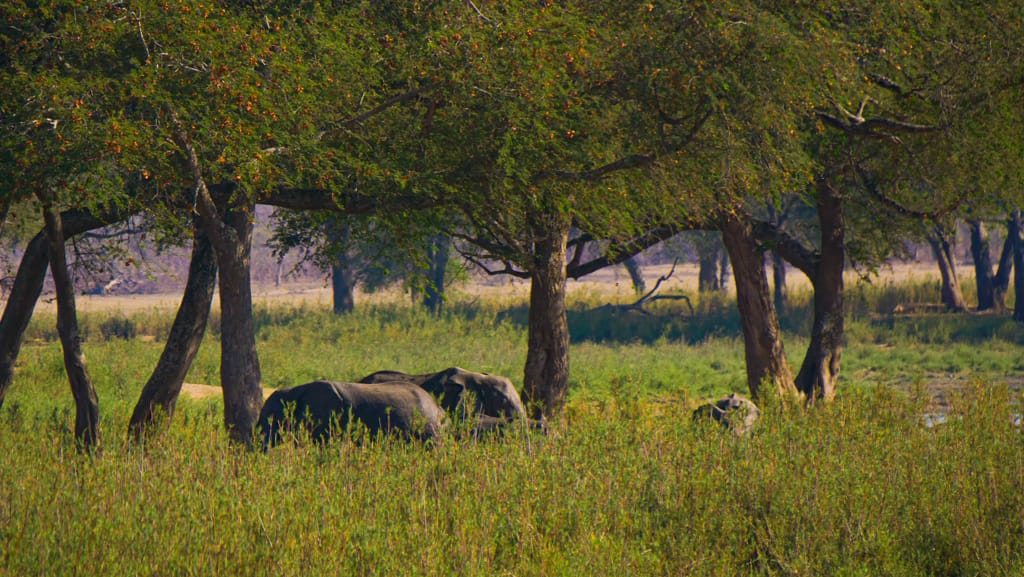
The team started collecting good data even before the two days of training were finished. So far elephant encounters have been less common than expected and so when we do come across any elephants, we jump straight in with our research tasks. Even counting the animals accurately can sometimes be a challenge. Yesterday we enjoyed the company of a herd of around forty elephants calmly browsing right in front of base camp, but half hidden amongst the bushes. Is takes patience and all of our eyes to count them all and record their sexes and age classes. Baby elephants are especially easy to miss in the vegetation.
We have twice spotted a lone young elephant with a poacher’s wire visibly caught around her head and have informed the relevant authorities in the hope that a vet might be deployed to dart and sedate the elephant to allow removal of the wire and to treat any wounds. However, such a mission needs to be properly planned, resourced and funded, likely including the need for a helicopter. For the moment, all our expedition team can do is to keep a lookout for the elephant and record its location if we see her again.
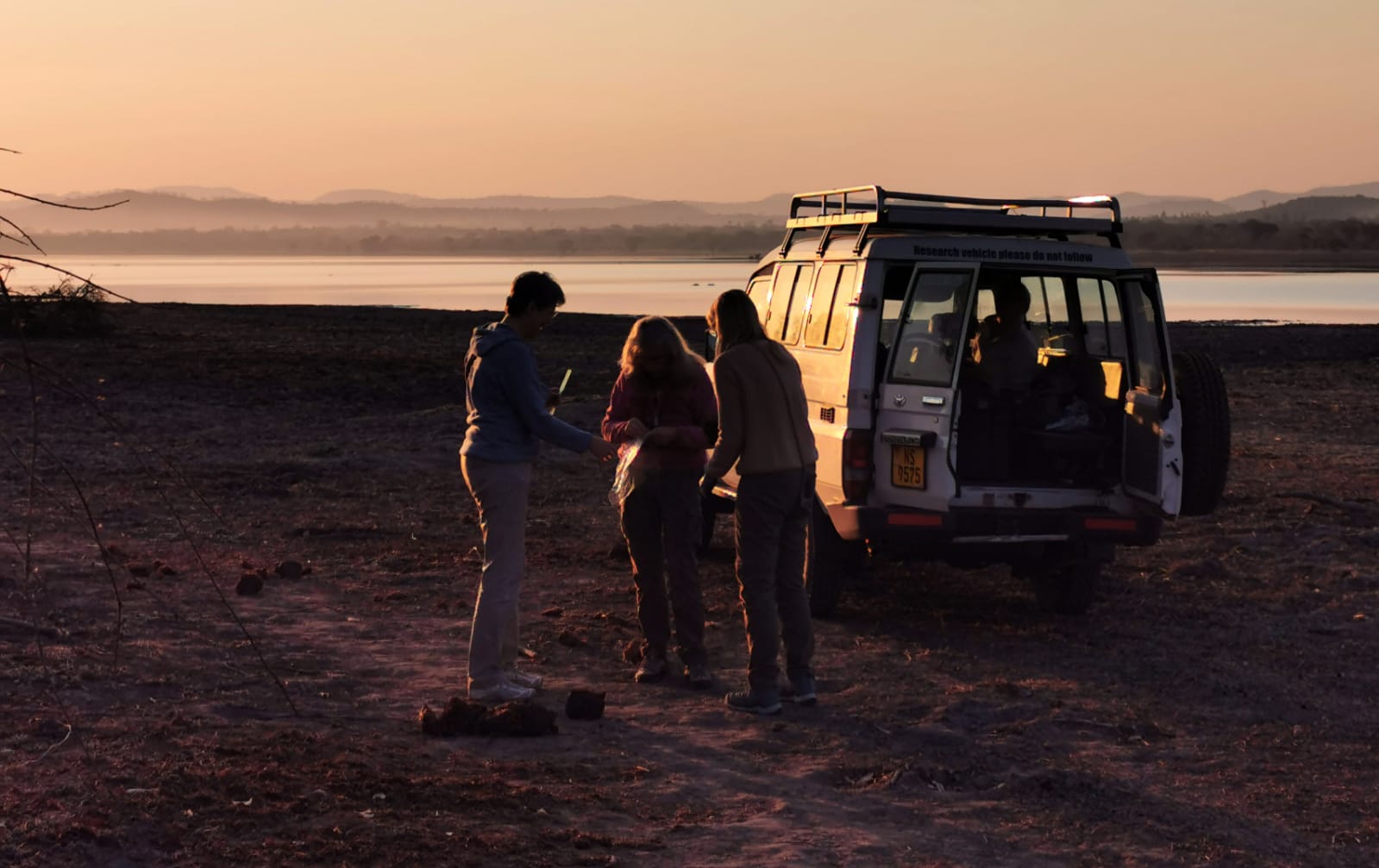
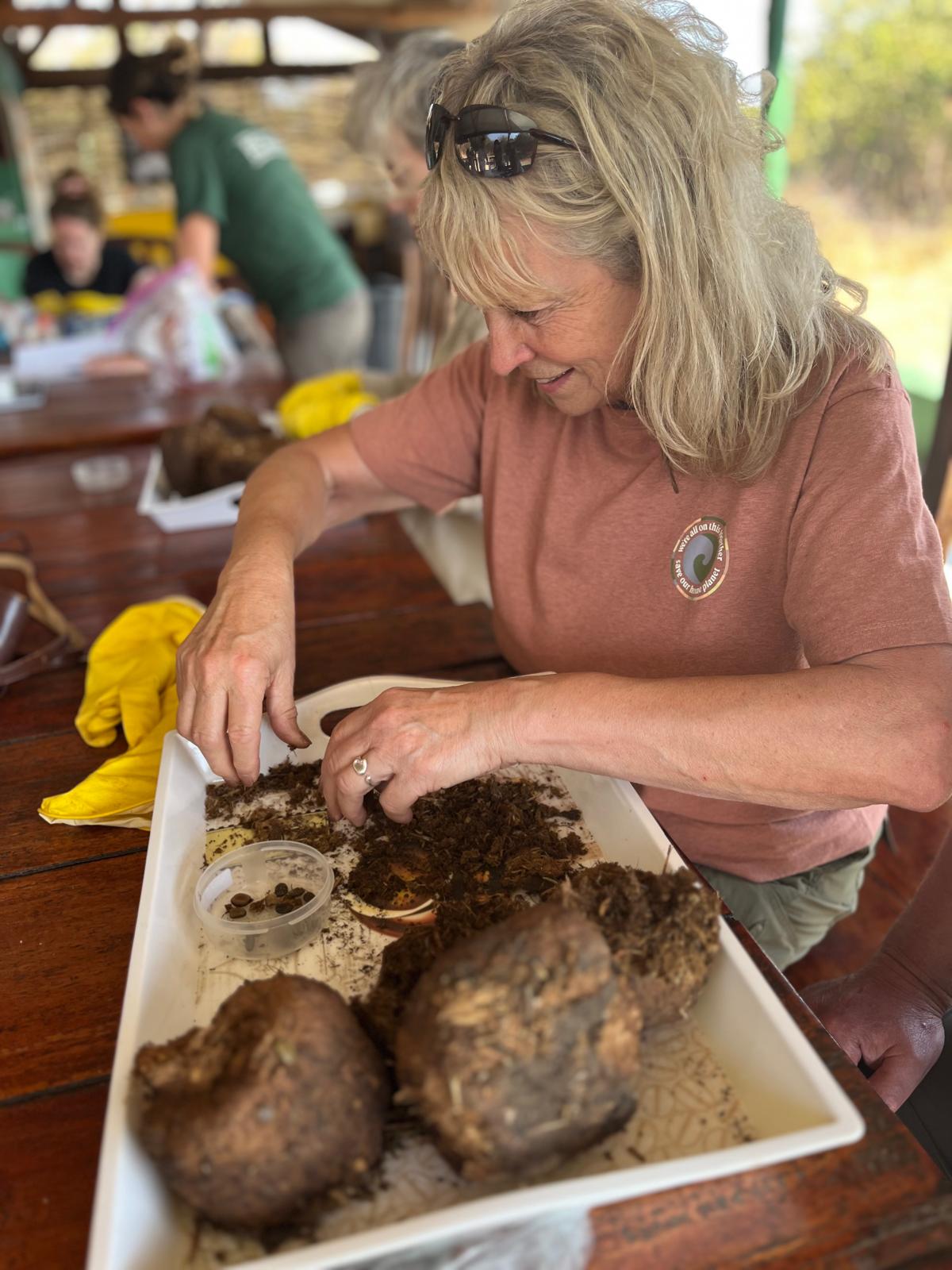
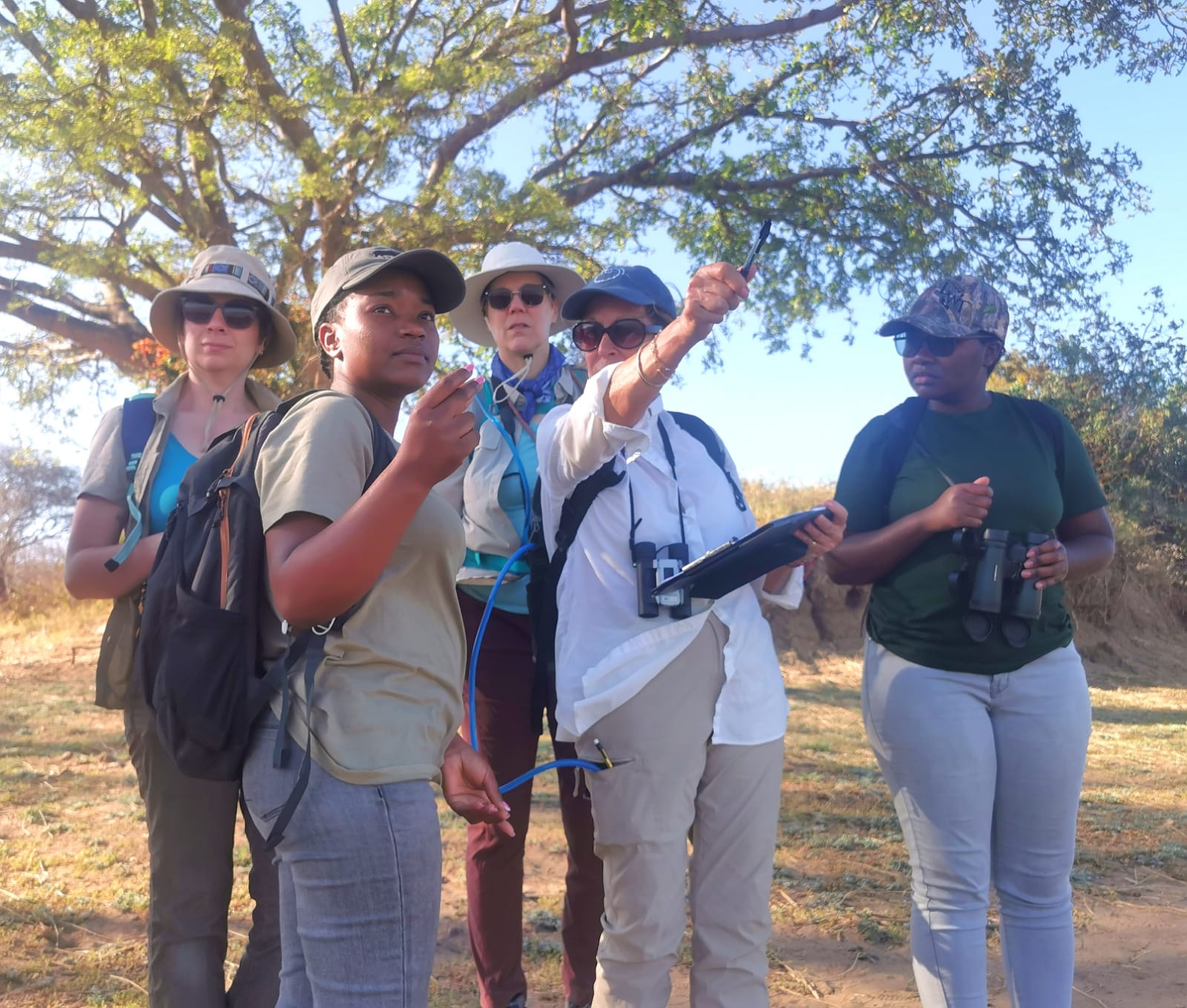
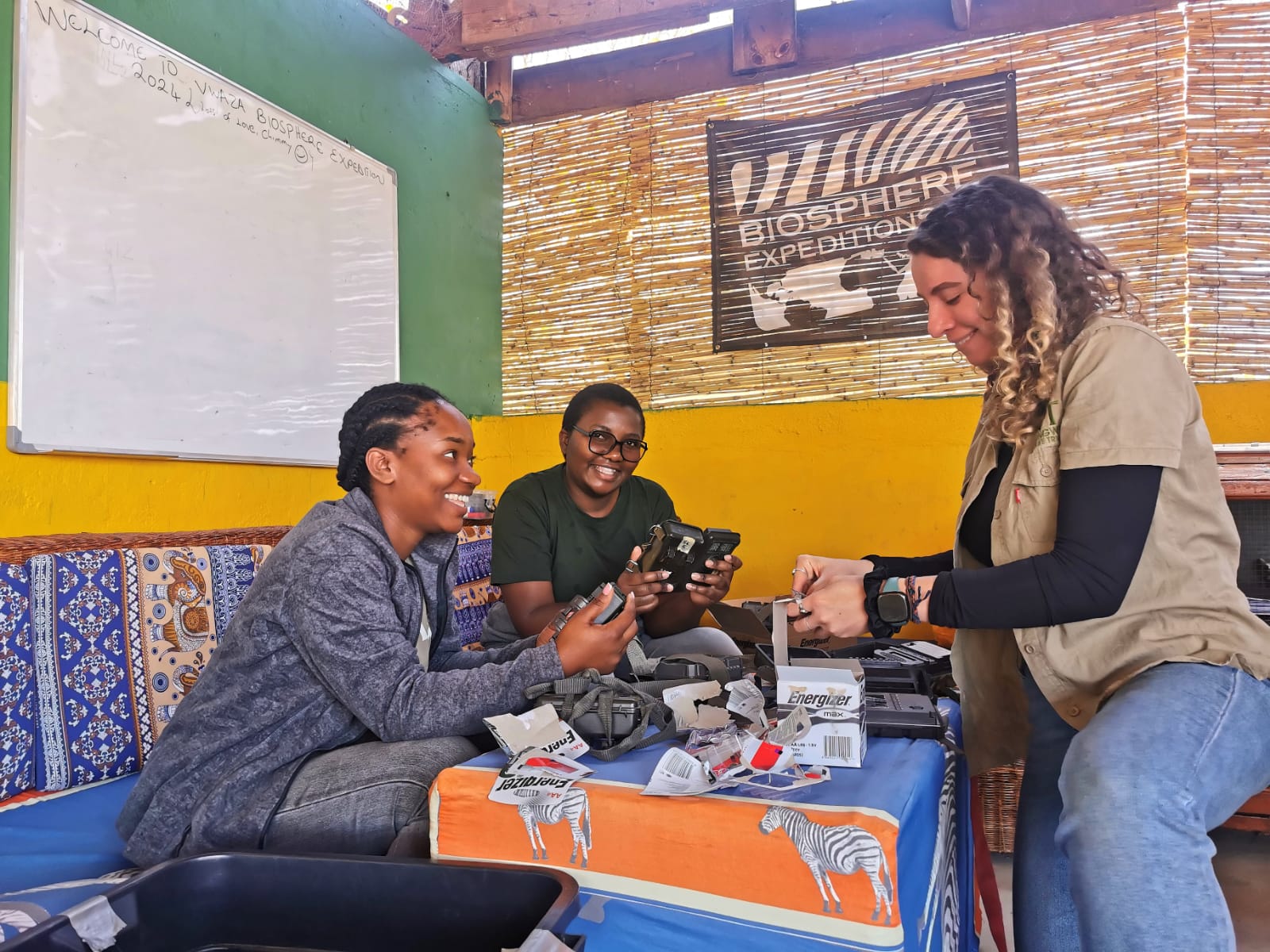
With training done now, we have a walking team, accompanied by a ranger, which carries out a hippo transect each day. Two other teams search for elephants and collect any fresh elephant dung for later processing to identify what they have been eating. Our camera traps are out and we have carried out our first ‘hyaena call in’ last night. Tonight we will check on half of our camera traps and see what they have recorded.
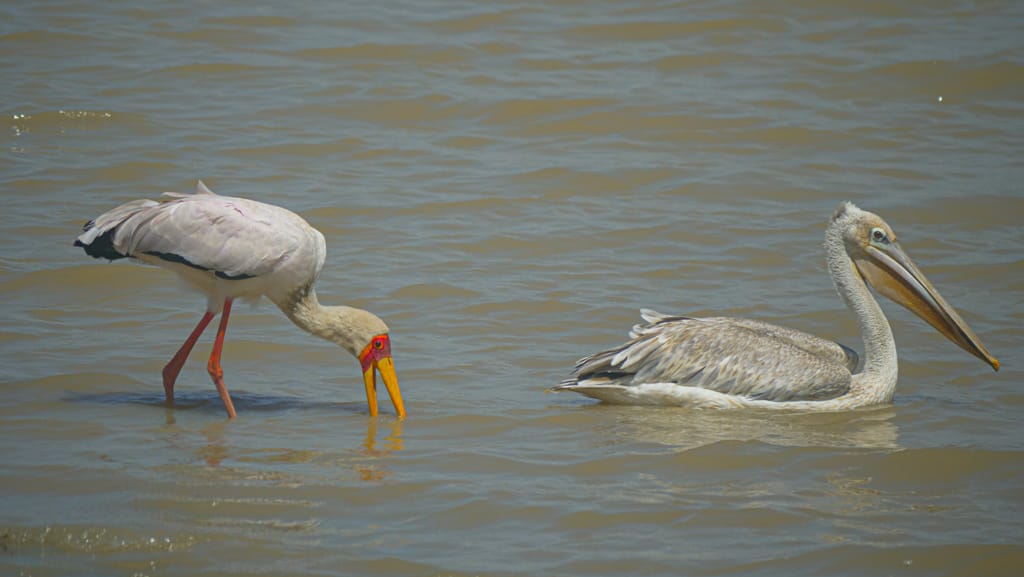
We also carry out opportunistic recording of other wildlife we come across. This can be very absorbing and there is much consulting of guidebooks, apps and collective knowledge to identify animals, birds, insects and plants. We were excited to spot pelicans on the lake, especially when we saw an unusual association between a pelican and a yellow-billed stork: the two birds swimming with each other and seemingly helping each other to fish together. Nature sometimes reveals some wonderful surprises!
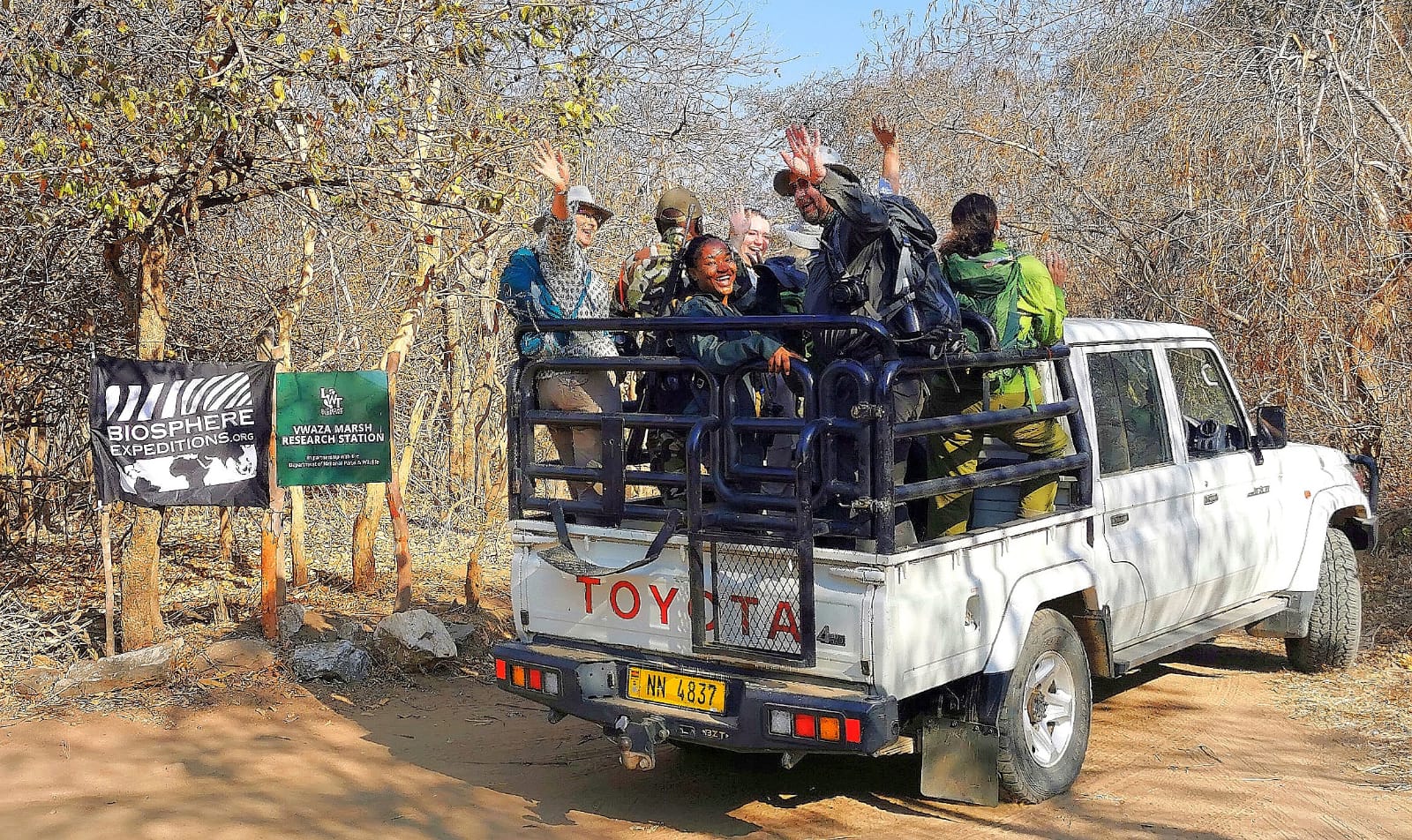
The 2024 Malawi expedition has started! The team of elevencitizen scientists arrived late on Sunday, a little delayed by inevitable bad roads and a misunderstanding by the fastidious guards at the Vwaza Wildlife Reserve gates. But they arrived in good spirits. It wasn’t long before the team were settled into base camp and rewarded with a good supper after their long journey from Lilongwe.
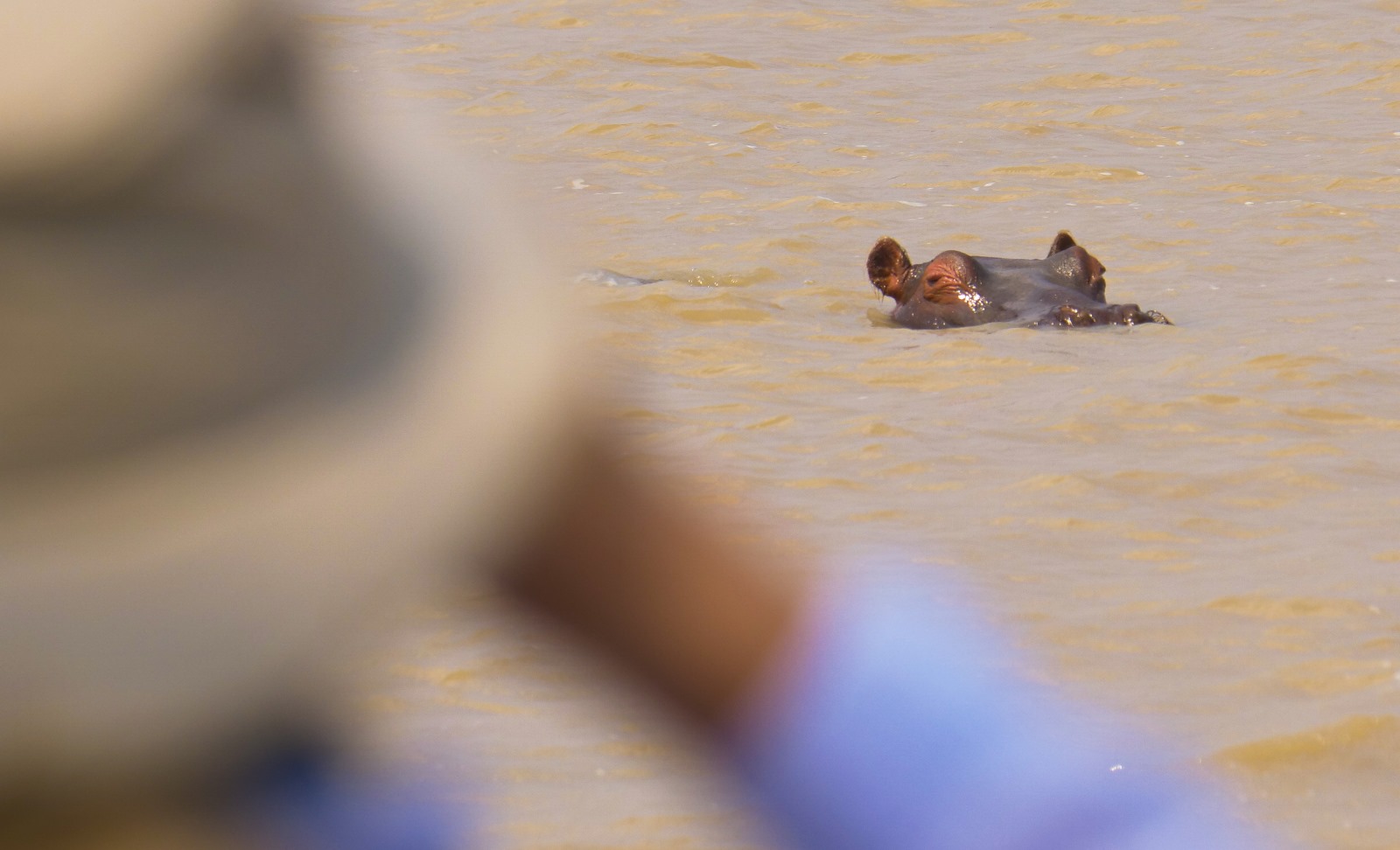
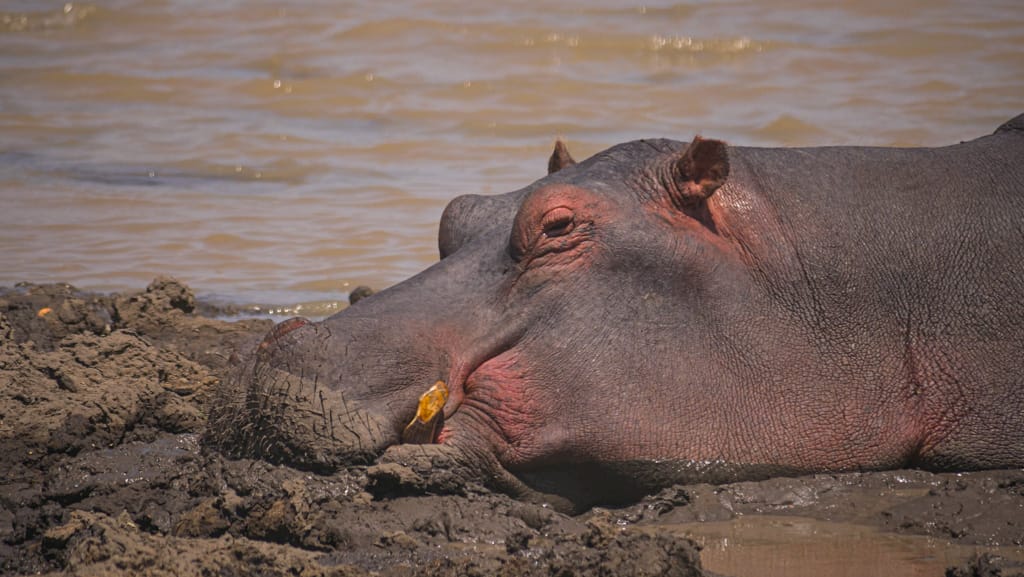
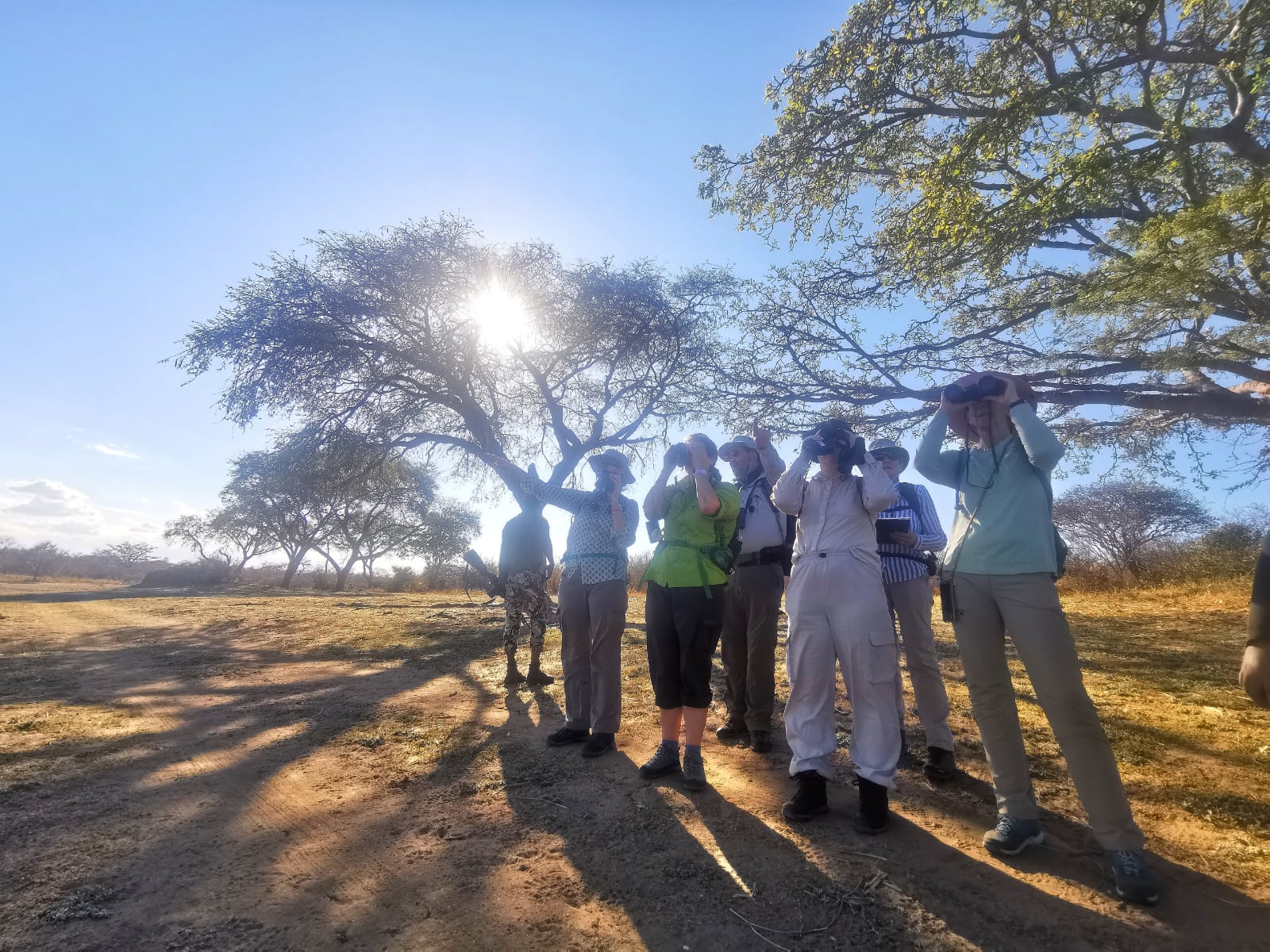
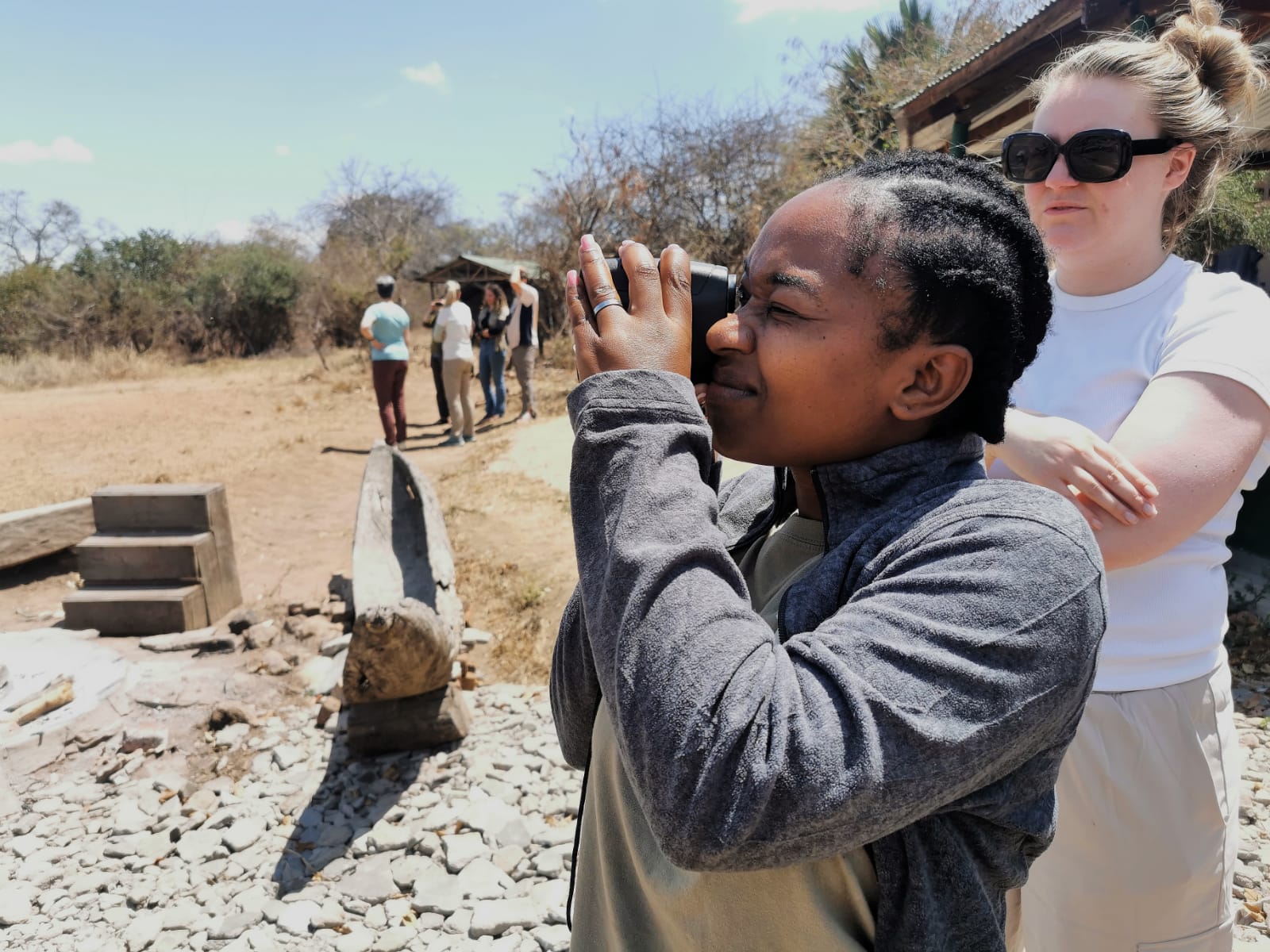
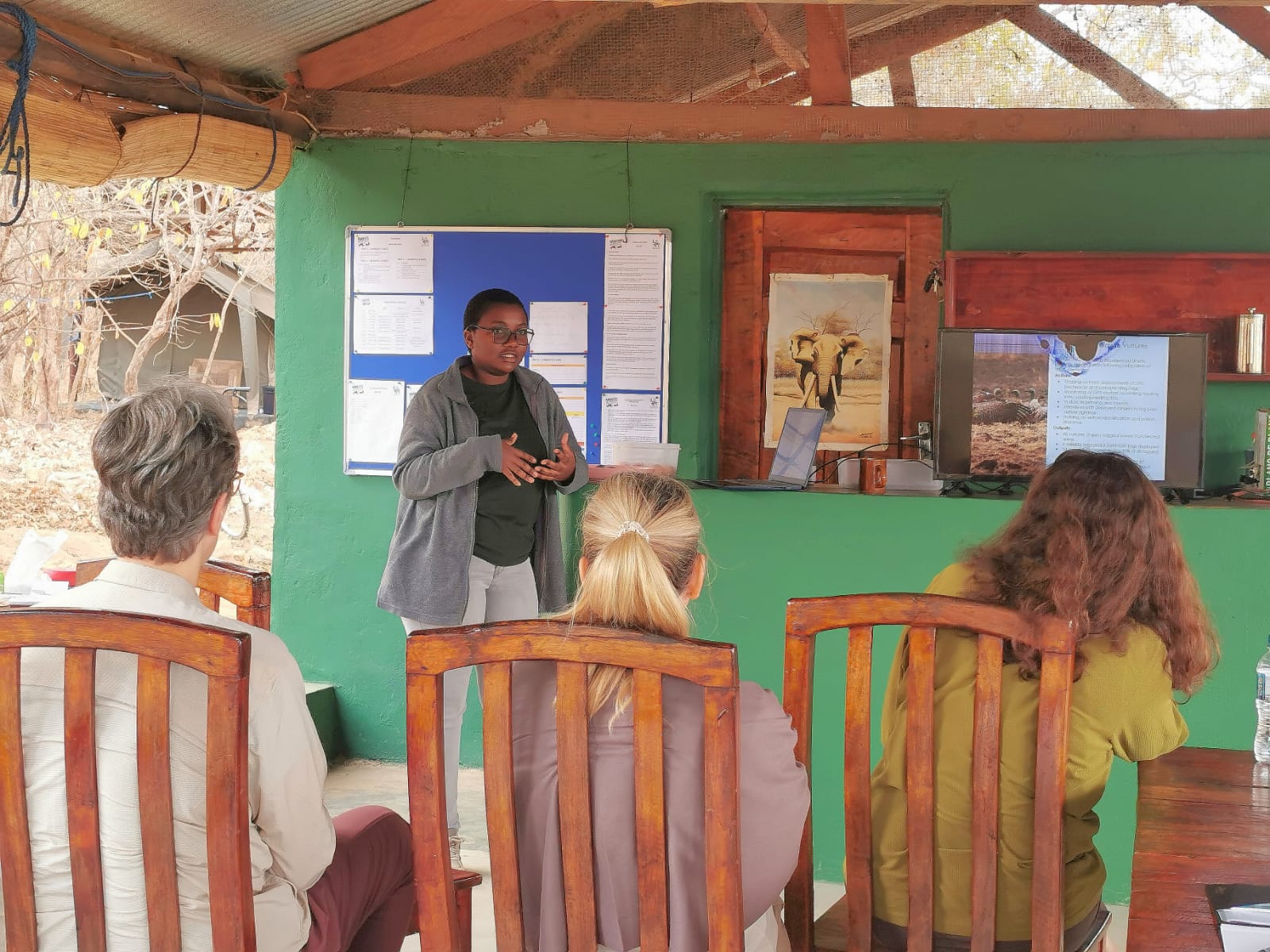
We have now completed day 1 of two days of training in how to operate safely in this environment and how to do the scientific research. The day’s training ended with a hike along the lakeside, accompanied by an armed ranger, to practice the hippo transect methodology and also to get a feel for our research area. We came across plenty of hippos including the sight of a bull hippo chasing off an interloper in the lake, dramatically splashing through the water like clumsy dolphins. The team successfully recorded the information they needed to for the hippo transect. We also spotted the clear tracks of a hyaena in the sandy vehicle track by the lake – a significant discovery as hyaenas are rarely seen here in Vwaza.
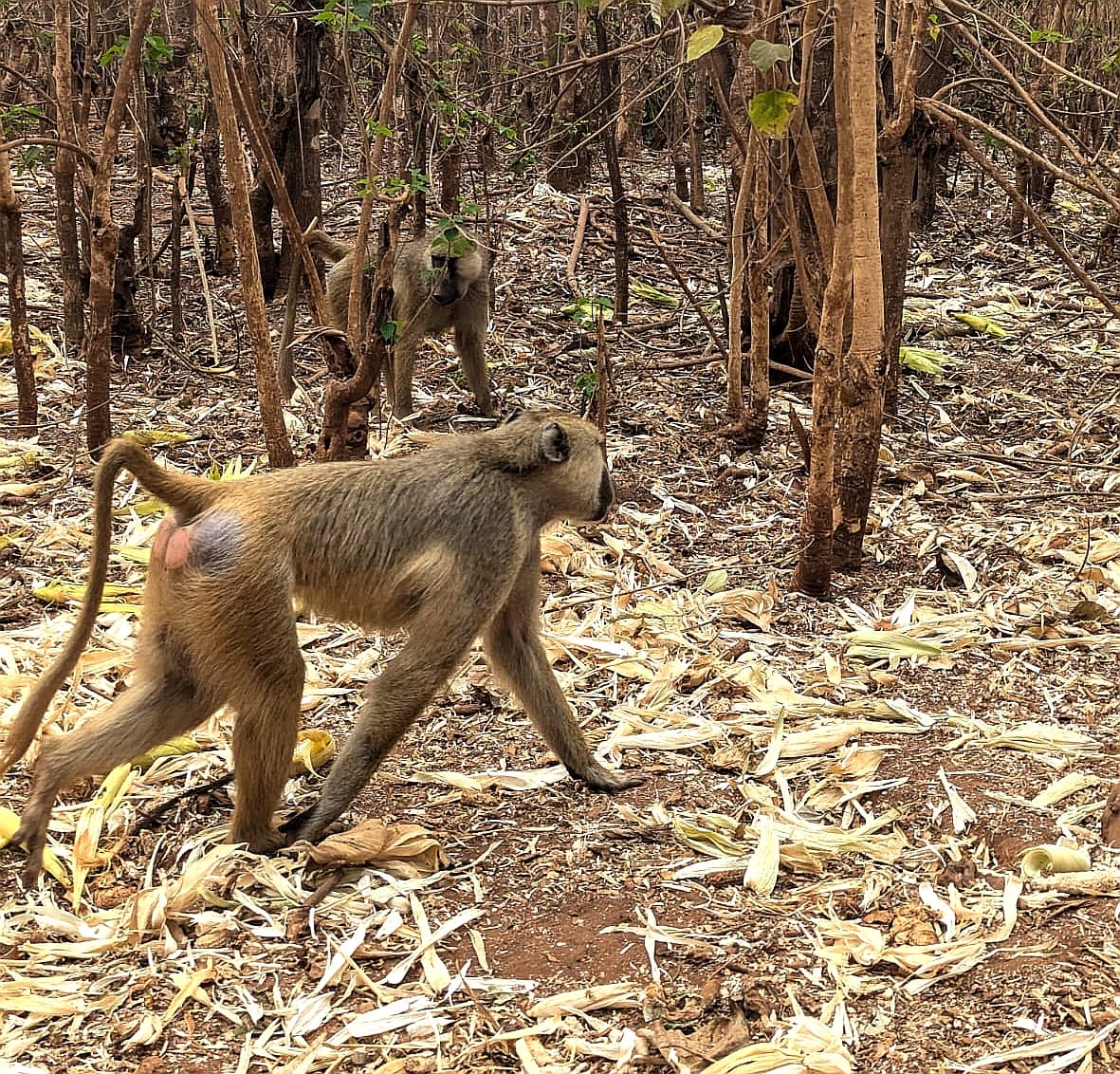
Crocodiles were spotted on the edge of the lake, along with egrets, ibises and spoonbills. We saw impala and kudu in the distance along with a trio of warthogs. By the time we walked back to base camp, we came across a massive troop of yellow baboons in the warm evening light and as the sun set, some of the hippos were beginning to venture out of the water to head off to spend the night wandering through the bush, browsing the vegetation.
This evening some of the team have headed off in two off road vehicles to place the remaining camera traps, armed with spotlights to see what nocturnal animals are out there.
Tomorrow will be focussed on the elephant research methodologies. I am crossing my fingers that some elephants will make an appearance, to help with the training.
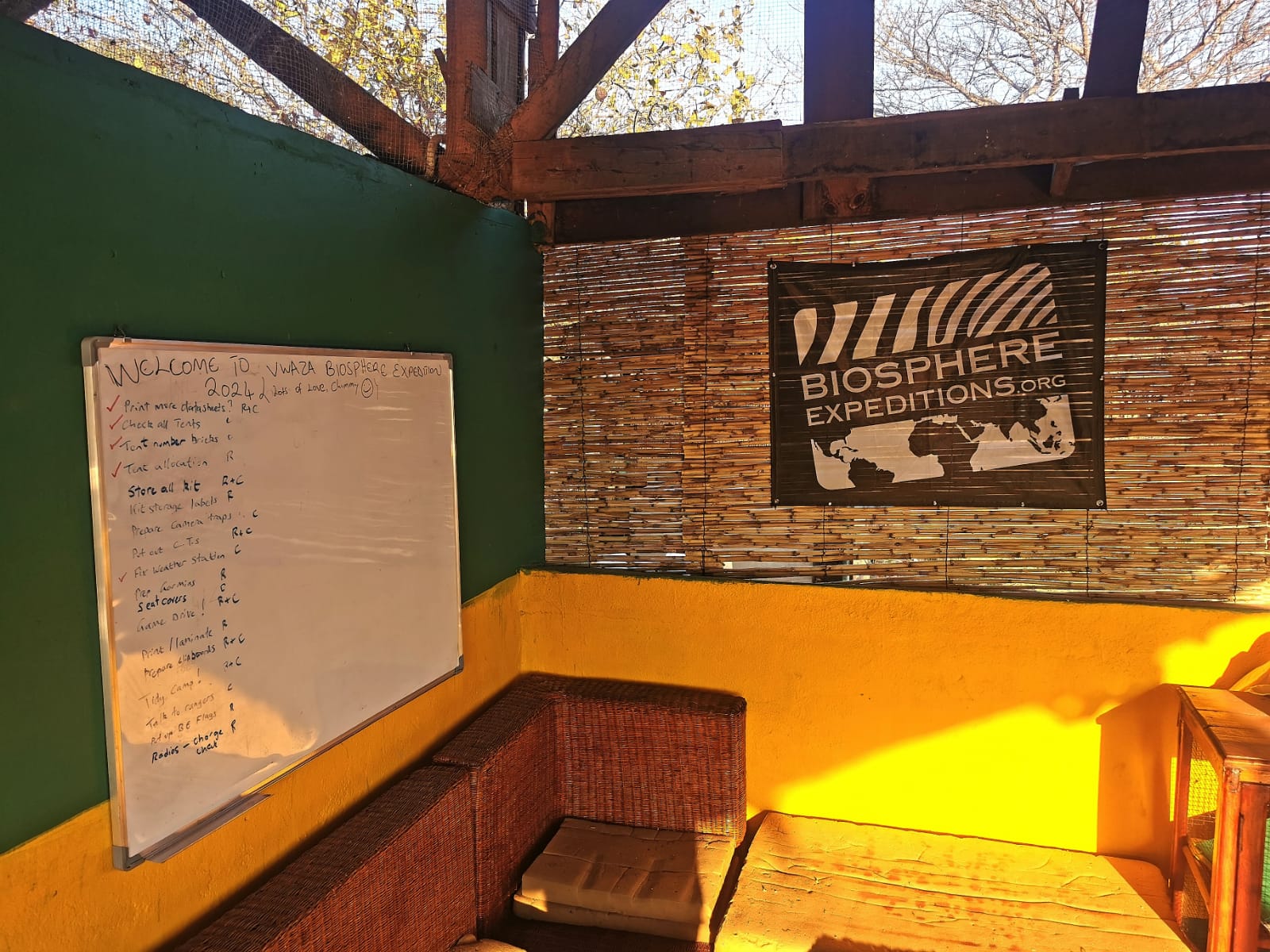
Chimwemwe (one of our two field assistants) and I have arrived at base camp at Vwaza Marsh, as an advanced party to get it ready for the expedition. It’s looking good. We will now get all the expedition kit and systems sorted before you arrive on Sunday. Before then, we expect the arrival of expedition scientist Lea, field assistant Wanangwa and cook Luka, some time tomorrow.
It’s great to be back here at Vwaza. The weather is hot: our new digital weather station reports a maximum of 32 degrees, but breezy. No problems with mosquitoes or tsetse flies so far. The baboons are prevalent at base camp – I had to chase a cheeky big male out of our living area just now. We have also seen many hippos and kudus and many birds (heard and seen). I haven’t spotted any elephants yet, but the guys here tell me they are around and have even come through base camp recently.
Chim and I are setting off soon to place some of the camera traps and I fully expect we will see some more wildlife on our evening excursion – maybe even our first elephant encounter.
Less than a week until the expedition starts, and preparations are going well for the Malawi expedition.
I have arrived in Lilongwe and Malawi has welcomed me back as an old friend! It’s good to be here again. It’s pleasantly warm – comfortable T-shirt weather.
I am enjoying listening to distinctly African bird calls even here in the city.
I am now checking kit and reviewing plans with expedition scientist Lea and the rest of the LWT team, before heading up to base camp at Vwaza in a couple of days.
Expedition leader Roland and expedition scientist Dr. Lea Stracquadanio
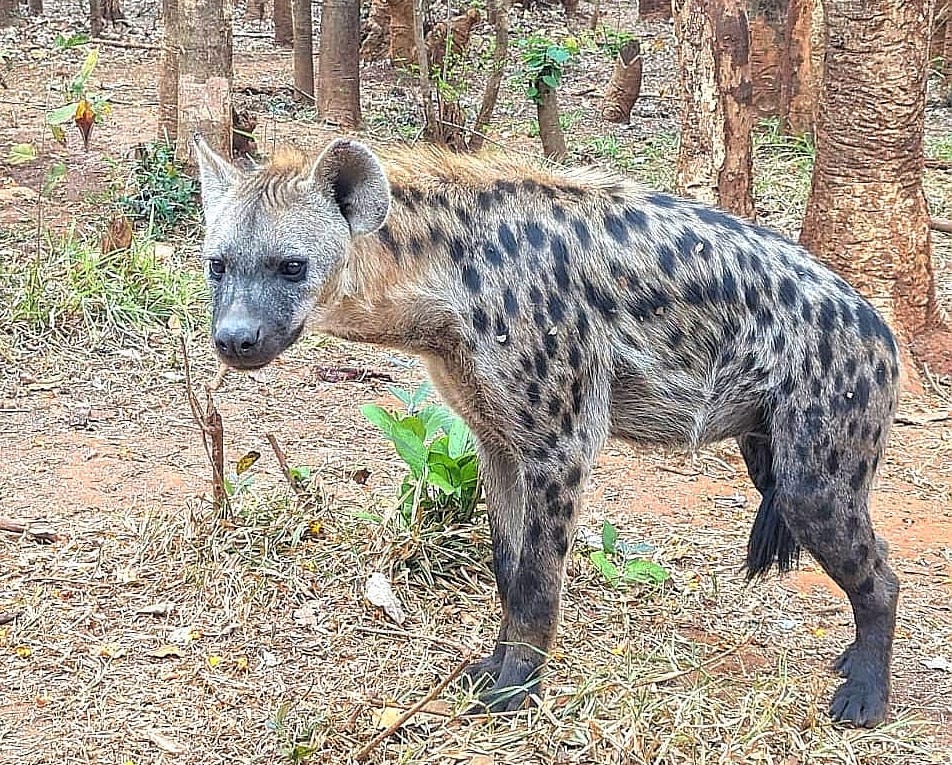
I even had enough time to pop over to LWT’s wildlife rehabilitation centre in Lilongwe and meet some of the wildlife species we will encounter (yellow baboons) or might encounter (spotted hyaena) at Vwaza.
Robert from LWT is already at Vwaza making sure the camp is ready for us.
Our third and final Tien Shan group was full of enthusiasm and hard work. There was a real buzz around camp and everyone was motivated to get stuck in.
We have captured snow leopard on our camera traps a total of four times (total of 14 images captured) and sent back 13 scat samples to Germany to be DNA-tested whether they really are from the ghost cat. We have felt their presence and it is hard to imagine that they haven’t observed us from a distance.
We planned an overnight expedition with two of our 4x4s to the east side of the Jil Suu valley to survey a large swath of prime habitat, but we were stopped in our tracks at the first hurdle: A road that we drove just two weeks ago was now impassable due to heavy rain “redesigning” the numerous river crossings. We returned to basecamp and decided to turn our attention to the east side of the Burkhan valley instead.
Another expedition team spent two days hiking in the mountains with an overnight stay in the Archaly valley to the south of our basecamp. They were able to place camera traps at a promising 4000 m pass and we are excited to see the results next year.
We were invited to join the local shepherds at a type of mid-summer celebration where all families from the same area let their hair down for the day. They had set up yurts with mountains of food and a loudspeaker to dance to Kyrgyz techno music. We were greeted gleefully and invited to talk in front of the more than 100 people that had congregated in the Burkhan valley. The Grupa Bars addressed the crowd and talked about the work we are doing here followed by talks from the expedition leader, expedition scientist and citizen scientists. We expressed our gratitude to our neighbours for their welcoming nature during our stay in the valley and their constant assistance and co-operation.
On our second to last day, we ventured to a ridge line to place camera traps, where we had discovered evidence of snow leopard. On the steep hike up the grass slope we were fortunate to witness a large group of seven to eight ibex walking on the ridgeline far above us, their silhouettes unmistakable against the deep blue Tien Shan sky. As we approached the top of the ridge, we made an effort to limit our noise in case they were still around. Sure enought, there was a small plateau around 150 m below the ridge where there was a group of over 40 ibex resting, the largest group of ibex we have seen on this expedition. We were able to observe them for a few minutes before they were startled by something and fled across the rocky, precipitous hillside out of sight.
The 2024 has been extremely successful and our citizen scientists have collected a huge amount of data. We have surveyed over 130 cells amounting to a total area of 520 square kilometres (!), looking for signs of snow leopards and their prey and assessing biodivrsity. We have placed 17 camera traps in the mountains to capture photos until our return in 2025 and have sent 13 vials of potential snow leopard scat to Germany to be DNA tested. Thank you to everyone involved to make this possible: NABU and the Grupa Bars, our scientist Emil, our local helpers and friends in the study site, in Bishkek and around the world, and most of all our citizen scientists, whose input in labour and funding make this expedition possible in the first place. I take my hat off to you all for doing this. Thank you.
The Malawi 2024 expedition is fast approaching and I’m really looking forward to leading it again this year. I will be heading out to Malawi and to our base camp in Vwaza a week or so before the expedition starts, working with our partners to get everything ready.
We will be continuing the same research tasks we have carried out in previous years, with a big focus on elephants and hippos. But we also record other wildlife of interest, including the wonderful, colourful, lyrical birdlife. To identify birds and to record miscellaneous wildlife on the expedition, it will be very helpful if you could install two free apps on your phone before you get to Vwaza. You can find them on Google Play or the Apple App Store on your phone, or click the links below:
After you have installed Birds of Africa, you will need to create an account, and then tap the ‘Countries’ button and download the Malawi dataset. This is a pretty big file, so best do it when you fast internat, and allow some time.
Apart from that, just read the the 2023 report and the expedition dossier (again), including the kit list and start getting excited! More updates to follow from Malawi in a week or so.
The last two camera traps still out in the field from 2023 are proving elusive. Perhaps they have gone “missing”. Never mind. This happens.
BUT we have an amazing snow leopard photo from another trap from just six days ago. I will share this next weekend when we return from the field to Bishkek with this final group.
Today everyone is heading out on an overnighter to increase our reach as usual.
A couple of days ago we joined a community gathering of over 100 shepherds and gave a talk to them about who we are, what we do here and why. This was a good and successful undertaking.
Group 3 have arrived and are on their way to base camp.
With this group, we will retrieve the last two camera traps still out in the field from 2023, place new ones and check the ones put out in groups 1 & 2, survey more cells, conduct more herder interviews farther afield and hold a community information event at our base camp.
As always, updates from the field will be scant with no up-to-date pictures until changeover. Wish us luck for this final group.

















 Biosphere Expeditions: blogs from the frontline of wildlife conservation and the fight for a more sustainable planet