Azores: we’re back on after two years!

Hello everyone and welcome to the first diary entry for Biosphere Expeditions’ Azores 2022. My name is An Bollen and I will be your expedition leader on this whale & dolphin marine conservation volunteer project to the Azores.
20220307_091601

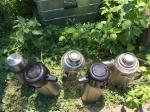
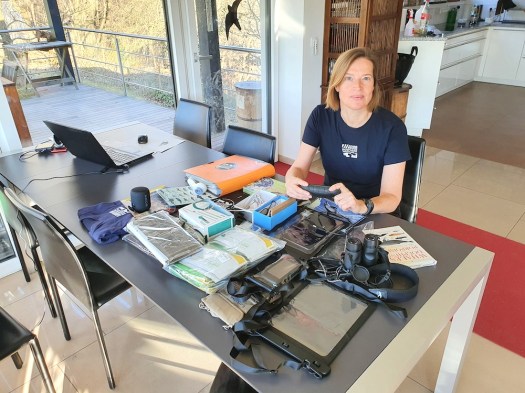
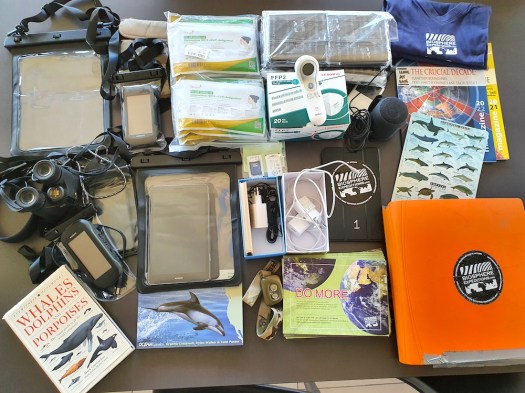
I now have some of the equipment at my home in Belgium (and more is stored on site).
20220307_090147

As it happens, this will be the first Biosphere Expeditions volunteer project that is back on after two years !  I am really grateful to all of you citizen scientists for signing up and making this happen.  I am sure many of us have been longing to get back out into the field and meet new people, whilst contributing time and energy to conservation and to volunteer with whales and volunteer with dolphins.

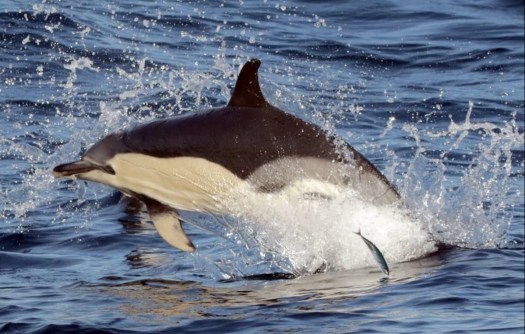
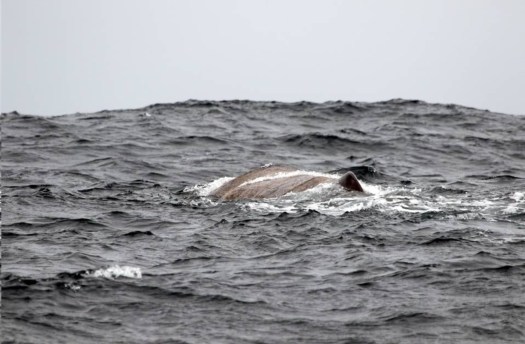
My own travels start next Thursday when I fly out to the beautiful Azores, where I will be preparing for your arrival together with Lisa, our expedition scientist, and Claudia and James, our hosts at Banana Manor.  On the cetacean front, there is some good news already. Lisa has been out at sea and spotted the first blue whales, several male sperm whales and lots of common dolphins, so the 2022 season is off to a good start.

bluewhale

spermwhale

Commondolphin

The weather is a bit hit and miss at the moment, as is often the case in the Azores this time of the year, so lets hope we get treated to some fine weather days and whale volunteer and dolphin volunteer action. Out at sea, it can get very cold and windy, so don’t forget to bring enough thermal wear. I find that putting on different layers works really well, combined with a wind- and waterproof jacket.

And of course, lets all be Covid smart and travel safely, as chances are that if we get infected, it will most likely be in the airport or on the plane. Don’t forget to bring your FFP2 masks (and use them whilst travelling!) and Covid self-tests so we can conduct this first expedition as professionally and safely as possible for everyone.

Remember that as part of our Covid procedures, this year we will not meet for drinks at Peter’s Café as we normally do at 11:30. Instead we will welcome you at our expedition base at Banana Manor (see position here) with all your luggage between 12:30 and 13:30 so you can get settled. Be sure to have lunch before you arrive, because at 14:00 the expedition starts officially and we get into action with introductions, talks and training.

Once I have arrived in Horta, I will send out another diary entry with my local contact details. If your family and friends back home would like to stay up to date while you are away, they can keep an eye on the Biosphere Expeditions blog (or subscribe to it for automatic updates) where I will publish diaries and photos regularly. If you are curious to see which whales and dolphins are currently being spotted out at sea, I recommend the Facebook page of our local partner Whale Watch Azores.

Looking forward to seeing you all soon !

An Bollen
Expedition leader

Thailand: Elephants all over the study site

The weather is hot during the day now. We like the sun, but we are sweating for science also. In the early mornings we walk by the local families huddled around their fireplaces. For most of us a long sleeve shirt is plenty.

We spent Friday & Saturday surveying in the afternoon, when all elephants have been very active. The two females and the toddler stuck together most of the time as usual and were followed by quite a few of us watching their every movement and recording activities and social behaviour every five minutes. Every elephant has their personal data logger and two more citizen scientists record association data of the herd. Until Saturday the males stayed away, roaming on their own but still followed by us citizen scientists.

We’ve been walking a lot up and down hills, along the main path, to the river, back into dense undergrowth, etc., etc.. With elephant toddler Gen Thong around it never gets boring, anyway. He likes testing the boundaries and is always up for game.

On Saturday & Sunday we found Boon Rott and Dodo together for the first time since we started our surveys. It was great to see them getting along well, Dodo following Boon Rott. He is the newest member of the herd and in the process of slowly settling in. It will take some more time for him to get his bearings and there is a lot to learn from his mate about his new environment. We saw them mud-bathing together and displaying social behaviour – they must like each other.

Apart from surveying elephants, some of the team took the chance to participate in community activities in the afternoon of our early survey days on Thursday and Sunday. Kunsang learnt some traditional weaving skills and her scarf should be finished by the time we leave. Others went for a Thai massage to the lower village to experience a blind man’s magic hands. He is said to be unique in what he is doing – I can certainly attest to this.

We have one survey day left tomorrow (Monday). Keep your fingers crossed that all five elephants will decide to spend some time in one group. That’s our hope at least, but they have their own minds 😉

Thailand: Collecting data

The team has completed the second elephant survey day. Introductions, presentations and lectures on the science, the history of the elephants to be surveyed, the equipment, safety and living with the local people were followed by a half day of practical training in the field on Tuesday. Data collection started on Wednesday and will continue until Monday, working towards the goal of completing two full sets of survey hours between 08:00 and 16:00. That means that the schedule will change from day to day, some days starting at 06:00 others at 08:00.

We left base at 08:00 on Wednesday for the 4.5 km hike to find the elephants. Too-Meh, the herd’s grandmother (57 years), her daughter Mae-Doom (23 years) and Gentong, Too-Meh’s grandson (6 years) were  together near the river. They foraged most of the time and took a bath in the river later on. Right at lunchtime, one of the male elephants, Boon-Rott (13 years) joined them, so that almost the whole team was reunited for lunch. The third male elephant, Dodo (Gentong’s brother, 13 years) decided to roam around solitary. A team of two citizen scientists followed him up and down steep hills and even further away from where the rest of the herd enjoyed each other’s company. It was a very good first survey day – easy for some, more challenging for others, though.

Today (Thursday) we went for the first out of two early shifts. Leaving base before sunrise, we very much enjoyed the 90 min walk along the river watching the sun come up and slowly dissolving the mist. For the first time during this week the sky was clear blue and the sun pushed the temperature up and over thirty degrees. Keep your fingers crossed that we won’t get any more rain!

We celebrated Neil’s birthday on Wednesday evening. Talia prepared a delicious homemade cake, which was presented after dinner. Thank you, Talia, for doing so, and thank you, Neil, for sharing it with us!

Thailand: Training

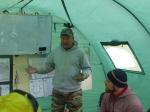
Everyone arrived safely at base today. Our team of ten citizen scientists from Brazil, Germany, the UK and US moved into their homes after lunch. Today was full-on introduction and training, stuffed with information before we go out tomorrow (Tuesday) morning for a practical data collection training walk.

Thailand: Ready to roll

I arrived at our base camp village of Ban Naklang on Saturday. Kerri, the founder of our partner organisation, and I had a meal at one of the homestay houses and continued to work on preparations, finalising the day-to-day schedule. Sunny weather was interrupted by heavy rain showers on Saturday and Sunday, but the weather forecast in predicting improving wheather conditions.

You will be picked up by Talia, our expedition scientist, tomorrow morning (Monday) at 8:00 at the Imperial Mae Ping Hotel, and Kerri and I look forward to meeting you at base.

I leave you with a few impressions from base and our jungle office, now all ready for your arrival…

Thailand: Preparations in Chiang Mai

I arrived in Chiang Mai on Thursday morning welcomed by sunny weather and temperatures around 30 C. I spent the day running around the old town doing some last minute shopping, passing food and other markets, enjoying the smells of Thai food prepared on the streets, as well as the cornucopia of strange-looking fruit, vegetables and flowers laid out on the tables.

The weather forecast says that the temperatures won’t change much over the next week or so, but there is a 50% chance of rain on the first couple of days of the expedition.

Kerri & Thalia, founders of Kindred Spirit Elephant Sanctuary (our partner organisation on the ground) and I are also finalising the work schedule. Each day will include a walk of about 60 – 90 min to get to where the elephants are , as well as three hours of observation and data recording, interrupted by a one hour break. Please be prepared that the walk will include river crossings, some of them waist-high as Kerri told me this morning. So please make yourselves comfortable with the tought that you won’t be able to keep your shoes & trousers dry throughout the surveys. You might also want to consider bringing walking poles if you’re not comfortable enough with using the bamboo sticks that will be provided at base.

I will leave Chiang Mai tomorrow morning. You’ll hear from me again once I have arrived at the village. I shall then also let you have my local (emergency) phone number. Until then please e-mail the office in case of emergency or if need to get in touch.

I’ll leave you with some impressions of Chiang Mai…

Thailand: Getting ready

Hello everyone, my name is Malika and I am going to be your expedition leader on this year’s elephant conservation project in Thailand. It’ll be our second year of collecting activity, social behaviour and other data by following the study objects around in the forest – and I can’t wait to get started.

I was busy with packing and preparing the equipment, paperwork, etc. and will start my journey from Europe to Chiang Mai today. Not much more to say for now; I’ll let you have the latest infos once I’ve arrived on the ground as well as my local (emergency) phone number. I hope your preparations are going well and you are all as excited as I am to get going. I hope you have all read last year’s expedition report as part of your preparations. If not, I suggest you download this now for some light reading on your flight. It’ll help you with training and being an effective citizen scientist.

See you all soon…

Malika Fettak
Expedition leader

P.S. I have also added some videos below so that you know what’s coming


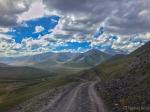
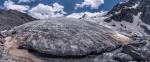
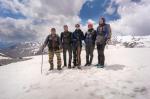
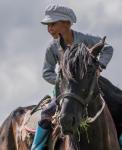
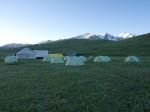
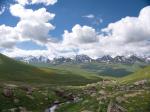
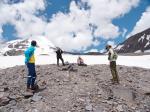
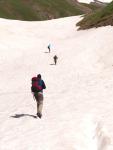
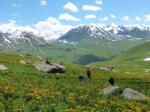
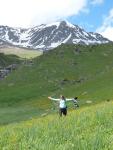
From our snow leopard volunteering expedition in the Tien Shan mountains of Kyrgyzstan

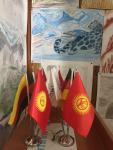
Five years on from the initial pledge from twelve nations at the “Snow Leopard Conservation and the Global Snow Leopard and Ecosystem Protection Programme” forum, Biosphere Expeditions continues to contribute to snow leopard protection in Kyrgyzstan. Their snow leopard conservation expedition to the Kyrgyz Ala Too mountain range, in close cooperation with NABU Kyrgyzstan, gives local people and international citizen scientists the chance to come and play an active and hands-on part in the conservation of this iconic species.

2017 saw the twelve countries reconvene in Bishkek, the Kyrgyz capital, to update the status of their pledges of five years ago. Controversially, and not supported by Biosphere Expeditions, some experts called for the IUCN status of the snow leopard to be changed from Endangered to Vulnerable, even though only 2% of the snow leopard’s range has been studied scientifically.

Biosphere Expeditions’ study has yielded important results in a region that has not been studied properly since the 1980s. A report to the Kyrgyz government is being prepared by the expedition scientist Dr. Volodymyr Tytar for 2018. This report will recommend that Kyrgyz Ala Too be protected as a wildlife sanctuary, specifically to benefit the snow leopard.

The snow leopard, like many species, is threatened by poaching, retaliatory killings and habitat loss. It is estimated that fewer than 7,500 snow leopards remain in the wild. One goal formulated in Bishkek is the 20/20 pledge – to protect 20 snow leopard landscapes that have over 100 breeding adults by 2020, and to promote sustainable development in areas where the species lives.

“This is as big as it gets in terms of top-level conservation news”, says Dr. Tytar, “and it is a privilege to be part of the challenge, together with my colleagues in field science, local people and international citizen scientists, to preserve this iconic cat. But what we do goes far beyond a single cat species, beautiful as it is in its own right, because successful species conservation is all about creating positive impact well beyond the target species, namely for those people that share their daily lives and landscapes with the snow leopard. As specified in the Conservation Strategy for Snow Leopard in Russia, 2012-2022, much can be achieved in the socio-economic context of snow leopard conservation by ‘…developing collaborations with such internationally known organisations as Biosphere Expeditions…’ (p.81). And this is exactly what we have set out do with our research expedition here in Kyrgyzstan, which I am very proud of”, Dr. Tytar adds.

“Four of the key themes at the Bishkek conference as ways forward in snow leopard conservation were private conservation initiatives, local involvement, capacity-building and ecotourism”, says Dr. Tytar. “Our project ticks all those boxes beautifully in an expedition that does it all. Funded by the private donations of our citizen science participants, we involve local people and organisations and bring benefits to herders and other people on the ground. For us these are the key factors to ensure the future of the snow leopard in Kyrgyzstan and elswhere”, Dr. Tytar concludes.

Over the past four years, Dr. Tytar has been able to produce GIS models that transform collected data into visual representations that suggest locations within the study site that are suitable habitat for snow leopards. “Using these models we have been able to find sings of both snow leopard prey species and the snow leopard itself,” says Dr. Tytar. “With each new year’s data we are refining the model and gaining a better understanding of the snow leopard population within the Kyrgyz Ala Too Range.”

A new initiative to gather more data for more of the year was started this summer also. Community members from the surrounding area were trained in camera trapping techniques in order to extend the study season another six months. Essentially, these community members will continue to monitor camera traps within the Kyrgyz Ala Too before and after future expeditions. “This new incentive will be a great opportunity for local communities to learn more about their natural habitat and become more interested in many aspects of conservation,” suggested Jana Schweizer, a citizen scientist from the USA.

Key points of future Biosphere Expeditions snow leopard expedition to the mountains of Kyrgyzstan are:

1. Continue to evaluate and map the current status of snow leopard populations in the Kyrgyz Ala too range.

2. The fifth expedition will take place between June and August 2018 and will continue to work in close co-operation with the Bishkek office of German conservation organisation NABU (Naturschutzbund = nature conservation alliance) and its “Gruppa Bars”, an anti-poaching and snow leopard ranger group, as well as the newly created community monitoring group.

3. Local people, community monitors as well as student placements, as well as international citizen science volunteers from around the world will continue to join in the effort and, through their collective effort and funding, make it possible. Anyone can take part and details about the expedition and how to join are at www.biosphere-expeditions.org/tienshan.

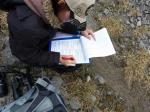
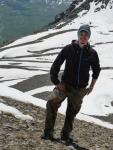
A picture selection from the expedition is below

From our scuba diving conservation holiday with whale sharks and coral reefs of the Maldives

Maldives: Bleaching devastates vulnerable inner, sheltered reefs, whilst the more resilient outer reefs with stronger currents, bounce back

Two Biosphere Expeditions Reef Check survey teams have been laying underwater transects over a two-week period from 15 – 28 July 2017 in order to get a clearer idea of the impact of the April/May 2016 bleaching event. Biosphere Expeditions has been collecting these types of data from Ari atoll since 2011, visiting the same sites repeatedly in order to create a reliable dataset.

It was soon apparent that many inner reef sites had not recovered from the bleaching and that hard coral had reduced dramatically to an average of only 8% . Over time, many of these corals will be broken down into rubble, so it is essential that grazers – parrotfish and surgeonfish continue to do the job of cleaning the dead coral of algae, in order to allow new coral ‘recruits’ to settle on the old dead coral.

However, fish stocks are depleted too. Important fish, such as parrotfish (for grazing the reef of algae that colonise corals after death) and grouper (an important food fish), were recorded, but not in any great numbers, which is another cause for concern. Grouper numbers, for example, were woefully low, with densities averaging only about 1 individual per 100 sqm of reef. Parrotfish, on the other hand, were abundant, sometimes reaching densities of 14 individuals per 100 sqm – densities at which the fish should be able to graze away the emerging algae.

Hope for inner reef remains in some isolated spots, such as Holiday thilla, to the south of Ari atoll, where many coral recruits were recorded. Overall, though, the picture was one of coral death, destruction and decline.

The picture was more encouraging for outer reefs that are more heavily dominated by Porites colonies. Here, much of the reef appeared to have totally recovered from the heating in 2016, with hard coral cover at an average of 38%.

The second half of the expedition visited sites further afield in Vaavu Atoll, attempting to glean information from historic survey sites first surveyed in the late 1990s.

Here too there was a mix of good and largely bad news, with healthy sites generally located in more exposed and southerly locations on atolls.

The expedition was joined by Maldivians and an international team of fee-paying citizen scientists. Maldivians ranged from members of the new NGO Reef Check Maldives , created as a result of Biosphere Expeditions’ placement and capacity-building programme for local people, to consultant marine ecologists, government staff, and Maldivians working for the tourist industry.

We are encouraged by the keen participation of our Maldivian colleagues and look forward to seeing go Reef Check Maldives from strength to strength. Because this is what is needed in the absence of any sensible government strategy that balances economic development against protecting the reef foundation on which the country itself, as well as its economy, identity and culture is built on: Civil society stepping up where the government is failing its people to protect the nation’s reefs and with it the nation’s wellbeing.

The expedition is kindly supported by the Marine Conservation Society and The Rufford Foundation.

A selection of pictures from the expedition is below.

This slideshow requires JavaScript.

From our working holiday volunteering with leopards, caracals and Cape biodiversity in South Africa

Hello everyone

With a week to go before the expeditions starts, it’s time for the initial introductions. I am Craig Turner and I’ll be your expedition leader in South Africa this year. It is fantastic to be going back to this part of the world to work on this project.

I am not on route yet, but I am in the midst of preparations. So I thought I’d take the opportunity to introduce myself, and Dr. Alan Lee, our project scientist for the duration of the expedition. It’s great to be returning to work with Alan (and his family) for a third year. I’ll save the rest of the introductions until later next week, so they are fresh in your memory.
Craig (front) and Alan (back)

I am guessing many of you, like me, are in a whirl of preparation and beginning to think about packing your bags. So I hope you’ve all been eagerly reading your expedition materials and know to bring many layers of clothing. The weather can be a bit like four seasons in one day, so prepare for warm, cold, possibly wet and hopefully dry. Just like the weather in my adopted home – Scotland!
Hopefully you have also seen the recently published 2016 South Africa expedition report, so will have an idea of some of the planned activities. This also is my opportunity to flag up our expanding bat survey work. As this year, in the spirit of citizen science, we are hoping to turn your iPad or iPhone (if you are travelling with them) into a bat detector.

I’ll leave you to continue your preparations and will be in touch later this week from South Africa. I look forward to meeting group 1 next weekend.

Safe travels…

Craig
Expedition leader