Award-winning, non-profit and ethical wildlife conservation volunteering. Advancing citizen science and conservation since 1999 – for nature, not profit.
It feels strange and somehow wrong to be sitting on a long-haul flight again. Strange because it’s been a good while, thanks to the pandemic, and wrong because so much has happened since then in terms of the planet sending very clear signals that we are doing a great job in cutting off the branch that human civilisation sits on. So we at Biosphere Expeditions have decided we will only fly if absolutely necessary. If we can’t avoid flying (such as to the Maldives), we now try to pack as many jobs as possible into a flight. So I am here on the non-too-shabby resort of Baros, not far from Male’, to train their dive centre staff and the resident marine biologist in Reef Check so that they can conduct surveys themselves and eventually also train other Maldivians (and on the way back, I will stop off in Dubai to work on our forthcoming Arabia expedition).
Baros
Shuga, the Maldivian marine biologist I am training here, will also join us on the expedition, alongside two other Maldivians, as part of our placement programme.
Anyway, I am Dr. Matthias Hammer, founder and executive director of Biosphere Expeditions and I will be your expedition leader for this Maldives coral reef and whale shark expedition, next to our esteemed expedition scientist Dr. Jean-Luc Solandt. We’re both old and frustrated codger-biologists, so you have been warned! 😉
I arrived to grey, stormy weather and rain. Jean-Luc’s codger message to me on take-off was “enjoy the rain, old man”. I wasn’t surprised.
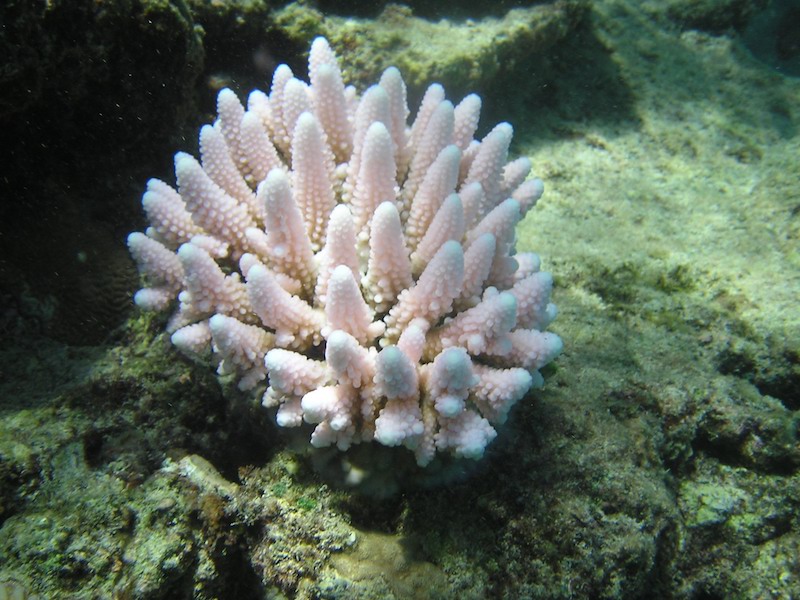
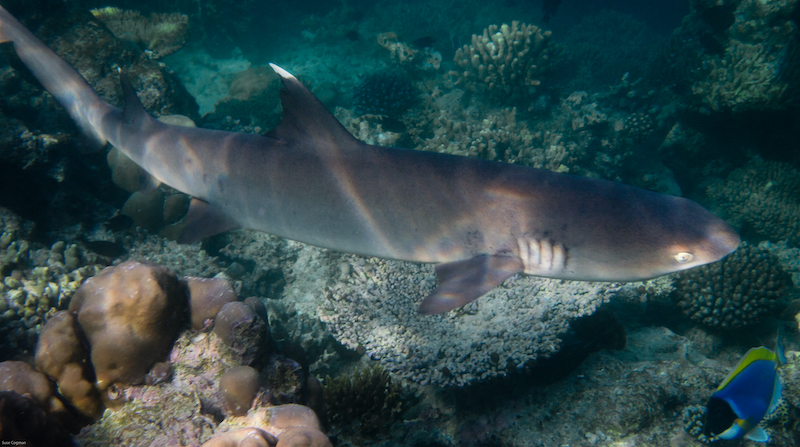
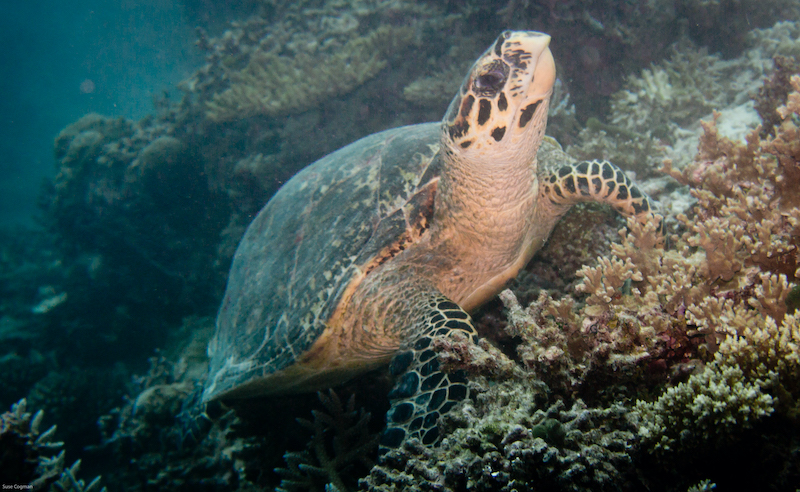
But underwater made up for it. The Baros house reef was in a bad state three years ago, but it has bounced back somewhat. There is quite a bit of coral regrowth and within two 40-minute dives, I saw all fish indicator species (grouper, sweetlips, butterflyfish, snapper and more), three shark species, a turtle and all substrate types (hard coral, soft coral, rock, sand, rubble etc.). Not expecting much, it was a pleasant surprise to see the reef not dead, but fighting back. I wonder whether this is a good omen for the forthcoming expedition? It will certainly be interesting to see what state the reefs are in. Don’t get your hopes up high, though. We may just be documenting humankind’s cancerous effect on this part of our planet too. We will see. Jean-Luc will be telling us, without mincing his words, what it all means and I can guarantee you that he will open your eyes to reefs and help you see them like you’ve never seen them before, no matter what state they will be in.
The itinerary he has set for the expedition is below and a visualisation of the places we will survey and visit is here.
Survey schedule
I will write again in the next couple of days. In the meantime, happy packing and travels. I hope you have swotted up on Reef Check. The more you can do now, the easier the whirlwind of the first two training days will be, trust me.
Nobody could accuse this snow leopard volunteer expedition of being dull, and the interesting times have continued with the third and final group for this year.
Group 3 started dramatically with a mountain storm erupting without warning within hours of the team arriving at base camp. 30 minutes of high winds destroyed one of our three yurts and many of our tents, necessitating two prompt actions – a hasty arrangement to hire a yurt from a local shepherd and a long drive back to Bishkek for expedition leader Roland to buy some more tents. Both missions were completed successfully. Then expedition leader Roland tested positive for Covid. Leading an expedition while self-isolating proved to be a novel experience, but group 3 was a strong and dependable team and the expedition continued largely as planned. Another expeditioner then also tested positive for Covid a day after Roland, but thanks to the implementation of our Covid protocol, the spread stopped there.
Despite these setbacks and some challenging weather in the first few days, the expedition team pulled out the stops and achieved some good scientific research over the two weeks. We visited most of the camera traps already located in the mountains, to replace SD cards and to retain, move or bring back each camera. We surveyed many 2×2 km cells – many of them covering new valleys we had not visited before. We saw ibex, high up on ridges. We discovered many instances of ibex footprints and scat and – excitingly – some snow leopard footprints too. We also found large carnivore scat on a few occasions.
It is not easy to directly tell whether such scats are from snow leopard, wolf or even lynx, but the location and neighbouring clues often help. Wolf predation of livestock is common here – much more than with snow leopard who favour ibex as their main prey and we came across a few horse and cow carcasses and accompanying wolf scat on at least one occasion. Even more excitingly, we found likely snow leopard scat a couple of times and we have a total of six potential snow leopard scats from the three groups, ready to send off for DNA analysis to confirm their identity.
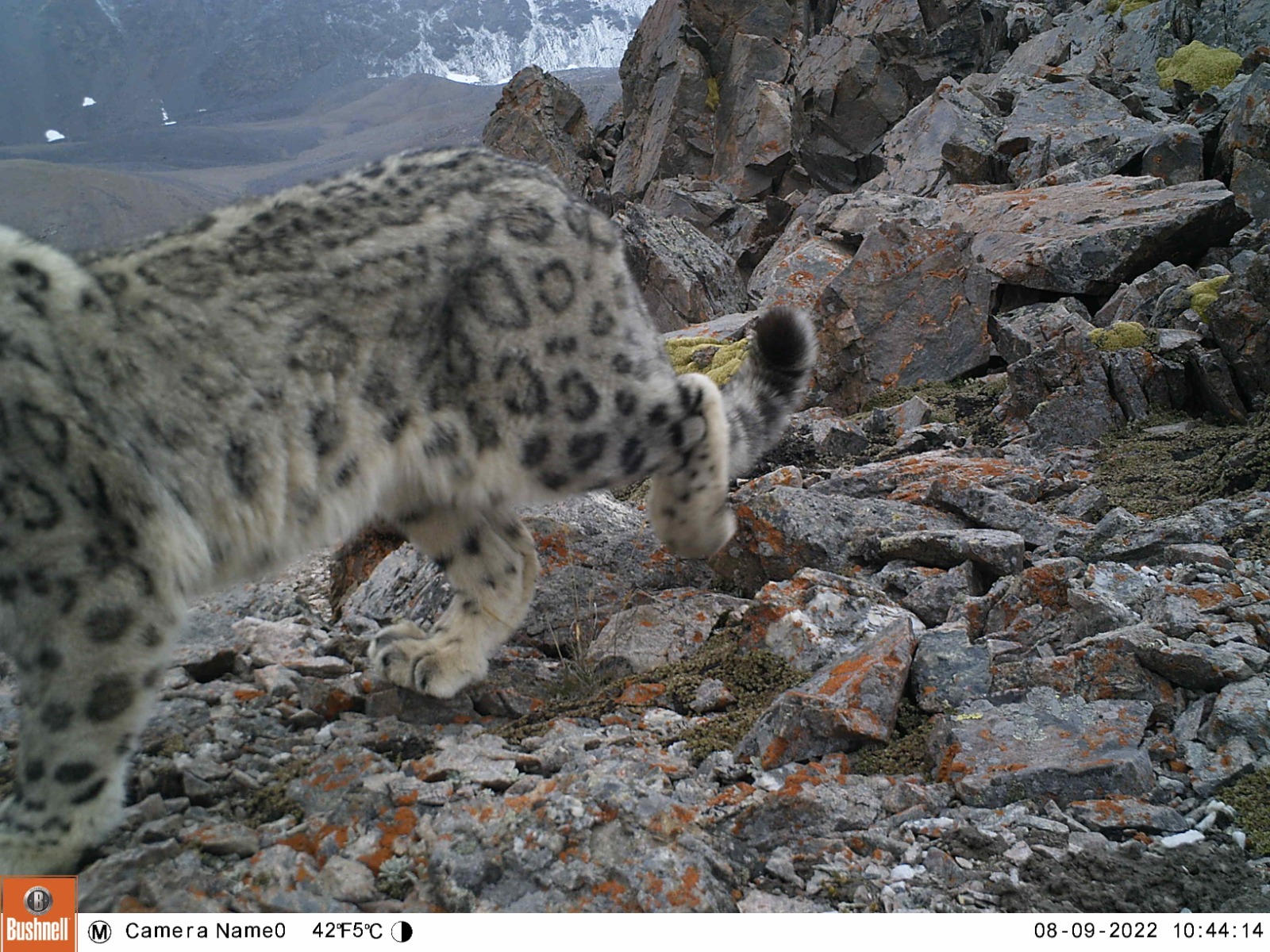
Group 3 also had the task of checking the camera traps that were put up by the previous two groups. All the camera traps were placed in strategic locations, often on high ridges, where we have found good evidence of ibex at least. Some of these cameras have captured good photos of ibex and snowcock, amongst other snow leopard prey animals. And two images of cameras have given us images of snow leopards – just a few days old in each case. This revelation never fails to being much excitement and celebration at our debrief sessions each evening.
Snow leopard image
Alongside our surveys of snow leopards and their prey, we naturally look out for any other interesting wildlife and other finds. We are always accompanied by buzzards, eagles and vultures. And often we come across petroglyphs, which are common in this valley but no less intriguing because of it. These are rock carving line pictures, depicting local animals, made many thousands of years ago in some cases. Most of the petroglyphs show recognizable animals (but some are not at all obvious and invite imaginative interpretation). Simple line drawings of ibex are especially common and we have also seen carvings of Argali sheep, camels, dogs –and occasionally snow leopards.
Ibex petroglyphSnow leopard petroglyph
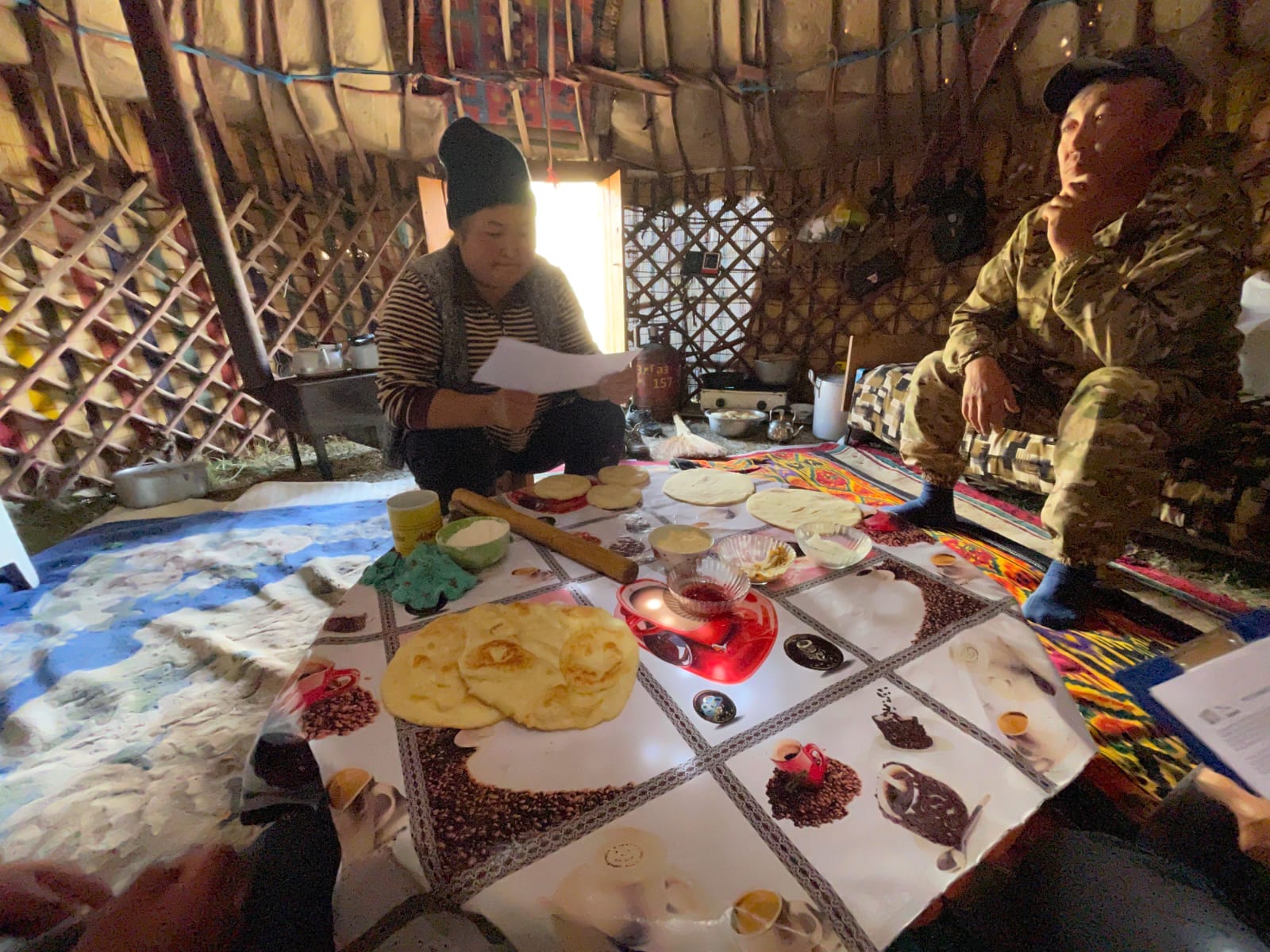
In group 3 we have also continued our social research into attitudes to the opportunities of eco-tourism amongst the local shepherd families. This involves visiting our neighbours up and down the valley, in their yurts and tents, always being received with great hospitality and courtesy. With our multilingual Kyrgyz scientist Dr Taalai Mambetov acting as interpreter, our expeditioners interview the shepherds, loosely following a prepared series of questions, but largely enjoying a free-flowing conversation. The interviews gave us a good insight into the realities of shepherding life in the upper Suussamyr Valley – and a strong appetite to host adventurous tourists here in the future.
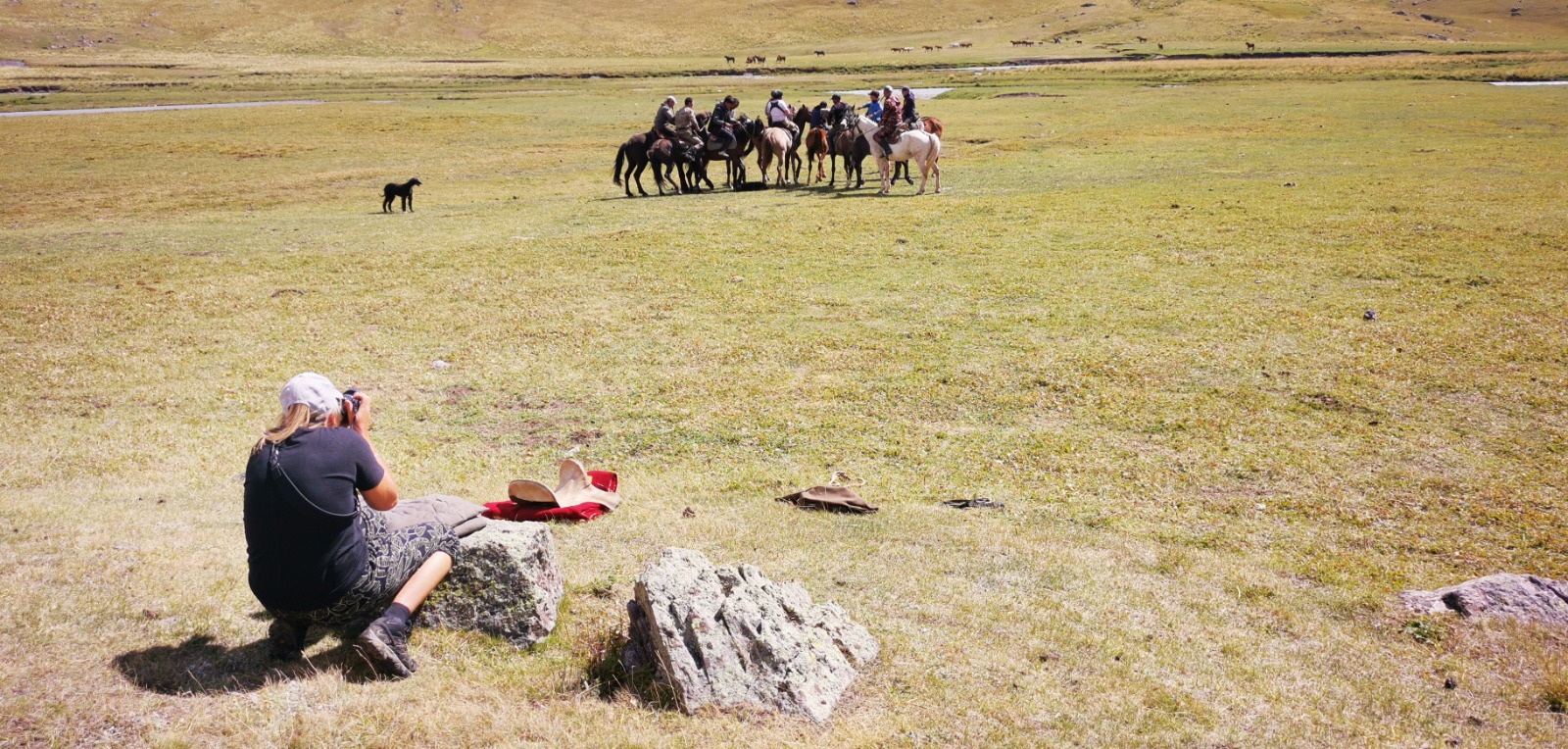
The 2022 Tien Shan snow leopard expedition has brought some memorable challenges but was ultimately very successful, with a total of 30 expeditioners achieving an impressive amount of citizen science over six weeks in Suussamyr Valley: We have surveyed seventy six 2×2 km cells, many more than once, collected six samples of likely snow leopard scat ready for DNA analysis, discovered three sets of photos of snow leopards on camera traps, found snow leopard footprints, seen herds of ibex on mountain ridges on several occasions and we have interviewed twelve local shepherd families. And alongside all this, we have immersed ourselves in the wild mountain environment, scrambled up rocky ridges, seen a lot of local wildlife, discovered ancient and intriguing rock art, watched crazy games of ulak (the national sport of Kyrgyzstan, with horse riders fighting over a goat carcass, in a mad chaos of hooves and mud) and made new friends.
As one expeditioner reflected – “A once in a lifetime experience! This was a great way to deep dive into a country, push yourself outside your comfort zone and save some wildlife. The science we do here may not seem like much on a single day, but it adds up and contributes to a wonderful research project.”
So I end this diary by thanking all expeditioners, whose time and funds make this expedition possible, our partner NABU Kyrgyzstan and its snow leopard rangers, our head ranger Aman and his wife Gulia, our amazing cook, our expedition scientist Dr. Taalai Mambetov and everyone else who helps to make this expedition a success. Thank you all. You all contribute to making this expedition what it is.
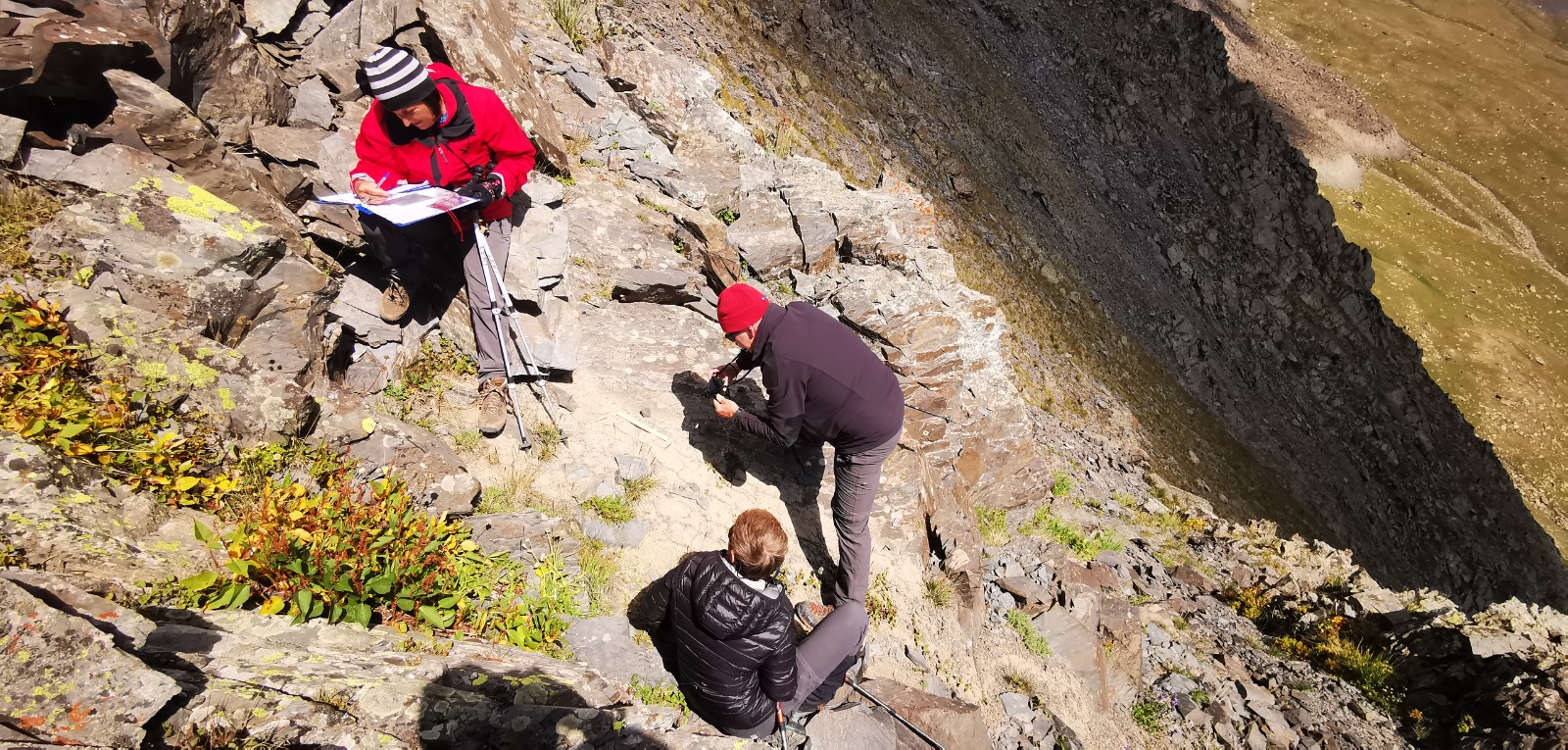
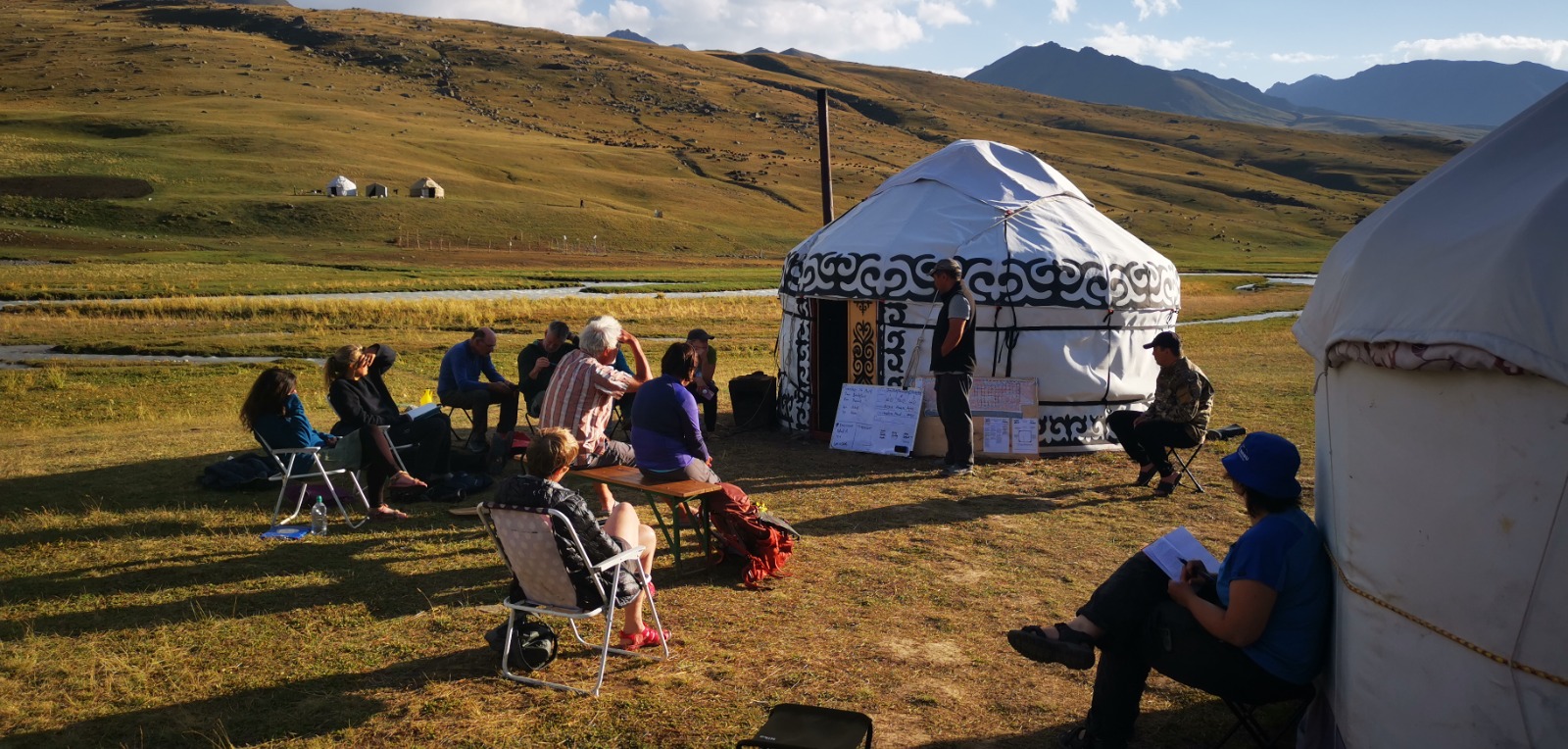
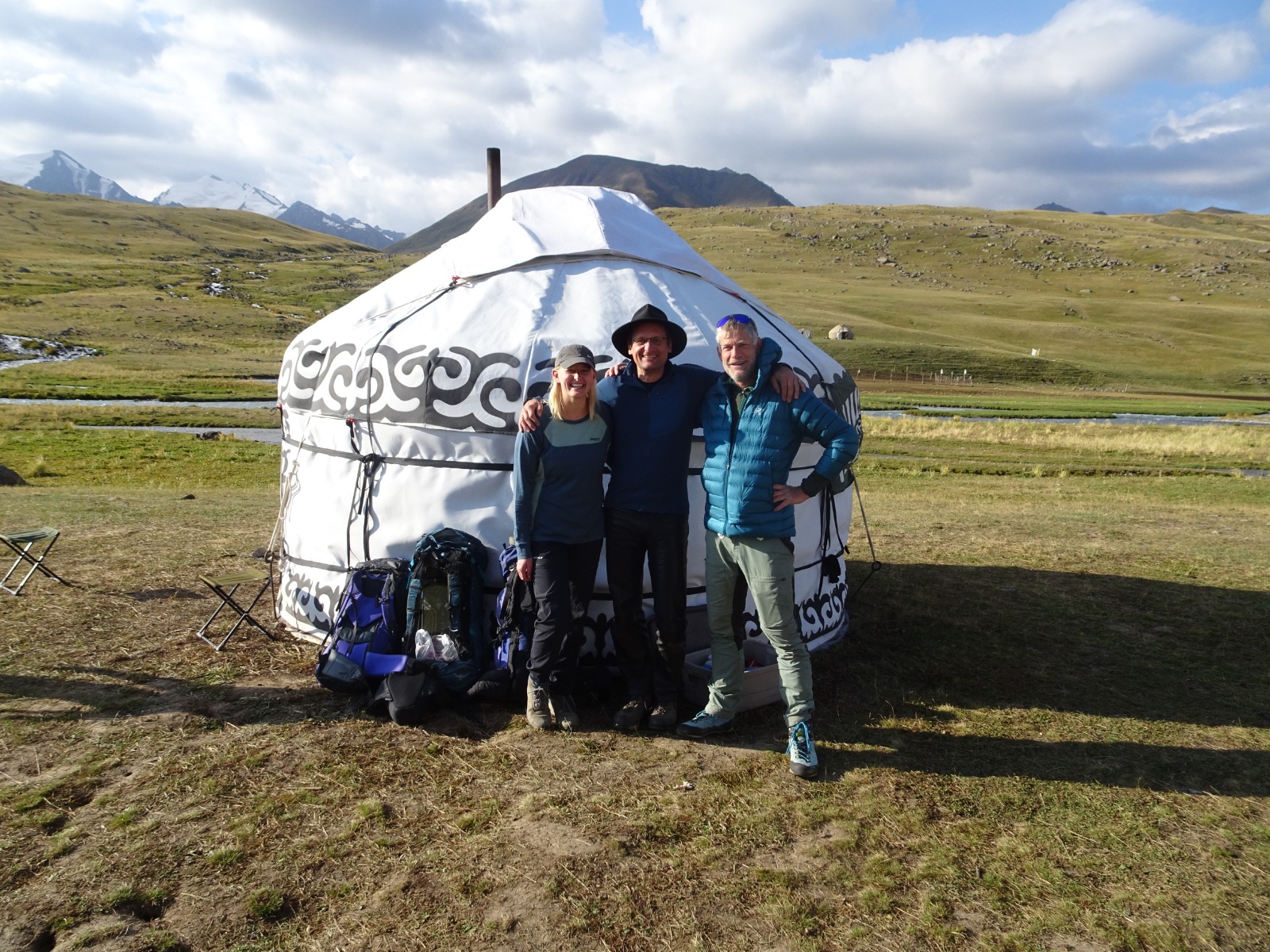
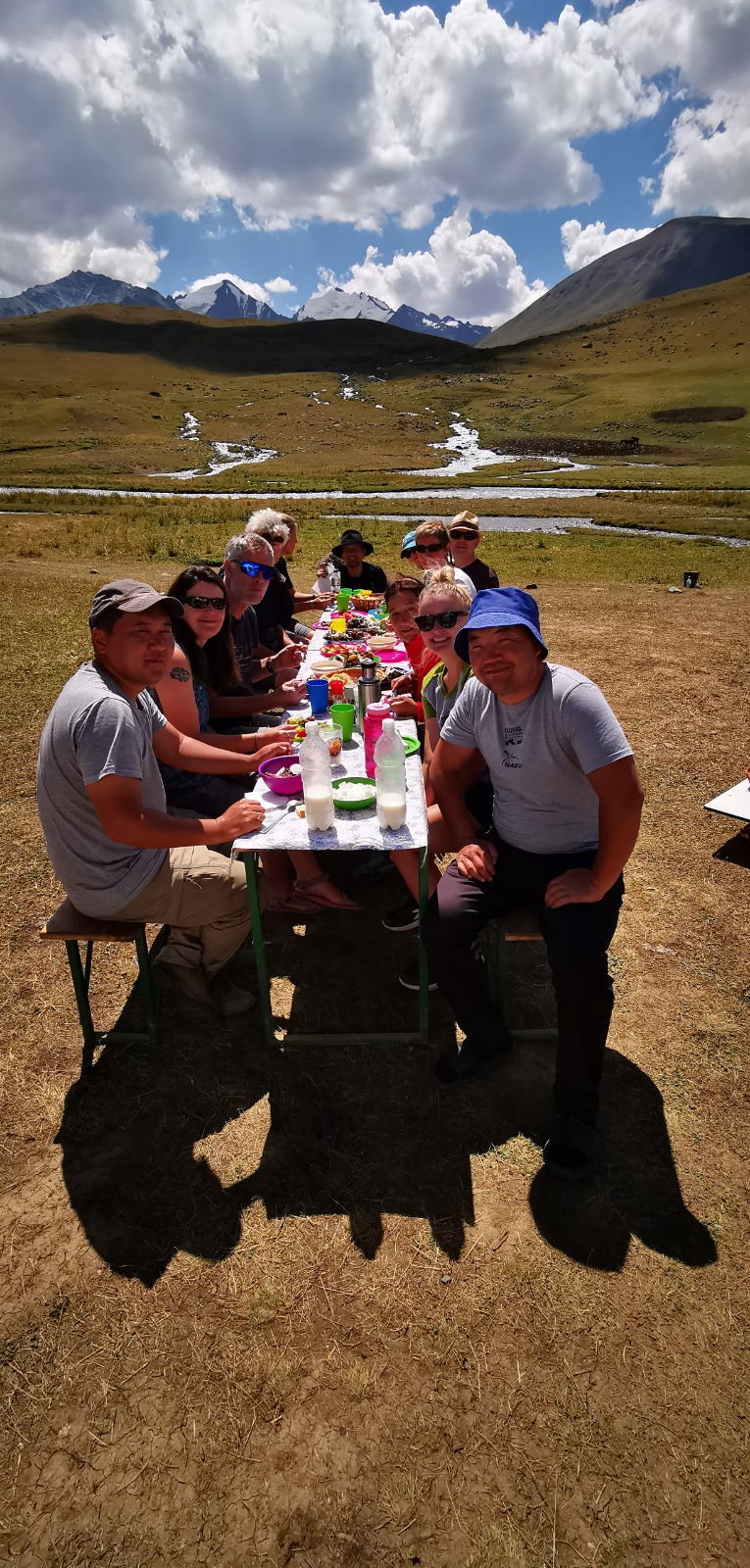
Group 3Karin, Walter and Sarah recording evidence of ibex footprintsHaley & AmanEnd of workday briefingHaley, Lars and Irving outside the hired drying yurtA game of ulak about to startEnd of expedition dinnerEnd of expedition dinnerDismantling base camp
Aman, our chief ranger, spotted them first, through binoculars. Once he pointed them out to us, they were obvious, even to the naked eye. Around twenty vultures circling over a spot on the far hillside, occasionally landing and pecking at… something. It was a dead horse. This valley is home to many herds of horses – not wild, but roaming free – and they occasionally fall victim to wolves. The vultures we saw might spend a few days getting a meal from what the wolves had left, a reminder for us of the circle of life.
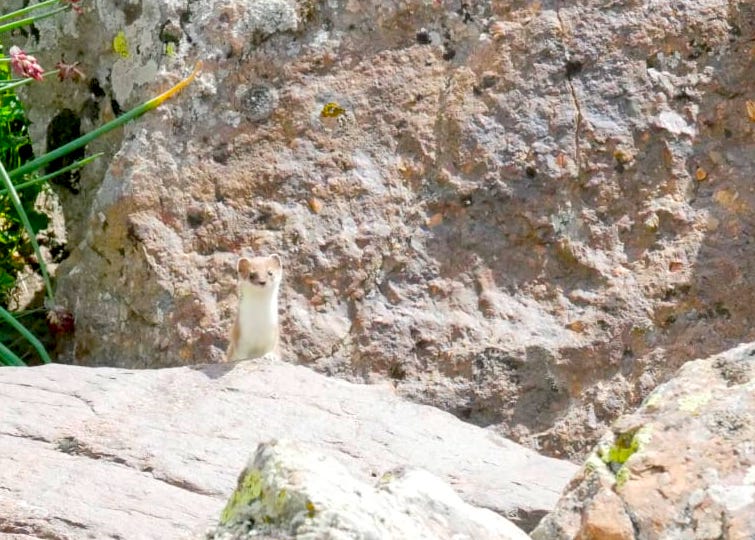
Vultures are not part of our snow leopard expedition, but they are one of the more dramatic creatures that we have seen on this expedition. Our valley seems to have an unusually high population of large birds of prey. We see bearded vultures, golden eagles, buzzards and other raptors every day, often flying or perched on a rock very close to us. On group 2 we have also seen badgers – smaller, lighter coloured and less nocturnal than their European cousins, a mysteriously tame weasel and other mustelids, as well as a host of smaller bird species – wagtails, warblers, larks and choughs have all been seen and identified. The choughs are especially a welcome accompaniment to our high mountain walks, with their acrobatic flight and musical calls.
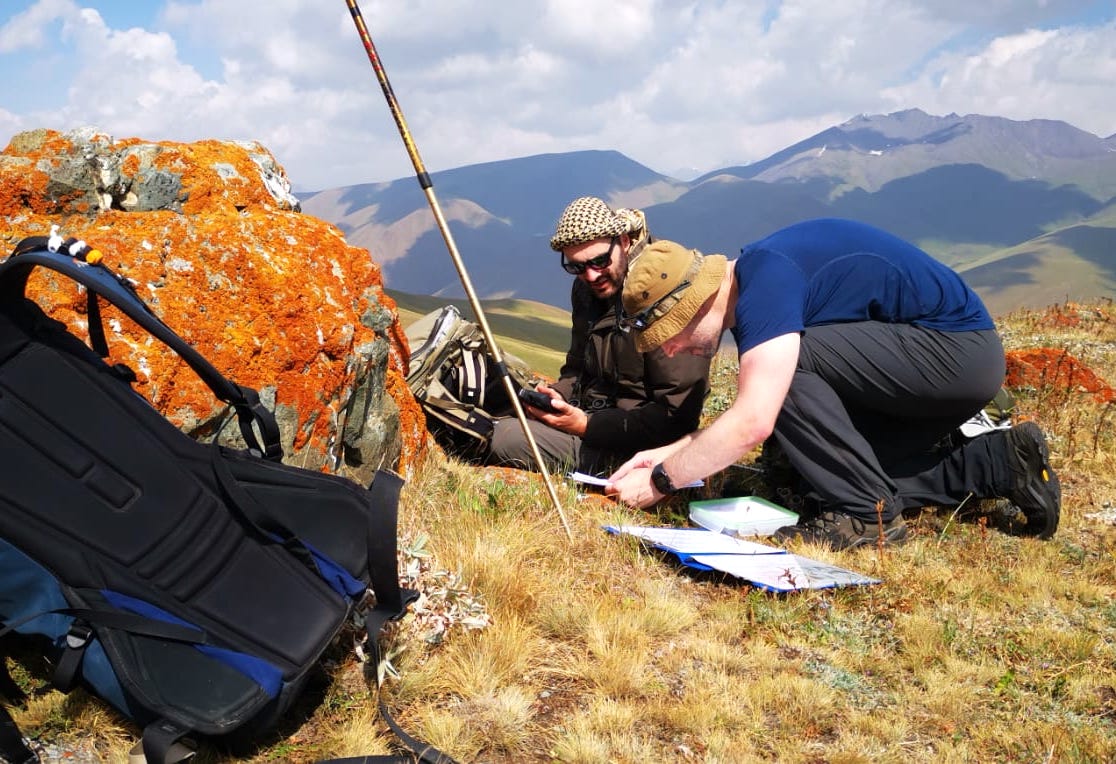
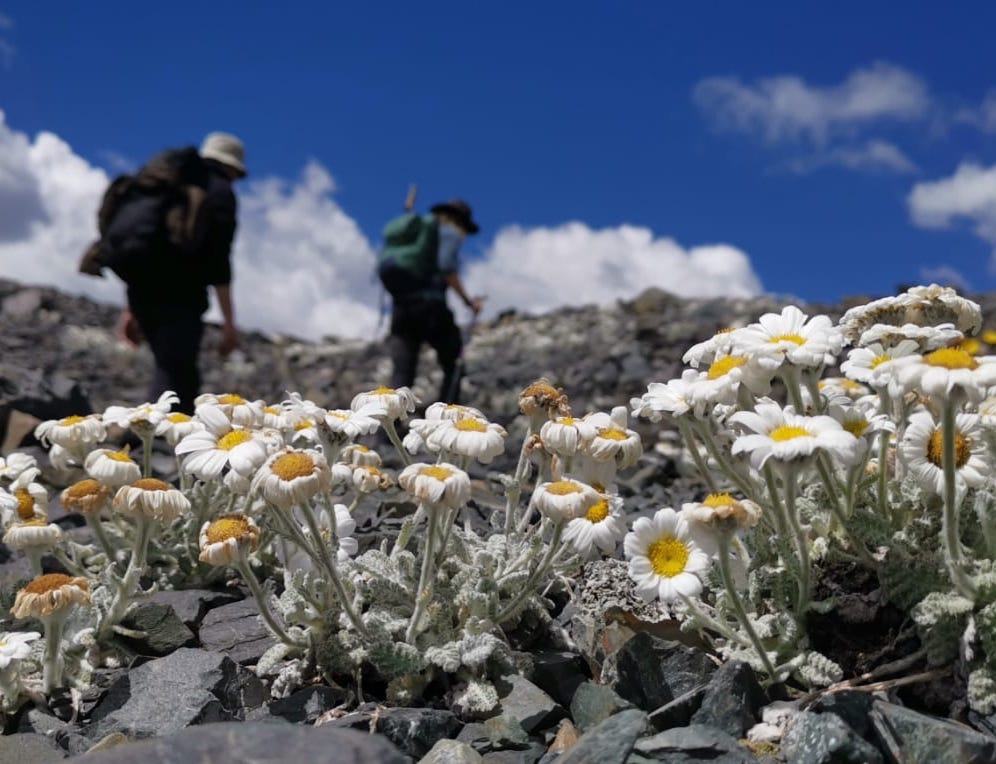
Most days we spend on hikes, slowly surveying many of the side valleys, peaks and ridges, looking for any evidence of the species we are researching – snow leopards and their main prey species (ibex, argali, marmots and snowcocks). Most days our small teams find something to report – marmots are relatively common on the lower slopes. Footprints or scat of ibex are found on the higher slopes and sometimes – always to great excitement – we see a herd of ibex walking along a ridge or up a slope. All of these findings are photographed and recorded on datasheets according to our research protocols.
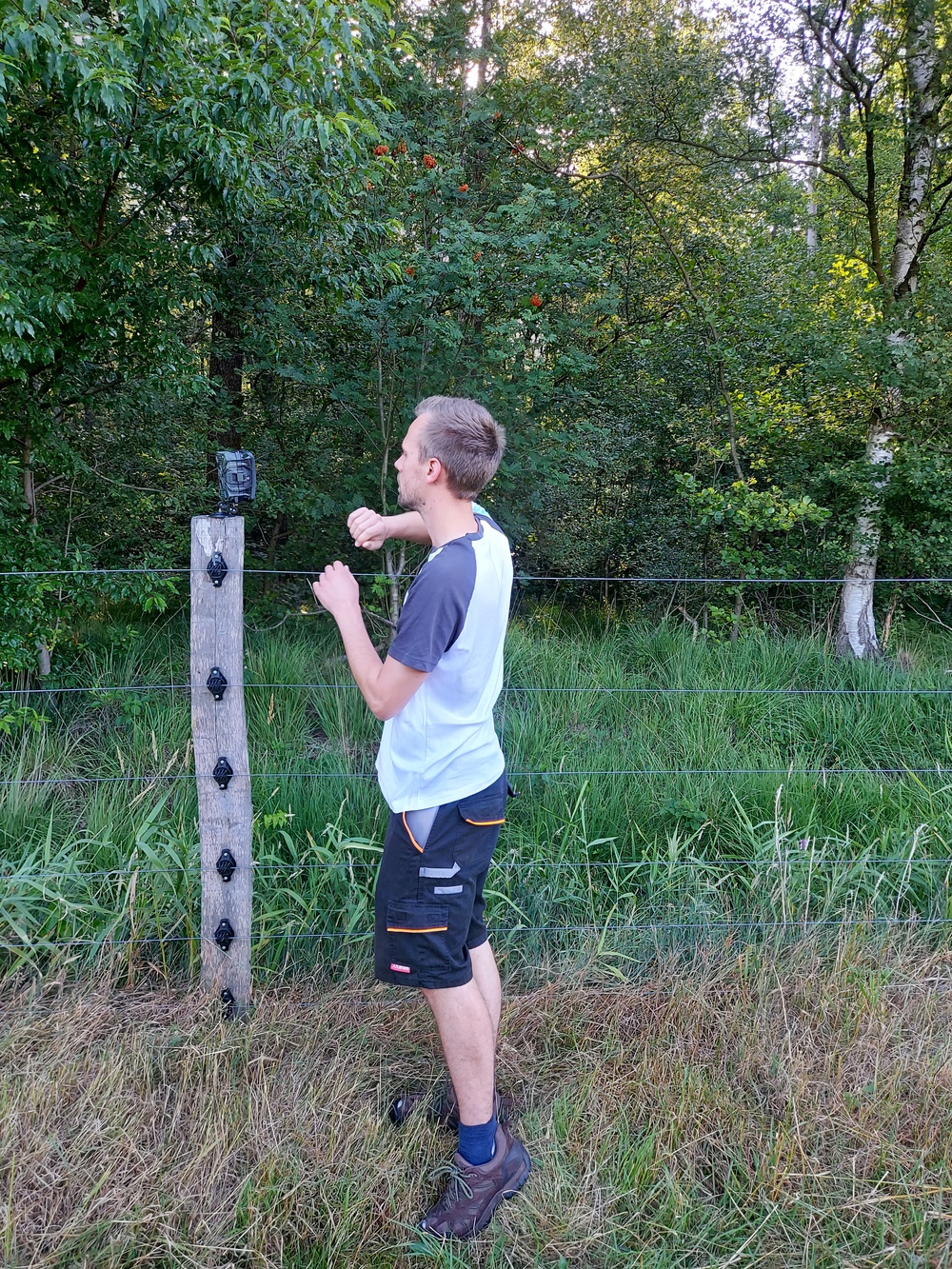
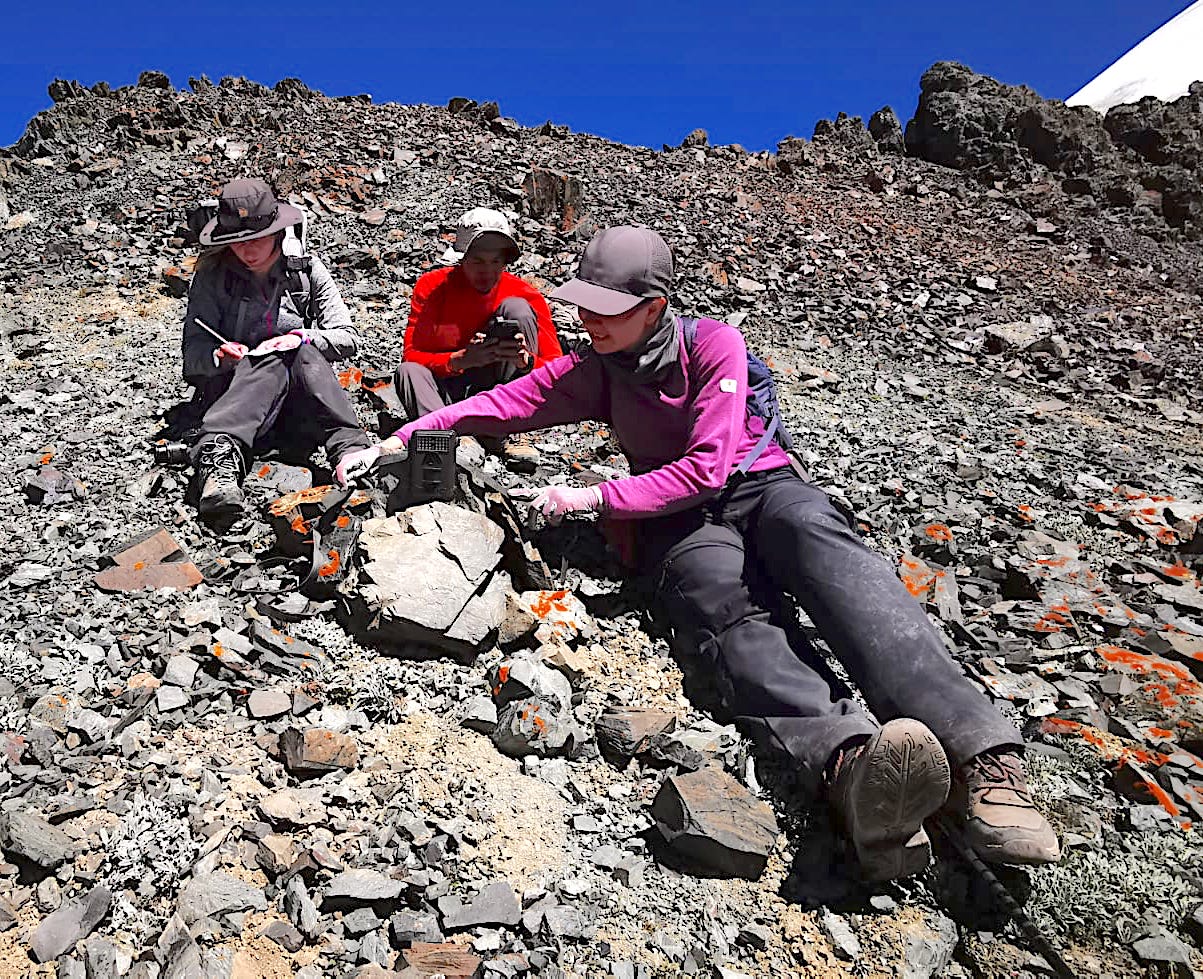
We have also been deploying camera traps in suitable places – mostly on high ridges with signs of snow leopards or ibex – and have been able to check some of the cameras already. When we retrieve the traps or their SD cards, the exciting work of scrolling through all the photos begins. Many of them are of moving grass, sometimes even bright sunlight triggers them, so it is painstaking work. But sooner or later we are rewarded and we have happily discovered a handful of images of ibex, snowcocks and two snow leopards so far. These are important pieces of evidence for the research project as well as a source of great excitement for us at base camp. At the time of writing there are still a good few cameras waiting to be retrieved from the mountains by group 3.
We have had a few rainy cold days – this is the high mountains after all. But everyone has brought suitable clothing as recommended in the expedition kit list so our work continues whatever the weather. And the wood burner in our ‘drying’ yurt has proved very welcome when we return to base camp. An especially stormy night ripped a couple of our tents and we also suffered tent damage from a wayward animal. But we have enough spare tents, so no problem.
A new element of our research this year is a survey of the local shepherd families about the potential for ecotourism, which might offer a new source of income for local people, give an incentive to protect and encourage wildlife and perhaps in time allow a reduction in livestock numbers in the valley, which are in competition with the ibex and the argali. The interviews we have been carrying out are intended to assess interest in the idea. So far, volunteer citizen scientists Margot and Kathy have been our chief interviewers, accompanied by our scientist Taalai as interpreter. This team has been welcomed with wonderful hospitality by the women and men they have approached, and ten interviews have now been completed, with a great variety of responses. The great majority of people are in favour of small-scale ecotourism in the valley and at least one respondent said he would give up shepherding altogether in favour of an income from ecotourism.
These interviews have been a fantastic way of getting to know our neighbours. And more widely, it is clear that the Biosphere Expedition is very welcome here – the local shepherds are very hospitable and express a great interest in what we are doing. Last week we were invited to watch a game of Ulak – the national game of Kyrgyzstan, involving two teams of horse riders ferociously competing to score goals with a goat carcass – followed by a generous meal in a local shepherd’s yurt. Many toasts and promises of continued friendship and collaboration were made.
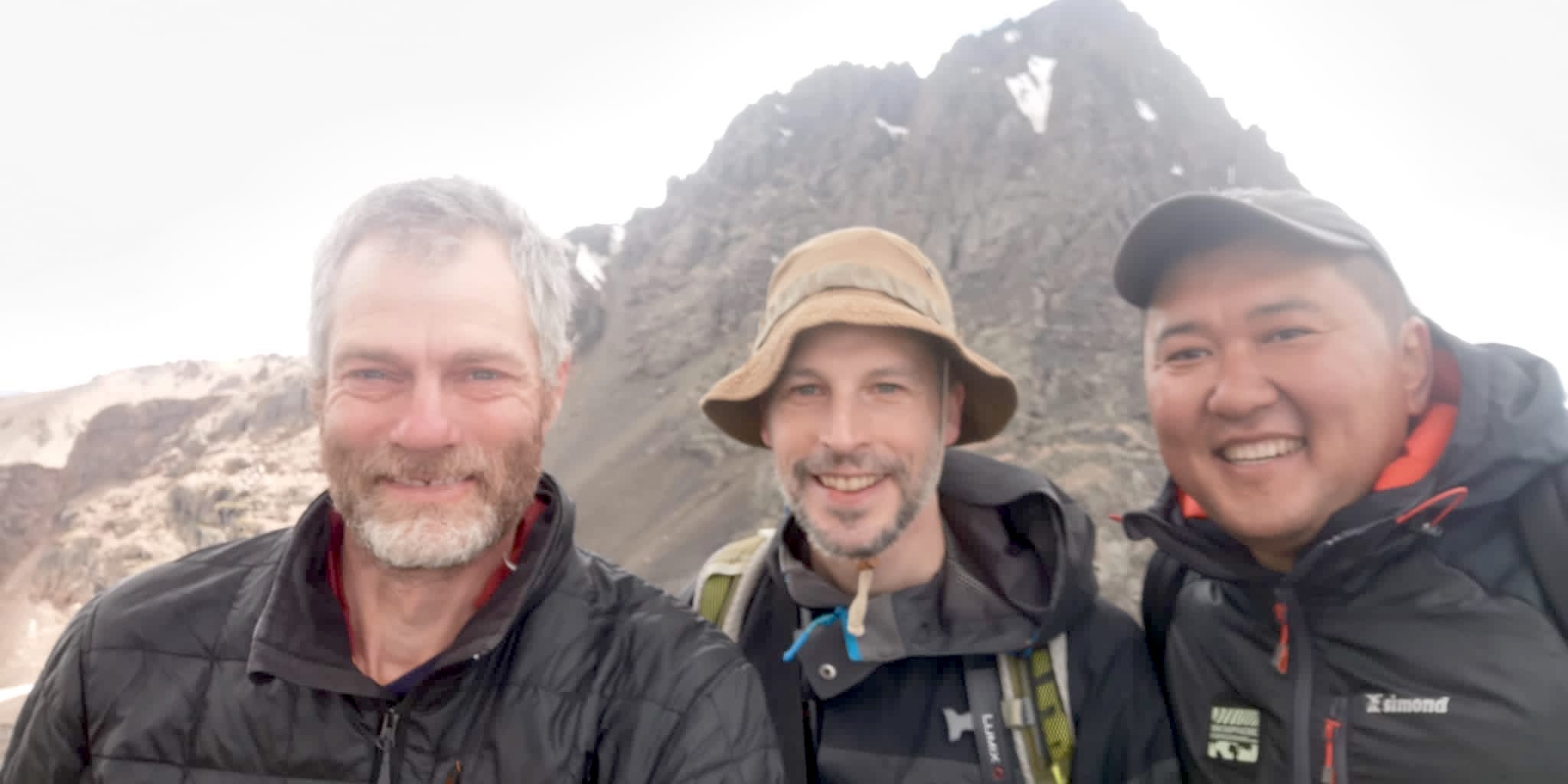
Felix looking for ibexMargot & Kathy with local shepherdsPondering interview questionsRoland, Georg and Taalai on top of a ridgeMountain surveyAt the local natural history museumChecking a camera trapIbex horns found in the fieldGroup 2
Group 2 is going well. Covid has not reared its ugly head again, so after getting to base and two days of training, several more valleys have now been surveyed.
We put new camera traps on a high ridge by an ibex superhighway. Whilst doing this, we saw a group of ibex further up the same ridge. We also spotted marmots, stoats, badgers, many many eagles, vultures, buzzards, and many other birds.
We also started doing interviews with people in the main valley to find out about their attitudes towards low-scale / low-impact ecotourism based on intact nature as a means of generating income for them. Our first interviewees were five herder’s wives. We found varying attitudes towards tourism, including some very open to the idea of hosting tourists and providing horses. We have more interviews planned, including with the herders themselves. We are also starting conversations about how livestock numbers are restricted (not very effectively) in the valley and the possibility of creating buffer valleys for wildlife without livestock.
Yesterday, Sunday, we came over the pass and into a local village with a phone signal, which is why I can send this diary update. A fuller account next weekend when we change over to group 3.
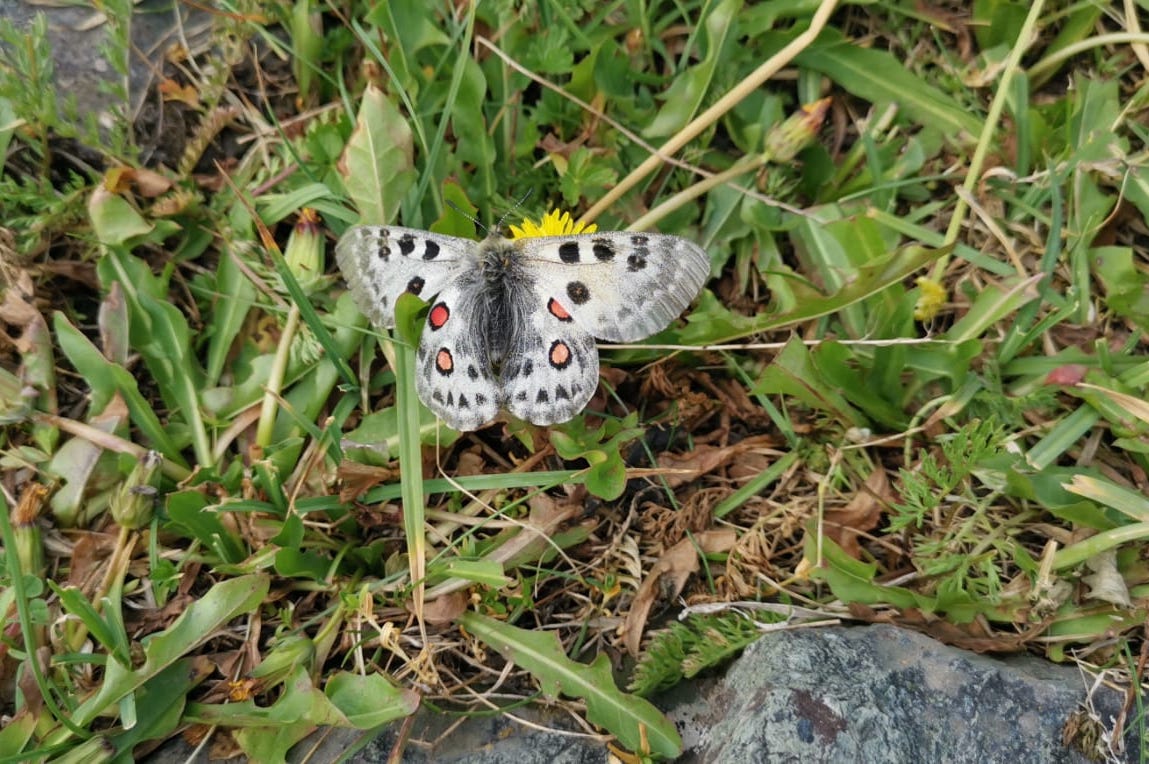
We’ve seen many, many butterfliesIbexMustelids (here a stoat)And birds (here probably a golden eagle)Collecting possible snow leopard scatCollecting possible snow leopard scatSetting up a camera trap on an ibex superhighwayThe going is often tough in these pathless, undeveloped mountainsExpeditioners
After a 2-year Covid break, it was truly rewarding to run this 4th edition of the Lower Saxony wolf expedition again in 2022 with a total of 24 expeditioners from seven different countries for three weeks. The final numbers of all groups sum up a truly impressive effort: all teams covered 837 km in nine wolf territories, sampling a total of 190 wolf scats. 132 samples were frozen for dietary analyses and 15 samples will be sent to the lab for DNA analysis. We also recorded one wolf sighting during group 1 and recorded a 300+ meter track of an adult wolf with (probably) two pups.
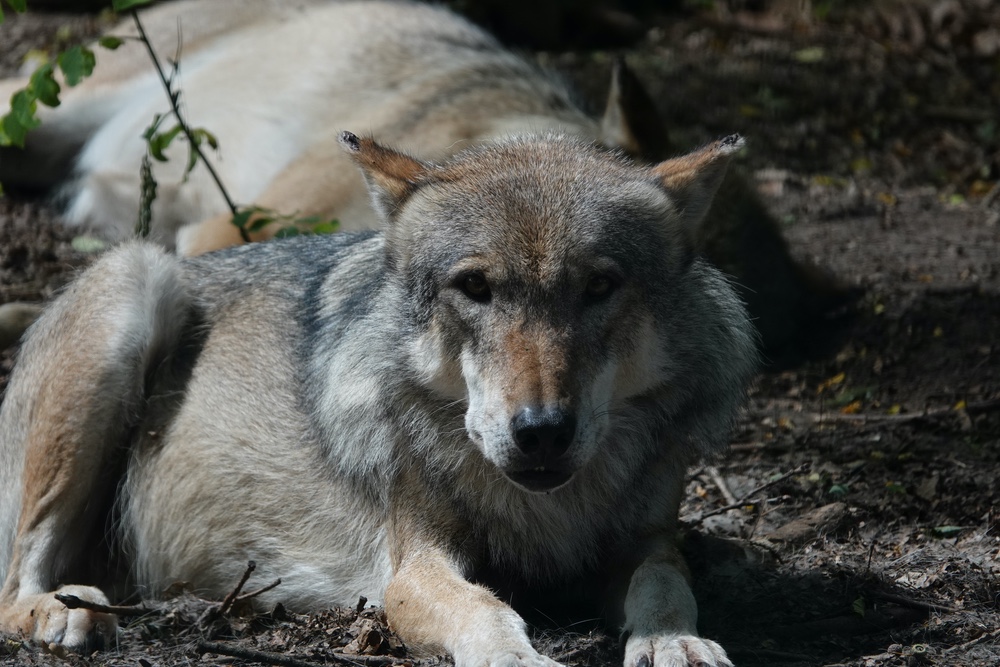
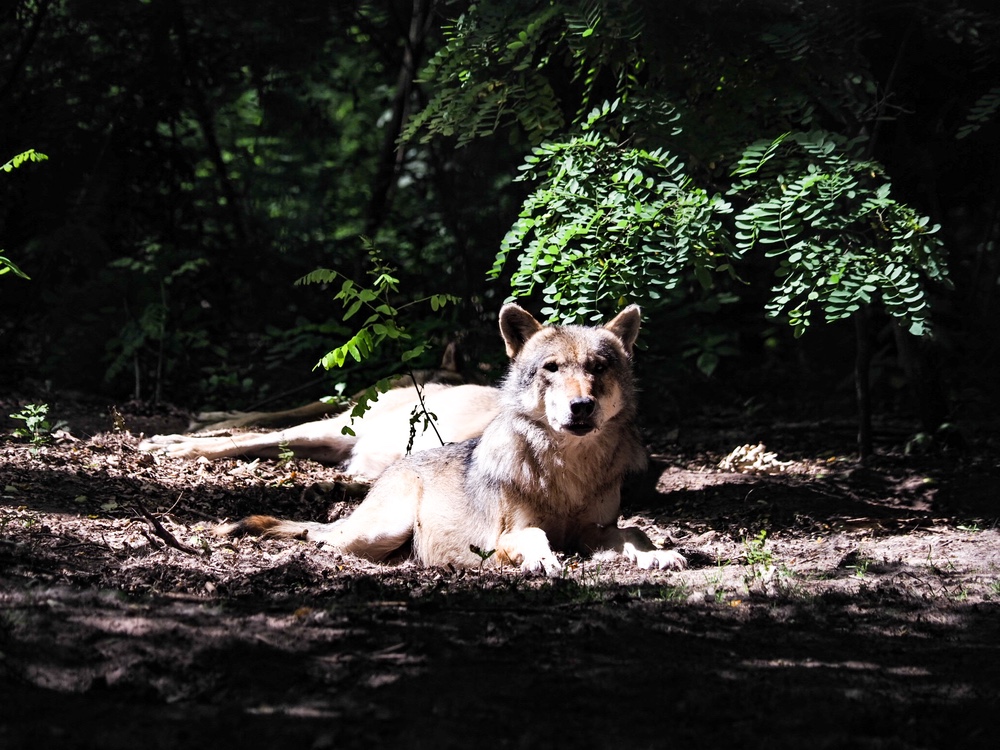
Very rare chance wolf encounter during the expedition
During the Covid pandemic, wolf monitoring went through a lull in data collection, so the new and sizeable set of data collected by the expedition will be crucial for an up-to-date picture of current wolf presence in the study area. Expedition data have just been entered into the German wolf monitoring database by our expedition scientists. Biosphere Expeditions’ contribution from 2017 to today now exceeds 650 data entries, underlining the importance of citizen science for wolf monitoring and conservation.
What makes this expedition truly unique is the variety of wolf stakeholders we have interacted with: inspiring wolf ambassadors, the committed state wolf bureau team, beautiful Kenners Landlust advance expedition base, the showcase Wolfcenter, our amazing scientists and fascinating wildlife detection dog Molly. We also learnt about how humans and wolves can coexist in a densely populated and highly developed landscape like Germany.
The wolf has returned to Germany to stay and it is a credit to Germany that the country is making it work, the inevitable trials and tribulations aside. We are proud to say that our expedition plays a significant role in making this so and we thank everyone for making this year a great success. We hope to see many of you again in the future.
Feedback from the participating citizen scientists:
I am full of impressions from this week. I have learned a lot about the wolf monitoring and in the future I will walk through the woods in a different way: eyes to the ground, slow pace and taking in the scent to check for wolf evidence. Thanks for a great expedition week together. Sandra S., Germany
I never thought I would be so happy and proud to find no fewer than 18 piles of scats in one day. A new record on the wolf monitoring expedition for our team. Thanks so much for the experience. Aniek L., Netherlands
This was a great experience for me – learned a lot about wolves, even if I did not get to see one, but still it was very interesting to do this expedition. Paul R., Netherlands
As always another great experience with Biosphere Expeditions. Never thought looking for scat could be so enjoyable and rewarding. Martyn R., UK
This was my first expedition, and it really fulfilled my expectations. I greatly enjoyed it, learned a lot from the different presentations on the controversial topic of human-wolf coexistence. I am looking into the bear expedition in Sweden for my next expedition… Veronika E., Germany
It’s been a memorable two weeks. This has been the first Tien Shan snow leopard volunteer expedition for three years, we have a new scientist on the ground and various new equipment and systems, alongside the challenge of managing Covid risk on expedition.
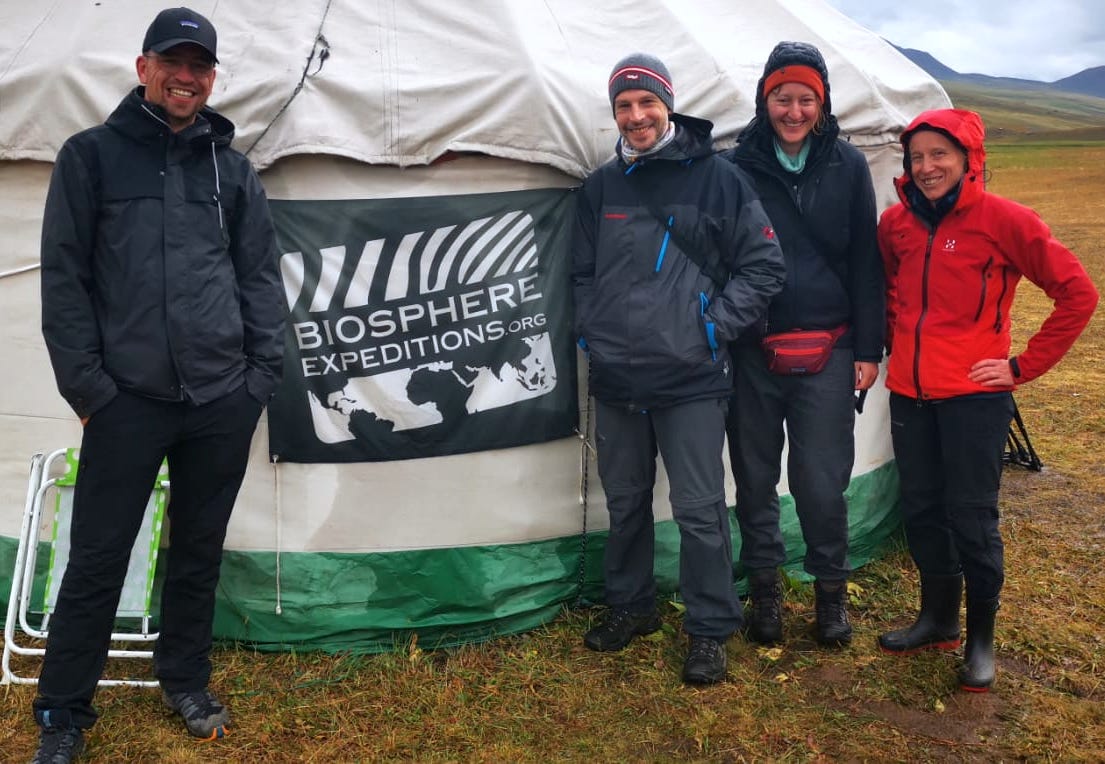
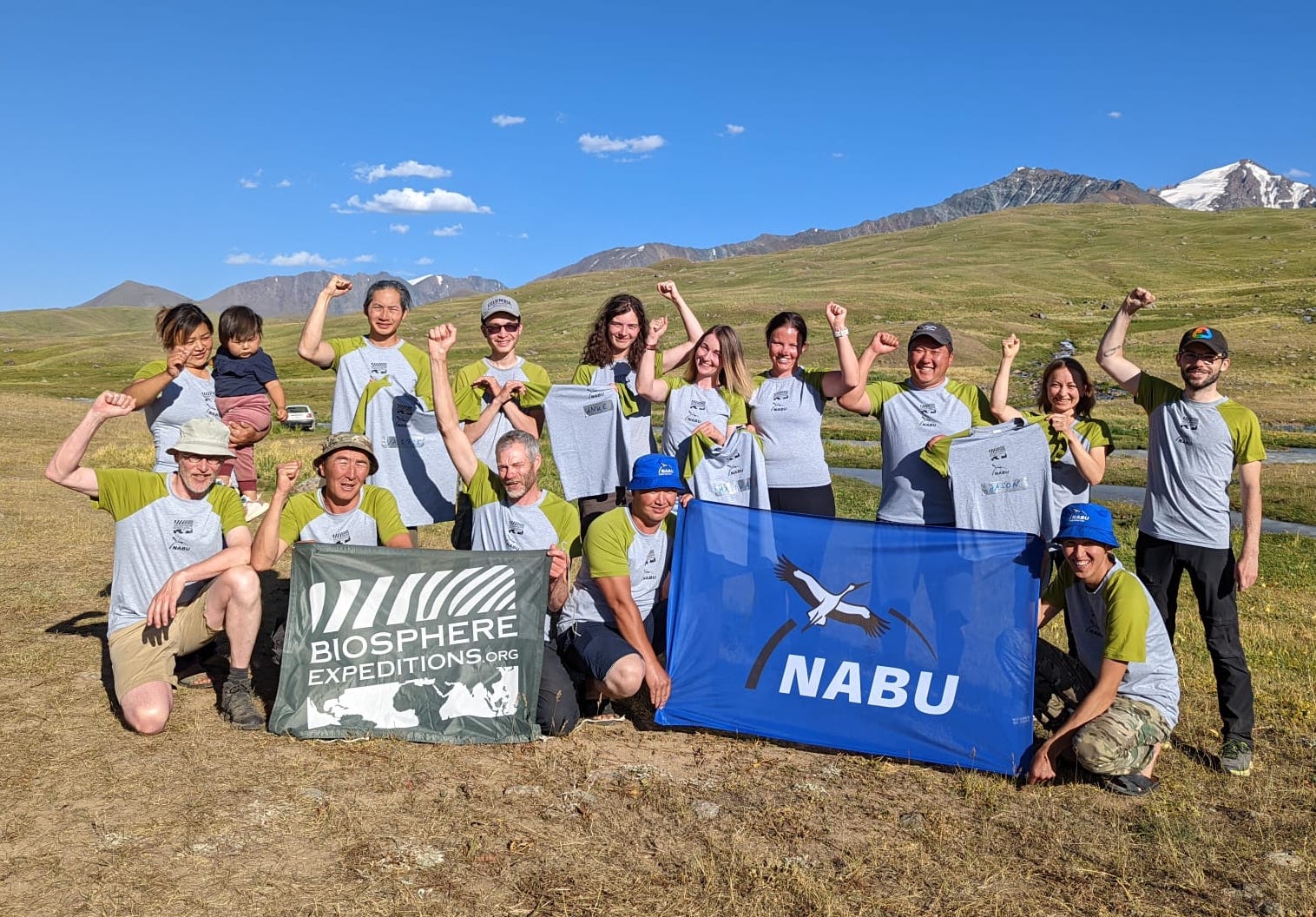
The eleven snow leopard citizen scientists on this expedition can be proud of themselves as pioneers. The full team – the citizen scientists Jason, Jörg, Valerie, Anke, Coleen, Anne, Pierre, Alan, Nadine & Lydie, expedition leaders Roland and Malika, scientist Taalai, rangers Aman, Beka and Ayan, cook Gulia and placement Kubanychek – got on well from the start. The first two days of orientation and training were busy, but rewarding. After weeks of preparation, it was great to get started.
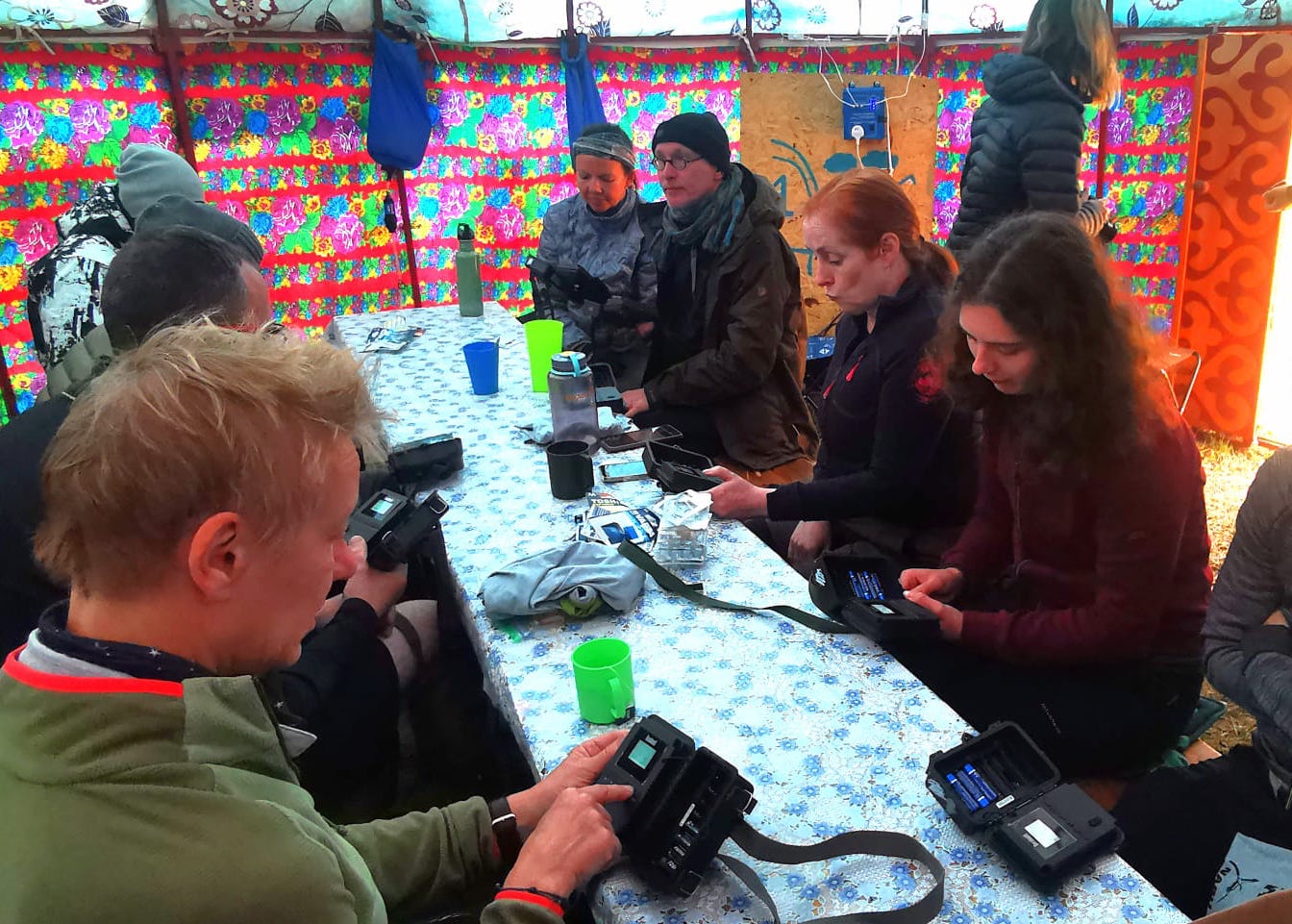
The snow leopard expeditioners were trained in everything needed for the success of the expedition, from off-road driving to the snow leopard research methods and expedition safety protocols. The new toilet and shower huts are a big improvement. The expedition office, in the back of the truck, worked well as a base for all the science kit and Gulia fed us all well from the start. The new solar power system, to charge all the gadgets and yurt lights was a disappointment for the first few days until Jason (citizen scientist and also an engineer) and Roland spotted and – with a little ingenuity – fixed a loose connection. We now have power as expected. Our new GPS units have taken a lot of effort to set up, but now we have all learnt their eccentricities, they are a vital tool to use for navigation, to mark the locations and camera traps and important research finds, and for satellite communication.
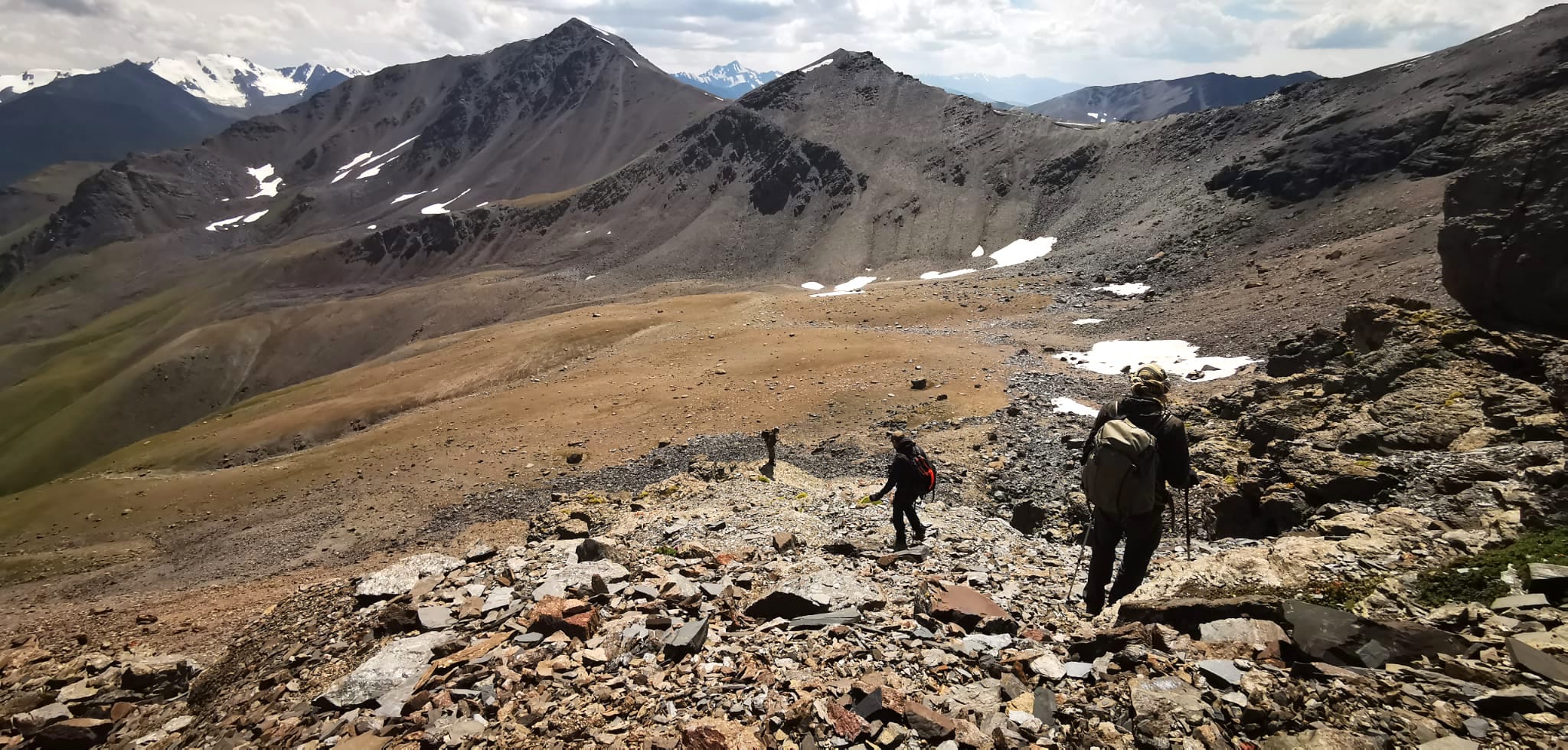
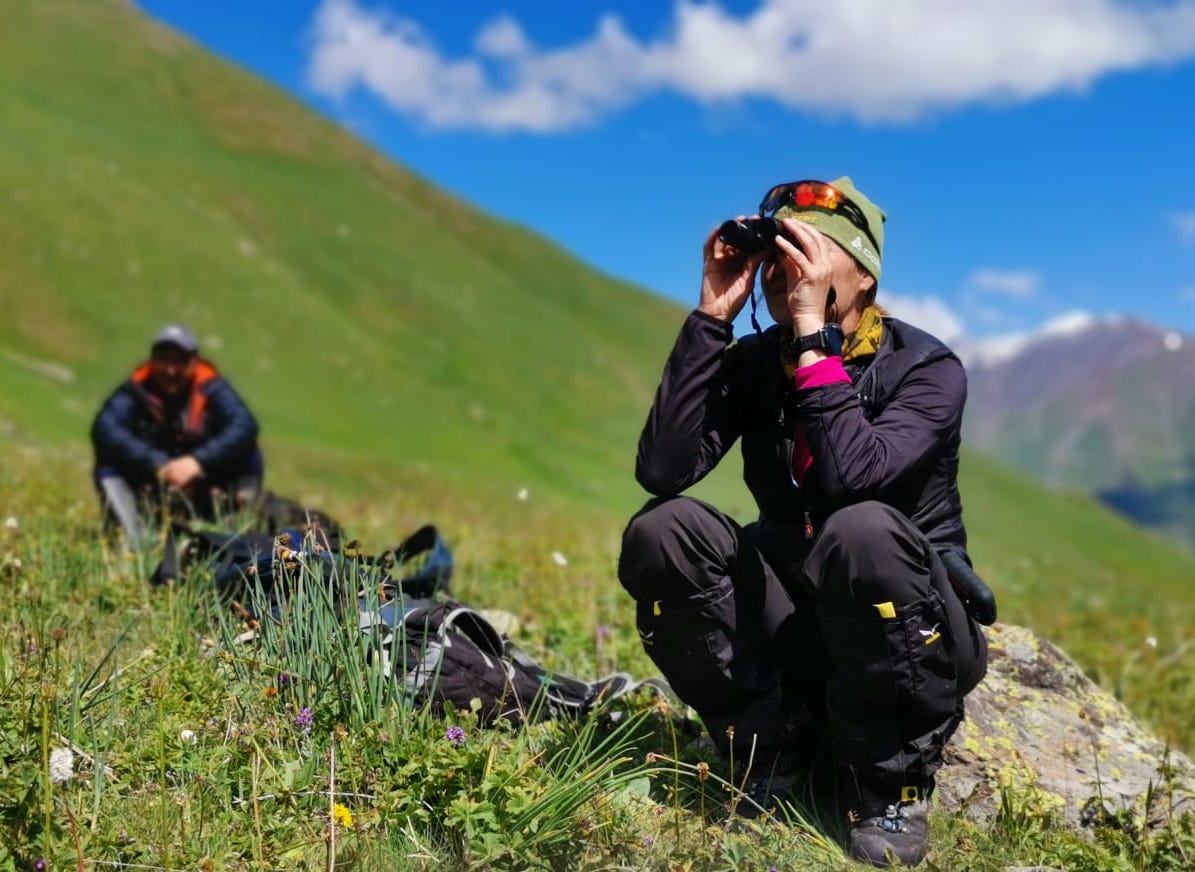
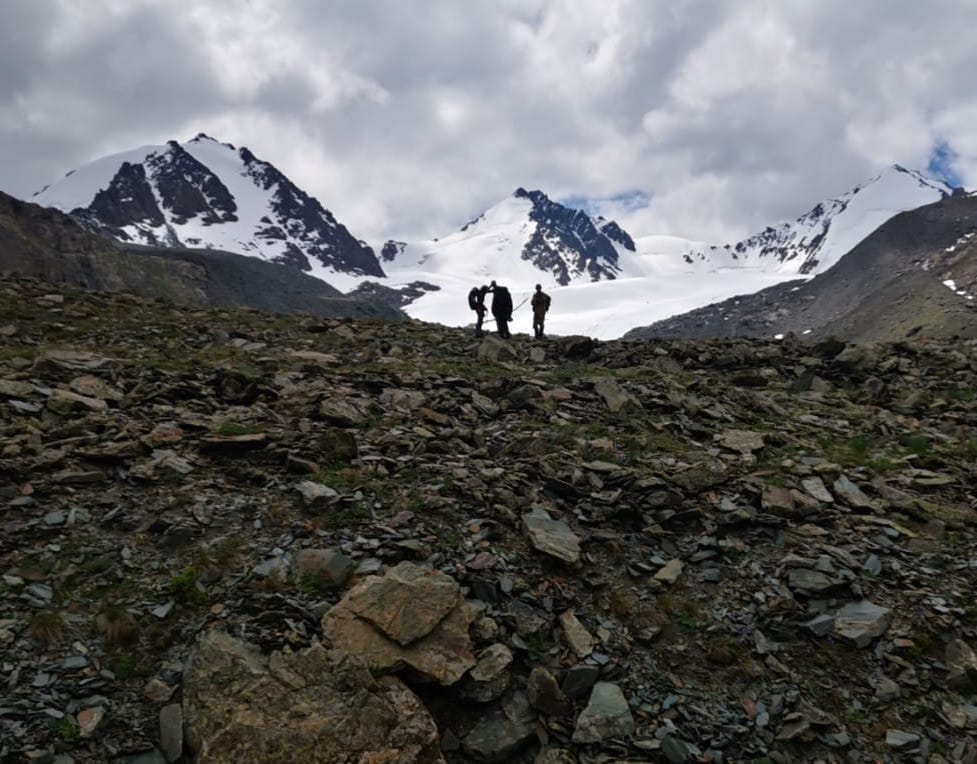
Within a few days we hit a rhythm and stride. One aim of the expedition, amongst others, is to find evidence of snow leopards or their prey over a vast area centred on the Karakol valley. We have a relatively simple and robust methodology to do this – spending each day exploring hidden side valleys, marking the location of any significant finds – sightings, footprints or any other evidence of key species. A lot of time is spent sitting in this beautiful mountain landscape, peering through binoculars. We also deploy camera traps in strategic positions high in the mountains. And we keep a tally of any bird species we can identify. Trekking up these valleys, with river crossings, rocky terrain and steep ground is hard work, especially since there are no well-trodden paths, signposts, bridges or any other mod cons in these rugged and remote mountains. But our efforts have been rewarded with several sightings of ibex, a key prey species for snow leopards, as well as many marmots, eagles and vultures. A highlight was discovering on one of camera traps – amongst dozens of photos of marmots, foxes, stoats (and a few mystery animals) – recorded three photos of a snow leopard walking down a snowy ridge in late last and then ibex in the same spot early this year. The camera trap was placed there by our community camera trapping group and retrieved by group 1 a few days ago.
An unwanted twist to our snow leopard expedition story were two Covid infections early in the expedition, despite all our precautions, and then two more. Our Covid protocol was implemented with the first case and I am happy to report that we managed to stop the virus spreading further.
Towards the end of the expedition, a few hardy expeditioners chose to hike for six hours up to a spot high above base camp and spend a night under the stars, to allow the next day to be spent exploring a remote ridge with a lot of signs of ibex – a great location to place camera traps for both the ibex and, hopefully, any snow leopards that might be stalking them.
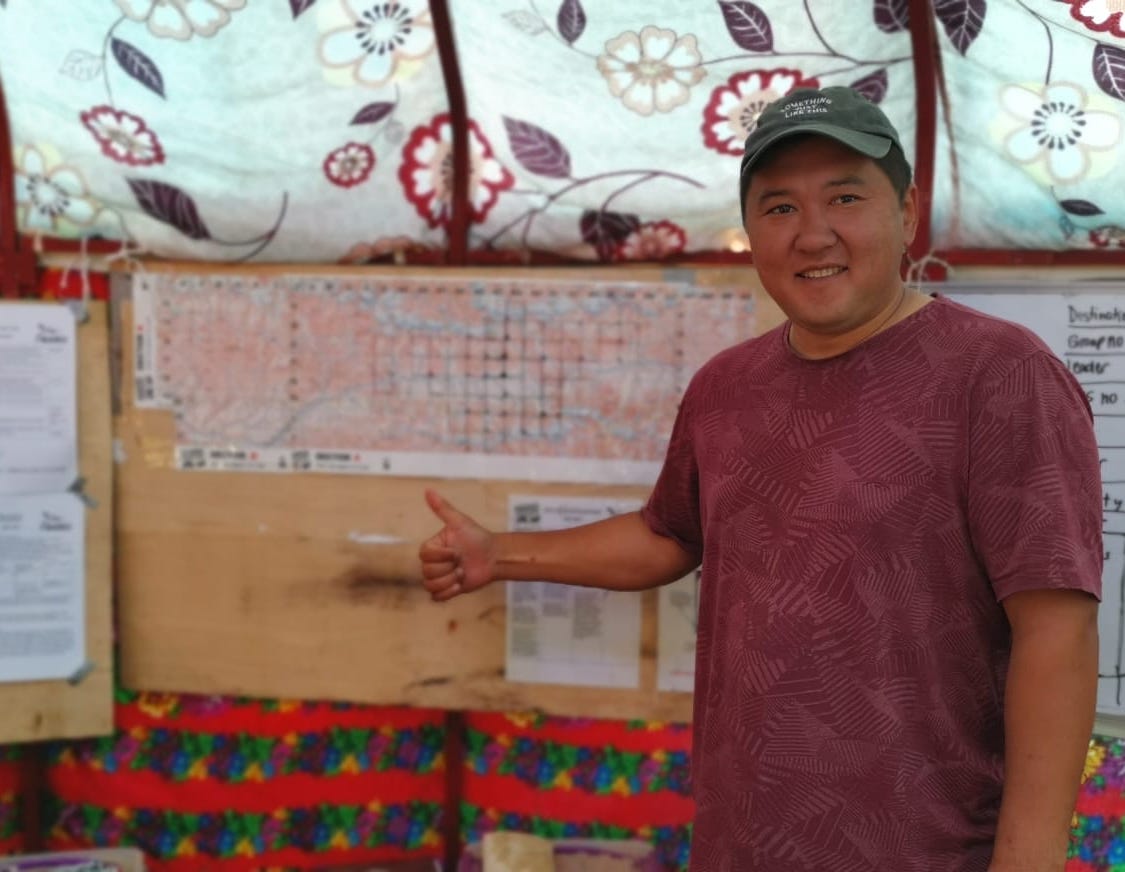
Over the past two weeks we have surveyed 100 ‘cells’ on our target map – representing 400 square kilometres of mountain terrain – we have had several sightings of ibex, recorded evidence of many key species and captured images of snow leopards on camera traps – all in all a great success. The team 1 now retires tired, but happy. From Monday, team 2 has big boots to fill and we look forward to exploring the Karakol Valley and add to our research findings. with a fresh team of citizen scientists
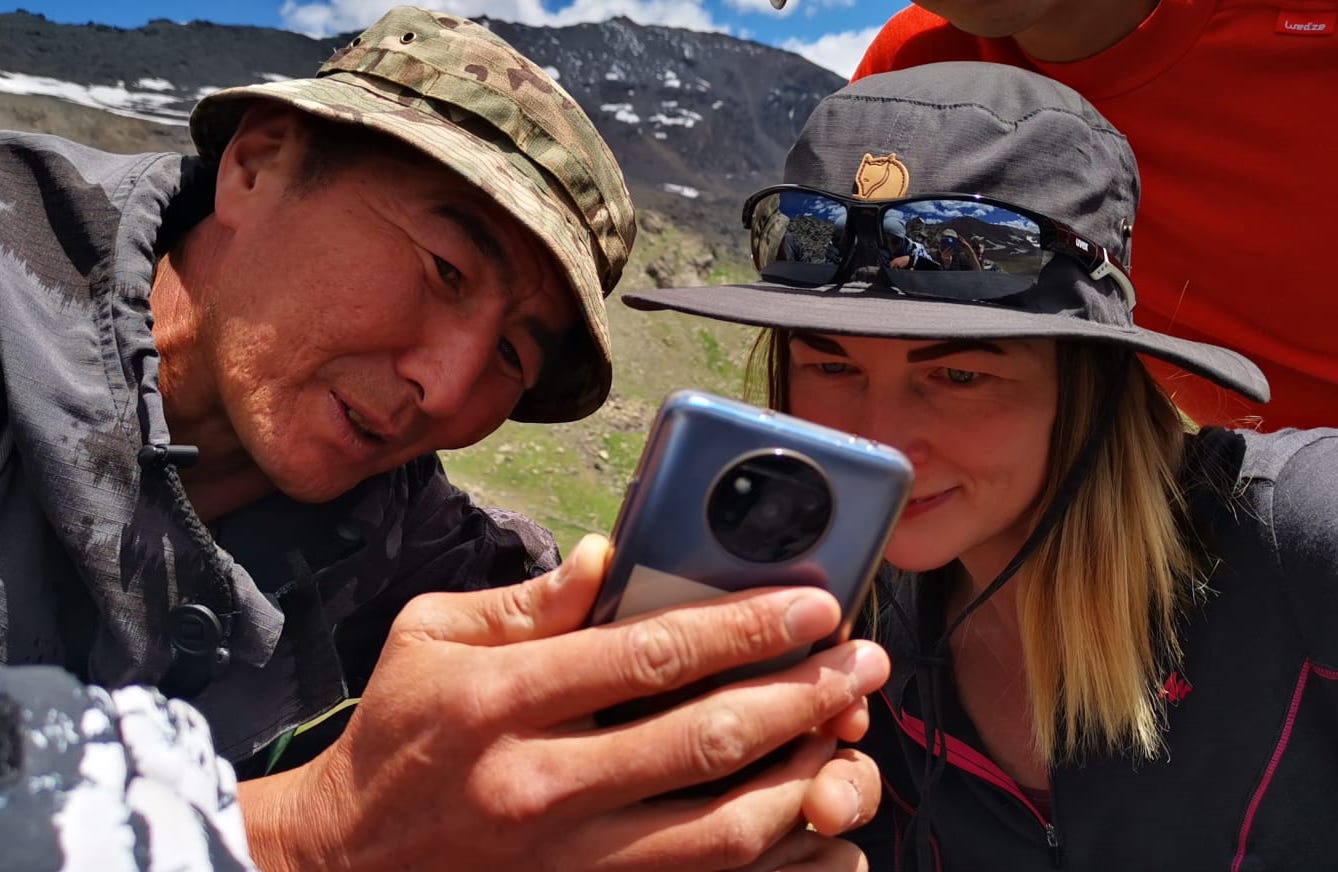
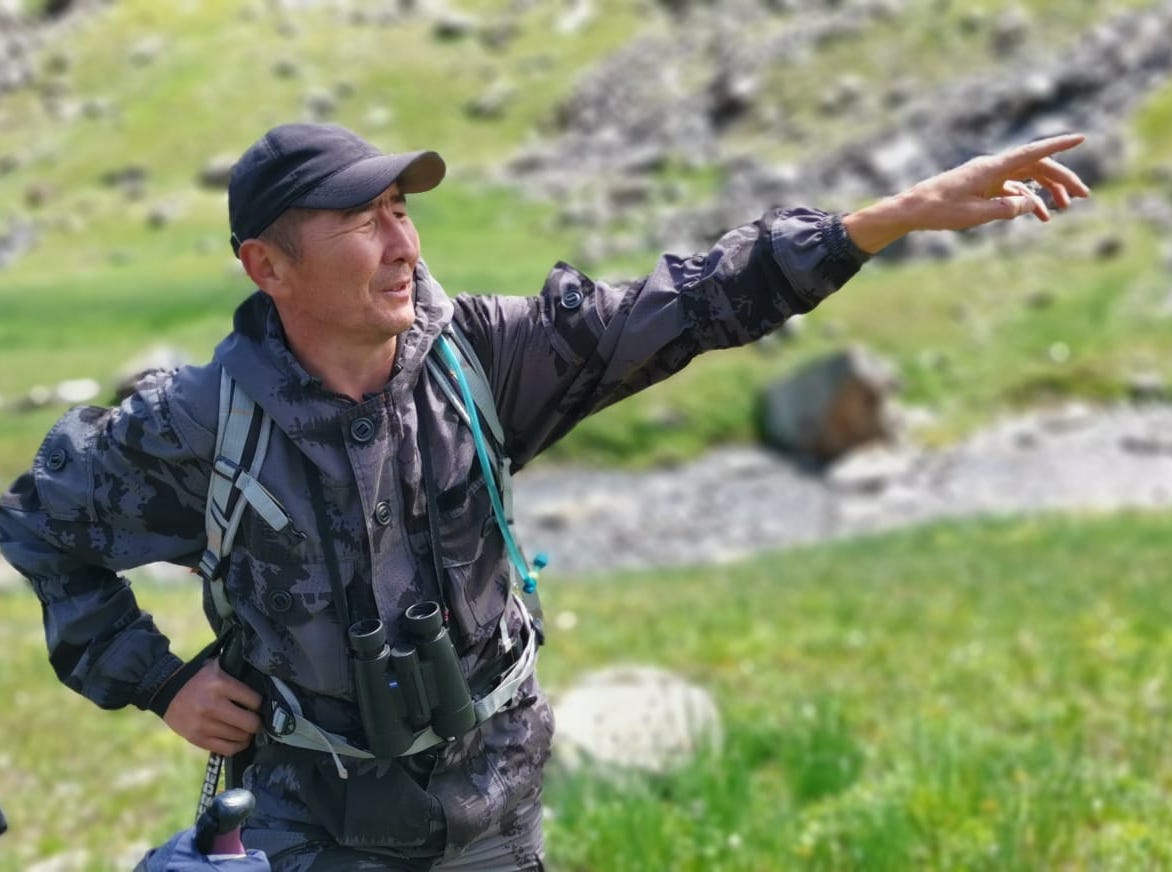
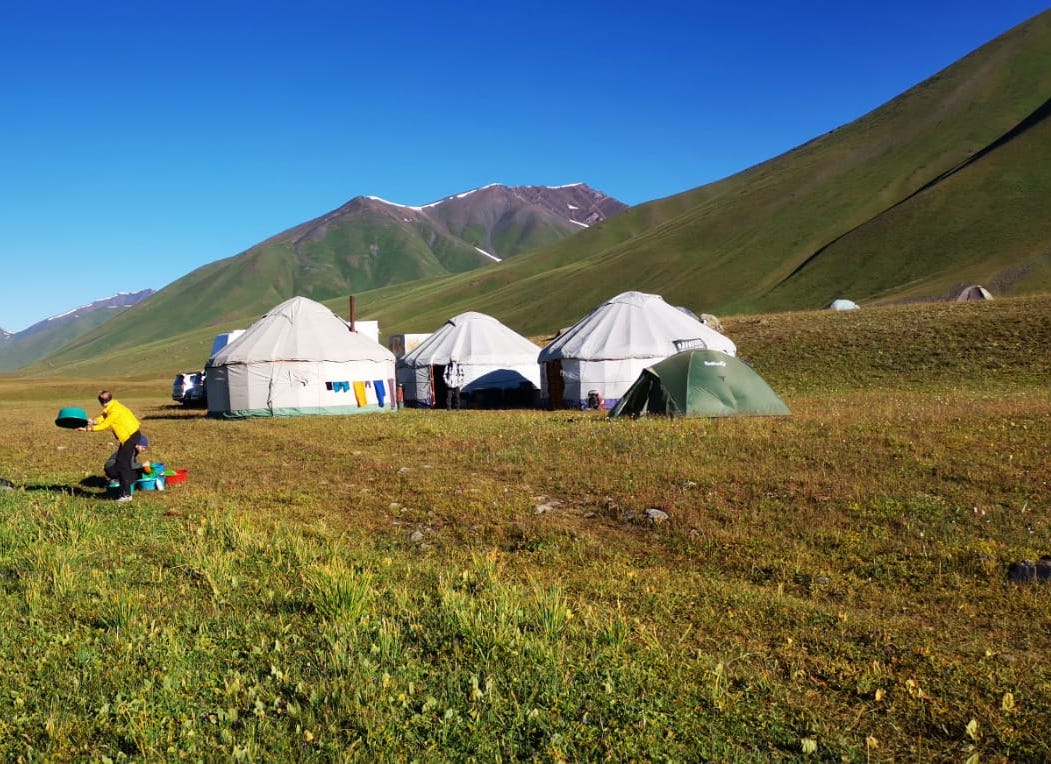
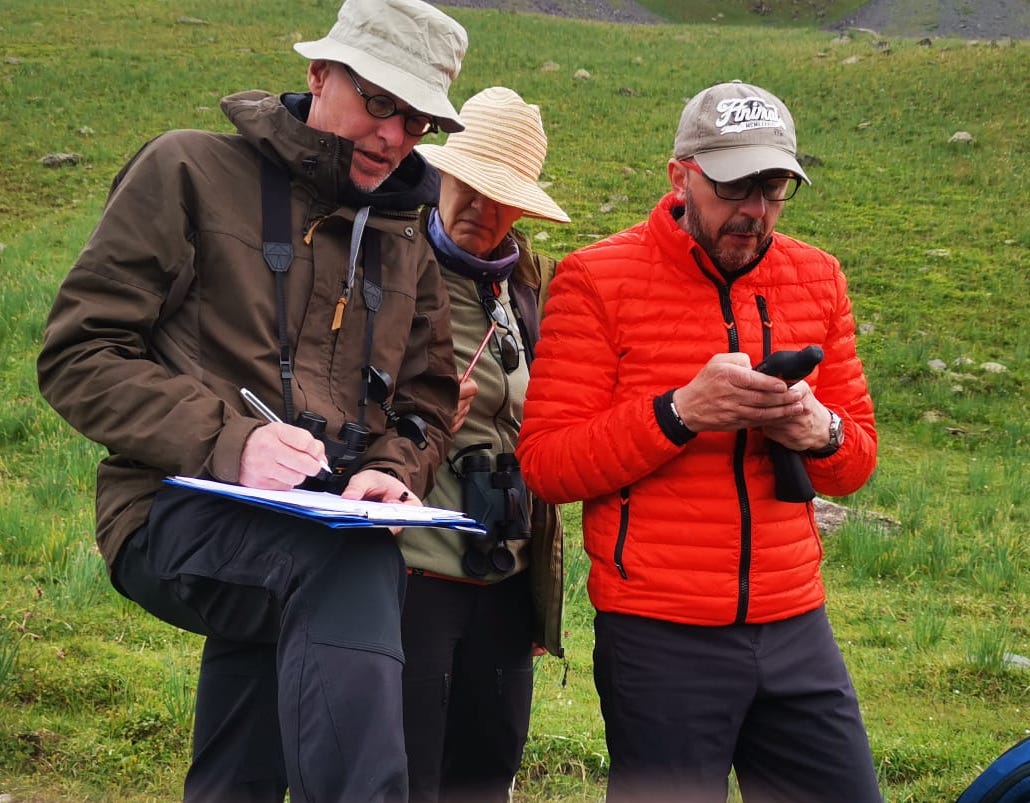
Survey walkCollecting snow leopard signObservation stopTeam 1Taalai is happy with the resultsSurvey walkSetting up a camera trapOvernighter teamChecking camera trap picturesRanger Aman showing the wayObservation stopBase camp in all its gloryOn a surveyRecording dataProgramming camera traps
Thursday was our last day of field monitoring. For a final time our intrepid wolf volunteers put on their hiking boots and scanned the trails, adding more data to our already sizeable database. After the hot temperatures, the night brought lots of rain and with it much cooler temperatures.
Friday morning, we said goodbye to our third group. We thank also this great team for their effort and enthusiasm in contributing to citizen science and wolf conservation. They hiked no less than 218 km in hot weather and managed to find a total of 38 scats.
Finding scats, especially the fresh ones, remains a task that requires a lot of patience as you need to be in the right place at the right time. The wolves occupy very large territories and are rarely observed, but somehow, we all experienced their presence while doing this work.
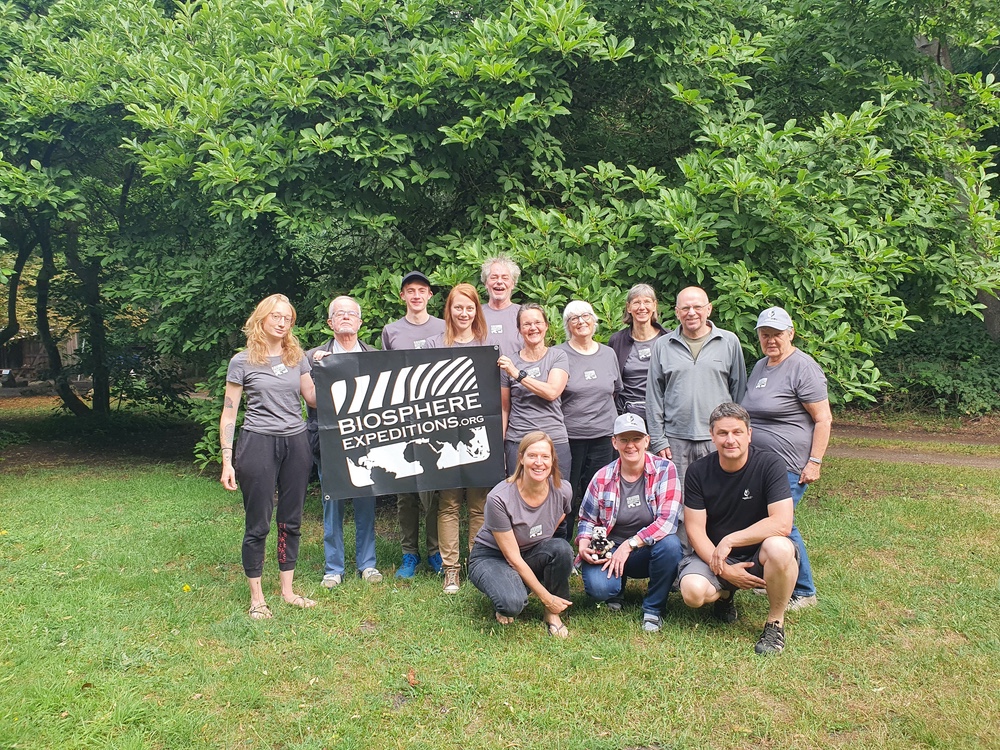
After a 2-year Covid break, it was truly rewarding to run this 4th edition of the Biosphere Wolf Expedition in Lower Saxony again in 2022 with a total of 24 expeditioners from 7 different countries for 3 weeks. The final numbers of all groups sum up a truly impressive effort: all teams covered 837 km in nine wolf territories during which a total of 190 wolf scats were sampled. 132 samples were frozen for dietary analyses and 15 samples will be send to the lab for DNA analysis. We also recorded one wolf sighting during group 1 and recorded a 300+ meter track of an adult wolf with (probably) two pups.
During the Covid pandemic, wolf monitoring went through a data depression, so the new and sizeable set of data collected by our wolf expedition will be crucial for an up to date picture of current wolf presence in the study area. Expedition data have just been entered into the German wolf monitoring database by our expedition scientists. Biosphere Expeditions’ contribution from 2017 to today now exceeds 650 data entries, underlining the importance of citizen science for wolf monitoring and conservation.
What makes this expedition truly unique is the variety of wolf stakeholders we interacted with: inspiring wolf ambassadors, the committed Wolfsbüro team, beautiful Kenners Landlust advance expedition base, the showcase Wolfcenter, our amazing scientists and fascinating wildlife detection dog Molly. We also learnt about how humans and wolves can coexist in a densely populated and highly developed place like Germany. For this mighty predator has come back to stay and it is a credit to Germany that the country is making it work, the inevitable trials and tribulations aside. We are proud to say that our expedition plays a significant role in making this so and we thank everyone for making this year a great success. We hope to see many of you again in the future.
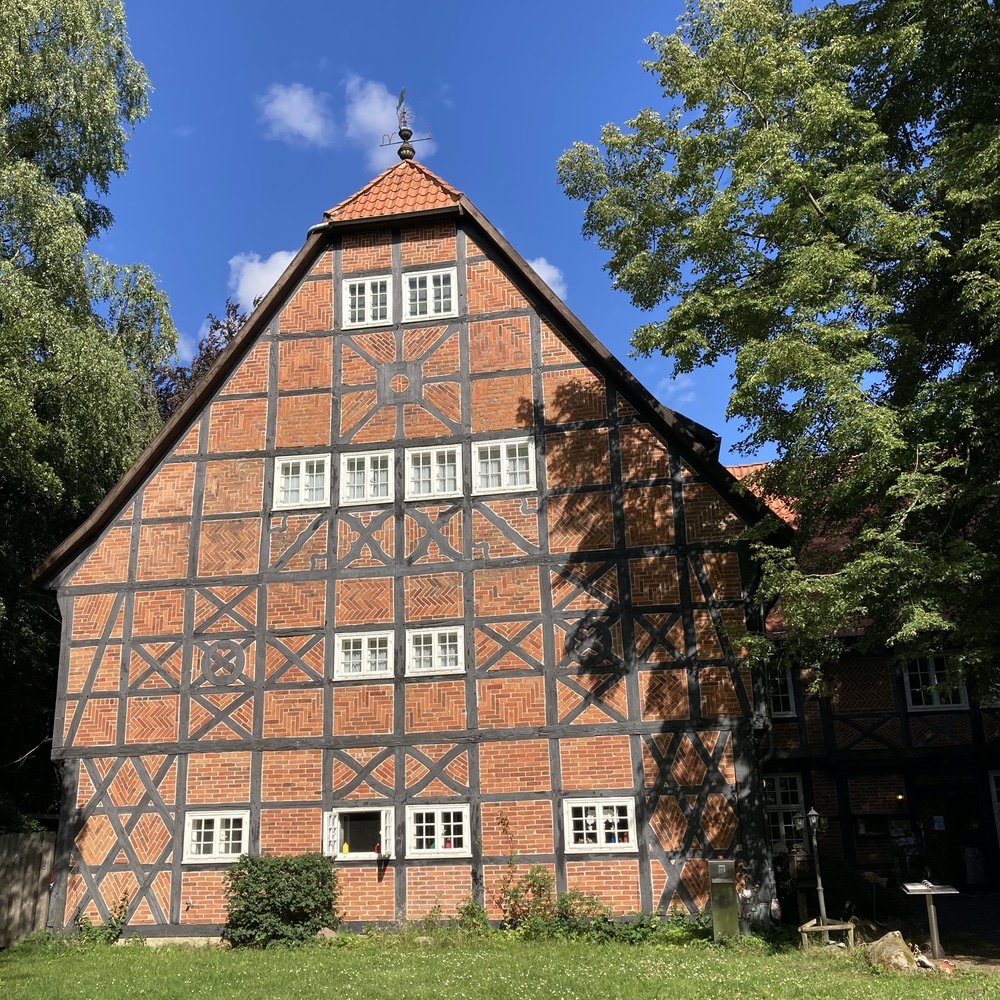
Last but not least, a very big thank you to our wonderful hosts at the Herrenhaus Gut Sunder. You truly made us feel at home here and after long days out in the field it was rewarding to get treated to an impressive variety of vegetarian menus. Vielen Dank Anja, Ilka, Claudia, Kirsten and all the others!
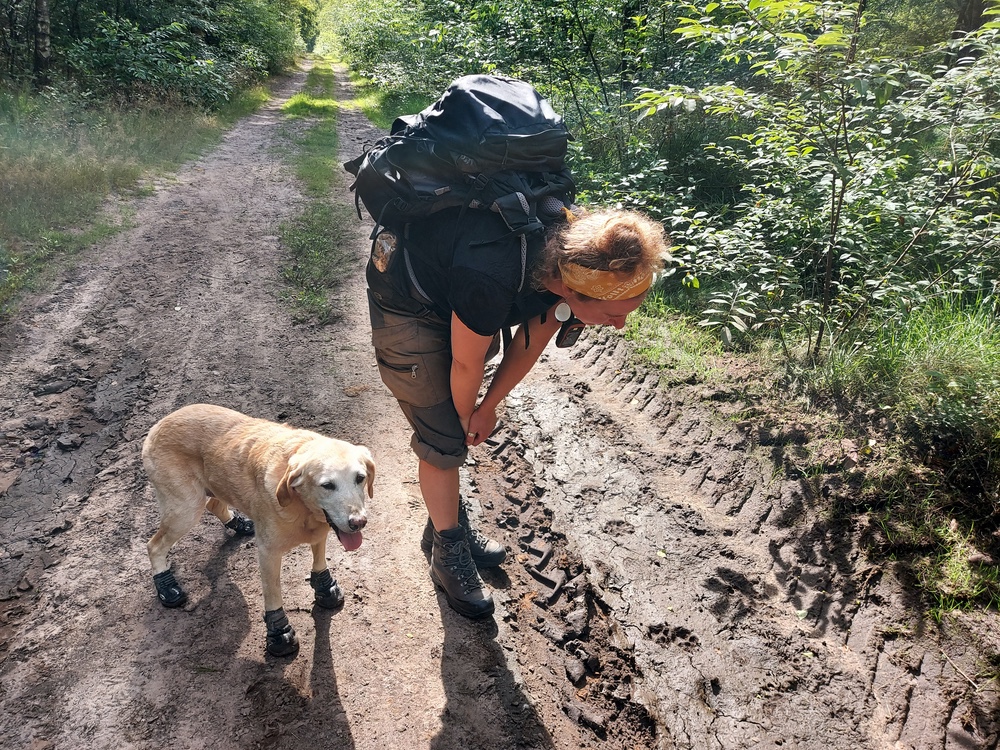
Monday brought a unique addition to our wolf volunteer team: Lea and her labrador Molly, a wildlife detection dog trained to find wolf and golden jackal evidence with her exquisite nose. The Schneverdingen team saw Molly in action in the field, while they braved the rather busy nudist trail on this hot day. Also teams Wietze and Ringelah brought back home wolf evidence, clearly demonstrating all newly trained wolf citizen scientists were up to the task.
On Tuesday our hardcore expeditioners braved up to 35°C during their hikes, but they were unphased and continued the monitoring with enthusiasm and dedication. The overnight team scanned the Amt Neuhaus wolf territory and again found much older evidence. The Ebstorf teams got lucky as they found two fresh scats, suitable for DNA analysis, not that far from the area where group 1 had its sighting. It will be interesting to see what the lab results will tell us about this territory.
With temperatures up to 39°C on Wednesday, we had to shift gears. In Göhrde that meant early morning monitoring between 5 a.m. until 10 a.m. It was clear that chances to spot wildlife in the early, cooler hours of the day are greater and working conditions less sweltering. We saw several roe deer, hares and four adult wild boar with no fewer than eleven piglets that made their way through the forest understory. Meanwhile at Gut Sunder the team visited the nearby wolf-proof fence of the livestock protection project in the morning.
Wednesday afternoon we decided to stay indoors to escape the heath and process photos, GPS tracks and take a rest.
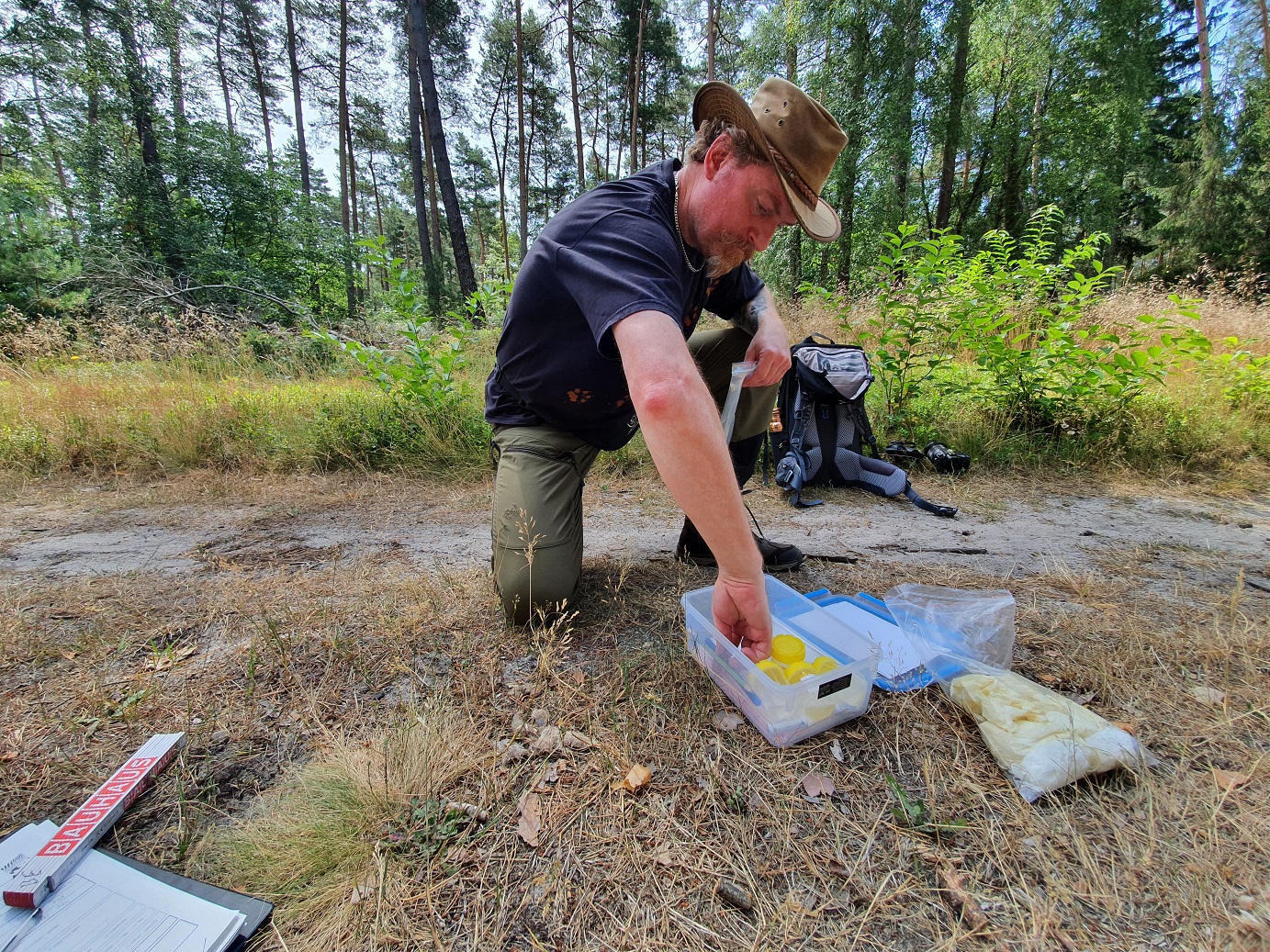
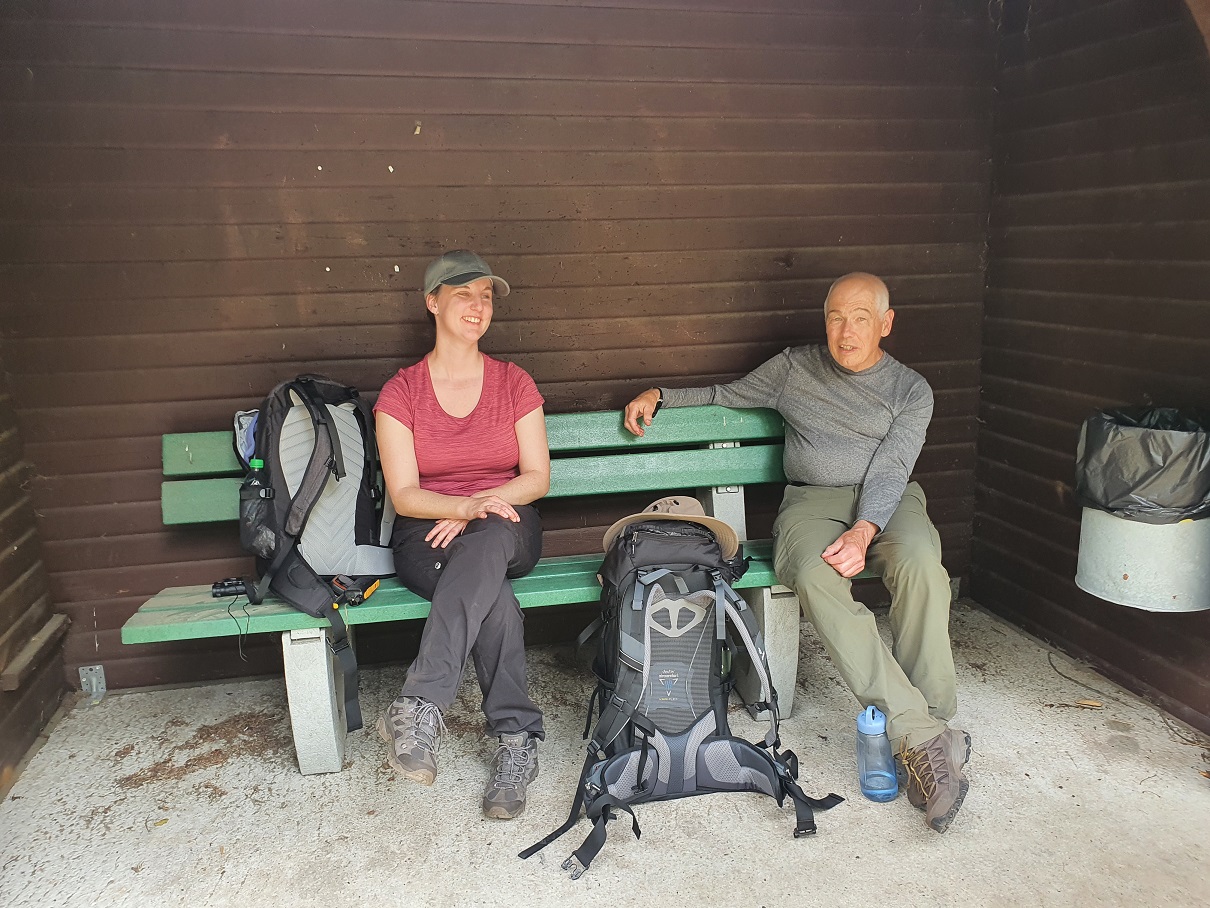
Andreas samplingBen scanningCaitlin & Michael restingCaitlin scanningLea, Molly & Stefania surveyingPlanning a surveyMolly and her quarryOvernight camp at GhördeContinue reading “Germany : Last few days”
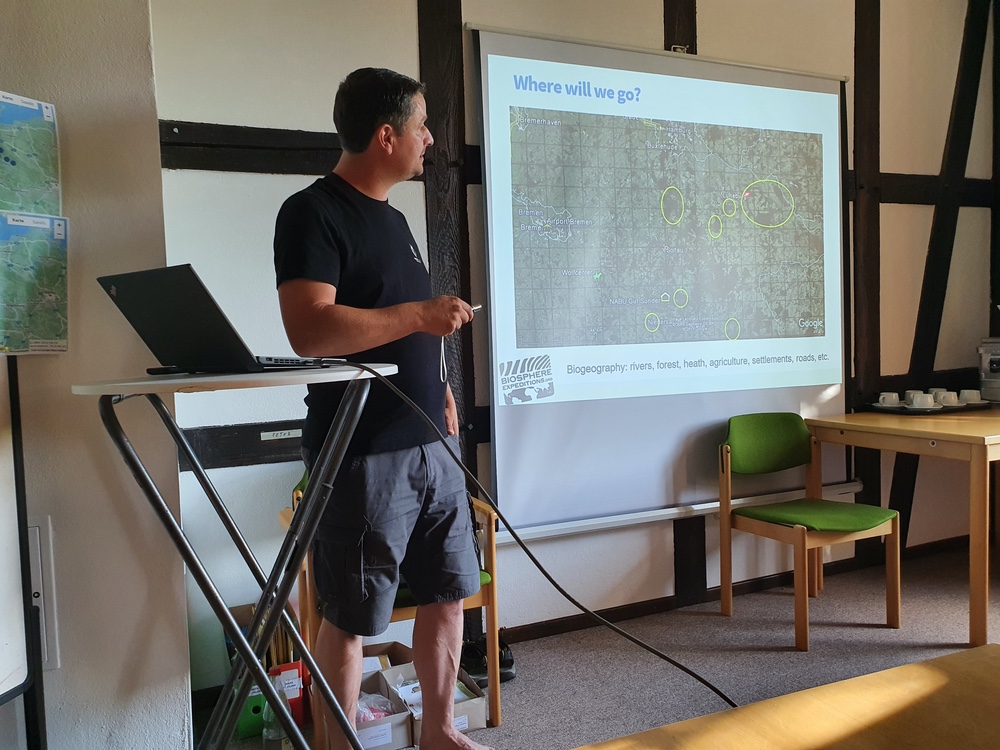
This Saturday we welcomed our third and final group of Germany wolf volunteers travelling from the US, Australia, UK, the Netherlands and Germany to the beautiful expedition base of Gut Sunder in Lower Saxony. The usual training visit to the Wolfcentre allowed our expeditioners to take a closer look at our target species, the European grey wolf.
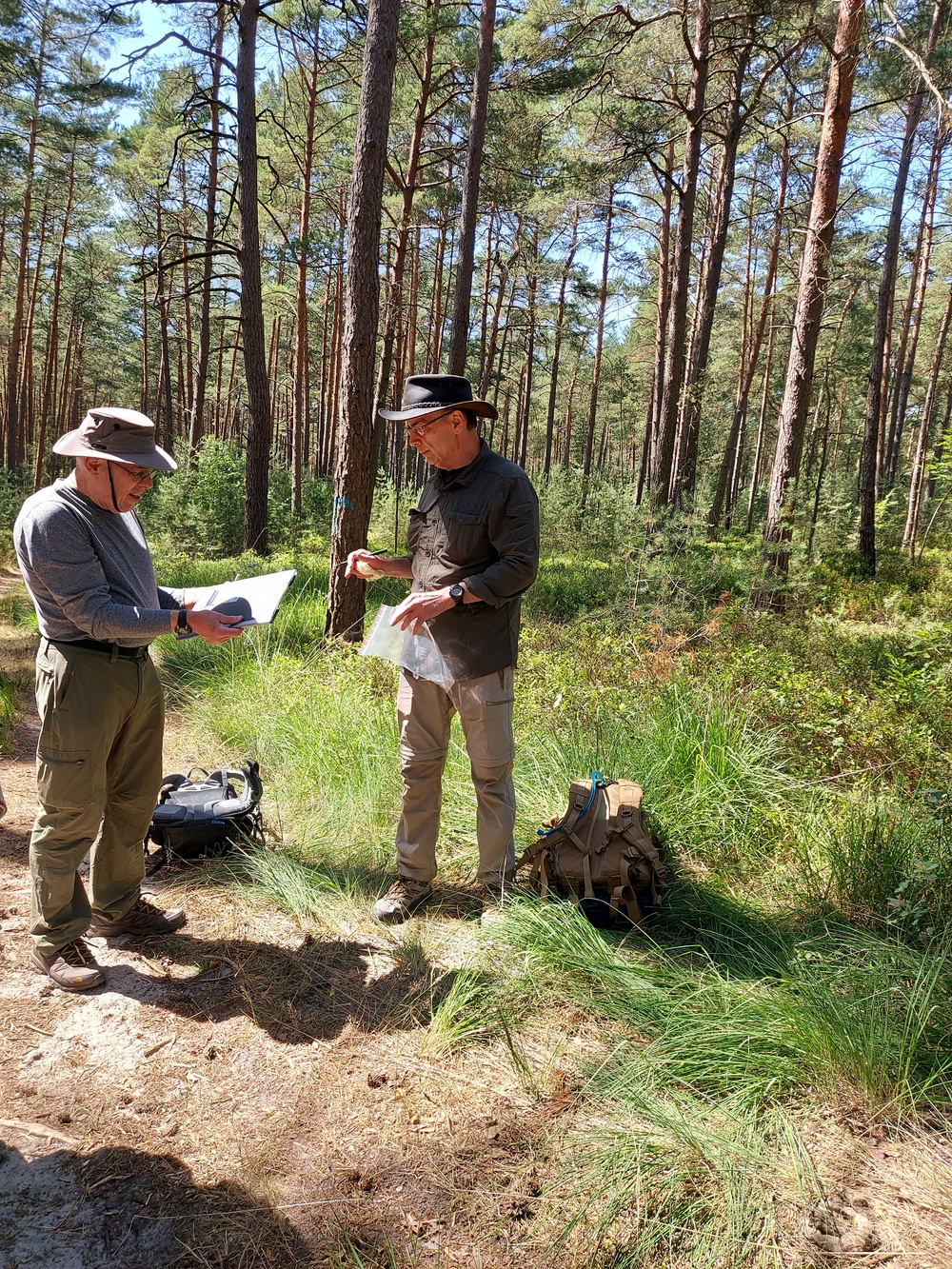
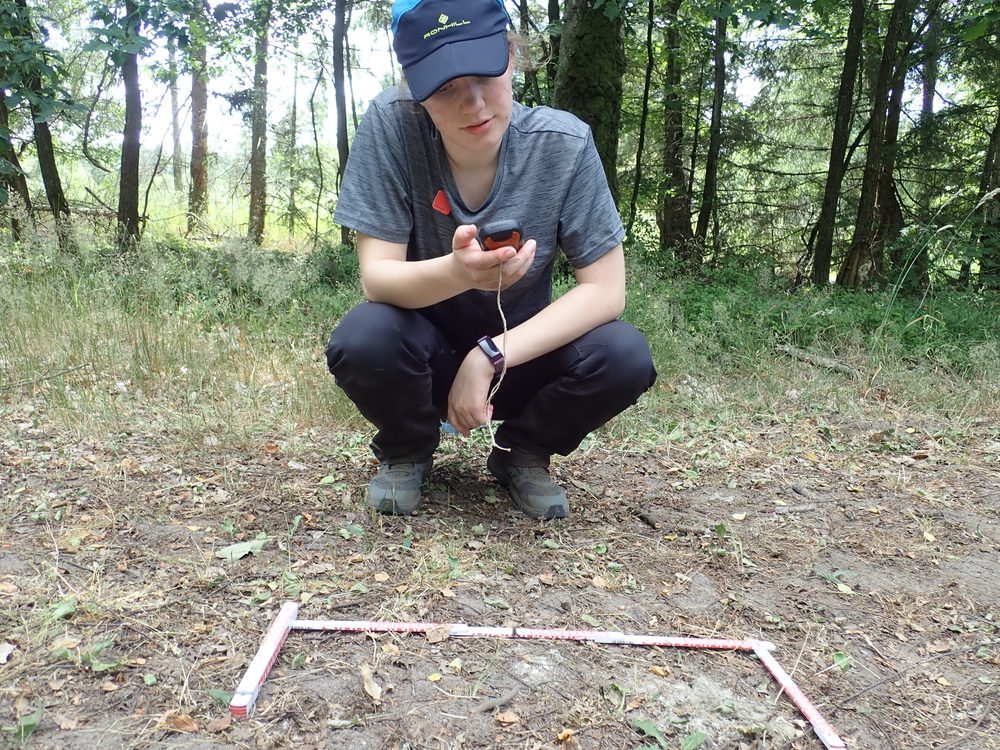
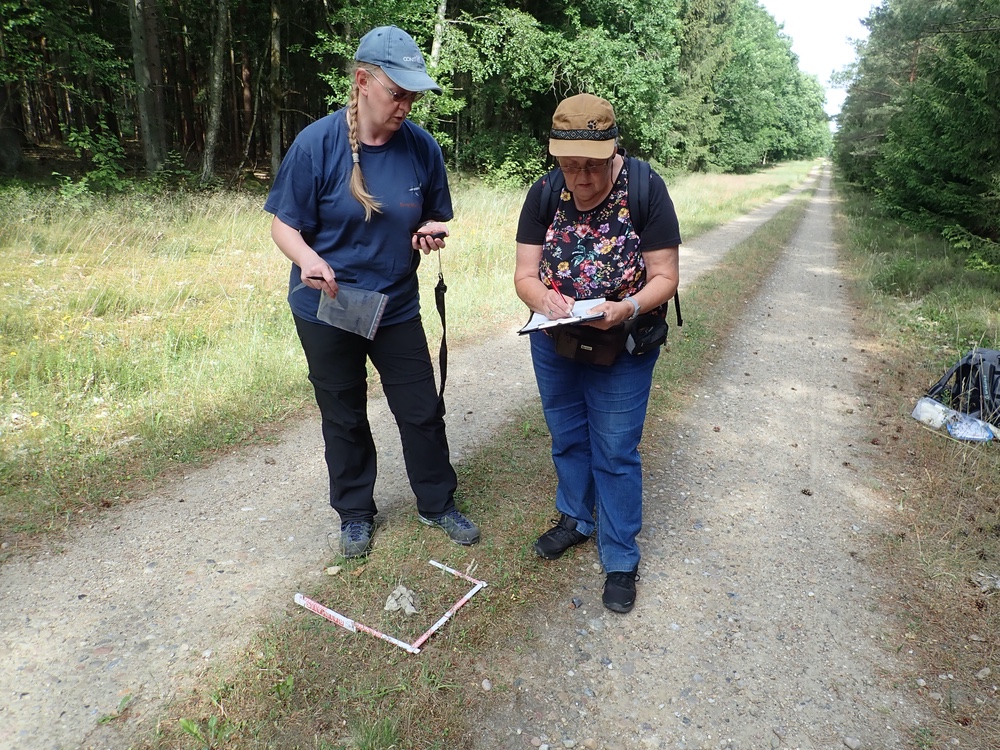
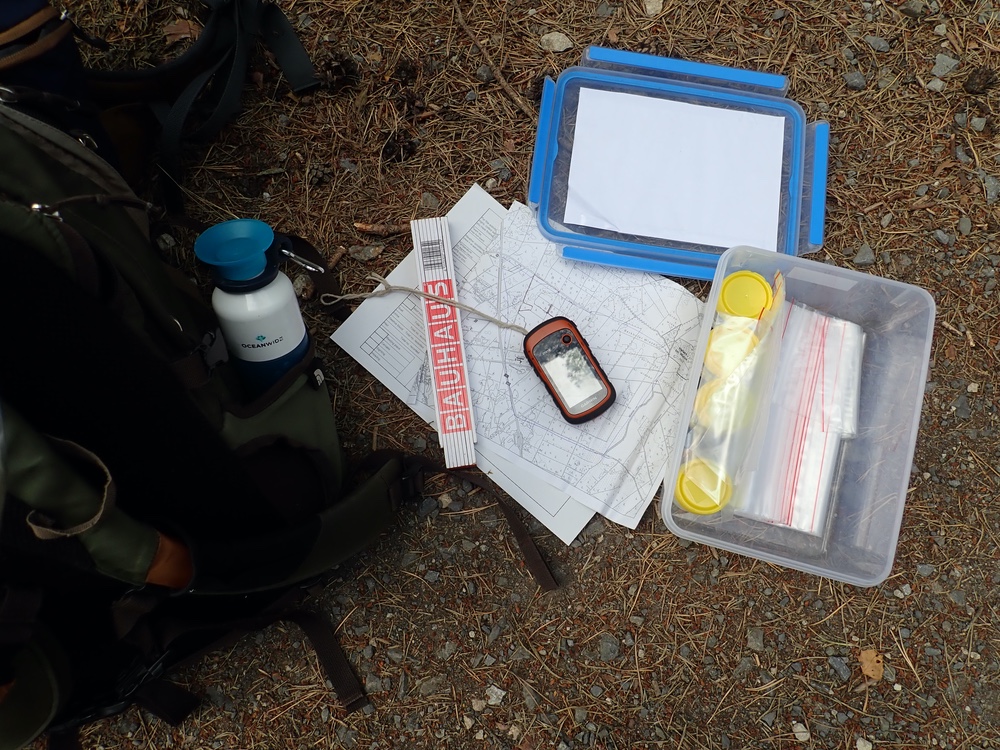
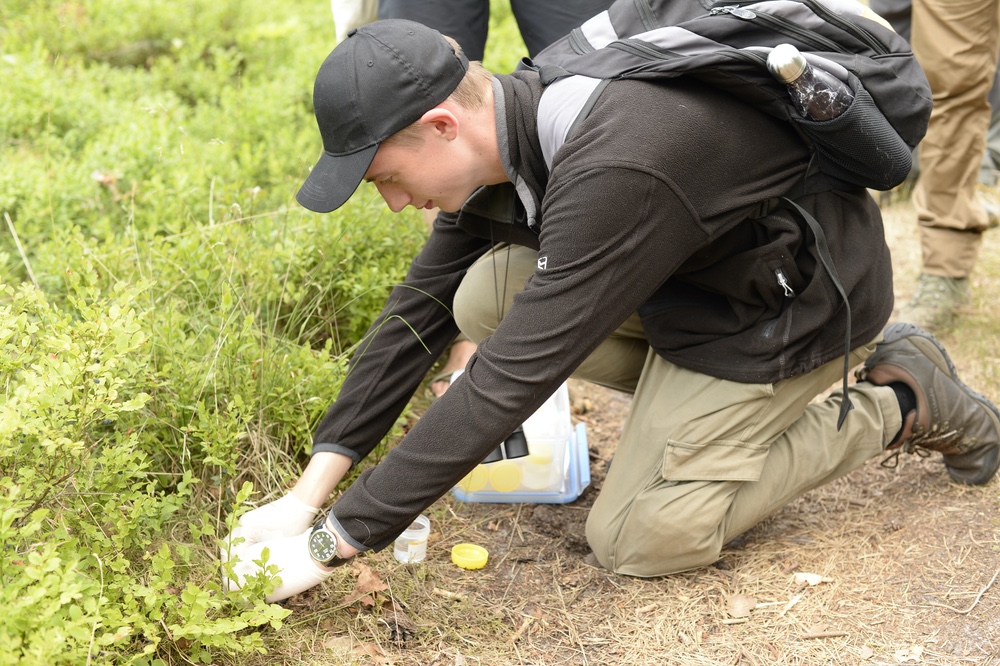
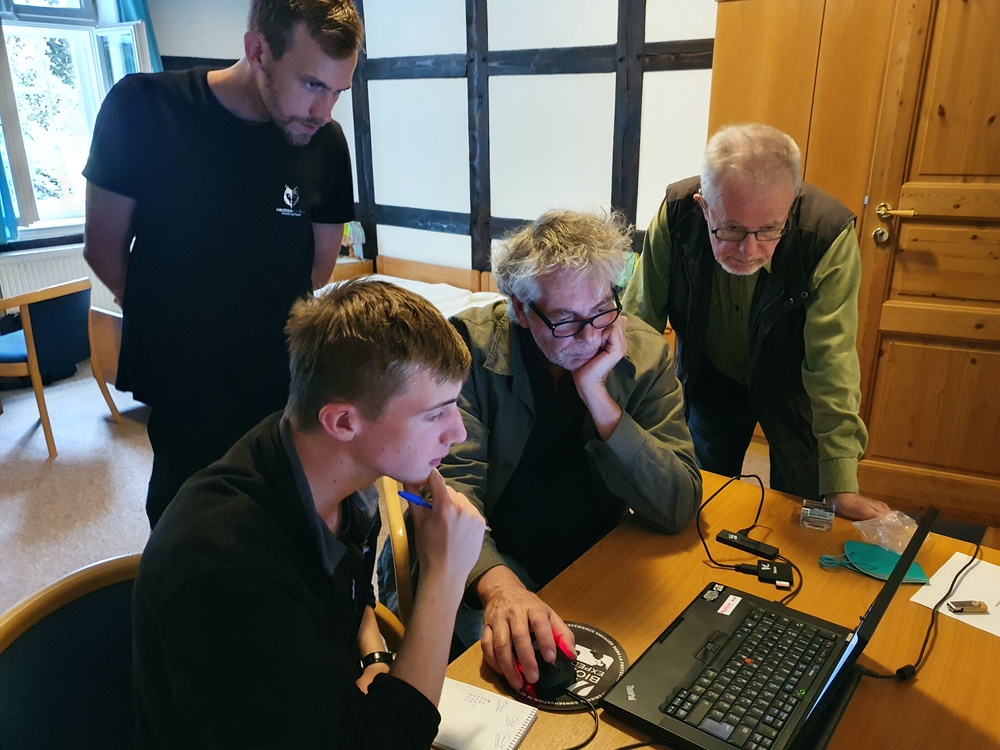
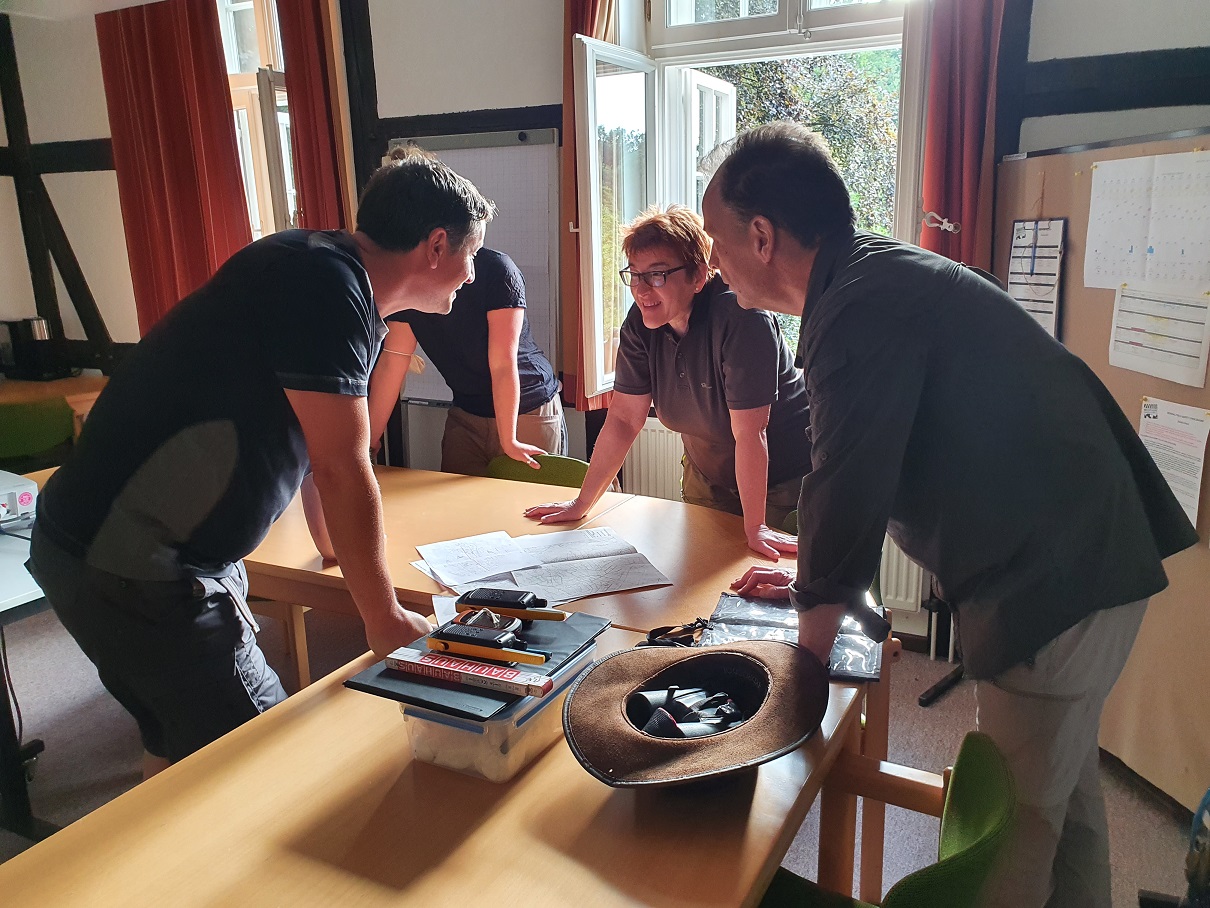
Once arrived at expedition base, the team went into full training mode learning about wolf monitoring and how to collect and record evidence of wolf presence in accordance with to the standardised state data collection protocol protocol. The GPS devices now no longer hold secrets for the team.
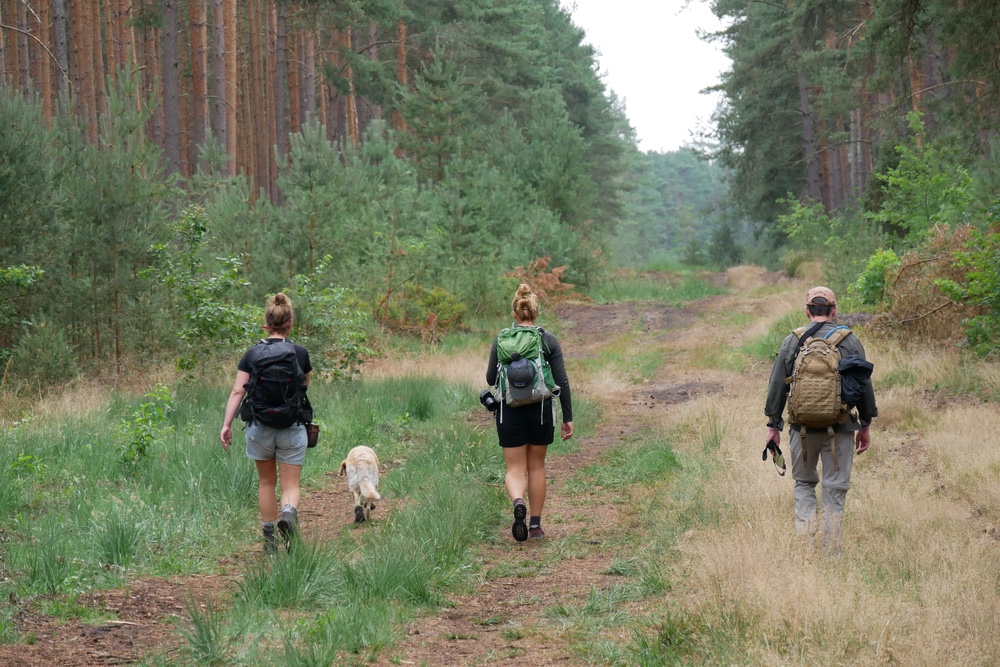
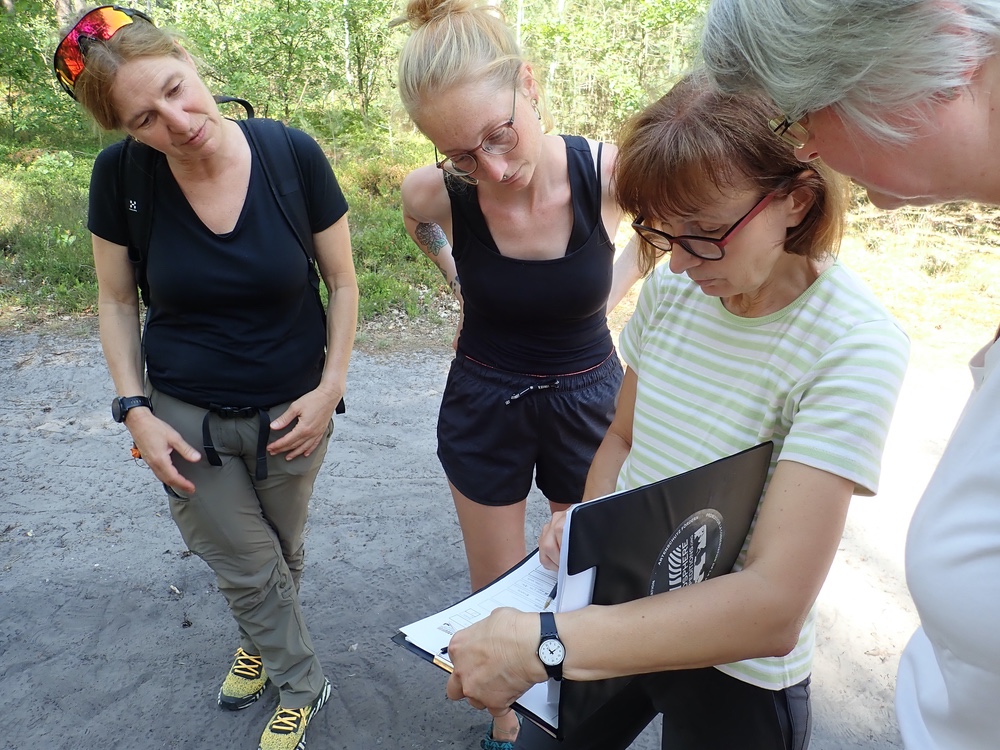
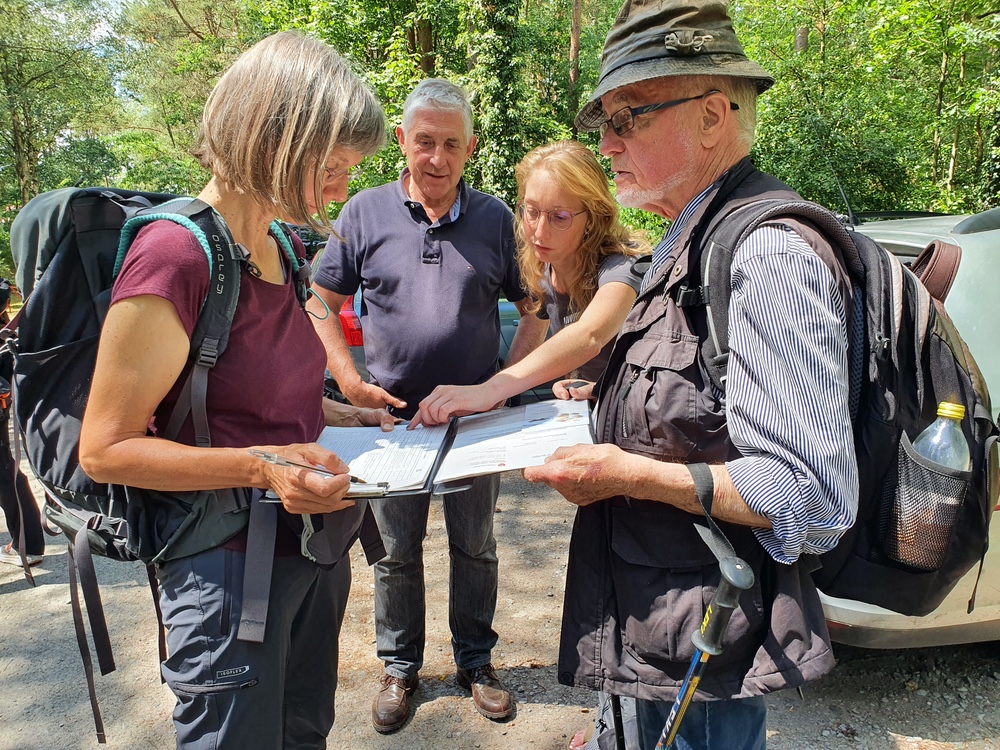
On Sunday afternoon we went out for a trial hike nearby to test our newly-gained skills and find our bearings in the pine forests and heath. Sure enough Michael found the first wolf evidence which was meticulously documented by the entire team. We were also treated to some first sightings of local wildlife. Ben, who is a regular Biosphere Expeditioner, spotted the first roe deer, Kathrin saw some cranes during her early morning run and while testing our GPSs, two grass snakes and a common toad crossed our path.
While looking for wolf evidence, we heard and saw several ravens flying over. They are known as allies of the wolf and alert the wolves to potential prey to then get a share of the reward after a successful hunt. Before dinner, Theo Grüntjens, one of the first wolf commissioners of Lower Saxony and an excellent photographer, shared with us his experiences, gorgeous images and incredible footage of the local wolf pack in his region, which without a doubt is the second best to a close encounter with the species. We ended the evening with a nice dinner and lively debate on how to promote coexistence between wolves, shepherds, farmers and hunters. An inspirational day and everyone is ready for full-on wolf monitoring in the coming days.
The first group of snow leopard volunteer citizen scientists were there, all Covid-free on Monday. The drive to base was over a rough pass, which is almost free of snow now and just about passable for 4×4 cars.
At base, it rained and was cold. This did not change for the next two days of training, so it was tough going. When the rain stopped for a while, we put up the third yurt and put a stove in it. This helped.
With training (science, equipment, offroad driving, data collection etc.) complete, we went for a first survey as one group on Thursday. Today, Friday, the sun has come out and we are surveying in several groups for the first time.
Everyone’s in good spirits, healthy (except for a bothersome contact lens courtesy of which we can send this short diary entry) and having fun. More news when we get to a signal next. This might not be until changeover on 24/25 July, so please be patient.
On the way to baseSetting up the “hot” yurtSetting up the “hot” yurtIndoor training sessionProgramming camera traps at baseSetting up a camera trapSurveying


























































 Biosphere Expeditions: blogs from the frontline of wildlife conservation and the fight for a more sustainable planet