Award-winning, non-profit and ethical wildlife conservation volunteering. Advancing citizen science and conservation since 1999 – for nature, not profit.
This is the first (quick) diary entry for the Arabia desert expedition starting on 9 January. My name is Malika Fettak, I am a senior member of the Biosphere Expeditions staff and I will be leading the expedition. Also with us will be David Moore as an expedition leader in training.
Right now we are about to board our planes Dubai (David from France and I from Germany). David and I will meet up in Dubai tomorrow morning and then go straight into preparations. Quite a few things need to be organised before the team’s arrival: Food supplies, setting up the expedition base campsite, preparing the equipment, cars and paperwork, etc., etc. I’ll be in touch again once I have arrived on the ground and my local SIM card is confirmed as working still.
Meanwhile, our expedition scientists Stephen Bell of the Dubai Desert Conservation Reserve is getting ready at his end too. He’s picked up some cars that cannot be missed in the desert – see below ;), kindly provided by Ford Middle East, who has also supported our expeditions in the region for many years via its Conservation and Environmental grants programme.
Further support, logistics and otherwise, comes from Platinum Heritage and Al Maha. Thank you to all three of them; their support is much appreciated.
Now all we need is the team. Safe travels and I’ll see you in the desert soon.
Lisa Steiner’s report from the San Francisco marine mammals conference
Every two years, the Society for Marine Mammalogy hosts a conference. Over 2,000 scientists that study whales, dolphins, seals, sea lions, sea otters and polar bears descend on whichever city holds the conference. The last conference I attended was in Quebec City, Canada, where I presented results on male sperm whales that matched between the Azores and Norway. This year, I was presenting a poster on twelve female sperm whales and a calf that have been seen in both the Azores and the Canaries, as well as a match between the Azores and Madeira and also a single match between Madeira and the Canaries. I was also co-author on two other posters, one on humpback whales and the other on blue whale photo-identification.
Lisa Steiner at her poster
The conference gives people studying marine mammals around the world a chance to see what is being done elsewhere in the world. There is not a lot of time to rest. There are five talks going on at the same time for most of the day and a couple of selected speakers have their own slot. This year saw the introduction of the 5 minute speed talk, which was challenging for both the presenters and the listeners, especially if the audience wanted to change rooms for the next talk!
On Saturday, before the official start of the conference, there was a workshop just on sperm whales. We had short presentations on all aspects of sperm whale biology & behaviour. I gave a short three minute presentation on the photo-identification work that Biosphere Expeditions and I are doing in the Azores.
Some highlights of the sperm whale session were:
There is not a lot of genetic diversity between oceans, and this may be due to a bottleneck in the population around 80,000 years ago, when the squid populations also crashed.
Male sperm whales in Alaska have learned how to take sable fish off the long lines. It seems that there are around ten offenders and the researchers are working on ways to help the fishermen avoid this loss or these whales specifically. Some of the males were tagged with satellite transmitters and a few of them went as far south as Baja, Mexico still heading south when the transmissions stopped.
Russian illegal whaling may have changed the structural groups of females in the Pacific by decimating the stocks. Females in the Pacific groups are not always related, whereas in the Atlantic they generally are. This was caused by individuals forming new groups in the Pacific.
There are some juvenile male sperm whales that lived close to a navy test site in the Bahamas for a couple of years, before they moved on to another unknown destination. I am hoping to get those flukes for matching to the Azores catalogue. The female sperm whales in the Bahamas sensibly stay in the north of the archipelago, away from the navy test site and there does not appear to be mixing between the groups seen in the Bahamas and Dominica.
A couple of invited squid biologists gave us a bit of a different perspective on the whales as ferocious squid predators.
And in the last presentation of the day, it was shown that the theory that sperm whales change the density of the spermaceti to help them dive and surface is not accurate.
Some highlights of the rest of the conference:
Whales benefit the environment by recycling nutrients. In the case of sperm whales they catch their prey in deep waters, but defecate at the surface, re-releasing all those nutrients, which would otherwise be lost to the depths. Blue whales in the Antarctic drive the whole ecosystem by recycling nutrients and making them more accessible for the krill to use.
Climate change is not good news for polar bears and probably walrus too, because they depend on the sea ice to hunt, but grey whales could benefit as new feeding grounds open up, which have previously been covered in ice. This lack of ice could also lead to grey whales re-populating the Atlantic Ocean, where they have been extinct for many years. But the fossil record shows that there may have been several re-colonisations over the years as ice ages came and went.
Fin whales are mostly right handed lungers. Out of 800 lunges, only three or four went to the left.
A long term photo-ID study in Alaska’s Glacier Bay National Park has 46 individuals with a sighting history of more than 30 years. Something I am aiming for with the Azores sperm whales.
And speaking of Humpback Whale IDs. There has been a match made between a humpback whale that was seen during the 2008 Azores expedition and then again in Norway in 2012, near Tromsø! This is the second match made with a whale actually seen during an expedition. The other match was first seen in Norway on 20 March 2010 and then in the Azores on 5May 2010.
This slideshow requires JavaScript.
The humpback whales that we see in the Azores are most likely travelling from the Cape Verde Islands up to feeding grounds around Iceland and Norway or back down to the breeding grounds; although to date we have not had any matches to Iceland. We have eight Azores matches to the Cape Verdes and now eight matches to Norway as well. The whales can use the waters around the Azores as a pit stop from the breeding to feeding grounds, since most of them have not been feeding for a few months while on the breeding grounds. So far we have not had any matches to the Caribbean population of humpbacks, which is more numerous than the Cape Verde population, although this may be down to low numbers of identifications in the Azores.
This slideshow requires JavaScript.
The flukes in the North Atlantic Humpback Whale Catalogue are constantly being reviewed, especially with hard to match individuals, since the computer assisted matching is not always perfect.
And speaking of computer-assisted matching, I think we will be trialling a new matching system, Flukebook, during the 2016 expedition alongside Europhlukes. Flukebook is a new online matching system that shows a lot of promise. It uses six different algorithms for the matching and has machine learning too, as well as being able to plot the sightings with Google Earth. The biggest drawback will be if catalogues that I currently match to, do not join Flukebook. Only time will tell.
After the conference I had a couple of days down in Monterey Bay, looking for grey whales, since I had never seen one. The mission was a success, I saw over 20 different grey whales and around 30 humpbacks. Unfortunately none of the “friendly” behaviour from the greys – they were just migrating on their way to the breeding lagoons, where you can get the “friendlies”. No acrobatics from the humpback whales either, but I did get some fluke ID pics, which I will send off to the Pacific Humpback Whale Catalogue at Cascadia Research.
I would like to thank the Friends of Biosphere Expeditions, as well as my parents, for making my attendance at these conferences possible through their support. And thank you to all the expedition participants that make this work possible.
Divers rediscover Eden for coral reefs in the face of climate change
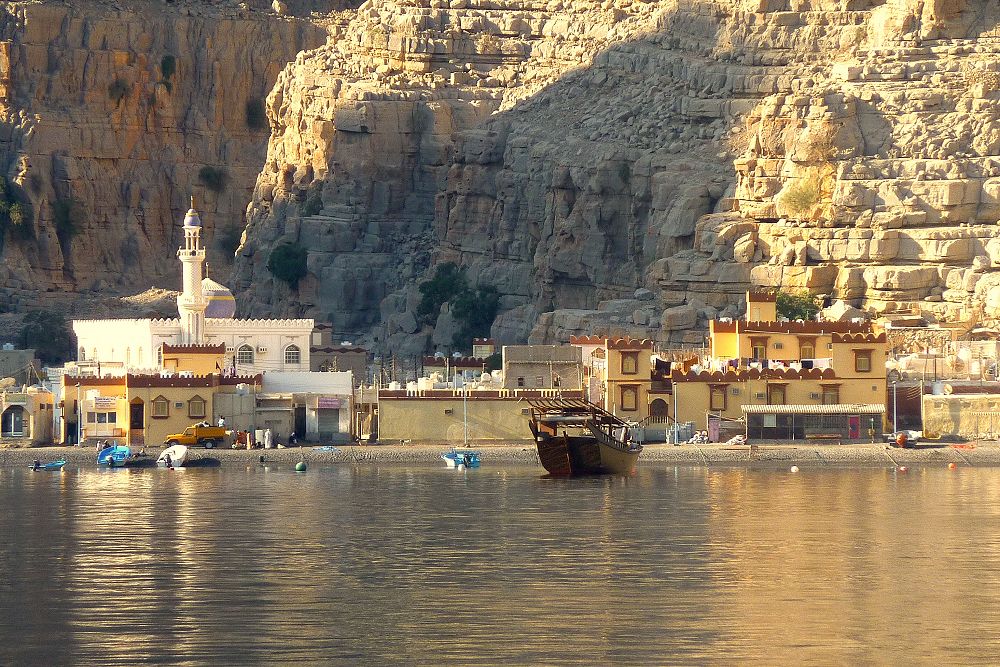
The waters of the world’s tropical coral reefs are warming and getting more acidic in the face of increased C02 concentration. Reefs in most parts of the world are dying from such stress and it appears that the ability for coral reefs to recover from periodic El Nino events is being diminished – because of increasing frequency of warming, pollution, increased sedimentation and disease. However, the corals of the Musandam in northern Oman are currently an exception. Here reefs are extremely healthy, covering the shallow waters of the mountainous peninsula with extreme variety of growth forms from massive 400 year old 4m high ‘boulder’ coral to the delicate yet important branching and ‘bushy’ corals. Coral cover regularly exceeds 70% in nearshore embayments
Elsewhere in the world, corals have been reduced to rubble, their once great carbonate structures being eroded by boring sponges and worms, whilst successive warming events and overfishing of herbivores has resulted in massive plant growth, suffocating what’s left of corals, and attracting opportunistic algae. The majority of Jamaica’s once spectacular reefs have been turned from ‘coral’ to ‘algal’.
Dr Jean-Luc Solandt, Reef Check Course Director of the region said: ‘The past six years of Biosphere Expeditions surveys confirm the vitality and resilience of this area. At a time when we’re seeing the degradation of the world’s most diverse marine habitats, relied on by 100s of millions of people for food, Musandam is withstanding the current temperature hikes. Our survey findings offer hope that there are some areas of the world that can withstand such environmental change.’
The temperature of the surrounding waters differs considerably from that of the Gulf of Arabia. Musandam lies at the entrance of the gulf and is enriched by cool deep waters of the Gulf of Oman to the east. The current exchange between the waters of the gulf flowing over the reefs allow for currents to wash the reefs with clear waters, whilst the cooler water from the east prevents catastrophic climate effects. Furthermore, some of the corals have been seen to harbour temperature resistant algae, allowing greater resistance to bleaching.
Whilst Musandams coral reefs are faring well, the fisheries of the area are being exploited at ever increasing effort. The most important commercial fish species of the reefs – grouper (hammour) are only ever recorded at 50 cm in size at very few more isolated sites. We recommend the development of an MPAs and minimum landing sizes for grouper to achieve a sustainable fishery, though none of this will change if it doesn’t have the support of the community. Jenan Alasfoor from the Environment Society of Oman, a scholar on this year’s expedition, knows too well that before any changes in fishing practices occur, full consultations with the local communities need to be undertaken.
Our first dive survey went smoothly – reef sharks and an eagle ray spotted off transect – then we sailed to Faq al Asad (the jaw of the lion), a stunning site of crystal clear water, amazing rock formations, even dolphins! We ate our lunch and went for a snorkel to assess the reef, then kitted up as usual. The teams dived in and the invertebrate teams began to lay the transect. As they reached the end of the 10 0m and turned around to swim back to the start of the tape a freak current swept through the bay. The teams struggled back to find that the boat had completely swung on its anchor, one of the SMB’s marking the start of the transect had been swept away and air was running low. All was not lost, though, as we reeled the tapes back in and still had time to sail further round the peninsula with a pod of Arabian humpback dolphins at our bow, to a site aptly named “pray for calm.” It worked, and we managed to complete our survey just before dusk.
Not to be thwarted by the elements, we returned to Faq al Asad the following morning very early and collected the data we had missed the day before, then headed to Khayl Island for a glorious survey dive, complete with shipwreck. The site was so interesting we decided to stay for a night dive and explored the ancient porites mounds with their banded coral shrimp and moray eel inhabitants, with turtles, cuttlefish, giant porcupine fish and squid in the mix.After a scientific wrap-up from Jean-Luc, we moored away from any civilisation and spent our last peaceful night under the stars.
A big thank you to everyone for all your hard work and attentiveness. It’s been a steep learning curve, so much to take in, both in and out of water, and your diligence in collecting the data, even in adverse conditions – swarms of jelly fish and flies – was much appreciated. This expedition has confirmed for us that the reefs here in Musandam really are resilient to the ravages of climate change, and offer an insight into another type of hardier reef that can withstand very significant temperature fluctuations. It may not be as colourful, or as varied as traditional coral reefs, but it has a much healthier future than most!
Thank you also to Patrick for your retrieval skills – masks, fins, SMBs, plastic bags and even a cushion that got knocked overboard during a dawn yoga session! Thank you to the crew, who offered continuous support and demonstrated great expertise in getting us right where we wanted to be. Thank you all for your sense of curiosit, and enthusiasm for getting the work done. It was a pleasure working with you! I hope you continue Reef Checking now you have your certification and look forward to meeting you again on another Biosphere Expeditions project.
It’s been an eventful beginning to this year’s Musandam expedition – a tire on our trailer blew out as we were en route to Khasab, so we had to wait for another vehicle to transport all the kit. Arriving late at the harbour meant we had no time to spare if we wanted to complete our check dive before dark, though with an attentive team, and a competent skipper and his crew this was not an issue. The dive went well and we relaxed to the light of a huge silvery moon.
The next couple of days were taken up with Reef Check training. From dawn ’til dusk the team studied, dived, and took tests above and under water. The effort required was considerable but rewarding and by the afternoon of the third day everyone had passed all their tests and were fully qualified reef checkers. Well done! A great achievement for a team with an age range spanning 50 years! As a treat we took the speedboat and visited the local land-locked village of Kumzar, learning about the local customs and traditions from Yusef, our skipper.
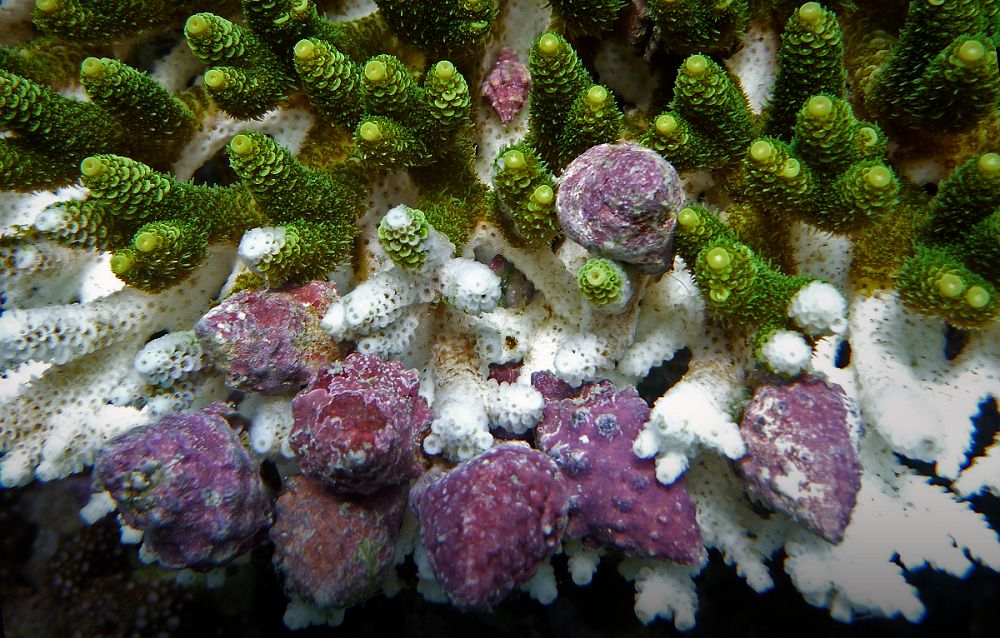
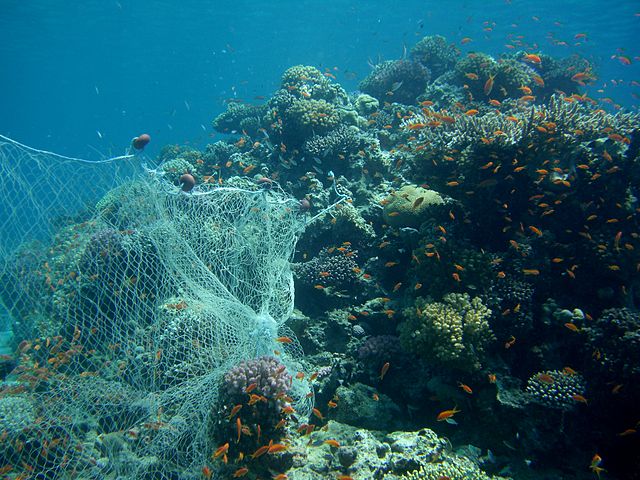
It is reassuring to see from our preliminary investigation that despite being flagged as a hot spot for coral bleaching, these corals seem to have adapted sufficiently to cope with such high temperatures. Not such good news is the first ever sighting on any Musandam expedition, of the coral-eating Drupella snail at, along with a proliferation of discarded fishing nets and lines. Reef Check veteran Ayesha managed to release two banner fish caught in a fish trap, though bat fish in another trap were not so fortunate.
So with another five surveys ahead of us and the full moon tampering with the tide and currents, we still have very few full days ahead of us. But I have no doubt that if the last few days are anything to go by, the next will be filled with enthusiasm, hard work, and good humour.
Greetings from Dubai – our preparation day has been very successful, beginning with a trip out to the Dubai Desert Conservation Reserve (DDCR) to collect our kit boxes that have been in storage there for the past year. The DDCR is our partner for our Arabia expedition (www.biosphere-expeditions.org/arabia) which runs each January, monitoring Arabian oryx, Gordon’s wildcat, and other flagship species, and they also kindly guard all the equipment we need to run the Musandam expedition as well. Once the kit had been checked and the car loaded, we went back to Dubai in search of an essential piece of O2 delivery equipment, without which we could not set sail tomorrow. After a hectic couple of hours, it was sourced, found, and collected! Thank you Nasser for your help!
Our next port of call was the iconic sail-shaped Burj Al Arab hotel where we met with David Robinson, their head aquarist. He took us behind the scenes, showing us the turtle rehabilitation work they are doing in Dubai, taking injured hawksbill and green turtles that get washed up on the beaches, and nursing them back to health for release back into the open ocean. David told us that there are only 60 breeding adult female hawksbill turtles left in the whole of the Southern Gulf of Arabia. This dangerously low figure is due to loss of habitat, unsustainable fishing practices and other anthropogenic influences.
This slideshow requires JavaScript.
On our tour we saw the aquarium’s leopard shark, now 7 years old, born parthenogenetically, i.e. without external fertilisation. David was very excited, as yesterday, she too exhibited the first signs of laying her own clutch of eggs. Leopard sharks are only the 3rd species to show parthenogenesis in captivity. David is not only working in Dubai, but is conducting research on whale shark ecology. As part of his PhD, David formed Sharkwatch Arabia, a database to collect whale shark sightings throughout the region. He recently discovered a massive aggregation of over 150 whale sharks in Qatar. Protected by the presence of oil rigs, the waters are not fished, and tourism is prohibited – a strange but effective MPA. He asked us to keep a lookout for whale shark and other shark species during our time in Musandam, as they are likely to be present in the areas we are surveying. We did indeed have a whale shark encounter two years ago, in the same location, so keep your eyes peeled – and remember, it may be above you!
So, after this very informative and enjoyable meeting we bid our farewells and rushed back to the Holiday Inn to collect another consignment of equipment – all in a day’s work!
It may be a few days before I can send another diary entry as internet connection out on the Musandam peninsula is sporadic to say the least, but I look forward to meeting you tomorrow at 09:00 – let the expedition begin!
Against the tide of bogus voluntourism in South Africa: a case study from the Western Cape
South Africa has been gaining a reputation as the home of bogus wildlife voluntourism projects. At the worst end of the scale are profiteering scams that abuse unsuspecting volunteers to walk, pet and raise lion and other predator cubs whose only purpose is to enrich the owners and be killed in a canned hunt as soon as the animals have outgrown their cute and cuddly stage. But there are genuine volunteering alternatives too, set up by locals and satisfying local need for help with wildlife research and conservation. A small project in the fynbos of the Western Cape shows how it is done.
Dr. Alan Lee, a South African biologist, is currently hosting a group of seven volunteers from South Africa, Switzerland, the UK and USA at Blue Hill Nature Reserve to assist him for two weeks in his efforts to research and conserve the unique wildlife of the fynbos.
“The volunteers helped me with big cat, small mammal and camera trapping, with analysing thousands of camera trap photos, and conducting a general biodiversity assessment using flush surveys”, says Dr. Lee and adds that “much of this work is time- and labour intensive and can only be done in groups. With only a couple of days training, I can turn laypeople into valuable research assistants, enabling me to do projects that I could not do by myself or that I simply lack the time for.”
But it does not stop just there. Dr. Lee aims to publish two peer-reviewed scientific papers as a result of the project, one on temporal patterns of abundance of medium- to large-size mammals from camera trap records, and the other on the Hottentot buttonquail, an endangered bird species endemic to the fynbos. This will add two more useful pieces of the puzzle to what is known about South African wildlife in academic and conservation circles.
Dr. Lee enlisted the help of international volunteering non-profit Biosphere Expeditions in order to recruit his volunteers and help with the logistics of the project. Fellow biologist and executive director of Biosphere Expeditions Dr. Matthias Hammer says that “Dr. Lee’s project is a showcase of how wildlife voluntourism can and should work, and we are very proud to be associated with it. Peer-reviewed publications are the litmus test for genuine research and getting two out of a two-week project with seven volunteers shows exceptional, goal-oriented focus. It also corroborates what we call our stamp-collecting argument: That voluntourism in wildlife conservation works, because tasks are simple, but laborious and therefore often ideal for the involvement of volunteer citizen scientists. Add to this genuine local demand and community involvement through Biosphere Expeditons’ placement programme, hosting Khomotso Rammala, a recent biology graduate from the University of Limpopo on the project, and you have a small, but significant project that swims against the tide of charlatan and bogus voluntourism in South Africa”, concludes Dr. Hammer.
The next expedition to Blue Hill with Dr. Lee and Biosphere Expeditions will take place from 2 – 16 October 2016.
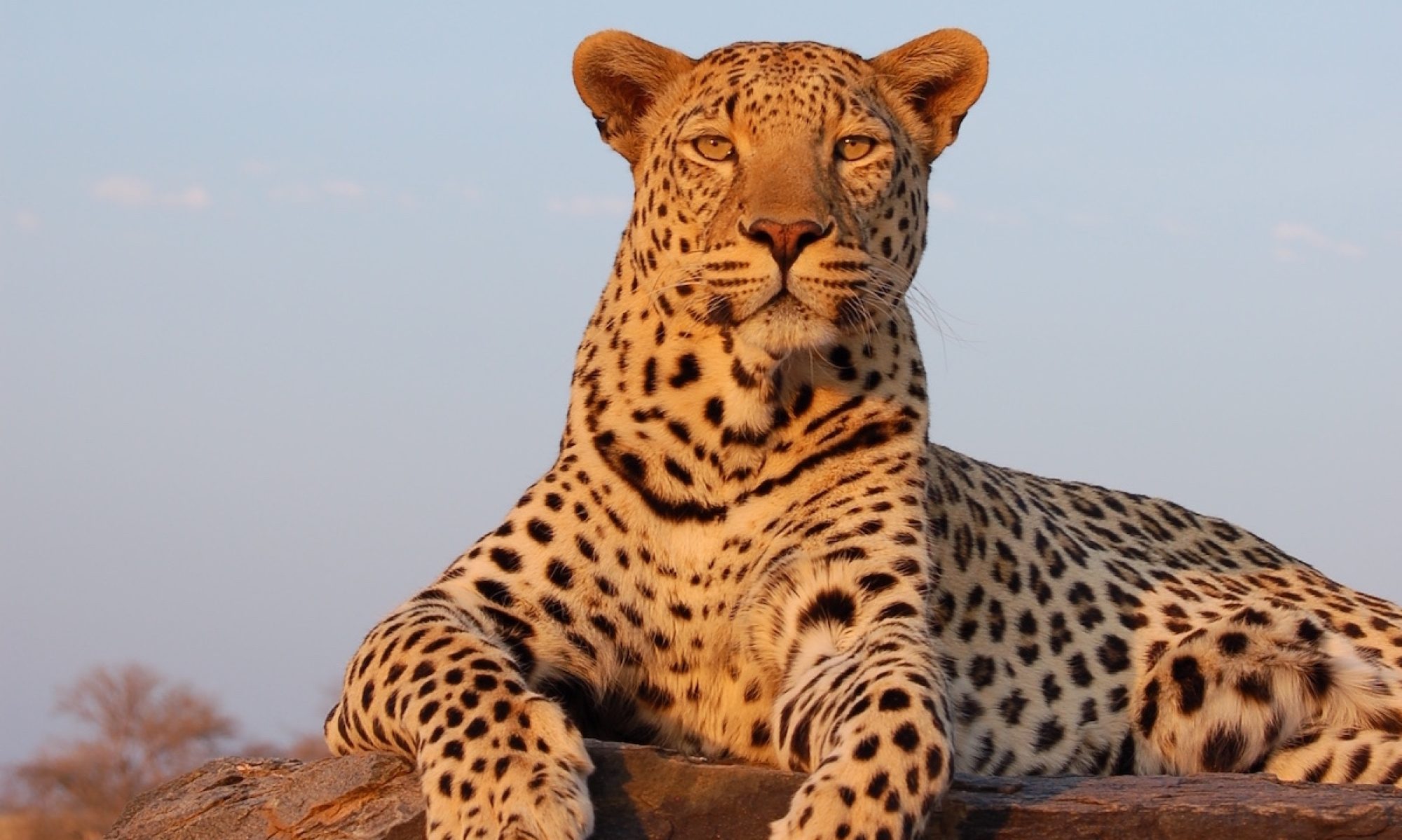
In collaboration with the Landmark Foundation, the project focuses on monitoring two of Africa’s iconic cats: the threatened Cape mountain leopard and the caracal, in an effort to mitigate conflict with farmers and thereby contributing significantly to cat survival and their conservation. Working in the unique biome of South Africa’s Cape Floral Kingdom (fynbos) – a UNESCO World Heritage Site and the world’s only biome contained within one country – the project also conducts larger biodiversity surveys, focusing on cat prey species such as antelopes, as well as small mammals. The project’s ultimate goal is to develop a remote monitoring technique that will better inform landowners of the status of their prey wildlife and predatory cats, identify potential conflict areas, and use the knowledge gained to mitigate conflicts.
At 1.2 million square km, South Africa is the world’s 25th largest country. It is incredibly biodiverse, with habitats ranging from forest to savannah, grassland, thicket, karoo, desert and fynbos. South Africa is also very rich in wildlife, and is a favoured Big Five safari destination. The core of the study site is the Blue Hill Nature Reserve, a 2,300 ha CapeNature stewardship nature reserve with mountains ranging from 1,000 to just under 2,000 m and under the care of the Lee family trust. CapeNature is the Western Cape provincial conservation department in charge of the network of nature reserves of the Western Cape. The property was purchased in 2009 by Chris Lee, a retired geologist who has been awarded the Draper Memorial Award for contributions to South African geology. The land was previously used for cattle ranching. It was incorporated into the local community conservancy in 2010 and officially declared a nature reserve in 2013. The trust has an obligation to manage the land for biodiversity under a management plan administered by Eastern Cape Parks and Tourism, the state organisation charged with managing the Baviaanskloof Mega Reserve.
Blue Hill lies on the western side of the massive Baviaanskloof Mega Reserve and wildlife is free to move between these protected areas. The Baviaanskloof area is one of outstanding natural beauty, owing to its spectacular land forms, a diverse array of plants and wide variety of animals. The area is also part of the Cape Floristic Region World Heritage Site.
Here is a photo from the camera trap taken at the cage the night after it was deactivated! The associated video shows the leopard spooking at the entrance, and not going through… but trust our luck….
We ended as we started, with a small transportation hiccup. The minibus driver managed to get himself lost on the way to Blue Hill. So we loaded everyone and their kit into two of the four wheel drives, and headed out to intercept the bus on a dirt road, and ensure that flights weren’t missed.
I can hardly believe our first expedition in South Africa is already over. Let me start by thanking our team. First off, our volunteers, for being pioneers, willing to take the expedition leap of faith and believe in a new project – you’ve all made a great contribution (see below). But firstly, we owe a big thank you to the Lee family, particularly Anja, Eli and Charlie, and Chris and Elaine (our collective hosts) for your endless hospitality. Grateful thanks also go to Melda and Stefan, for the continual provision of culinary delights, and their botanical and camera trap ID wisdom! And finally, our enormous collective thanks go to Alan, our leader in all things scientific. It has been a fantastic privilege to share in your world.
So what about that contribution I mentioned? We achieved the following:
– 15 new camera traps have been deployed both across the Blue Hill area and in the Baviaanskloof, to monitor leopard, caracal and other mammal activity and movement patterns.
– Over 3500 camera images from Blue Hill have be analysed, identified and catalogued, revealing activity of leopards, caracals and African wildcats across a number of locations.
– 20 km of flush transects surveys have been completed across the Blue Hill area, and the first-ever flush survey was completed in the Welbedacht section of Baviaanskloof.
– We completed the first series of small mammal trapping surveys in the Blue Hill area of the fynbos, and demonstrated the presence of Namaqua rock mice, which was previously unknown in this location.
– We identified the location of more Cape rockjumper nests (a bird endemic to the fynbos), and installed camera traps to monitor chick development and feeding behaviour.
– We completed more radio-telemetry surveys on tagged rockjumpers, to assess activity and distribution patterns.
– We located an active nest of the endemic jackal buzzard, with two chicks and again installed a camera trap to assess prey species brought to the nest.
– Four species of bat have been identified in a small survey area around Blue Hill, and a cave roost of the Cape horseshoe bat has been identified.
– New locations and examples of rock art have been discovered.
That broadly covers the headlines, but our work is still not complete. Data still needs to be crunched from the various field surveys and just think of all those new camera traps still clicking and collecting data….long beyond our departure.
This slideshow requires JavaScript.
The keen-eyed amongst you will have realised that this is nine different, and in several cases, new achievements, in nine full days, by the collective efforts of nine people. Full marks and many thanks for this great contribution.
Don’t forget to share your pictures and you’ll hear from us again when the full technical expedition report comes out in a few months. Safe travels home and we hope to see you on another expedition again at some stage, somewhere on this beautiful planet of ours.




 Biosphere Expeditions: blogs from the frontline of wildlife conservation and the fight for a more sustainable planet