Award-winning, non-profit and ethical wildlife conservation volunteering. Advancing citizen science and conservation since 1999 – for nature, not profit.
Greetings from Sweden everyone. Louise and I travelled up to Mora together, started feeling ill and tested positive for Covid yesterday; no idea where we picked that up. This is a bummer, but not the end of the world, as Covid no longer is the health issue it once was and because Sweden no longer has any restrictions in place (they never did have many). Today we feel pretty rough, but can still function, so because of this and out of courtesy to everyone else, this is how we will run the expedition:
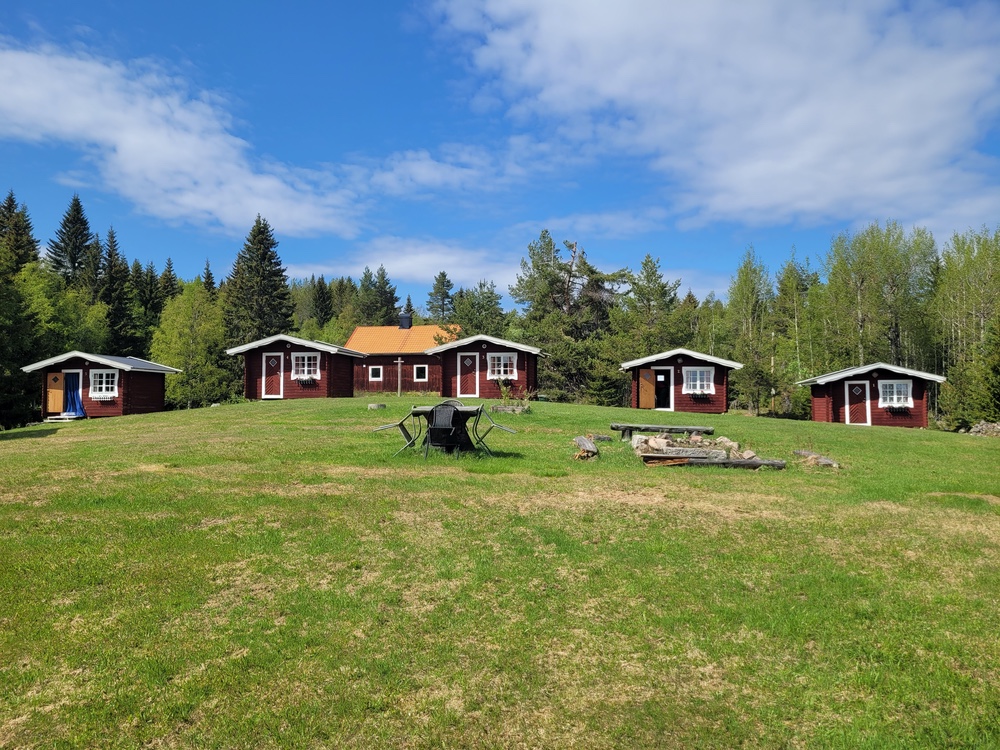
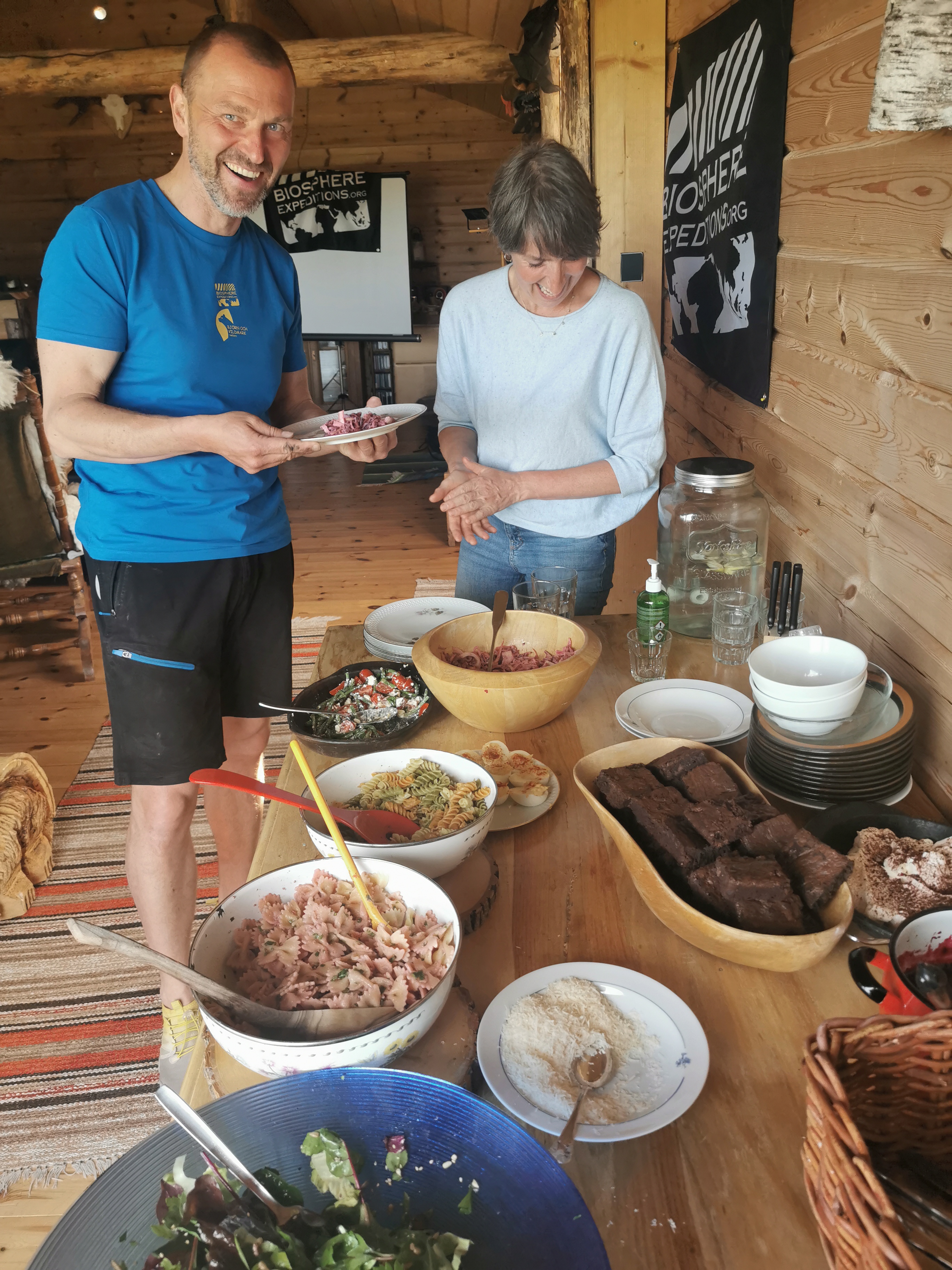
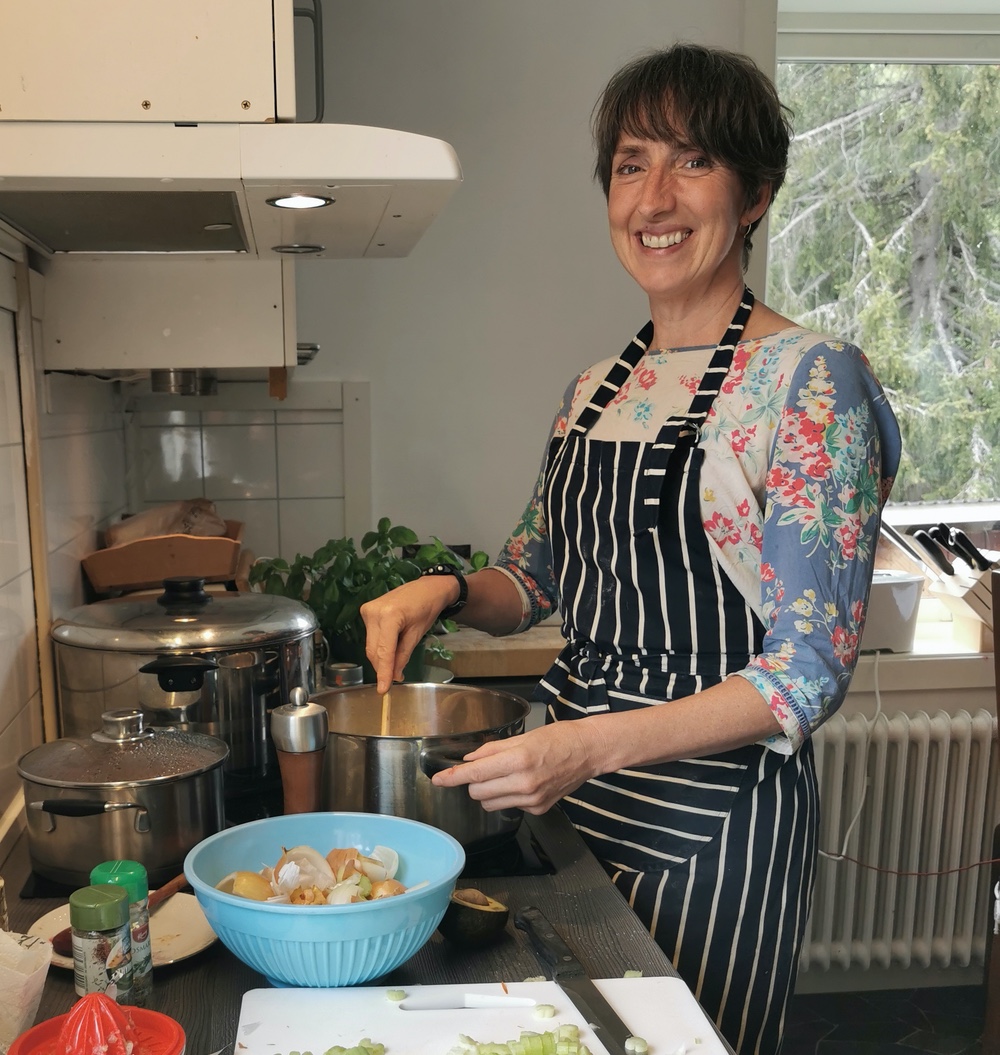
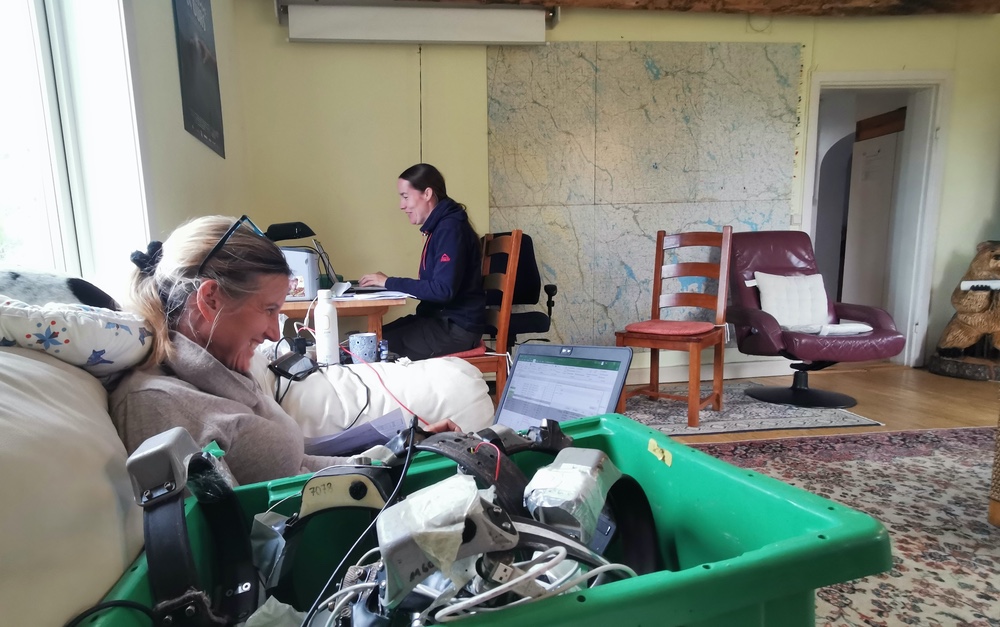
Louise and I will isolate ourselves as much as possible in the main house, where the kitchen is located. Louise will cook there and we will put the food out for you to carry over to the fireplace house to eat (we will eat in the main house).
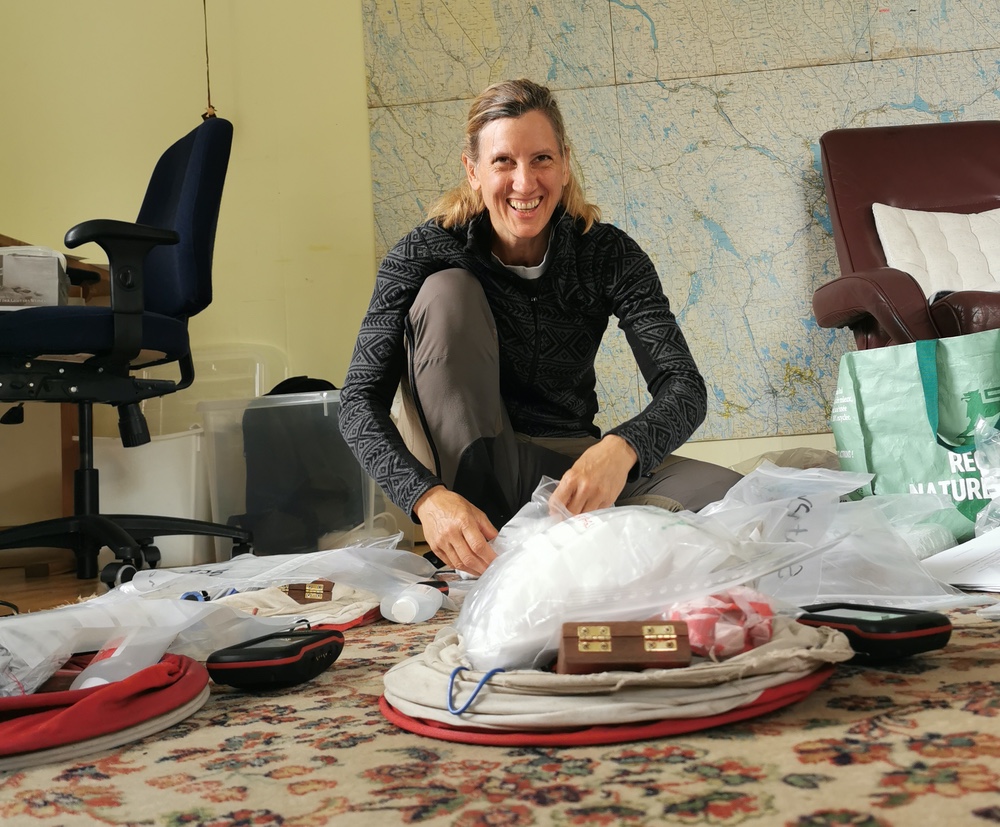
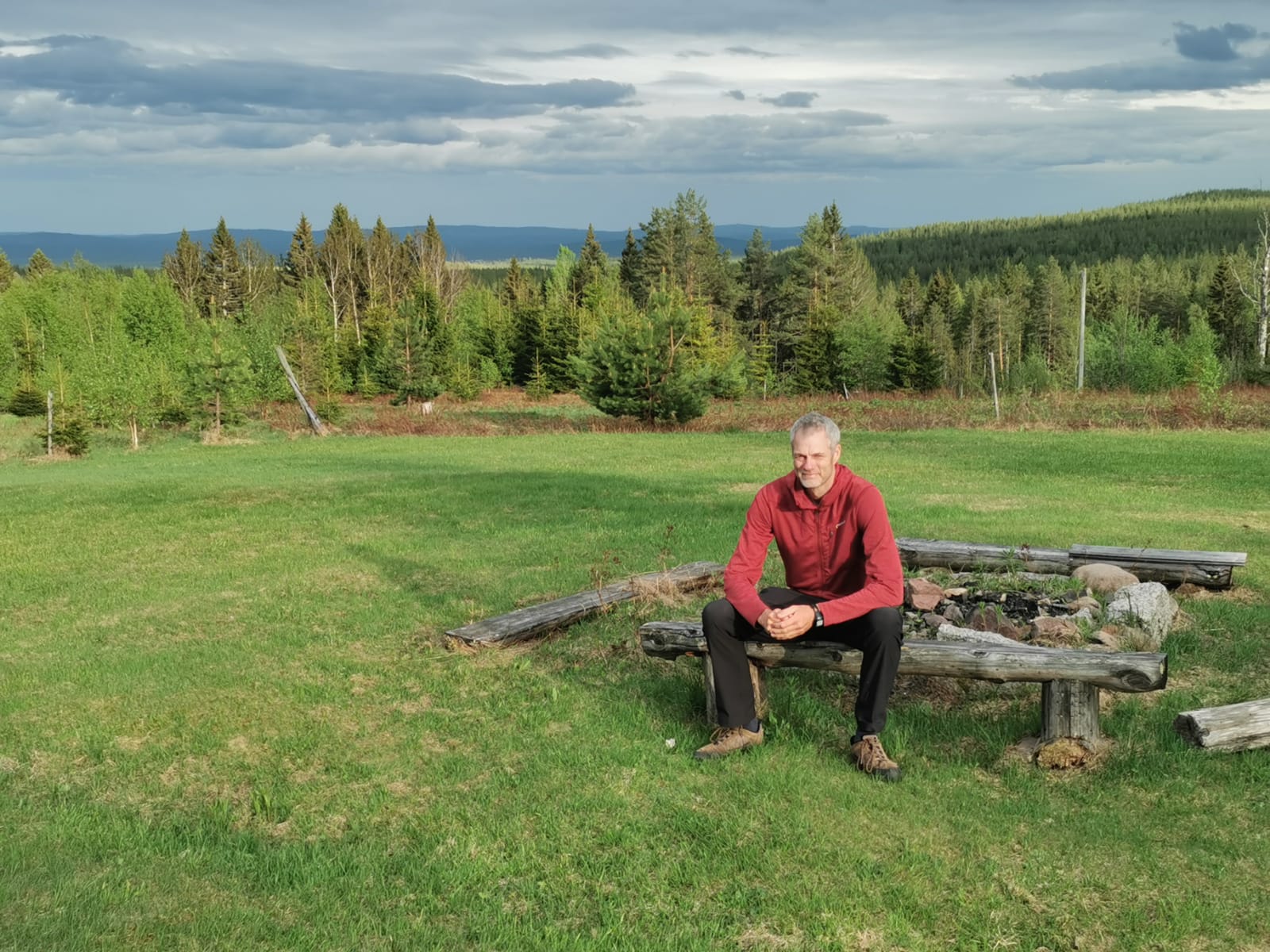
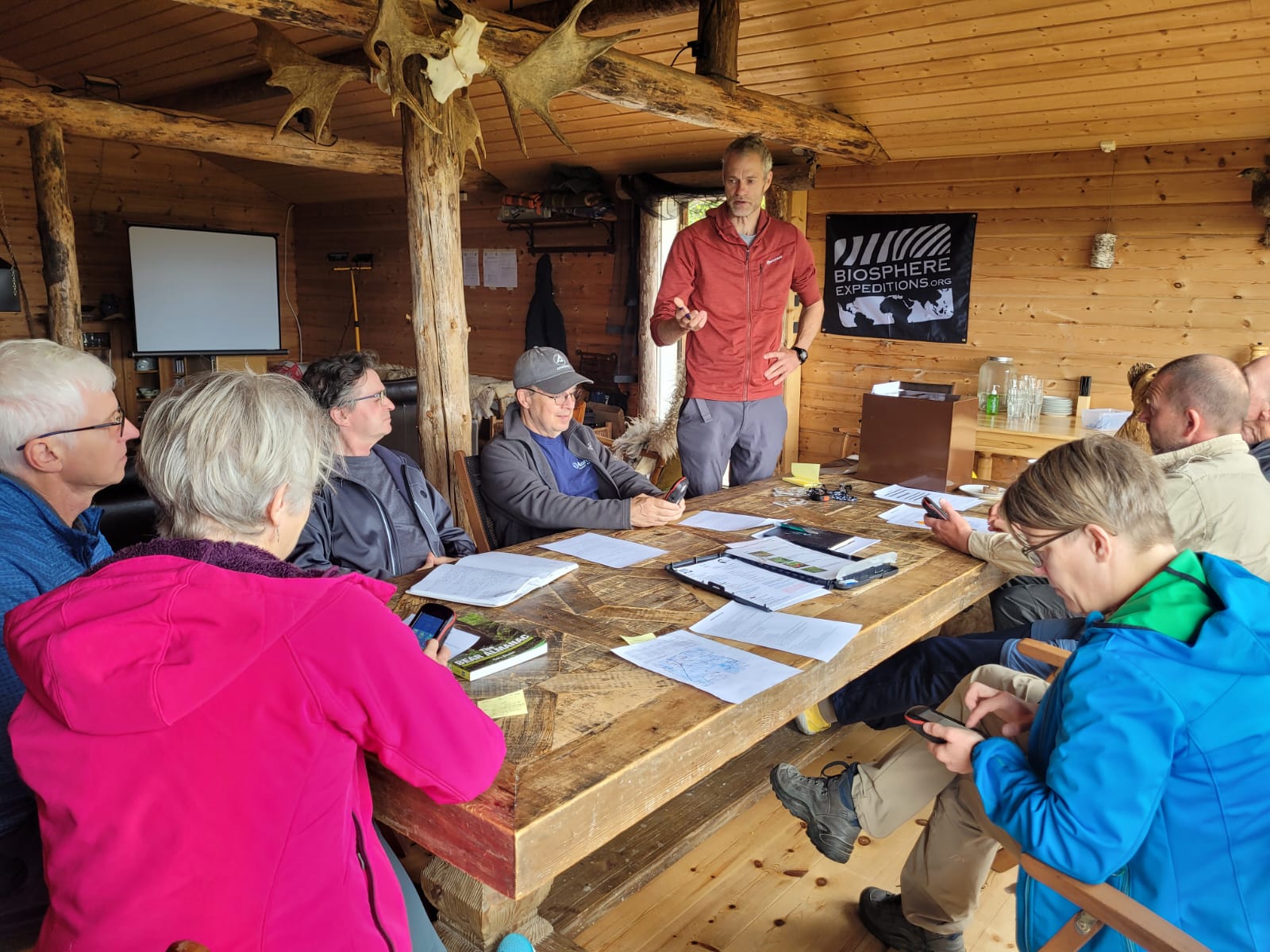
Also in the fireplace house will be the equipment and where Andrea will conduct her training sessions.
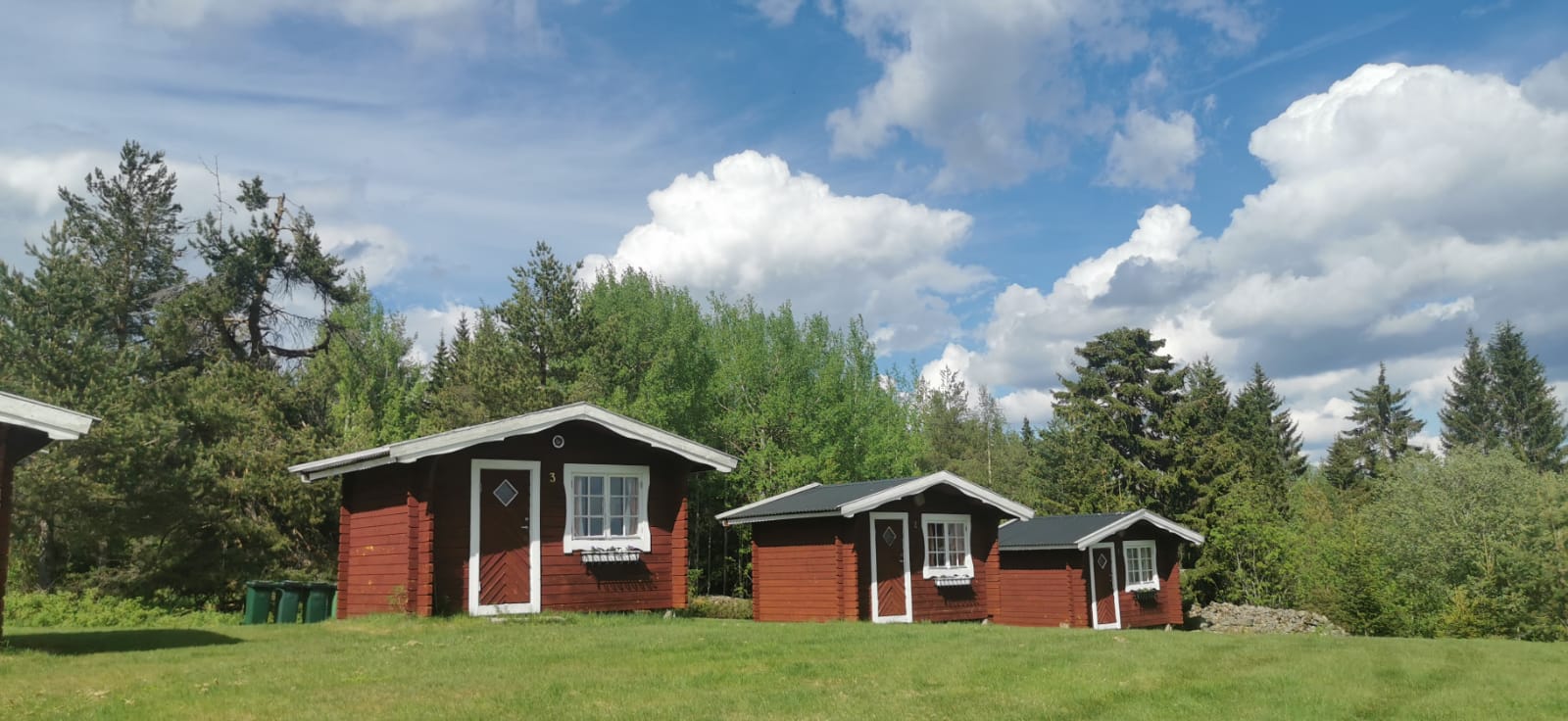
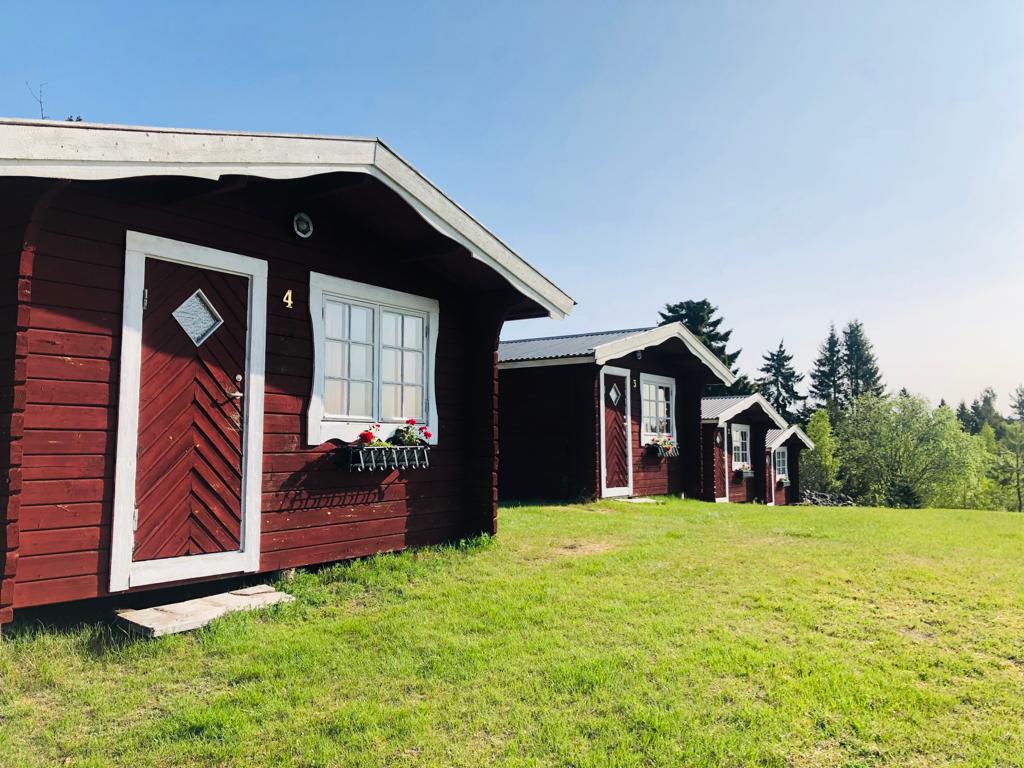
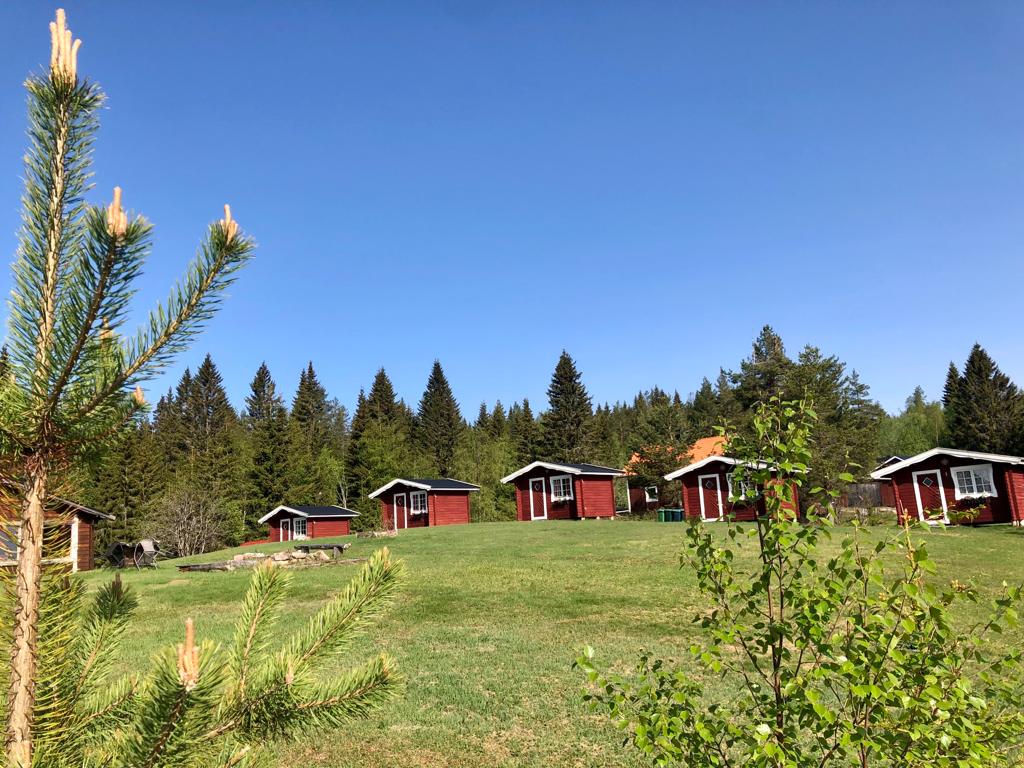
You will all have twin share cabins to keep your things and sleep in at night, as normal.
Louise and I will wear FFP2 masks (the thicker type) whenever we are in contact with you. We recommend that you also wear FFP2 masks when around us (make sure you buy some before you arrive and we will also have some on site).
Andrea has drafted in her husband Gunther to help with training sessions. If I am needed for training sessions, they will be held outside or in the well-ventilated/draft barn and I will be masked up. We recommend that you mask up too.
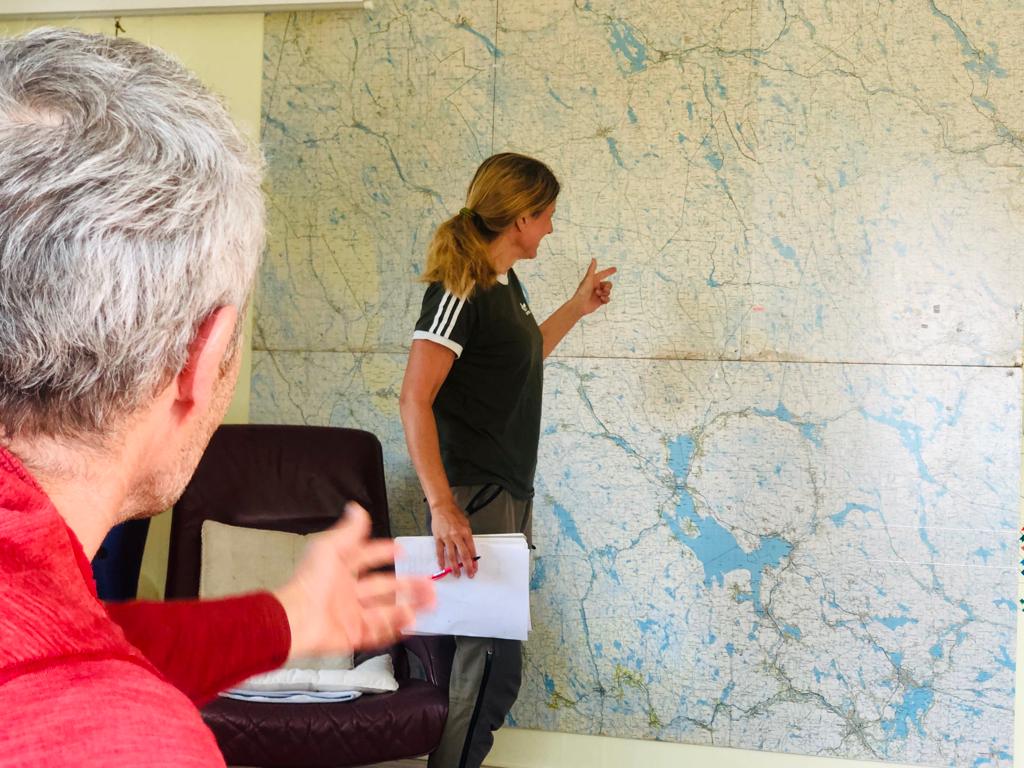
Andrea will lead all field training activities during the first two days and Louise and I will stay back at base.
As people usually stay infectious for 10 days after testing positive, this will bring us towards the end of the expedition. Louise and I will monitor for symptoms and only stop using masks and join the group as normal if we have two negative tests 24 hrs apart; you are of course free still to use masks around us if/when we re-join.
I hope this explains everything clearly. We can discuss details on site, if you want to.
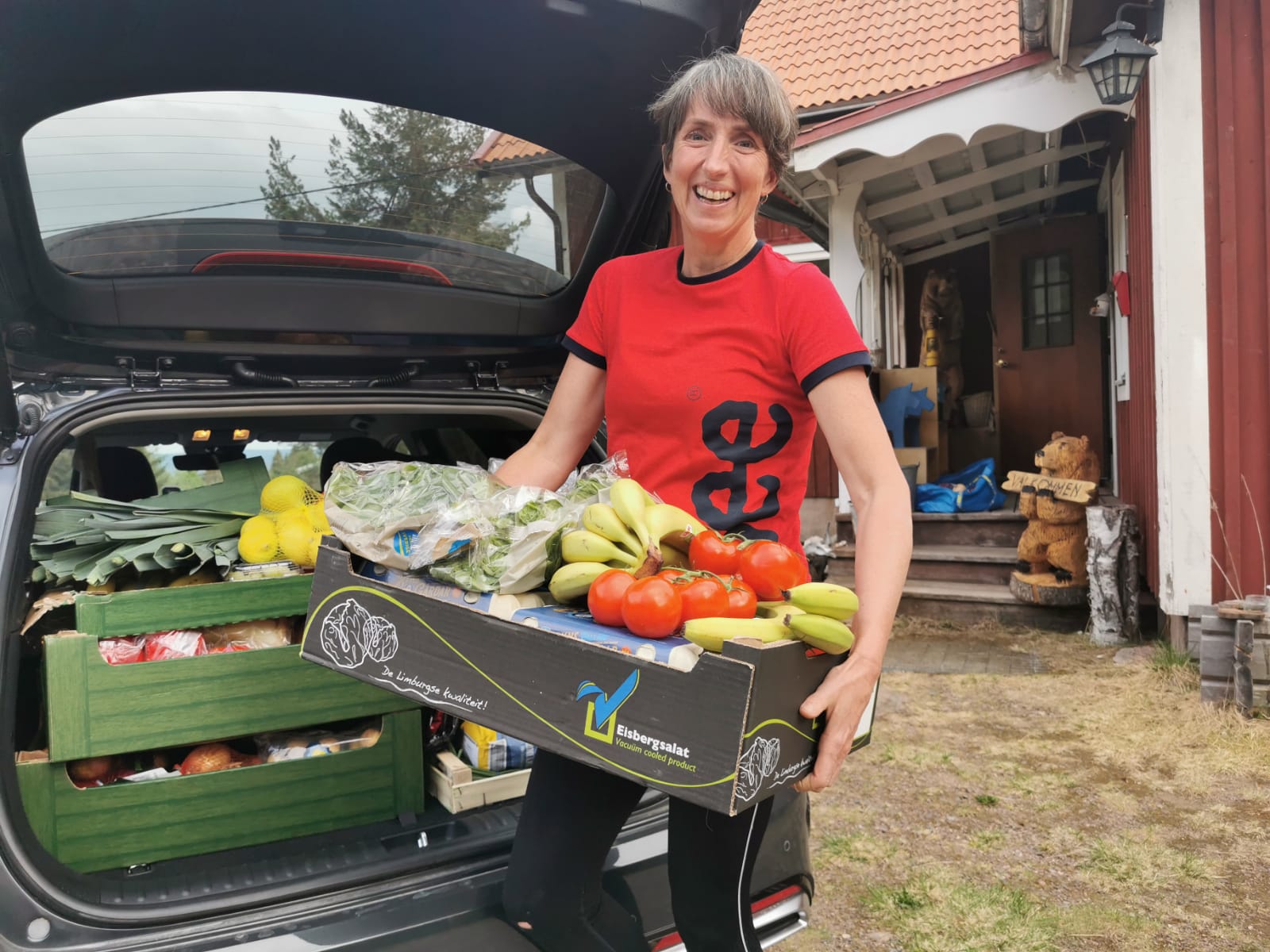
Apart from that, the expedition preparation is going well and to plan. We have bought what looks like an enormous amount of food, but is exactly the right quantity as calculated in Louise’s spreadsheet.
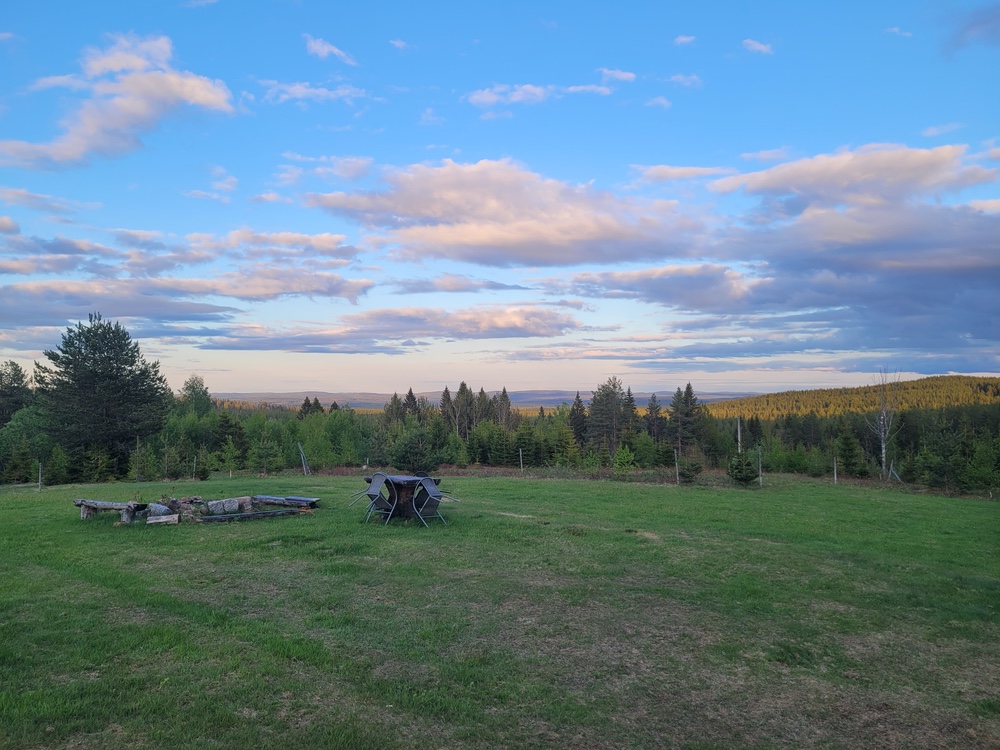
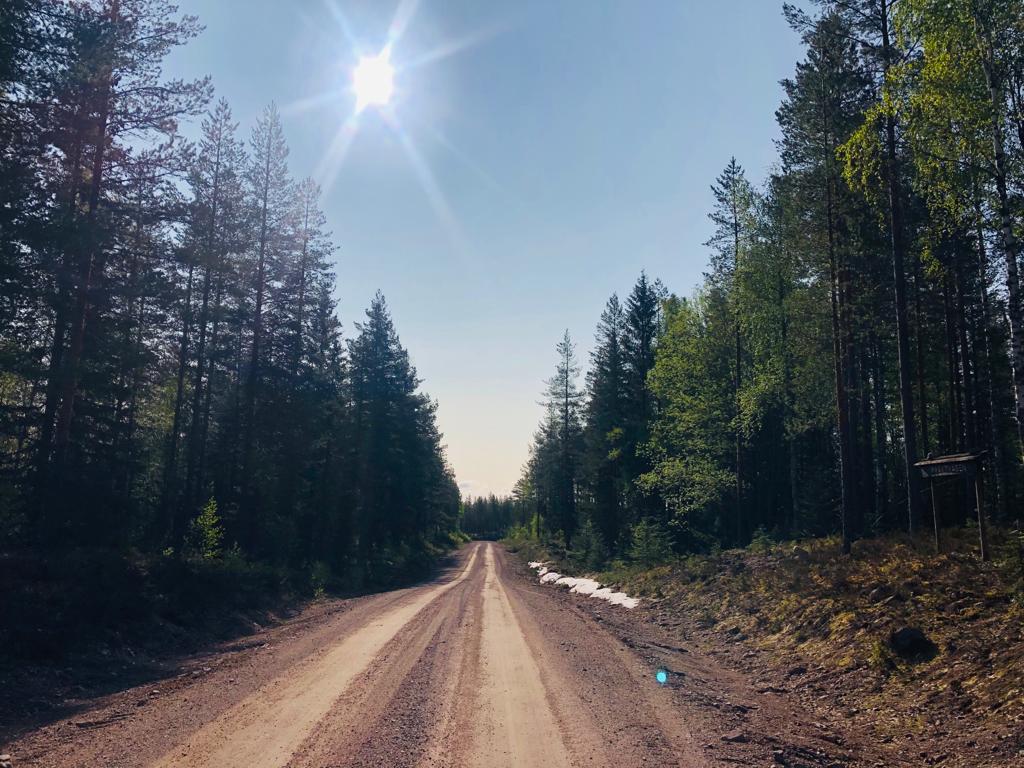
Our base camp is looking good and will be ready to welcome the expedition team on Sunday. The weather forecast is looking good. Cloudy and sunny days ahead, not much rain, temperatures up to 25C on some days. Don’t forget your sun hat!
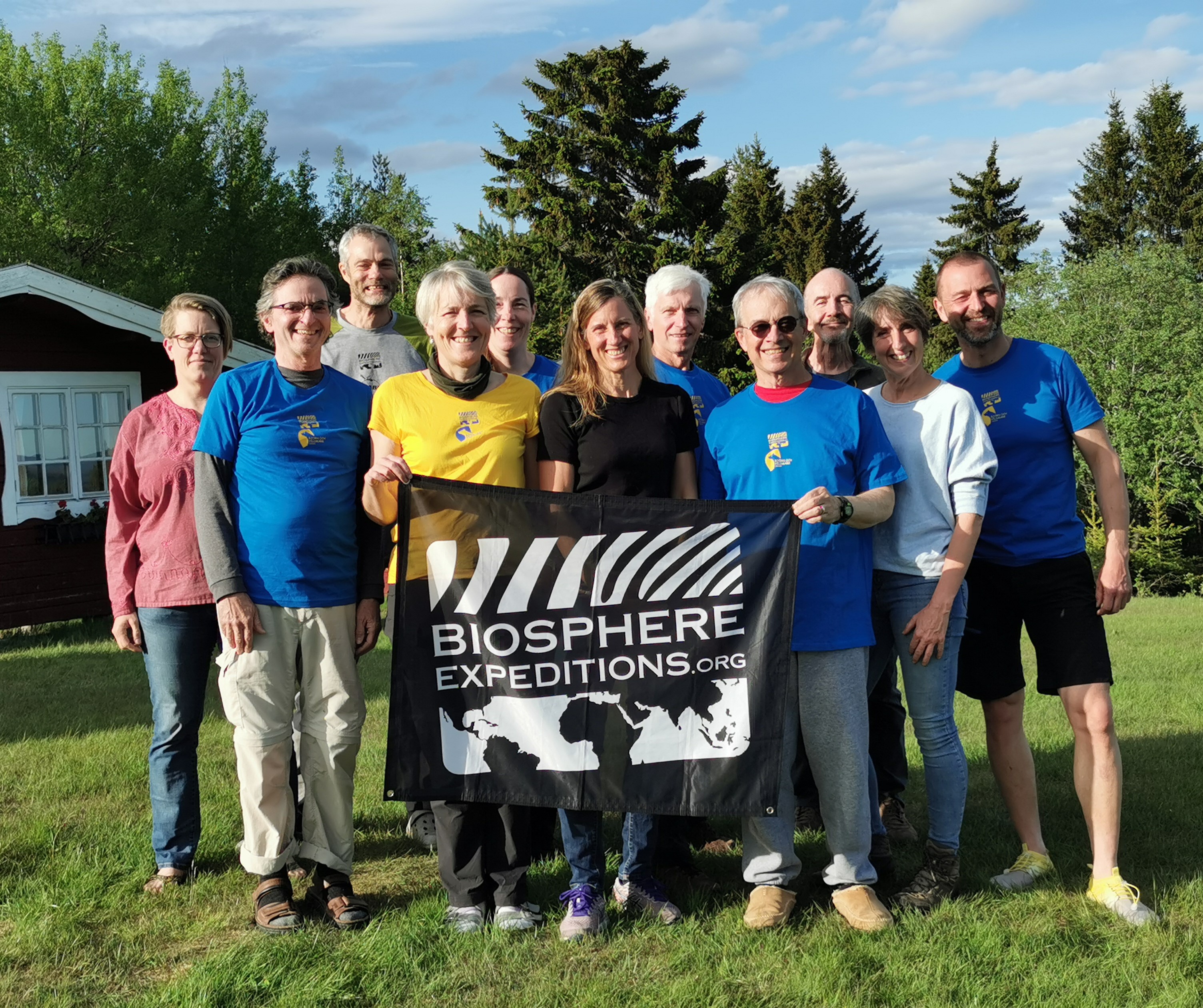
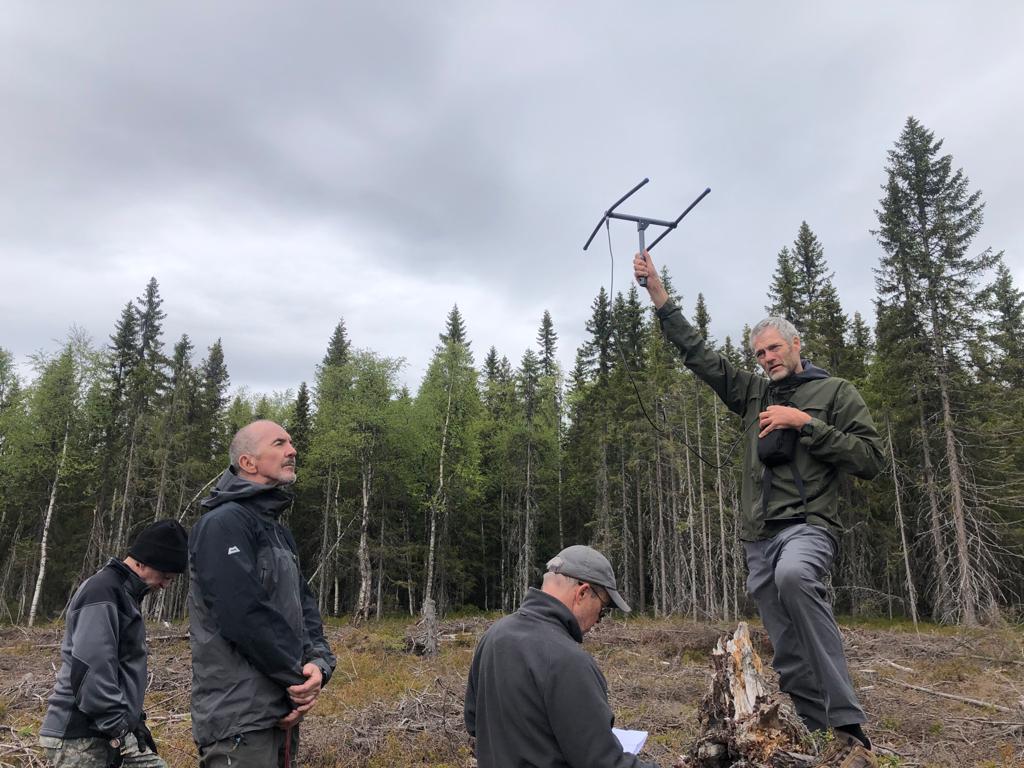
We have the same team as last year of expedition scientist Andrea, expedition cook Luise and me running the expedition and we are busy preparing. I am taking a break from a sea kayaking journey in Scotland and will be heading direct to Sweden in the coming days. Louise will be joining us from Devon to take command of the kitchen and keep the expedition team well fed. And expedition Andrea is based in Sweden and currently busy fitting tracking collars to bears who have recently left their winter dens. It is the use of these tracking collars that allow us to find the dens that we survey on our expedition, while also collecting a range of other biological data needed for us to understand how the bear population of mid Sweden is affected by changing pressures from climate change, forest management and hunting. This is conservation research on the front line.
We will be using similar research methodologies as last year, but we have some new kit. Make sure you read past expedition reports (2023, 2022, 2019) so that you are fully informed when you arrive.
The weather in Kvarnberg is good at the moment, warm and sunny. Although of course this may change, so please do bring clothes suitable for any weather, as described in the expedition dossier.
I can’t wait to get started and I will be back in touch from Sweden when I have arrived to set everything up for you.
In science confirming the absence of a species from a location is still a result. But hope dies last and so, after all the effort that has been put into selecting and moving expedition locations, everyone was hoping that we can find some evidence that snow leopards inhabit the mountains of our new study site. With this in mind, we started group 3 with the ambitious goal of placing 15 more camera traps in the surrounding mountains, and surveying all the remaining valleys within our base camp vicinity.
As previously reported, on our first full day in the mountains Sonja found what is suspected to be snow leopard scat. Since then several more promising samples have been collected (we eagerly await DNA confirmation from the lab). However, with Taalai, the local rangers and Alex (snow leopard zoo keeper) all feeling confident, signs are promising.
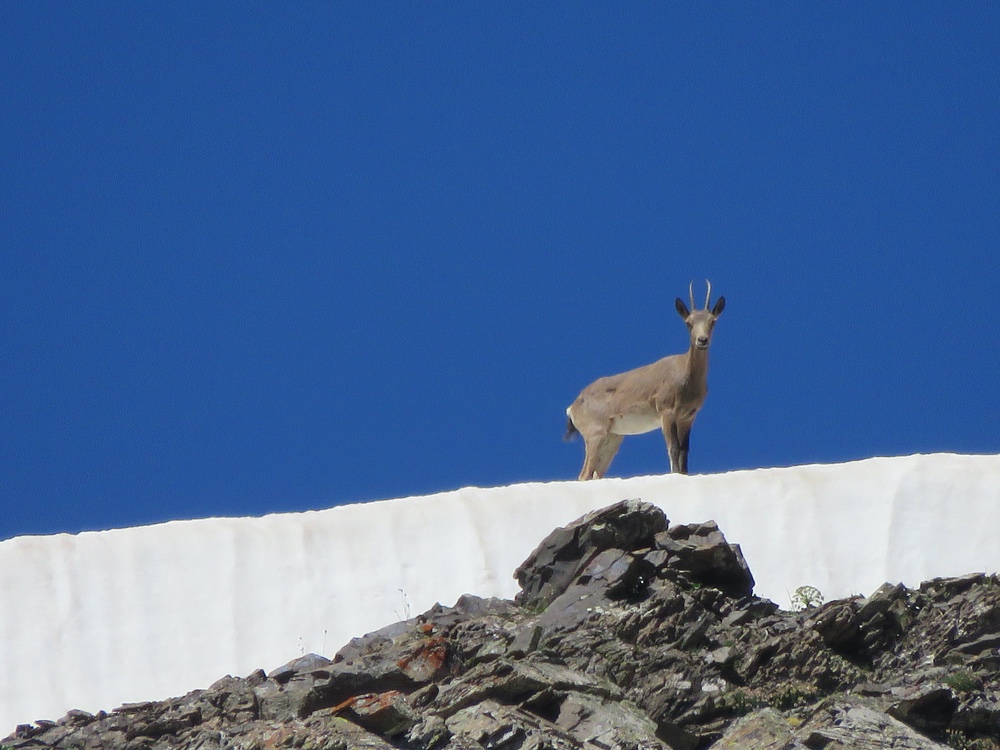
With strong and ambitious snow leopard citizen scientists we managed to hit our camera trap goals, special thanks to Mel and Alex for volunteering for the most challenging survey routes on every single day we went out. The most exciting discovery of the fortnight was made by Sonja, an excellent suspected snow leopard print (also mentioned in our previous blog post). With likely snow Leopard prints and scat, multiple Pallas’s cat prints as well as live ibex sightings, all indications are that these mountains are an excellent location for our expedition.
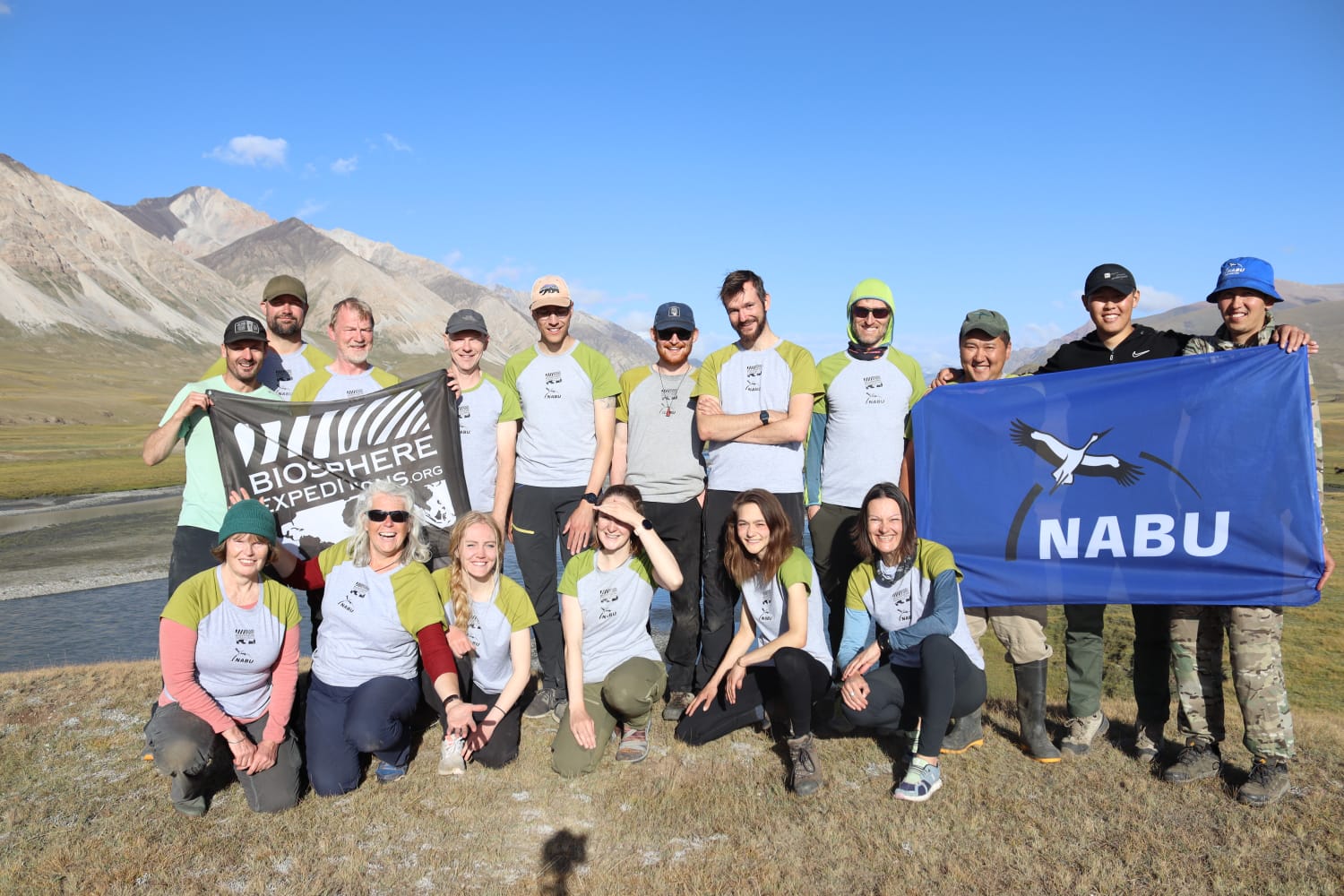
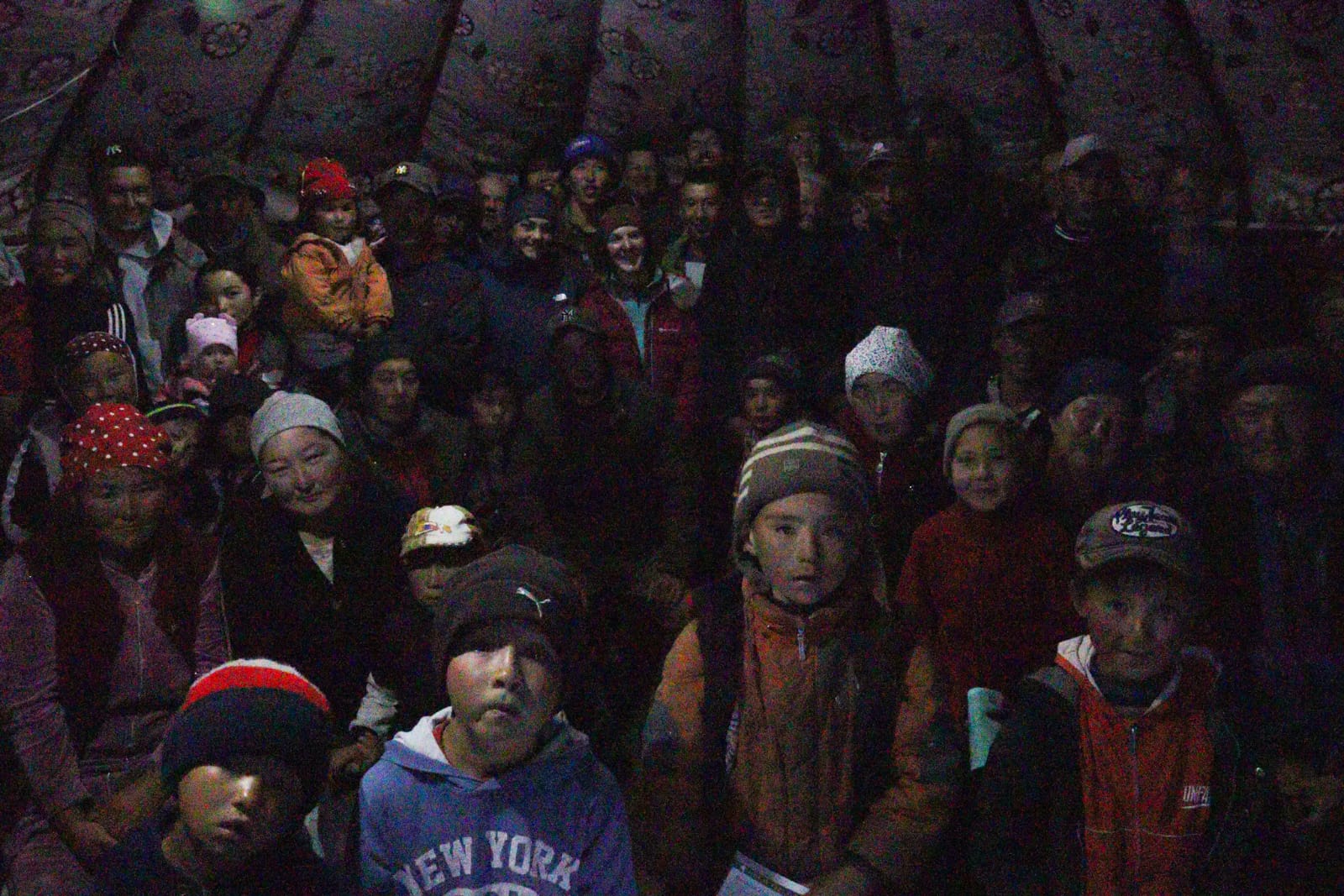
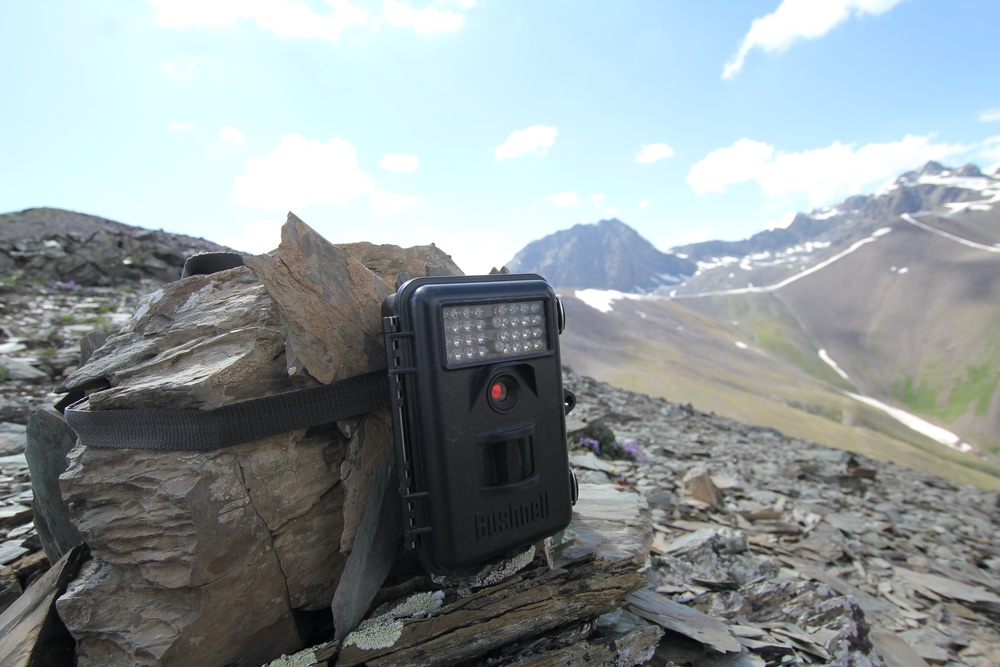
We rounded off the 2023 snow leopard expedition with a presentation evening for the locals in the valley. It was our opportunity to thank them for their hospitality and officially introduce Biosphere Expeditions, NABU and our project. With over 35 attendees, the evening was a fitting end to a busy and productive expedition. Keep an eye out for the 2023 scientific report in the coming months. With a look forward to 2024, we eagerly await the results of the camera traps we have placed.
On behalf of the whole team here in Kyrgyzstan, thank you to group 3 for your tremendous work ethic and thank you to everyone who contributed to the 2023 snow leopard expedition.
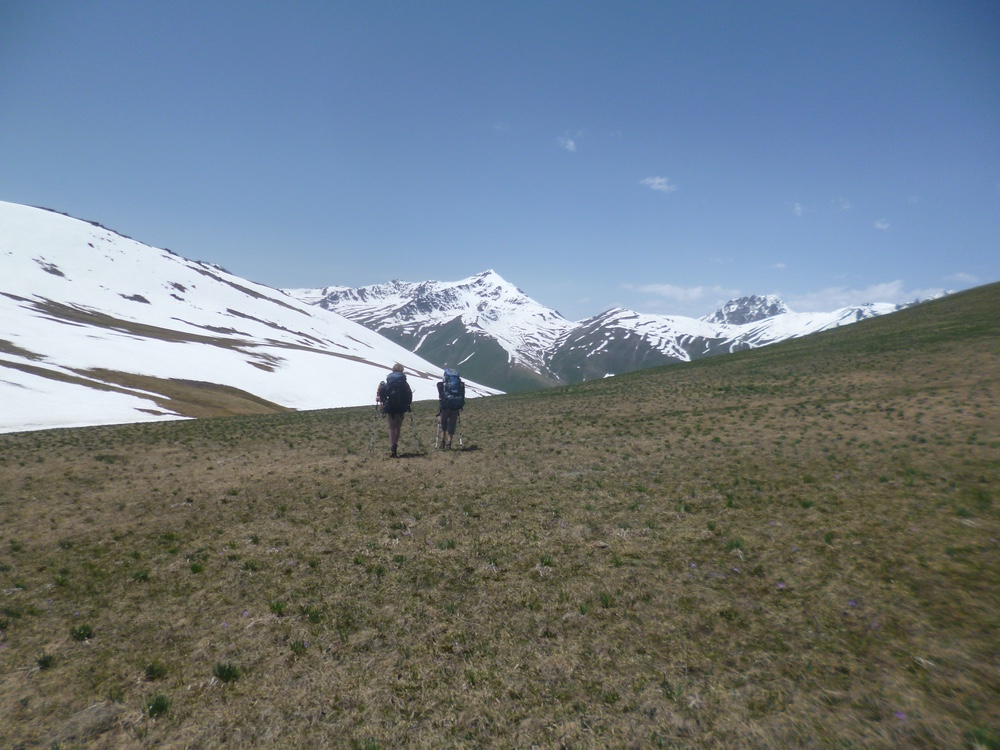
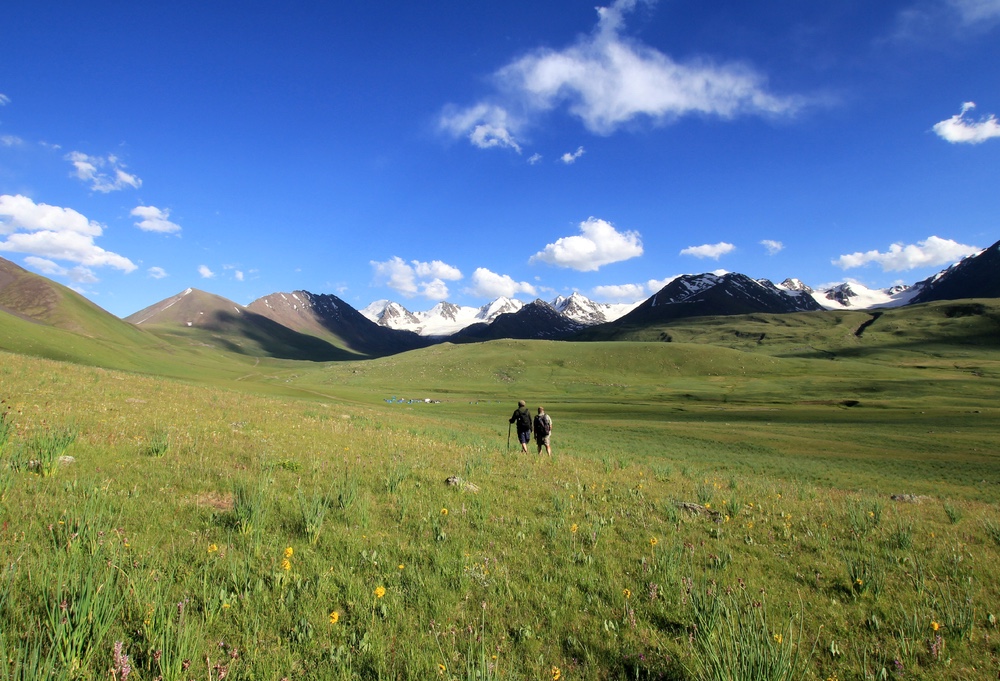
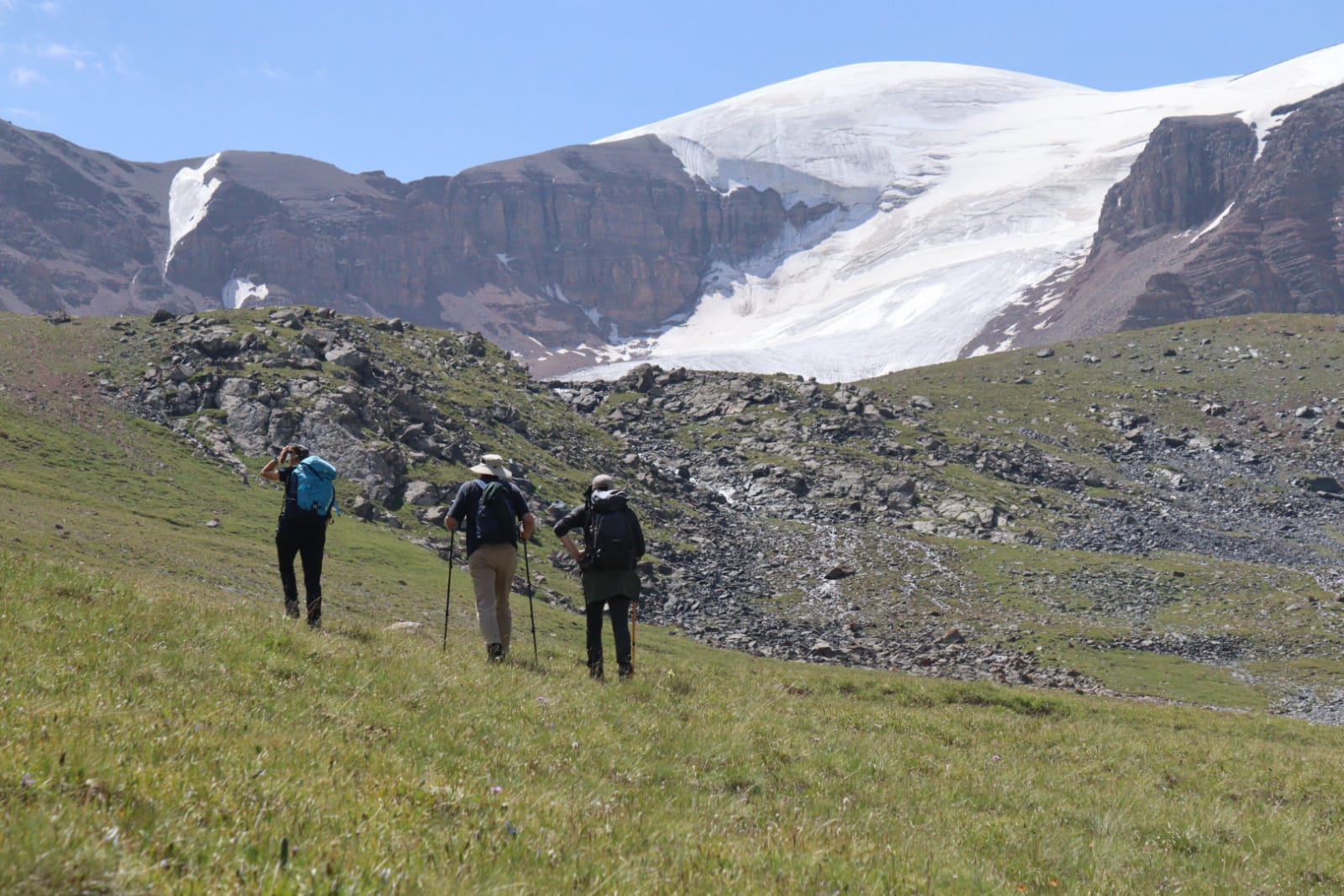
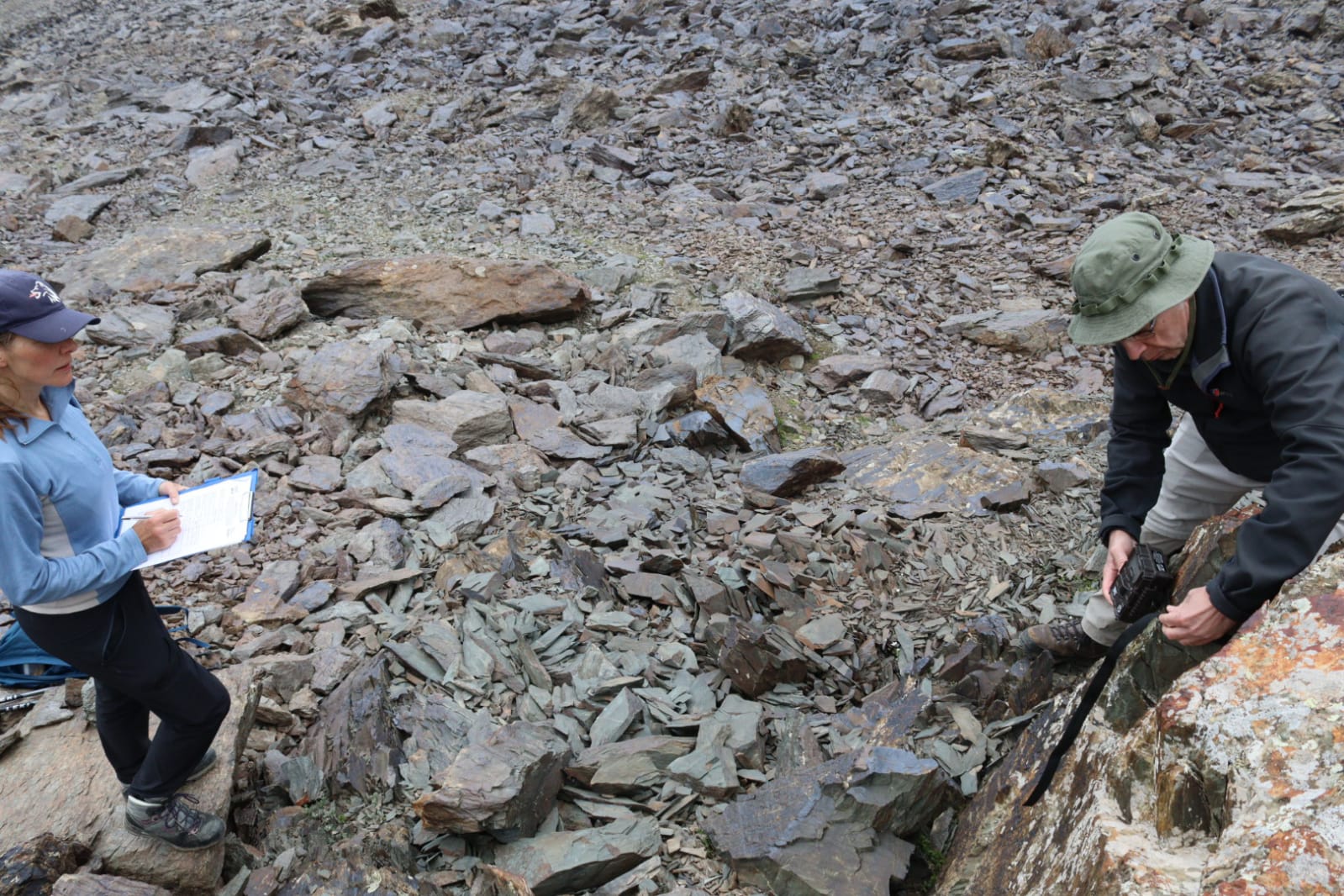
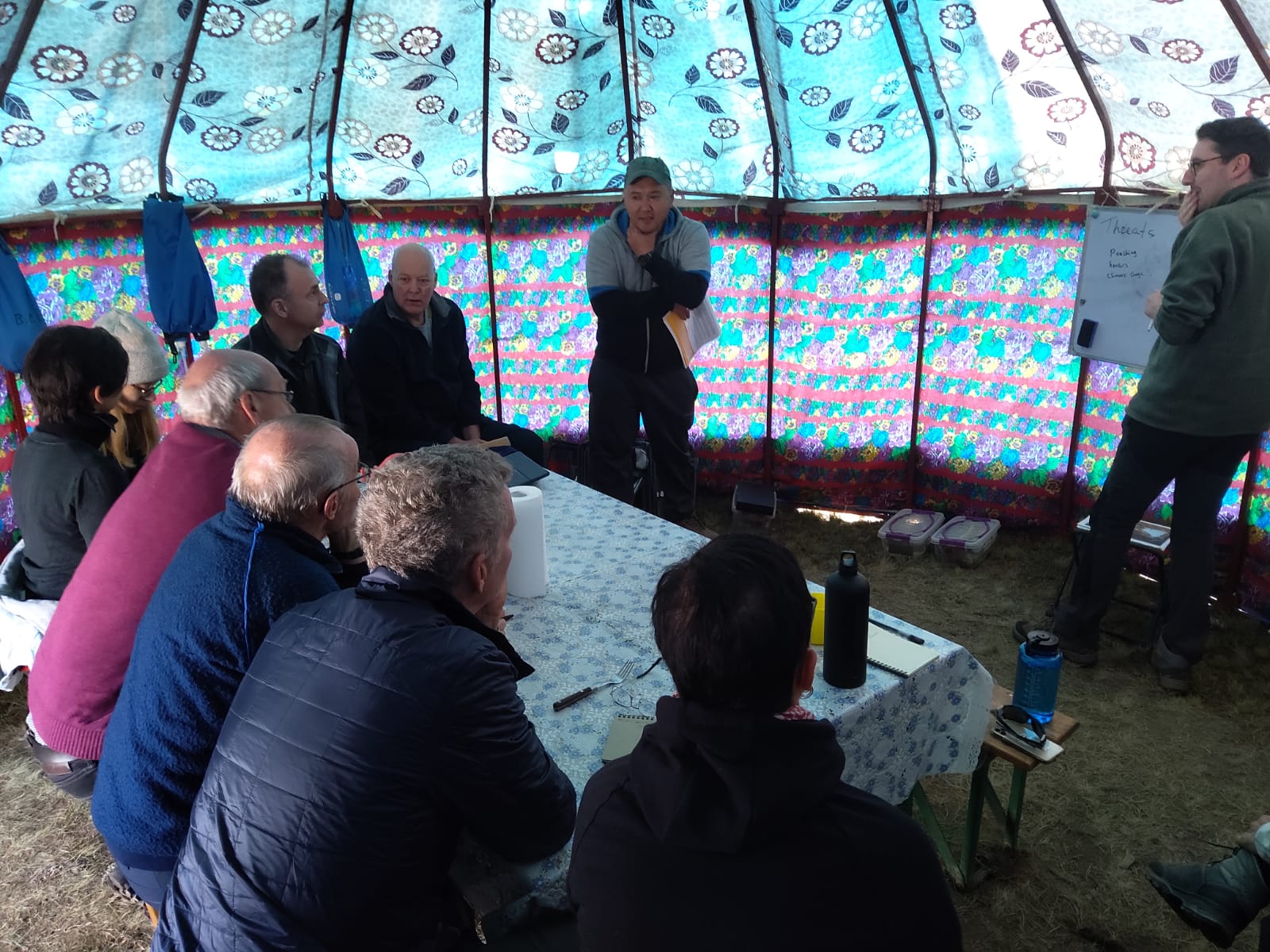
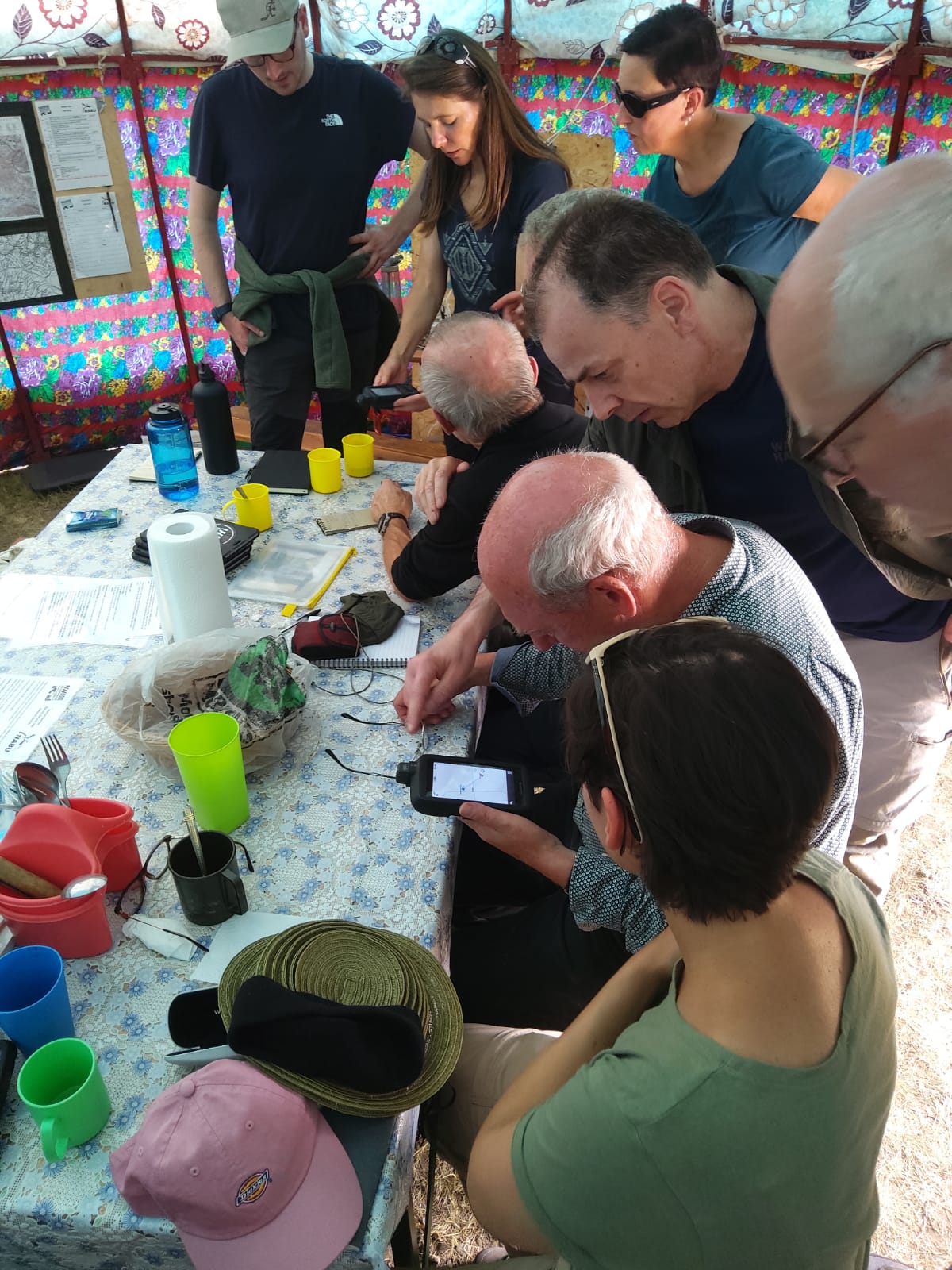
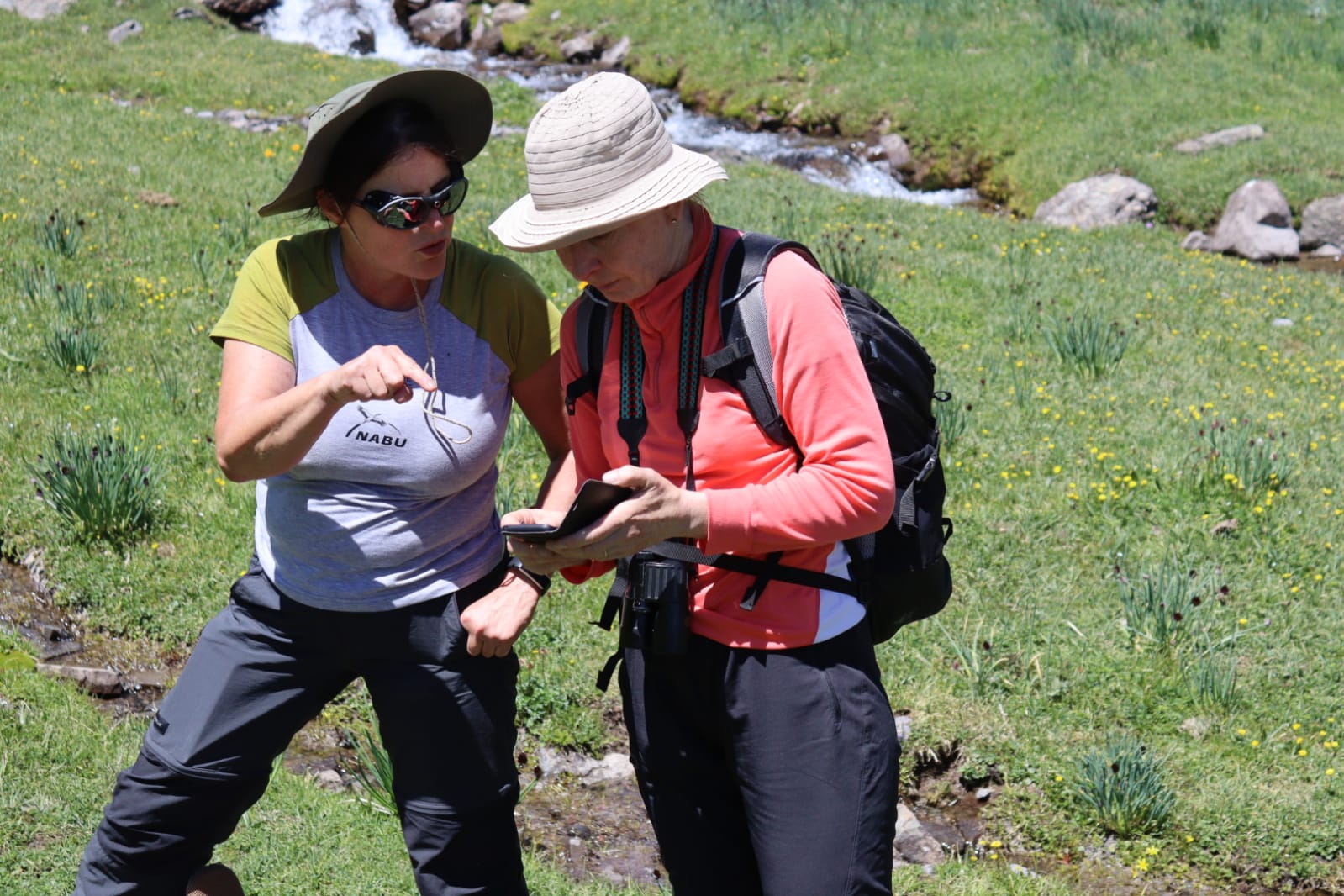
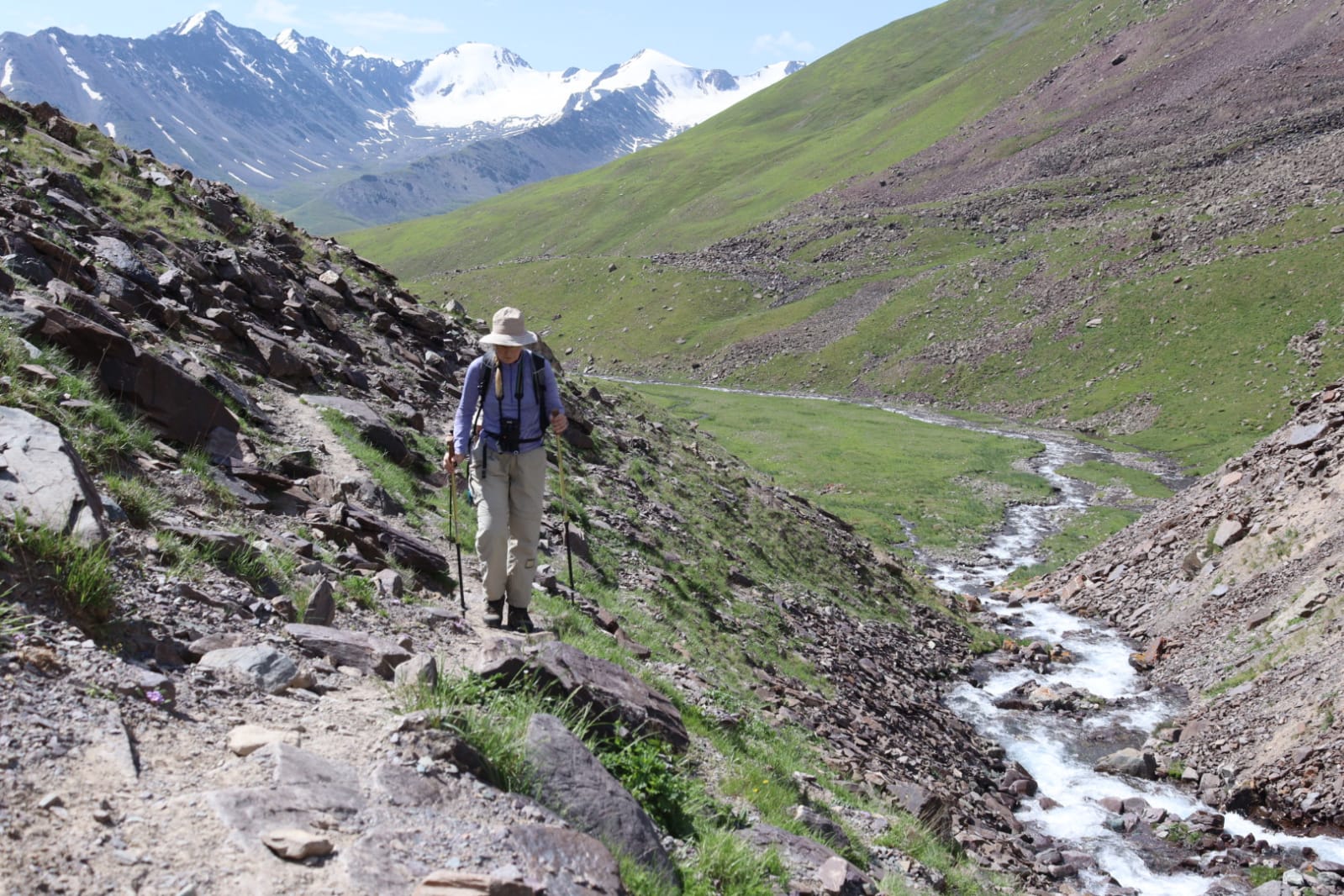
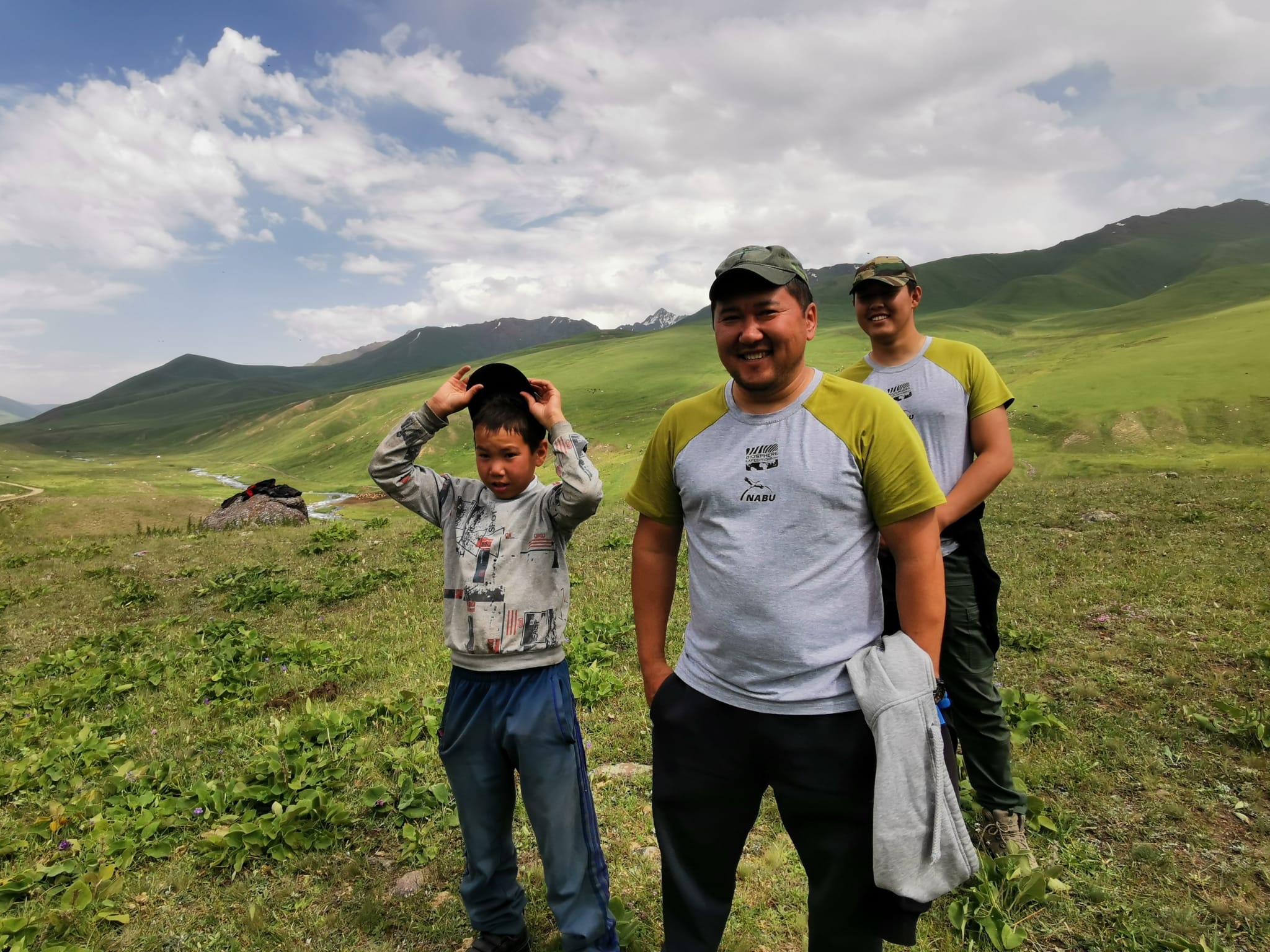
Here’s an update from half-way through group 3, mostly text with some generic pictures. This is because we have fancy GPSs that can send messages (but not pictures) via satellite from our remote, internet- and mobile-free base camp, which is a welcome distraction from distractions in itself….
Things are going well with a strong group 3. Our new location is delivering. We’ve had multiple ibex sightings and also what we think is evidence of snow leopard (tracks and scats). Tracks are notoriously unreliable with a high misidentification rate, so this is not strong evidence yet for our science nerd minds. Scat will be, once its DNA has been analysed. In itself scat has a 50% misidentification rate by sight, but once snow leopard DNA has been show to be present, then it’s a 100% proof. What the people in the lab look for – if you are interested – is intestinal cells on the surface of the scat that are deposited there as the scat moves through the cat’s gut. The scat itself is composed of what has been eaten.
We are pushing to get all camera traps out by the end of the expedition. This is hard work, but group 3 are up to the task.
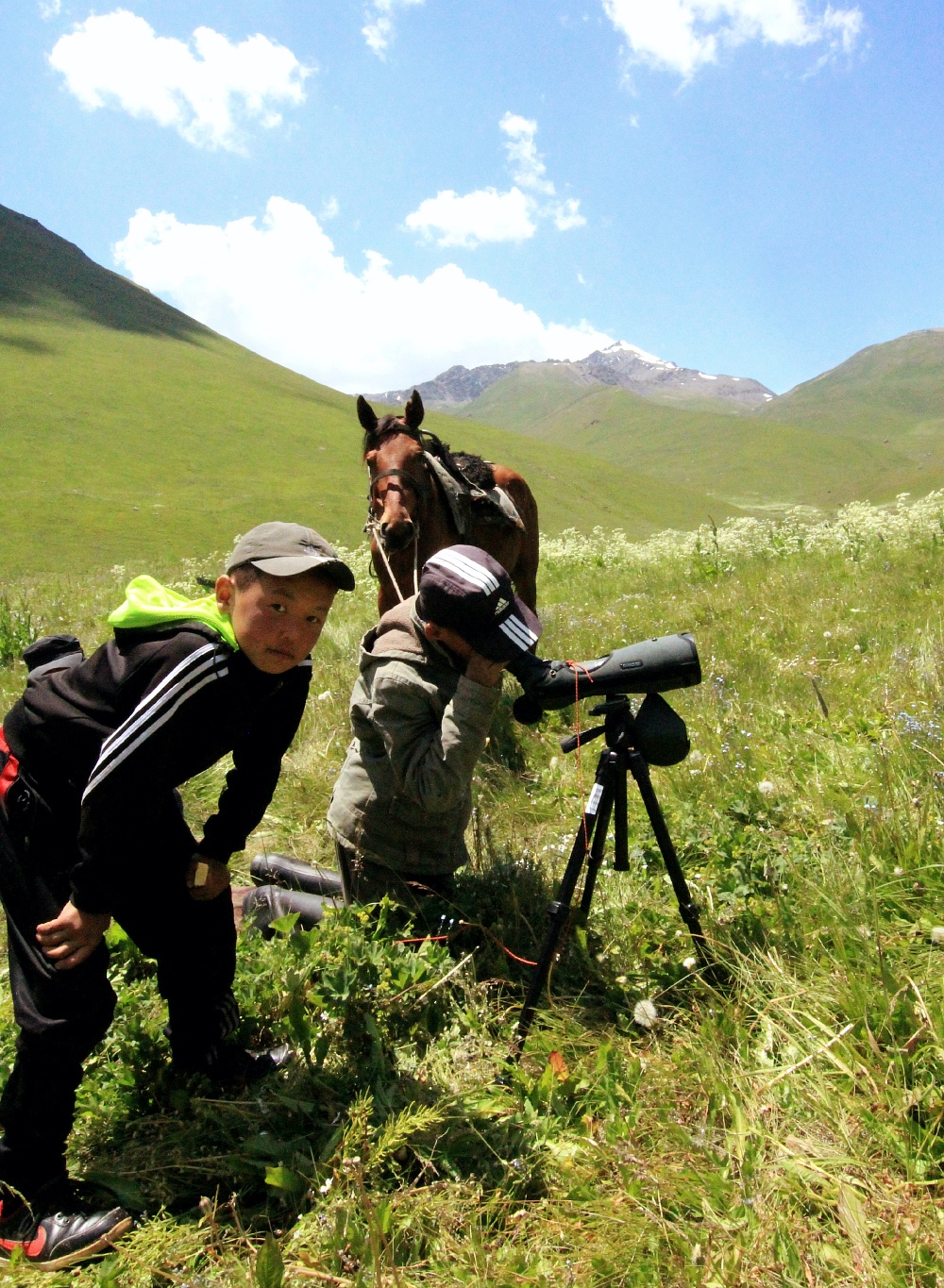
We will also deliver a presentation about what the heck we are doing in their valley to our local herding neighbours. Hopefully this will be a great ice breaker and the start of a good working relationship.
Continuing the 2023 Tien Shan snow leopard expedition in our new study area meant an inexhaustible list of tasks for group 2, with new valleys to explore, camera traps to set and locals to build relationships with.
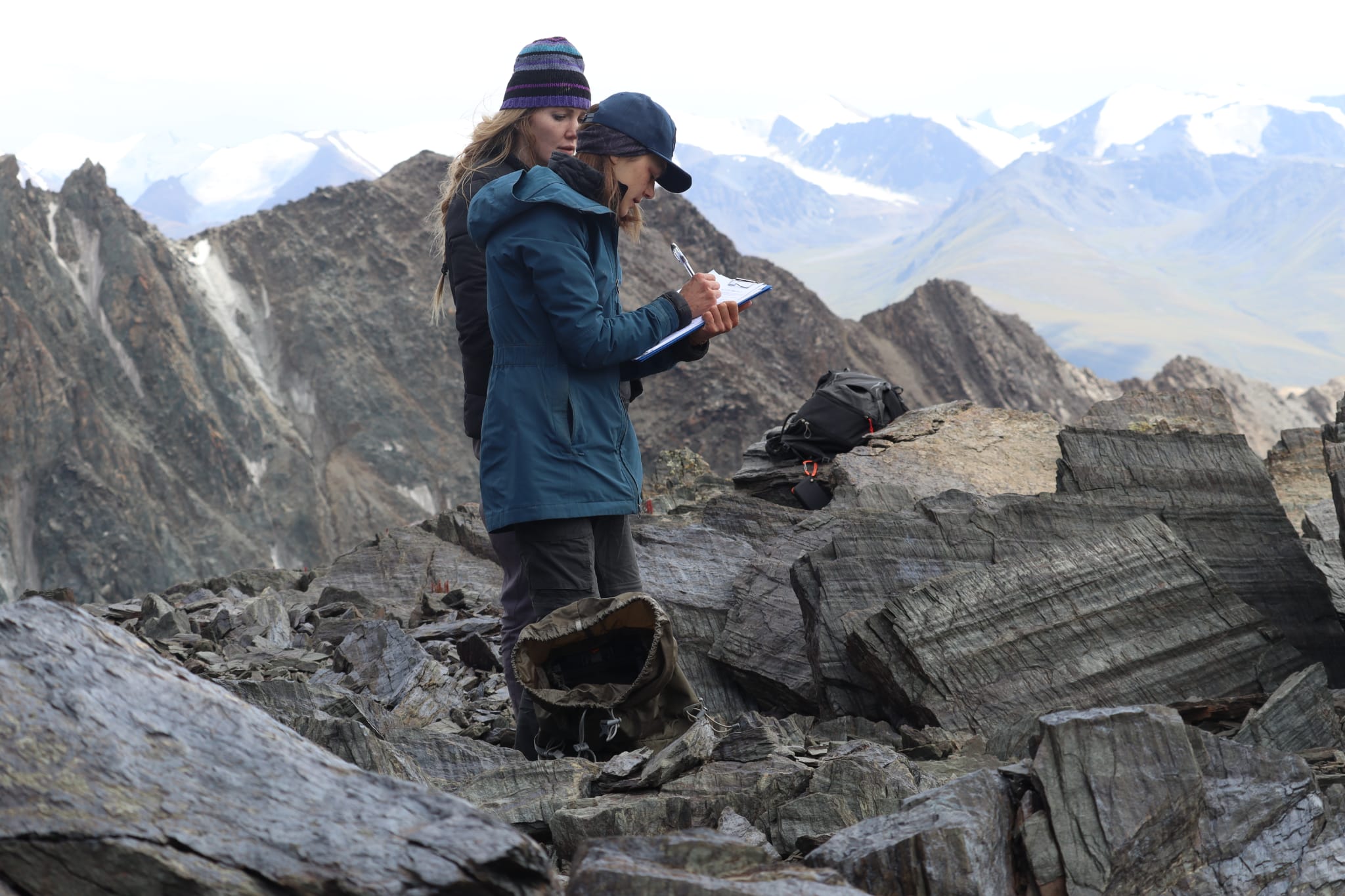
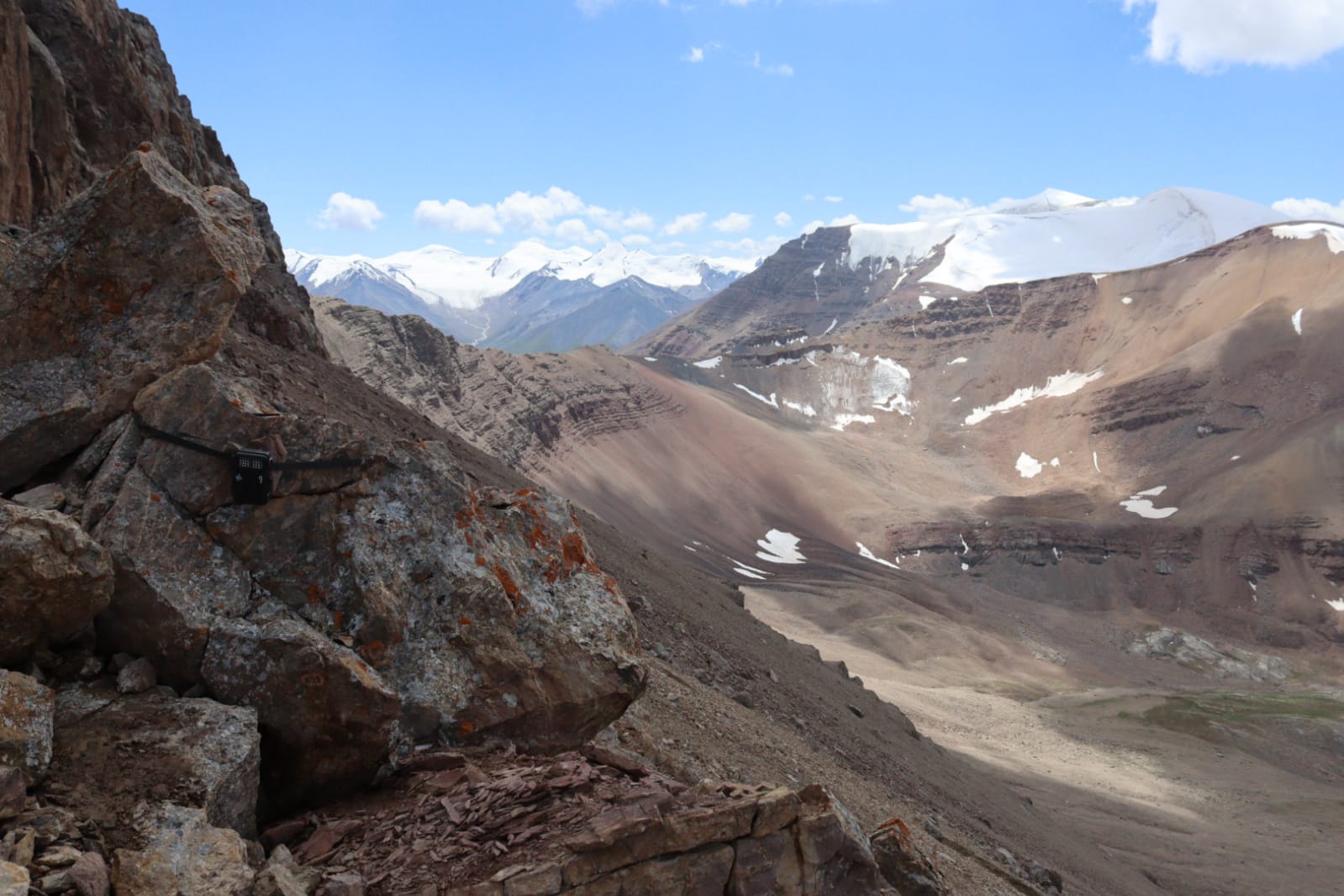
Surveying unexplored (by Biosphere Expeditions) valleys meant that group 2 had to start each day with a flexible mindset. The suggested survey route could be promising and turn into a nine hour mountain walk, or an impassable obstacle could mean the group is back at base camp by lunchtime. Initial evidence is very promising, with multiple signs of argali sheep (snow leopards prey), including remains and tracks. But, to achieve the goal of documenting snow leopards in this new study area, we need camera traps up in the mountains, working for us 24/7. Special mention to Isabelle, who was part of every team that reached the desired altitude for camera trap placements.
We look forward to seeing what evidence this hard work captures in the coming weeks. We also had teams working hard on interview questions and relationship building with local herders and their families. Thank you to Luke, Karl, Anastasia and Corinna for your dedicated work in designing and implementing interviews.
With group 2 wrapping up, I would like to thank everyone who participated for your hard work. We look forward to welcoming group 3 to these beautiful mountains. Please be prepared for training days followed by some long days in the mountains getting camera traps into prime snow leopard territory.
Group 1 started smoothly with everyone arriving on time to the meeting point in Bishkek. We then drove in convoy for seven hours to base camp arriving on schedule at 16:00.
The next morning saw a busy day of training with lessons on scientific methods, GPS use and offroad driving at our old site. We’re here to wrap up our work in this valley. If you have read the 2022 expedition report, you know why. The biggest task for group 1 was collecting all the camera traps from the mountains, which involved some challenging days, as most of the cameras are placed above 3700 m. Well done Clodagh, Leonard and Simon for retrieving our highest and most hard to reach cameras.
In fact, the whole team did a sterling job retrieving most of the cameras within the first few days. We then had a day off with goodbye celebrations for the old valley and experienced some local culture before taking down base camp and loading up the cars and truck. There is a feeling of excitement for the opportunity to study a new valley where – to our knowledge – no snow leopard research has previously taken place.
So here we are, half way along the eight hour drive to our new location in Archaly valley, where the rest of our 2023 expedition will take place. Just enough time and signal to drop off this blog entry.
More news on the new location when we’re back in Bishkek for the changeover. Groups 2 & 3, be ready to go where few citizen scientists have gone before!
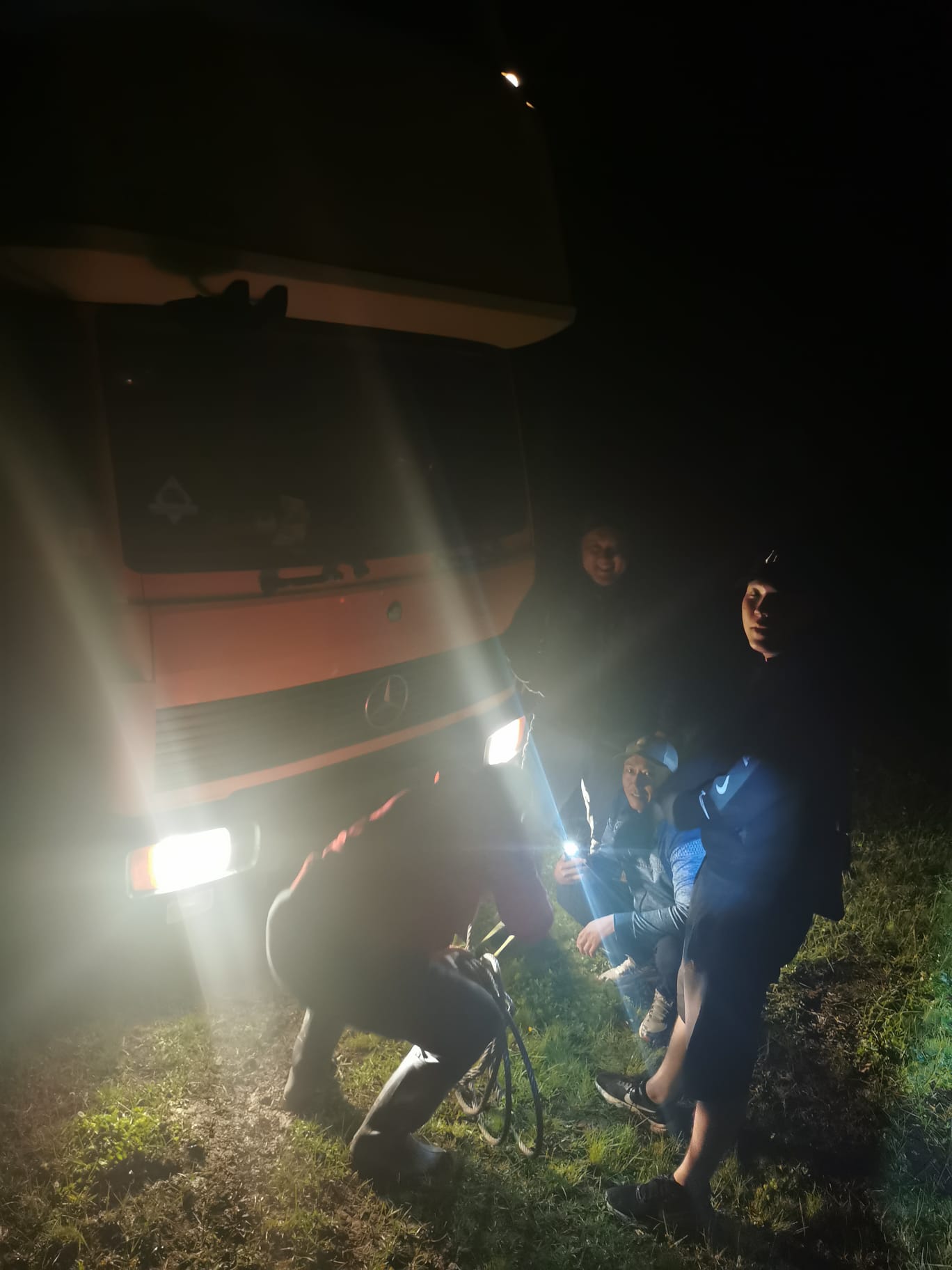
We set off on Thursday for our base camp location. After eight hours on the road we arrived as night was falling only to get our big truck stuck in soft ground. After a few failed attempts at freeing the truck from the mud, we decided to pitch our tents and try again in the morning.
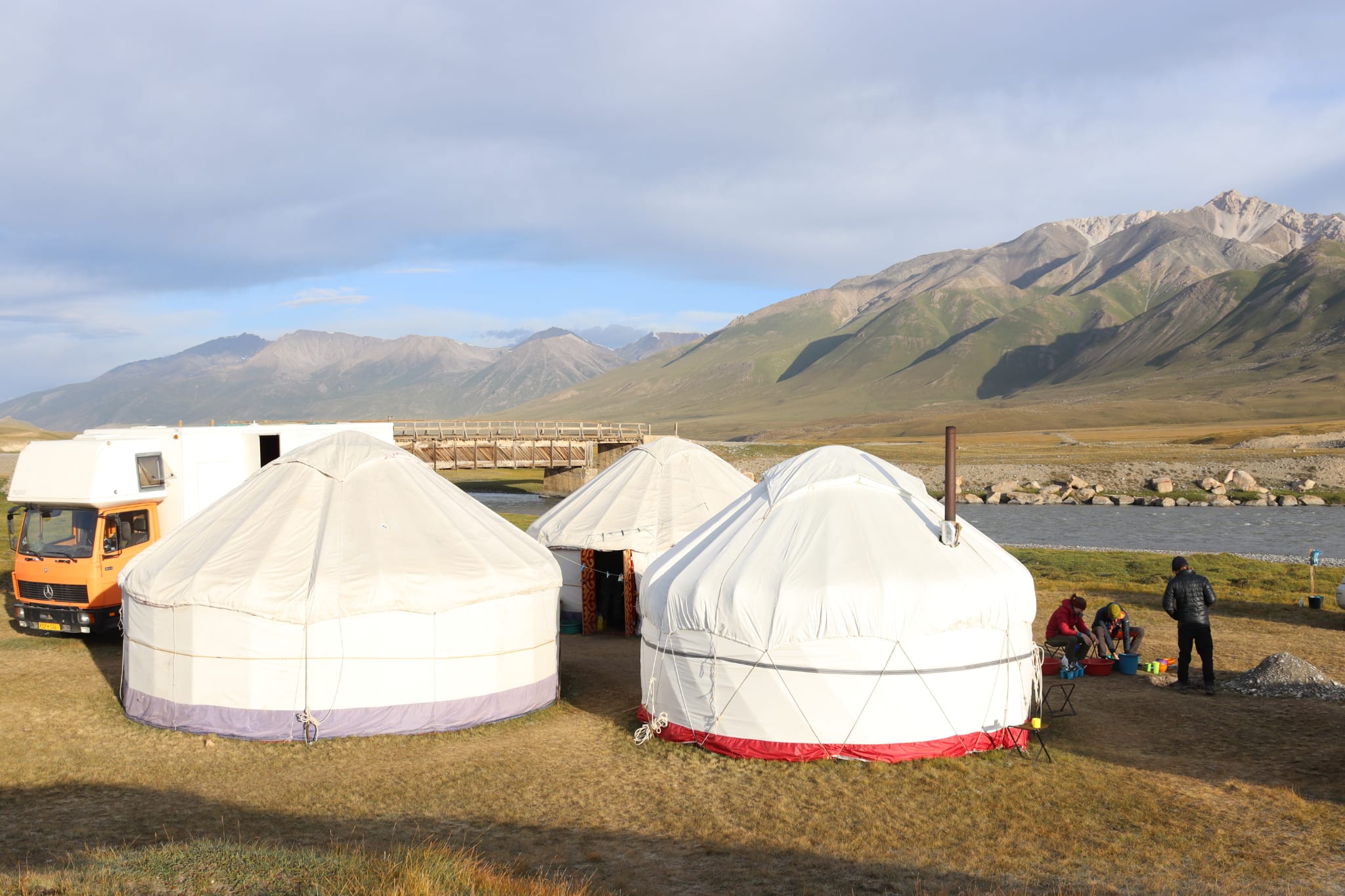
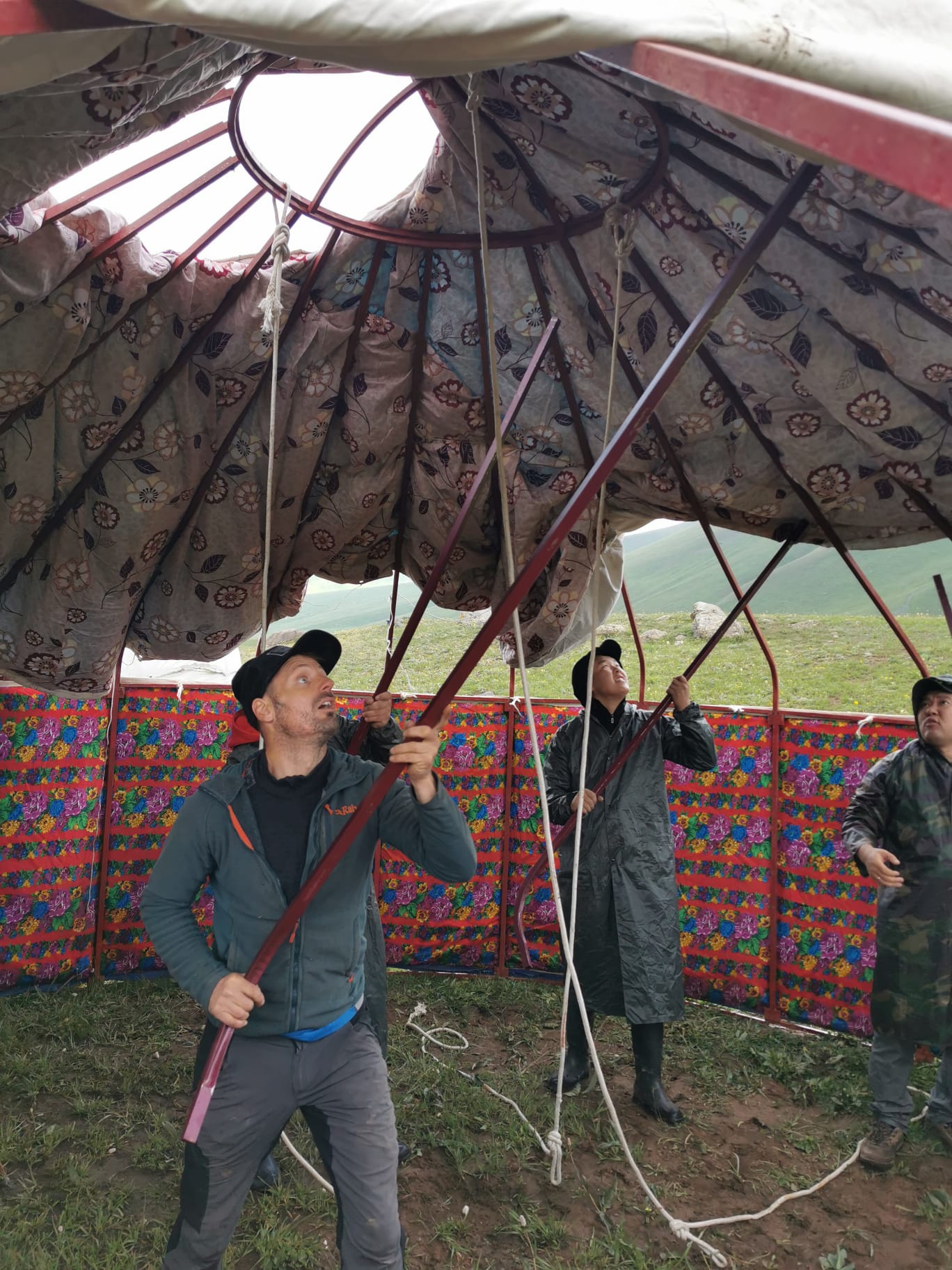
Sure enough the next day, Becca (ranger/guide) promptly freed the truck and it was all hands on deck setting up yurts, only breaking to reacquaint with old friends in the valley who paid a visit, they even mentioned having lost livestock to snow Leopards just weeks ago (more information needs to be gained with surveys) . Two days later, base camp was ready for the arrival of group 1.
On the way back, we went past another possible research site, Archaly valley, which looks good and promising, especially in light of what we wrote in the last expedition report, which we’re sure all expeditioners have read in preparation…. More on Archaly and our plans for this new site later.
Back in Bishkek, more last minute shopping before we met group 1 this morning for the long journey to base camp followed by plenty of learning in the first couple of days.
Here in Bishkek we’ve been continuing to meet staff who have been on expedition before. Many discussions are taking place about road conditions in the mountains, camera trap locations and servicing and expedition food.
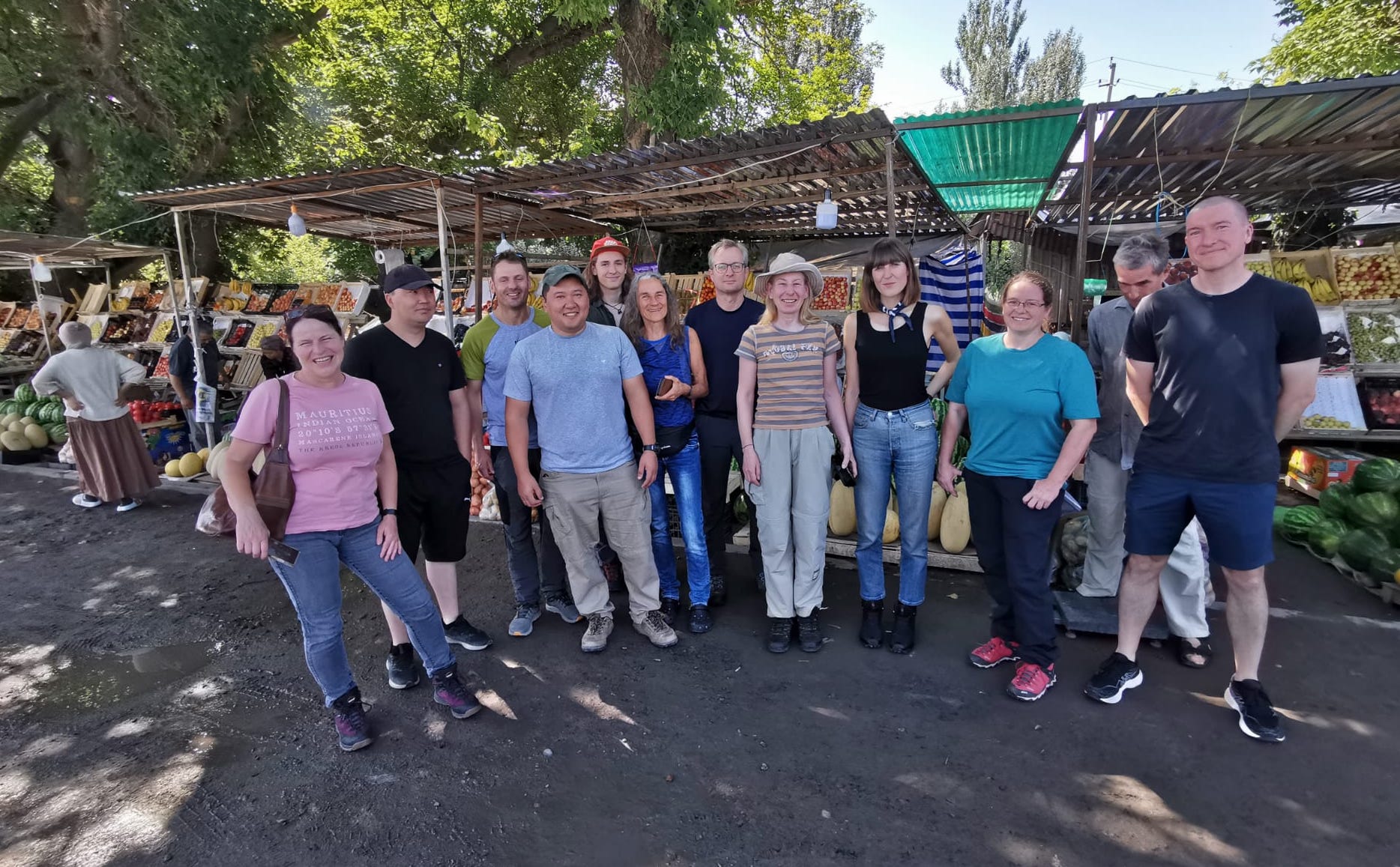
The expedition cook, Azamat, has prepared a meal plan (looks great). Today we’ve been at the local markets filling two 4x4s with groceries. We’ve also been testing equipment such as GPS units and radios.
This afternoon we’ll be loading everything into the lorry ready for an early departure tomorrow for the 6 hour drive to our base camp location. Once there, we’ll begin setting up. There’s no phone signal or internet in the valley, so we’ll report back on progress once we arrive back in Bishkek ready to meet group 1.
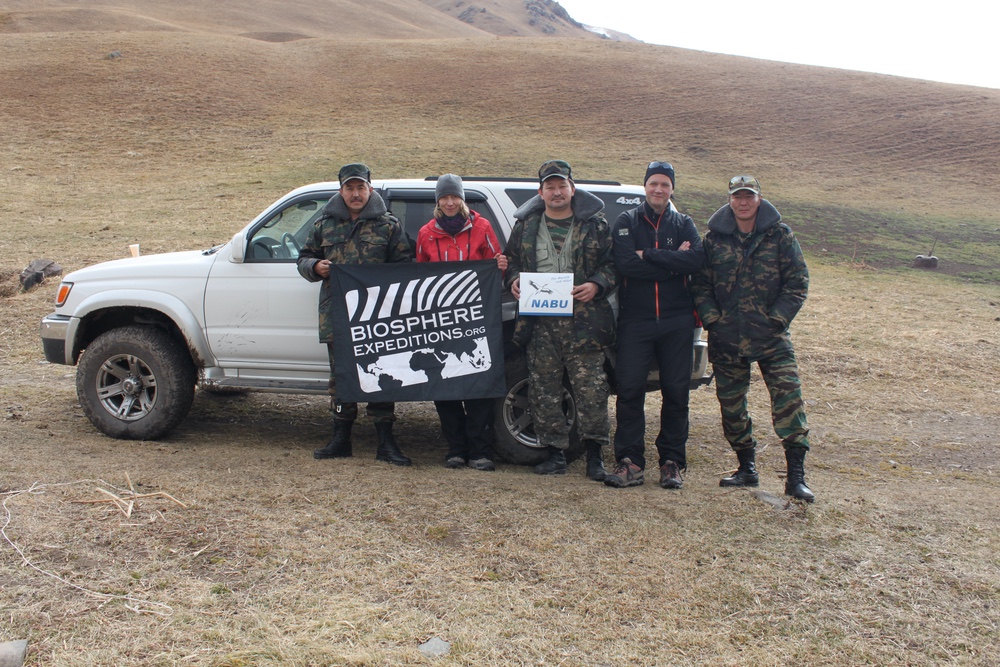
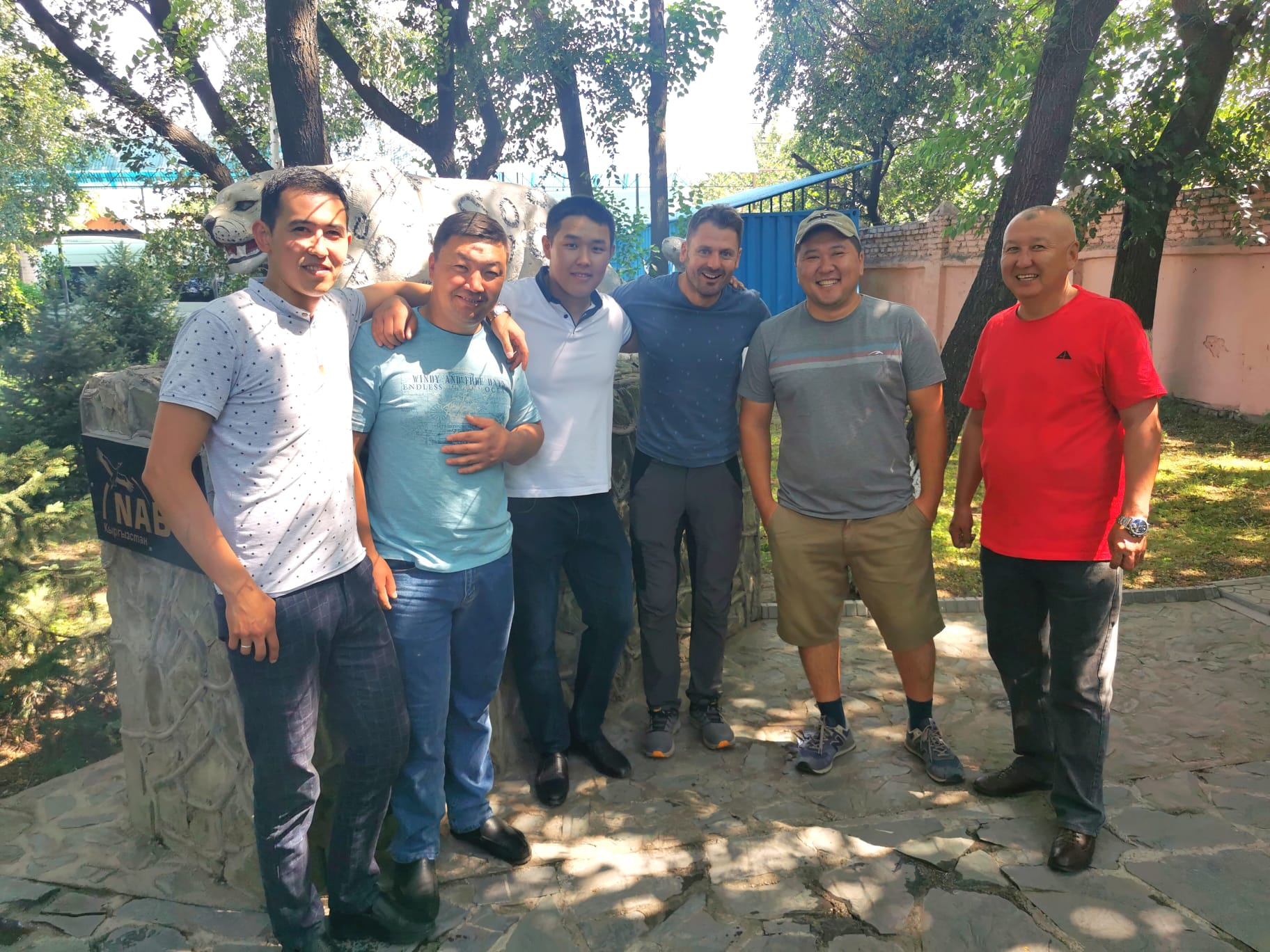
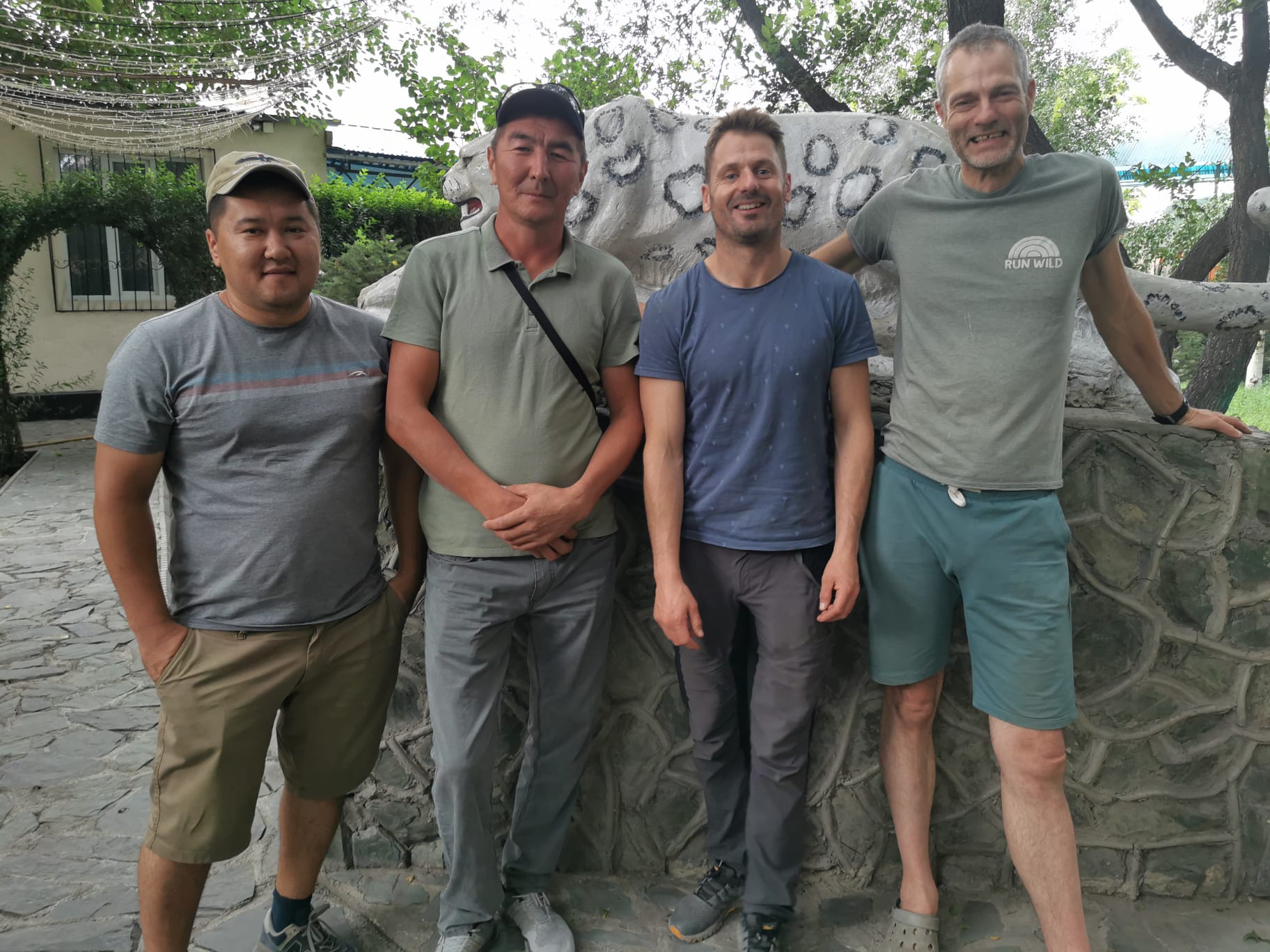
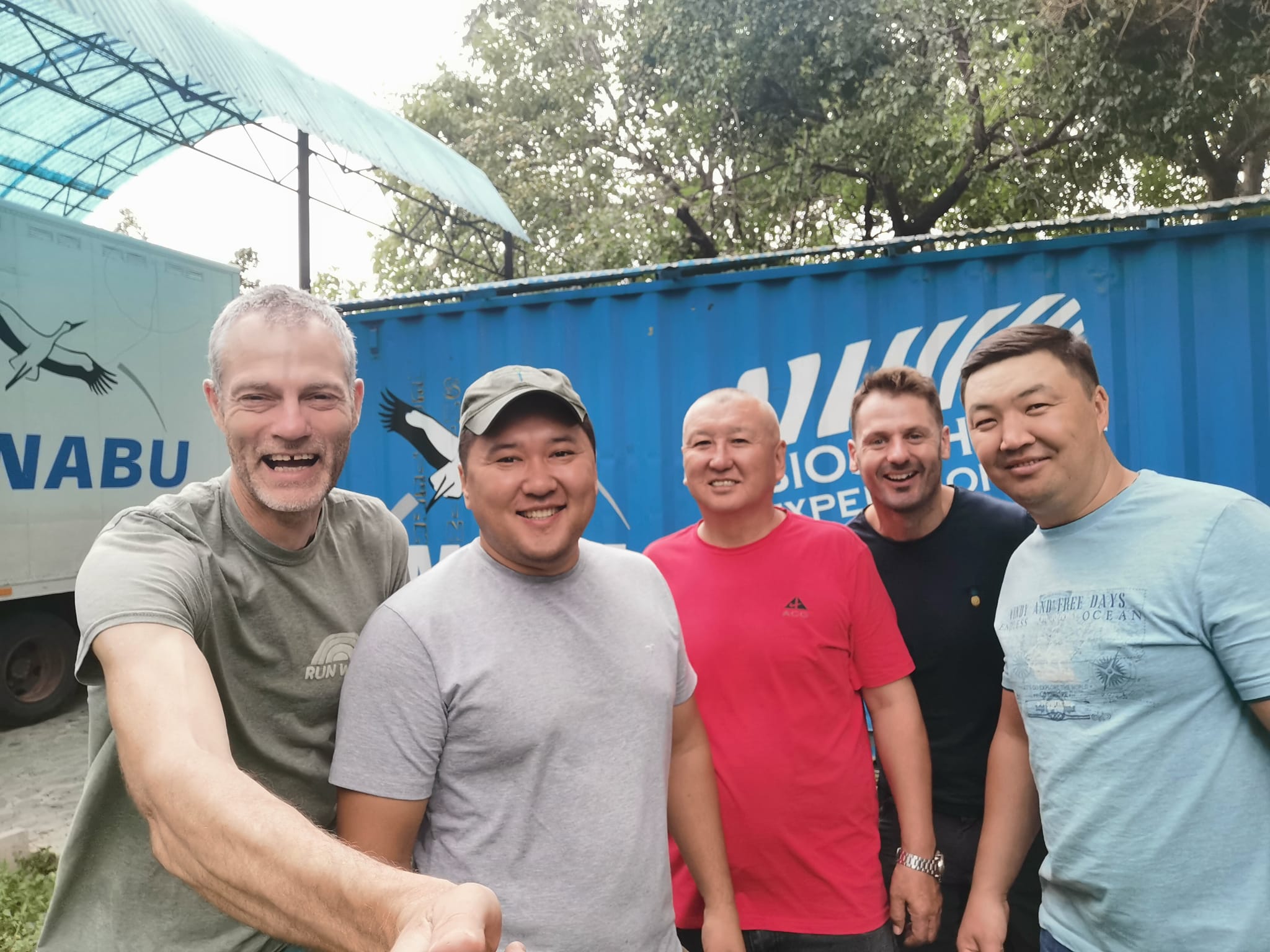
After collecting the 4x4s we headed straight to the NABU headquarters in Kyrgyzstan, where we assessed the state of the expedition equipment and met Taalai (our expedition scientist), Beka (ranger/guide), Ayan (ranger/guide) and Mirlan (ranger/guide) who will all be with us for either part or all of the expedition. There is a palpable sense of anticipation and excitement.
Soon we will load the equipment into the expedition lorry and leave for the Karakol valley to set up base camp ready for the arrival of group 1. For those of you joining us for that one, we hope your preparations are also well underway. Please don’t be fooled by the hot weather here is Bishkek, we are expecting cold nights in the mountains so make sure you pack accordingly (see your dossier!).
We’ll keep you updated on the progress of our preparations and we look forward to meeting group 1 soon.
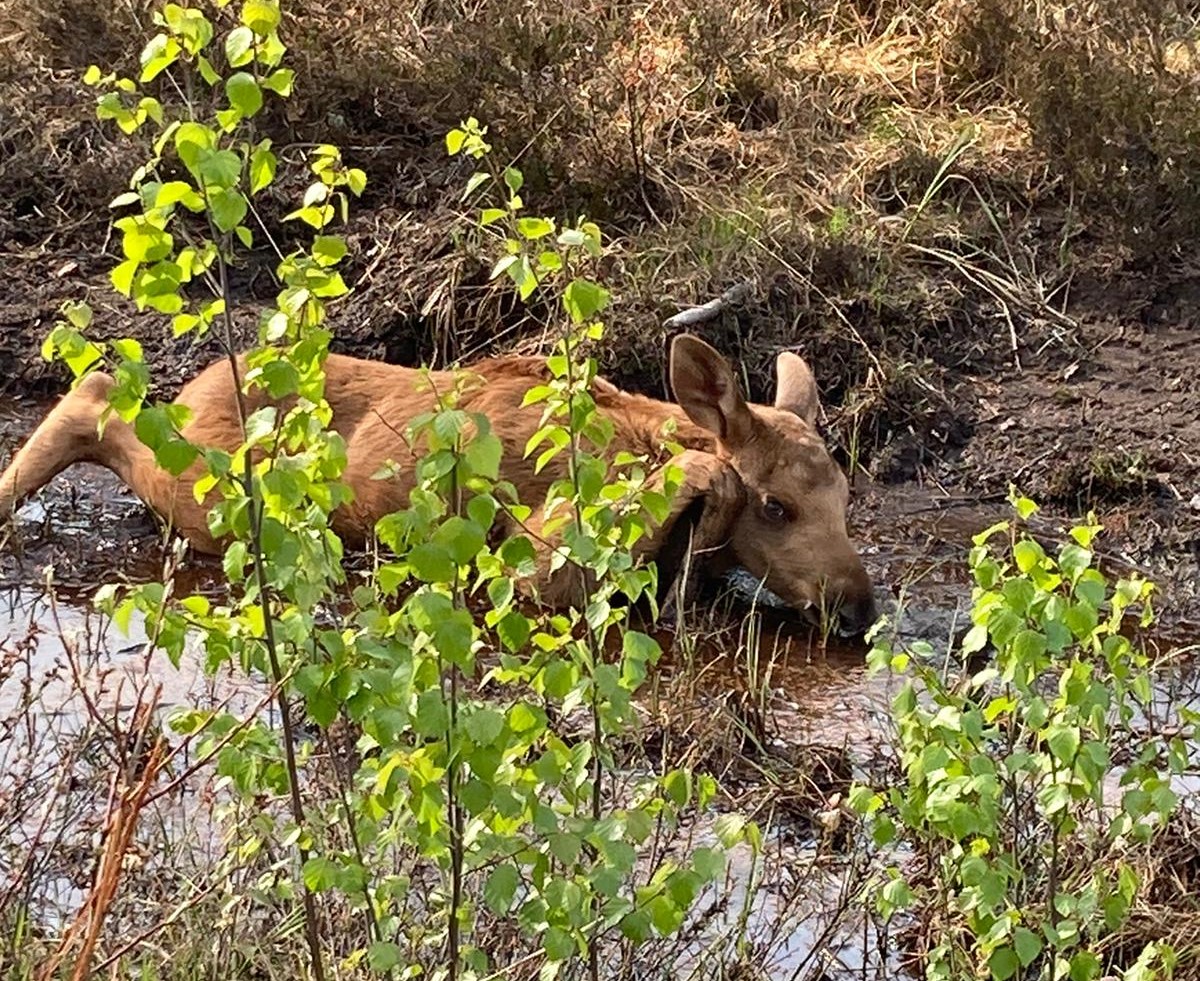
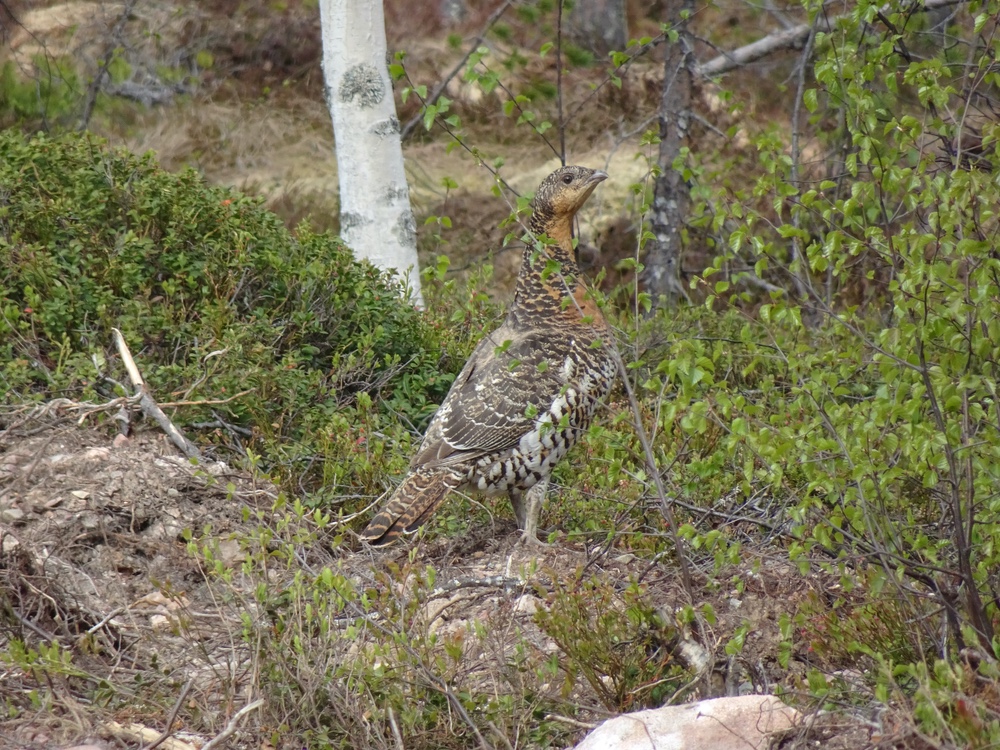
The inaugural expedition in 2019 visited 28 bear den sites and mapped 24, found 10 scats at 15 bear cluster sites, recovered a bear skeleton from a bog for further analysis, recovered a valuable transmitter, covered over 2,000 km of the study site, had two bear encounters and several with moose, capercaillie and other interesting wildlife, increased the scientist’s bear den database by between a third and a half, and in one short week gathered scats worth six weeks. The expedition scientist called the expedition’s contribution “invaluable”.
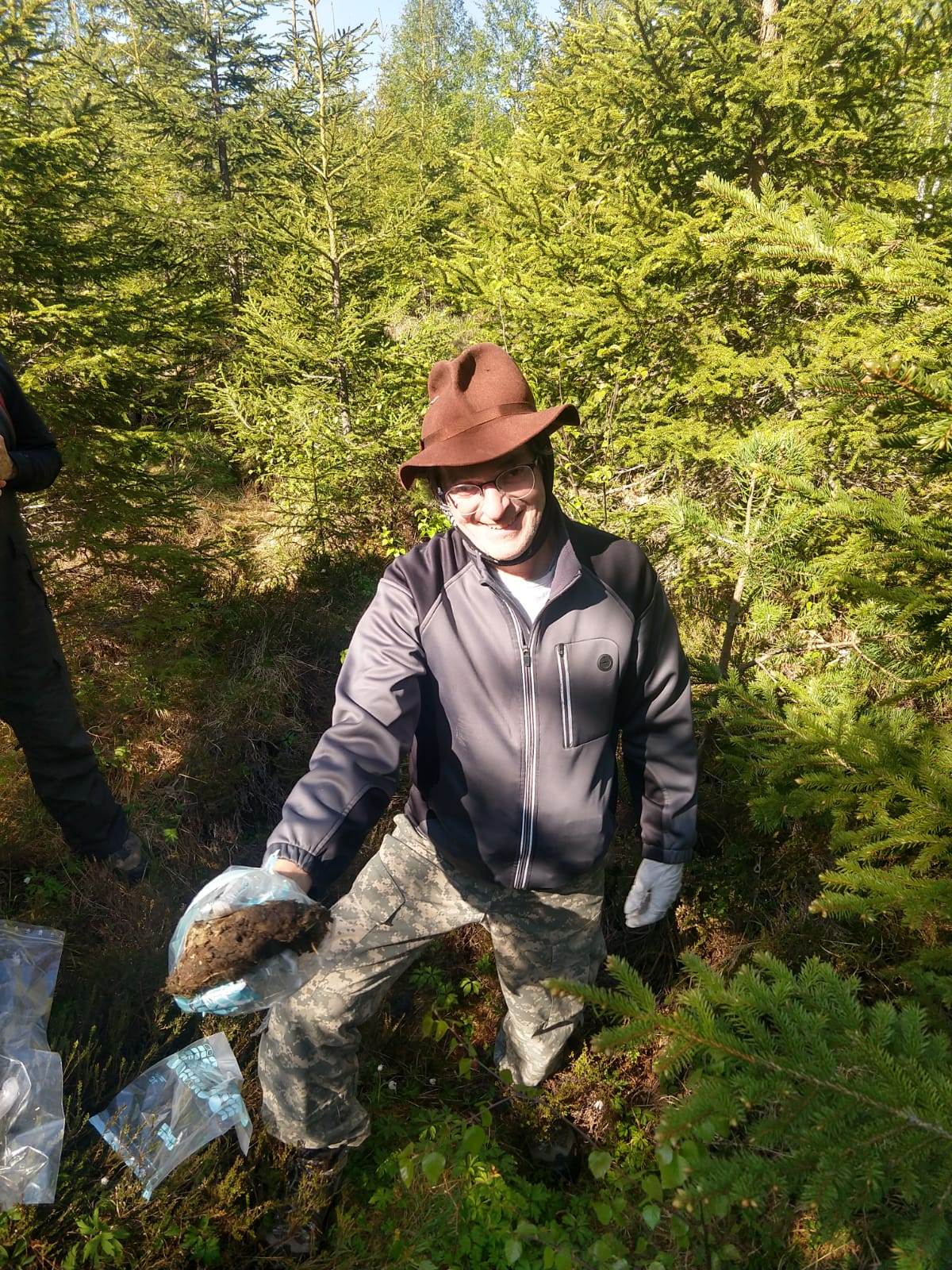
The post-Covid second and third expeditions (2022 and 2023) built on the successes of the first expedition by collecting a significant amount of up-to-date data on the bears’ winter dens, day bed sites and their scats. Following a review, the length of expeditions was increased from 2023 to maximise data collection time. This resulted in the 2023 expedition visiting 68 sites, including 38 winter dens and 35 scat collections, ten of which were ‘first scats of the season’ (especially valuable samples that can reveal what a bear has eaten before and during hibernation).
We thank all citizen scientists very much for their help. An expedition report has ben published once data were analysed and here is its abstract:
From 27 May to 4 June 2023, eight citizen scientists collected data on bear denning behaviour and feeding ecology by investigating the 2022/2023 hibernation season den sites of GPS-collared brown bears and by collecting fresh scats from day bed sites. 2023 was the third year of Biosphere Expeditions citizen scientists assisting the Scandinavian Brown Bear Research Project (SBBRP) after 2019 (followed by an enforced COVID-19-related break in 2020 and 2021) and 2022. It was the first year when field sampling was extended by two days to a total expedition length of ten days.
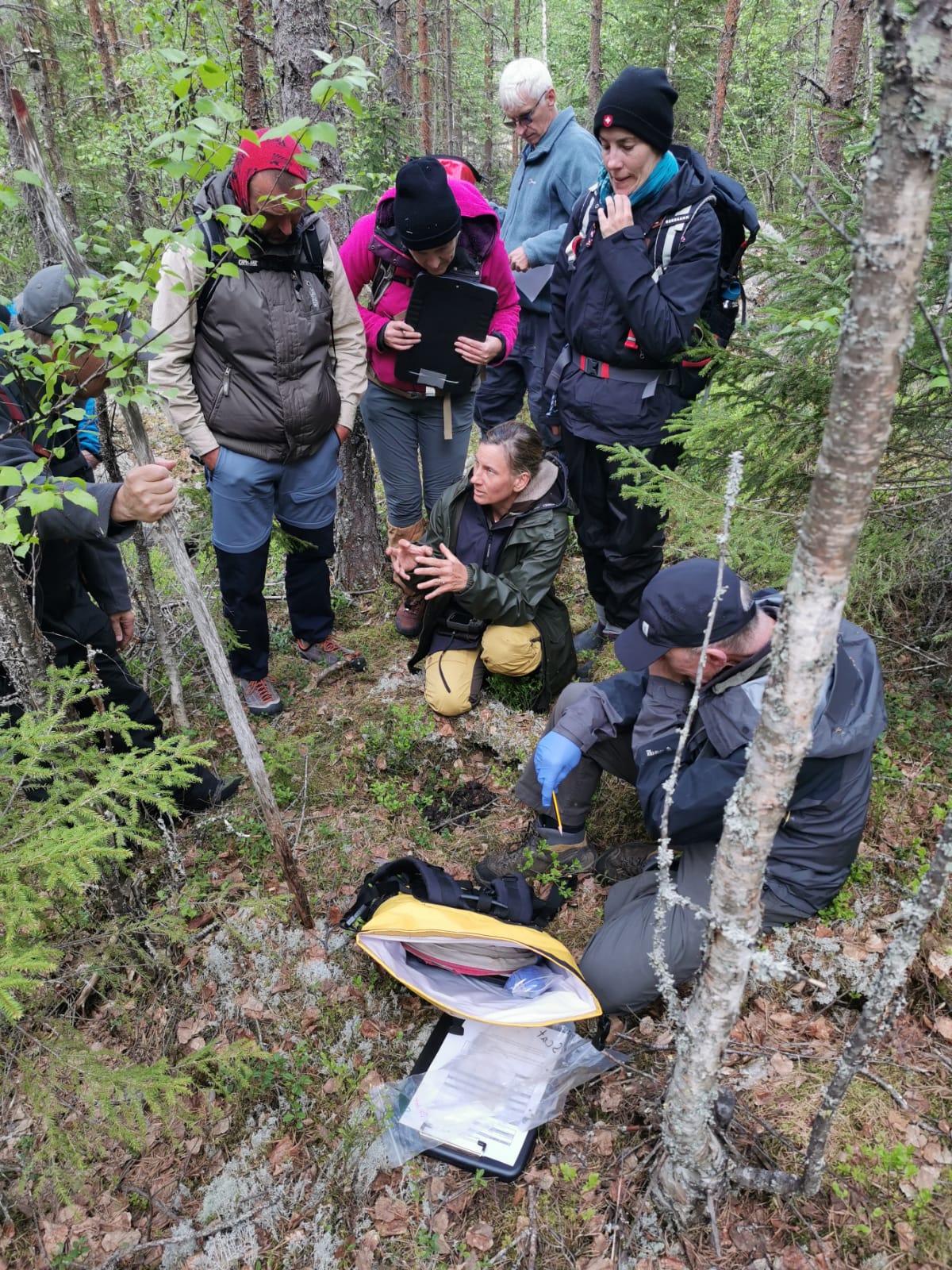
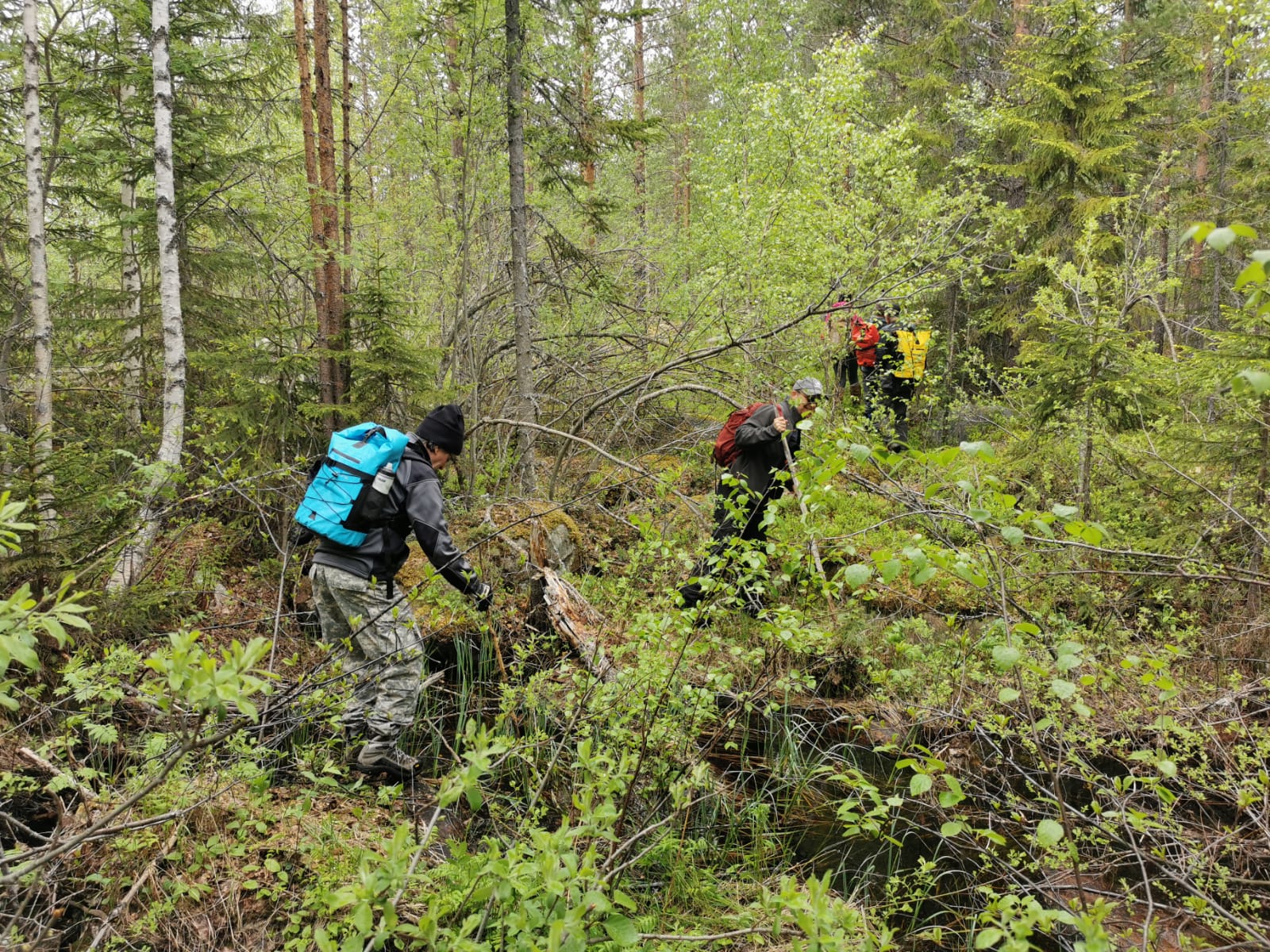
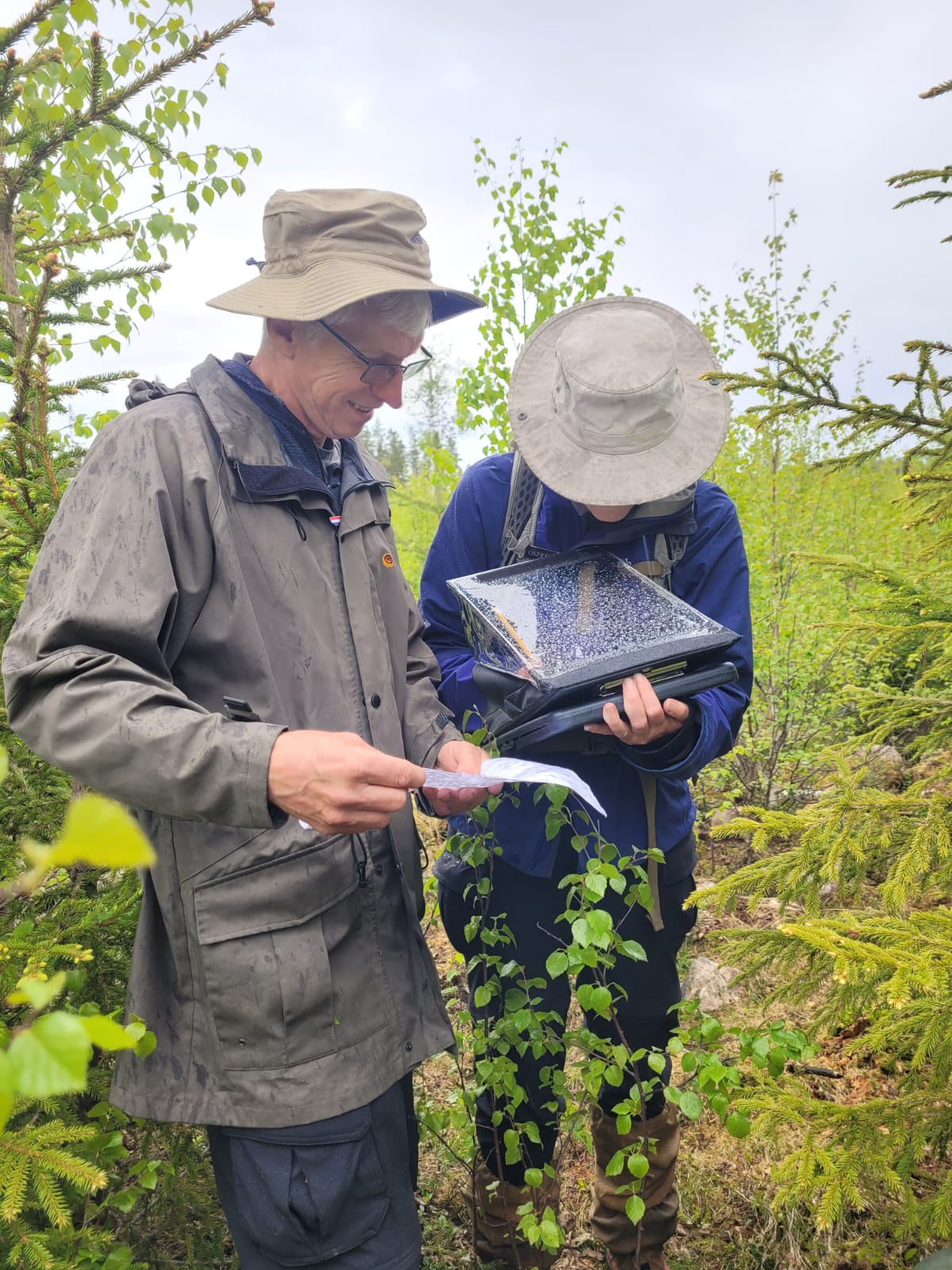
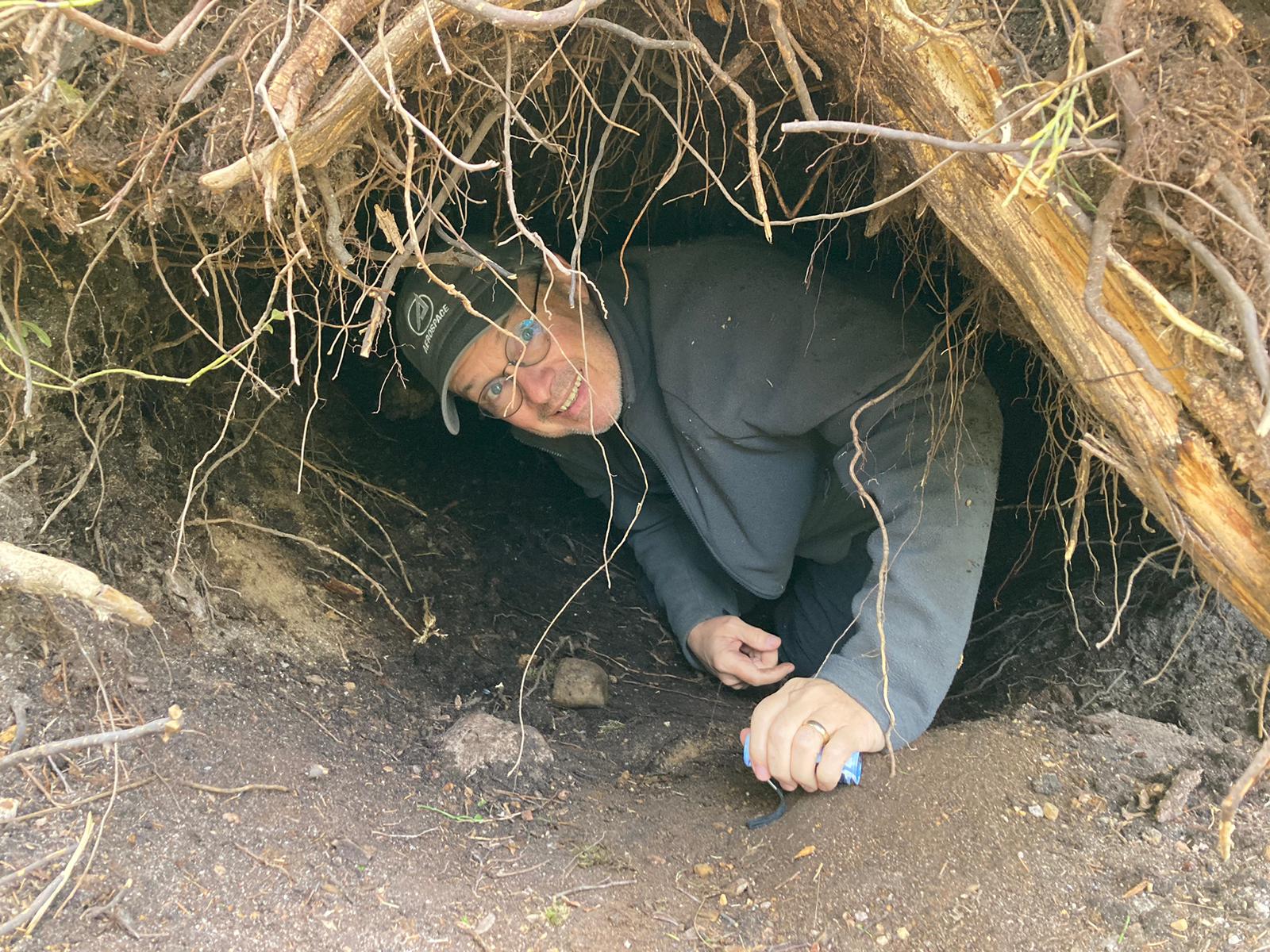
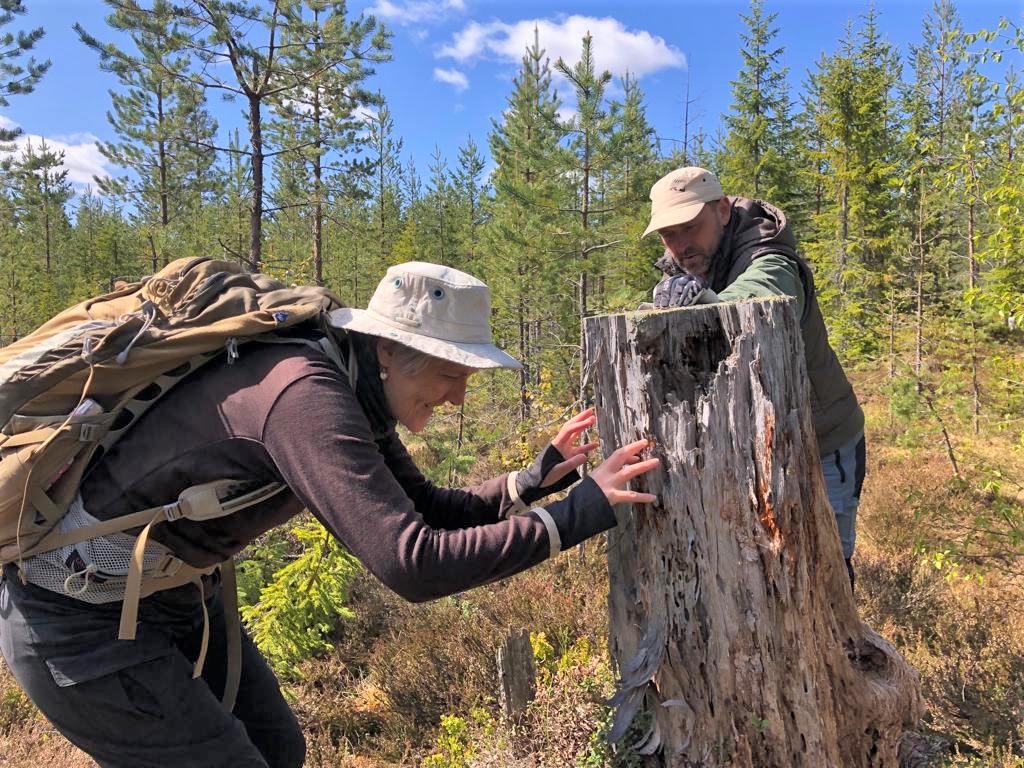
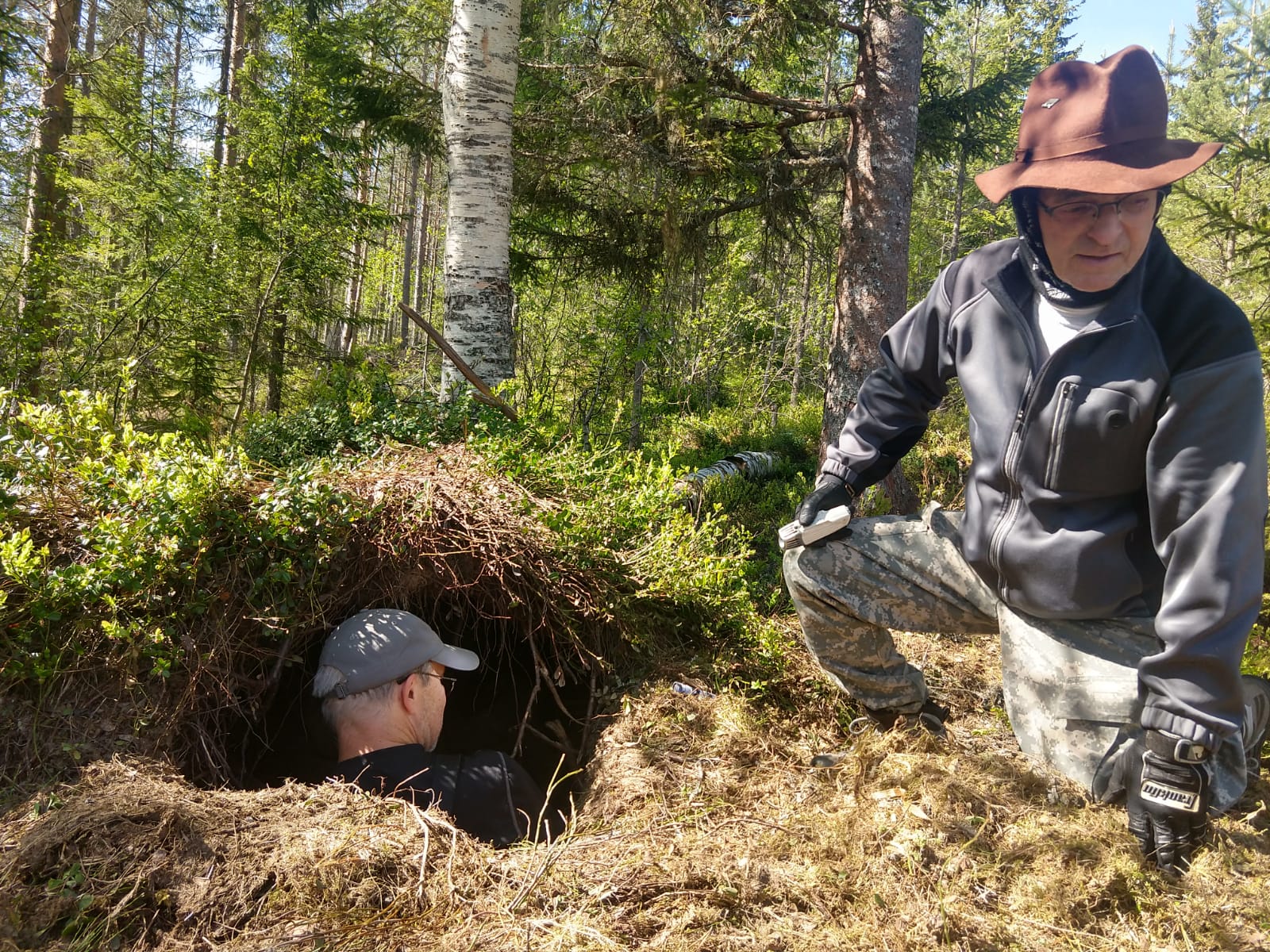
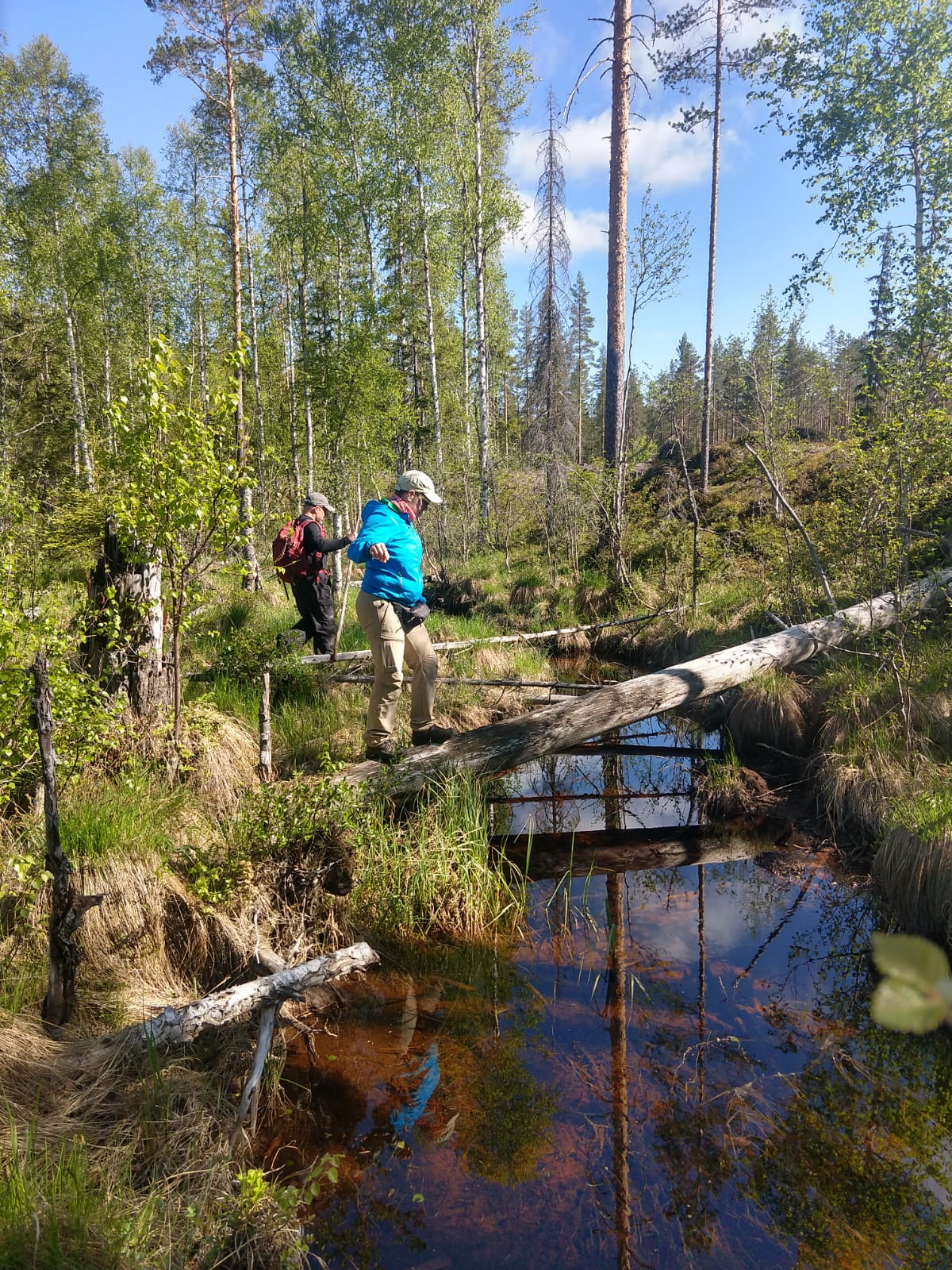
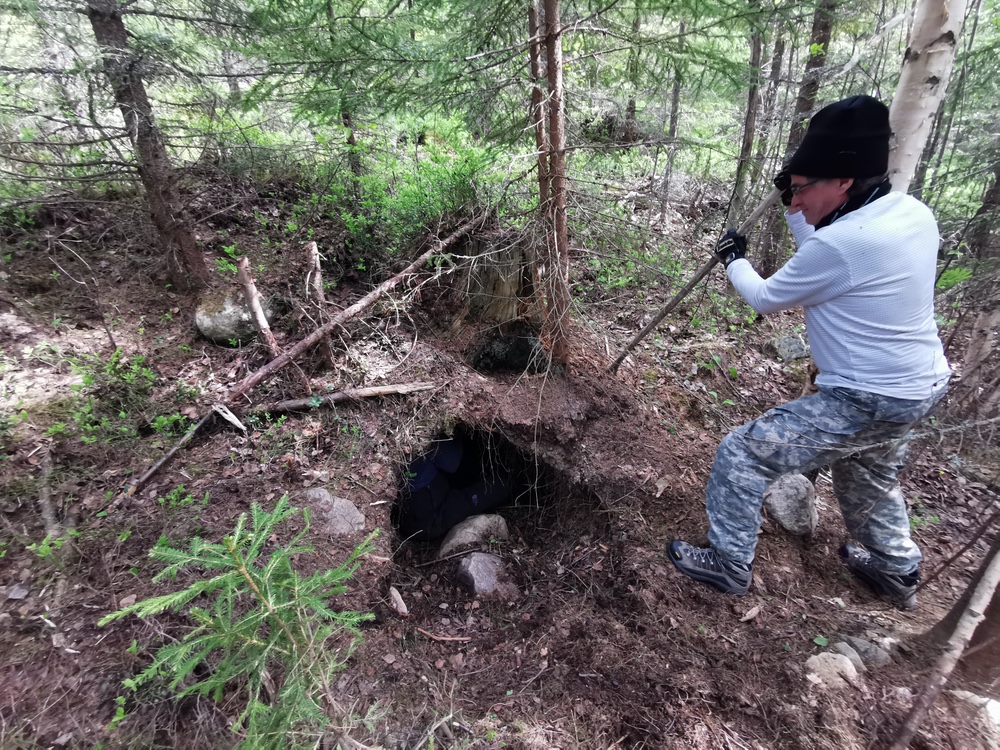
All field work was performed in the northern boreal forest zone in Dalarna and Gävleborg counties, south-central Sweden, which is the southern study area of the SBBRP. After two days of training, citizen scientists were divided into three to four sub-teams each day for seven days of field work. On field work days, citizen scientists were given locations where collar data suggested that bears had spent significant time either denning or around a kill site. Citizen scientists then went to those locations and defined den types (anthill den, soil den, rock den, basket den or uprooted tree den), recorded bed material thickness, size and content, as well as all tracks and signs around the den sites to elucidate whether a female had given birth to cubs during hibernation. All first scats after hibernation and hair samples found at those locations were also collected, and the habitat type around the den and the visibility of the den site were described.
In a very significant contribution to the SBBRP’s field work, the expedition visited 43 winter positions and investigated 37 dens of 30 bears, which represents about 75% of all winter positions that the SBBRP recorded in 2022. Previous expeditions investigated 34% (2019) and 50% (2022) of all winter positions recorded. The significant 2023 expedition increase is due to the extra two field days introduced with this expedition. Additionally, the expedition collected 100% of scat samples that the SBBRP normally collects during a research season. Previous expeditions collected 50% (2019) and 100% (2022).
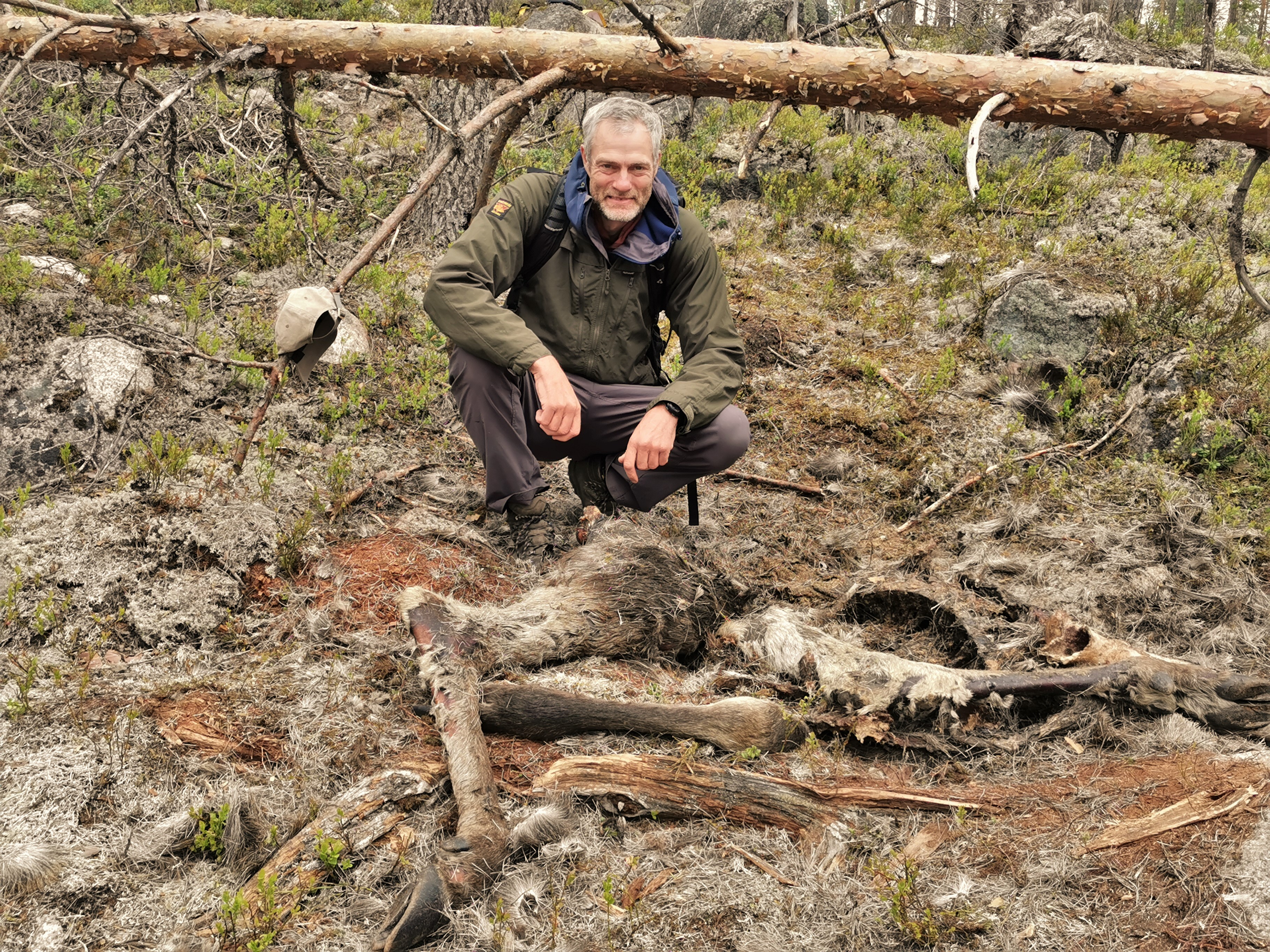
As in 2022, two bears shifted their dens at least once during the hibernation season. In total, the expedition found 37 dens; five soil dens, eleven anthill dens, four anthill/soil dens, seven stone/rock den, five dens under uprooted trees and five basket dens. Unusually again, as in 2022, one pregnant female that gave birth to three cubs during winter, and one female that hibernated together with dependent offspring spent the winter in basket dens. Normally basket dens are mainly used by large males.
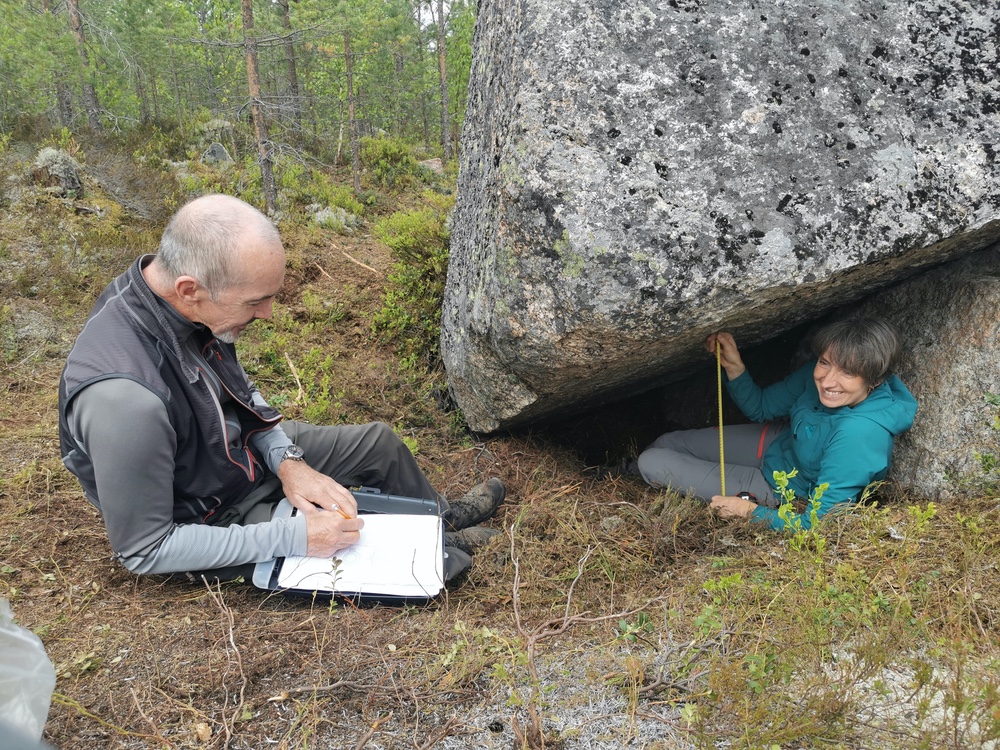
Excavated bear dens had an average outer length of 2.0 m, an outer width of 2.2 m, and an outer height of 0.7 m. The entrance on average comprised 16% of the open area. The inner length of the den was on average 1.4 m and the inner width was 1.3 m. The inner height of the dens was on average 0.7 m. Bears that hibernated in covered dens used mainly mosses (43%), field layer shrubs (21%) and branches (22%) as nest material, which reflected the composition of the field layer and ground layer that was present at the den site. However, bears that hibernated in open dens such as basket dens, preferred mosses (64%) followed by grass (17%); and field shrubs (17%) as nest material. The expedition found ten first post-hibernation bear scats at the den sites.
Twenty-seven bears selected their den sites in older forests, and three bears in younger forests. The habitat around the dens was dominated by spruce (Picea abies) 39%, scots pine (Pinus sylvestris) 36% and birch (Betula pendula, Betula pubescens) 26%.
The SBBRP is very thankful for Biosphere Expeditions’ significant annual data collection aiding its long-term study of brown bears. With the help of these data, three reports and publications are on course to be published within the next two years: (1) A global review of the factors influencing den types of brown bears, (2) a brown bear dietary specialisation Master thesis based on faecal samples and (3) a publication on the effect of den type on hibernation duration and reproductive success.
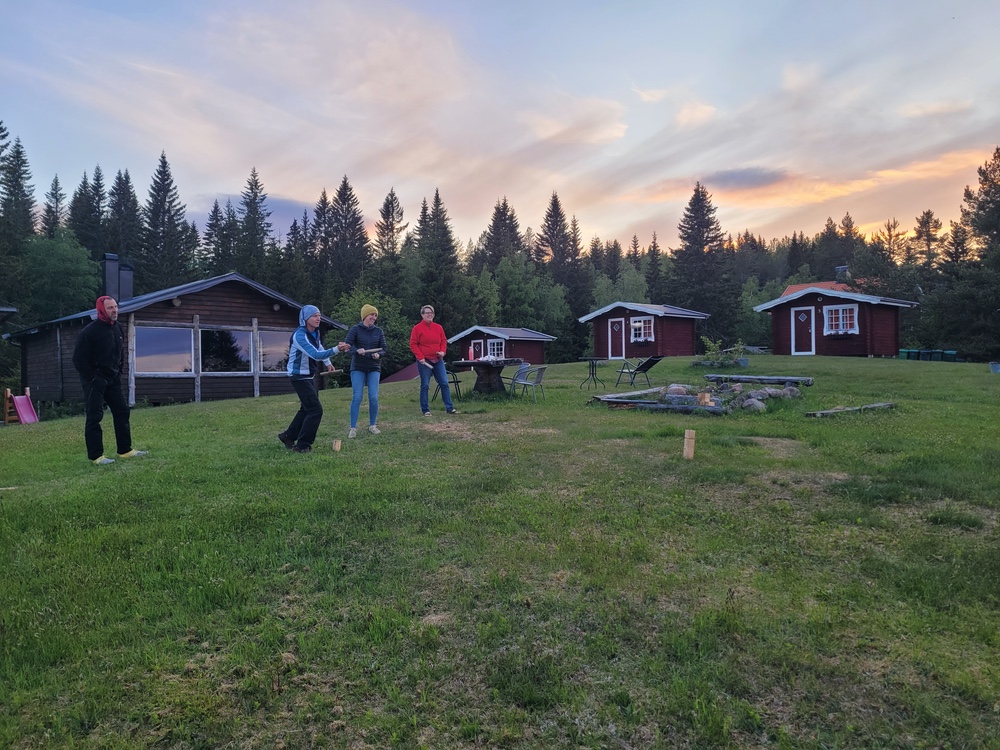
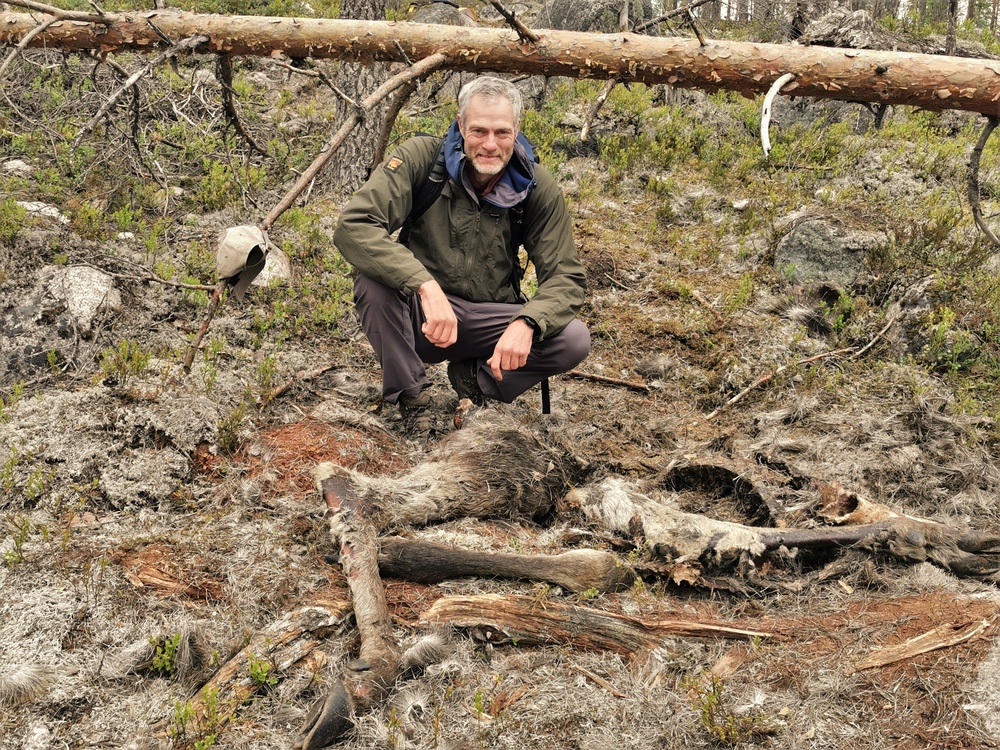
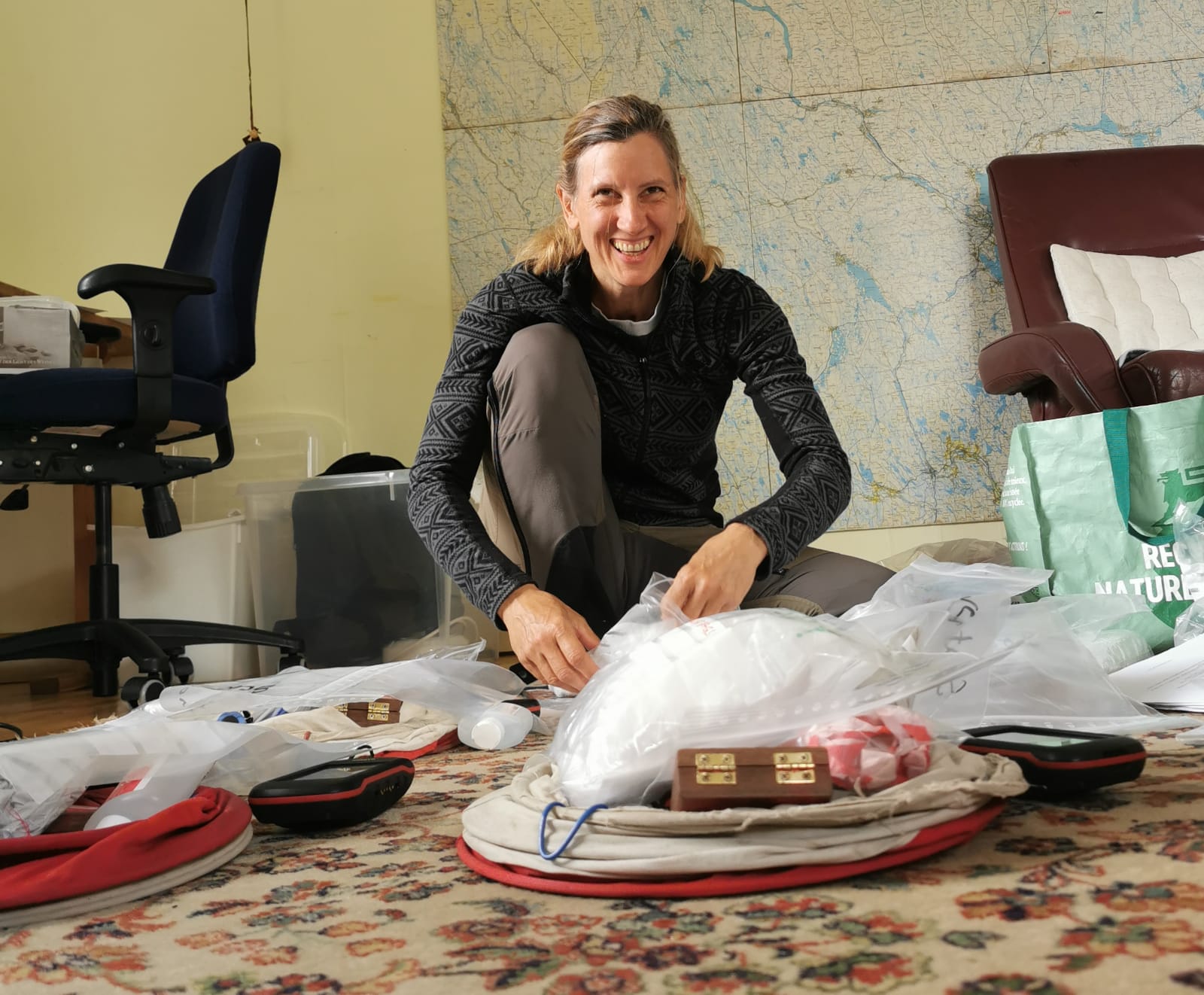
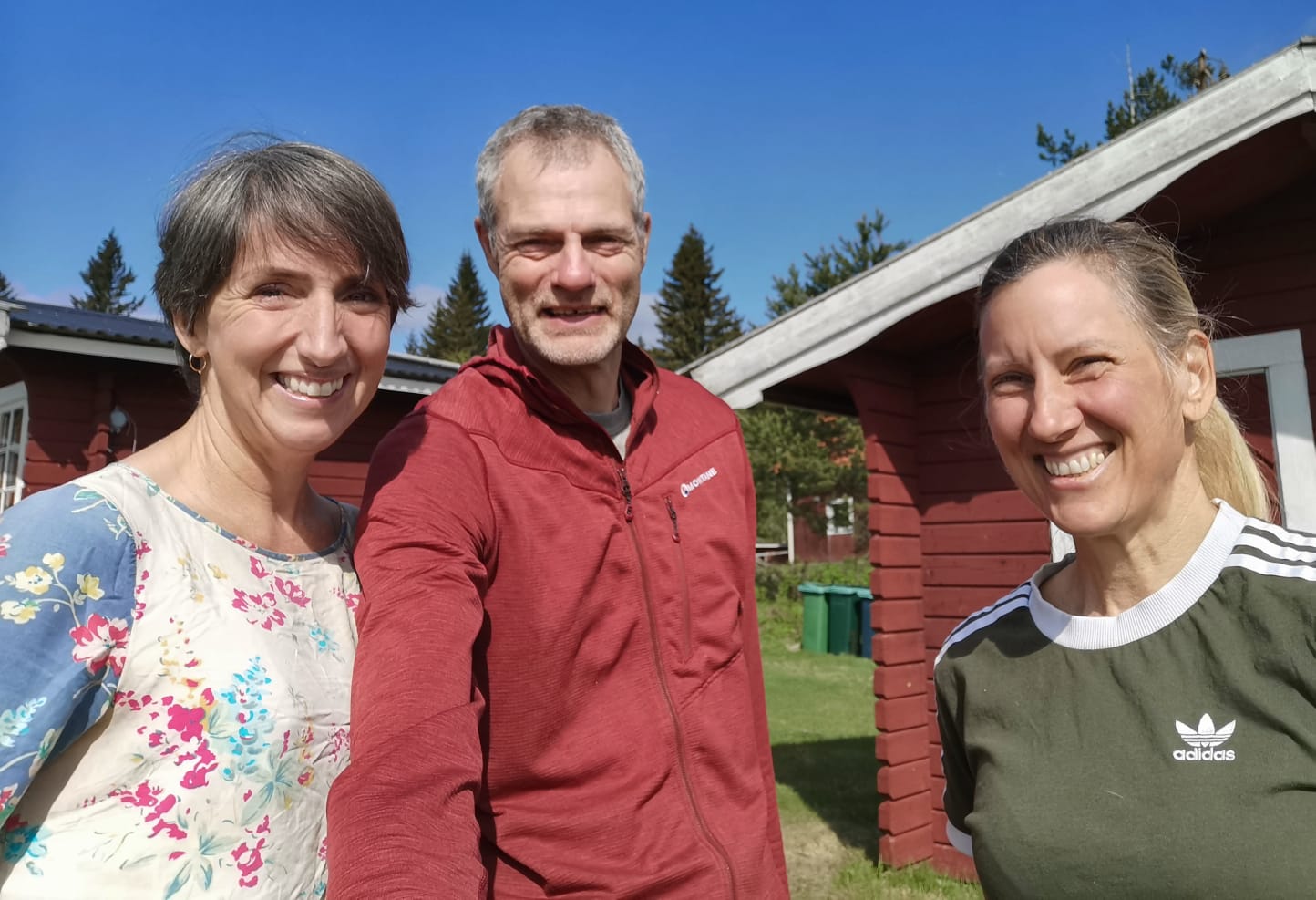
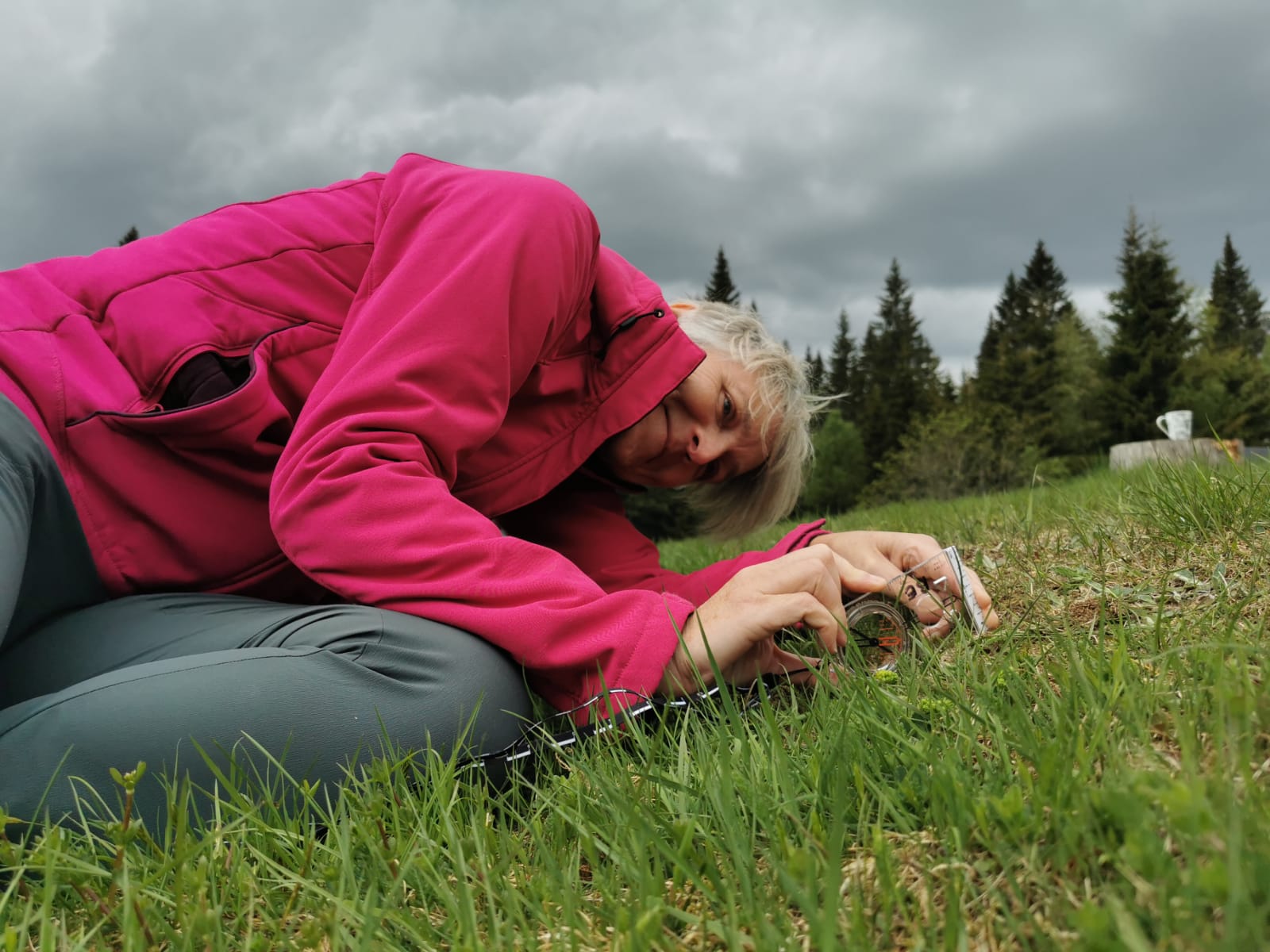
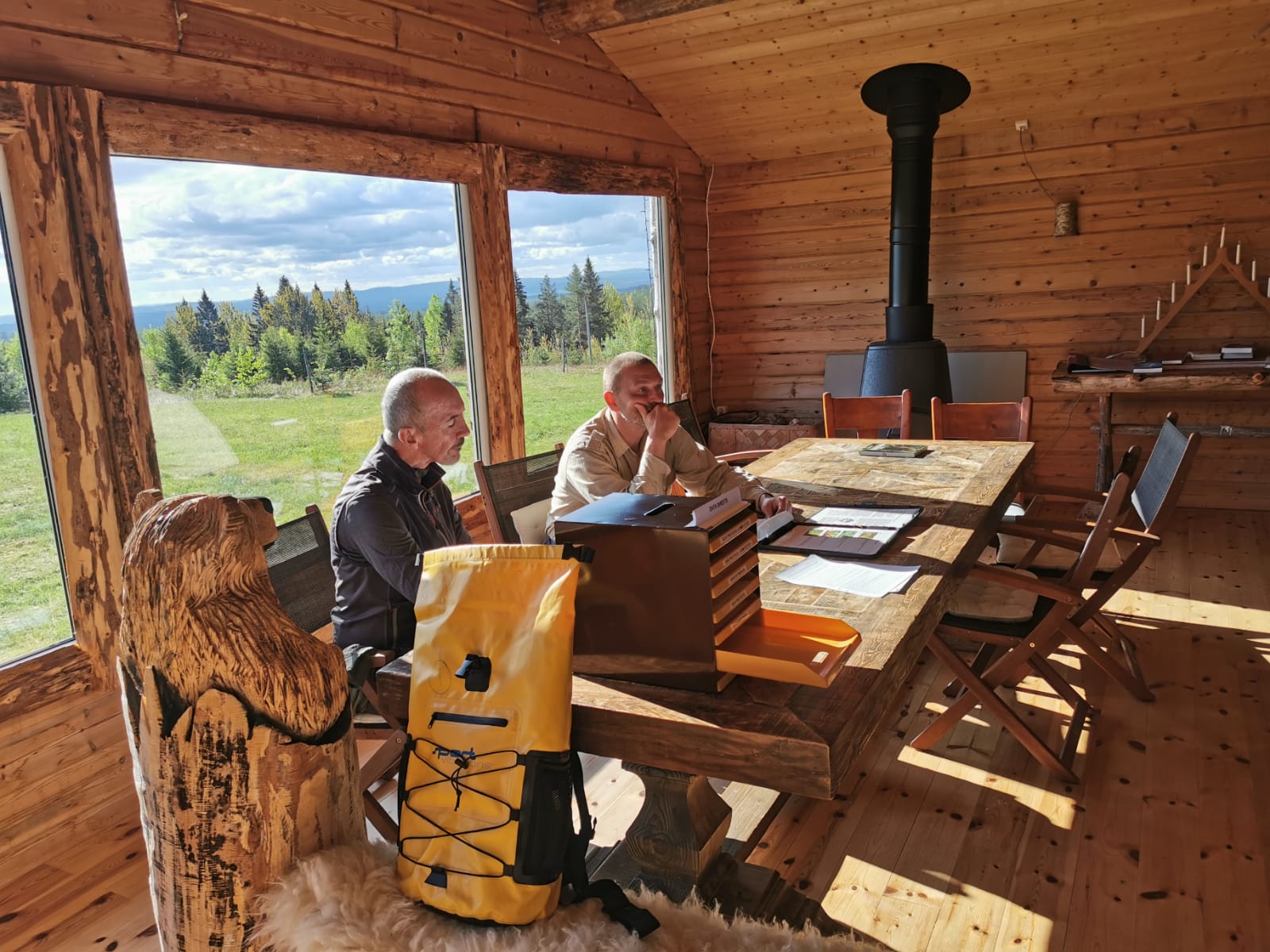
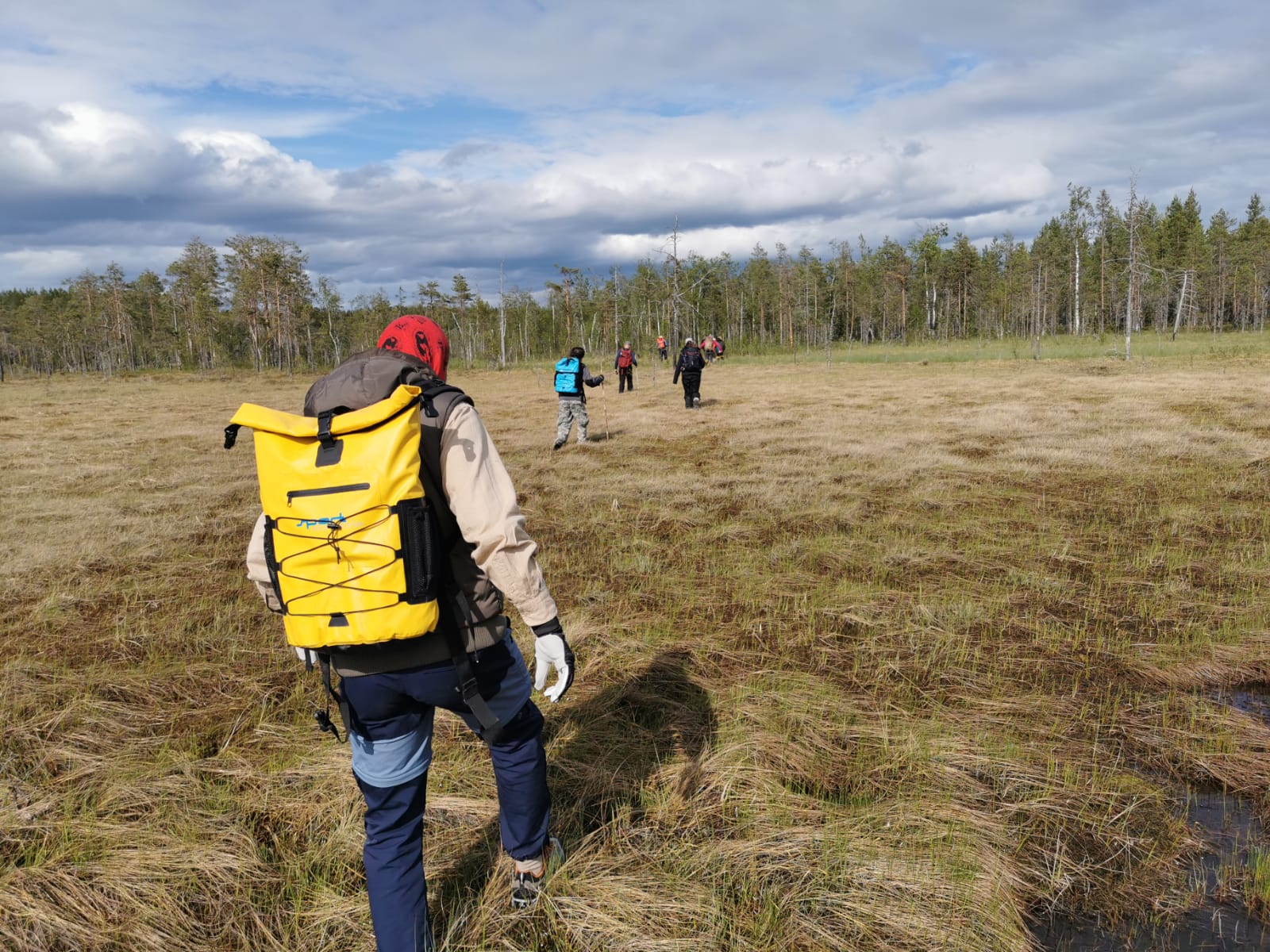
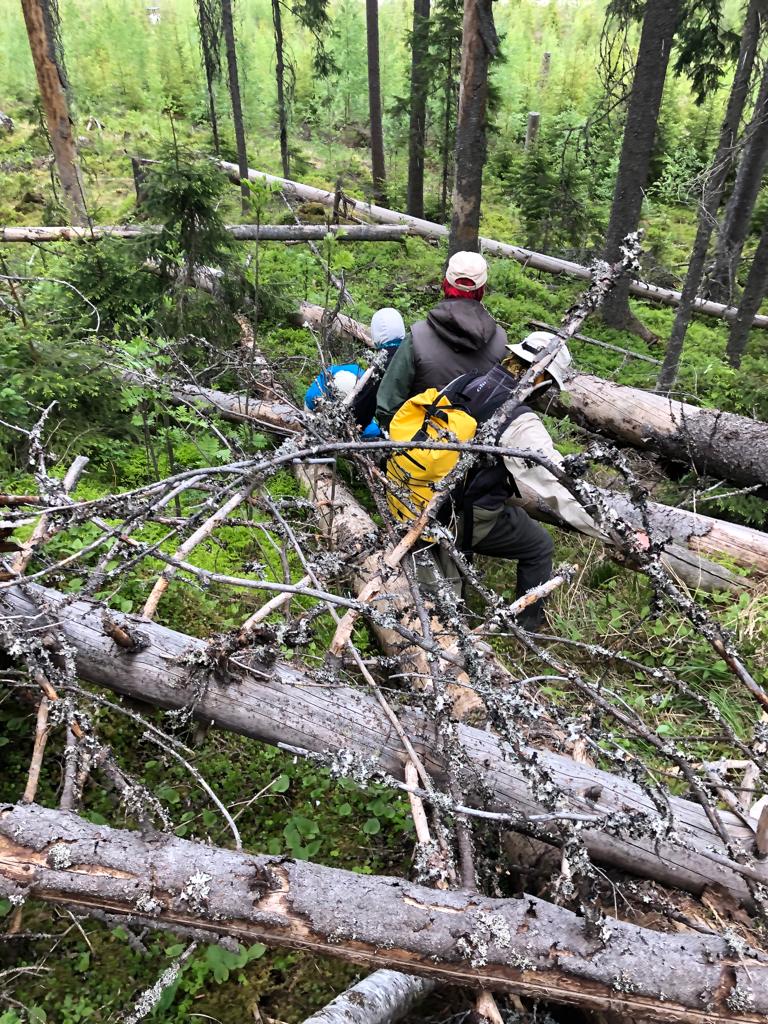
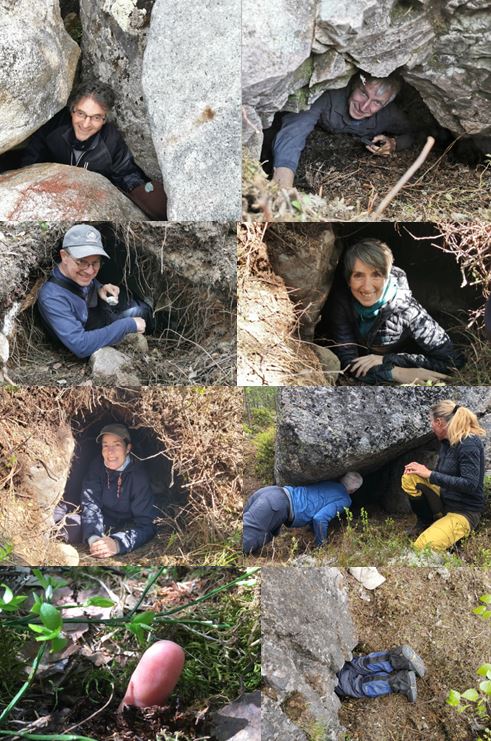
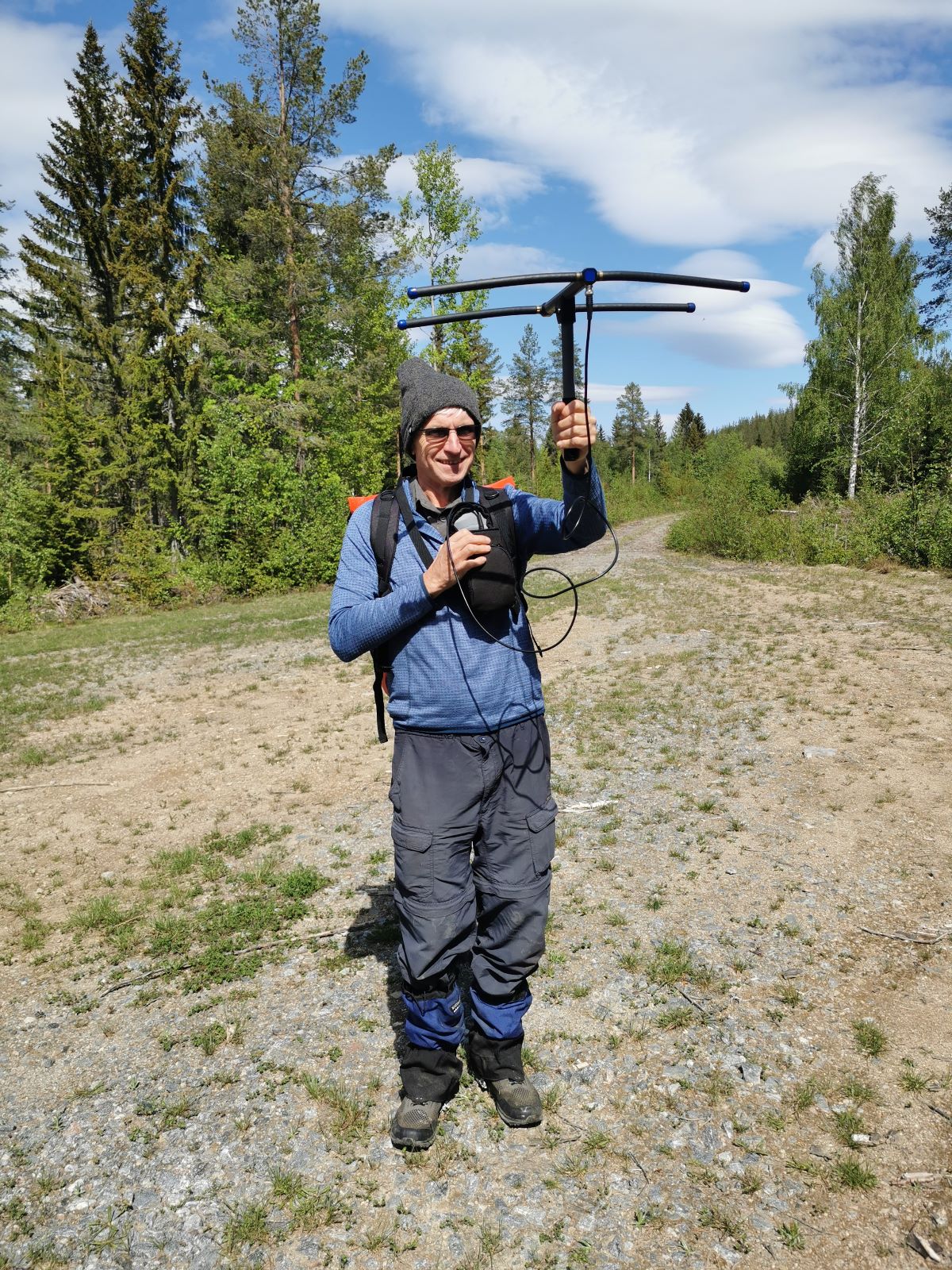
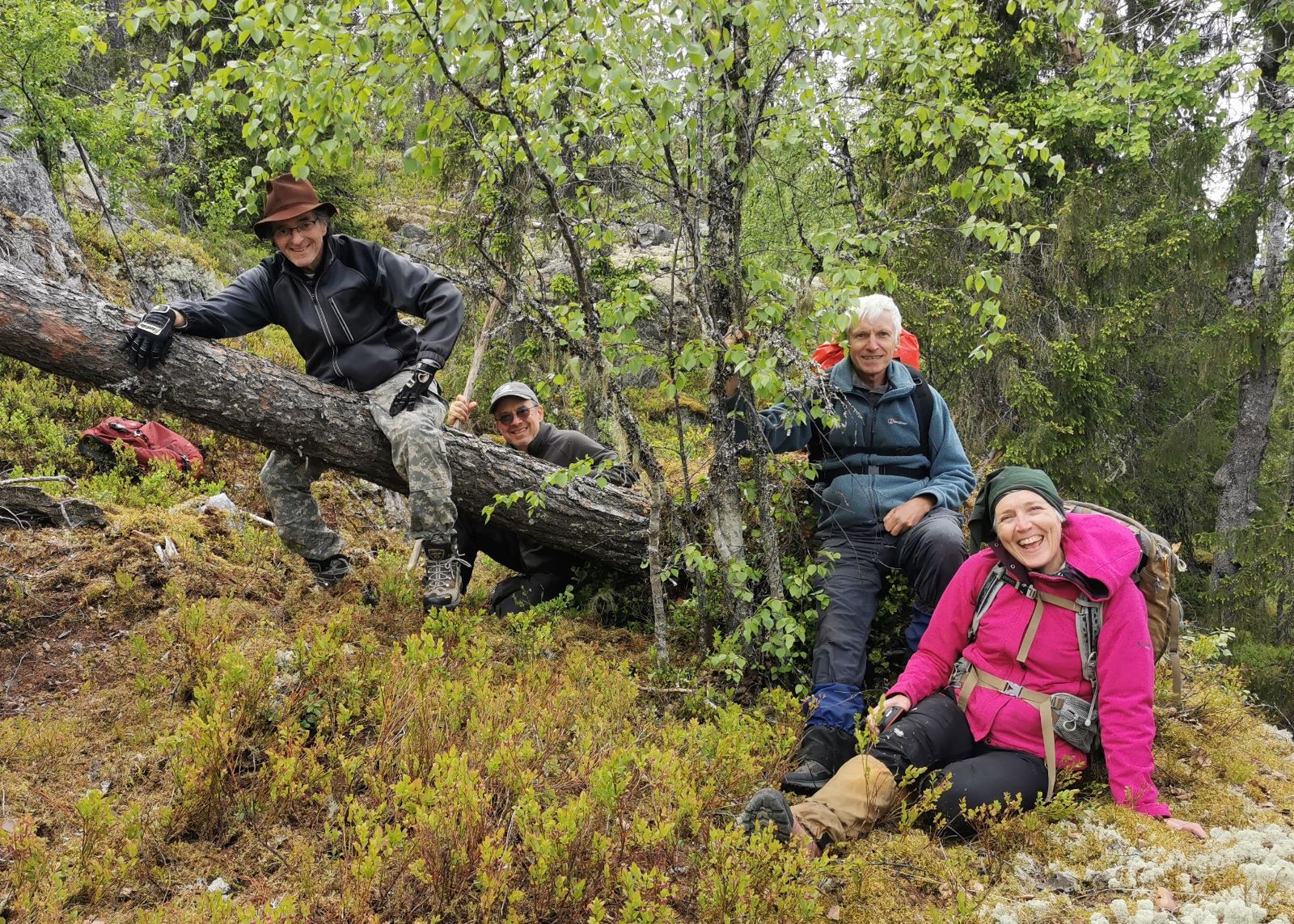
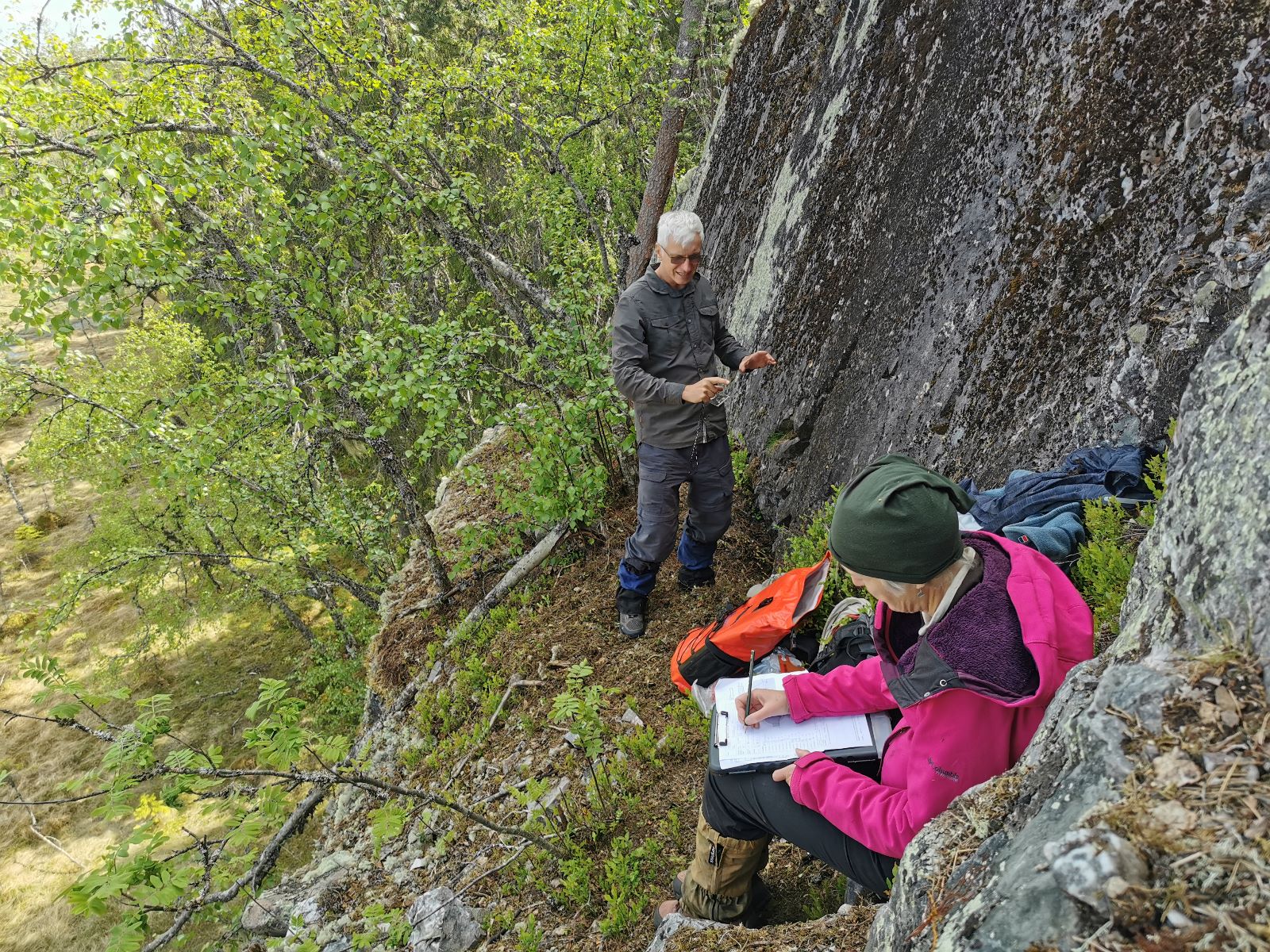
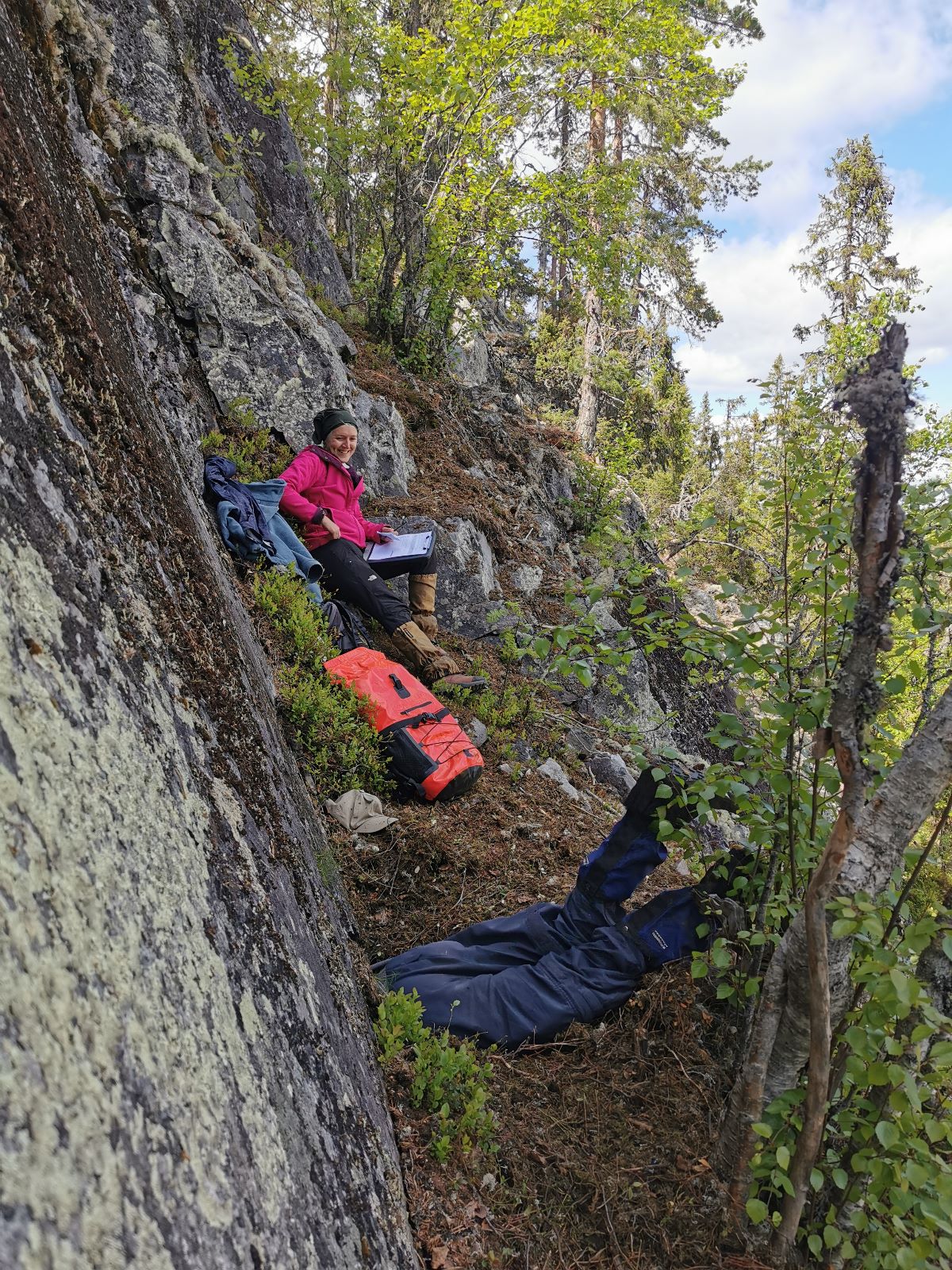
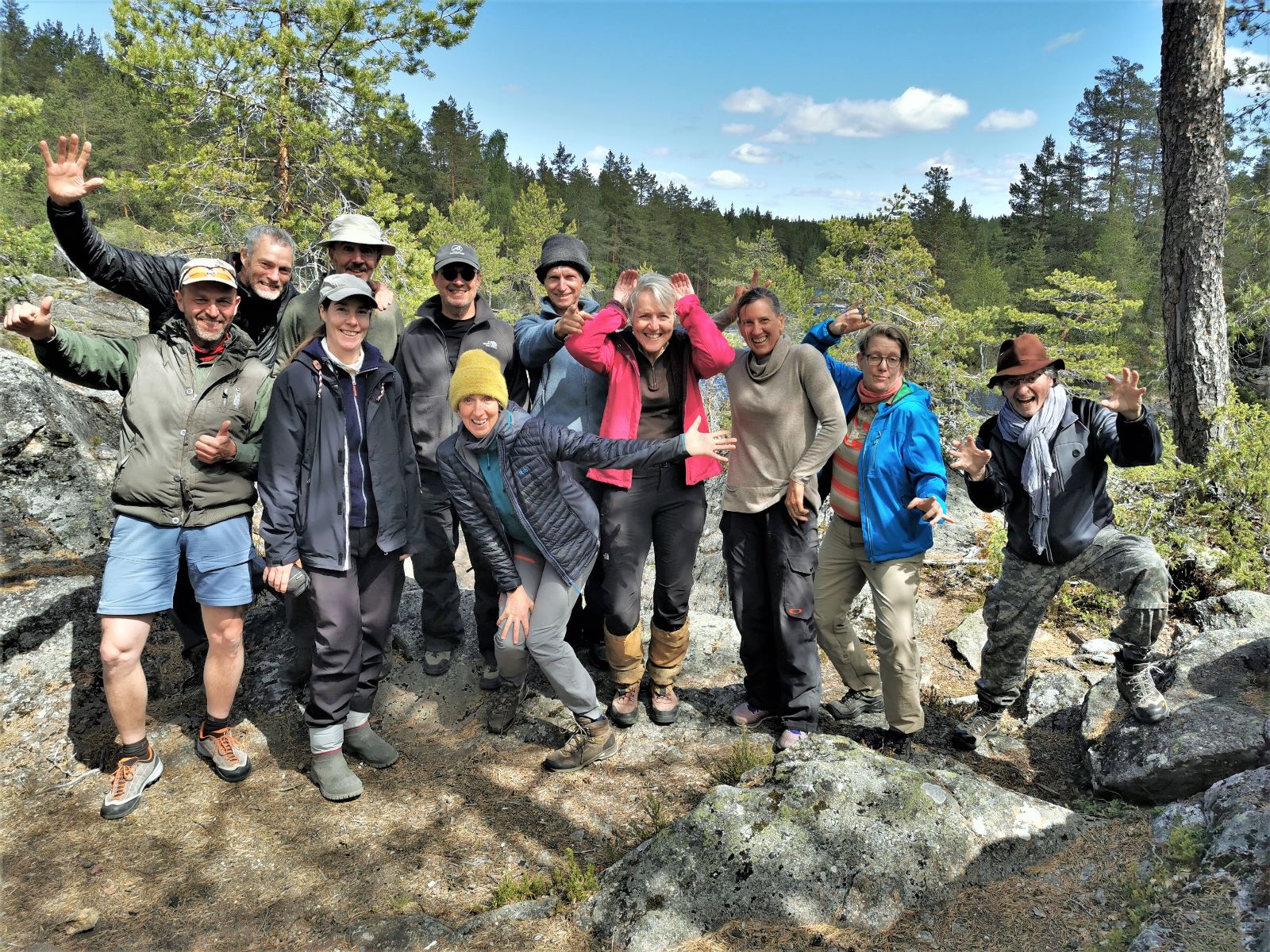
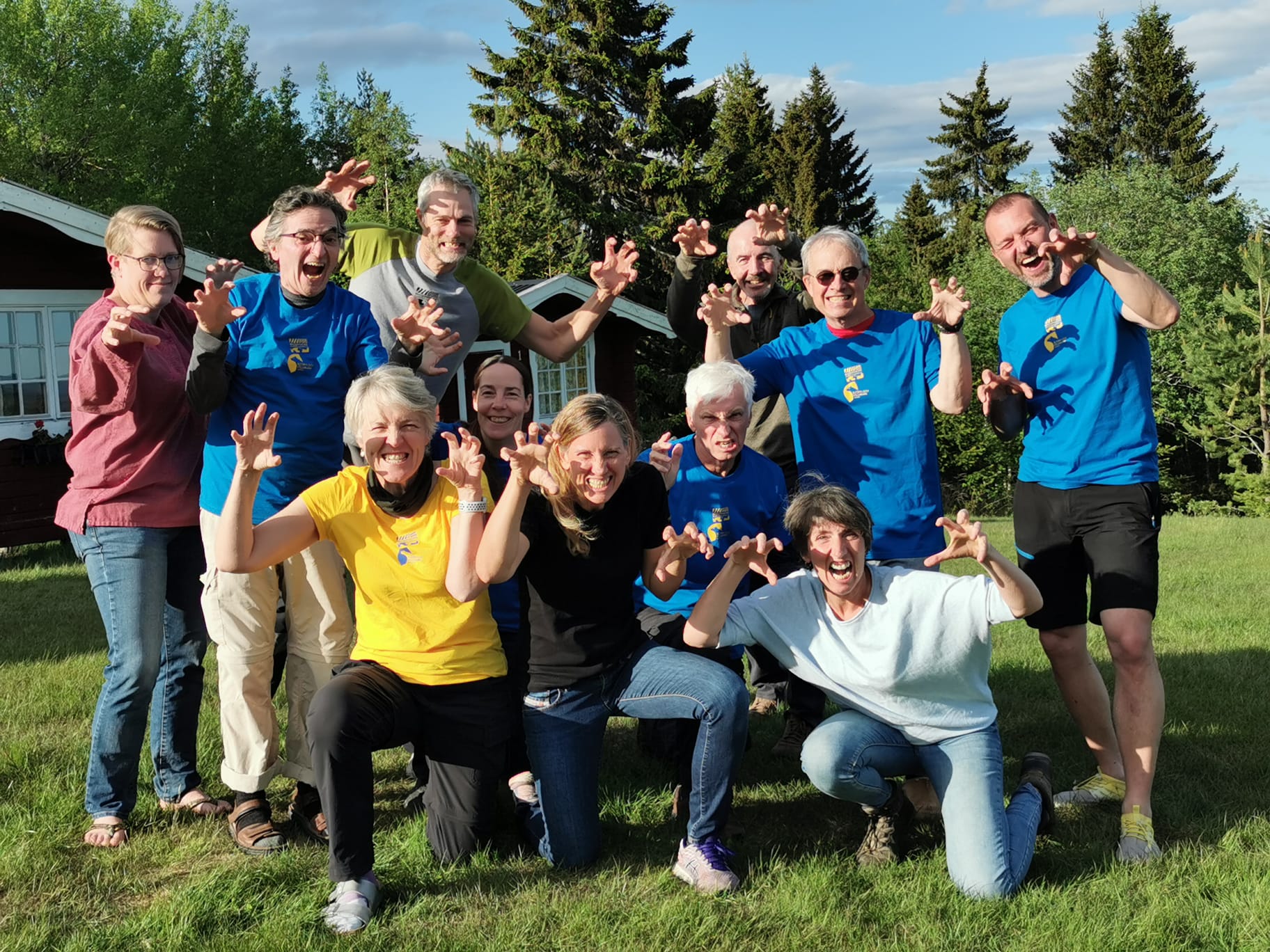
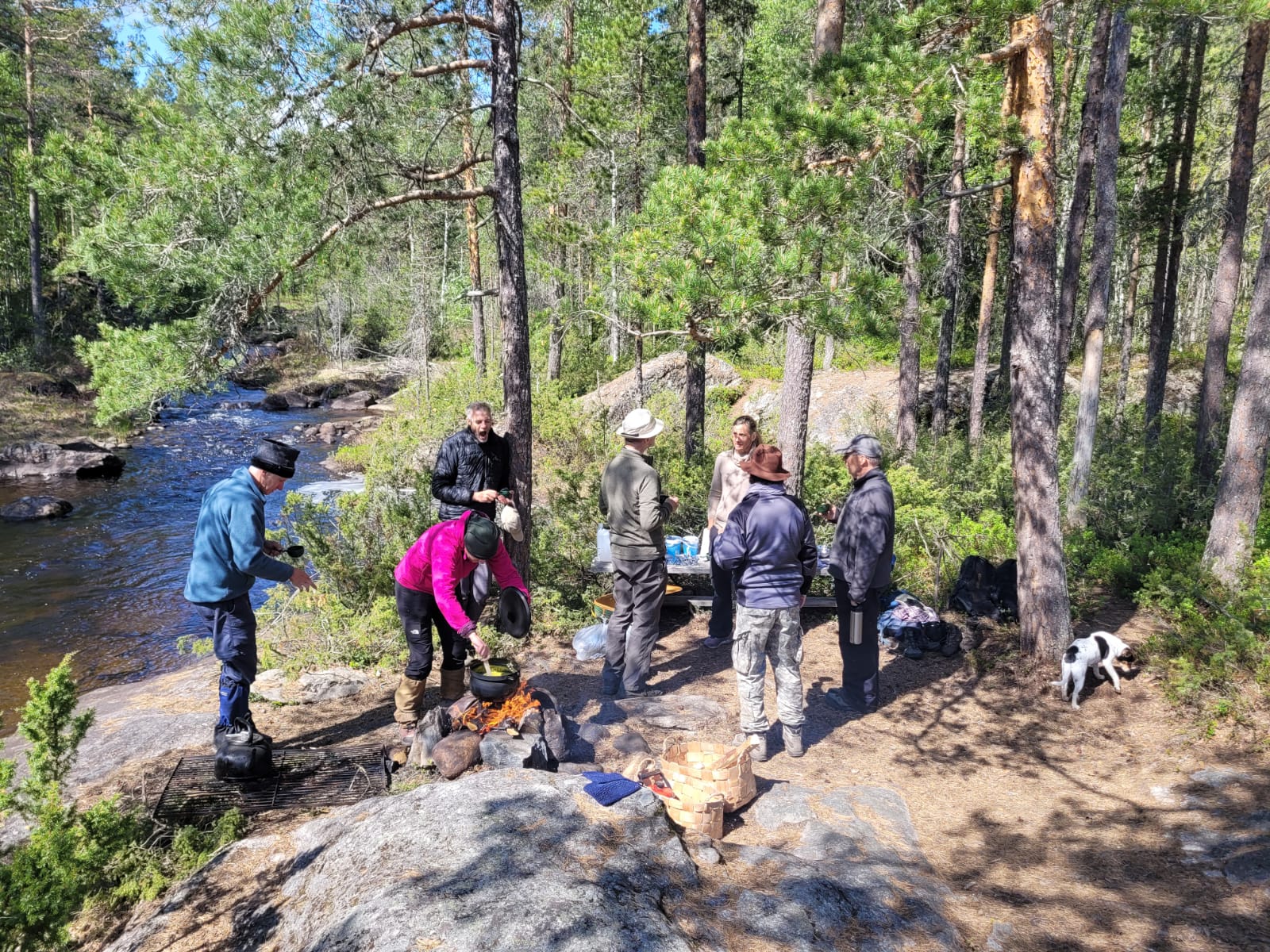
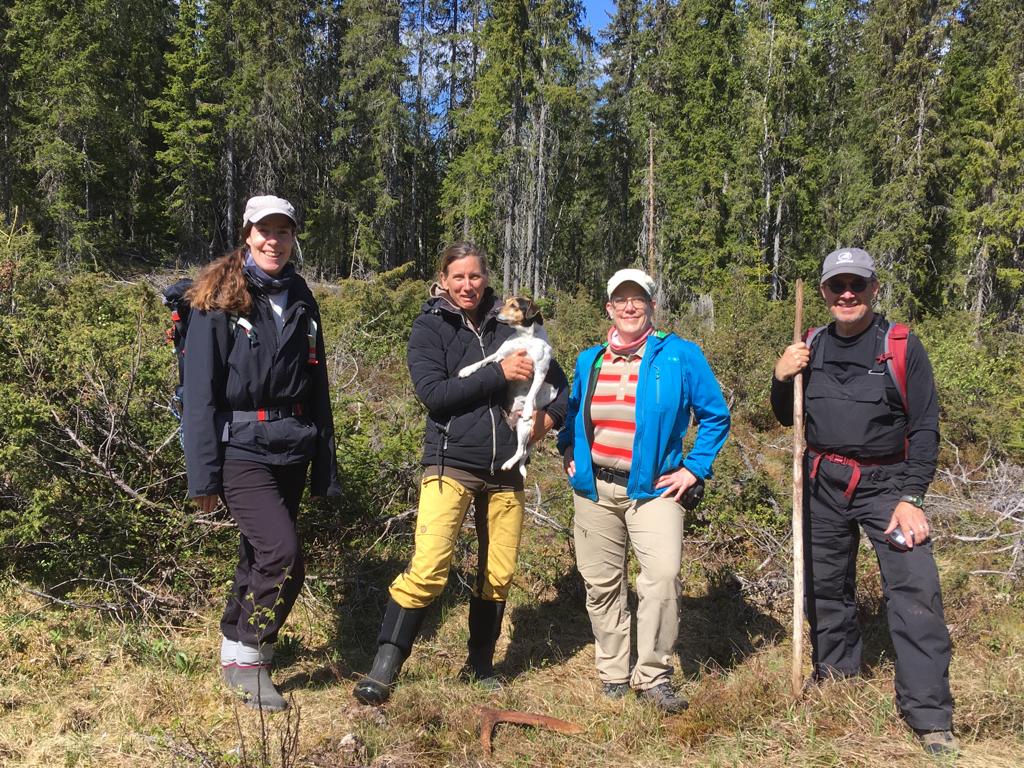
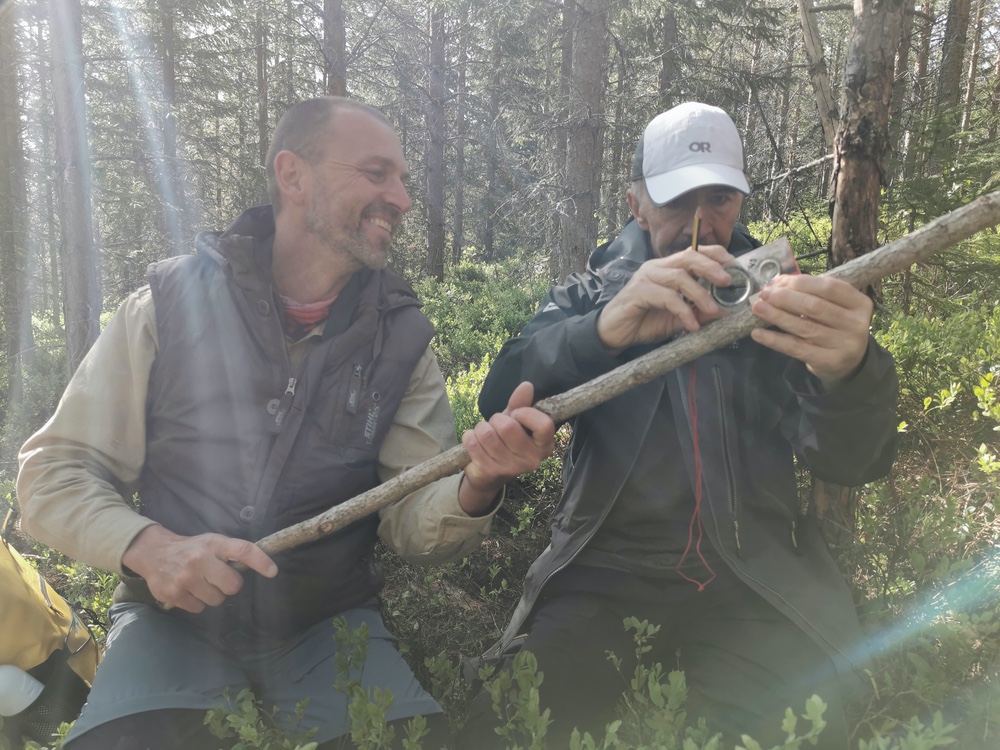
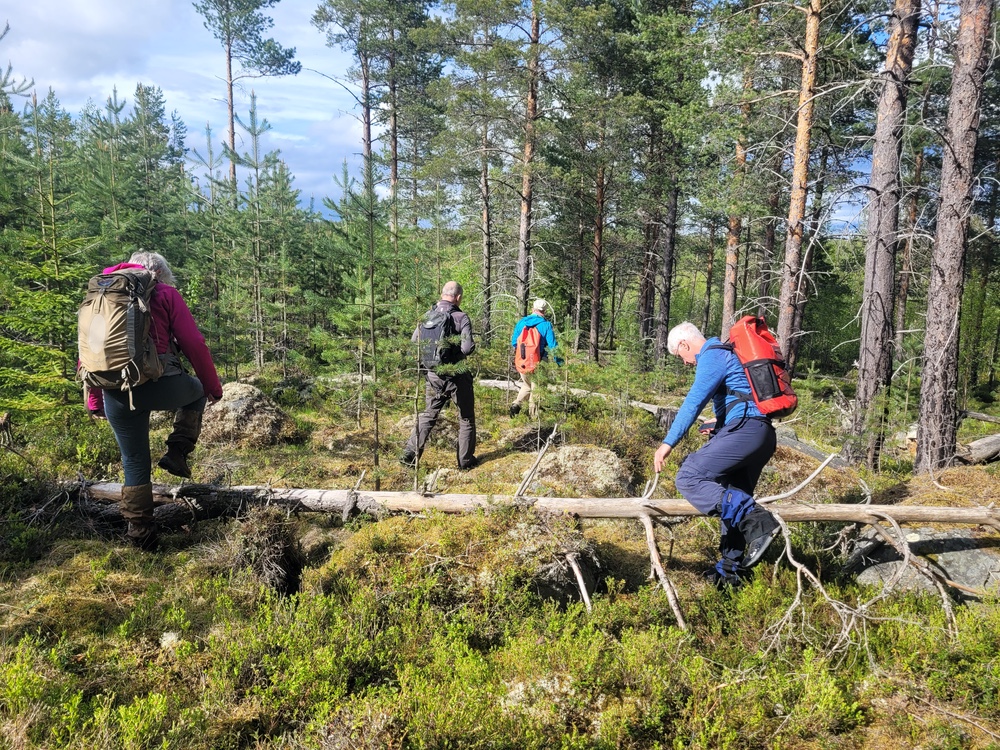
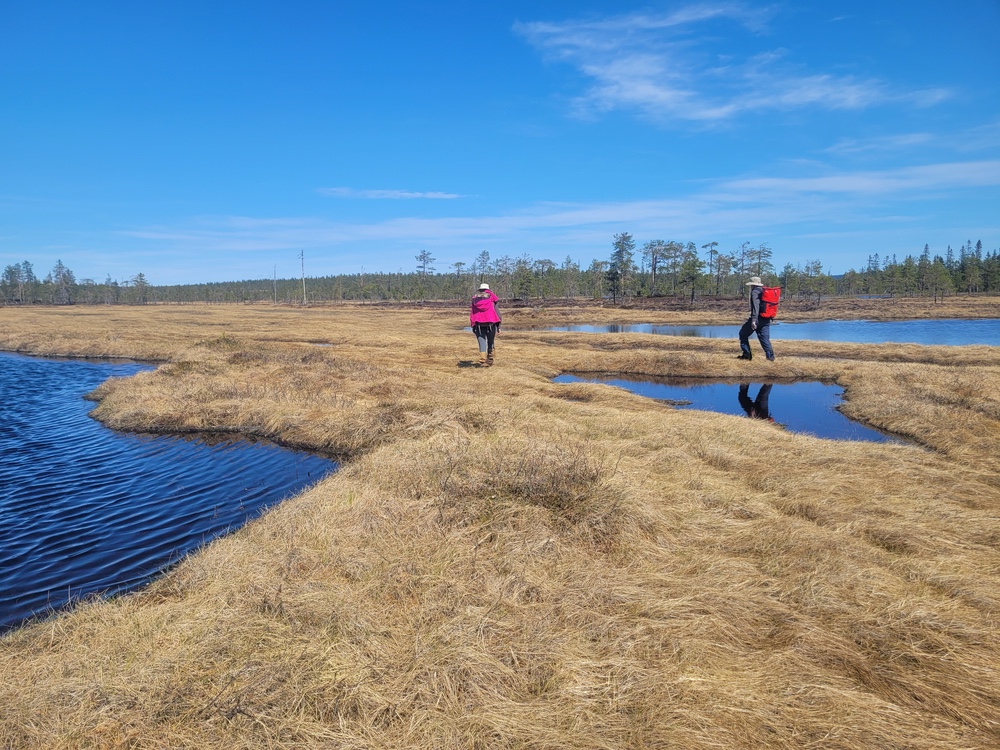
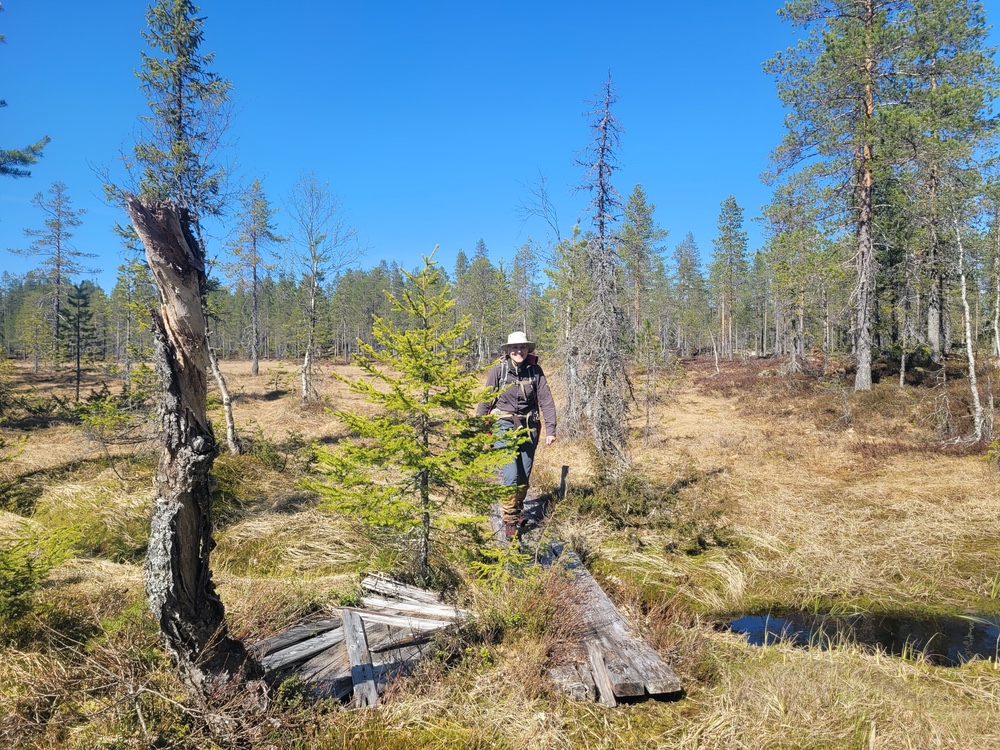
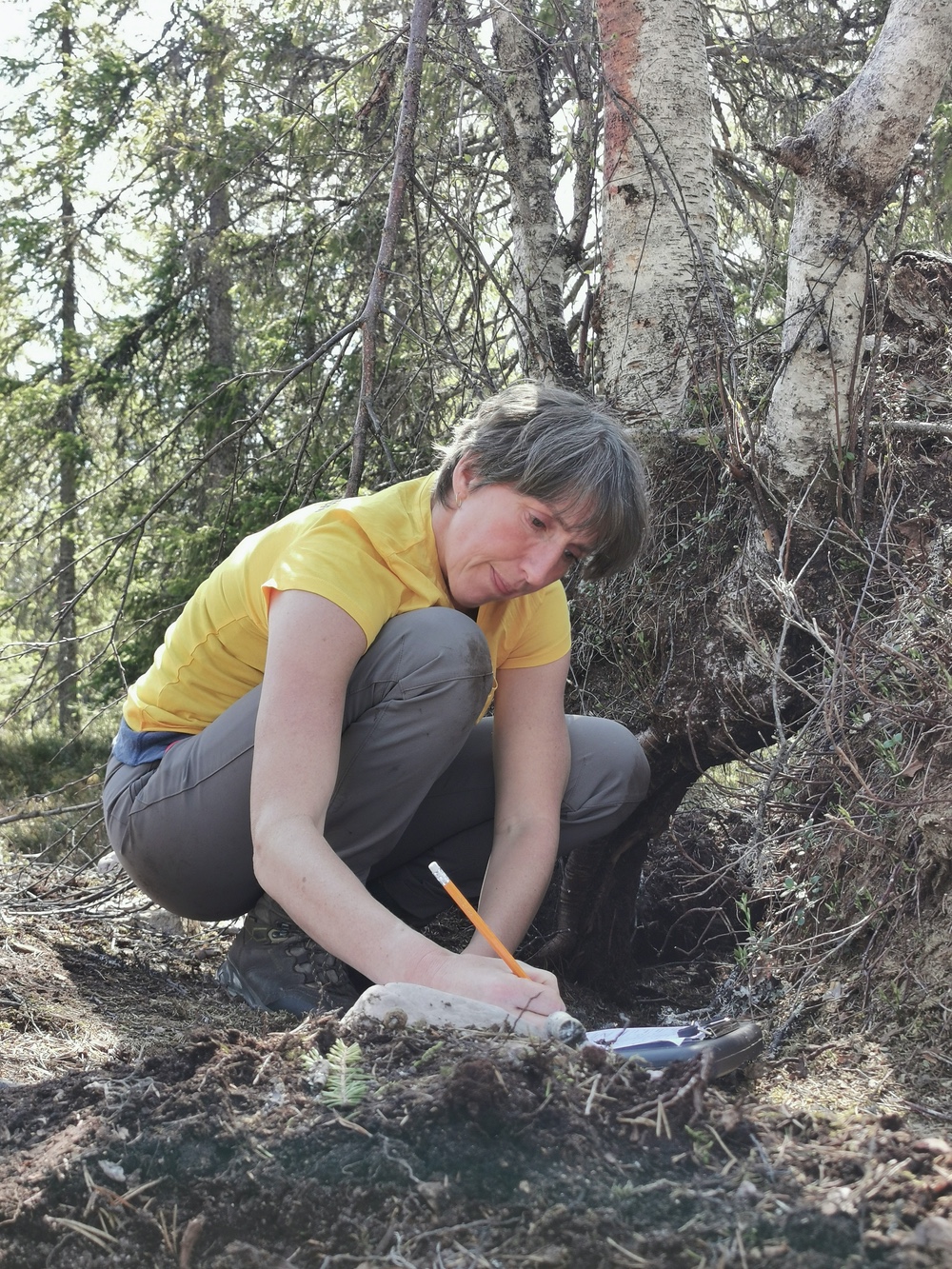
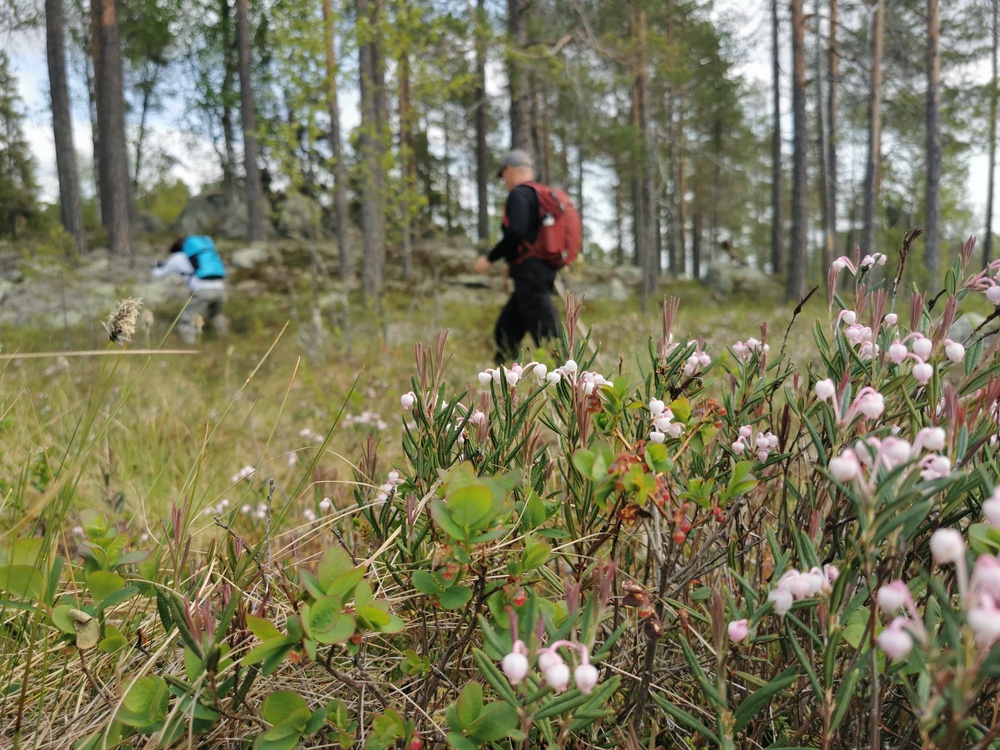
This rounds up this expedition and here are some feedback videos and a picture gallery of the expedition:






















 Biosphere Expeditions: blogs from the frontline of wildlife conservation and the fight for a more sustainable planet