Thailand: Done

Update from our Elephant conservation volunteer holiday Thailand

The Thailand 2024 expedition has now ended and all citizen scientist have left base with a little sadness, but also a spring in their step and plans to join future expeditions. It’s suddenly gone very quiet here without them. Just the sounds of cicadas, children, chickens, dogs, a passing buffalo and the calming gurgle of the river.

The last few days saw us continuing to observe the elephants and record their behaviour, adding to the impressive dataset. The final day in the field was hot, but fortunately for us the elephants headed for the shade of the forest and the cool of the streams for most of the time and we all had a wonderful few hours watching elephants forage, explore, dust bathe, drink and interact: simply living the natural elephant life.

Over the course of the expedition, we collected 142 hours of records of elephant activity, calf development, types of plants eaten and association between individual elephants. We also completed two biodiversity transect surveys near to base. Scientist Laura is really happy with what we have achieved and in due course she will write up the results and conclusions from our data in the expedition report.

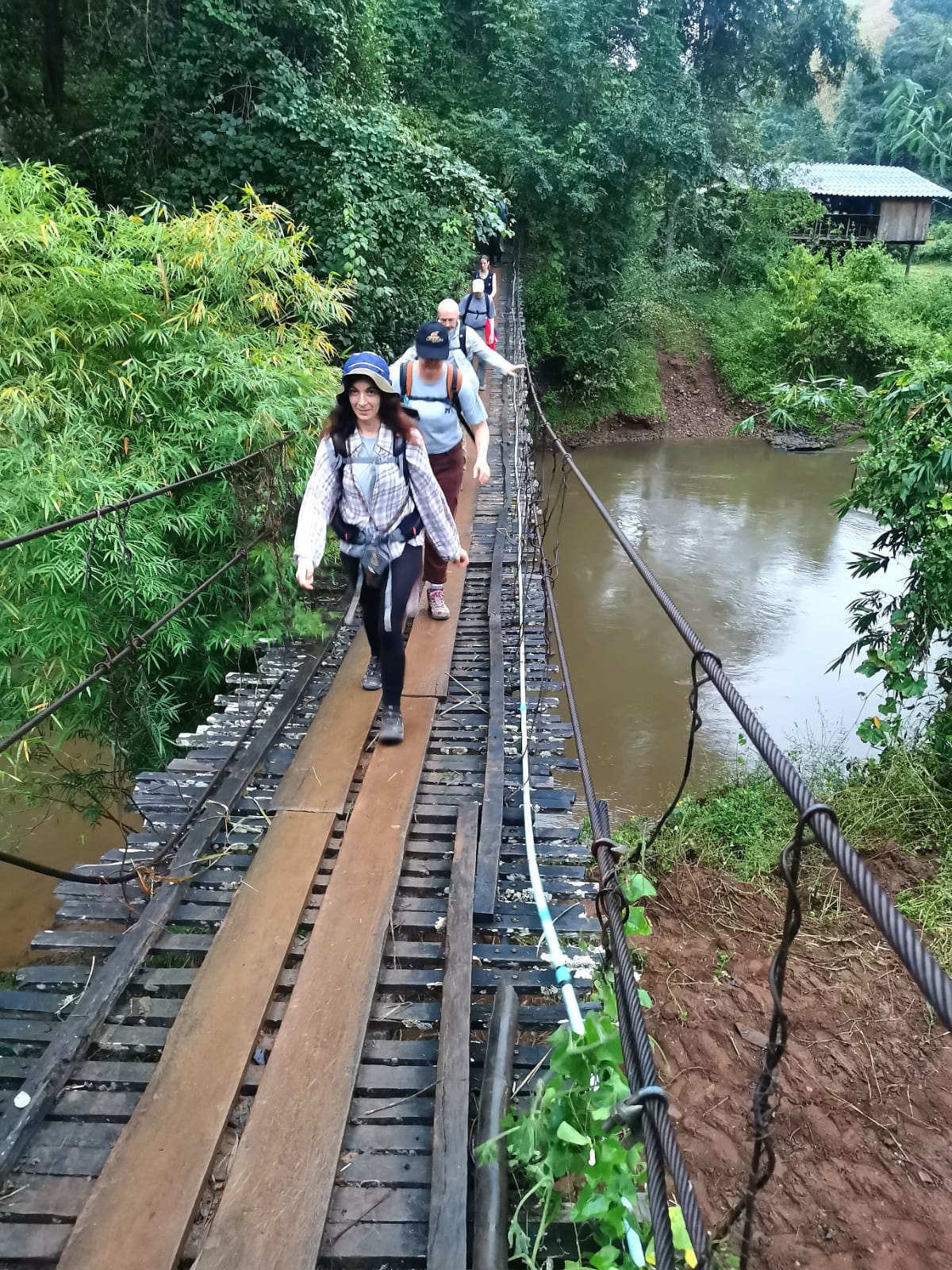
Our final hike back from the forest was great. We passed and greeted the locals sharing the same trail, by foot and motorbike, to get to the rice fields. We enjoyed the sight of butterflies, lizards and praying mantises.

I would like to thank the excellent team at KSES – Kerri, Laura and Cris – who hosted us, oversaw the science and gave us an insight into the world of captive Asian elephants released into their natural habitat. Thank you to Kanda, our young local guide who kept us safe and was always so warm and smiley. Thanks too to the villagers of Ban Naklang who fed and accommodated us in their home stays: Baw Eh, Tawahmoh, Nee, Jadee, Lujet and Seeva. And a big thank you to Neele, Anette, Stephen, Brandon, Jim, Rachel and Ed, the expedition citizen scientists who made this conservation research expedition such a success. You were a great team: hard-working, punctual, cooperative, appreciative of the value of the work we do here and altogether had a great attitude to the expedition. I hope to see you again on a future expedition.

Continue reading “Thailand: Done”

Thailand: Rain, sun and elephants

Update from our Elephant conservation volunteer holiday Thailand

We have settled into a good routine now. A one hour hike to the forest, setting off sometime between 06:00 and 10:00, depending on which period scientist Laura needs data for that day, followed by two or three hours of data collection with the elephants.

Once we find the elephants, we split into teams – generally one citizen scientist per elephant plus a team of two who will record where each visible elephant is in relation to the rest. If the elephants drift away from each other, we have to decide whether our teams should follow them or if it is more useful for us to watch from a distant vantage point. We need to be adaptable. On two days we have had to spend our time fighting through the jungle, following the elephants as they trample their way through thick vegetation. There is a real art to choosing where to go and when, in order to get a good view of your target elephant so you can record its behaviour, while keeping our distance for safety reasons (and to avoid annoying the elephant). It keeps you on your toes (or sometimes off your toes when you trip over terrain that the elephants find effortless to traverse).

Laura, the scientist is happy with the data we have collected so far and the team are operating well, whatever the time of day, weather and conditions.

The rain has stopped now and we are being reminded how hot it gets here when the sun is fully out and the air still. A good day for drying out. Tomorrow is our last day of data gathering – likely to be in the forest as the elephants will probably retreat from the open grass field when it gets too hot. But in the meantime, we have another bio-hike to do this afternoon: a transect survey of a path near our base, recording the numbers and diversity of insect life. After that – large helpings of good Thai food for supper, with perhaps a cold beer to celebrate another successful day completed on this expedition.

Continue reading “Thailand: Rain, sun and elephants”

Thailand: Elephants and insects

Update from our Elephant conservation volunteer holiday Thailand

Our first two days of research have sped by. The core activity involves hiking out to where the six elephants that we are studying live and observing them for a few hours. Working on different methodologies, we record each animal’s behaviour, how the elephants associate with each other and what plants they eat.

On both our research days, the elephants have been foraging in a large sloping field of tall grass, rather than in the nearby forest. Our best vantage point to watch them is on the opposite side of the small valley. This has the added benefit of a large shelter we can stand under when it rains. It rained incessantly all day today, but with that shelter, use of umbrellas and the upbeat attitude of our small team of citizen scientists, our spirits were high.

We happily watched and recorded the elephants as they foraged, explored, dust-bathed and interacted with each other. The two younger females tend to hang out together along with the 18-month old calf. The two adult bulls usually stay apart although one of them (father to the calf) does readily join the trio. The old matriarch tends to keep herself to herself.

With some spare time this afternoon, we carried out an extra research task. The appealingly named ‘Biohike’ is a transect survey of insects contributing to a long-term study of biodiversity in the area near our base, including habitats affected by elephants, which have a significant and long-term ecological impact as they trample, break up and uproot the vegetation as they pass through.

This evening we will be eating dinner with our homestay hosts and tomorrow it’s back to watching and recording the elephants. The expedition team is doing well.

Continue reading “Thailand: Elephants and insects”