Azores : Strong winds

Update from our marine conservation volunteering holiday in the Azores archipelago, working on whales, dolphins and turtles

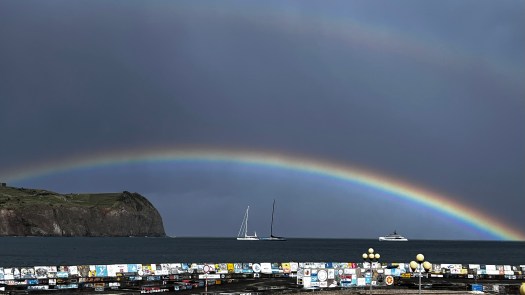
My flight to Horta on Sunday was cancelled due to bad weather. An unplanned extra day in Lisbon followed and some rapid replanning of the expedition preparation began. Huge thanks to Lisa for stepping in and help organise what she could in my absence โ€“ though there is limit to what you can do from a laptop in Lisbon. The good news is I have finally arrived in the Azores, albeit much later than expected. No real harm done, but the next day or so will be busy getting everything back on track. But this is an expedition, so it is great to have a plan, but as important is a willingness to change it and adapt.

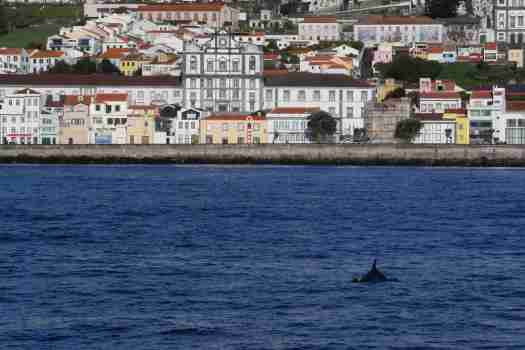
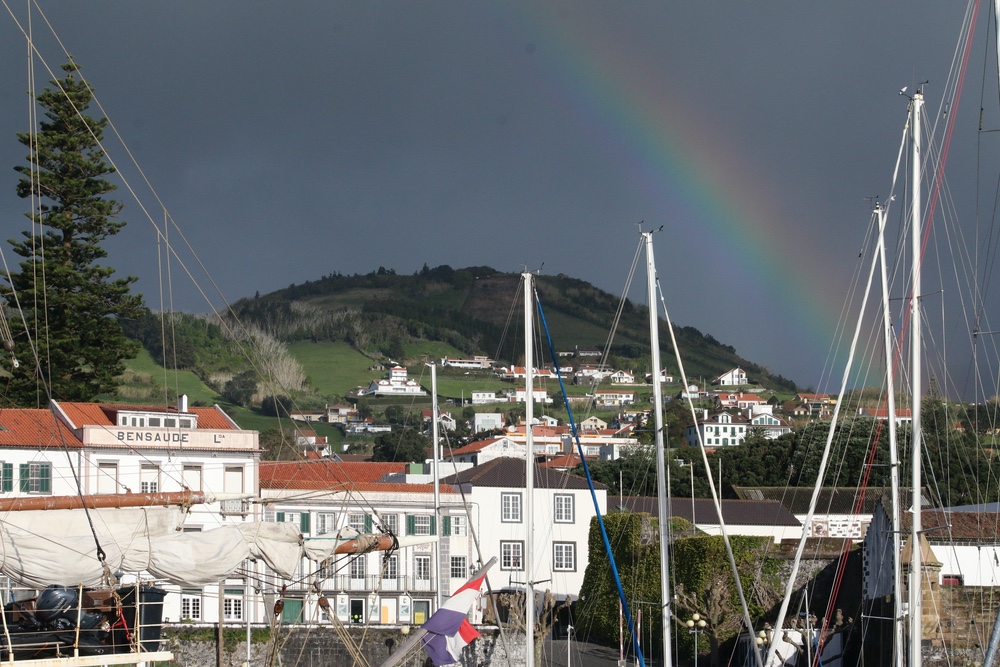
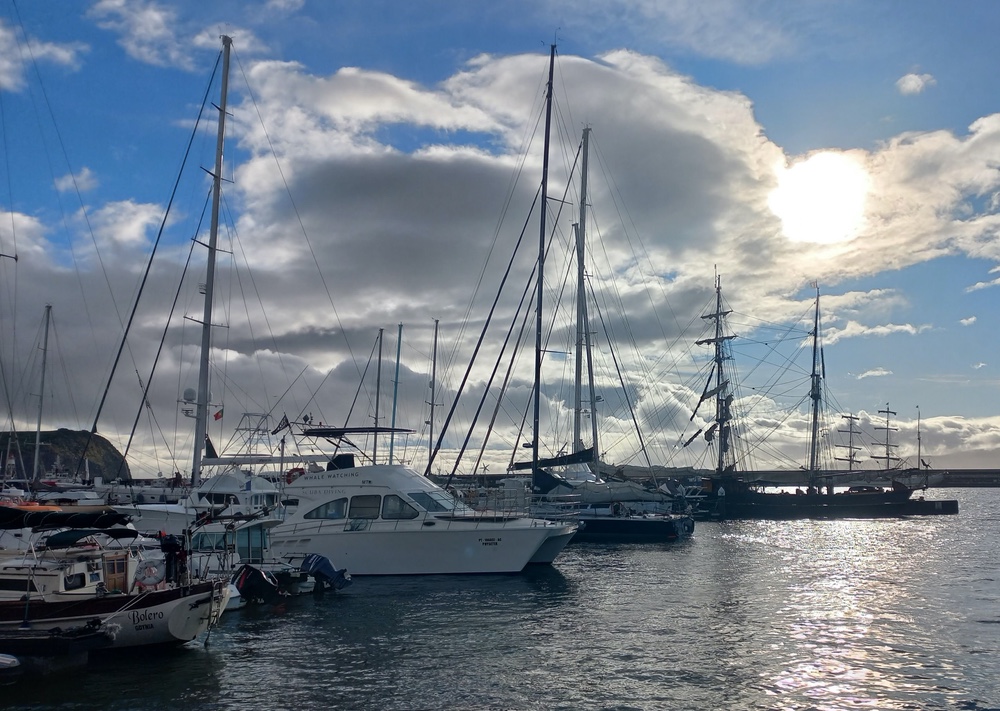
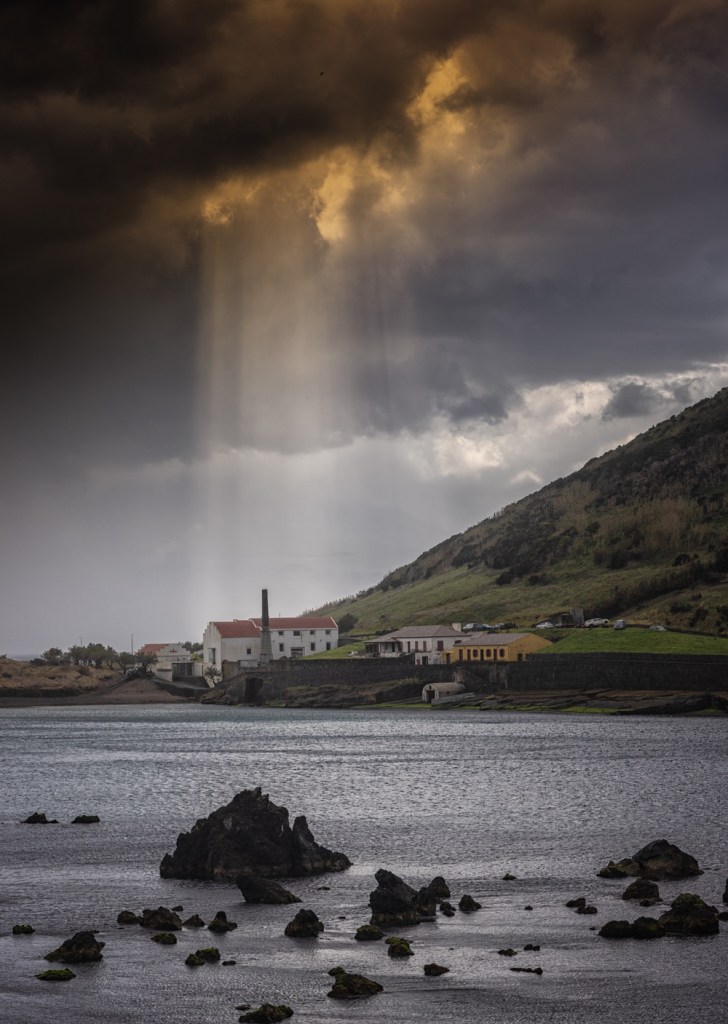
Strong winds whipping up the surge at Horta beach

The good news is our hosts at Monte Da Guia (Silvia and Mario), Lenita (our housekeeper) and Lisa have been preparing the expedition base for group 1’s imminent arrival, and I will continue this evening.

We now just hope that the weather and whales (and other target species!) are on our side and we can look forward to some great fieldwork (and data collection) over the next few days.

So safe (and hopefully uninterrupted) travels to those of you on group 1 still en route and we look forward to meeting you all on Tuesday morning.

Continue reading “Azores : Strong winds”
Azores : Starting the 2025 expedition

Update from our marine conservation volunteering holiday in the Azores archipelago, working on whales, dolphins and turtles

Itโ€™s almost time to return to the Azores, which means it is also time for the initial introductions. I am Craig Turner and I’ll be your Expedition Leader on the Azores Expedition this year.

Craig Turner

The Azores has an allure that keeps drawing me back, and I know I am not the only one returning this year. Who doesnโ€™t want to live on a volcano, in the middle of an ocean, searching for a diverse array of charismatic species, including some of the biggest creatures to ever roam our planet! It is always great to be going back to the Azores. Whilst my home patch of water (Loch Ness) has its own monstrous appeal (and I spend a lot of time on it with the RNLI), the mid-Atlantic is vast, and despite this, we do have a better chance sighting the beasts that frequent the depths!

I am currently organising and packing my kit, checking that I have all I need for the next month โ€“ so donโ€™t forget to check the project dossier.

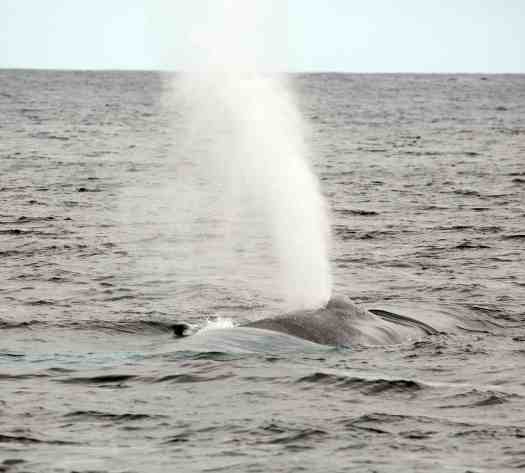
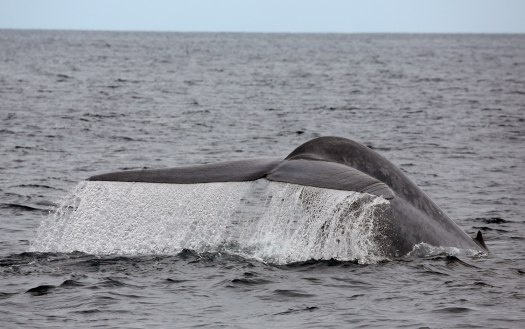
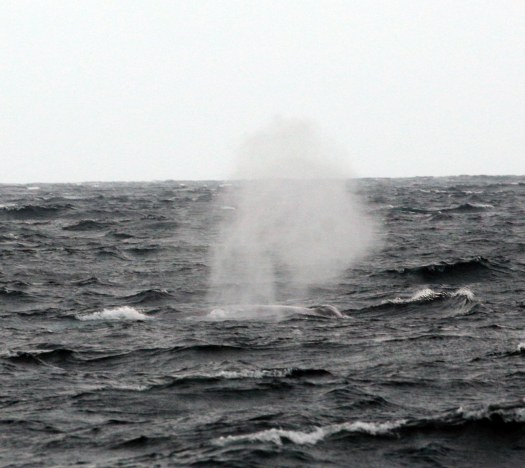
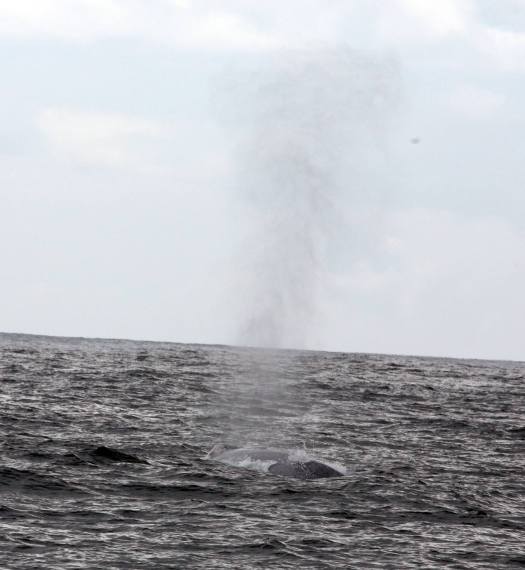
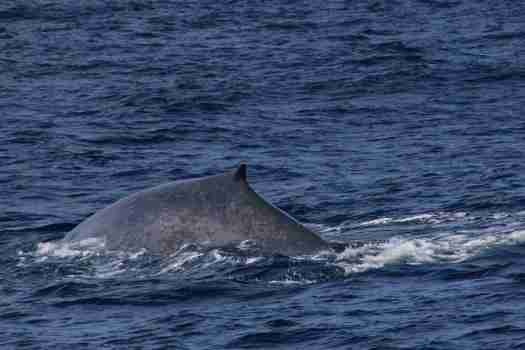
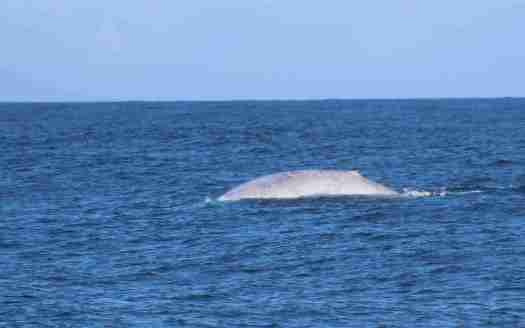
It will be great to meet up with old friends and colleagues from previous years, not least, our scientist Lisa Steiner โ€“ it has now been over ten years since I first worked with Lisa. If you want to find cetaceans in the Azores, then as many know she is the person to find them. If you have seen the latest expedition report and Lisaโ€™s publications, then youโ€™ll know, not what to expect, but what we hope to record. Last year, youโ€™ll note they had a variety of records โ€“ so you never can be too sure what โ€˜dataโ€™ we will collect. Dare I say it, blue whales have already been sighted! Just cross your fingers and do the relevant dance for good weatherโ€ฆ.

I arrive in Faial over the weekend, a couple of days before meeting the first group, in order to set up the expedition headquarters. I’ll send around another message once I get on the ground in Horta and confirm my local contact details.

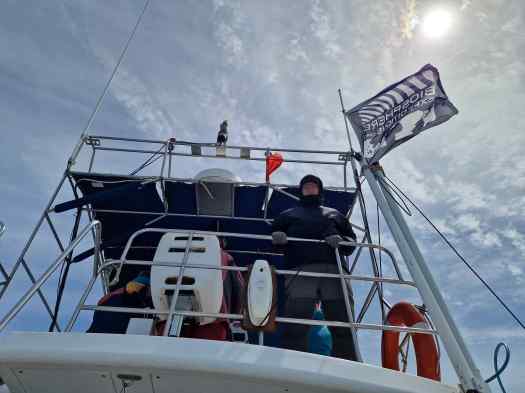
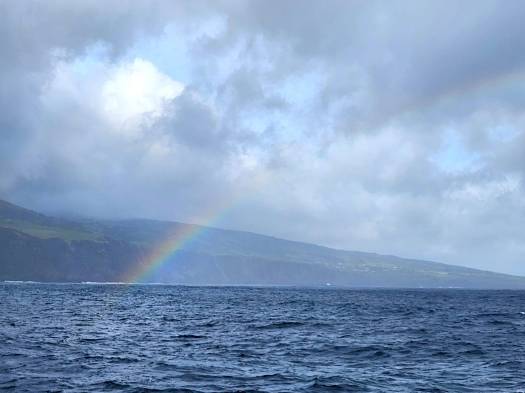
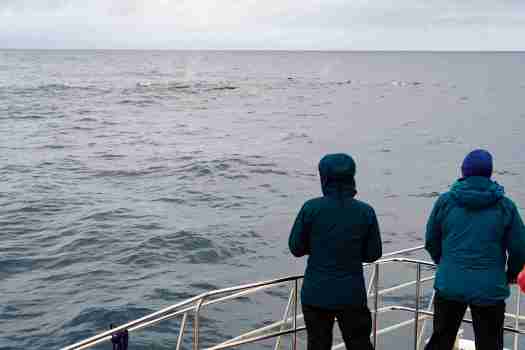
I hope you’ve all been eagerly reading your expedition materials and know to bring many layers of clothing. The weather is often very Scottish – so prepare for warm, cold, wet and dry โ€“ sometimes on the same day. Donโ€™t forget your sunglasses or your waterproof trousers โ€“ youโ€™ll thank me when you are stationed on the bow of the boat as a lookout and the weather is choppy (so also bring your motion sickness pills/patches โ€“ if you know you need them!) otherwise youโ€™ll be feeding the fish!

So, with the local team in place, whale sightings already recorded by Lisa, all we are missing is you. It will be great to meet you all and I’ll send along another update very soon.

Continue reading “Azores : Starting the 2025 expedition”
Azores : Round-up 2024

Update from our marine conservation volunteering holiday in the Azores archipelago, working on whales, dolphins and turtles

Biosphere Expeditions just completed their 18th expedition, now covering almost two decades of cetacean citizen science monitoring since 2004 in the Azores, a mid-Atlantic hotspot for marine megafauna with no fewer than 25 species. Cetacean data collection take a decade or longer to reveal meaningful patterns. Hence, the true value may not always be in the โ€˜here and nowโ€™, but be realised as future questions and challenges arise.

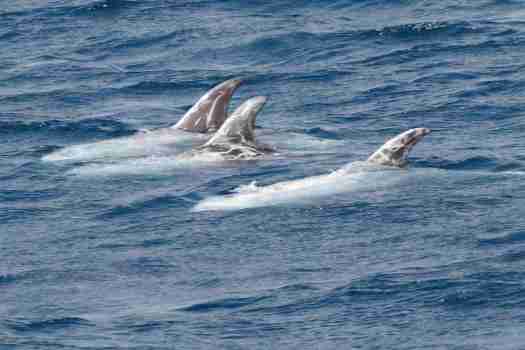
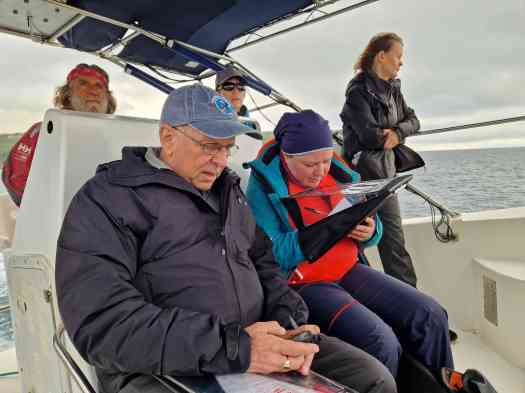
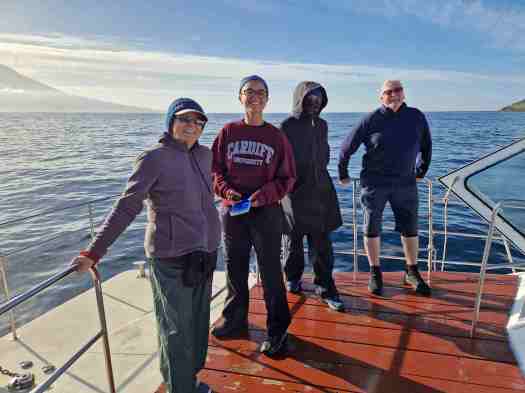
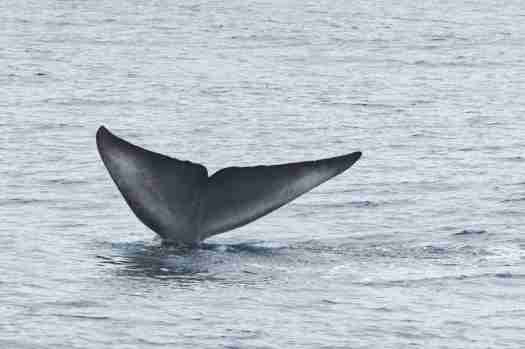
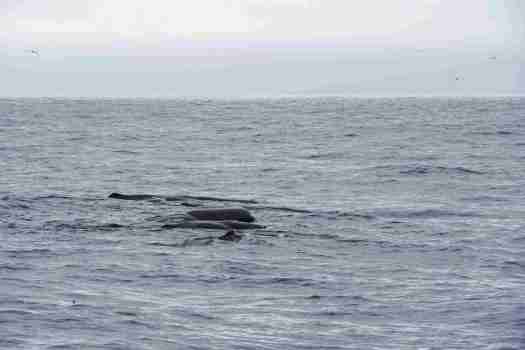
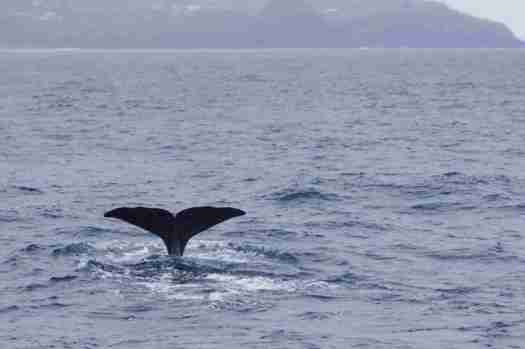
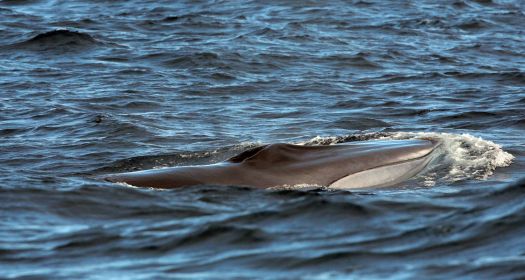
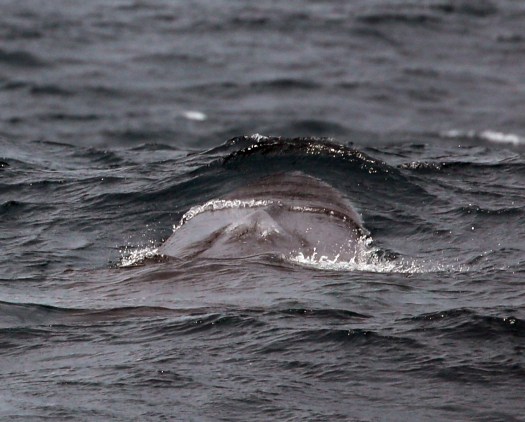
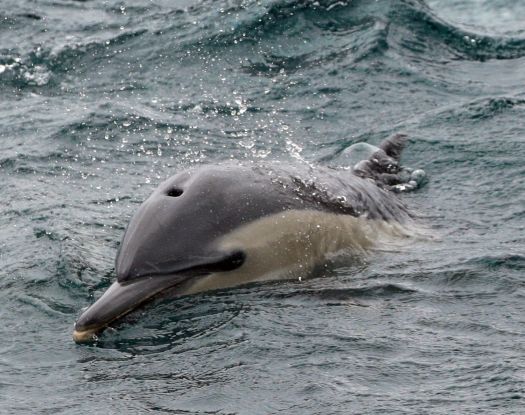
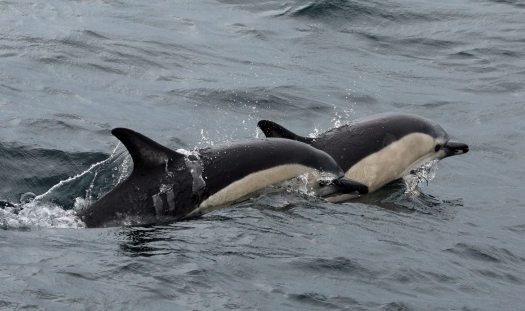
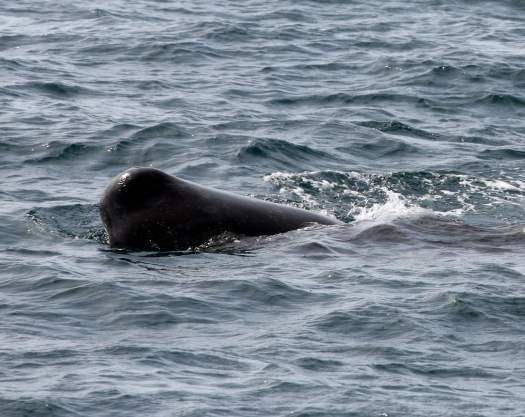
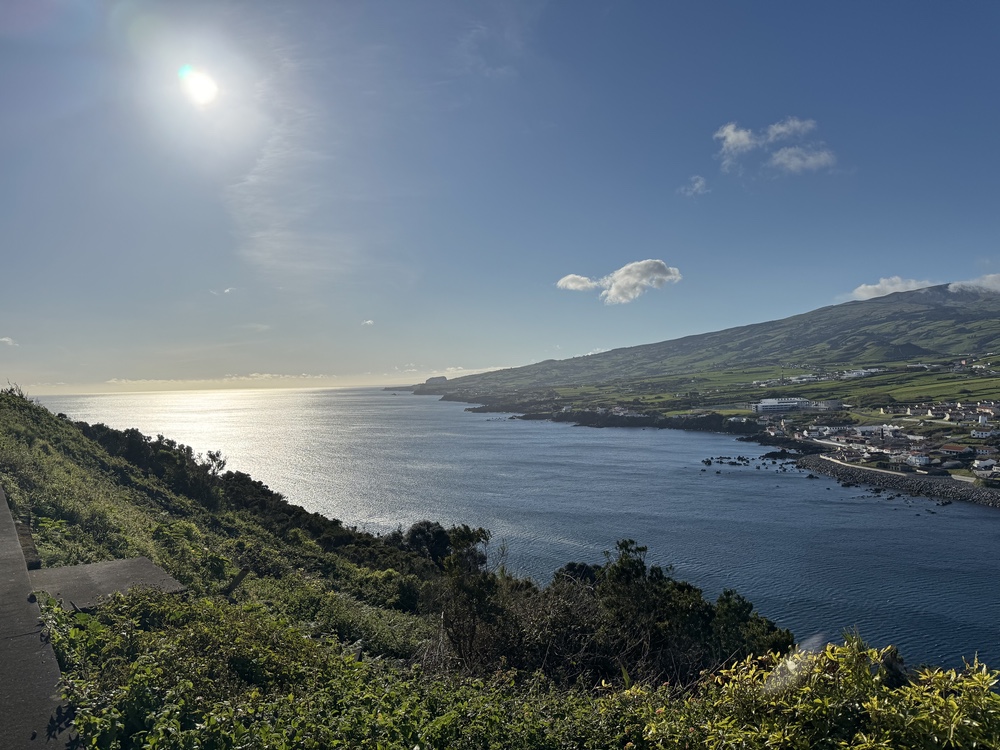
Twenty-nine expeditioners from ten countries, joined the 2024 expedition, completing 16 days out at sea, adding up to 86 sea hours while covering 1,500 km of ocean around Faial and Pico. Our search effort resulted in 92 encounters of nine different cetacean species. Sightings of common dolphins and sperm whales were most abundant. Common dolphin groups were smaller this year, a trend already observed in 2023. With regards to baleen whales, we had ten sightings of โ€˜feedingโ€™ blue whales, seven of fin whales, one minke whale and one humpback whale. The resident bottlenose and Rissoโ€™s dolphins were also seen on several occasions.

In total we confirmed some 20 positive IDs, including several re-sightings of sperm and blue whales. One of the sperm whales we sighted goes as far back as 1988, 35 years ago. Several blue whales observed were seen in previous years in the Azores, showing that they use the same migration route. Some individuals were recorded for the first time, again contributing to an ever-growing growing photo-catalogue and to our understanding of population dynamics. Many more whales have yet to be matched. Studying cetaceans takes patience and perseverance, one photo-ID shot at a time. Yet, these valuable data provide relevant insights into the spatio-temporal movements, migrations, numbers, group structures, and ecology of cetaceans, key to their long-term protection and conservation.


Feedback from the citizen scientists:

โ€˜I was dreaming of seeing a blue whale. Not expecting to see one in four consecutive days!โ€™
Jenny S., UK.

โ€˜Well-organised, safe, learned a lot on marine conservation! Great team work and excellent accommodation. โ€˜
Skarlet-Ilieva M., UK.

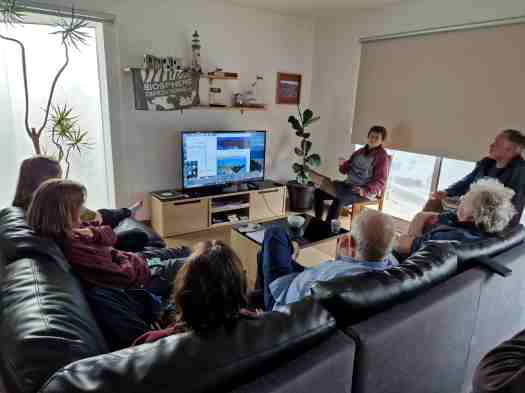
โ€˜An, the expedition leader is exceptional. The breakdown of tasks was good and the daily briefings provided immediate feedback of results. Very well organised.โ€™
Debbie R., Canada.

โ€˜This is my sixth expedition research project and honestly reached the top of my list for so many reasons.โ€™
Lisa C., USA.

โ€˜The group dynamics, the expedition leader and scientist went over and beyond to make sure we had all we needed. โ€˜
Paulina B., Canada.

Continue reading “Azores : Round-up 2024”