Award-winning, non-profit and ethical wildlife conservation volunteering. Advancing citizen science and conservation since 1999 – for nature, not profit.
Pascal Tchengang, from Paris, France, loves travelling and being in touch with nature. In fact, this is how he discovered Biosphere Expeditions way back in 2002 and then went on an expedition to study big cats in Namibia in 2003, returning there in 2005 as staff. Today Pascal helps out part-time in Biosphere Expeditions’ French office near Paris.
Pascal’s first engagement with Biosphere Expeditions was in 2002, when he was researching options for holidays with a purpose in nature. ‘My favourite thing -then and now – when I travel is being in touch with nature’, Pascal reminisces, ‘there are certain places you can discover and visit on your own or with your family, but there are others where you really need to be accompanied by specialists’. This is how he came across Biosphere Expeditions all those years ago and has ‘never looked back’, he says with a broad smile.
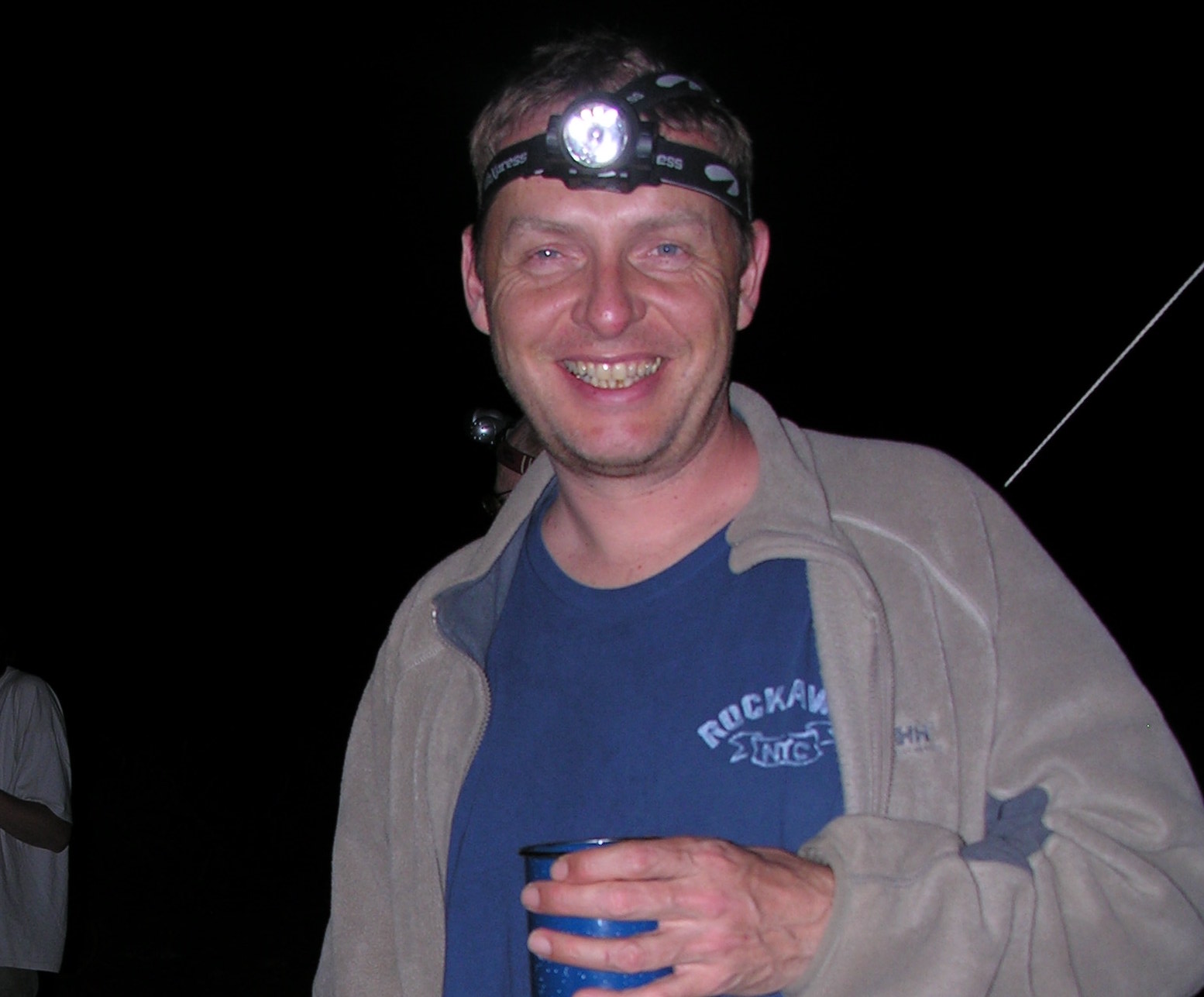
Pascal on expedition in 2005.
‘You see, I love animals and wildlife in general. Back then I had a burning desire to go to Africa and see wildlife up close. Of course, there are national parks that you can visit on your own or with your family by renting a vehicle, but what I wanted was to get as close as possible to the large mammals. So, while searching the web, I discovered Biosphere Expeditions. Browsing through their website, I was fascinated by the programmes offered on each expedition. So I signed up and took part in my first expedition to Namibia in 2003’, Pascal recalls. ‘It was incredible, a real revelation. It was the first time I had ever come into close contact with large mammals. In Namibia, I had the chance to get up close to cheetahs and leopards, because we were accompanied by a scientist who was studying them there. In fact, during that first expedition, I enjoyed both the opportunity to encounter the animals and being part of a group that was genuinely curious and eager to learn’.
On the expedition Pascal met some senior Biosphere Expeditions staff and asked whether he could help out with the office in France. He could – and started assisting with enquiries and attending events, becoming a spokesperson for Biosphere Expeditions.
Two years later, Pascal was back in Namibia as staff, this time with Peggy, ‘the person I share my life with today’, Pascal says with his eyes lighting up, ‘this trip was her first of its kind, a real revelation’.
Peggy & Pascal
‘So, yes, if you are looking for a trip where you won’t encounter trivialities, and especially if you want to make yourself useful, then I really recommend Biosphere Expeditions’ Pascal says, adding with a laugh ‘and I don’t just say this because I am biased, but because I genuinely believe it’. For advice, over 20 years after his first expedition, Pascal is the representative in France, so please feel free to reach out. ‘I will be happy to provide you with as much information as I can’.
The advanced party has arrived in Malawi ahead of the start of the expedition, to help with last preparations, alongside expedition leader Roland, there is Simon, expedition leader in training. On the LWT side, there are expedition scientist Lea and helpers Chim and Gideon.
Roland, Gideon, Lea, Chim, Simon
Lilongwe is hot, dusty and busy, but not TOO hot dusty and busy! It’s fine walking around here in a T-shirt and thin trousers in the middle of the day. The Malawian government has been doing major road upgrades over the last few years and it’s now mostly complete in Lilongwe – it’s almost fun to drive on the wide new tarmacced roads now. The taxi drivers we spoke to were very happy!
We have tied up a few remaining loose ends on the expedition prep and have just set off to Vwaza with all the kit and supplies we need to set everything up for the expedition there. It will be a long day, but it will end with arrival at our wonderful base camp, with baboons, hippos, antelope and elephants waiting for us. More from there in a day or two.
It’s not long to go until the start of the 2025 Malawi expedition. We are feeling prepared and excited. We have updated the research tasks – continuing the long-term studies of elephants and hippos at Vwaza along with the camera trap surveys, while also adding some new nocturnal mammal and bird research. All the activities we intend to do are in the 2025 Malawi Field Guide. Please can you make sure you download and study this prior to the expedition, and bring a copy of it with you, either as a soft copy on a tablet or a printed version. We are counting on a hard-working team to undertake all of the activities, following training at the start of the expedition, so the more you can swot up now, the easier it will be for you to get through the intensive training phase.
We have sourced some new equipment too, to aid this research – thank you to those of you who have volunteered to bring some of this kit with you. Our expedition partners, Lilongwe Wildlife Trust, have also been busy preparing: getting the camp and vehicles ready and sourcing the expedition food – not always easy in a country like Malawi where you can’t guarantee the availability of all the food supplies you might want! But I am confident that we will have the tasty and nutritious meals that we have enjoyed in previous years, prepared by our experienced expedition cook.
This will be my fourth time leading this expedition and I expect it to run as smoothly as in previous years – although something unexpected always seems to happen, usually involving elephants!
I will be flying out from the UK soon to work with LWT in final preparations and head up to Vwaza before the full expedition team arrive.
I will report back once I have arrived in Lilongwe and leave you with the 2024 picture selection to put you in the mood..
Sven Strohschein from Hamburg, Germany, has made some great memories with Biosphere Expeditions, going with them twice to research whales and dolphins around the Azores archipelago, to study Amazon biodiversity in Peru, African wildlife in Namibia and the Arabian leopard in Oman. After these expeditions, he also joined the ‘Friends of Biosphere.’ ‘It was and is a great experience to be part of Biosphere Expeditions’, he sums up.
Sven on expedition in 2007
For Sven, who has been in the shipping industry since 1981, going on an expedition was something completely new for him: ‘I found Biosphere Expeditions through an article in a magazine. I was curious to get more experience and knowledge about wildlife conservation and looking after our natural environment.’ So Sven took the plunge into what was to become a formative experience.
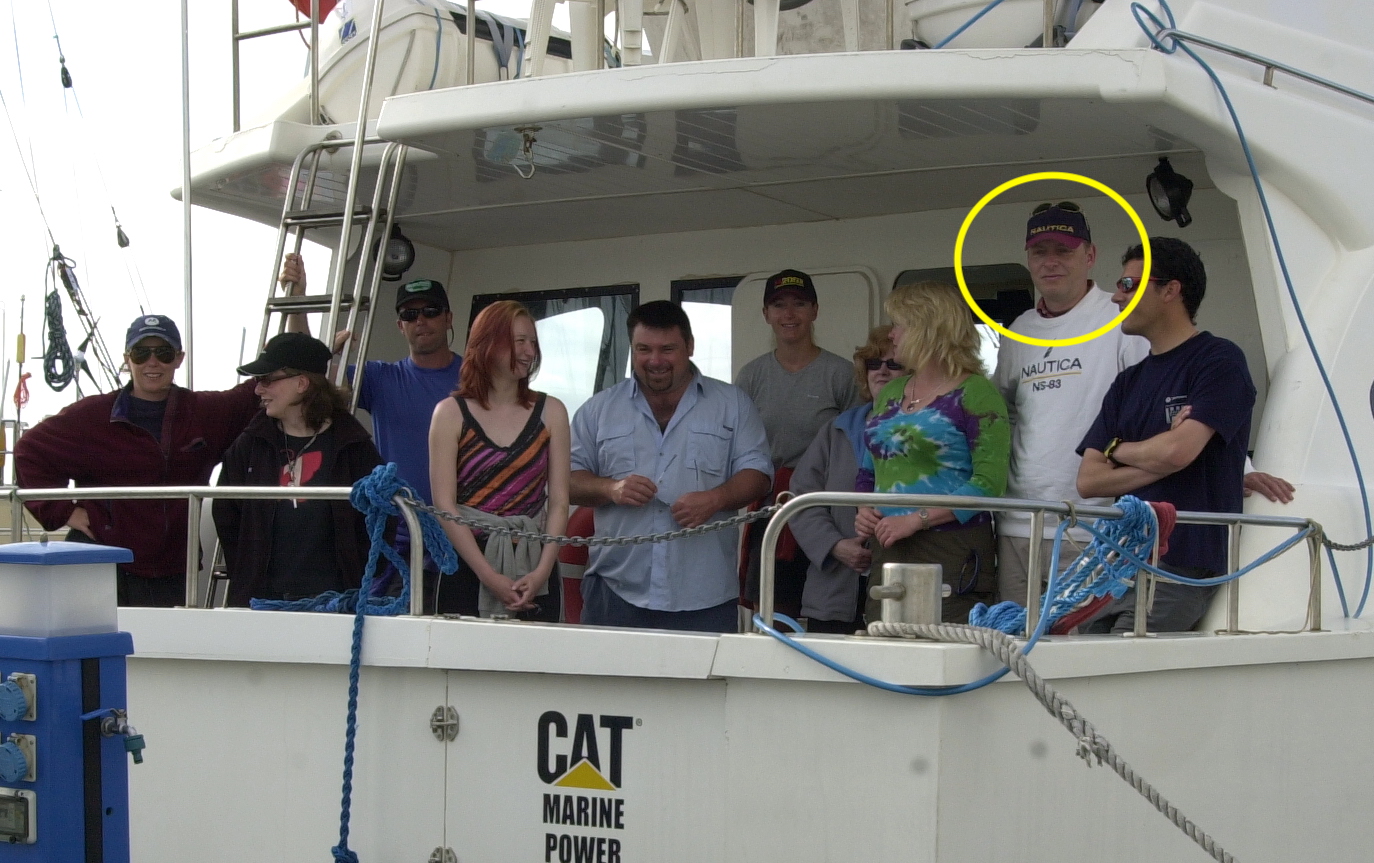
Sven (circle) and his Azores expedition team
‘I can still remember sitting at the campfire under the stars during the Namibia expedition and hearing the lions roar. I also remember jumping into the Atlantic Ocean, trying to catch a glimpse of the whales after they went under the waves, and watching the sunrise at our research station on the Amazon.’ Perhaps his most abiding memories were ‘being woken up by elephants browsing trees just a metre away from where I was sleeping, witnessing a lion hunt in the middle of the night and talking to local people face-to-face’.
When asked about what he’s learnt, Sven thinks that a lot more needs to be done to help the natural world recover and also that everyone can help, not only scientists.
Sven (left) tracking a lion in Namibia
Looking back, Sven reminisces that “Each time I joined a Biosphere Expeditions team in the field, it was definitely a unique experience. I am happy and proud to also support Biosphere Expeditions through the Friends and by helping with media enquiries in Germany and talking to those who are thinking of coming on an expedition.’
Becoming a marine conservation scientist is hard. For women in traditional societies, it’s almost impossible. Yet once she began diving, Jenan Al Asfoor was determined to break free from the confines of gender and her corporate job alike. It wasn’t easy, but now Jenan runs her own marine conservation consultancy, training the next generation to protect the coral reefs of her native Oman. Looking back now, Jenan credits Biosphere Expeditions as the turning point that transformed her passion into a lifelong purpose.
From a young age, Jenan was not deterred from defying social norms for women. She excelled in school, went to university and then took a corporate job in marketing at the Environment Society of Oman, an NGO in her native country. Diving was her hobby. ‘I was just doing it [diving] for fun, until I got the chance of a placement on a Biosphere Expeditions diving project in my country.’
Jenan had had other placement opportunities, ‘but the Biosphere Expeditions one stuck out. I was so happy to be on expedition with them. It truly changed my whole life, what I’m passionate about, and what I’m capable of doing. After my placement in Oman, went to the Maldives to expand my marine knowledge. To find a network of people, from all around the world, from very different fields, but always sharing the passion for doing something for the environment – it makes you change how you see people.’ She became more enthralled with the underwater world and the running of expeditions.
Part of the expedition to the Maldives includes getting certified by Reef Check (a reef conservation NGO that partners with Biosphere Expeditions), meaning citizen scientist divers are then qualified to conduct underwater surveys anywhere in the world. Soon, Jenan found herself re-evaluating her career and her way of living. Working alongside Biosphere Expeditions’ founder and executive Dr. Matthias Hammer and team scientist Dr. Jean-Luc Solandt changed how she saw diving too.. ‘These two opened my eyes that there was more to diving than to have fun. They then helped me to get Reef Check Oman off the ground, I started a science diploma and then went on to start a consultancy in marine conservation.’
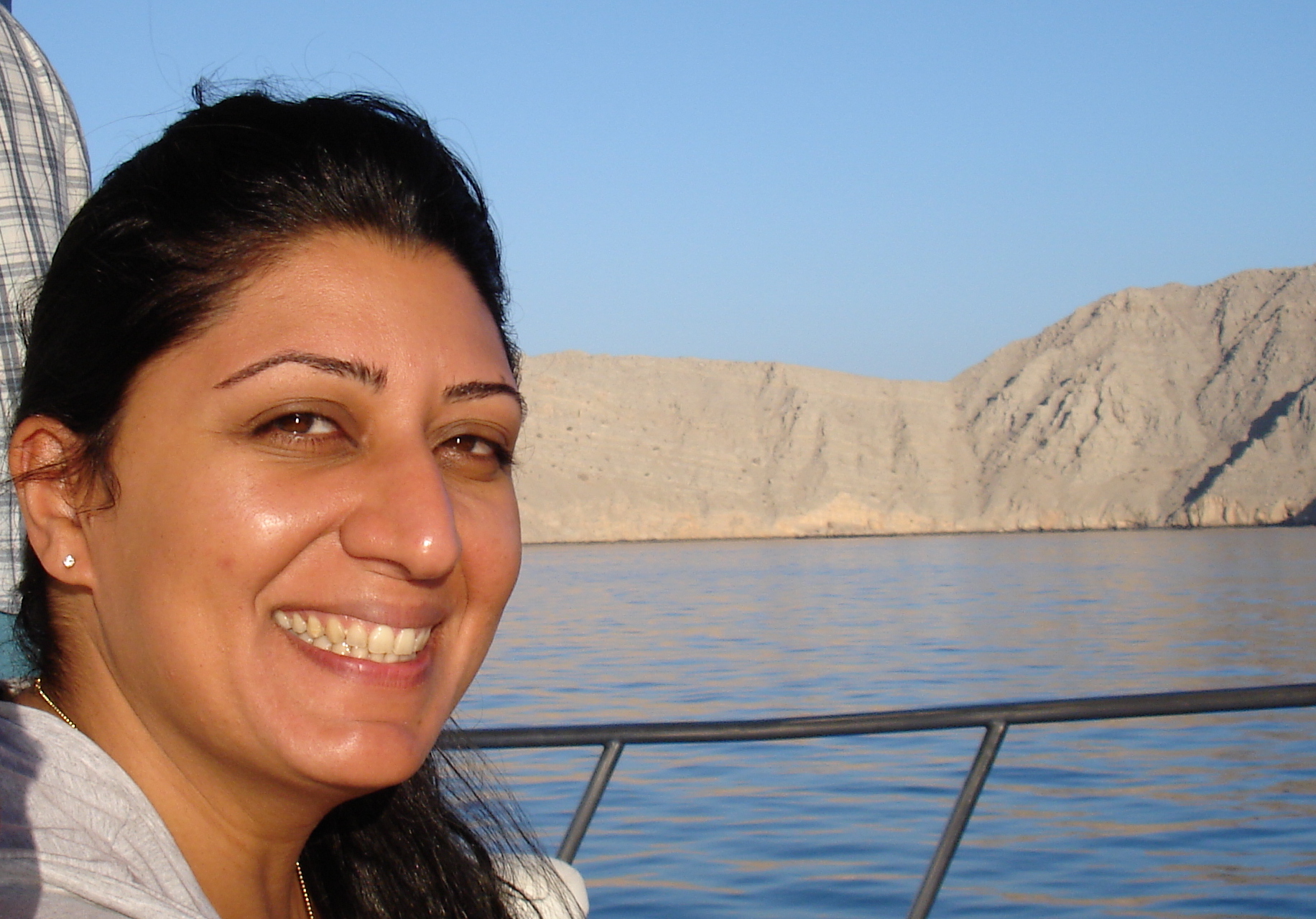
Jenan Al Asfoor on the Musandam Peninsula diving expedition, Oman
In 2017 Biosphere Expeditions’ involvement around the Musandam Peninsula of Oman concluded with the declaration of two protected areas in the region. Jenan was the perfect steward to protect these achievements. She quit her corporate job and devoted herself full-time to diving and reef conservation, launching community-based reef conservation efforts, becoming Oman’s first Omani Reef Check Trainer, and to top it all off, starting Reef Check Oman, an offshoot of the NGO that originally qualified here as a survey diver, as well as her own consultancy. All this was not easy either. ‘My friends and family were surprised,’ she recalls. ‘Diving as a woman in Oman is unusual – it’s not seen as a field for females. People don’t see diving as something with a career related to it. People think it’s not a job, that there’s nothing there to learn, so quitting my job was really challenging, as it was not acceptable to my family. Finding encouragement was hard.’
Jenan about her achievements, hopes and aspirations in reef conservation
‘Without the encouragement of the people I met on the expeditions, I wouldn’t have made it,’ says Jenan. ‘When you don’t get support in your regular life, you need it elsewhere – that’s why Biosphere Expeditions had such a big impact.’
Proving almost everyone wrong, she is now an experienced diver and trains others – including delegates from the Omani government, who are learning how to protect the country’s precious corals. ‘I want to share all the beautiful, life-changing experiences I had being part of Biosphere Expeditions. I want to demonstrate the impact of knowledge sharing and community engagement.’ Working with Biosphere Expeditions meant Jenan learned ‘to face challenges on a daily basis. You don’t need to be a scientist to make a difference; even as citizens there’s so much we can do.’
When she stepped foot on Arabian soil back in 2006, Malika Fettak had no idea how influential and life-changing it would become. Starting as a citizen scientist with Biosphere Expeditions, she eventually landed a job with them, initially as part of their marketing team. However, she craved being back in the field and so jumped at the chance of becoming an expedition leader, taking on the responsibility for teams of citizen and professional scientists as well as a handful of staff and helpers; mastering to be empathetic towards people she may otherwise have trouble getting on with and helping people achieve their dreams. Malika Fettak tells her own story.
‘Back in the early 2000s I was looking for a different way to explore the world. As a single woman wanting to travel alone, it can be scary not knowing who to trust. I was searching for a worthwhile holiday to do something more adventurous. And Biosphere Expeditions sounded perfect: you’re in a group, you’re safe, and you get to do unique things out in nature that you can’t do on your own: not as tourists, but as a team on a mission, working together in conservation. You are also pushed beyond your comfort zone: you don’t know what people you’ll be with, what the work will be like and how hard it will be. On my first expedition, my English was not as good as it is now and I was worried that I would not be able to understand my team mates, the expedition leader or the scientists. Luckily, since team members come from all over the world, the English was very accessible and I had no problems. I instantly fell in love with the simplicity of expedition life. Before the expedition, I remember worrying about how I would cope with not having a hot shower for two weeks! But it didn’t take long for those thoughts to dissipate. You learn not to be afraid and to trust your own abilities and resilience.’
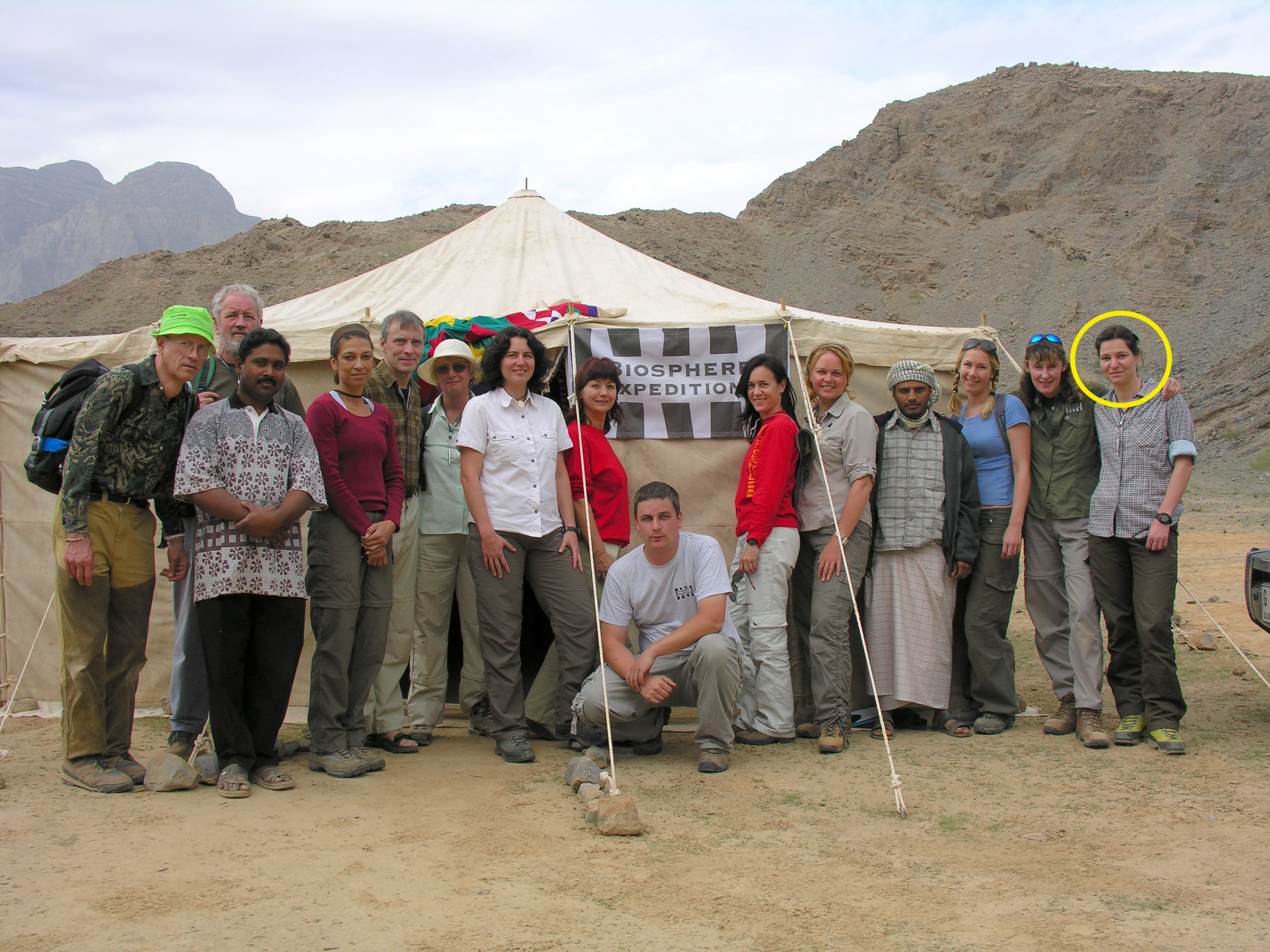
Malika Fettak (yellow circle) with her expedition team in Oman
‘It opened my eyes to the possibilities of another way of living. Out in nature, you actually need less to be happy and fulfilled. If you’re warm, dry, fed and have a place to sleep, that’s enough. And it calms your mind. You don’t have to worry about material luxuries, because in nature, on a fundamental level, it’s not important. A lot of people are overwhelmed in their lives. For example, there may be constant streams of information through phones that don’t actually have anything to do with your day-to-day life. Out in nature, especially away from phone coverage, things become simple. Things become easy. It’s not complicated out in the wild.’
‘After my first experience in Oman, I continued following Biosphere Expeditions across the globe all the way to the Altai Mountains in Russia. By this point, I’d been thinking about a career change, but I lacked a sense of direction. Matthias, Biosphere Expeditions founder and an expedition leader himself, and I had become well acquainted on expedition over the years; making me seriously consider a step into the unknown . He just said: ‘Why don’t you work for us?’ This was in 2006, seven years after Biosphere Expeditions was founded. I kind of created my own job by writing an essay about what I could contribute to the organisation. Having a degree in marketing and communications, I could see a lot of opportunities, so I began working full-time in the background.’
Leading in the Altai Mountains
‘Soon, however, I craved the expedition life again. Being out in nature, in the middle of nowhere, with nothing else but the expanse of the environment. So I signed myself for expedition leader training. It was a huge challenge at first, especially in a foreign language, but it was also extremely fun. I learned a lot. Once I started leading expeditions, that was it – I knew I’d found my place. Working in the wild, weathering the elements whilst leading people: everything that’s missing in contemporary city life, Biosphere Expeditions brings to you.’
Malika Fettak in between countries as an expedition leader
Starting as a citizen scientist, I loved the shift in perspective I got as an expedition leader. Not only was I suddenly responsible for all those people on the expedition; I also found myself in unimaginable situations. I learned how to solve problems, figuring it out as I went along. I felt a sense of accomplishment taking people out there, encouraging people to leave their comfort zones and helping to change people’s self-limiting beliefs – not in theory, but in reality. It really was a life-changing journey.’
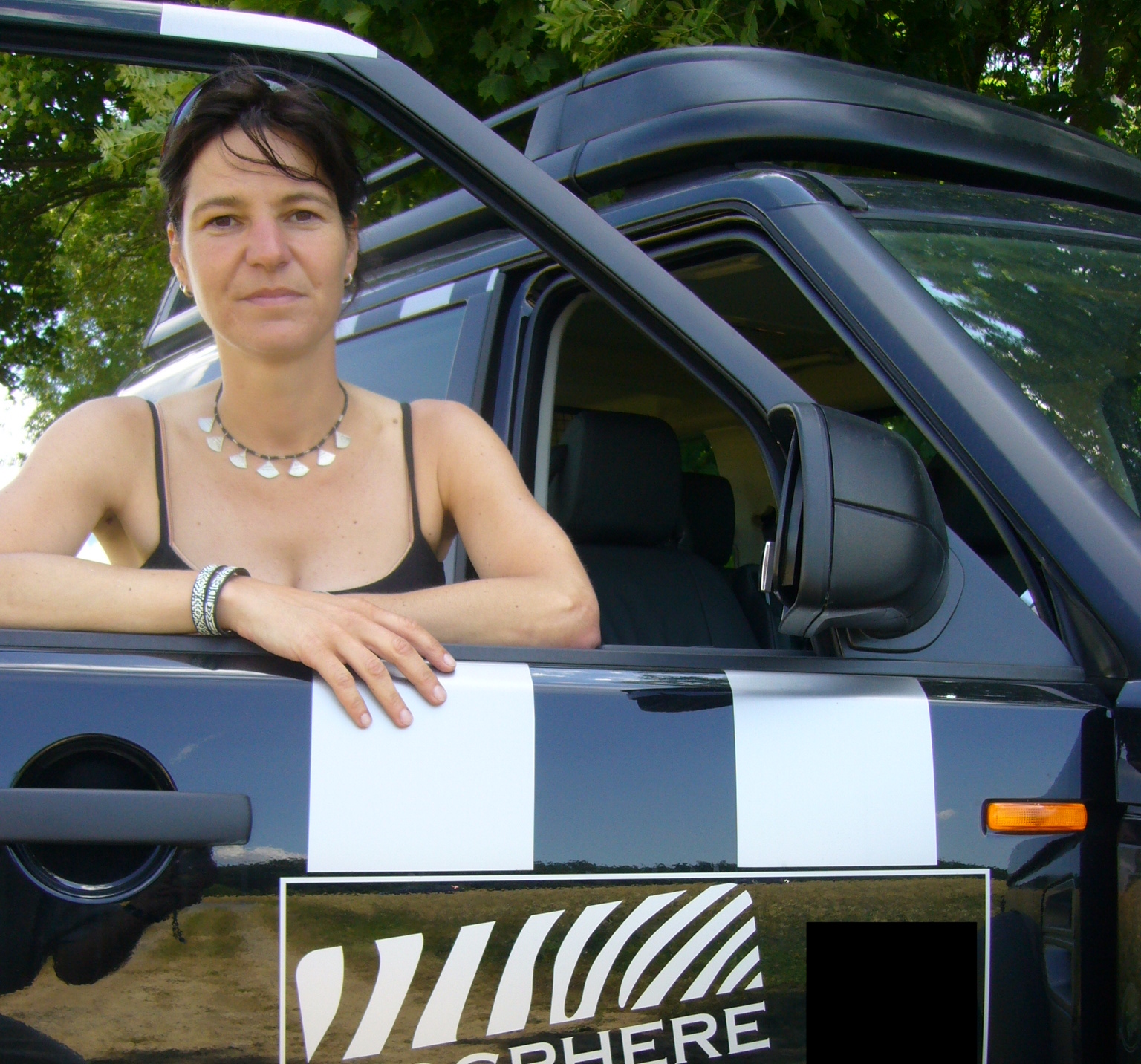
Expedition leader Malika Fettak
In more recent years, I took a step further in my career again and qualified as a systematic coach and trainer in order to encourage and support personal development of people and empower teams outside expedition life – but I still lead expeditions. This has allowed me to look at the work Biosphere Expeditions does from a different perspective yet again. It has become all too clear for me that people are a lot more comfortable speaking about the things they want to achieve in their lives, rather than actually taking action. Biosphere Expeditions requires action. A lot of people talk about nature conservation, but never do anything about it. They think there’s no way I could do that! Then you find out: I actually can!’
‘The great thing about Biosphere Expeditions is that a formative personal experience of simply existing ias part of nature is almost built in. You’re there not to save the world all by yourself – for this is impossible – but learn and make experiences for your own sake and for the world around you. Biosphere Expeditions has made me appreciate the importance of every living thing on the planet. Even the smallest animals have successfully found a niche to live in; they all have an impact on each other, starting with a bug or ant, their presence is vital for, say, the top predator to have a healthy ecosystem to live in; that’s what I’ve understood and learned and experienced. The jaguar depends on the ant.’
Eve Hills is a PhD student at the University of Brighton currently working on leopard prey and habitat preferences in the Meru Conservation Area, Kenya. Big cats have always fascinated Eve – ever since coming on expedition with Biosphere Expeditions. So, what was so significant about this first experience?
‘I went to Africa for the first time in as a young child and instantly fell in love with the continent and wanted to come back,’ Eve Hills recounts. ‘I had a passion for big cats from a young age and did everything in my power to include them in any school projects.’ Five years later, she came across Biosphere Expeditions, ‘via one of the first expeditions to Poland to research wolves. In those days, Matthias (Dr. Matthias Hammer, Biosphere Expeditions’ founder and executive director) ran most of the show, so I was able to talk to him about my dreams of wanting to do something with big cats. In the end, I was sick and could not make the wolf project. Then, in 2002, a cheetah project came up in Namibia and I was really excited. I saved all my money and wanted to do the whole thing, which lasted two months.’
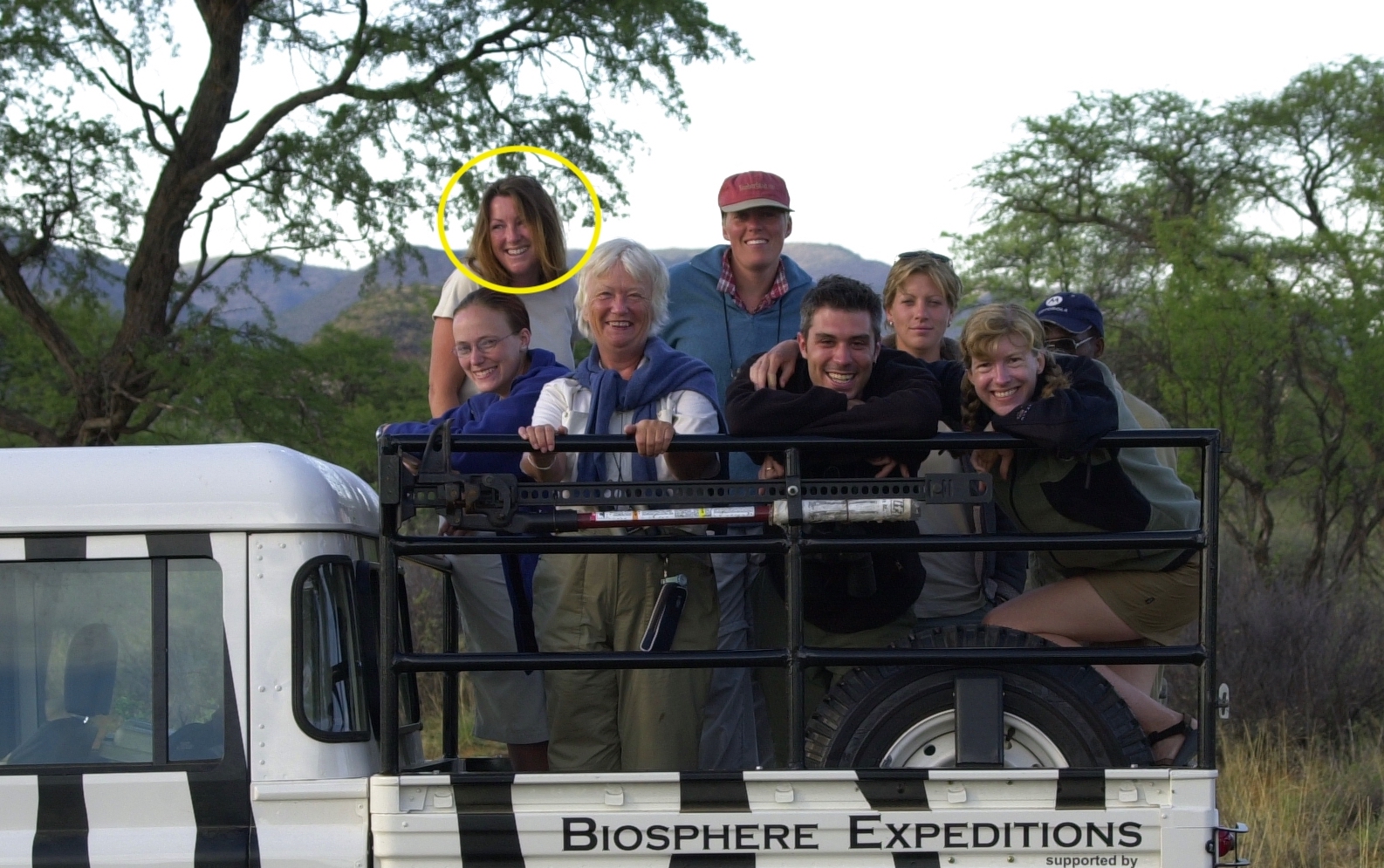
Eve Hills (yellow circle) with her expedition team in Namibia in 2002
Eve immediately fell in love with the entire experience. Staying for two months gave her a unique perspective. ‘I think this allowed me to immerse myself completely. It was an incredible place and the landscapes were so different. I just loved sharing my environment with big cats, knowing they were there. I don’t really need to see them. One of the most special things for me was when we tracked leopard prints and it was just incredible following in the animal’s footsteps. I remember collecting all the sand from one of its paw prints. It was really amazing. I loved feeling part of something. ’
After Eve came home, as with so many people, life got busy and she was ‘side-tracked by a job that had nothing to do with conservation.’ She also had to contend with a partner who thought she ‘should get a real job.’ However, she never forgot about those beautiful moments on expedition and did whatever she could at university to include big cats in her projects. She continued pursuing this passion into her master’s degree when she, ‘ linked up with some cheetah conservation organisations based in Kenya and intended to do a cat project.’
So now Eve is a PhD student studying leopards. As for the future of her relationship with Biosphere Expeditions, she says, ‘I’m hoping to get involved with another project and I’m keeping my eye out for any leopard-related projects.
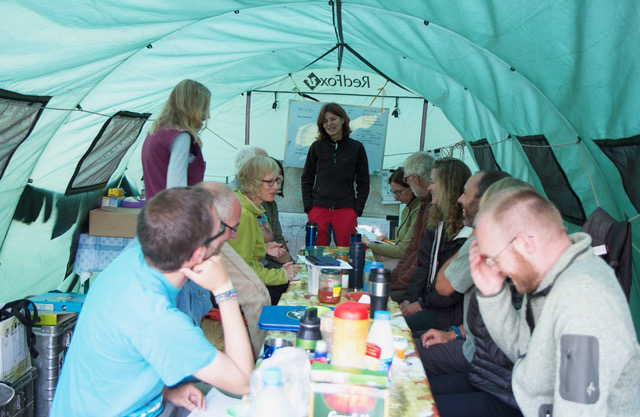
Eve Hills (and others) talking about her expedition experience in Namibia



 Biosphere Expeditions: blogs from the frontline of wildlife conservation and the fight for a more sustainable planet