Award-winning, non-profit and ethical wildlife conservation volunteering. Advancing citizen science and conservation since 1999 – for nature, not profit.
We have commenced the third and final part of the 2025 Azores expedition. It is great to have another diverse and enthusiastic group. With the welcomes, greetings, briefings and training sessions out of the way, we were all keen to get out to sea. Again, the weather made us wait a day, but used the day with more training and science presentations.
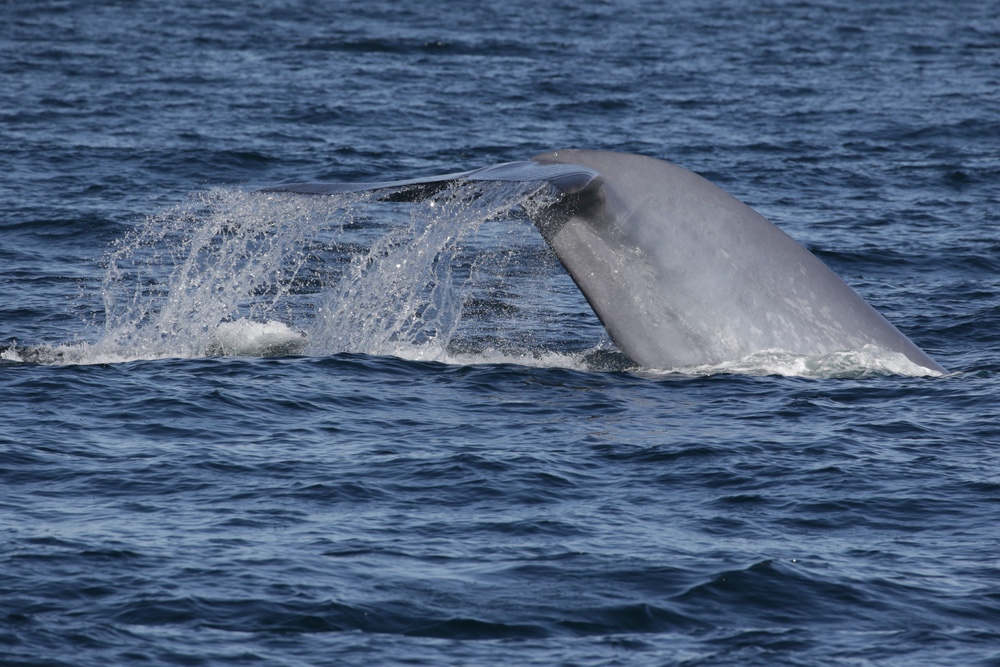
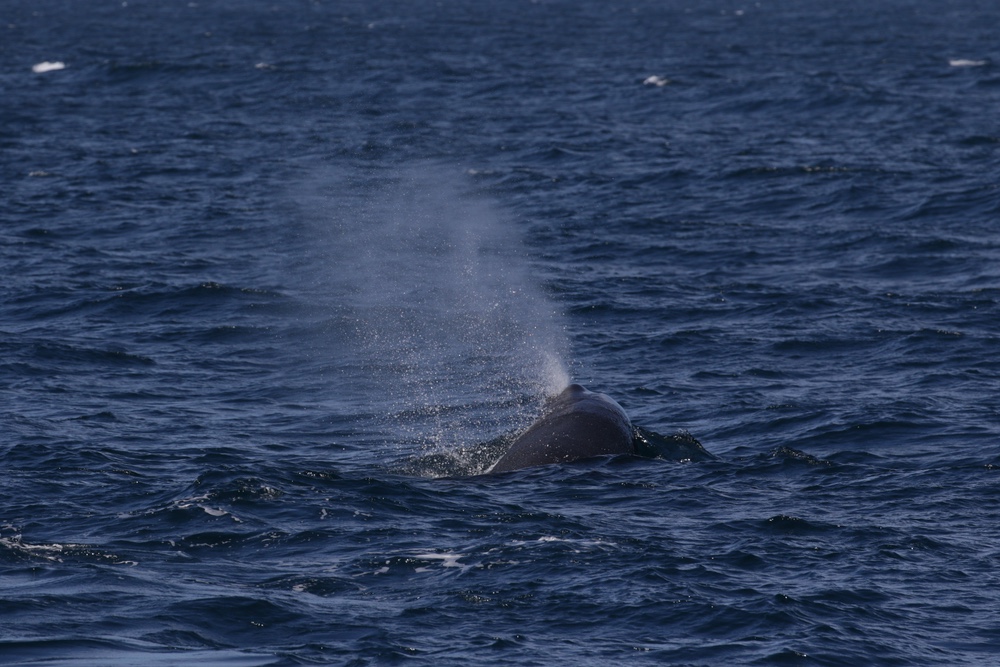
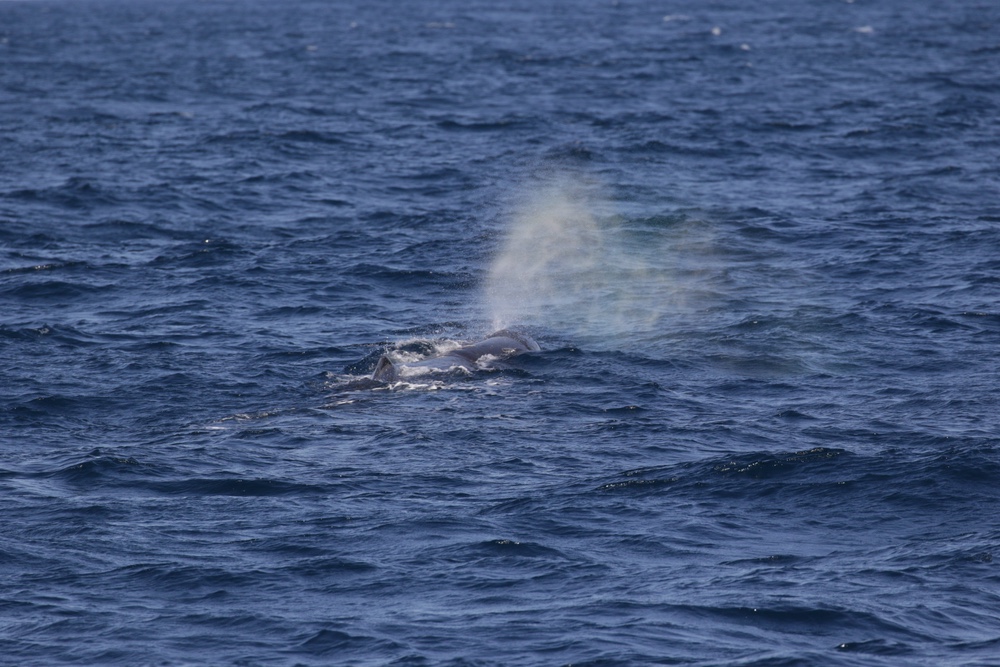
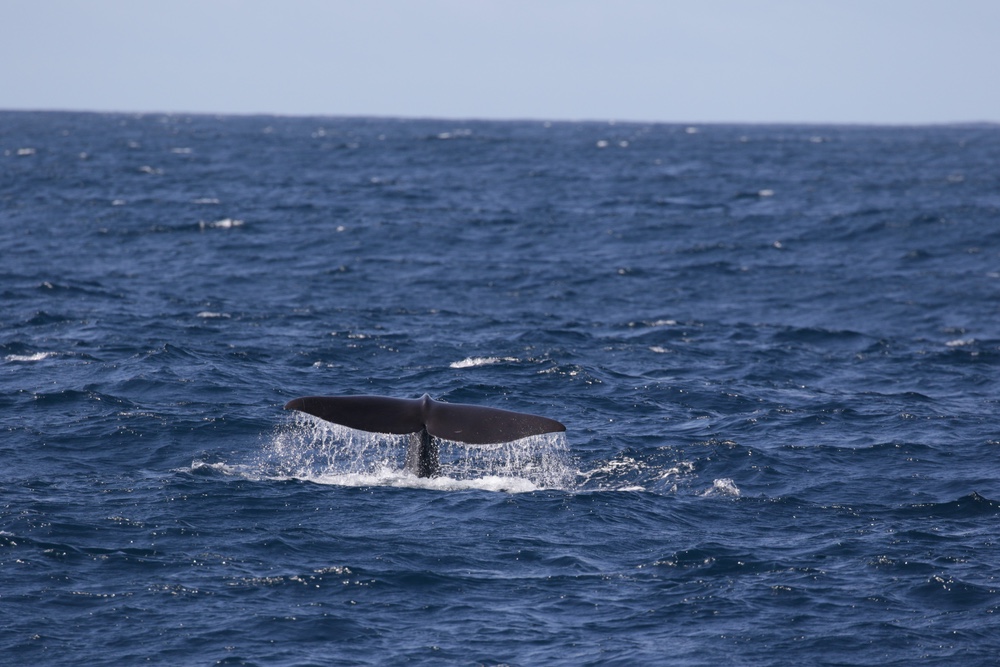
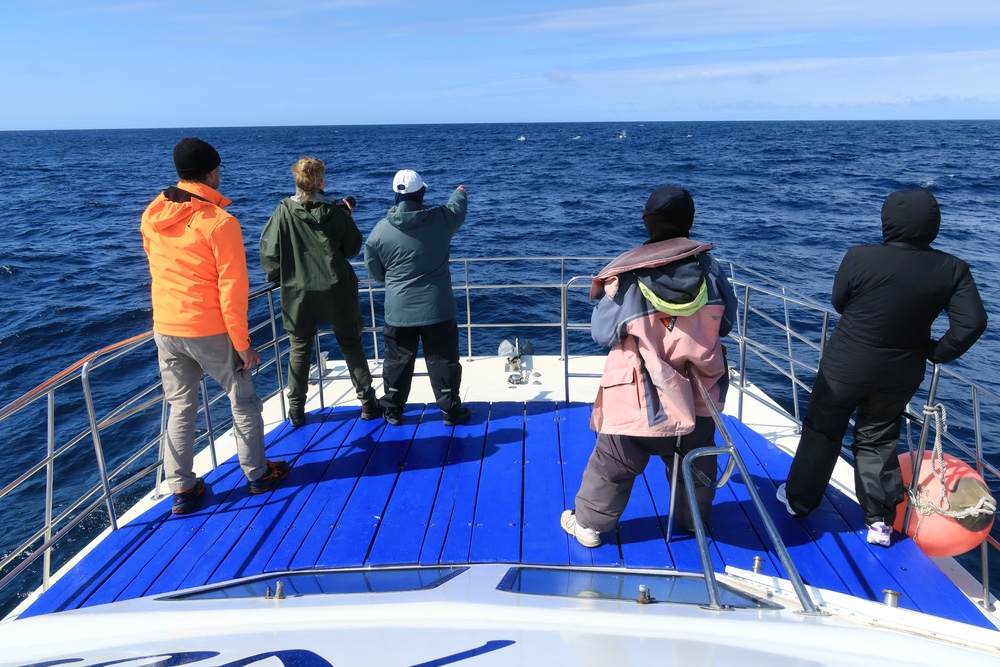
Our first day at sea was a triumph. Starting almost where we had left off – with a blue whale. That means blue whales have been seen on all but one day at sea this year – which is incredible. Next were a large group of sperm whales, who again were not the most cooperative, with very few fluking – so limited ID data, but a great job by the team for keeping up with all the sperm whale sightings. Add in some common dolphins, a loggerhead turtle, and this was a great start.
But our day was not done, it ended almost as it began, with another blue whale sighting, but this turned out to be a pair of blue whales – a first for this year. I am beginning to think we should rebrand to the Azure Expedition!
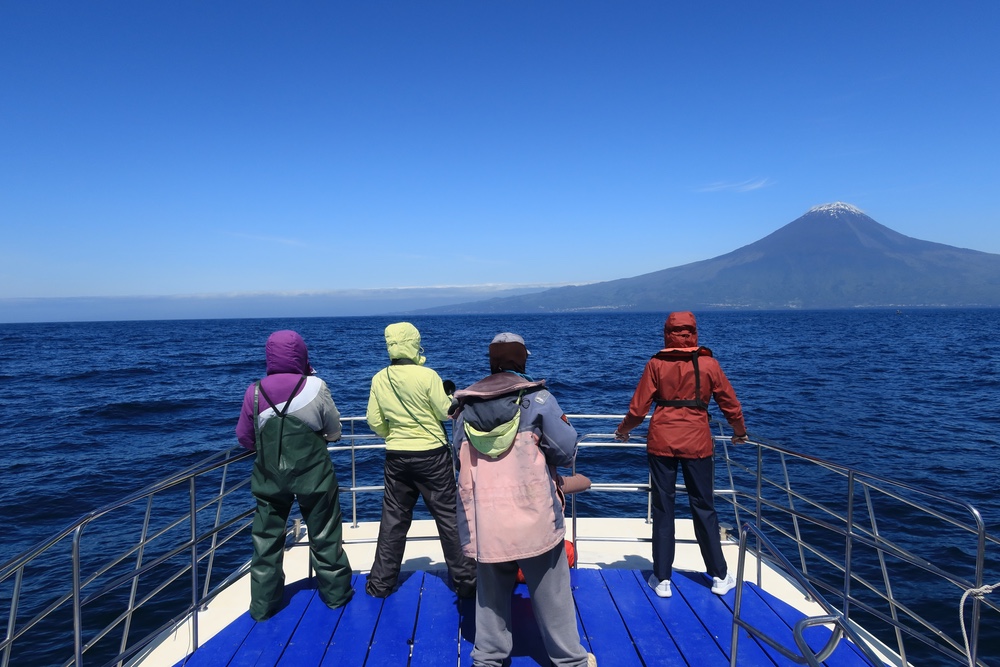
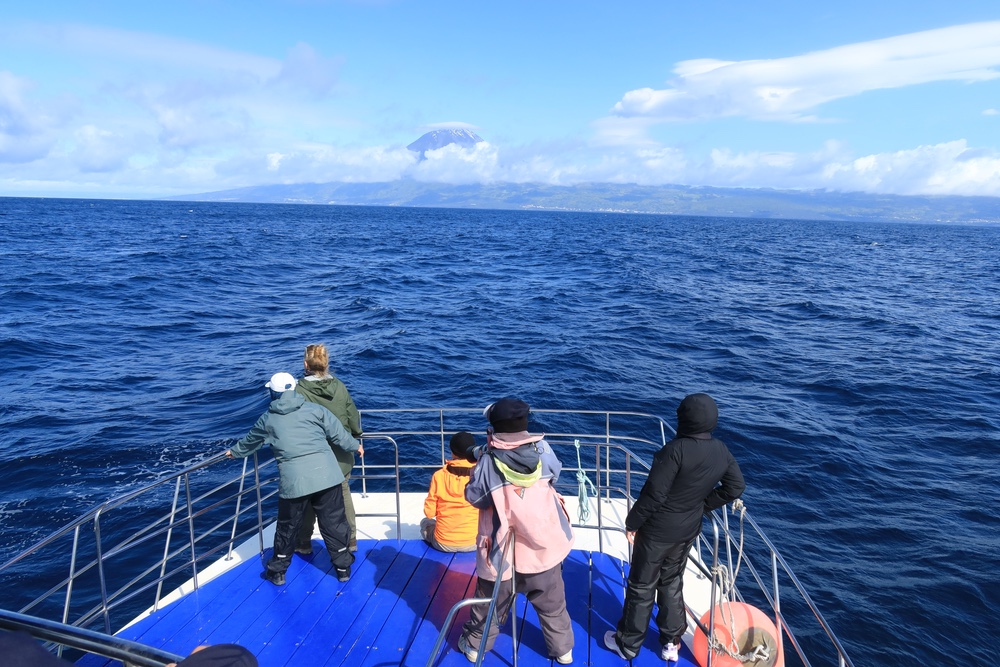
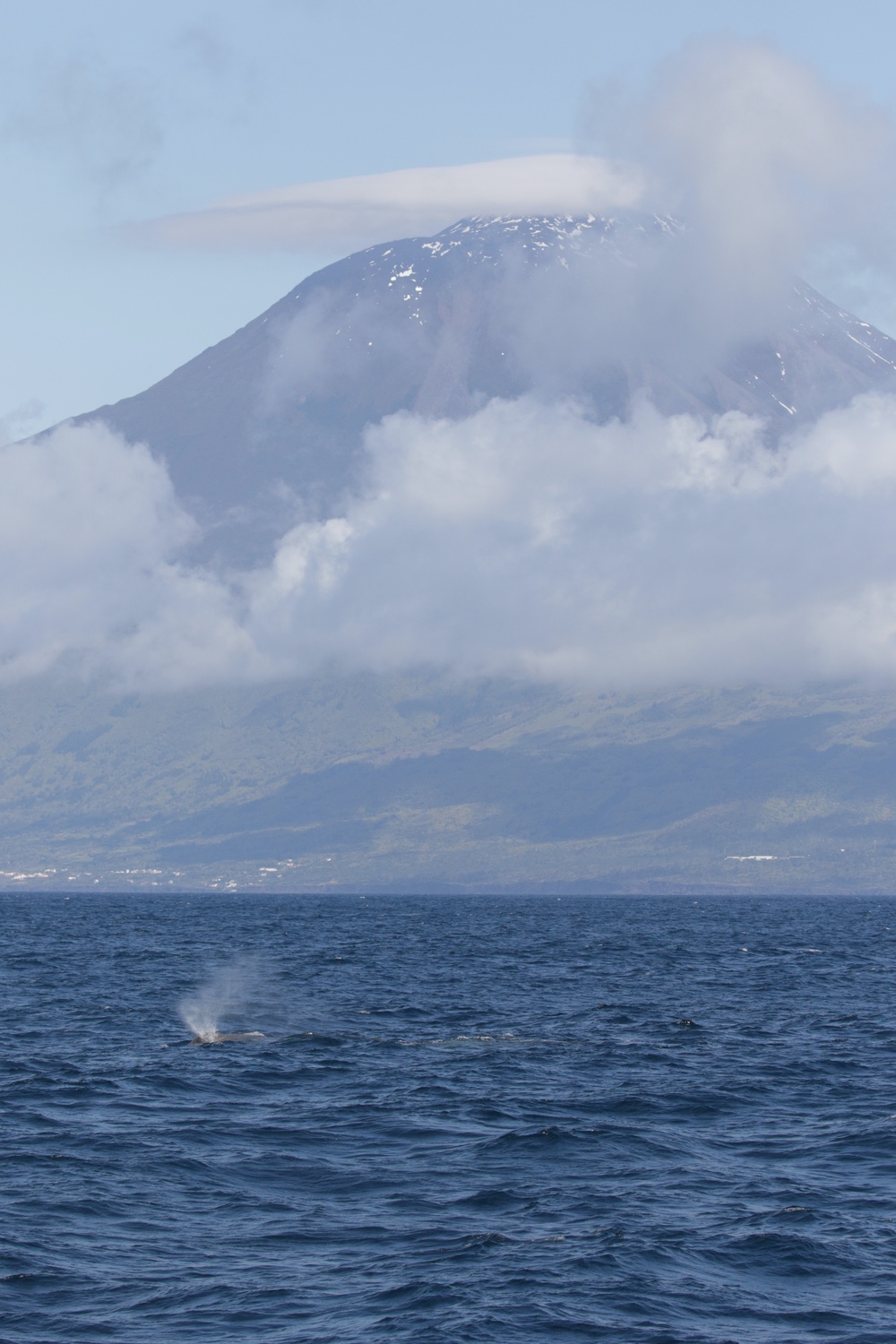
Our second sea day was less frenetic, but had a common theme – blue whales. We also recorded a large male sperm whale and common dolphins as we travelled along the south of Pico, using the volcano as a shield from the prevailing winds and thus take advantage of the calm-ish waters.
It has been a good start to the last leg, and here’s hoping our luck continues.
In the words of Crowded House, it feels like we’ve been ‘walking round the room singing stormy weather’, as the seas have put on quite a show. This has also curtailed our boat time but not put a full stop to data collection or image processing – there are always things to do on the expedition – whatever the weather!
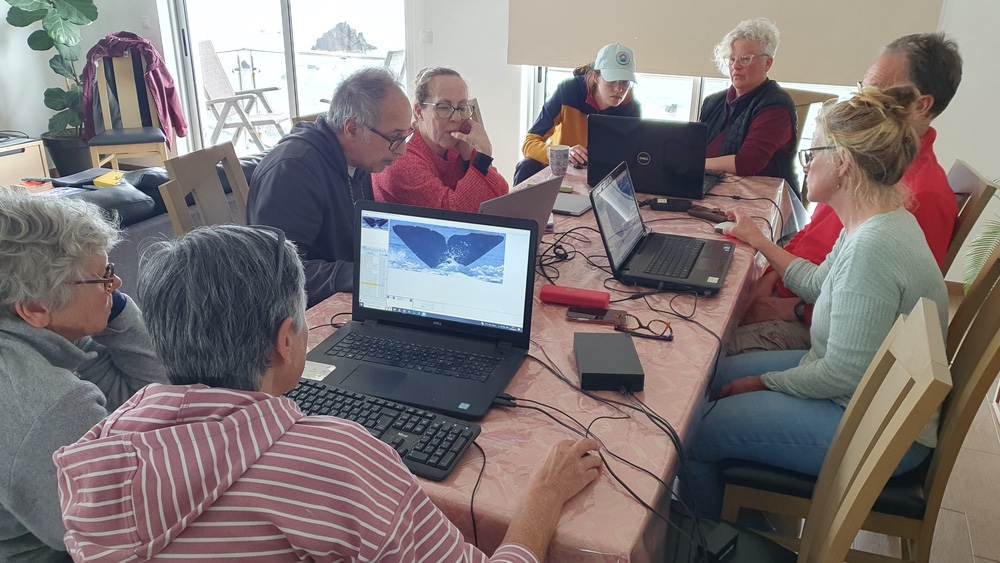
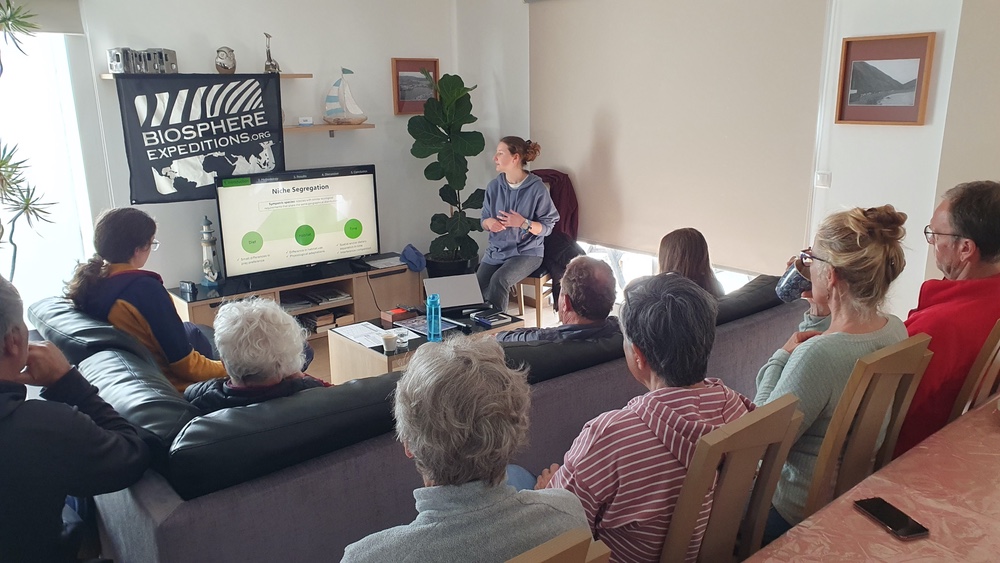
Indeed the worst of the sea conditions provided an opportunity for a day off and time spent exploring Faial, and enjoying the visual spectacle of the mid-Atlantic. It also gave an opportunity to process more data, and the chance for another talk; this time from Cláudia Oliveira from the Azores Whale Lab on the role of photo-identification and bioacoustics for sperm whale studies. Again, illustrating the power of data collection such as ours.
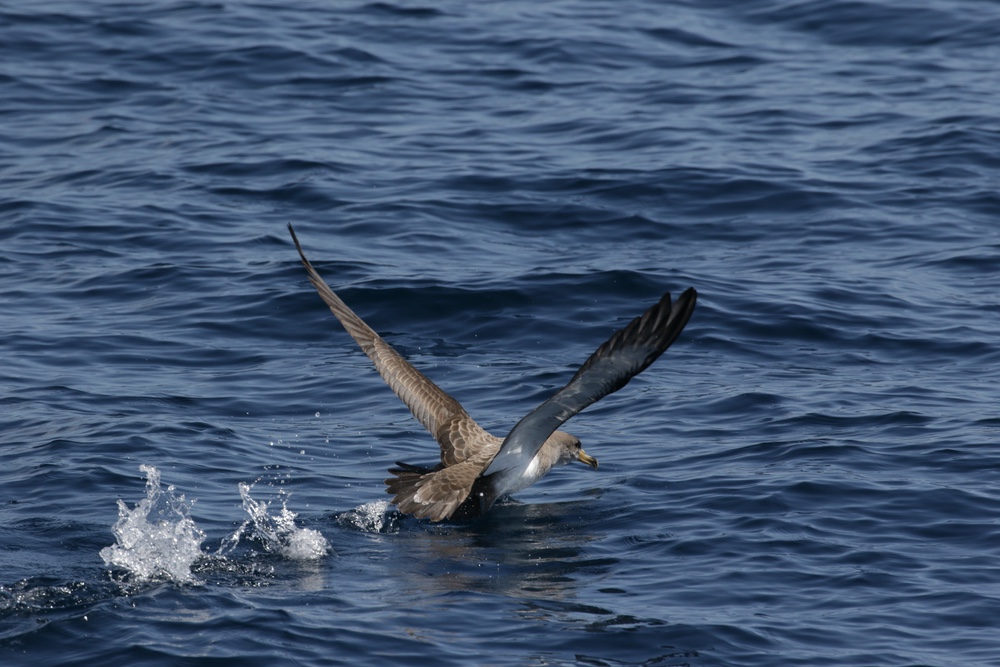
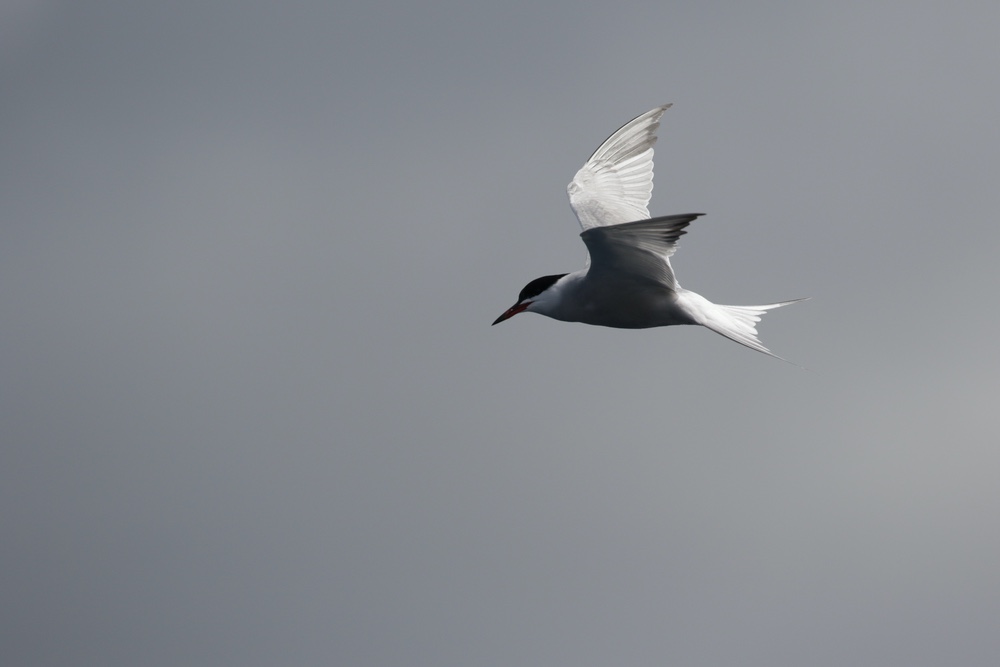
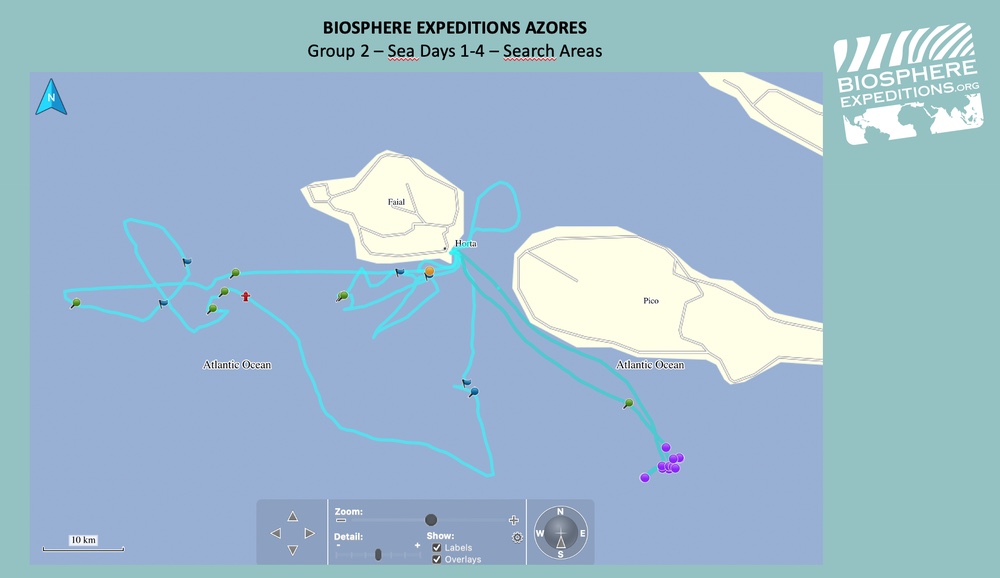
Over the past few days, we have travelled almost 400 km over four days at sea. The group has been able to add vital cetacean data to this year’s haul, add a new bird species, and the numbers of encounters and individuals have also increased. A great effort by another great group.
So, as we bid group 2 farewell, we now welcome group 3; and we hope you bring the luck with the whales and the ‘weather with you’.
The Azores sits in the middle of North Atlantic ocean, but the weather and sea state can still restrict us to a relatively small area for surveys. This has been the case for the past few days.
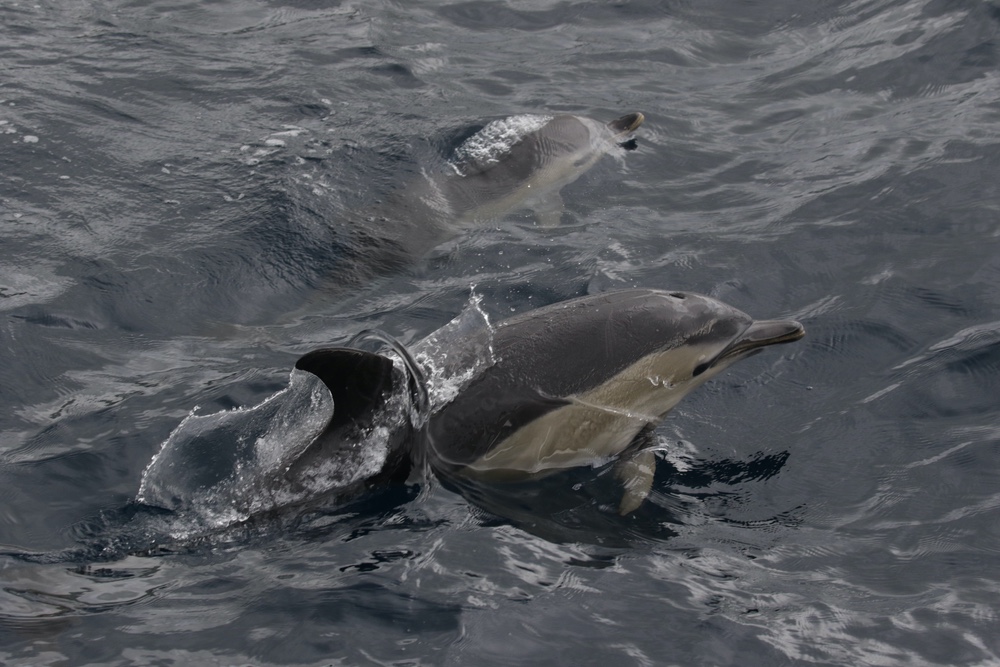
Following a shore day on Wednesday and a chance to explore the island of Faial, we headed out to sea, more in hope than expectation. We were initially rewarded with an extended common dolphin sighting, close to the south of Faial. This was followed by a second encounter, in the waters protected from the worst of the winds.
Our luck then improved further, with a ‘random’ blow sighted, which of course turned out to be yet another blue whale. And during the course of obtaining the required ID pictures (great job Pixy), a second blow was spotted, but heading into the worsening seas, so we gave no chase. Whilst waiting to photograph both sides of ‘our’ blue whale, we spotted a ‘strange’ looking, almost leucistic gull. With images circulated to bird groups, it transpired that it was an Icelandic gull – a rarer visitor to these waters, normally seen in very low numbers over winter.
The day ended with an encounter with Risso’s dolphins not to far from home. The calmer waters meant a relaxed observation of four mums with calves. From the photos taken we could work out that one of the mums has been documented since 2006, so is likely to be over 20 years old. Well worth getting out on the boat.
Additionally, one of the blue whales recorded at the start of week was first recoded in 2001, and this is the sixth year it has been documented, but never previously so early in the year. We await news on some of our other sightings.
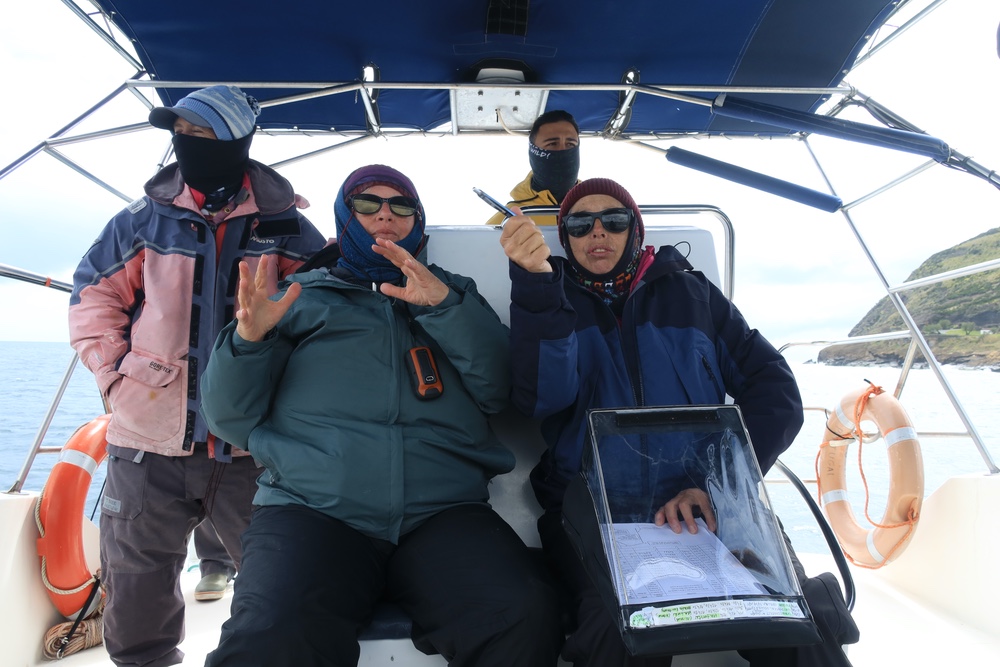
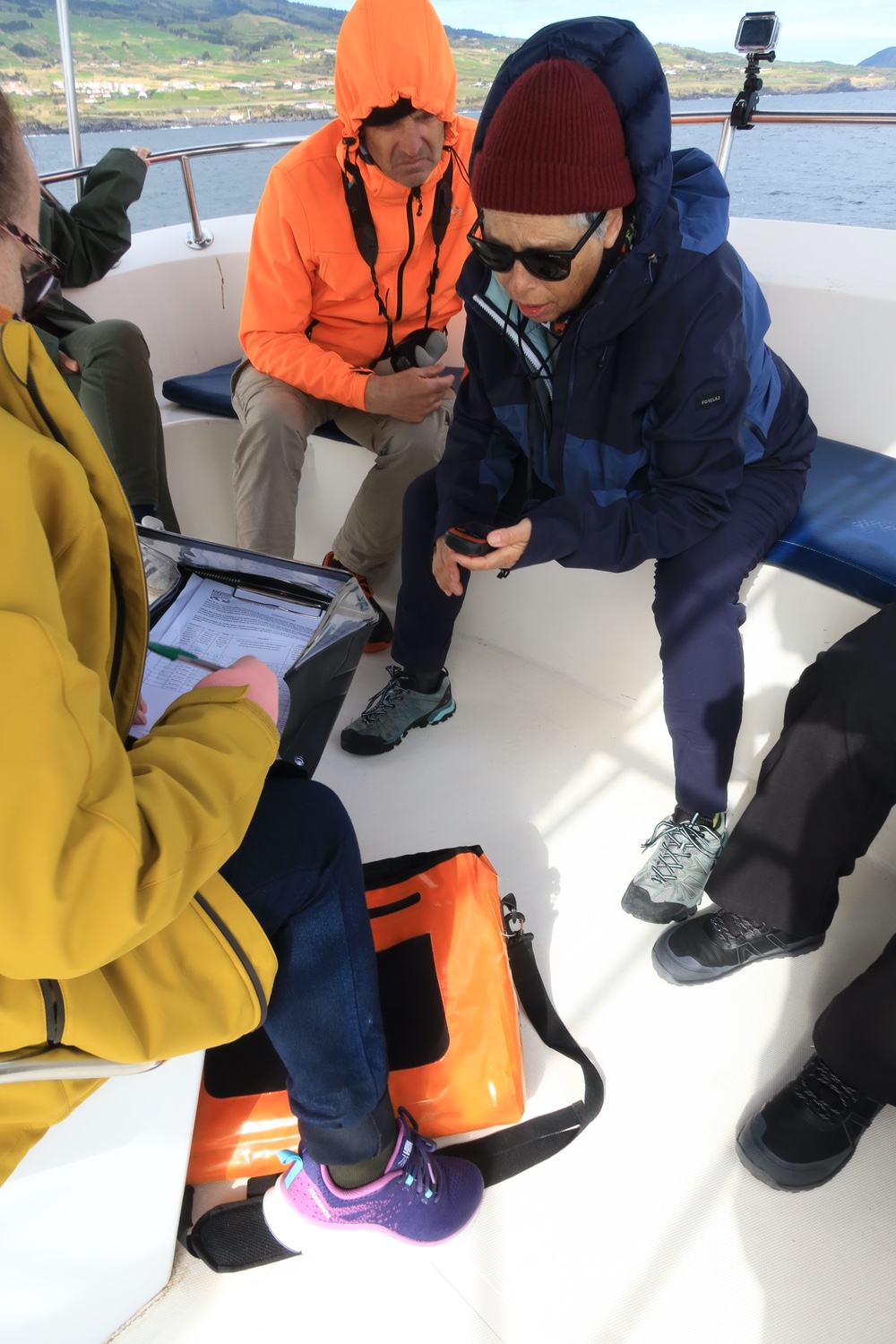
Having welcomed group 2 to the expedition, we quickly embarked on the project orientations, equipment briefings and scientific survey training. Fortunately, this all went to plan, so we could make the best of the available weather window, to get out on our survey vessel – Physeter.
This meant a longer than anticipated trip on Sunday, which resulted in some well-earned records. One of our team has been on the Azores expedition on two previous occasions, but had yet to see a ‘true whale’, despite being party to an orca sighting in 2019 (the largest member of the dolphin family). This record was soon broken with a fin whale sighting and followed up with more blue whale records. If at first you don’t succeed……..it is worth trying again and again. Congratulations Neil, a great way to ‘chalk up’ your first whales!
Our second day at sea also started with the now obligatory blue whale sighting. Yes, these magnificent beasts have now been spotted every day we have been at sea in 2025 – that may also be a record for the expedition. This was followed by a rather frustrating group of sperm whales, who seemed more interested in socialising with each other and not feeding. This means no diving and that means no fluke pictures with which we can identify individuals. Some common dolphins provided some intermittent entertainment, whilst we waited, and waited and waited. Of some 25-30 whales in an area south of Pico, we returned to port (after a wet and bumpy journey) with fluke pictures from only two. Kudos to Pedro (our skipper) for getting us back to port.
The Atlantic weather systems decided the next day would be on land. This not only gave us a chance to process some of the data from the previous days at sea, but also learn how the data can be used by others. Maria Ines (a Masters student from the University of the Azores) gave an excellent presentation of spatio-temporal dynamics of common dolphins and Atlantic spotted dolphins in the Azores, based largely on POPA (Programa de Observação para as Pescas do Açores = Observation Programme for the Fisheries of the Azores) data, which is also a key element of the expedition data collection. Understanding the importance of the Azores archipelago for these species is contingent on the availability of long-term data sets.
We look forward to more sightings and more data in the coming days.
In his fifties, Neil Goodall felt the familiar urge to get away from it all and out into nature. Yet when he took the leap into expeditions, Neil discovered more than a new world – he found a new path, and a new lease of life.
Neil on expedition in 2018
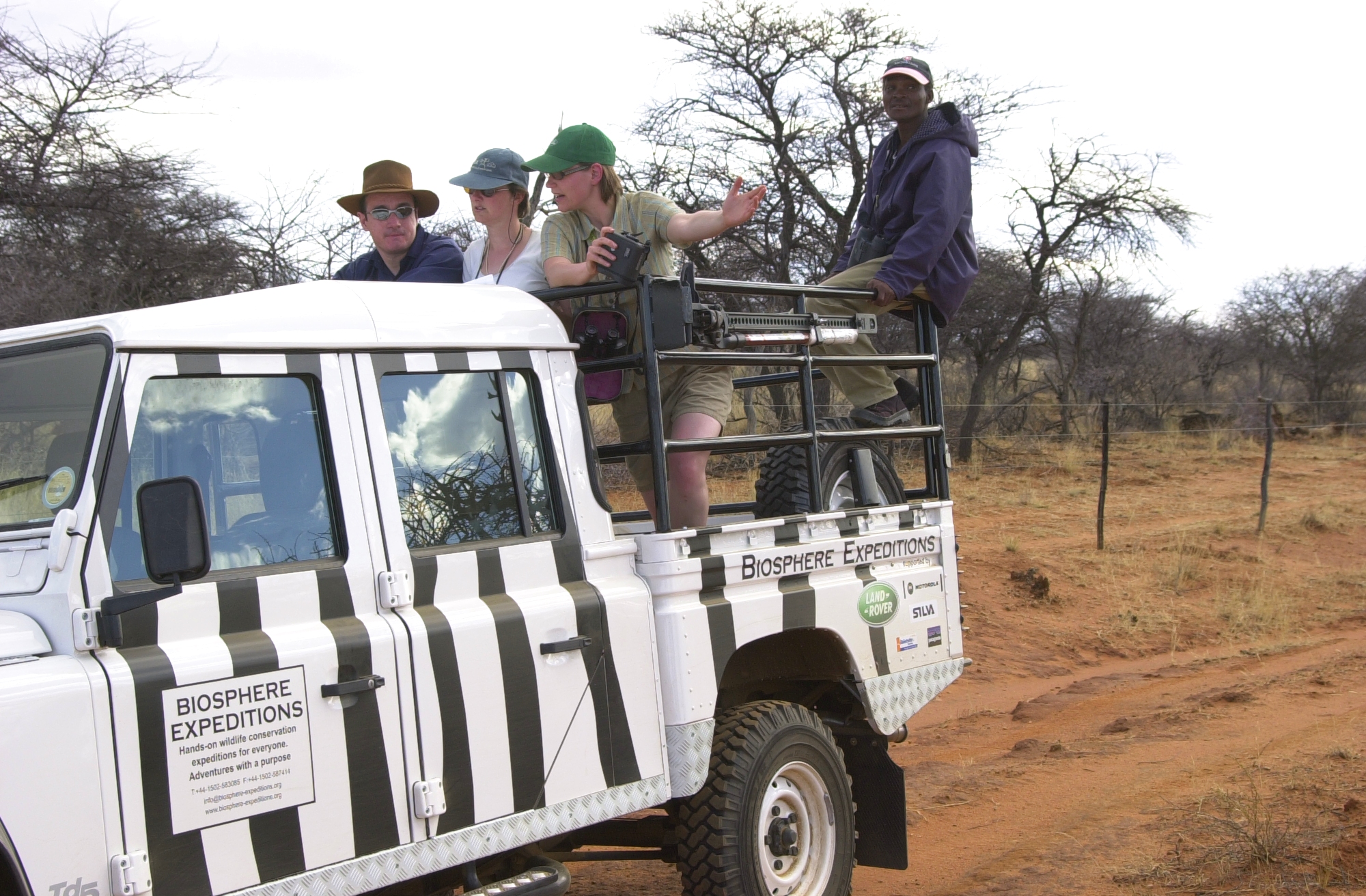
Neil Goodall never expected to find himself in an acacia bush.
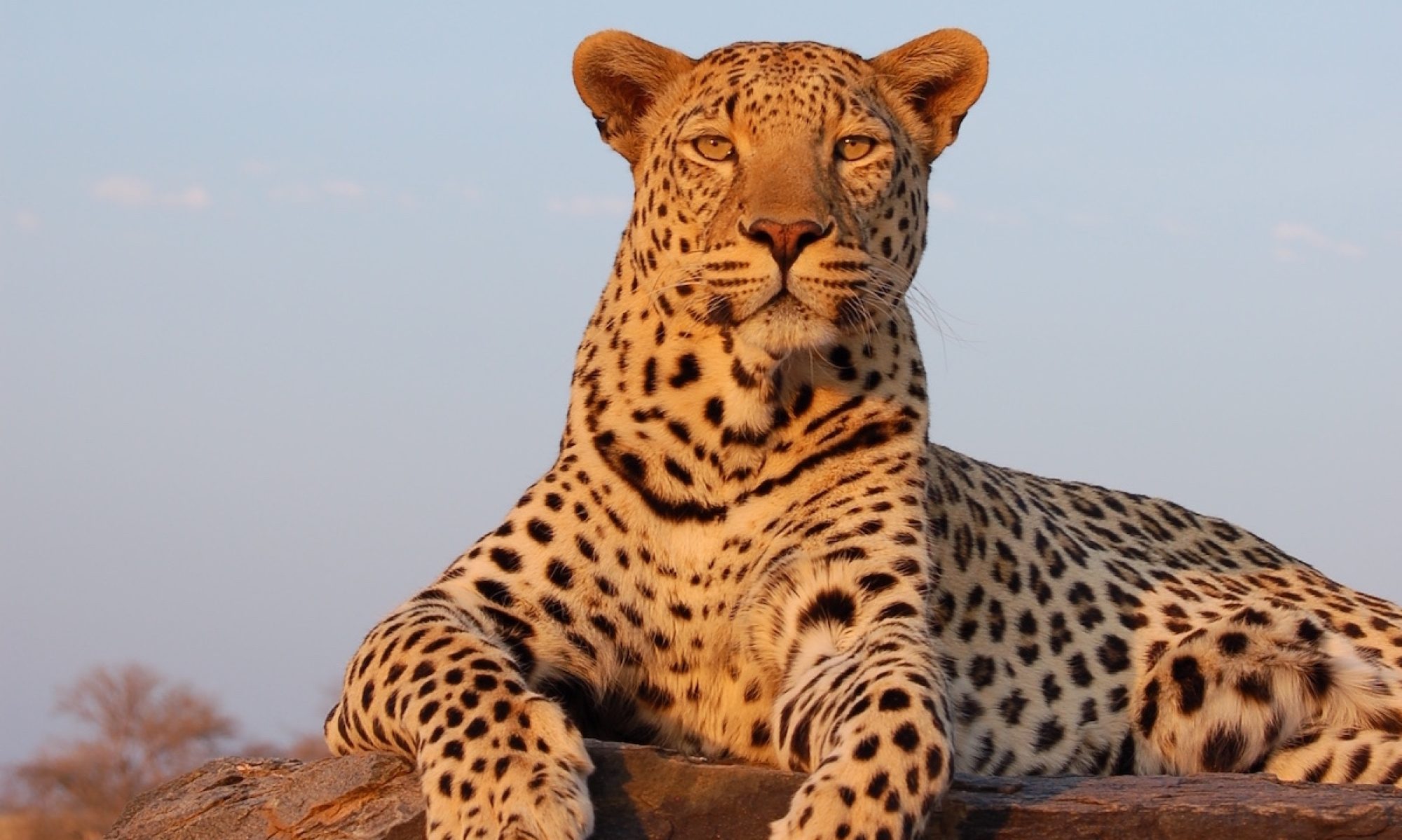
‘We were tracking leopards in Namibia, and had to set traps,’ Neil explains. ‘So I volunteered to crawl into the bush, and put the smelly carcass in the trap – and I thought, I’m an accountant!’
Setting a trap for leopards in Namibia
Since his first expedition in Namibia, Neil never looked back. Thailand, Malawi, Tien Shan: Neil traversed swamps, crossed deserts, and returned with a different perspective on life. ‘The contrast between this and working at my desk all day was just amazing. My colleagues couldn’t believe it. Gradually I became known as the Scat Hunter!’
Yet he wasn’t always an adventurer. Like many people, Neil found himself isolated from the natural world.
‘I always liked nature but never found the time for it,’ he says. ‘I was in my early 50s. Busy life. Two kids, family, and a very busy job – as a finance director for a public organisation.’
To get closer to wildlife, Neil followed what seemed to be the only option – safari, spending five days in the Serengeti.
‘Afterwards, I thought, I loved that, but a couple of things nagged me: you’re a tourist, you’re stuck in a vehicle, you can’t interact, and when you do see wildlife, they’re surrounded by tourist vehicles…it all felt a bit contrived.’
Signing up to be a citizen scientist with Biosphere Expeditions gave Neil the immersion in the natural world that he couldn’t reach in his everyday life – and then some.
‘It was everything that I’d hoped for: structured, but with a sense of liberation. We could go out into the wild, and as long as we did our tasks, we were free to do as we pleased. Wildebeest, giraffe, springbok – all close enough to smell them.’
Yet there was a crucial distinction. Neil wasn’t just close to the wildlife; his participation in the expedition enabled him to contribute to their conservation, shoulder to shoulder with dedicated scientists out in remote wilderness. On his first expedition, in Namibia, part of the project’s purpose was to change the narrative.
‘The farmers blamed the leopards for killing their livestock. Our work was helping to protect the cats. Collecting data, but properly in the wild – it’s such a purposeful interaction with wildlife.’
Part of what makes the expeditions so meaningful is because they’re not a holiday – they’re challenging, as Neil attests.
Neil (right) entering data with a fellow expeditioner in Malawi
‘It’s hard work,’ he agrees. ‘You’re up early, active from the off, but when you look back at the end of the day, shattered, you think – but what have I done? All day in nature, encounters with wildlife, collecting data with a team of people who were strangers a few days before. It’s hard, but it’s also one of the best things to experience because it connects with a lot of deep drivers that are rare to find in everyday life. But Biosphere Expeditions gives you confidence: you’re well briefed, well fed, and you know what you’re doing: solid foundations to go out of your comfort zone!’
And, like many expeditioners, Neil found himself not just out of his comfort zone, but far beyond it. His experiences across the world have been so out of the ordinary that they’ve changed how people see Neil as a person.
‘On my third expedition, I went to Peru – the first person in my family ever to go to South America. I found myself taking the boat from Iquitos down the Amazon, and I remember pinching myself – literally pinching myself – going, I’m on the Amazon. How!?’ Neil says, laughing. ‘People at work see me as the accountant. But it changes people’s perspective of you. They react ‘Wow, you did What!?’’
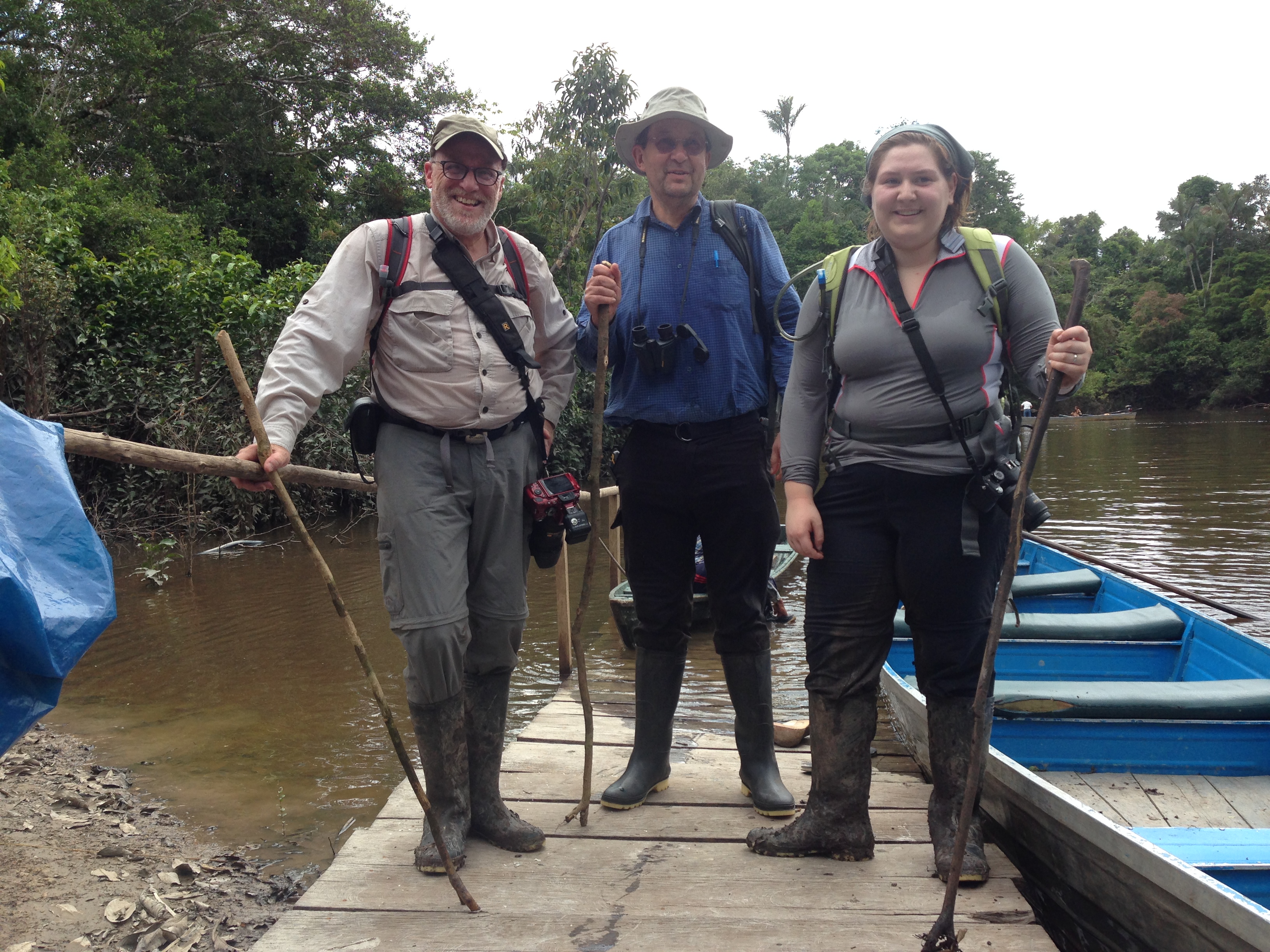
Neil (middle) with fellow expeditioners in Amazonia
Judging by his stories, this amazement is justified.
‘One night, in a remote region of Malawi,’ Neil begins, eyes lighting up in recollection, ‘We were observing a goat carcass to see if it attracted predators in the dark. We set a camera trap 10 miles from camp, but on the way back, we got stuck in the rutted road. Imagine: three of us, in the pitch black dark, somewhere in the middle of Malawi…and we had no choice but to get out of the car and push it out of the ruts. And you feel the danger,’ Neil admits. ‘We could radio for help, we knew we were safe, but it’s so far beyond everyday life. You come back and think: Wow!’
Ultimately, though, Neil’s experiences on expedition have given him more than just memories. They’ve given him new skills, opened new opportunities, and have made him an active protester for change. Inspired to put his new skills to use, he attend his first protest march – Restore Nature Now – in London in the summer, alongside 60,000 other nature lovers. Neil says, ‘I thank Biosphere Expeditions for giving me the confidence and the compulsion to protest for what I believe is a just cause, something I had not done before in my 68 years. And I will do the same again if the march is repeated.’
‘It changed my idea of what’s possible,’ Neil reflects. ‘I’ve always had it latent within me – but when are you going to get the chance, sitting in the office?’
Sixteen expeditions later, Neil the office accountant, has been transformed – and it hasn’t gone unnoticed. So who has Neil’s new sense of purpose influenced most? Neil bursts out laughing.
‘My sons – who see me as a boring old dad – they can’t believe what I’ve done!’
As biologists, Gary and Sandra Hogben have always been fascinated by the natural world. But when seeking a way to get stuck into some fieldwork, they began going on expeditions together. From tiptoeing past sleeping elephants to learning how to use the village water pump, it’s been an even richer journey than they’d imagined.
Sandra (left) and Gary Hogben (right) on their elephant expedition to Thailand in 2023.
Gary and Sandra never imagined they’d end up stranded on a dirt road in Malawi, miles from anywhere, bus broken down, no immediate way of moving. But that’s exactly where they found themselves. Rather than the struggle, however, they remember the laughter and camaraderie that came from taking responsibility for their own fate. ‘You’re really pushing yourself,’ Sandra says. ‘You learn your limits.’
Their story starts back in 2013, when the couple undertook their first expedition to Namibia. It proved a turning point in how they saw themselves—and their holidays. Both are biologists by training, but as Sandra notes, ‘It’s microbiology, not macro, so we wanted a broader perspective. Something that let us get back to what we used to do: proper fieldwork.’ A classic game drive wasn’t enough; they wanted hands-on involvement, real interaction with wildlife, and a sense they were contributing to something bigger.
So they signed up for a Biosphere Expeditions project in Namibia, discovering that expedition life is intense in ways they never anticipated. ‘I felt anxious about what I’d signed up for,’ Gary admits, recalling the dossier’s instructions on braving remote desert roads and uncertain conditions. But from the start, that same uncertainty became an addictive challenge. ‘I love to travel, but because of the climate crisis, I felt guilty,’ he says. ‘This wasn’t just a holiday though — it had a purpose, a way to give something back.’
Over time, they ventured further: Malawi, Arabia, Costa Rica, Thailand — each place tested them physically and emotionally. They’ve dodged tsetse flies, tiptoed past elephants at night, and faced torrential storms checking on hatcheries every fifteen minutes. Yet for all the trials & tribulations, both speak with a sense of wonder. ‘You come back feeling that you’ve overcome a challenge,’ Sandra says. ‘And very glad to have done so.’
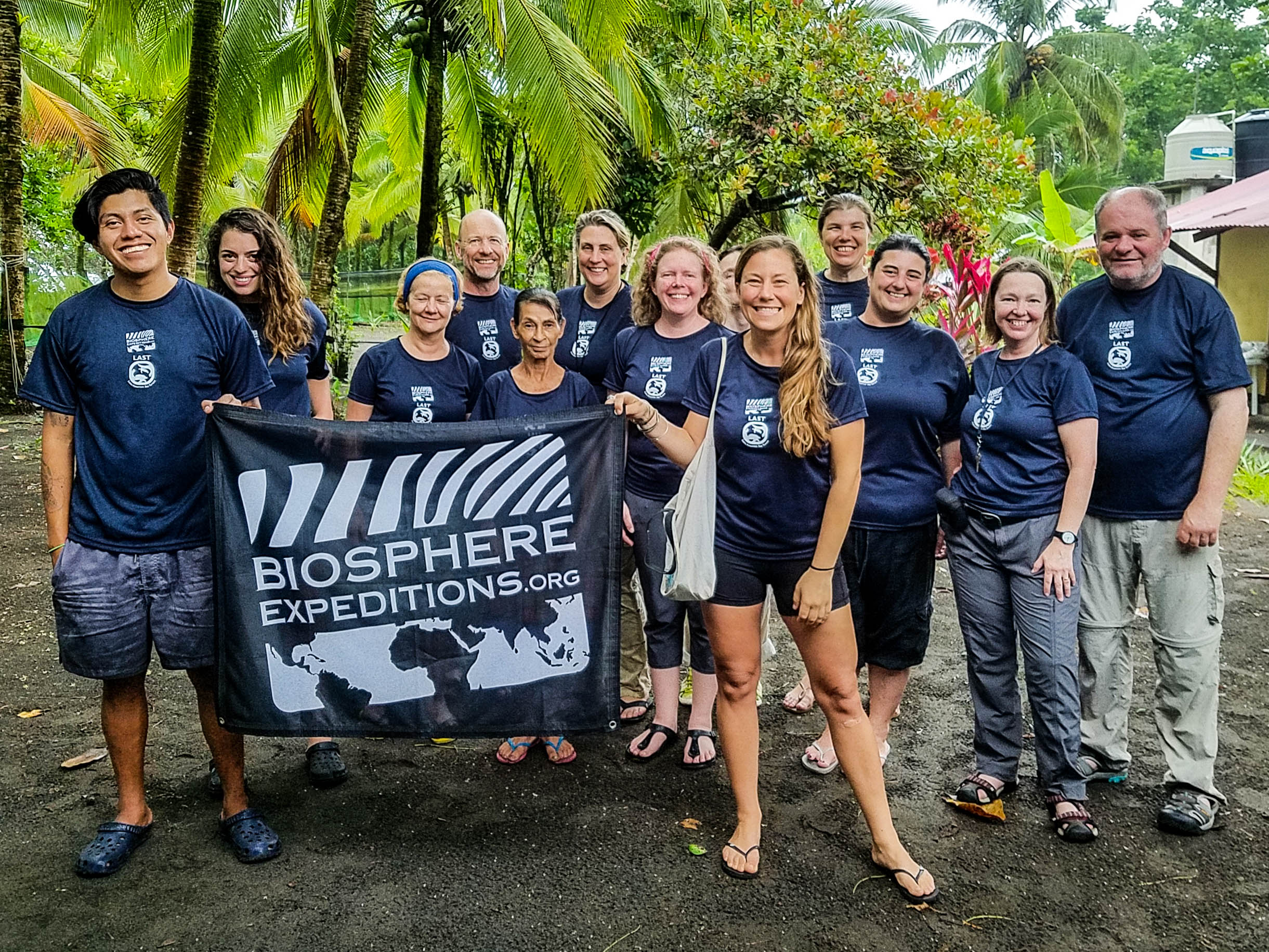
Gary & Sandra (from right) and their 2018 Costa Rica sea turtle expedition team.
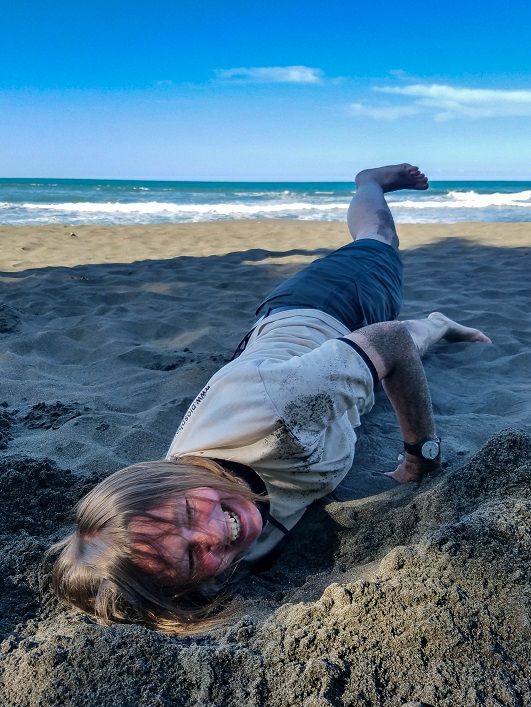
Sandra digging an incubation nest for leatherback turtle hatchlings
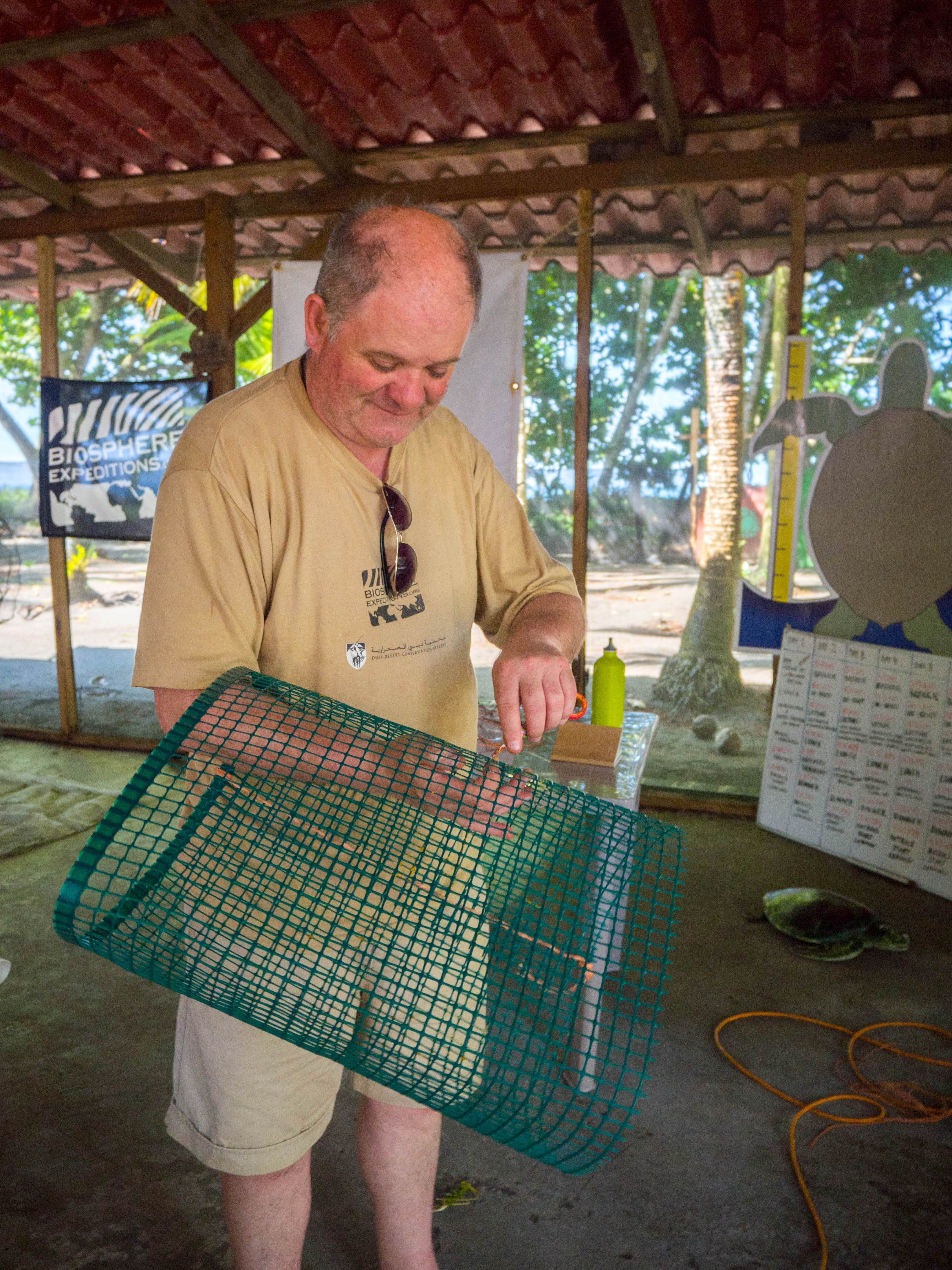
Gary constructing a protective basked for leatherback turtle hatchlings
Gary & Sandra on their 2018 Costa Rica experience
Meeting local communities helped them see their own routines in a new light. In Malawi, they learned to pump water from a village source, twenty liters at a time, or no shower. Back home, they realised their perspective had changed. ‘You see it a bit differently,’ Sandra reflects. ‘It shows you what’s possible.’ Gary now chairs a clean-water advisory group, inspired by the stark realities he encountered. ‘You’re right on the frontlines of conservation,’ he explains, ‘seeing the difference you’re making.’
Gary on his 2019 Malawi experience
Perhaps the biggest surprise has been the friendships they’ve forged. ‘We’ve stayed in touch with people from our first expedition,’ Sandra says. ‘Helen from Australia visited us in the UK, and Georg from Germany — like-minded folks who keep coming back for more.’
‘If someone asks whether they should do it, I always say: ‘Go for it. You won’t regret it,’’ Gary says. ‘I used to think being stuck between hippos and elephants was something you’d watch on TV. Now it’s part of our reality.’ And for both Gary and Sandra, that reality is far more compelling — and life-changing — than any other kind of holiday could ever be.
Tired of feeling passive, and yearning to get closer to nature, Martyn Roberts swapped safari holidays for expeditions – and learned as much about himself as he did about wildlife.
Martyn Roberts on the Azores whale & dolphin expedition in 2024
Martyn Roberts never forgot his first safari in South Africa – it left him wanting more. He loved the thrill of being close to wildlife — but as he put it, ‘I wanted to get hands-on. I wanted to make a difference, to do something more demanding that allowed me to express these beliefs, ideas and interests.’ Those hopes lingered until 2002, when a chance encounter led him to Biosphere Expeditions and a life-changing trip to Namibia.
At the time, Martyn had just come out of his first marriage and was ready for something new, something bold. His earlier safari was too short, too passive. So when he discovered Biosphere Expeditions and heard about an upcoming two-week project in Namibia, he took a leap of faith. ‘I wouldn’t call it the hard sell,’ Martyn says as he recalls his first conversation with Matthias, the expedition leader, ‘but he insisted that I join. It was an encounter with the unknown.’
For Martyn — who had always travelled with friends, family or a partner — heading off by himself to find the meeting point in Windhoek felt like a huge step. ‘Yes, it was the first time I’d travelled on my own,” he remembered. ‘I wasn’t overly worried, but I was apprehensive. What would it involve? It was a leap into the unknown.’
What he found in Namibia wasn’t at all what he’d expected. ‘The country itselt … just how wild and desolate it was,’ he marvels. ‘So much bigger than I expected. The cheetah was the species we worked with – I was a bit surprised how well it all ran!’ He still laughs about his first meeting with another big beast: Matthias, in a Windhoek café, when Martyn realised his expedition leader was nothing like the ‘old man with a big beard’ he’d imagined.
Gruelling hours, hard physical work and pushing comfort zones: Martyn discovered much more than animals alone. He and his team had to maintain vehicles, drive out into remote areas, check camera traps, and spend hours in hides. ‘Everyone was silent when Matthias asked who wanted to drive,’ Martyn says. ‘I stuck my hand up and said, ‘I’ll give it a go,’ driving people I’d never met, hours out of town, in a foreign country, at times when you’re tired can be challenging. But you do it.’
Martyn driving in Namibia in 2002
That first two-week expedition changed the course of Martyn’s life. He kept returning: Altai, Sumatra, Brazil, drawn back again and again. ‘As each expedition happened, you could sense a change,’ he explains. ‘I thought, ‘I like this. This is good. We’re giving a lot and getting a lot.’ And you could feel no one wanted to leave.’ Simply deciding to go – and accepting responsibility for getting himself to the rendezvous point, no matter how remote – was a challenge in its own right. But he relished it. ‘It’s the first test to see if you’re independent and can take responsibility.’
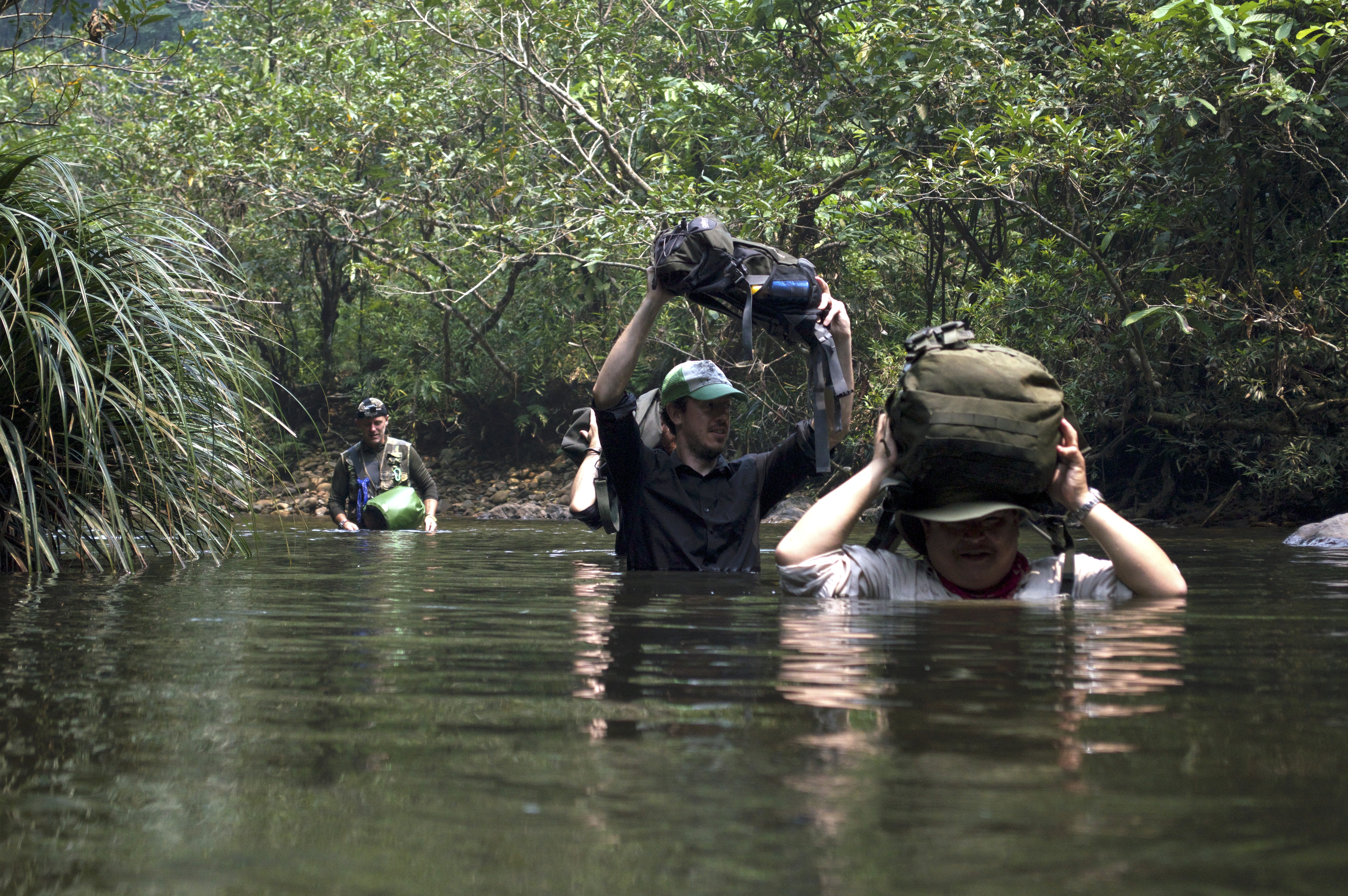
Of all the expedition he’s been on taken, Sumatra in 2015 stands out as a defining moment. Heat, humidity, dense jungles, the exhaustion of wading through waterlogged terrain – it tested him like nothing else. ‘We had base camps with WWF, rats in the night, someone set up a camera so we got rat TV every morning,’ he chuckles. ‘But the expedition work was seriously challenging. I approached the expedition leader talking about quitting – I was in my late 50s and finding it tough. A couple of days I didn’t go out because it was too hard, and I felt I was holding the group back. But I got back in the end!’ It’s a point of pride that he persevered. ‘Even with Wellington boots, boggy ground, up and down, thigh-deep in water … it was unpleasant. But I managed,’ he says. ‘It’s addictive. Can’t get there from here? You can, you can, because you’re part of a team.’
Tough expedition work in SumatraMartyn (foreground left) asking local people about tigers in Sumatra 2015
Returning home after each of these experiences has been its own kind of challenge. ‘It’s a bit like the post-holiday blues,’ Martyn admits. He’d come back buzzing with stories: Muddy boots, extraordinary wildlife encounters—but maintaining his passion at home wasn’t easy. Still, that energy proved infectious for friends who saw just how transformative the expeditions had been for him.
In time, Martyn also realised that his once ‘rose-tinted view’ of wildlife charities had grown more nuanced. ‘Before expeditions, I supported charities like WWF. You think everything runs smoothly. But then when you do it yourself, helping professionals, you realise how difficult it is, how many challenges you face — it’s not as easy as you might think,’ he muses. The fieldwork – hauling camera traps, trekking through punishing environments, collecting data – deepened his respect for conservationists. ‘I do it two weeks a year, and it’s made me realise money isn’t everything. Commitment, courage, consistency: that’s critical,’ he says.
Martyn’s convictions haven’t dimmed; they’ve evolved. His adventures have taken him across continents, from desert scrubs to humid jungles, always in search of something more meaningful than a fleeting holiday. Each expedition tested him in a new way. Each time, he rose to the challenge. Now, he can’t imagine who he’d be without those experiences – or the confidence they’ve given him. ‘For some people, this might be a one-off. But I realised I relish it,’ he says, bright-eyed with the memory. ‘It’s rare in life. You give a lot, but you get a lot back, and that changes you.’
As a wrap-up for the 2024 expedition, we thought you would like to know what our scientist Dr. Jean-Luc Solandt said to Reef Check:
During the 2024 expedition we had to operate near to Guraidhoo (four sites) for most of the week due to the high winds. We also surveyed Bandos Island in N Male’ atoll.
Surprisingly reasonably healthy reefs just near to Guraidhoo island (Guraidhoo backreef) where we saw considerable damage in 2022 after the construction of the infilled back reef (see this report). In some (particularly back reef) reef areas there appears to have been dominance of lifeforms other than Acropora – moving towards non-Acropora genera such as Porites rus and Porites cylindrica that are also dominant at Baybe’s.
Porites species dominance
This was evident at Guraidhoo back reef. Guraidhoo fore reef, however, has not recovered its pre-development coral reef condition. Perhaps because the conditions are not suitable for both sediment and wave-action tolerant coral lifeforms such as Porites rus.
These patterns will be discussed in the 2024 report.
The 2024 expedition is done. Instead of waxing lyrical again, why not let some of those involved speak:
Thank you to all of you involved in the expedition. Thank you for making it possible through your input of time and money. Thank you for helping to build a unique dataset, telling a significant story of hope in what can sometimes be a bleak world of nature conservation, especially for coral reefs. We will have to see what comes of it.
So finally, honour where honour is due, here they are, our heroes of the reef:





















 Biosphere Expeditions: blogs from the frontline of wildlife conservation and the fight for a more sustainable planet