Award-winning, non-profit and ethical wildlife conservation volunteering. Advancing citizen science and conservation since 1999 – for nature, not profit.
Paul and Phil left England at 06:00 yesterday on he Dover to Dunkirk ferry.
Ferry ride
Last night was spent in Linz, Austria after a 1,400 km drive though Belgium and Germany. Today we will arrive at the expedition base in Švošov and meet up with Matthias, Tomas and Noro this afternoon to prepare the expedition kit and set up the base. Paul will meet the slot 1 expeditioners in Bratislava on Saturday morning and we are all looking forward to an interesting, fun and productive expedition.
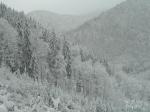
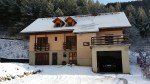
It’s snowing on the higher ground, but not in the valleys (see this webcam). The forecast (lower down on the webcam site) is for sunshine and sub-zero weather.
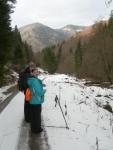
We have started our journeys to Slovakia and so it is time for our Slovakia expedition diary 2016 to start too. Our executive director Matthias Hammer is the advance party with most of the equipment. He arrived in Slovakia yesterday and is now in the Carpathians. As you can see, there is a bit of snow, but warm weather and rain is forecast for the next few days, so we may be tracking in the mud, in the valley bottom at least, rather than in the snow. We’ll keep you updated on the weather.
Expedition leader Paul Franklin and his assistant Phil Markey are starting from the UK tomorrow on a drive that will take them three days. We all meet up at our base in Švošov on Thursday, where our expedition scientists Tomáš Hulík will also join us. Yesterday Tomáš joked that because of the warm weather, the bears might be awake… 😉
We’ll be in touch from there with more information on weather, work, plans, etc.
We’ve walked many more kilometres on the sand and dunes over the last two days with all teams determined to complete their surveys. By Friday afternoon we had surveyed 39 out of a total of 42 cells, making the scientist very happy. Heavy wind and downpours stopped us from surveying on Wednesday afternoon. Fortunately all tents were still in place when we returned to base.
Instead of sitting around the fireplace, that evening was spent in the main tent with some of us playing games after the daily review. On Thursday a broken cooker forced us to cook on the fire. Having a hot tea or coffee in the morning around the fireplace truly felt like being on expedition.
The week was over too soon. Before we went out to a special event on the last evening, Steve summed up the results after six days of working in the field. Not including Friday’s results, 399 oryx were counted at feeding spots, 126 mountain and 49 sand gazelles were encountered as well as two hares. The new method of visiting two predefined observation points in each cell to survey the area for 15 minutes will definitely result in more accurate/comparable results. We caught only three rodents during the week using 16 traps, leading to the conclusion that the number of rodents is down. This could influence the number of desert eagle owl – a bird target species that was not recorded on the surveys – but also on the cat population. 130 fox dens were observed and quite a few new dens were recorded. All of this will go into the expedition report.
We left camp after the obligatory team picture session to go out for a night dune drive. Sponsored by Platinum Heritage the team was invited to spend the evening at traditional Arabian dune camp. We learnt about Arabic coffee, cuisine, dance, henna painting, smoking shisa, etc. The dinner was delicious! It was far beyond our usual bed time (22:00 ;)) when we were dopped back off at base. Still everyone had enough sleep since we decided to have breakfast late today, our last day.
Thank you so much, again for joining this project, putting sweat, time and money into research & conservation. I hope you’ve enjoyed the week as much as David, Steve and I did and I hope to see you again sometime somewhere.
The expedition is in full swing. We are checking live traps in the morning and rodent traps before the teams move on to their surveys. A Cheeseman’s gerbil was caught yesterday.
Cheeseman’s gerbil
Playing dead, we didn’t see or hear it hidden in wood shavings and there was no movement when we studied the closed trap for signs of life. Only when emptying the trap, did the creature reveal itself, frozen at our feet for only a second before disappearing at the speed of light. During the night a fox must have desperately tried to get to it, burying a deep hole all around the gerbil’s safe enclosure. From the tracks that were left behind we could read the whole story!
Trap & tracks
Other than that the surveys are going well. After a couple of days everyone is now familiar with the GPS and the road network. But also with using shovels and tow ropes for a full desert experience! 😉
A little stuck
Apart from surveying ‘cells’ – areas of 2 x 2 km – from two different survey points, which the teams have to reach on foot walking up and down sand dunes, Steve, the expedition scientist, has added the task of counting oryx at feeding points.
Survey point
A great number of calves and juveniles are seen and counted, and it will be of great importance to ascertain the actual number of oryx within the Dubai Desert Conservation Reserve for further management decisions.
Oryx
We have also come across a dead oryx indicated by about 15 lappet-faced vultures circling the sky above. Walking the dunes we also check fox den holes marked in our GPSs to categorise them active/inactive/abundant/not found, or we note GPS positions of new fox dens – all in an effort to update the existing database.
When the teams return back to base in the late afternoon lots of data are brought back from the field. Thanks to Lea, who has become the team’s data entry specialist, all data sheets have been entered into the scientist’s computer.
Only two more days of rising with the sun in the morning and spending all day out in the field.
Everyone arrived safely two days ago at base camp located within the Dubai Desert Conservation Reserve. The convoy of four cars stopped at the DDCR’s brand-new office where Steven Bell, the expedition scientist, gave a presentation about the history of the reserve, study animals and conservation work before the convoy headed out into the desert. After setting up tents and lunch, the rest of Saturday was spent with talks, risk-assessment, training on research equipment, live- and camera traps, data sheets and expedition vehicles. More training on GPSs – a vital tool for all field work – was done the next morning as was the off-road driving training. So far so good.
The North (Sandra & Gary, Mary and Judith from the UK, Susanna & Lloyd from the US), Central (Margit and Sigrun from Germany) and South (Caroline and her two daughters Lea and Janna, U.A.E. residents and Tariq from Jordan) teams accompanied by Steve, David and I then went out to set all traps (10 camera, 12 live and 16 rodent traps). Designated areas stored in the GPSs must be found, as well as proper spots to place and bait the traps – a very busy day. The South group came across a lappet-faced vulture, the Central group found a small silver snake and everyone finally made it back to base in the late afternoon. Of course Arabian oryx and the smaller gazelles are all around, flitting through the dunes or majestically standing in the sand, reminiscent of Arabia as it once was or of Africa as it still is in some parts of the savannah wilderness. For the daily review we sat around the fireplace, had dinner straight after and went to bed early.
The weather has been very pleasant: sunny, 23 degrees C, with temperatures not dropping below 10 degrees at night. For dinner we are spoiled by a great variety of delicious food & salad plus dessert such as chocolate cake! 😉 Writing this I am at the DDCR office while everyone is out doing surveys. Soon I will be picked up to be taken back to base camp, away from any internet or phone connection. I’ll keep you updated.
Only 36 hours have passed since we’ve arrived in Dubai. Stephen, our expedition scientist, David and I met up yesterday morning, picked up some supplies in town and then made our way to the desert. With two huge Ford off-road expedition vehicles, we drove to the storage room within the reserve to load up our camp equipment: tents, tables, chairs, carpets, cushions, gas cooker, cooler boxes – just to name a few items. Thanks to the DDCR staff the main “big” and kitchen tents were already set up and in place for us to move in. We’ve been busy with organising camp, checking research equipment, going through data sheets and paperwork, etc., etc. It feels like we’ve been here for much longer than 36 hours 😉
We have been shopping a bit already, but tomorrow is going to be the big shopping day – we’ve put together a looong list – as always.
The weather is really pleasant. In the mid 20s C during the day, dropping to high 10s during the night, some scattered cloud, but otherwise blue skies.
That’s it for the moment, we’ll be in touch again soon.
This is the first (quick) diary entry for the Arabia desert expedition starting on 9 January. My name is Malika Fettak, I am a senior member of the Biosphere Expeditions staff and I will be leading the expedition. Also with us will be David Moore as an expedition leader in training.
Right now we are about to board our planes Dubai (David from France and I from Germany). David and I will meet up in Dubai tomorrow morning and then go straight into preparations. Quite a few things need to be organised before the team’s arrival: Food supplies, setting up the expedition base campsite, preparing the equipment, cars and paperwork, etc., etc. I’ll be in touch again once I have arrived on the ground and my local SIM card is confirmed as working still.
Meanwhile, our expedition scientists Stephen Bell of the Dubai Desert Conservation Reserve is getting ready at his end too. He’s picked up some cars that cannot be missed in the desert – see below ;), kindly provided by Ford Middle East, who has also supported our expeditions in the region for many years via its Conservation and Environmental grants programme.
Further support, logistics and otherwise, comes from Platinum Heritage and Al Maha. Thank you to all three of them; their support is much appreciated.
Now all we need is the team. Safe travels and I’ll see you in the desert soon.
Lisa Steiner’s report from the San Francisco marine mammals conference
Every two years, the Society for Marine Mammalogy hosts a conference. Over 2,000 scientists that study whales, dolphins, seals, sea lions, sea otters and polar bears descend on whichever city holds the conference. The last conference I attended was in Quebec City, Canada, where I presented results on male sperm whales that matched between the Azores and Norway. This year, I was presenting a poster on twelve female sperm whales and a calf that have been seen in both the Azores and the Canaries, as well as a match between the Azores and Madeira and also a single match between Madeira and the Canaries. I was also co-author on two other posters, one on humpback whales and the other on blue whale photo-identification.
Lisa Steiner at her poster
The conference gives people studying marine mammals around the world a chance to see what is being done elsewhere in the world. There is not a lot of time to rest. There are five talks going on at the same time for most of the day and a couple of selected speakers have their own slot. This year saw the introduction of the 5 minute speed talk, which was challenging for both the presenters and the listeners, especially if the audience wanted to change rooms for the next talk!
On Saturday, before the official start of the conference, there was a workshop just on sperm whales. We had short presentations on all aspects of sperm whale biology & behaviour. I gave a short three minute presentation on the photo-identification work that Biosphere Expeditions and I are doing in the Azores.
Some highlights of the sperm whale session were:
There is not a lot of genetic diversity between oceans, and this may be due to a bottleneck in the population around 80,000 years ago, when the squid populations also crashed.
Male sperm whales in Alaska have learned how to take sable fish off the long lines. It seems that there are around ten offenders and the researchers are working on ways to help the fishermen avoid this loss or these whales specifically. Some of the males were tagged with satellite transmitters and a few of them went as far south as Baja, Mexico still heading south when the transmissions stopped.
Russian illegal whaling may have changed the structural groups of females in the Pacific by decimating the stocks. Females in the Pacific groups are not always related, whereas in the Atlantic they generally are. This was caused by individuals forming new groups in the Pacific.
There are some juvenile male sperm whales that lived close to a navy test site in the Bahamas for a couple of years, before they moved on to another unknown destination. I am hoping to get those flukes for matching to the Azores catalogue. The female sperm whales in the Bahamas sensibly stay in the north of the archipelago, away from the navy test site and there does not appear to be mixing between the groups seen in the Bahamas and Dominica.
A couple of invited squid biologists gave us a bit of a different perspective on the whales as ferocious squid predators.
And in the last presentation of the day, it was shown that the theory that sperm whales change the density of the spermaceti to help them dive and surface is not accurate.
Some highlights of the rest of the conference:
Whales benefit the environment by recycling nutrients. In the case of sperm whales they catch their prey in deep waters, but defecate at the surface, re-releasing all those nutrients, which would otherwise be lost to the depths. Blue whales in the Antarctic drive the whole ecosystem by recycling nutrients and making them more accessible for the krill to use.
Climate change is not good news for polar bears and probably walrus too, because they depend on the sea ice to hunt, but grey whales could benefit as new feeding grounds open up, which have previously been covered in ice. This lack of ice could also lead to grey whales re-populating the Atlantic Ocean, where they have been extinct for many years. But the fossil record shows that there may have been several re-colonisations over the years as ice ages came and went.
Fin whales are mostly right handed lungers. Out of 800 lunges, only three or four went to the left.
A long term photo-ID study in Alaska’s Glacier Bay National Park has 46 individuals with a sighting history of more than 30 years. Something I am aiming for with the Azores sperm whales.
And speaking of Humpback Whale IDs. There has been a match made between a humpback whale that was seen during the 2008 Azores expedition and then again in Norway in 2012, near Tromsø! This is the second match made with a whale actually seen during an expedition. The other match was first seen in Norway on 20 March 2010 and then in the Azores on 5May 2010.
This slideshow requires JavaScript.
The humpback whales that we see in the Azores are most likely travelling from the Cape Verde Islands up to feeding grounds around Iceland and Norway or back down to the breeding grounds; although to date we have not had any matches to Iceland. We have eight Azores matches to the Cape Verdes and now eight matches to Norway as well. The whales can use the waters around the Azores as a pit stop from the breeding to feeding grounds, since most of them have not been feeding for a few months while on the breeding grounds. So far we have not had any matches to the Caribbean population of humpbacks, which is more numerous than the Cape Verde population, although this may be down to low numbers of identifications in the Azores.
This slideshow requires JavaScript.
The flukes in the North Atlantic Humpback Whale Catalogue are constantly being reviewed, especially with hard to match individuals, since the computer assisted matching is not always perfect.
And speaking of computer-assisted matching, I think we will be trialling a new matching system, Flukebook, during the 2016 expedition alongside Europhlukes. Flukebook is a new online matching system that shows a lot of promise. It uses six different algorithms for the matching and has machine learning too, as well as being able to plot the sightings with Google Earth. The biggest drawback will be if catalogues that I currently match to, do not join Flukebook. Only time will tell.
After the conference I had a couple of days down in Monterey Bay, looking for grey whales, since I had never seen one. The mission was a success, I saw over 20 different grey whales and around 30 humpbacks. Unfortunately none of the “friendly” behaviour from the greys – they were just migrating on their way to the breeding lagoons, where you can get the “friendlies”. No acrobatics from the humpback whales either, but I did get some fluke ID pics, which I will send off to the Pacific Humpback Whale Catalogue at Cascadia Research.
I would like to thank the Friends of Biosphere Expeditions, as well as my parents, for making my attendance at these conferences possible through their support. And thank you to all the expedition participants that make this work possible.
Divers rediscover Eden for coral reefs in the face of climate change
The waters of the world’s tropical coral reefs are warming and getting more acidic in the face of increased C02 concentration. Reefs in most parts of the world are dying from such stress and it appears that the ability for coral reefs to recover from periodic El Nino events is being diminished – because of increasing frequency of warming, pollution, increased sedimentation and disease. However, the corals of the Musandam in northern Oman are currently an exception. Here reefs are extremely healthy, covering the shallow waters of the mountainous peninsula with extreme variety of growth forms from massive 400 year old 4m high ‘boulder’ coral to the delicate yet important branching and ‘bushy’ corals. Coral cover regularly exceeds 70% in nearshore embayments
Elsewhere in the world, corals have been reduced to rubble, their once great carbonate structures being eroded by boring sponges and worms, whilst successive warming events and overfishing of herbivores has resulted in massive plant growth, suffocating what’s left of corals, and attracting opportunistic algae. The majority of Jamaica’s once spectacular reefs have been turned from ‘coral’ to ‘algal’.
Dr Jean-Luc Solandt, Reef Check Course Director of the region said: ‘The past six years of Biosphere Expeditions surveys confirm the vitality and resilience of this area. At a time when we’re seeing the degradation of the world’s most diverse marine habitats, relied on by 100s of millions of people for food, Musandam is withstanding the current temperature hikes. Our survey findings offer hope that there are some areas of the world that can withstand such environmental change.’
The temperature of the surrounding waters differs considerably from that of the Gulf of Arabia. Musandam lies at the entrance of the gulf and is enriched by cool deep waters of the Gulf of Oman to the east. The current exchange between the waters of the gulf flowing over the reefs allow for currents to wash the reefs with clear waters, whilst the cooler water from the east prevents catastrophic climate effects. Furthermore, some of the corals have been seen to harbour temperature resistant algae, allowing greater resistance to bleaching.
Whilst Musandams coral reefs are faring well, the fisheries of the area are being exploited at ever increasing effort. The most important commercial fish species of the reefs – grouper (hammour) are only ever recorded at 50 cm in size at very few more isolated sites. We recommend the development of an MPAs and minimum landing sizes for grouper to achieve a sustainable fishery, though none of this will change if it doesn’t have the support of the community. Jenan Alasfoor from the Environment Society of Oman, a scholar on this year’s expedition, knows too well that before any changes in fishing practices occur, full consultations with the local communities need to be undertaken.