Maldives: Ready to dive

Jean Luc and I have arrived safely on the MV Theia, a beautiful vessel and our research base for the next week.

The weather is looking promising and we are excited to get started. The first few days will be quite intense getting the Reef Check training done, but you will learn everything you ever wanted to know about coral reefs and more. No worries, you are in good hands and no doubt come prepared 😉

Don’t forget important paperwork such as your diving certification cards, PADI medical forms (where necessary), insurance details and Biosphere Expeditions checklist. Safe travels and I look forward to meeting you Saturday, at 11:00 at the Coffee Club in Male Airport.

Romania: Lynx & bison work

Day 3 saw the team embark on a full day of camera trapping. After a short session at base learning how camera traps work, and viewing some images of bears, lynx and wolves taken earlier, we set out in three teams, to check on existing cameras and install new ones.

The main focus of this work is lynx. These are hard to study using other non-invasive methods as their hair rarely contains enough DNA to successfully identify individuals, and their scat is hard to find, unless tracking them in snow. In contrast, it’s possible to identify individuals based on the unique patterns of markings on their flanks, so the camera traps we’re using take colour photos (with a flash at night) and are positioned in pairs to maximise the chances of photographing both flanks of passing animals.

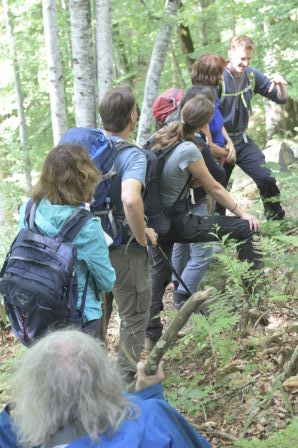
Our suspicions as to the rangers’ descriptions of the terrain were verified – routes included some pretty steep and challenging sections. Trails involved four of five hours walking, with breaks for views. Along the way we encountered several fresh bear scats and prints, as well as a den.

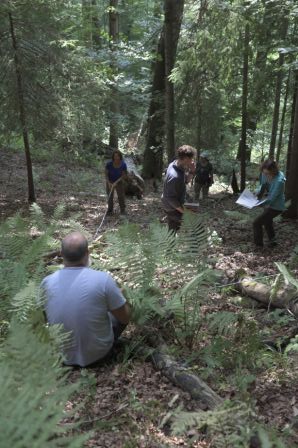
During day 4, the team was working with Oliviu, an ecologist with FCC, on the enclosures, which will house the bison, due to be translocated in October this year. We drove, then hiked to Bunea hide, then located a suitable site on the forested slopes below, which will form part of the bison enclosure.

We undertook vegetation surveys along a transect, contributing to a baseline habitat assessment prior to the bisons’ release. This will allow FCC to understand the impact of the bisons’ presence on the forest, by comparing changes in the enclosed areas with ‘exclosures’ control plots in which the bison cannot graze.

The day was cooler, with a high temperature of 18 degrees, and light rain.

Tien Shan: Another snow leopard! (addendum)

We have a bit more to write to you. We know that at this point nearly all of you will have been home for a while, gotten back into your daily routine, and have forgotten what it is like to wake up to frost on your tent!

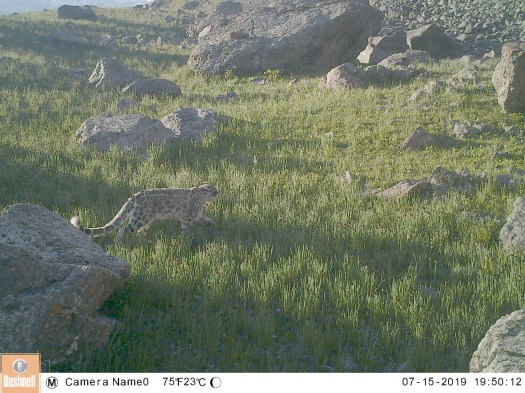
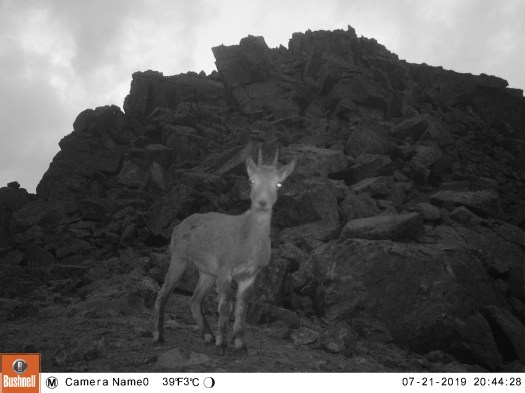
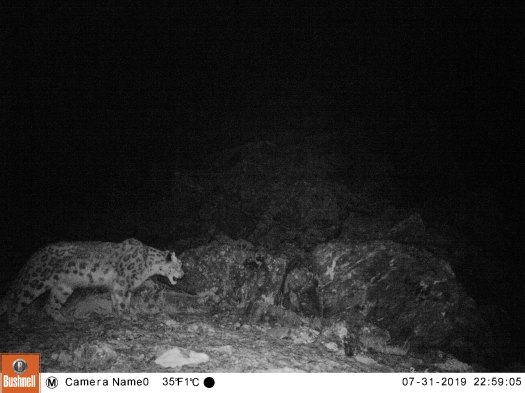
But we hope to grab your attention and awe once more before the weight of “real life” truly sinks back in. Volodya was recently going through some camera trap photos of where we had a camera knocked over by bulls. [For obvious reasons we are not mentioning exact camera trap locations here, but this particular trap was set by Bek, Kurt, Lothar, Guillaume, Christiana and Tessa on 5 July, and removed by Hubert and Jörg on 20 August]. There were nearly 3000 images of these bulls feeding in front of it in the end, and a couple images of foxes that were immediately recognisable. However, Volodya found a series of images that were late in the evening, that appeared to show something walking in front of the camera, but the exposure levels were way off and it was indistinguishable. After editing the contrast etc., Volodya discovered that prior to the bulls knocking it over, we had a snow leopard walk right in front of the camera on 15 July at 19:50!

The image shows the cat walking to the right of the camera, just like the other image taken in another location, which means we can compare the rosettes and see if it is a separate individual. Likely this could be inferred just from the location that each image was taken, but we’ll let you take a look at the two images side by side. This is your chance for one last bit of citizen science on expedition this summer!

What an amazing extra photo captured! And again, this photo wouldn’t have been possible without all the hard work that each of you put in to the project. So I’d like to once again say thank you for making this season’s expedition the most successful yet!

Do e-mail us your conclusion on whether it’s one or two individuals. Or comment below.

Right-click on images to download them to your computer to see them full size.

Maldives: Opener

Hi everyone, my name is An Bollen and I will be your expedition leader on this year’s expedition in the Maldives. We will be accompanied by our local scientist and marine biologist Dr Jean-Luc Solandt, who has been the Reef Check coordinator in the Maldives since 2005 and who joined nearly all previous expeditions.

An
Jean-Luc

On this ninth annual Reef Check survey expedition, you will be trained to become citizen scientist divers and help collect data on coral reefs, while also recording sightings of marine megafauna, such as whale sharks and rays. We will be visiting sites on the South Male and Vaavu atolls to survey the health of the coral reefs and their recovery following bleaching events.

I just had my expedition briefing outside Brussels and I’ll be travelling out in advance with Dr. Jean-Luc Solandt on Thursday, to ensure that everything is ready for your arrival, and will be in touch with updates and my local mobile number from Male’.

Looking forward to meeting you all on Saturday at the Coffee Club in the main airport’ hall in Male.

Safe travels to you all and see you soon for an adventure out in the blue!

Romania: Training, training, training

It is the end of day two here in the Carpathian mountains and the team have completed their main training to help scientist Ruben with his work studying bears, wolves and red deer. We ended the day listening to three different tawny owls calling around are base and looking at the stars in the clear night sky. Over the last two days we have heard about the project here to restore the ecology of the forest and to work to assess scientifically the numbers of large carnivore and their main prey that are resident in the study area.

The team have worked hard learning how to use the GPSs and radios that we use as part of our safety procedures, and have spent time looking at genetic sampling kits that they will use to collect biological samples for Ruben’s work.
The sun has shone and the weather has been warm for our first two days, with the afternoon of the second day seeing the first of many survey hikes in the hills.

Group planning with map
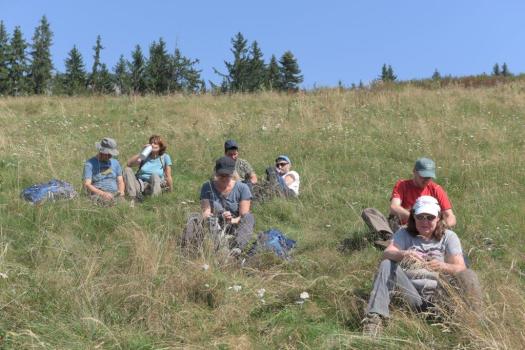
Team on alpine meadow

Romania: All set up at base

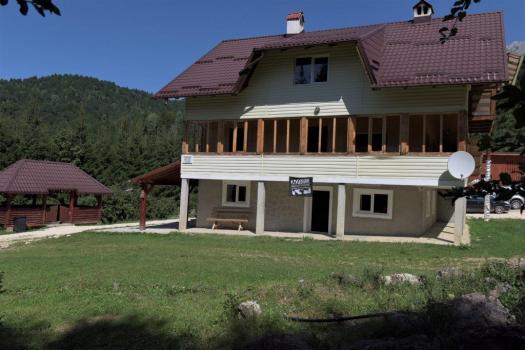
The expedition base is now all set up for you. We have an excellent main room for training and storing equipment and have found that eating outside has been lovely, even in the evenings. Our host at base, Aurel, is very hospitable and the rooms are clean and good for a mountain hut, although you may find them a little rustic. Showers are hot, the food is great and the wine is locally made. Ruben, our expedition scientist, arrives Sunday morning and we are looking forward to welcoming the first team later in the day. See you later.

Assistant expedition leader Robin (Johnson)
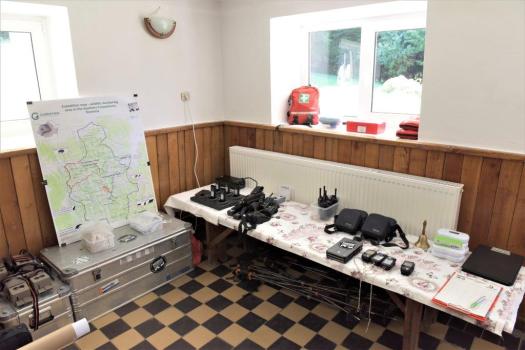
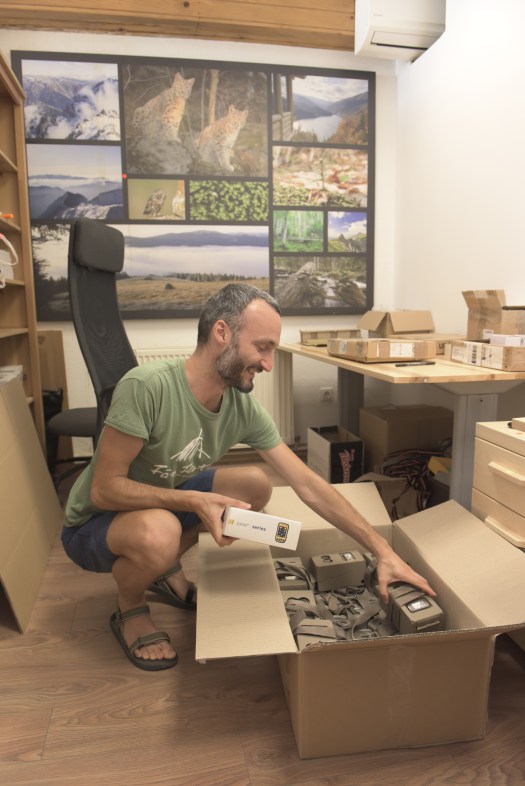
The equipment room
Expedition leader Kathy (Gill)
Expedition base

Romania: In Brasov

I  arrived in Brasov (where the HQ of our partner organisation is located) Tuesday evening with all the kit and our trusted photographer, Matthew, who will be helping document the work that we do on the group 1. We spent Wednesday with Ruben, the expedition scientist, talking through the work that we will be doing and the logistics generally.

Ruben checking out camera traps

For both groups we are going to spend our last two nights in the three wildlife watching hides in the study area; hides that use a technique of baiting to attract animals so that tourists coming to the hides are more likely to see some of the larger mammals. Our time there as citizen scientists, not tourists, will be spent documenting the animals that come near the hides as part of the work to understand the impact of these tourist ventures; ventures that make up a necessary part of wildlife conservation in many areas. By understanding the impact, there can be improvements to the feeding regimes and recommendations can be made on regulations to support good wildlife watching practices across the wild areas of Romania.

Anyway, stay tuned for more of our arrangements in a few days (including my phone number and some more details).

Tien Shan: Group 4 and wrap-up

Group 4 is back in Bishkek, and likely happy that Bishkek is warm enough for shorts and t-shirts! This fantastic group consisted of Jorg, Hubert, Dirk, Petra, and Mandanna (Germany), Aniek (Netherlands), Tom (Australia), Dina (Australia/Italy), and Eileen (Australia) in addition to myself (Amadeus), our excellent cook Gulya, our two local NABU guides Zhyrgal and Zhengish, as well as our scientist Volodya.

Nobody ever likes to say it, but the expedition got off to a rough start right after leaving. Stopping at the shopping centre to pick up any last minute items is always a great idea, but one of the cars had a bit of an issue when we tried to leave again… Nobody knows how it happened, but a very small square magnet made its way into the ignition slot and we couldn’t get the key in to start the car! Fortunately we were able to get a locksmith to take care of the issue and we finally got on our way without any other troubles on the journey. And really, what is an expedition without a few little hiccups so that there is a story to tell at the end!

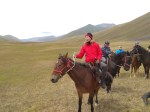
Obviously because of the magnet, we arrived a bit late to camp. Even though we were all a little tired, Tuesday’s training day still went ahead as planned. Wednesday saw us go up to Sary Kul for the traditional training walks. One group reached their destination quite a bit earlier than usual, so they decided to go further to a small glacier. How great to have a group wanting to push their limits, even on the first day out!

Unfortunately, the weather wasn’t interested in letting us keep working hard the way we had hoped. On Thursday we ended up driving to the village of Dong Alysh to visit their zoology museum. We got an excellent tour of the museum and were quite happy with the way the day turned out. The next day we resolved to get into the mountains though, regardless of the weather.

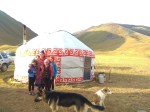
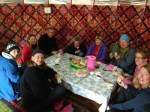
On our day off we got to watch some excellent ulak tartysh (goat polo) and Mandanna and Eileen ended up carrying the goat around for a while! Lots of horse riding, and then Zhyrgal and Amadeus played a round together. Amadeus was able to pull off a victory, but really it was just a great afternoon of traditional games between a group of friends. After such a game of course we had to have some food, so we went over to Joldosh’s yurt for a very filling traditional meal.

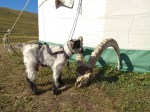
A great story from this group involves a tiny goat named Tony. While we were walking through a new valley called Kashka Suu, Eileen and Dina heard a little noise and saw a baby goat all by itself! There was no herd anywhere nearby, so they picked it up and carried it over near where the shepherd was. Amadeus was there to help translate, and the shepherd told us that the goat was much too young to be his, and that we should just leave it there. He said it would probably die, but that it didn’t matter to him…so we asked if he thought it would be ok if we took it back to camp with us. Dina carried him the whole rest of the day, even with the buzzards circling above! Upon arrival at camp, Tony ended up being our new mascot! Petra and Dina became the little guy’s new “aunties”, and everyone enjoyed having him around. Upon leaving we handed him over to the neighbour, Shukurbek, to take care of. We’re sure he’ll enjoy his new herd!

Although we did get up close and personal with some of the local animals, here is the rest of our important data:

  • Our total cell count was 55, which is amazing considering our weather and group size!
  • We found evidence of snow leopard, wolf, fox, argali, ibex, roe deer, marmot, snowcock, badger, stone marten, ermine, and a few new bird species including the blue throat and greenish warbler.
  • For the first time in six years of study in the region we saw a Turkestan pika! This is very exciting as it is also considered a snow leopard snack, but more so because of how rare it seems to be in our study area.
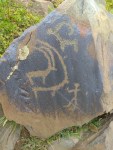
  • We also made new records of over 100 petroglyphs in two unexplored valleys.

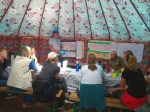
As I’m sure you are all aware, this research would never have been accomplished without each and every one of you. I love the science behind the expedition that we run here in Kyrgyzstan, but sometimes I think I do what I do more because of how inspiring you are! Thank you to groups 3 and 4 for getting out of your comfort zones, waking up to freezing snow, hiking through rain to search for scat, enjoying sprawling vistas from ridge-lines, laughing together in the yurt, and for taking care of one another. You are the heart and soul of our expeditions, and it was an absolute pleasure to have had the opportunity to work with you all this summer. I’m thankful that through Biosphere Expeditions we had the opportunity to get to know each other through our mutual love of snow leopards and conservation!

Till next time,
Amadeus DeKastle

Romania: Inaugural expedition opener

Dear Romania expeditioners and friends

I am Kathy Gill and I will be your expedition leader for our forthcoming inaugural Romania expedition.

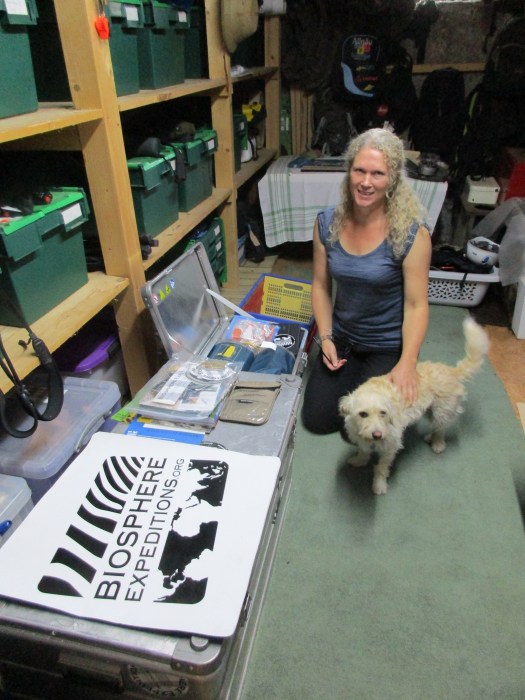
I have arrived from the UK at our stores in Germany to pack up kit (see photo with my dog Elgin who is staying in Germany while I’m in Romania) and to be briefed on the expedition.

Kathy Gill and Elgin

We discussed a lot of the details of the expedition today and I’m setting off to drive to Brasov, very close to the expedition base, but going via Vienna and Bratislava. In Bratislava I’m meeting with our scientist, Tomas, from a Slovakia expedition that we ran for many years up until 2017, as he some excellent books and papers on bears and lynx in central Europe – all useful background for our work in Romania. The weather is due to be very warm over the next few days across central Europe, but still don’t forget to pack warm clothes for the evenings and early mornings when it could be quite chilly (see the list in the expedition dossier).

I’m looking forward to meeting group 1 on 1 September and once I’ve reached Romania, I will send you all an update from the ground along with the best mobile number to reach me on, in case you need to get in touch before your arrival.

In the meantime, I hope you are enjoying your preparations and are getting excited. Happy and safe travels and you’ll hear from me again in a few days.

Best wishes

Kathy

Tien Shan: Group 3

Group 3 is back in Bishkek, with amazing stories to tell! This hard working group consisted of Clemens, Gerd, Marcus, Nadja, Ulf and Helena (Germany), Andi (Austria), Geoff, Amelia and Lyndal (Australia) and Stuart, James and Anjum (UK), in addition to myself (Amadeus), our excellent cook Gulya, our two local NABU guides Zhyrgal and Zhengish, as well as our scientist Volodya.

Leaving Bishkek as soon as possible on Monday morning was probably one of the best things all of us could hope for as the temperature was already in the high 30s at only 09:00! After a (thankfully) uneventful drive, we reached base camp in the late afternoon, had a quick tour around, and proceeded to set up our tents before a good first supper.

Once our training day was done, we got right into things with a day into the Sary Kul valley, putting our training into practice. Apart from some marmots and ibex bones, we didn’t get much out of our first day out, but it was great fun all the same. Everyone was super excited to get into the thick of things.

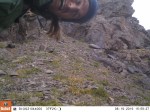
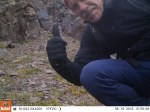
One funny story that must be told is the search for the Issyk Kul camera traps. Although a valiant effort was made,  armed with a GPS with coordinates, the team that set off to find two camera traps in Issyk Kul were not able to locate them…quite frustrating! The following day, the team tried again, and instead of finding two, they found three! Upon return to camp though, Volodya had a look at them, and found out that one of them had not been switched on! But the other cameras had hundreds of photographs on them…unfortunately again, this was because when they were picked up, this time they weren’t turned off! So there were a lot of photographs of the camera being carried around through Issyk Kul Valley. Blurry images of boots, rocks, grass, and other items along the trail. But in the end, there was one ibex that had been captured as well as perhaps the ear of a fox.
On our day off we got to watch some excellent ulak tartysh (goat polo) and Ulf, Helena, Andi, and Clemens even got cajoled into playing a mini game! It was awesome to see them playing so well and the local shepherds loved how the four of them were so into it. It even got so real that Clemens (accidentally?) got whipped by one of the others in the battle! After such a game, of course, we had to have some food, so after watching another game of ulak, we went over to Joldosh’s yurt for a very filling meal of local delights. What an excellent opportunity to get so up close and personal with the local culture.

We also had a special treat during the second week. A group of archaeologists had gotten in touch with Amadeus just a day before group 3 left Bishkek, and had asked if they could set up camp nearby for a day and come along with us on a day out to see some of the petroglyphs and burial mounds. It turns out they are considering using our snow leopard citizen science work as an example for getting people to come to Kyrgyzstan to do archaeological research. It was great to learn more about the cultural history of the area from these experts.

So now the part that I had a hard time waiting to write…

After multiple snow leopard signs being found by various members: tracks, scrapes, kills, and scat, a group made their way up to Chong Chikan where two camera traps had been set up by previous groups. This is in an interesting location where there is a tiny bit of cell phone reception, so there is a high amount of shepherd traffic. The team brought back two cameras, and were completely tired out from the trek. I later went through the images on the computer…shepherd…shepherd…shepherd…shepherd’s dog…horse tail swish…horse tail swish…and on and on it went like that. And then all of a sudden, a night shot with two glowing eyes! I jumped up out of my seat and called everyone in camp over to the computer to show them an excellent photograph of a beautiful snow leopard! Words just can’t expressed how happy everyone was to see such a great picture!
On that note, here are the rest of our data:

  • Our total cell count was 56, a new record
  • We found evidence of snow leopard, manul, wolf, fox, argali, ibex, roe deer, marmot, snowcock, badger, stone martin, stoat, and plenty of birds. We basically checked off nearly everything on the list in this group!
  • We also made new records of nearly 100 petroglyphs and have data on 19 different species of butterfly.

Group 4, I look forward to meeting you and getting back up to the mountains so we can get even more research done. All groups have done a sterling job so far, so let’s keep it going group 4. Are you as ready as I am to get into the mountains and find more signs of the mountain ghost?! Yes? Then I’ll see you at the Futuro Hotel at 08:00, Monday morning.