Award-winning, non-profit and ethical wildlife conservation volunteering. Advancing citizen science and conservation since 1999 – for nature, not profit.
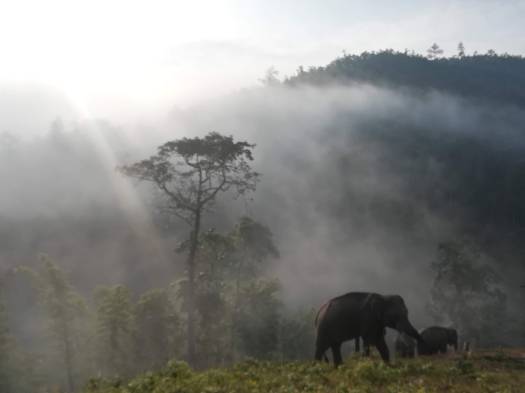
Elephants right outside our camp while volunteering in Malawi
Are you thinking about volunteering abroad and interested in wildlife conservation?
Whether you want to help monitor whales, survey coral reefs, or support wildlife researchers in remote national parks, these volunteer projects offer the chance to contribute to real conservation work while experiencing a destination in a much deeper way.
But, volunteering abroad is very different from a typical holiday.
In this article I’ll walk you through what wildlife volunteering actually involves, what daily life looks like, and how to know if it’s the right fit for you.
This report was written by Sebastian K., who won his place on the 2023 Tien Shan snow leopard expedition as part of a competition run by expedition partner NABU and Biosphere Expeditions. It is written in his native German.
Die Anreise nach Kirgisistan über Istanbul nach Bischkek verlief ohne Probleme und so kam ich am frühen Sonntagmorgen (6. August 2023) dort an.
Freundlicherweise konnte ich mein Hotelzimmer sofort beziehen. Das Hotel war auch zugleich der Treffpunkt der Expedition. Doch zuvor konnte ich noch ein wenig Bischkek erkunden: eine beeindruckende Stadt, in der man schnell erkennt, dass die Kirgisen stolz auf ihre Geschichte sind. Überall wird die Geschichte des Landes wiedergespiegelt.
Praktischerweise wurde vor der Reise schon eine WhatsApp-Gruppe mit allen Expeditionsteilnehmern gegründet. So trafen wir uns mit ein paar Teilnehmern schon am Abend vor Beginn unseres Abenteuers zu einem schönen Essen.
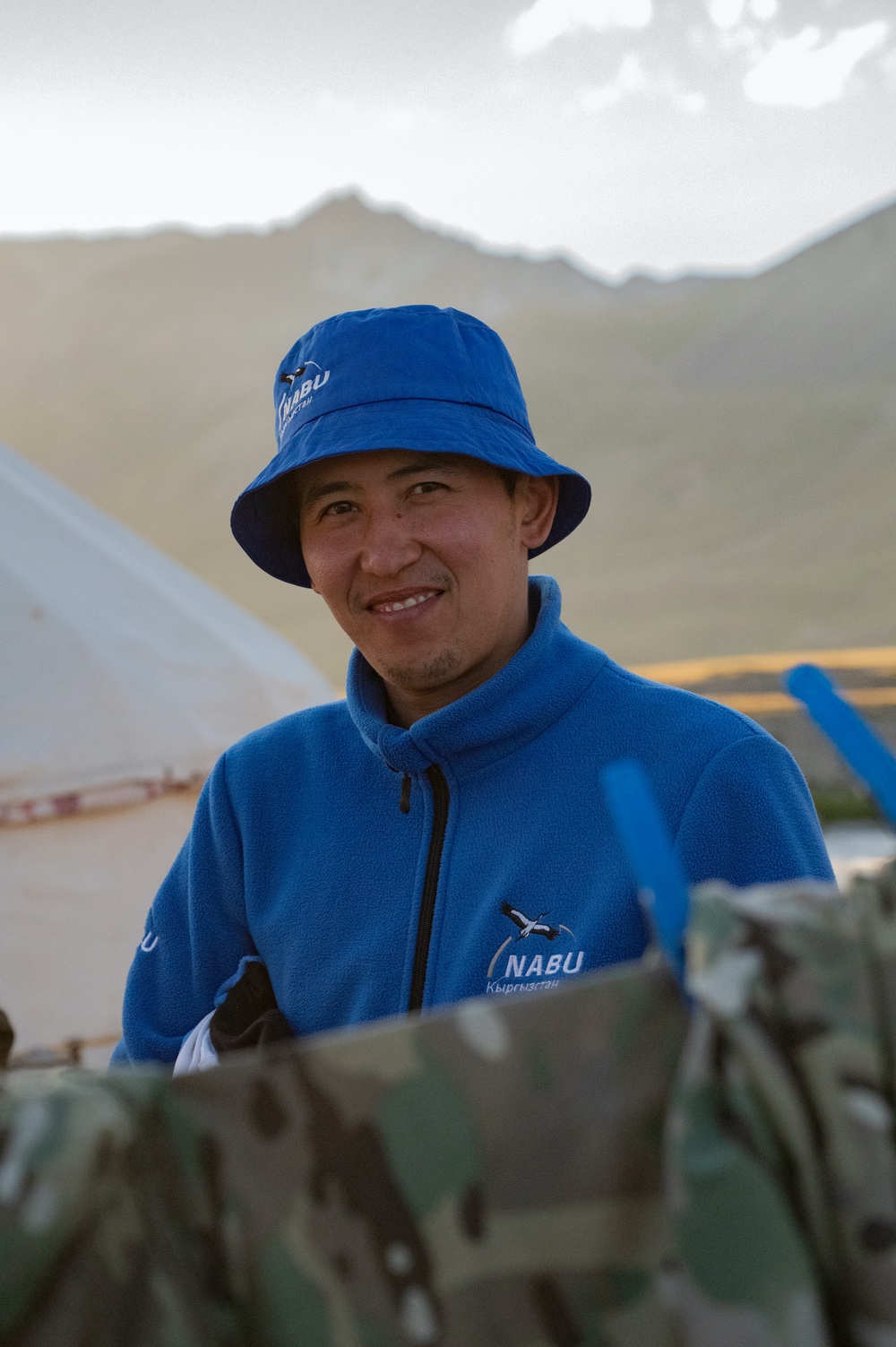
Am nächsten Morgen fanden sich alle Teilnehmer der Expedition draußen vor dem Hotel ein. Henry, der Leiter der Expedition, und Taalei, der die Expedition wissenschaftlich begleitete, Ibrahim und Ayan vom Team NABU Kirgisistan nahmen uns in Empfang.
Alle Teilnehmer stellten sich kurz vor. Es war wirklich interessant, ihre Beweggründe für die Teilnahme zu erfahren.
Vier imposante Toyota Land Cruiser standen vor dem Hotel, die bevor es losging, bepackt werden mussten. Es wurde ein Fahrer gesucht, und ich übernahm gerne einen der Fahrerjobs.
Autos bis oben hin bepackt, ging die Fahrt los: raus aus Bischkek, ab auf die Schnellstraße parallel zur Grenze Kasachstans in Richtung Osten und dann gen Süden in Tian-Shan Gebirge.
Nach vier Stunden Fahrt verließen wir die festen Straßen. Den Rest der Strecke befuhren wir auf Schotterpisten. Manchmal konnte ich mir ein Grinsen nicht verkneifen, da es doch ein Menge Spaß machte, mit dem Geländewagen über die Pisten zu fahren.
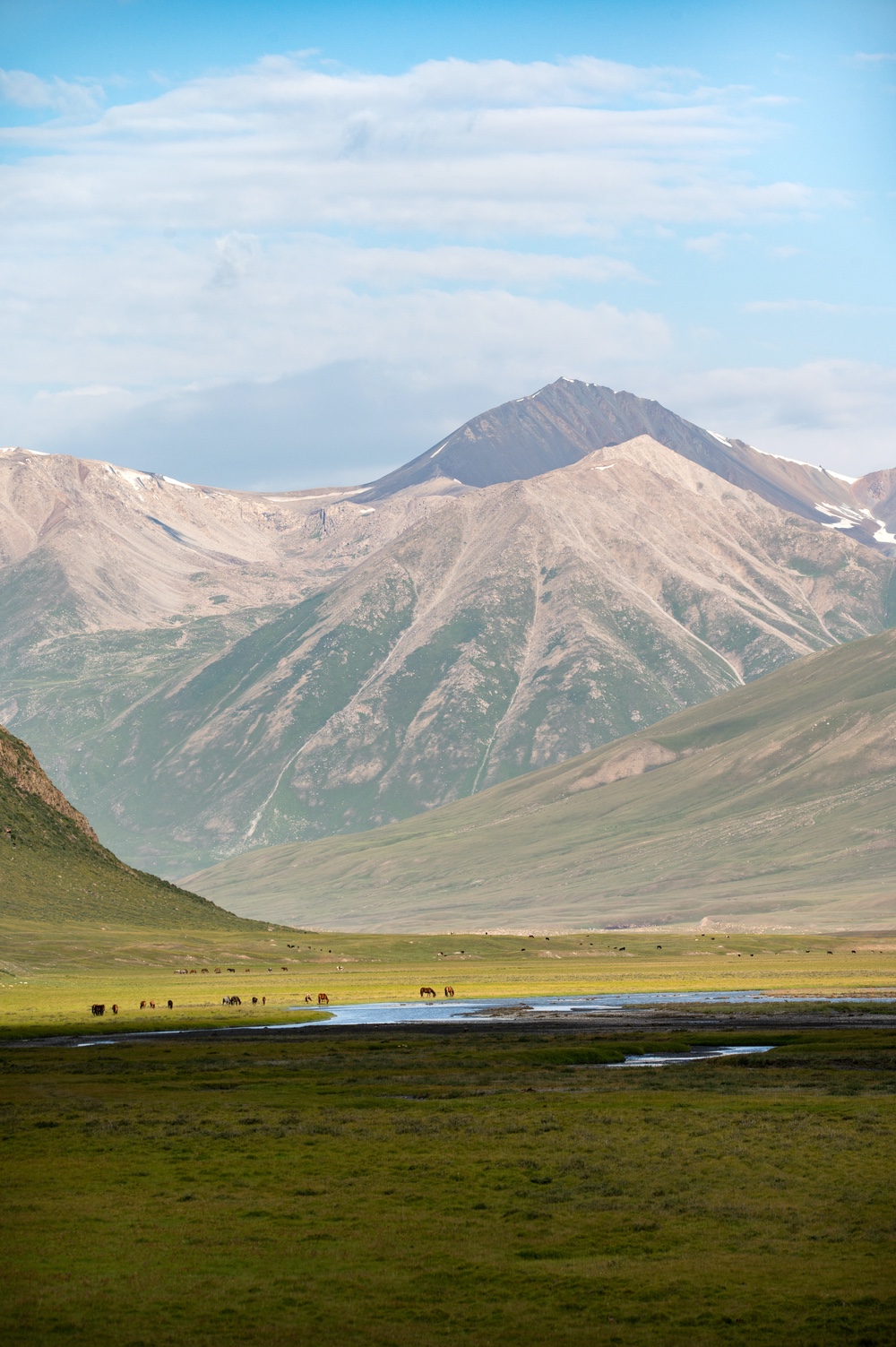
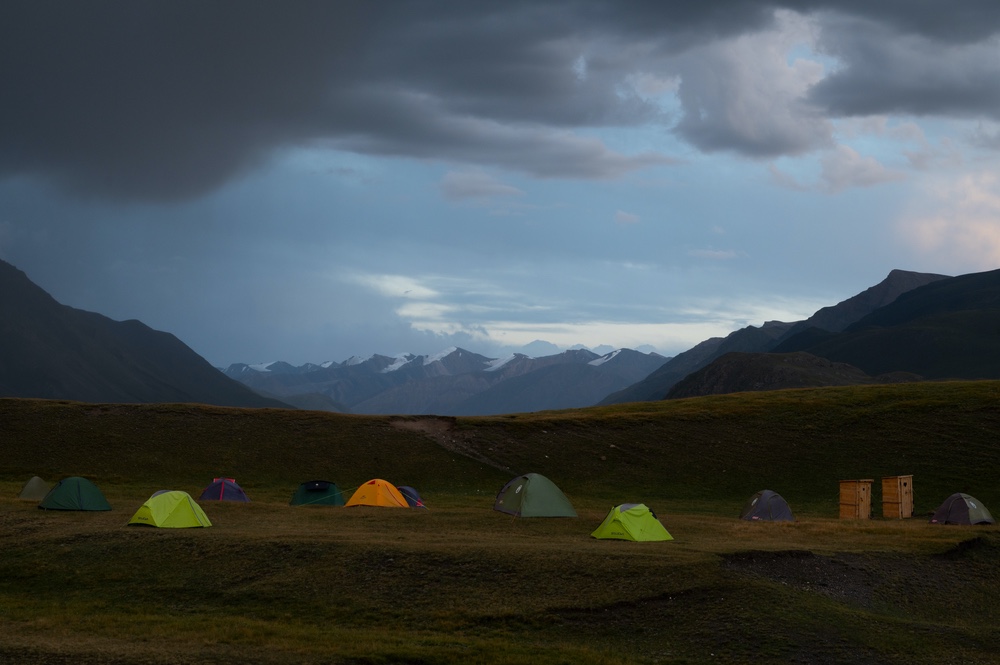
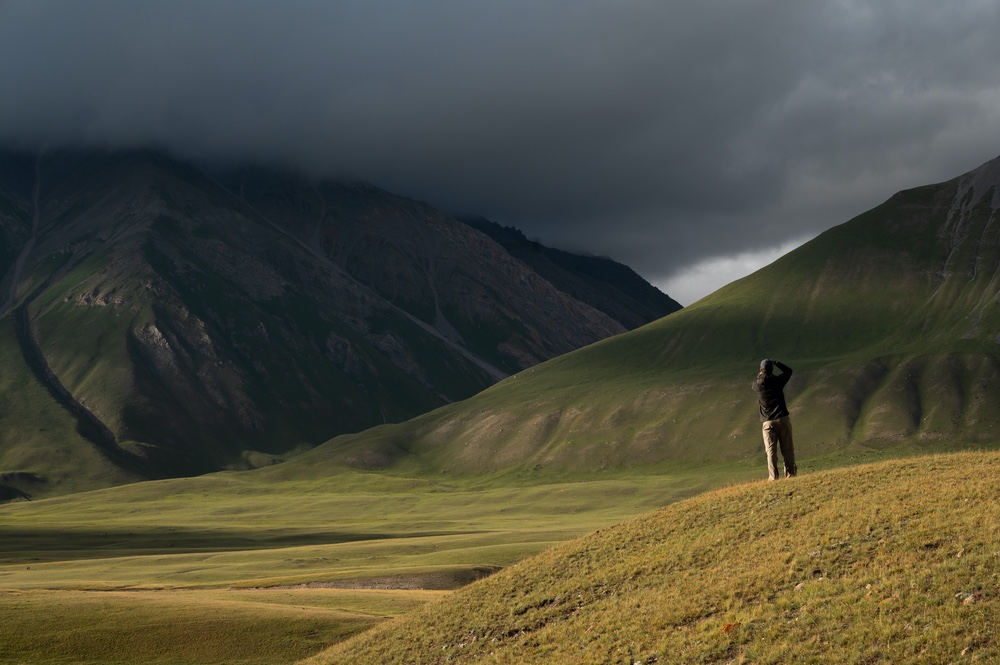
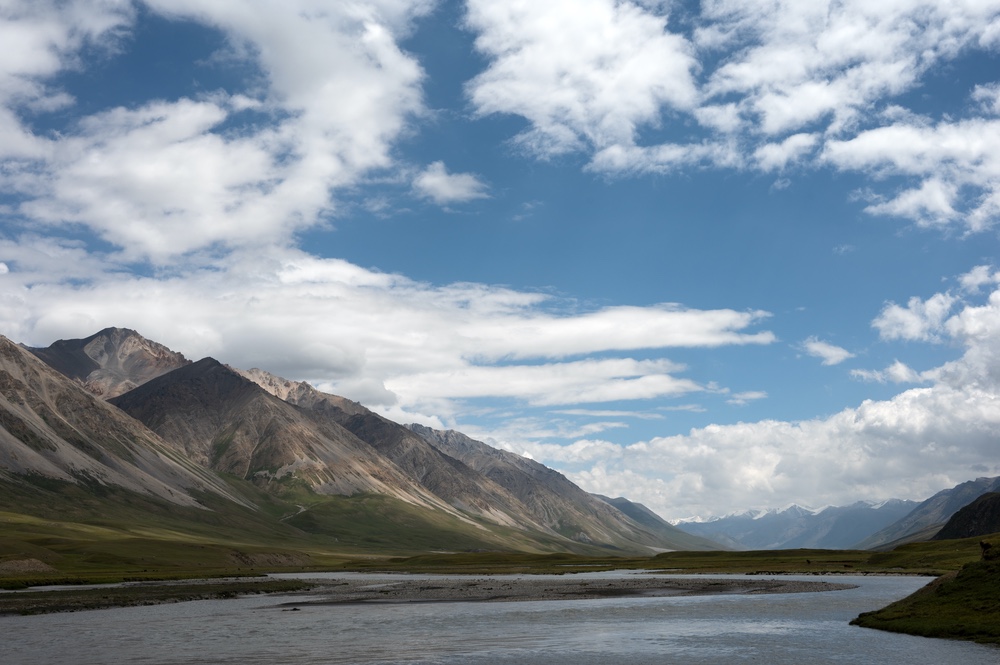
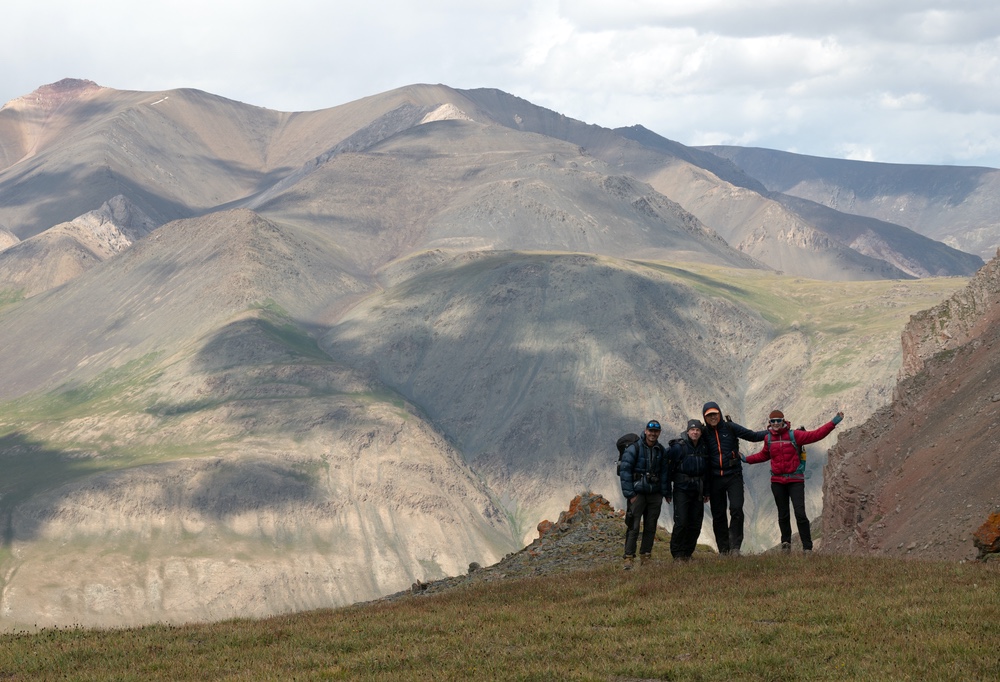
Am Nachmittag kamen wir im Camp an: Wunderschön gelegen auf ca. 3000 m Höhe, direkt am Fluss in der Nähe einer Brücke lag das Camp in einem wunderbaren breiten Tal. Die Landschaft war einfach herrlich. Überall im Tal waren Pferde und Rinder zu sehne, die sich frei bewegen konnten.
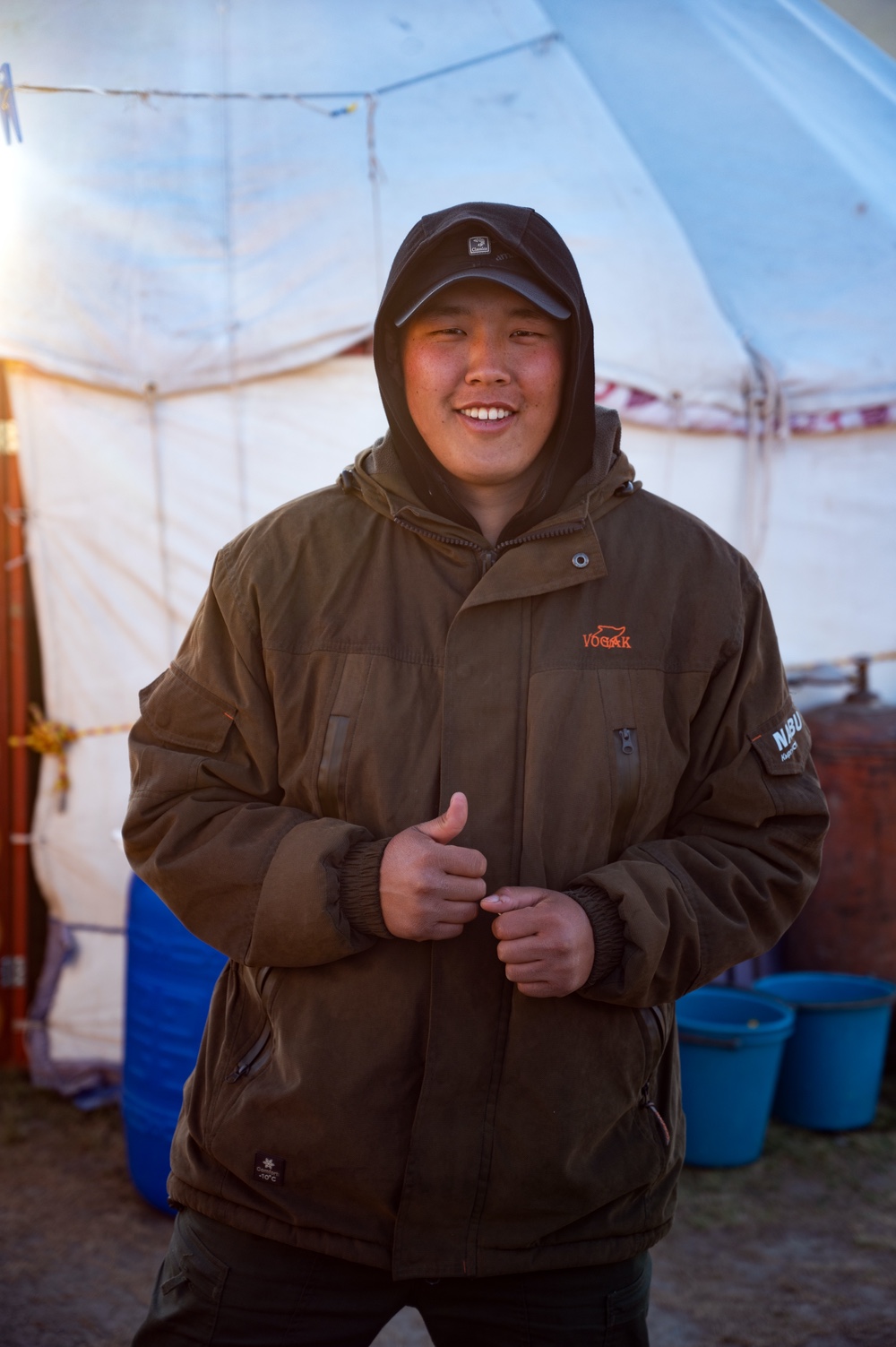
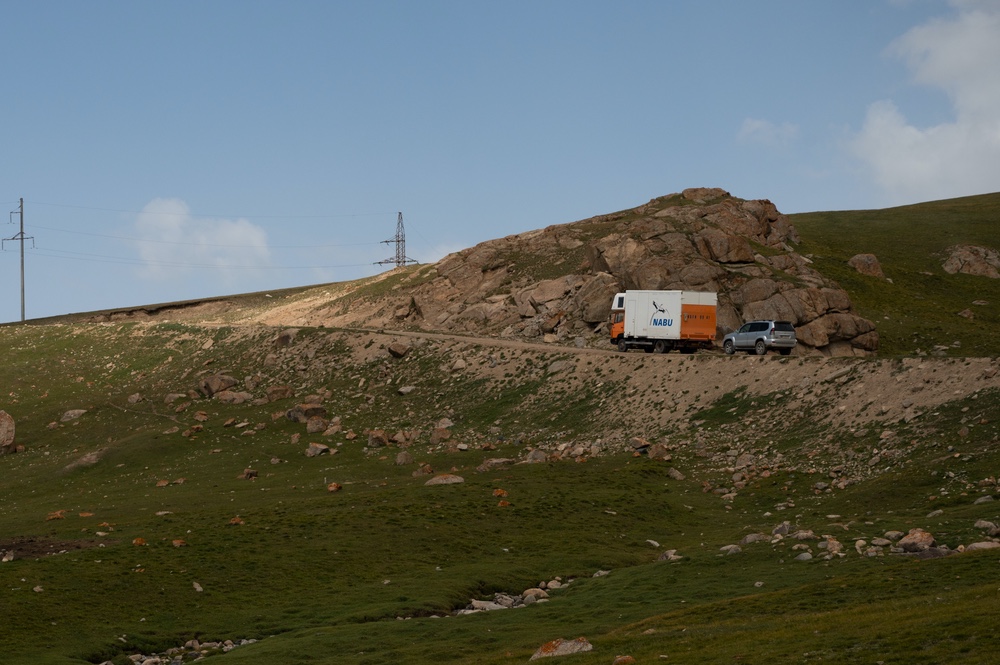
Henry gab uns kurz eine Einführung in das Camp: Toiletten, Duschen und die drei Jurten. Eine der Jurten war die Küche und damit das Reich von Azman, unserm Koch. Eine andere war unser Aufenthaltsraum, in dem gegessen wurde, unsere Besprechungen stattfanden und natürlich das gemütliche Beisamensein abgehalten wurde. Außerdem gab es noch einen uralten NABU LKW, in dem die Ausrüstung verstaut wurde. Dusche und Toilette hörte sich super an. Tatsächlich waren es vier kleine Holzhütten.
Dann ging es daran, die Zelte aufzubauen. Jeder bekam ein eigenes Zelt und im Nu standen noch 11 weitere Zelte im Camp.
Alle Bilder (c) Sebastian K.
Am Abend gab es eine Besprechung darüber, was am nächsten anstand. Azman bereitete uns ein leckeres Abendessen zu, und wir tauschten uns alle noch etwas aus, bis schließlich alle in ihren Zelten verschwanden.
Jeden Morgen, um 6 Uhr, ging der Wecker. Frühstück um 6.30 Uhr: Spiegeleier, Milchsuppe, und es gab Brot mit verschiedenen Möglichkeiten, diese zu belegen. Es standen immer mehrere Thermoskannen mit heißem Wasser bereit für Tee und Kaffee.
Kurze Zeit später fing Henry mit der Unterweisung unseres Gruppe an. Als erstes die Grundregeln, Sicherheit, Forschung und dann das Vergnügen. Henry unterwies uns in die Funkgeräte, die GPS-Geräte, Tablets und natürlich die Fotofallen, die wir aufstellen sollten.
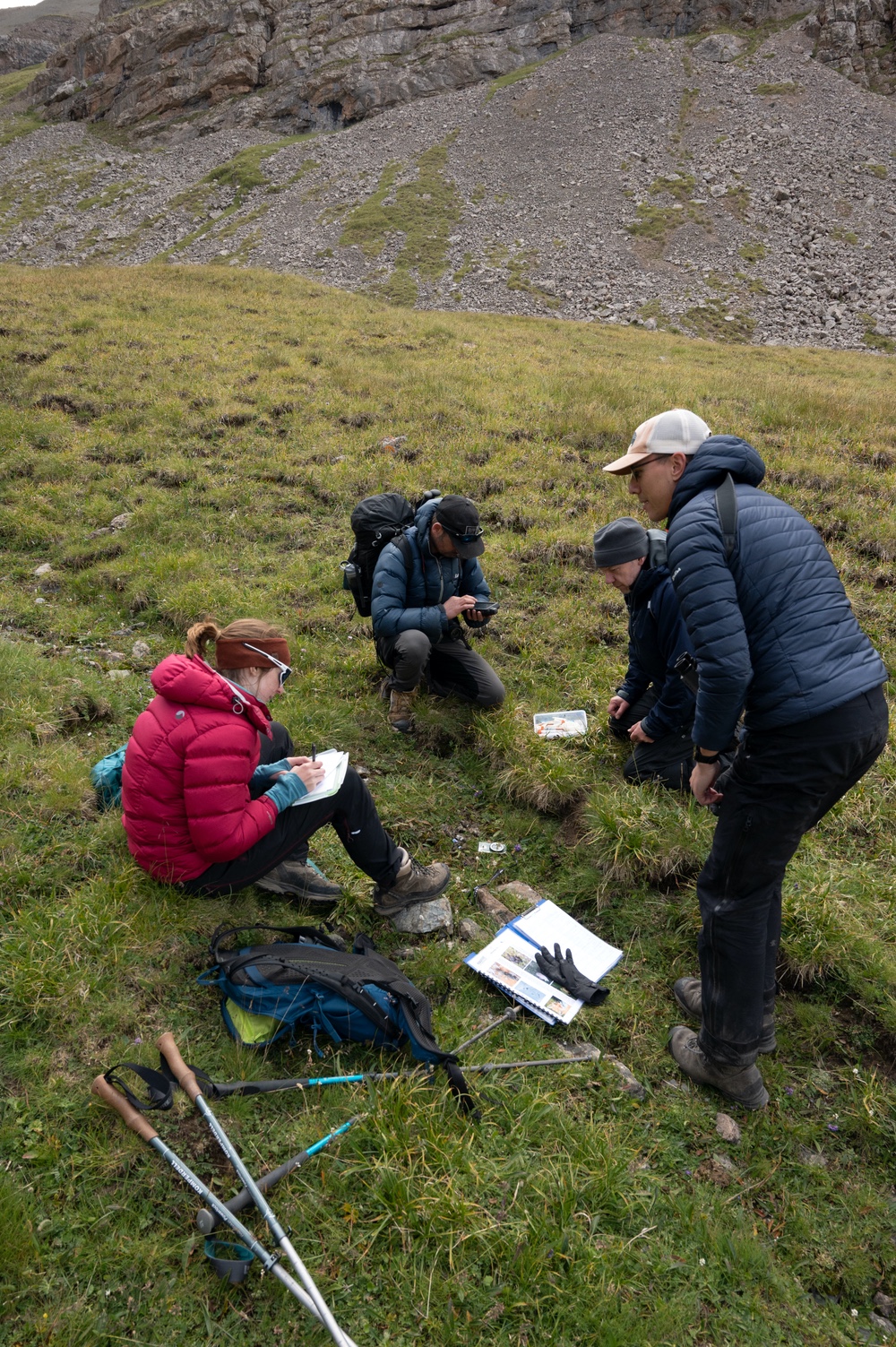
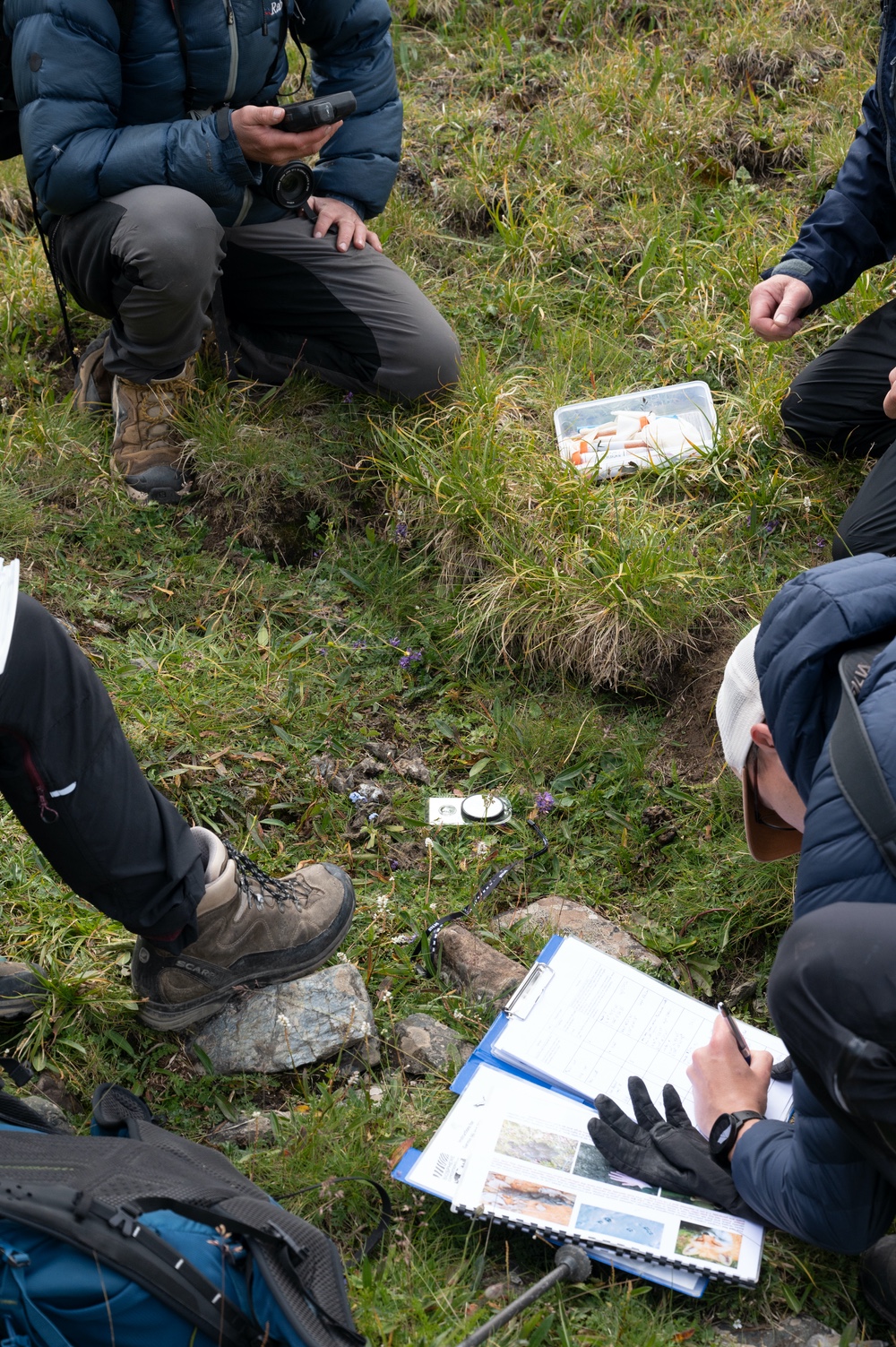
Taalei führte uns in die Forschungsausrüstung ein. Alle Entdeckungen musste ordentlich mit den neuen Tabletts fotografiert und eingetragen werden. Anzeichen von Schneeleoparden mussten im Tablet und im GPS gespeichert werden. Wir alle wussten nicht, wie bald dass passieren würde.
Am nächsten Tag stand der erste Ausflug in die Seitentäler an. An einer Tafel in unserer Jurte standen drei verschiedene Ziel nach Schwierigkeit sortiert und jeder konnte sich ein Ziel aussuchen.
Ab nun begrüßten uns jeden Morgen die 4200 m hohen Berge um uns herum. Nach dem Frühstück die Ausrüstung gepackt und Ibrahim vom Team NABU sind wir dann zum Anfang eines Tals gefahren. Wir mussten unterwegs mehrere Wasserströme durchqueren und trafen auf Rinder und Pferde. Wir brauchten für die Strecke eine gute halbe Stunde, und dies wiederholte sich auf jeder Tour.
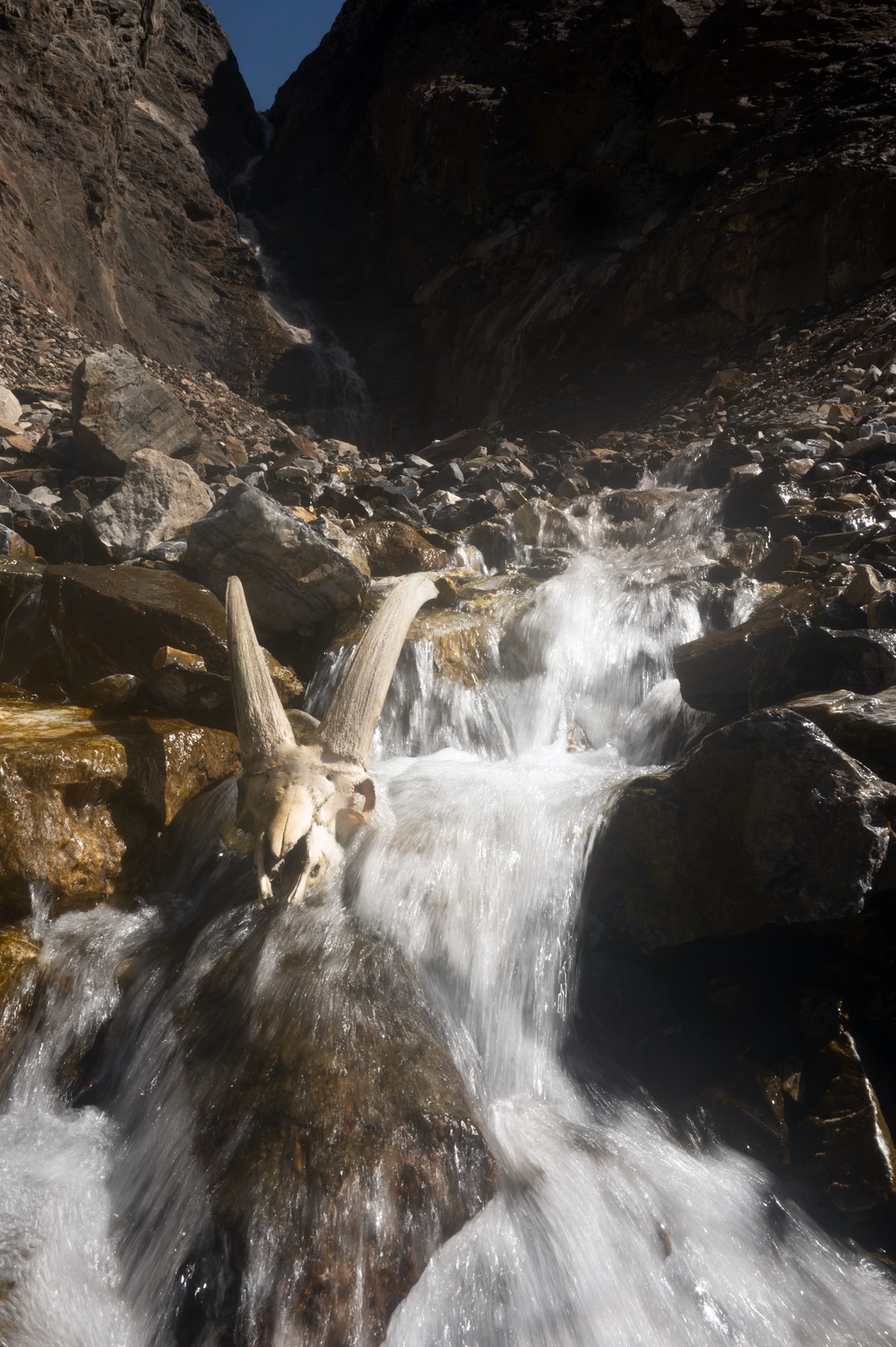
Am Seitental angekommen ging es für unser Team dem Wasserstrom entlang Richtung Berg. Erst an dutzenden Rindern und Pferden vorbei, die im Tablet dokumentiert wurden. Je höher wir kamen, desto steiniger wurde das Tal. Wege gab es natürlich nicht, aber dafür fanden wir einen Steinbockschädel. Nach zwei Schluchten konnten wir unser Ziel sehen, einen Bergkamm auf 4100 m. Auf diesem Kamm hofften wir, gute Plätze für unsere Fotofallen zu finden. Der Anstieg war sehr anstrengend, da die Steine immer kleiner wurden und ständig unter denn Stiefel nachgaben.
Leider musste ich mit Sander, einem Teamkameraden aus Amsterdam, bei 3940m aufgeben, da es doch zu anstrengend wurde und ich mich an die Höhe erst gewöhnen musste. Spencer, Lana und Ibrahim gingen noch weiter hoch, aber fanden leider keine geeignete Stelle für eine Fotofalle.
Jetzt mussten wir wieder herunter steigen, was auch kein Kinderspiel war. Dabei wurden wir von einem Bartgeier begleitet, der seine Kreise über das Tal zog. Bartgeier und andere Geier wurden von da an unsere ständigen Begleiter in den Bergen.
Im Camp zurückgekommen hatten alle Teams über ihre Ausflüge berichtet und zur Überraschung hatte Team Nr. 1 im Nachbartal auf 4000 m Höhe mehrere Markierungen mit Losungen von Schneeleoparden gefunden. Schneeleoparden markieren ihr Revier unter anderem, indem sie in Erde oder Kies mit ihren Hinterpfoten kleine markante Mulden scharen und gelegentlich hineinmachen. Natürlich war das eine kleine Sensation und ein gutes Zeichen für unsere weiter Expedition.
Am nächsten Morgen begann der gleiche Ablauf: die Berge bestaunen, frühstücken, Ausrüstung packen und zum nächsten Tal fahren, wieder die wunderschöne Aussicht genießen. Dann hieß es natürlich, dem Tal entlang den Berg hinauf wandern. Ein Wasserfall versperrte uns den Weg, So mussten wir ausweichen und uns einen neuen Weg suchen.
Leider war ich vom Vortag noch so erschöpft, dass ich wieder nicht bis zum Bergkamm kam und mit Spencer ein Stück zurückblieb. Zur Überraschung fanden Ayan, Alex und Mel wieder auf einen Kamm die Markierungen und Losungen eines Schneeleoparden. Wie auch zuvor wurden natürlich DNA- Proben von den Losungen genommen.
Im Camp zurück wurde die gute Nachricht wieder freudig bei der Besprechung geteilt, und alle waren sehr gut gelaunt.
Am nächsten Tag entschloss ich mich, wie andere auch, im Camp zu bleiben, und mich von den beiden anstrengenden Touren zu erholen. Natürlich stand im Camp auch Arbeit an, wie z.B. Wasser in Tonnen von einem Seitenstrom mit dem Geländewagen holen, die Toiletten umstellen und somit neue Löcher graben, Geschirr spülen, Tisch abräumen und Azman in der Küche helfen.
Freitags fuhren wir mit Ayan auf die rechte Seite des Flusses. Dort waren die Berge nicht so steil, aber die Täler dafür umso tiefer. Da das Tal tiefer war, war der Wasserstrom größer und wir mussten sehr oft durch das Wasser steigen. Es fing dazu noch an zu regnen. Wir kamen leider diesmal nur bis auf 3700 m Höhe. Wir fanden wie auf jeder Tour mehrere Steinbockschädel, wurden von Bartgeiern beobachtet und sahen einen Steinadler.
Samstags standen nur leichte Touren auf dem Plan, so hieß es. Diese Tour gingen wir mit Henry wieder auf der rechten Seite des Flusses. Leider startete die Tour mit einem starken Regenschauer und der Eingang des Tals wurde von einem Wasserfall versperrt, so dass wir am Hang entlang gehen mussten. Das war auf dem nassen Gras nicht einfach. Hinzu kamen noch unendlich viele alte Murmeltierbauten, die unter dem hohen Grass schlecht zu erkennen waren. Nachdem wir das Hindernis überwunden hatten, erreichten wir ein wunderschönes Tal, das von imposanten Felsen eingebettet war. Wir suchten mit unseren Ferngläsern die Felsen ab und Spencer erblickte dann auch Steinböcke, die wir alle kurz beobachten konnten bis sie in den Felsen verschwanden. Wir gingen das Tal weiter hinauf und natürlich fanden wir auch wieder Steinbockschädel. Auf 3800m Höhe öffnete sich das Tal in eine breite flache Fläche, die von einem Bach durchquert wurde. Rechts und links stachen die Felsen hinaus. Wir waren uns einig, eine oder zwei Kameras in die Felsen zu installieren. Auf dem Weg zu den Felsen, fand ich dann Abdrücke einer Katze. Ich rief den Rest der Gruppe zurück. Wir verglichen diese Spur mit Spuren in unseren Unterlagen und waren uns einig, dass es die Abdrücke einer Pallas Katze, auch Manul, genannt sein mussten. Natürlich schauten wir uns weiter auf der Fläche um und fanden viele weitere Spuren u.a. eine Wolfsfährte sowie die Losung eines Wolfes. Wir installierten die Wildkameras noch und machten uns auf den Rückweg, auf dem wir noch eine Losung mit Knochen und Haaren fanden.
Im Camp angekommen war die Begeisterung groß von unserem Fund, aber das andere Team konnte es noch toppen. Sie fanden im Nachbartal den Pfotenabdruck eines Schneeleoparden. Was für ein erfolgreicher Tag! Da Sonntag natürlich frei war, wurde zur Feier des Tages am Abend eine Flasche Wodka geleert.Aus einer Flasche wurden plötzlich sechs. Es wurde ausgelassen mit Musik aus den Autos gefeiert.
Am nächsten Tag war das Frühstück natürlich deutlich später. Nachmittags fuhren wir mit ein paar Leuten in die Berge.
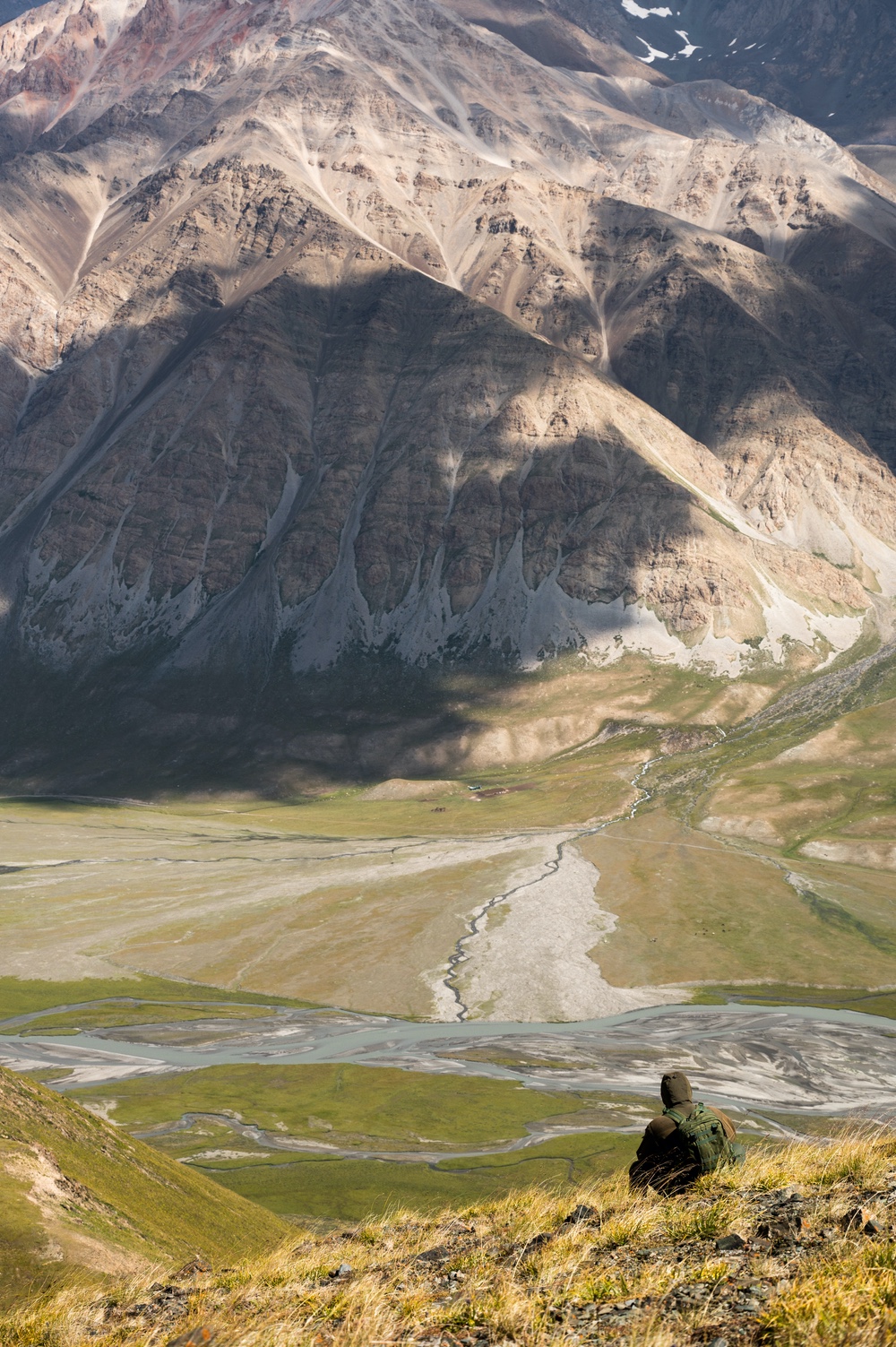
Montags stand natürlich wieder eine ordentliche Tour an. Wir starteten mit Ibrahim in ein Tal auf der rechten Seite des Flusses. Es ging direkt über Wiesen und den Berg hoch. Nichtsdestotrotz erreichten wir den Fuß eines felsigen Plateaus auf 3850 m Höhe. Stewart, Ibrahim und ich wollten oben auf dem Berg nach Wildkameras Plätzen schauen. Somit sind wir noch einmal 130 m höher über Felsen auf das Plateau geklettert. Oben angekommen, ergab sich eine spektakuläre Aussicht von fast 4000 m über das große Tal, und wir konnten sogar unser Camp sehen. Da wir einige Steinbockspuren fanden, entschlossen wir uns, am Rande des Plateaus eine Kamera aufzustellen. Nach einem schwierigen Abstieg vom Plateau, gingen wir wieder mit allen zusammen hinunter. Am folgenden Tag war das Ziel meiner Gruppe, zwei Wildkameras auszuwerten, die ein Team in der vorhergehenden Woche aufgestellt hatte. Wir fuhren mit Ayan die rechte Seite des Flusses entlang. Am Seitental angekommen, überprüften wir das GPS, um die genauen Standorte zu sehen. Auf der rechten Flanke, ganz oben auf dem Kamm, waren die Kameras. Von unten schauten wir nach einem geeigneten Aufstieg und besprachen uns. Lana, Sander, Spencer, Ayan und ich waren uns einig, die direkte, aber steile Route zu nehmen. Zuerst kamen wir gut hinauf, aber je höher wir kamen, desto steiler wurde der Berg. Nach ein paar hundert Höhenmetern, wurde das Gelände felsig. Wir mussten auf allen Vieren mit ein paar Klettereinlagen die restlichen Höhenmeter überwinden. Oben am Kamm angekommen, zeigte sich uns erneut eine spektakuläre Aussicht. Es überraschte uns ein starker Wind, gegen den wir uns lehnen mussten. Wir gingen in Richtung Kameras an einem Felsen vorbei. Als ich genauer hinschaute, entdeckte ich mit großer Freude zwei Mulden am Rande des Felsens und rief den Rest der Gruppe zu mir. Wir waren uns einig, dass es eindeutig die Markierung eines Schneeleoparden sein musste. In einer Mulde fanden wir sogar zwei Losungen mit kleinen Knochensplittern und Haaren. Natürlich nahmen wir eine Probe zur DNA- Untersuchung. 50 Meter weiter fanden wir noch eine Losung, die deutlich frischer erschien. An der ersten Wildkamera angekommen, checkten wir diese, aber leider waren keine Aufnahmen auf der Speicherkarte und auf der zweiten ebenso wenig. Hierzu sei angemerkt, dass die Kameras hingen nur ein Paar Tage dort hingen. Wir waren zuversichtlich, dass die Plätze gut gewählt waren und es nur eine Frage der Zeit sein würde, dass der Schneeleopard dort wieder vorbeikomme. Mit einem guten Gefühl traten wir den Abstieg über ein Geröllfeld an, das bestimmt 400 Höhenmeter hinab ging. Danach folgten wir dem Wasser dem Tal entlang, bis wir wieder erfreulicherweise unseren Land Cruiser sahen. Erschöpft im Camp, wurde natürlich in der Jurte bei der Besprechung alles berichtet. Ein anderes Team hatte ähnliche Erfolge. Donnerstag war abends eingroßes Fest geplant. Die Gruppe, die zwei Wochen vor uns im Camp war, hatte die großartige Idee, Einheimische aus dem Tal einzuladen, um ihnen näher zu bringen, was wir eigentlich in ihrem wunderschönen Tal so machten. Damit wir noch für den Abend einiges vorbereiten konnten, war nur eine kleine Tour geplant. Das letzte Seitental auf der rechten Seite des Flusses. Das Ziel war es, das Tal ein wenig zu erkunden. Bis dato war noch Niemand aus der Expedition in diesem Tal gewesen. Also gingen wir das Tal locker an und erreichten über viel Geröll ein weites Tal mit einem Gletscher am weiten Ende. Wir begaben uns an den Rand des Tals auf ca. 3800m Höhe und beobachteten die Landschaft mit der Suche nach Steinböcken. Wir fanden jedoch keine. Natürlich begleiteten uns wieder Geier kreisend über uns und ein Steinadler, der knapp über dem Boden nach unaufmerksamen Murmeltieren suchte. Wieder fanden wir verschiedene Steinbockschädel. Andere Knochen waren darunter nicht zu finden, da es sich bei diesen um die Leibspeise der Bartgeier handelte.
Zurück im Camp, fingen wir mit den Vorbereitungen für unsere Gäste an. Azman bereitete einige Leckereien für die Erwachsenen und Kinder vor. Da das Wetter leider nicht ganz mitspielen wollte, wurde die Veranstaltung in eine Jurte verlegt. Wir stellten alle unsere Bänke und Hocker so auf und ein Beamer de durch zwei Autobatterien seinen Strom erhielt. Am Abend strömten etwa 40 Einheimische aus allen Ecken des Tales in unser Camp. Sie kamen mit Pferden und alten Mercedes Transportern und brachten ihre Kinder mit. Nach einer gewissen Zeit war die Jurte komplett gefüllt und Taalei startete die Präsentation. Diese hatten Heather und Lou vorbereitet und mit verschiedenen Bilder gespickt. Henry vertrat die Biosphere Expedition, die Jungs vom Nabu stellten sich vor, Alex und Mel vertraten uns als Expeditionsteilnehmer. So erfuhren die Einheimischen die Beweggründe unserer Arbeit in den Bergen. Wir erfuhren ein wenig über ihre Probleme mit den wilden Tieren, wie z.B. den Wolf und die Schneeleoparden. So endete nach einigen Stunden ein wirklich gelungener Abend, der für viel Verständnis auf beiden Seiten sorgte. Unsere Reise neigte sich dem Ende zu. So hieß es am Freitag: Abbauen. Die Jurten, Duschen und Toiletten mussten abgebaut werden. Alles musste im NABU Lkw verstaut werden. Nach dem Azman uns ein letztes Abendessen zubereitet hatte, trafen wir uns alle auf dem Hügel neben dem Camp und aßen dort ein letztes Mal zusammen mit dem Blick über die wunderbaren Berge des Tien-Shan Gebirges, in welchem wir so viel Zeit miteinander verbracht hatten. Eine letzte Nacht im Zelt bei Minusgraden stand uns noch bevor, als es am nächsten morgen in Richtung Bischkek ging. Am Morgen packten wir unsere Zelte halb gefroren in den Lkw und unsere Taschen in die Land Cruiser. Dann ging es los. Leider verlief der Rückweg nicht so gut wie die Hinfahrt. Der Toyota, den ich fuhr, hatte ein Problem und ging immer wieder aus. Wir entschlossen uns, ihn bis es wieder bergab ging, mit dem NABU LKW abzuschleppen. Über dem Berg angekommen, ließen wir ihn mit dem Rest der Leistung noch bis zur ersten Tankstelle rollen. Das Gepäck umgepackt und den Land Cruiser stehen gelassen, fuhren wir weiter. In Bischkek erreichten wir schließlich unser Hotel, von wo aus wir zuvor auch unsere gemeinsame Reise gestartet hatten. Ich glaube, ich habe die Worte „Dusche“ und „Bett“ sehr oft gehört. Darauf freuten wir uns alle. So entluden alle ihr Gepäck dementsprechend schnell. Ein paar von uns hatten sich in andere Hotels eingebucht, so dass sich ein Teil der Gruppe bereits verabschiedete. Der größte Teil aber verabredete sich für ein Treffen am Abend in demselben Restaurant wie vor Beginn des Abenteuers. So verbrachten wir alle noch einen wirklich herzlichen Abend zusammen bei gutem Essen und Getränken, bevor wir uns voneinander verabschieden mussten.
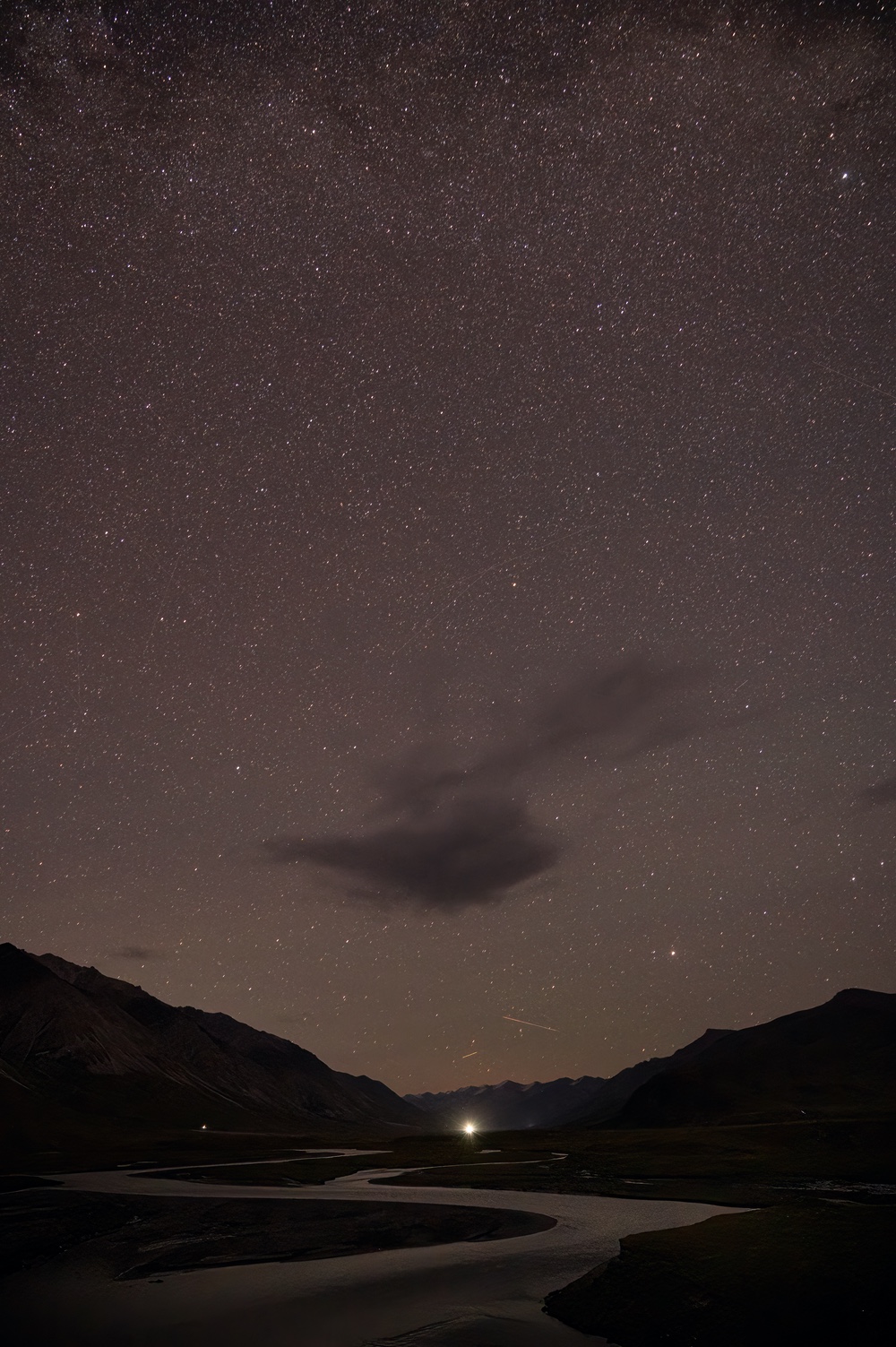
Ein paar Worte zum Schluss. In Kirgisistan habe ich die besten Wassermelonen meines Lebens gegessen, ich bin auf den gleichen Wegen wie der Schneeleopard gegangen, habe den schönsten Sternenhimmel aller Zeiten gesehen, aber die Höhe sollte man nicht unterschätzen. Ich kann diese Expedition jedem empfehlen, der ein Faible für Natur, Berge, Tiere, Landschaft und Teamarbeit hat. Es verlangt einem körperlich tatsächlich viel ab. Ich persönlich hatte keine direkten Symptome der „Höhenkranheit“, jedoch hatte ich die ersten fünf Tage mit Appetitlosigkeit zu kämpfen, was sich natürlich mit starker körperlicher Anstrengung nicht gut vereinbaren. Es war nichtsdestotrotz eine unvergessliche Zeit mit tollen Menschen und ich bin sehr dankbar für diese einmalige Erfahrung. Ich wäre jederzeit bereit, dieses Abenteuer noch einmal zu bestreiten und ich werde es.
The curious snuffling of a foraging trunk and the distant muffled crunching of leaves and branches, the hum of busy insects and a cotton-white blanket of morning mist hugging the dense, muggy jungle… these are some of the sensorial memories that drift into my mind when locked inside a small apartment in Barcelona during the confinement that began in March.
Just a few months earlier, the strict lockdown of my four walls was instead a remote Karen Hill Tribe village in the north of Thailand, a 5-hour drive from Chiang Mai. For nine inspiring days I stayed in Naklang, a temporary new member of its population of 450, and worked as a ‘citizen scientist’ for an elephant welfare project established by Biosphere Expeditions – a non-profit and award-winning ethical conservation organisation that celebrated its 20th anniversary in 2019.
Citizen science is a relatively new term that describes lay people working alongside scientists to conduct valuable field research with the aim of improving and protecting nature and wildlife around the world.
Biosphere Expeditions has partnered with the Kindred Spirit Elephant Sanctuary (KSES) in Naklang, working together to rescue elephants from the often-punishing reality of elephant tourism camps in Thailand, and re-wilding as many elephants as possible.
Our team for the nine-day expedition is made up of ten people; six citizen scientists from around the globe, who are taught how to observe and collect data by the founder of KSES and their resident scientist, and guided in the field by two Biosphere Expeditions leaders.
We get to study and spend time observing KSES’s semi-wild herd of five elephants; 59-year old Too Meh and her 24-year old daughter Mae Doom, Too-Meh’s grandsons, 14-year old Dodo and the 8-year old tearaway Gen Thong, and their adopted family member, 14-year old Boon Rott.
This slideshow requires JavaScript.
By studying semi-wild Asian elephants in safe and natural surroundings, Biosphere Expeditions and KSES can create a rigorous scientific report detailing diet and authentic wild behaviour – the report can then be referred to and presented as a benchmark for the proper treatment and welfare of elephants in Thailand.
Each morning, after an early breakfast and preparing our gear for the day – stopwatches, data sheets, lunch – we hike into the forest, past terraced rice paddies and water buffalo loping in the river, into the general area where the elephant herd is roaming, always within range of their respective mahouts.
This slideshow requires JavaScript.
Every elephant has a close bond with their mahout – normally a local man who has known the elephant for years – and this relationship ensures that human/animal conflict is avoided and dangers such as ingesting pesticides from cornfields is mitigated. The elephants live as though they would in the wild, albeit for this human safeguard.
Once the elephants are located in the forest, the expedition team separates into smaller groups and each group collects a different set of data, covering activity, behavioural data and diet. This information will form the basis for scientific reports advising on the correct care of elephants. A concrete example of this is that the data shows that elephants consume up to 248 different types of foliage in the wild. Compare this to a tourist camp diet that may consist solely of bananas or sugar cane and the poor health implications are obvious.
In terms of behaviour, we observed over the course of the expedition how social the elephants are, spending hours of each day together, interacting in a variety of ways. In contrast, some tourist camps work the elephants for long hours and then keep them apart from each other, starving the animals of social attention and comfort.
The partnership between Biosphere Expeditions and KSES couldn’t be more vital as today there are more domestic elephants in Thailand than there are wild elephants, caused by the usual culprit of loss of habitat, combined with the cultural perception of elephants as property.
This slideshow requires JavaScript.
Another aspect of the Biosphere Expeditions and KSES project is monitoring general biodiversity and fostering the participation of local people in the protection and conservation of elephants through education initiatives and community-based tourism, which prioritises the development of local communities.
The Karen people, our hosts for the expedition, are unfailingly warm and sociable, opening their homes and inviting us to join them in their daily lives. We learn about and buy examples of their traditional weaving, enjoy their food, absorb a few phrases from their ‘Pakinyaw’ language, and can understand first-hand their intimate relationship with elephants.
This slideshow requires JavaScript.
Now the world has changed so dramatically, it throws into stark relief how delicate the balance between humans and nature is. The coronavirus crisis shocked the planet and triggered an unprecedented halt in ‘business as usual’ in the industrialised world. One of the few silver linings of the pandemic has been the brief respite given to the natural world and its wildlife, with ecosystems all over the world given a chance to recover, at least momentarily.
Biosphere Expeditions have 13 projects running worldwide, ranging from leatherback turtle conservation in Costa Rica to protecting the snow leopard in Kyrgyzstan, and never has their work been more vital.
Travel itself will likely change in the aftermath of COVID-19, with many people wanting to contribute towards a more conscious form of tourism. The fragility of our existence and the degradation of the planet is inarguably evident for all to see. Hopefully there will be an increase in travellers supporting community-based tourism and embracing experiences that promote social and economic growth in marginalised regions and which protect and conserve wildlife and the natural environment.
Dr. Matthias Hammer, the Founder and Executive Director of Biosphere Expeditions says, “We have spent the last twenty years helping to build the data that improves the chances for wildlife. And we will continue to do this essential work. Without the science underpinning our understanding of the world, we cannot make rational choices in support of its future.”
Taking part in a Biosphere Expeditions project is an unforgettable experience, but if it’s not possible just yet, there is always something you can do to contribute. Biosphere Expeditions have 20 tips on how to be (radically) green, and also a Do More campaign or tips on how to beat the volunteer charlatans. Also check out their 2020 Magazine, which mirrors this new development of more activism and campaigns for our planet.
As the coronavirus pandemic has a stranglehold on the planet, travel plans have had to be cancelled everywhere. Even those where people help nature conservationists during their holiday time as citizen scientists.
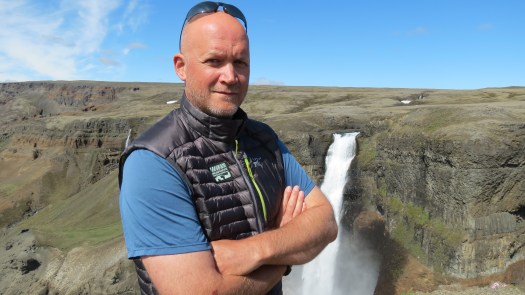
Dr. Matthias Hammer, Executive Director of Biosphere Expeditions
Laufmann: The corona pandemic seems to be giving nature some breathing space. That must please you as a nature conservationists, right?
Dr Hammer: Of course! I am very happy about nature being given a chance to recover for a change, instead of the continuous assault of the last decades. There is also the hope that humanity as a whole will stop to ponder for a while. That we realize it is possible to work from home, to fly around less, etc.
What’s the situation like in nature conservation?
Well, for us, for our citizen science / wildlife conservation expeditions, the effect is of course that we won’t be able to carry out any projects in 2020. But that is the lesser of two evils. The bigger evil is the situation of our local partners.
How come?
It is much worse for our local partner organisations. In the developed world, we can apply for state aid. Besides, we are a very lean organization. We don’t have large offices which we have to pay rent for and the like. Our running costs are very low. State aid, as limited as it may be, helps us a lot. But our local partners are in a difficult situation. There, there are by and large no such programs. And much of their income has disappeared. For example in Enonkishu, a conservancy in Kenya, their main income is the fees that tourists pay when they come into the reserve. This has dropped to zero practically overnight, so they now have a reall challenge on their hands to keep paying their rangers and other staff. And if no rangers are being paid, how do they fight poaching? Not only that: the increasing poverty through the crisis also increases the pressure from poaching as cash-strapped people go in search for bushmeat, for example.
So what does this mean?
There are two sides to it: It’s both a chance and a challenge. On the one hand, it’s a chance for nature to recover, because there are no visitors. In the Red Sea, for example, the water is clear and the reefs are recovering, as the ecosystem remains largely on its own, because of course there are no divers or tourists causing disturbance. On the other hand, the lack of money is a real problem, as I explained earlier. Conservation costs money.
How can we counteract this? Both on a large scale and you with Biosphere Expeditions?
We are a relatively small organisation. Our influence is correspondingly small. At best we can do something on the ground with our partners and bring money and, of course, manpower to advance their conservation projects. But since this has now ground to a halt, we have also started a fundraising campaign. Our project partners have written a few lines about what they currently need money for; where their need is greatest. And I have been surprised by how generous people are despite, and perhaps because of the crisis. For our partners this really is a godsend in their hour of need.
How does Biosphere Expeditions deal with the fact that there are now those calling for a fundamental change in the way we travel?
Air travel in itself is of course bad for the environment. There is no question about that. If there are no contrails in the sky, everyone has a basic understanding that this must be good for the planet.
How does Biosphere Expeditions deal with this dilemma?
We have several approaches. First, it is a fundamental concern of ours to eliminate ourselves in the long run. In other words, we want to advance projects to a point where we are no longer needed. Take the Maldives, for example: via expeditions there for eight years, we have established a non-profit organisation (www.reefcheckmaldives.org), which is now entirely run by locals. The reef research that we have done with volunteers is now under their leadership. Point two is that we encourage our participants to offset their carbon footprint. I am aware that this is also under criticism, but as part of the mix, I believe it is a positive thing. We as an organisation naturally compensate for the CO2 our activities produce as well. Thirdly, we must not forget that the alternative to tourism is often the chainsaw or total overfishing. In other words, nature conservation takes place because there’s an economic benefit for local people to intact wildlife and wild places. This is what we conservationists call the ‘what pays, stays’ principle, whether it is via safari tourists or through citizen science projects. It’s too shortsighted to reduce everything down to CO2 exclusively, although we must keep an eye on this. The world is more complicated than just CO2 budgets.
How will the pandemic influence your citizen scientist projects?
That’s a difficult question to answer. The crisis will be with us for a long time; years rather than months. We have contingency plans in case expeditions are still impossible right through to 2022. How people’s behaviour will change… I wouldn’t want to predict this as this is not my area of expertise. But I do believe that the desire to do something useful in your holiday time will keep increasing in people. This was already evident before the pandemic and will hopefully get a further boost now.
Is this the end of tourism?
I am afraid not. As soon as lockdown restrictions are relaxed, people will by and large fall back into old habits. Still, it would be nice if humankind could become significantly more mindful through this crisis.
What should politicians do to support nature conservation and environmental protection in times like these?
On no account lower environmental standards! Under no circumstances save the big polluters. The money that is saved by not bailing out destructive corporations should be put to good use elsewhere in combating climate, the other and more dangerous challenge humanity faces, and preventing destruction of wildlife and wild places. We need the planet as the basis of all life and economic activity. For on a run-down planet, there will be no life worth living and no economy to speak of.
How does someone use their time during lockdown?
There are lots of ways to help from home as well. Citizen science also works during lockdown. You could for example analyze photos of animals or galaxies, or provide computing power for virus research. The possibilities are endless.
How an almost dead landscape is transformed back into a wildlife paradise by livestock – by Christiane Flechtner
Kenya – Kunsang Ling looks through her binoculars. What the Canadian sees makes the corners of her mouth move upwards: “A cheetah with six young animals,” shouts the 38-year-old to her team in the 4×4 vehicle. Just a few years ago, this region of Kenya consisted of little more than barren earth. Dead, dusty land devoid of life. But little by little, the grey is changing into green – and with it zebras, wildebeests and antelopes are reclaiming their former territory.
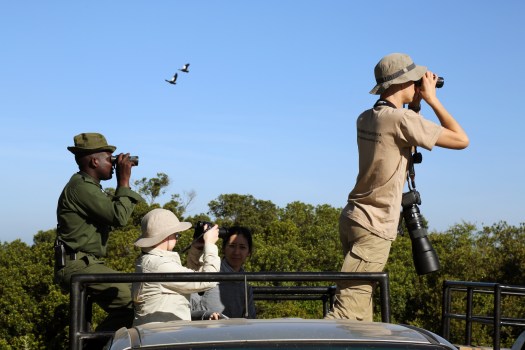
Counting wildlife from the back of a 4×4 (c) C. Flechtner
The Canadian is one of twelve international citizen scientists on a wildlife conservation expedition to Kenya, conducted for the second time by the non-profit nature conservation organisation Biosphere Expeditions. The organisation is known for its successful involvement of lay helpers in species conservation projects worldwide and has been working hand in hand with people and biologists in various project areas since 1999 – including the Enonkishu Conservancy in southwest Kenya. “We want to help scientists to conduct their research projects successfully,” explains Malika Fettak, the NGO’s expedition Leader in Kenya. “To this end, we recruit motivated people who help collect data and help hands-on during their holidays.”
Widlife of Enonkishu, all photos (c) C. Flechtner
This slideshow requires JavaScript.
Kenya is one of the countries with the highest population growth worldwide. From 1960 to 2017, the number of inhabitants rose from 8.1 million to 49.7 million – an increase of a full 513 percent. In the next 25 years, the number is expected to double again. The country is groaning under the burden of a overpopulation and the associated expanding infrastructure, which increasingly encroaches on animal habitats. In just three decades, the species-rich country has lost almost 70 percent of its wildlife – on the one hand through the destruction of its habitat, and on the other through the effects of climate change with extreme droughts.
The 1,700-hectare area of Enonkishu Conservancy, located around 240 kilometres south-west of the capital Nairobi, also since ceased to be a habitat for wild animals. It is a buffer zone between the famous Mara Serengeti ecosystem and civilisation.
The land belonged to 32 different landowners, who used it as farmland for corn or bean cultivation and cattle breeding – and overused it enormously. The excessive number of livestock led to extreme soil erosion. In order to counteract the devastation, the landowners joined together in 2009 to form a community and transformed the area into a conservancy, a protected area jointly managed by the local population.
The thousands of years old behavioural patterns of wild animals served as a model for rewilding of the area: “Here, the great migration of the wildebeest through the Serengeti has been imitated on a small scale,” explains the expedition leader. The wildebeest not only loosen the soil with their hooves, but also fertilise it with their dung. Then they move on, and the grazed green grass can grow again. “Here in Enonkishu, they leave this task to the cattle – they systematically let them graze in certain areas and then drive them on. Within just a few years, dead earth transformed into a green oasis, from which not only the landowners benefit, but also the wild animals,” says Fettak happily.
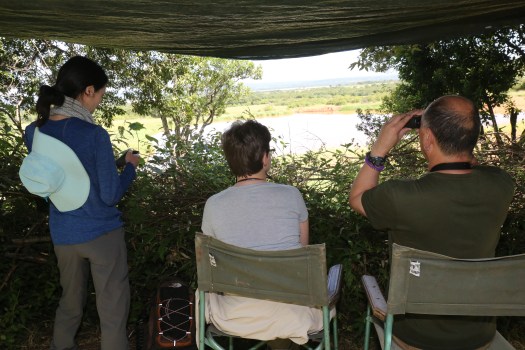
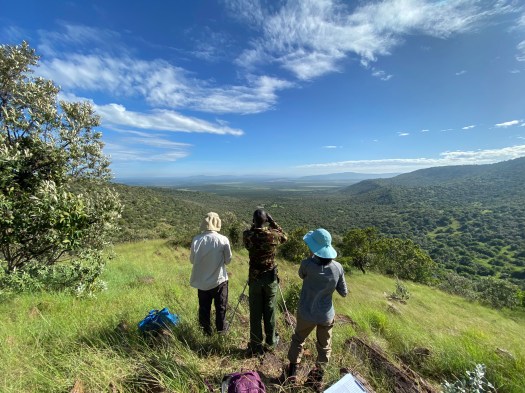
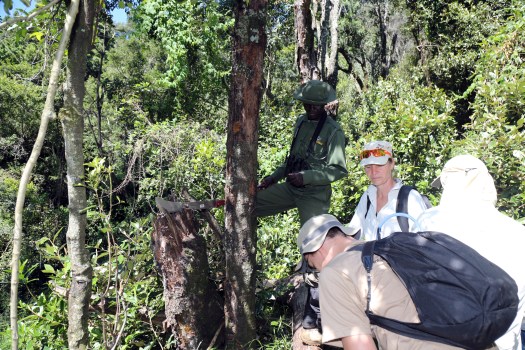
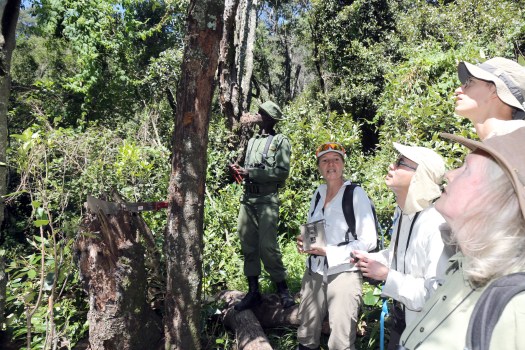
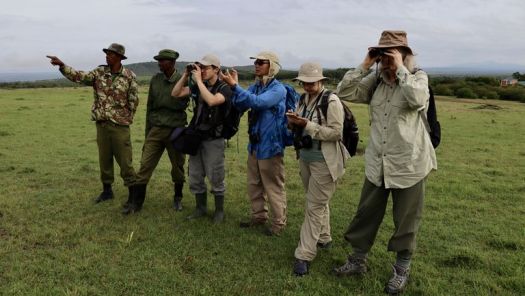
The job of the expedition participants is to collect data to provide figures to document the return of the wild animals. While Kunsang, together with Matthias Herold from Germany, Sirpa Lahtinen from Finland and Kathy Haan from the USA, observes the waterhole for several hours from a hide using binoculars, GPS devices and rangefinders, ranger Albert Ngetich, together with Canadian Brian Oikawa and Dutchman Paul Serail, set off on foot to the summit of Kileleoni Hill to observe the area from a bird’s eye view. The third group checks camera traps for pictures of nocturnal animals.
Waterhole obervation (c) C. Flechtner
Hill top obervation (c) C. Flechtner
On the way to a research activity (c) C. Flechtner
Checking and setting a camera trap (c) C. Flechtner
Checking and setting a camera trap (c) C. Flechtner
Checking and setting a camera trap (c) C. Flechtner
The results are quite impressive: The wildlife numbers have proliferated within a year. “The whole thing has developed a momentum of its own,” says the expedition leader. “The landscape has turned into a paradise where farm animals and wildlife can live peacefully side by side,” says Fettak. A positive side effect is that tourists are also discovering the area for themselves and supporting Enonkishu with their entrance fees to the protected area.
It may even be possible to find imitators of the sustainable concept elsewhere. It would be good for the densely populated country, and with the acceptance of wildlife and its benefits for people, this will be a chance to increase already scarce wildlife habitat bit by bit.
“It’s not a safari”, Biosphere Expeditions warned in advance. It was an adventure.
Cheetah (c) Paul Serail
Those who go on safari are driven around the savannah for a day by a guide. I went to Kenya for science. With twelve citizen scientists we counted zebras, wildebeest, giraffes and other cool animals in the Enonkishu Conservancy nature reserve.
How far is that wildebeest? Editor Paul Serail, third from left, measures the distance. (c) Paul Serail
Then you should also set out on foot. And not all animals on the savannah are harmless. As I walked into the bushes to take a pee, an irritated elephant hooted furiously nearby. Oops. During another walk I really had to run it twice for an elephant.
Hippos are the most dangerous
How do you get through your expedition safely? Tip 1: stick together. Tip 2: keep your distance from the animals.
But what should you do if the animals do not keep their distance from you?
Hippos are the cause of most casualties in Africa. A hippo usually flees to the water. Therefore, make sure you never stand between a hippo and the water.
If you leave elephants alone, they will leave you alone. Mostly. (c) Paul Serail
Elephants pretend to attack
Stressed elephants often perform a fake attack, then stop and make themselves big. They shake their heads “no” and rake the ground with one foot. They can also trumpet at the same time. The right solution: get out.
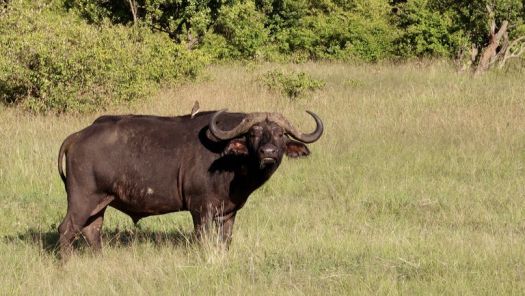
Buffalo, especially the bulls, have a short fuse. (c) Paul Serail
If you stay, it can happen that an elephant really attacks. He does this without sound, with folded ears for extra speed and with the tusks ahead. Running makes no sense, because the elephant will win that competition. Stand still, make yourself tall and yell, “Stop!” It works, I am told.
Buffalo do not fake attack. You better stay far away from the animals to avoid misery.
Whoever runs away from a lion is prey
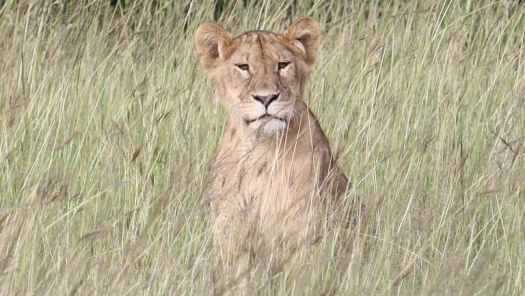
Has she already eaten? (c) Paul Serail
If a lion comes across as slightly interested, stand still. It will be difficult, but otherwise the hungry hunter sees you as prey and you don’t want to be that. It can be wise to make yourself big and shout loudly. Then you come across as a threat, rather than a meal.
Other expedition pictures, all (c) Paul Serail
This slideshow requires JavaScript.
Do you also want to go on an expedition? You can. Biosphere Expeditions organises volunteer trips in nature. From diving to coral reefs to the mountains where snow leopards live. And everything in between.














 Biosphere Expeditions: blogs from the frontline of wildlife conservation and the fight for a more sustainable planet