Award-winning, non-profit and ethical wildlife conservation volunteering. Advancing citizen science and conservation since 1999 – for nature, not profit.
As a wrap-up for the 2024 expedition, we thought you would like to know what our scientist Dr. Jean-Luc Solandt said to Reef Check:
During the 2024 expedition we had to operate near to Guraidhoo (four sites) for most of the week due to the high winds. We also surveyed Bandos Island in N Male’ atoll.
Surprisingly reasonably healthy reefs just near to Guraidhoo island (Guraidhoo backreef) where we saw considerable damage in 2022 after the construction of the infilled back reef (see this report). In some (particularly back reef) reef areas there appears to have been dominance of lifeforms other than Acropora – moving towards non-Acropora genera such as Porites rus and Porites cylindrica that are also dominant at Baybe’s.
Porites species dominance
This was evident at Guraidhoo back reef. Guraidhoo fore reef, however, has not recovered its pre-development coral reef condition. Perhaps because the conditions are not suitable for both sediment and wave-action tolerant coral lifeforms such as Porites rus.
These patterns will be discussed in the 2024 report.
The 2024 expedition is done. Instead of waxing lyrical again, why not let some of those involved speak:
Thank you to all of you involved in the expedition. Thank you for making it possible through your input of time and money. Thank you for helping to build a unique dataset, telling a significant story of hope in what can sometimes be a bleak world of nature conservation, especially for coral reefs. We will have to see what comes of it.
So finally, honour where honour is due, here they are, our heroes of the reef:
Four days into the expedition, we’ve hit the groove. The first couple of days were intense, as always – cramming fish ID, invertebrates, substrate, coral disease & impact into citizen scientists’ brains, no gain without pain, late night sessions, tests, re-tests, success, until it all drops off and we can get into the real work of surveying. Well done to the team for rising to the challenge.
Yesterday, we did a test survey and this group of citizen scientist divers quietly got on with the job so well that our professional scientist Jean-Luc accepted the data. More surveys today, despite the squalls and the currents. Now, as night has fallen and I type away, they are on a night lazy dive, meaning there’s no surveying involved. Whether this is a reward or not, I am not sure.
The story from the Maldives that seems to be developing here, may be one of global significance, with echoes of it around other places in the tropics. The inner reefs, built over millennia in shallow waters, are suffering and increasingly seem doomed by climate change. Their corals simply cannot cope with the higher temperatures, gradually fading and dying, leaving space for other lifeforms to take over. Lifeforms that do not build reefs, so ocean rainforests turn to monocultures devoid of much life except a few specialised species. The outer reefs, however, exposed to colder waters from the open ocean are more resilient. But here too a great shift seems to be going on – the corals that cannot tolerate warmer waters fade away; the ones that can cope better with warmer waters survive and take over the vacant spaces. Evolution in action, reminiscent of a great city where gangs fight for turf and survival.
Does that mean that the outlook for reefs is not as bleak as it seems? Who knows. We need more time to study this, compare it to other parts of the world and draw conclusions. Whether we have the time to do this is another story. The supertanker is heading towards the harbour wall at full speed and nobody has turned the rudder around so far – far from it. Whatever we do, the corals themselves will provide the answer over time. The planet itself does not care what we humans do to it anyway. It’s been through much bigger upheavals and it is still the insignificant speck of dust it has always been at the edge of the great expanse of time and space.
But right here, in our very own great expanse of blue and azure, on this liveaboard, with this team of enthusiastic and capable citizen scientists and newly qualified Reef Check Ecodivers, it means our dives are not depressing at all. We’ve seen healthy reefs with healthy corals. Some bouncing back from development and other stresses, some quietly doing their thing despite the climate upheavals above the water.
So we dive right in, lay our 100 m line of science, count the fish, invertebrates, corals and much more along it and come out smiling. And that really is a reward, well deserved by all those on board who have opted to be small cogs in the wheels of reef research and conservation. Thank you for this.
We’re here, we’ve set up and all is well. It’s a muggy 30 C and there is rain forecast tonight. This won’t change much over the week.
Here are a few names to remember: Most importantly there’s Dileepa (cook), Randika (waiter), Mox, Antoine, Lorae (dive guides), Lukas (deck hand), Jean-Luc (scientist), Matthias (expedition leader), as well as a few other crew who are here to make sure the expedition runs smoothly.
All it needs now is you, our citizen scientists. Safe travels and we’ll see you at 11:00 at the Coffee Club tomorrow. Be prepared for a mind dump, some hard studying and exams at teh end, before we let you lose on the data collection.
Our 14th Maldives coral reef and whale shark expedition is about to start in a few days. I am Dr. Matthias Hammer, your expedition leader and founder & executive director of Biosphere Expeditions, and I look forward to meeting you all in Male’ soon.
Our expeditions scientists is Dr. Jean-Luc Solandt of the Blue Marine Foundation. Together we have run this expedition for longer than we both care to admit. In fact, we are practically married (and since we are both old, grumpy, single farts, who knows what bells will be tolling on board ;).
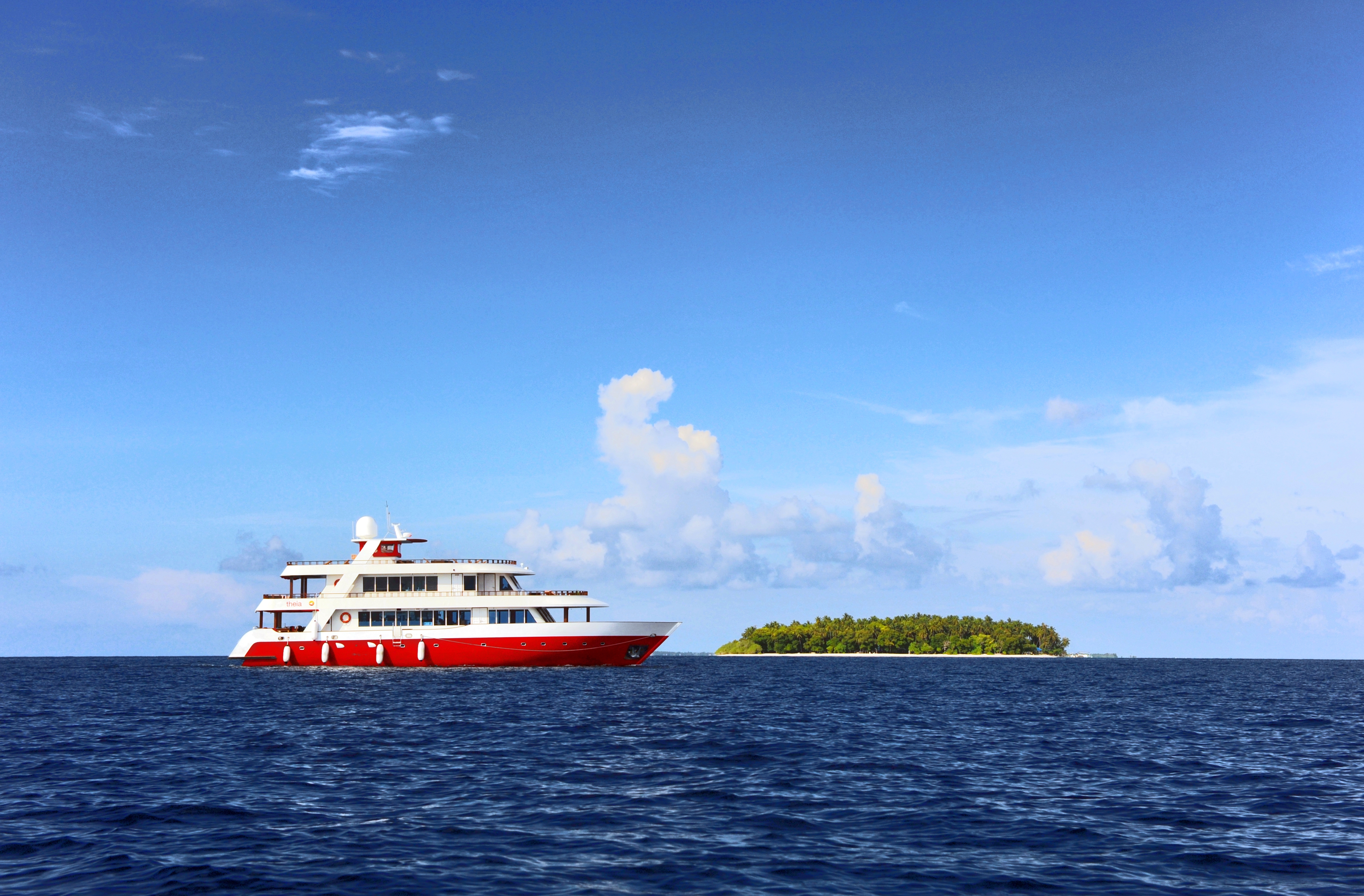
We’ll be 24 hours ahead of you to set up and get our beautiful liveaboard yacht and research base ready for you.
You can see our itinerary here and I hope you have all swotted up on the Reef Check methodology. The more effort you put in now, the easier it will be during the intense knowledge dump that will happen during the first couple of days. Don’t forget either that you must complete the online immigration formprior to departing for the Maldives.
Anyway, we’ll see you at the airport assembly point soon.



 Biosphere Expeditions: blogs from the frontline of wildlife conservation and the fight for a more sustainable planet