Azores expedition 2026: Baleen baptism

Update from our marine conservation volunteering holiday in the Azores archipelago, working on whales, dolphins and turtles

A group of people sitting around a table
Group 2

Welcome to group 2 – our most diverse (in terms of nationalities) this year. This includes our Singaporean quartet and our local student placement from Portugal.

Three people sitting in a boat on the ocean, looking at the water
On the lookout for cetaceans
Continue reading “Azores expedition 2026: Baleen baptism”

Azores expedition 2026: Fluking festival

Update from our marine conservation volunteering holiday in the Azores archipelago, working on whales, dolphins and turtles

A group of people standing on a boat smiling into the camera
Group 1

Successful sightings have continued for our last two days at sea.

Tuesday continued the theme of blue, fin and minke whales. We have now had more minke encounters in the past four days than I have had in eight previous whale and dolphin research expeditions to the Azores. Calmer seas definitely help with sightings! The now obligatory common dolphin encounter rounded off another great day at sea.

For people standing on the bow of a boat looking for whales
On the lookout for cetaceans
Continue reading “Azores expedition 2026: Fluking festival”

Azores expedition 2026: Seaward

Update from our marine conservation volunteering holiday in the Azores archipelago, working on whales, dolphins and turtles

For people standing on the deck of a small boat, holding onto the railing, looking for whales
Out on survey

Our whale and dolphin research expedition has put to sea. It was choppy, but the team were delighted to be on survey.

We were soon rewarded with sightings of common dolphins south of Faial. We did try to go south of Pico, following up on reports of baleen whales, but the sea state and wind had other ideas!

A volcano jutting out of the ocean
Mount Pico
Continue reading “Azores expedition 2026: Seaward”

Azores expedition 2026: Wet & windy start

Update from our marine conservation volunteering holiday in the Azores archipelago, working on whales, dolphins and turtles

Rainbow over Horta, Azores

It was great to welcome our first whale & dolphin research team (and most of their luggage) to get the 2026 expedition underway.

Team 1 seems to have endless enthusiasm for the days ahead. We have been able to complete the normal project briefings, presentations and equipment training over the first couple of days… and the missing bag also arrived. Success all round.

Continue reading “Azores expedition 2026: Wet & windy start”

Azores expedition 2026: Arrival

Update from our marine conservation volunteering holiday in the Azores archipelago, working on whales, dolphins and turtles

A blue whale swimming in the ocean
Blue whale

Sometimes the hardest part of an expedition is starting, and this naturally means departing. Which isn’t always straightforward.

I was aiming to leave home on Friday 13th. That day, I woke up to a blanket of snow, followed by a power outage and then our first lifeboat call-out of the year on Loch Ness. First steps are not always easy!

A whale blowing air and water
Blue whale blow
Blue wail tail as it dives
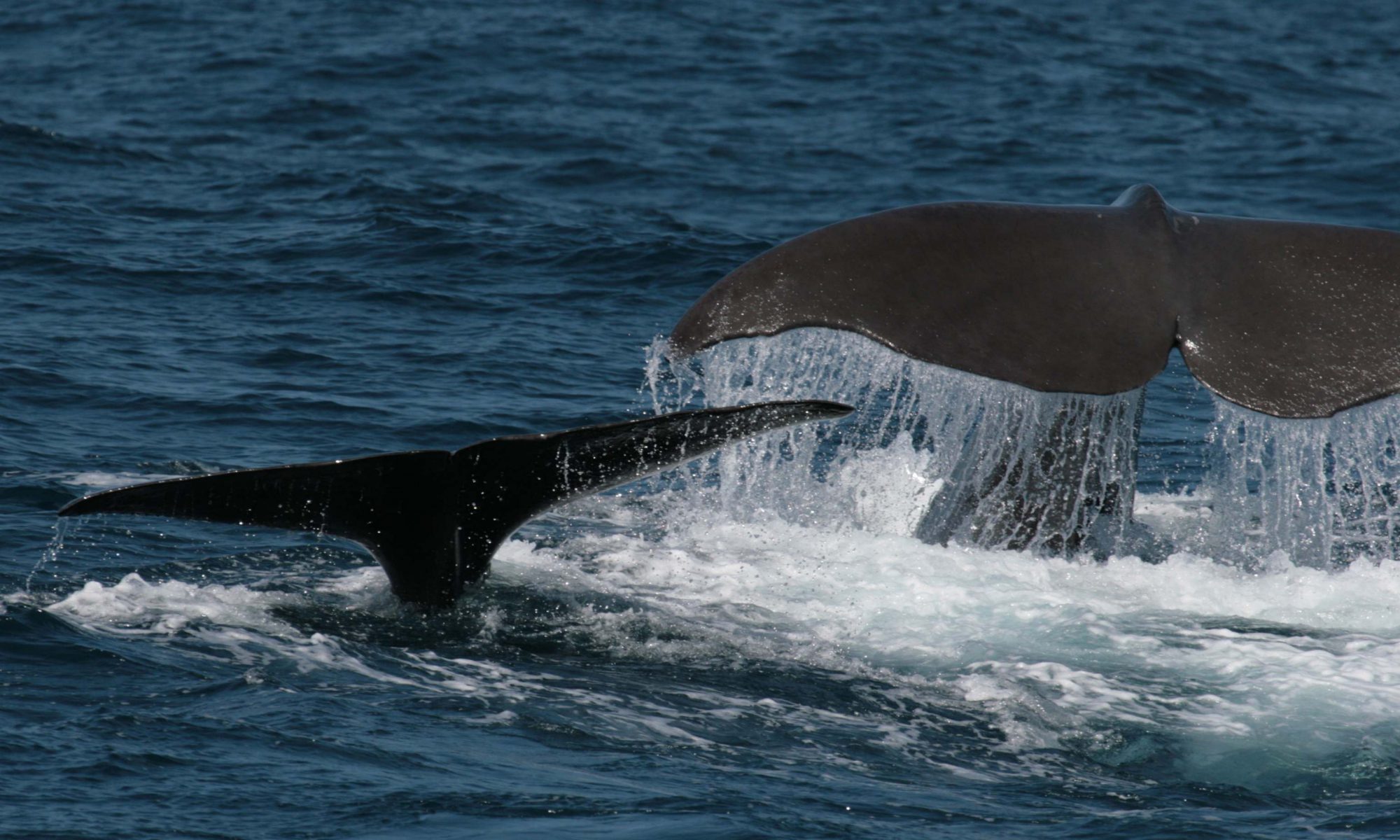
Blue whale fluking
Continue reading “Azores expedition 2026: Arrival”

Azores expedition 2026: Preparations and heading ‘home’

Update from our marine conservation volunteering holiday in the Azores archipelago, working on whales, dolphins and turtles

A pod of dolphins in front of Pico island

Planning has been underway for several months and next week the Azores Expedition begins.

This marks the 20th expedition in the Azores. So, it’s time for the initial introductions. I am Craig Turner and I’ll be your expedition leader.  

Expedition leader Craig Turner standing at Horta harbour, with yachts in the background
Craig Turner
Continue reading “Azores expedition 2026: Preparations and heading ‘home’”

Citizen science helps protect Sweden’s brown bears through critical denning period

Media release – 3 February 2026

A brown bear in a forest
Bear (c) Andrea Friebe

Sweden’s brown bears are a conservation success story, but their recovery brings new challenges. A ground-breaking citizen science project that has been running in Dalarna county since 2019 shows how volunteers from around the world can help local scientists in bear conservation.

Continue reading “Citizen science helps protect Sweden’s brown bears through critical denning period”

Bürgerwissenschaftler leisten wichtigen Beitrag zum Wolfsmonitoring in Niedersachsen während sich die Jagddebatte verschärft

Medienmitteilung – 27. January 2026
(Version auf Englisch)

Wolf (c) Christiane Flechtner

Die von Biosphere Expeditions durchgeführte Wolfsschutz-Expedition 2025 hat erneut einen wichtigen Beitrag zum offiziellen Wolf-Monitoring-Programm in Niedersachsen geleistet. Die seit 2017 jährlich stattfindenden Bürgerwissenschafts-Expeditionen sammeln weiterhin Daten, die in manchen Jahren die jährliche Datenmenge im Bundesland Niedersachsen verdoppelt haben.

Vom 5. bis 18. Juli 2025 untersuchten 19 Bürgerwissenschaftler mehrere Wolfsgebiete und legten dabei in zehn Erhebungstagen mehr als 650 Kilometer zurück.

Continue reading “Bürgerwissenschaftler leisten wichtigen Beitrag zum Wolfsmonitoring in Niedersachsen während sich die Jagddebatte verschärft”

Citizen scientists make significant contribution to wolf monitoring in Lower Saxony (Germany) as hunting debate intensifies

Media release – 27 January 2026
(Version in German)

Wolf (c) Christiane Flechtner

The 2025 wolf conservation expedition run by Biosphere Expeditions has again made a major contribution to Germany’s official wolf monitoring programme. The annual citizen expeditions, which have been running since 2017, continue to collect data that in some years accounted for up to half of all annual wolf scat samples in the state of Lower Saxony.

From 5–18 July 2025, nineteen citizen scientists surveyed multiple wolf territories, covering more than 650 kilometres in ten survey days.

Continue reading “Citizen scientists make significant contribution to wolf monitoring in Lower Saxony (Germany) as hunting debate intensifies”

2025 wrap-up: Biosphere Expeditions in the Maldives – 14 years of coral reef conservation

Four divers, a reef and a white transect tape
A team surveying a reef along a 100 m transect tape

In 2025, Biosphere Expeditions continued its long-standing citizen-science project in the Maldives, focusing on coral reef health through hands-on volunteer expeditions. Since 2011, these marine surveys have been an important constant of local reef conservation, blending scientific rigour, citizen science and immersive adventure.

The 2025 expedition brought together diverse teams of volunteers and scientists aboard a liveaboard vessel, each group contributing to Reef Check-standard surveys across multiple atolls. These surveys involve underwater assessments of coral cover, fish populations and other ecological indicators to track reef health across time.

A group of people standing on the top deck of a boat
One of the expedition teams

Long-term monitoring reveals trends: Outer reefs doing well, inner reefs in slow decline

A special emphasis on revisiting long-term monitoring sites allows Biosphere Expeditions to build multi-year datasets that reveal trends in reef resilience and degradation. The expedition’s work has resulted in annual scientific reports and many publications in the literature

During the 2025 expedition, citizen scientists surveyed 11 reefs and documented a mixed picture of reef conditions: some sites showed stable or improving coral cover, especially on ocean-fed outer reefs, while inner lagoon sites, more exposed to warming and stress, continued to struggle. 

Resilient outer reefs in Ari atoll had maintained levels of coral cover and had reasonably good reef fish populations with 50 – 60% hard coral cover on the deeper surveys (6 – 10 m depth). Some reef sites within atolls showed a further recovery for hard coral cover since the 2016 mass coral bleaching, reaching 40 – 50% cover on more shallow sites (3 – 5 m depth). However, other inner reefs continue to show a ‘phase-shift’ to a non-coral dominated status with opportunistic / fast-growing benthic fauna such as the coralliomorph Discosoma smothering the reef surface at one site (Dega Thila) and currently preventing the re-establishment of corals and other benthic groups.
A colourful reef with a moray eel hiding inside
A healthy outer reef
Continue reading “2025 wrap-up: Biosphere Expeditions in the Maldives – 14 years of coral reef conservation”