Update from our volunteer vacation / conservation holiday protecting whales, dolphins and turtles around the Azores archipelago (www.biosphere-expeditions.org/azores)

If our first day at sea was about diversity (with blue, sperm and humpback whales; not to mention the common and bottlenose dolphins), our second day was all about intensity.

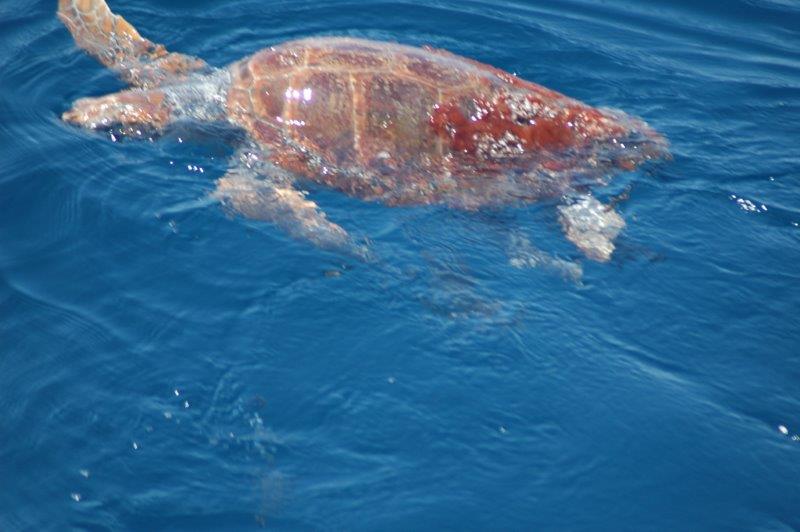
After the obligatory turtle sighting from Carlos (winning the prize for the first spot of the day), common dolphins were again added to the sightings list, but this time with calves. Our lookouts (Anthony and Simon) then proved their worth with a dolphin shout that turned out to be Risso’s, again with calves. With hieroglyphic scratches covering their bodies, this not only makes them distinctive, but also gives a window on their history.

Risso’s dolphin sighted off Pico Island – the scratch marks on the dorsal fin aids identification. Picture courtesy of Craig Turner.

Body art was also a theme for the part of the day, as we observed the ‘chevron patterns’ of several fin whales – these markings behind the head are partly used to identify individuals.

IMG_8791
Trying to identify a fin whale from its chevron markings. Picture courtesy of Craig Turner.

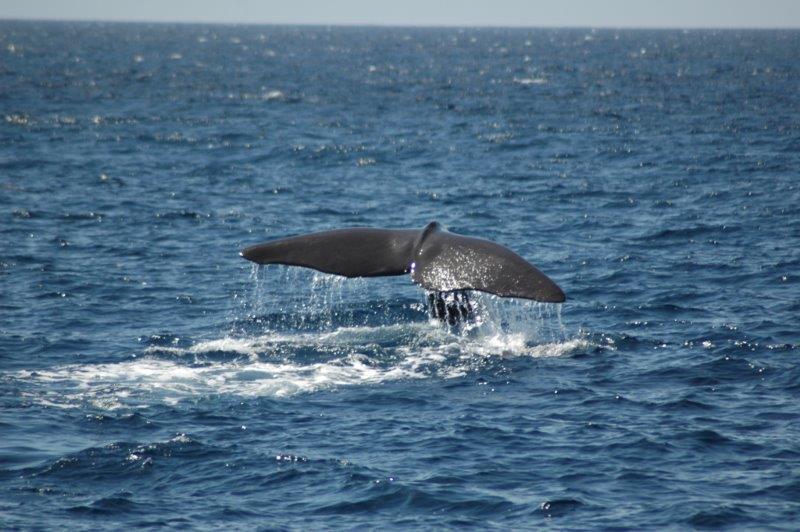
The afternoon was reserved for sperm whales by the dozen. Keeping the team busy recording blow rates and fluke photographs for identification of individuals. Several of the females observed were also with calves. There must be something in the water!

Until tomorrow.

Craig


Update from our volunteer vacation / conservation holiday protecting whales, dolphins and turtles around the Azores archipelago

Update from our volunteer vacation / conservation holiday protecting whales, dolphins and turtles around the Azores archipelago (www.biosphere-expeditions.org/azores)

This is Anthony, Craig’s assistant expedition leader, reporting on our first day out at sea.

Datasheets at the ready, we set sail this morning. Within moments of leaving the dock, we spied our first pod of common dolphins. In the rush to get the corresponding paperwork to document this event, a turtle was spotted by Annabel. Now hurriedly looking for the turtle sheet we were now in the bay and into the blue.

common dolphin (1)
Common dolphins
turtle 2010 (1)
Turtle

With the early records documented, we saw our first blow in the distance. It belonged to a humpback whale. Before we could get there, it had dived. Luckily, however, the radio, operated by our spotters on land, reported sightings of a baleen whale, so we powered in that direction.

humpback whale (1)
Humpback whale


When we arrived we discovered it was the mother of all baleens, the mighty blue whale. We patiently watched it as it swam gently on its way before diving and giving us five minutes or so of Meerkat-style peering around in all directions to see where the next blow came from.

blue whale (1)
Blue whale


Eventually we headed off and happened upon our humpback again, waving at us with his enormous pectoral flipper.

The day was rounded off with a group sperm whales until we had to make our way back to the harbour and call it a day.

Sperm whale
Sperm whale

All in all we could not have hoped for a better first day. What will tomorrow bring…?


Update from our volunteer vacation / conservation holiday protecting whales, dolphins and turtles around the Azores archipelago

Update from our volunteer vacation / conservation holiday protecting whales, dolphins and turtles around the Azores archipelago (www.biosphere-expeditions.org/azores)

After an early start for the final pieces of preparation, we can at last say a big Azorean welcome to our expeditioners.

The team all arrived safely, from the north, east and west; via a mix of routes and modes of transport. The good news is they are all present and correct and very excited. So the first slot of 2015 officially begins.

With initial introductions, risks assessments and briefings completed, we stretched our legs with a whistle–stop orientation around Horta. Whilst important for us to impart the initial project knowledge, it has been great to learn about our new team. The day was rounded off with our first dinner, created in-house by the team – a tasty vegetarian pasta it was too!

Rested and recuperated from the travel and briefing exertions of yesterday, the science training began today. Familiarisation with equipment was followed by data records training, and rounded off with a boat orientation – though the latter was slightly delayed, as our vessel went (without us) to the aid of another boat stranded engineless in the harbour – always be prepared for the unexpected!

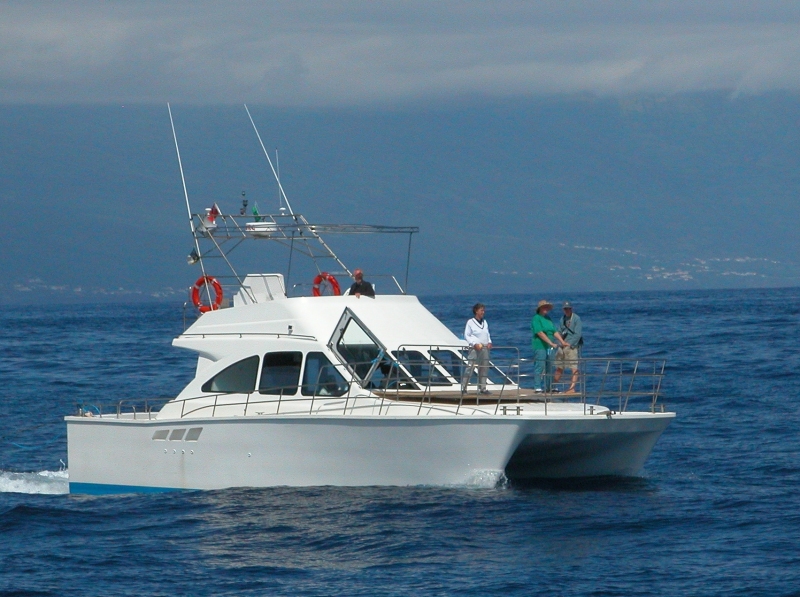
boat (1)
The research vessel


Slightly less than unexpected was the small ‘weather spanner’ thrown into the workings of the expedition, as our training session at sea was postponed by high winds. Tomorrow looks more favourable, so it will be all systems go as our team put their new-found knowledge into practice. The whales won’t have to wait for us much longer 😉

The weather delay meant Lisa (our scientist) could give a background talk on cetaceans, and the team could acquaint themselves with the data entry and the fluke matching process – how we identify and track individual whales.

The day was rounded off learning key identification features of species we will hopefully encounter, the team are now poised and ready for action. All we need now is a good night’s rest and the right weather for whales…


Update from our volunteer vacation / conservation holiday protecting whales, dolphins and turtles around the Azores archipelago

Update from our volunteer vacation / conservation holiday protecting whales, dolphins and turtles around the Azores archipelago (www.biosphere-expeditions.org/azores)

Our migration to the Azores is complete. After a great flight from Ponta Delgada, staring at the sea below whilst passing the towering volcanic peak of Pico island, Anthony and I are now in Horta. Yesterday and today we have been preparing for your imminent arrival.

It has been great to re-orientate ourselves around town, meet up with our hosts (Jim, Claudia and Tiago) and catch up with Lisa (our scientist) to hear about all the recent sightings. We can share more detail on that once you’ve arrived (or you can have a look at Lisa’s Facebook pag at https://www.facebook.com/pages/Whale-Watch-Azores/113978598781878?fref=ts). We now just hope that the weather and whale gods are on our side and we can look forward to some great fieldwork (and data collection) over the next few days.

Easter Sunday has greeted us with liquid sunshine, but it won’t dampen the preparations or enthusiasm for the first group of the expedition. So safe travels to those of you still en route, and we look forward to meeting you all on Monday.

Peter's Cafe (Sport)
Peter’s Cafe (Sport) in Horta

Update from our volunteer vacation / conservation holiday protecting whales, dolphins and turtles around the Azores archipelago (www.biosphere-expeditions.org/azores)

Hello everyone

It’s time for the initial introductions. I am Craig Turner and I’ll be your expedition leader in the Azores this year. It is great to be going back after my first stint last year.

I am already on route, having packed my gear and left the snowy hills of north Scotland yesterday. Today is the Lake District to Lisbon leg, and tomorrow Horta. It will be great to meet up with friends and colleagues from last year, not least our scientist Lisa Steiner. If you want to find cetaceans in the Azores, then she is the person to find them. Last year, my baptism was blue – a great way to kick off our data collection. Who knows what it will be this year, with an early and rare rumour of orcas in the wider area.

I arrive a couple of days before you in order to set up the expedition headquarters. We’ll have Anthony and Chris as expedition-leaders-in-training along with us on each slot, which will be a great addition to the team. I’ll send around another message once I get on the ground in Horta and confirm my local telephone number.

This reminds to mention communications on the island. There’s mobile phone reception on Faial in addition to internet here and there, but there’s also a golden rule of no cell phones while we’re at sea. Hopefully you can resist the need for frequent international comms, and why not go off the grid for the expedition, and soak up the expedition experience.

I know you’ve all been eagerly reading your expedition materials and know to bring many layers of clothing. The weather can be a bit like four seasons in one day, so prepare for warm, cold, wet and dry. Like the weather in Scotland! Don’t forget your waterproof trousers – you’ll thank me when you are stationed on the bow as a lookout and the weather is choppy.

So with the local team in place, whale sightings already logged by Lisa, all we are missing is you. This Monday morning is hopefully one we are all looking forward to….. It will be great to meet you all and I’ll send along another update very soon.

Safe travels…

Craig


Update from our volunteer vacation / conservation holiday protecting whales, dolphins and turtles around the Azores archipelago

From our working holiday volunteering with leopards, elephants and cheetahs in Namibia, Africa (http://www.biosphere-expeditions.org/namibia)

I received a couple of emails from previous team members asking to show pictures of what rain looks like here and I have attached them. (Evidently they did not believe me that it actually does rain here in November!)

Wednesday Stuart, Sandra and Markus signed up for the all day camera trap team. They kept stumm about it all day, yet at briefing they practically burst with the news: they’d seen a leopard running away from them up in the mountains. Quite a lucky team!

Thursday was our vehicle game count, the last of the season with Biosphere Expedition. It was a terrific way to finish off the expedition – all three teams seeing record numbers of animals and getting to spend one last beautiful morning driving on Okambara. In the afternoon the team helped pack up the expedition – each year the first and last teams have the privilege of unpacking and packing the expedition kit and storing it until the next season.

I’ve also attached a picture of all the groups’ elephants sightings in 2014.

Team 6 has now left the farm, and that wraps up our Namibia expedition for 2014. A huge thank you to everyone who volunteered this year. It was great to meet you all and work alongside you. Your hard work, flexibility, willingness to get dirty and be Vera’s “arms and legs and feet” on Okambara has been immensely helpful. Thanks to you we captured three leopards this year and collared two. Vera’s scientific report on the 2014 expedition will be published in a few months.

Best wishes

Alisa Clickenger
Expedition leader

This slideshow requires JavaScript.

Continue reading “From our working holiday volunteering with leopards, elephants and cheetahs in Namibia, Africa (http://www.biosphere-expeditions.org/namibia)”

From our working holiday volunteering with leopards, elephants and cheetahs in Namibia, Africa (http://www.biosphere-expeditions.org/namibia)

One of the things I love about working in Namibia is that when you start your day, you never know how it’s going to end. Sunday I got wet walking to briefing, something that has never happened to me before here in Namibia because normally we work in the dry spring/summer season. Tuesday night I drifted off to sleep to the deafening sound of all the frogs that had come out to call for mates with the rains.

Saturday was the day off and the teams volunteered to check the box traps. Unfortunately they were all empty. Sunday morning Stuart, Markus, Heidi, Sabine and Karen all helped Vera move the box trap from Frankposten up to Bergposten. We placed the trap where Team 4 had installed one, simply called Bergposten 2. Team 6 was hyper organised and had the trap out of the ditch and up on the track waiting for the truck when Vera arrived. They were back to camp in record time, thanks to said organisation plus the previous work Team 4 did cutting shrubs.

The elephant team did not find the elephants on Monday, but the box trap team did on their way back from the lodge, so we know they are still on the farm 😉 The lead cow’s VHF collar is barely giving a signal – very often we have to be within 300 metres or less to pick up any beeps at all.

Monday Markus and Sandra changed the trap meat in the morning, and Stuart, Christaine and Sabine changed it in the afternoon. Rough work in the afternoon for our resident vegetarians when the intestines we started using in the morning to lay a scent trail to our box traps had become fully ripe in the morning and afternoon sun.

Because of the rains all waterhole teams are reporting seeing very few animals. Tuesday we figured out why: we saw lots of puddles of water around the farm, so the animals do not have to go to the water holes where they are extremely vulnerable. Rather, they can grab a drink along the way and not have to congregate in the “danger zone”. Our territorial sable bull doesn’t seem to consider the bush camp water hole a threat, however…

_G8Q8628 IMG_6181 IMG_6191 IMG_6229

_G8Q8603

Continue reading “From our working holiday volunteering with leopards, elephants and cheetahs in Namibia, Africa (http://www.biosphere-expeditions.org/namibia)”

Update from our SCUBA diving volunteer opportunity & conservation holiday on the coral reefs of the Musandam peninsula, Oman (www.biosphere-expeditions.org/musandam)

On Wednesday, a beautiful day of surveying, punctuated by two minke whale sightings, the first was at 09:00 on our way to our first survey site. They were far from our boat, so we grabbed masks and snorkels and hopped into the speedboat for a closer look. We followed them at a safe distance for about half an hour watching them blow and dive until they disappeared into the deep.
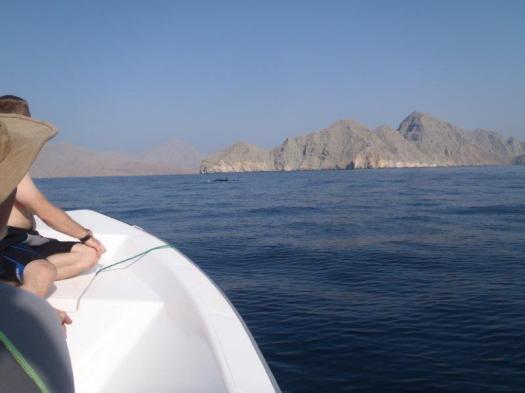
minke whale, Kriss Brandstrom

The surveys were both at Osprey Point, and by the afternoon the swell was so strong that Jean-Luc was given the nickname of Sultan of Swing in reference to the laying of the transect line. The substrate team, Catherine and Nadege, had an equally difficult time reeling it in, but although the team were bashed and tumbled by the waves, the stories were well recounted later!

The surveys on Thursday clarified our hypothesis that the further into the MPA we go, the less coral cover there was due to the environmental conditions, increased siltation, and restricted water movement. Nasser, Kristoffer and Hari went out on the speedboat and documented illegal fishing practices in the area, whilst the rest of the team entered data. The restricted water movement did, however, have a bonus feature in that huge amounts of phosphorescent phytoplankton congregated in Khor Nadj, our overnight mooring area, and with thousands of fish coming in to feed after the moon had set, we were treated to an amazing phosphorescent fish display. It was so beautiful that some of the team were tempted to join in, so donning masks and fins added to the incredible light show – a once in a lifetime experience!

exploring the MPA

Sailing into the remnants of a storm, the sky was hazy and the sea lumpy as we reached our first survey site of Friday, Paradise Point. The coral, though, was good, and the fish life abundant. The afternoon site, named Son of Gargoyle was even better, with ancient porites mounds and prolific grouper. The survey of the MPA was over (for this year at least) and we steamed round the northern tip of the peninsula accompanied by two Indian ocean humpback dolphins, who bow rode with us for a while.
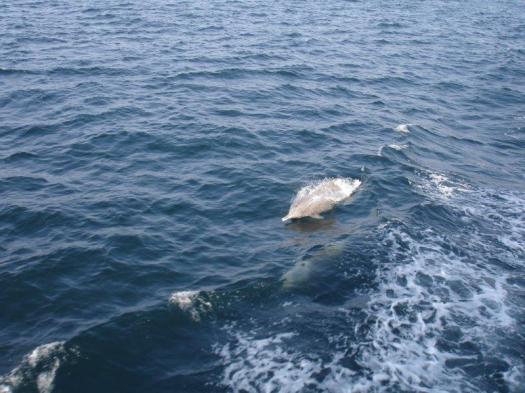
Indian ocean humpback dolphins

Back in Khumsar, as the Mosques called to prayer, we decided to set foot on dry land and visit the village nestled in the rocks with no road in or out, accessible only by boat. It was a great excursion, and gave a little insight into the lives of the local people here – a community reliant on the sea.

excursion to Khumsar

We were woken today, Saturday, at 04:00 by the waves slapping the side of the boat. Nadege, worried for her diving gear, went up on deck and rescued wetsuits and bikinis from being blown overboard. Dawn yoga was a windy affair, and breakfast was tricky with tea literally being blown out of the cups, but we made it back to Khasab, even managing to stop for a dive at Pipi Beach along the way before leaving our trusty survey vessel, the MS Sindbad, after lunch.

Another expedition over, but thank you for a wonderful week, rich in laughter and learning, new experiences and great memories – no one who saw will ever forget the sight of a terrified Hari trying to escape from an innocent turtle! We look forward to Jean-Luc’s report and are grateful for everyone’s involvement. It will be great to see how our understanding of the MPA has developed by this time next year.
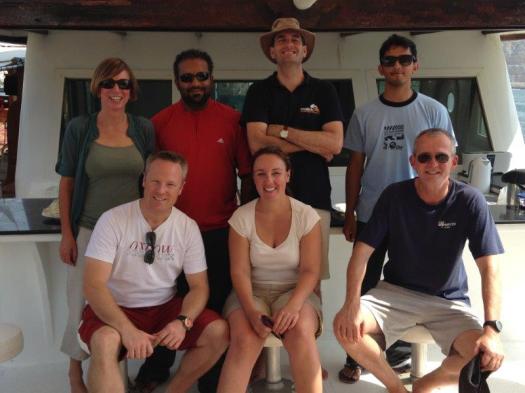
the team

Thank you to everyone who supported this project. Special thanks to the Oman Ministry of Tourism for supporting our efforts to conserve coral reefs through tourism.

logo_sultanate_of_oman

Continue reading “Update from our SCUBA diving volunteer opportunity & conservation holiday on the coral reefs of the Musandam peninsula, Oman (www.biosphere-expeditions.org/musandam)”
Update from our SCUBA diving volunteer opportunity & conservation holiday on the coral reefs of the Musandam peninsula, Oman (www.biosphere-expeditions.org/musandam)

After Saturday night in the desert (at the Dubai Desert Conservation Reserve, our Arabia project partners), we returned to Dubai on Sunday morning, collected the team and set off to the Musandam peninsula.

Surrounded by impressive sandstone mountains, our vessel – the MY Sindabad – took us to our first dive at the glorious Pipi Beach on Sunday afternoon. Dwarfed by massive coral stands, several hundered years old, the team checked out their diving kit and skills and gazed in awe at the underwater scene.

After that great introduction to the Musandam’s underwater world, the team knuckled down to some serious Reef Check training, and with 5 lectures, 2 dives and a test (with 100% pass rate – well done everyone!), the second day (Monday) of the expedition was successfully completed, and the MY Sindabad continued its journey around the peninsula.

This slideshow requires JavaScript.

Now firmly in the MPA (marine protected area) that was partly brought about by Biosphere Expeditions survey work here, we have begun to have a look around. Dive sites vary from heavily silted to abundant coral and fish life. For example, our ID test dive on Tuesday at Osprey Point (complete with osprey nest and feeding chick), was rich in diversity.

Gargoyle Cliffs was the site of our mock survey, and with a strong surge buffeting us, the team collected its first data set. It was more challenging than Nadege and Kristoffer, who were undertaking the fish survey, had imagined it would be, with hundreds of snappers to count whilst avoiding being smashed against the corals!

So, with Reef Check training completed, and a fully qualified EcoDiver team now in action, some decided to celebrate with a night dive.  Nasser and Kristoffer saw (and documented), a cuttlefish spawning – a very rare sight indeed.

This morning, after dawn yoga, and after we said goodbye to Matthias, Kathy, Liesl, Lukas and Sophie, we start our surveys proper, and will endeavour to investigate as many sites in the MPA as we can.

Continue reading “Update from our SCUBA diving volunteer opportunity & conservation holiday on the coral reefs of the Musandam peninsula, Oman (www.biosphere-expeditions.org/musandam)”

From our working holiday volunteering with leopards, elephants and cheetahs in Namibia, Africa (http://www.biosphere-expeditions.org/namibia)

Team 6 brought the rain. Not the average almost-evaporates-before-touching-the-ground-rain, but full-on rain. With thunder, lightning and the whole shebang. With nine of the team members out at the 4WD training, we sought shelter under the roof at the scientists’ compound. They have a metal roof in their lapa and it was spectacular. Back at bush camp, merely 6 kms away, Heidi had been out checking box traps with Ligeus and wondered what all the fuss was about because no rain fell there. Such are the vagaries in the non-rainy season in Namibia.

Team 6 also brought the rhinos, two of them at their first dinner here in camp. The rhino pals were so comfortable near us, they laid down for a while, so we got a really nice front-row encounter in the comfort of our own home.

Monday was our box trap training up at the CS House box trap, and afterwards we split into three groups to check all the traps. Markus, Astrid and Christiane came with me and got the grand tour of the farm on the first day, because we were responsible for checking the Lodge trap (where we found hyaena prints walking just beside the trap) and the Mountain trap (where I forgot there is a camera trap so there will be nice pictures of my lower legs for the next data entry team to see).

This slideshow requires JavaScript.

Today, Wednesday, the teams are working independently and enjoying the fruits of their two days of training. First order of business is changing the meat in the box traps, so it will be interesting to hear at tonight’s briefing how they’ve combined all their navigational, equipment, box trap and data sheet training for a successful day in the field. Most volunteers comment on how they cannot believe that after two days of training that we let them loose to work on their own in the field. Yes, we trust them. All the volunteers are so important, because we’re able to do so much more work all over the farm.

This morning the elephants gave Markus, Astrid, Christiane, Karen and I a merry chase. We searched for 4+ hours with no luck. We did telemetry in the north, south, east and west, and not a single beep. Yes, we even had fresh batteries in the telemetry receiver. Christiane and Markus even climbed up the Boma treehouse to have a listen. Well, no data are still data, so we have to record those as well.

On the way back from searching for the elephants, our team came across a large group of giraffe. Take a close look at the horns on the wee one. You’ll notice that they are crooked. That’s because when giraffes are born their nubs aren’t yet connected to their heads. Over time they grow and adhere to the animal’s head, becoming fully fused at 4-4.5 years (~7 years in females). But at birth they are loose and lie flat so they’ll ease through the birth canal.

Continue reading “From our working holiday volunteering with leopards, elephants and cheetahs in Namibia, Africa (http://www.biosphere-expeditions.org/namibia)”